بسم الله الرحمن الرحيم


This poem was written to inspire and increase our love for the Haramayn Shareefayn, to instil its beauty and dignity in our hearts. Allah accept my efforts and reignite our love for the holy lands.


This poem was written to inspire and increase our love for the Haramayn Shareefayn, to instil its beauty and dignity in our hearts. Allah accept my efforts and reignite our love for the holy lands.


When Ibrahim (as) famously left Hajar (as) with their baby son in the desert, she asked him if Allah commanded him to leave them. He said yes, so she said that she trusted Allah would take care of them.
Her response to the situation illuminated a middle path between two extremes we commonly see.
One extreme is pessimism. A person may simply give up and lose hope. After scanning the horizon and seeing no food, water, or any sign of civilization, it would be easy to sit down and do nothing. People with a negative mindset will focus on all the things wrong in this situation – there’s no food, we’ll probably die here – and overwhelm themselves with hopelessness.
The other extreme is naive optimism. It is sitting there doing nothing while telling yourself everything will work out. Or perhaps to simply “envision” a better situation and hope it will arrive.
Hajar demonstrated what optimism looks like.
The action of her heart was to trust Allah and have faith that He would make a way out. The action of her limbs was to do everything in her control to remedy the situation. No food? Then she will run back and forth between mountains looking for something to give her child.
She set a precedent that embodies the prophetic tradition, “tie your camel, and then trust in Allah.”
When it comes to the sunnah of the Prophet (s) we rarely talk about mindsets. The sunnah of optimism provides a playbook for dealing with the major and minor difficulties in our lives.
It’s amazing to think that he was tested more than anyone else, and yet, his default demeanor was always smiling.
True optimism provides the resolve to deal with difficulty.
When we look back at the most difficult moments of our lives, we actually cherish them. Those hardships, failures, and scars are what made us into who we are today. They made us stronger and provided lessons so invaluable we’d never trade them for anything.
This is easy in hindsight, but harder to do in the moment – “Patience is at the first strike of calamity.”
The prophetic example shows us how to cultivate a mindset of optimism.
He (saw) warned against giving up on people. “Whoever says the people are destroyed, he is the most destroyed amongst them (Muslim).” And Allah (swt) says in the Qur’an, “Do not lose heart or despair, and you will be superior if you are [true] believers (3:139).”
Despair is easy to feel almost by default. Every time we turn on our phones we are bombarded with headlines, photos, and videos of injustices that make it seem as if the world is going down the tubes. The lens of the believer necessitates understanding that our faith in Allah means knowing Allah is the source of all that is good, and He will never decree something in which the evil outweighs the good – even if that good is reserved for the akhirah.
The Prophet (s), even in the most dire circumstances, would look for excuses to be optimistic. When the Muslims set out for umrah, and were blocked by the Quraysh, the situation was tense. Negotiators kept coming but no agreement could be reached. Finally, the Quraysh sent Suhayl b. Amr, and the Prophet (s) took this as a good sign. The name Suhayl has a connotation of ease, and so the Prophet (s) announced to his companions that this was a good sign. Eventually, the treaty of Hudaybiyah was agreed upon – a victory in and of itself, even if it was unclear at the time as to how.
He even engineered the environment around him to be one that instills optimism. When he met someone from a place called the ‘Valley of Misguidance’, he renamed it the ‘Valley of Guidance’. This shows us that the way we refer to things even has a subconscious effect on us. What is the subconscious effect, for example, of referring to one’s spouse as “the old ball and chain” over and over again? When his (saw) grandson was born, Ali (ra) named him Harb (war). The Prophet (s) changed his name to Hasan (good).
He encouraged his companions to always be of those spreading good to others. He instructed them, “give glad tidings, and do not scare people away. Make things easy, do not make things difficult.”
The most important optimism is the optimism in Allah. The Prophet (s) relates to us that Allah said, “I am as my servant expects me and I am with him as he remembers me.” If you believe that Allah intends to make your life difficult, or that He is vengeful toward you (audhubillah), then that is what you will get. If you believe that Allah loves His creation, and intends what is best for them, and wants to forgive them – then you will find Allah (swt) as such.
When we inevtibaly encounter difficulty in our lives, we must tackle those problems head and and work our hardest to deal with them. We remind ourselves in those moments, that ultimately things will work out for the best, because we know that what Allah decrees for us is good and He will give us the strength and ability to make it through what we are dealing with.
“Our Lord, and burden us not with that which we have no ability to bear. And pardon us; and forgive us; and have mercy upon us (2:186).”
Omar Usman – link

The king of rome purposely designed a door very short so that everyone who enters would bow down to him, but Imām Abū Bakr al-Bāqillānī (رحمه الله) humiliates the roman king:

Before prophethood came, he SAW spent his time in a cave,
One day an angel from Allah appeared,
And the first words were revealed.
He SAW quickly went home to his wife Khadijah in fear,
She RA comforted him and all worries she made disappear.
Khadijah RA was the first believer then Abu Bakr RA was selected,
Not many people believed in the message and rejected.
This orphan boy grew up to be a Prophet of Allah SAW,
He SAW was remembered wide and far.
He SAW was known to be an honest man, he didn’t ever lie,
He SAW used to spend his nights in prayer, for the Ummah he did cry.
He SAW just wanted the world to be in peace,
And for His SAW message to spread to the wide West and far in the East.

Umar Sarfaraz Patel, 8 years old.
ANY DUA TO AVOID DISPUTES WITH MY HUSBAND?
Question:
Assalamualaikum
Is there good easy Duaa/wazeefa to prevent fights? And ease of mind of my husband as well as to move forward from repeated thoughts?
In the Name of Allah, the Most Gracious, the Most Merciful.
As-salāmu ‘alaykum wa-rahmatullāhi wa-barakātuh.
You have referred to three issues,
a. Dua to prevent fights
b. Ease of mind
c. Move forward from repeated thoughts
Fights are the consequence of one not expressing restraint and controlling one’s anger. In order, to prevent fights one should learn how to exercise restraint and control one’s anger. Dua alone is not sufficient to control one’s anger. If there is a raging fire, one needs to put off the fire. One cannot sit back and simply make dua without the aid of water or fire extinguisher. In fact, when there is fear of fire, arrangement is made for a water hose or fire extinguisher within one’s reach. Likewise, one needs to equip oneself with the necessary skills to overcome and combat anger. This requires spiritual and internal training by oneself or through a spiritual guide.
A Sahabi requested Rasulullah Sallallahu Alayhi Wasallam for advice. Rasulullah Sallallahu Alayhi Wasallam said, لَا تَغْضَبْ . He repeated this advice three times. If one does not exercise restraint and control ones anger, he will be forced to tolerate more than the discomfort of anger later. We advise you to inculcate skills of containing your anger. This would be achieved by a spiritual guide.
Also make dua to Allah for tolerance.
رَبَّنَا أَفْرِغْ عَلَيْنَا صَبْرًا وَثَبِّتْ أَقْدَامَنَا وَانْصُرْنَا عَلَى الْقَوْمِ الْكَافِرِينَ
Our Lord, pour upon us patience and plant firmly our feet and give us victory over the disbelieving people.” [2:250] 
The following marriage recipe of 10 points will be useful.
1. Fear Allah:
It was the noble practice of Nabi (SAW) to conscientise the spouses about the fear for Allah before performing a Nikah by reciting the verses (Nisa v14, Ahzab v69, Aali-Imraan v101) from the Qur’an. All the verses are common in the message of Taqwa (fear of Allah). The spouses will be first committed to Allah before being committed to their partner. There can be no doubt in the success of a marriage governed by the fear of Allah.
2. Never be angry at the same time:
Anger is the root cause for all marital disputes. One Sahabi came to Rasulullah (SAW) and sought some advice.
Rasulullah (SAW) replied, control your anger. The same advice was rendered three times. (Mishkat pg.433; HM Saeed)
3. If one has to win an argument, let it be the other:
Nabi (SAW) said: “Whoever discards an argument despite being correct shall earn a palace in the centre of Jannah. (Ibid pg.412)
4. Never shout at each other unless the house is on fire:
Luqman (AS) while offering advice to his son said:” and lower your voice for verily the most disliked voice is that of a donkey”. (Surah Luqman v19)
5. If you have to criticize, do it lovingly:
Rasulullah (SAW) said, ‘A Mu’ min is a mirror for a Mu’min.’ (Abu Dawood vol.2 pg.325; Imdadiyah) Advise with dignity and silently.
6. Never bring up mistakes of the past:
Nabi (SAW) said: “Whoever conceals the faults of others, Allah shall conceal his faults on the day of Qiyamah.” (Mishkaat pg.429; HM Saeed)
7. Neglect the whole world rather than your marriage partner:
Nabi (SAW) confirmed the advice of Salman to Abu-Darda [RA] for neglecting his wife. “Verily there is a right of your wife over you.” (Nasai Hadith2391)
8. Never sleep with an argument unsettled:
Abu Bakr [RA] resolved his dispute with his wife over-feeding the guests before going to bed. (Bukhari Hadith 602)
9. At least, once everyday, express your gratitude to your partner:
Nabi [sallallahu alayhi wasallam] said, ‘Whoever does not show gratitude to the people has not shown gratitude to Allah.’ (Abu Dawud pg.662; Karachi)
10. When you have done something wrong, be ready to admit it and ask for forgiveness:
Nabi [sallallaahu alayhi wasallam] said, ‘All the sons of Aadam commit error, and the best of those who err are those who seek forgiveness.’ (Tirmidhi Hadith 2499)
And Allah Ta’āla Knows Best
Huzaifah Deedat
Student Darul Iftaa
Lusaka, Zambia
Checked and Approved by,
Mufti Ebrahim Desai.
By Shaykh-ul-Hadīth, Hadrat Mawlānā Muhammad Saleem Dhorat hafizahullāh
A person’s final moments are dependent on how he spent his life, what he lived for and what his heart remained engrossed in. Accordingly, if a person lives a life of disobedience to Allāh ta‘ālā and is preoccupied in worldly pursuits, his last moments will be whilst engaged in such activities. Similarly, a person living a life of obedience to Allāh ta‘ālā, in His remembrance and in striving for His Pleasure, will find his final moments in acts beloved to Allāh ta‘ālā. Many incidents are recorded in history which bear testimony to this fact, prompting us to reflect on our current state and creating a concern regarding our own preparations for departure from this world.
Shaykh-ul-Hadīth, Hadrat Mawlānā Muhammad Zakariyyā rahimahullāh has quoted a number of incidents:
• Rabī‘ ibn Bazzah rahimahullāh has narrated that a person was in his last moments and the people present encouraged him to recite the kalimah lā ilāha illallāh, but he kept repeating (indicating to a glass of wine), “You drink and also give me one.”
• Another person was in his final moments and the people around him were repeating the kalimah lā ilāha illallāh to prompt him, but he kept saying, “Ten ten rupees, eleven eleven rupees, twelve twelve rupees.”
Hadrat Muftī Muhammad Shafī‘ rahimahullāh has narrated:
• A salesman used to be always occupied in his business ventures, so much so that performing salāh and other acts of worship would never come to mind. During his final moments, people encouraged him to recite the kalimah lā ilāha illallāh, but his end came with him continuously mentioning and calculating his business transactions.
• An incident of another person who remained busy in his worldly pursuits, led to him in his final moments continually saying, “Have you fed my donkey.”
In contrast, we find amazing incidents of pious people who lived a life of piety, engaged in the obedience to Allāh ta‘ālā and toiling for His Pleasure, leaving the world in a manner which leaves us in amazement and wonder.
‘Umar ibn ‘Abd-ul-‘Azīz rahimahullāh is well known for his piety and steadfastness on Dīn. He established justice to such a degree, that the Ummah recognise him as the fifth rightly guided caliph. Many people were gathered around him when his final moments drew near. As he began to cry, someone consoled him and asked, “Why are you crying? Allāh ta‘ālā has revived the Sunnah and established justice through you.”
Hearing this he began to cry more and said, “Will I not be questioned regarding the rights of the people?” He then went on to say, “O Allāh! You commanded me with certain things regarding which I remained imperfect, and you prohibited certain things from which I couldn’t restrain myself, but O Allāh, I bear witness that You are One, Who has no partner and there is none worthy of worship except You.” He then requested all to leave him except his attendant saying there are such creations before him who were neither jinn nor human. After everyone had left, he left this mortal world after reciting the following verse of the Glorious Qur’ān:
This is the home of the Ākhirah, which We shall assign to those who do not desire pomp on earth nor corruption. The (best) outcome shall be for those with Taqwā. (28:83)
The great muhaddith Abū Zur‘ah rahimahullāh was an imām in the field of hadīth. Imām Ahmad ibn Hanbal rahimahullāh states regarding him that he knew 600,000 ahādīth. When his final moments came, the ‘ulamā present began discussing how they should encourage him to recite the kalimah, as they felt it was disrespectful to address him directly. They decided to narrate a hadīth in his presence. One person initiated the hadīth with, “Dahhāk ibn Makhlad narrated to us from ‘Abd-ul-Hamīd ibn Ja‘far who narrated from Sālih”. He then stopped at this point. Hearing this, the great muhaddith began narrating the hadīth saying, “Bundār narrated to us that Abū ‘Āsim narrated to him that ‘Abd-ul-Hamīd ibn Ja‘far narrated to him that Sālih ibn Abī ‘Arīb narrated to him that Kathīr ibn Murrah Al-Hadramī narrated to him that Mu‘ādh ibn Jabal radhiyallāhu ‘anhu narrated that Rasūlullāh sallallāhu ‘alayhi wasallam stated, ‘Whoever’s last words are lā ilāha illallāh….’.” He then passed away. The full hadīth is, ‘Whoever’s last words are lā ilāha illallāh will enter Jannah’. By departing in this manner, he practically demonstrated the glad tiding mentioned in this hadīth. What an amazing death Allāh ta‘ālā granted him!
These few incidents are a mere drop in the ocean from the many great and amazing final moments Allāh ta‘ālā has granted His special servants, who made acquiring His Pleasure the objective of their lives. The thought should not cross our minds that these were great people of the past who achieved such heights. Even in this age, Allāh ta‘ālā does not deprive His servants who lead a life of servitude to Him and remain steadfast in their duties and obligations to Him.
Just this month, my very dear and close friend in Barbados, Dr. Muhammad Shafee Nagdi, left this mortal world. May Allāh ta‘ālā grant him forgiveness for any shortcomings and elevate his status in the hereafter and resurrect him with the Ambiyā, the Siddiqīn, the Shuhadā and the Sālihīn. Āmīn.
Dr. Muhammad Shafee Nagdi was my host whenever I visited Barbados and was very affectionate towards me and showed me much love and affection. He was very respectful towards the ‘Ulamā and Mashāyikh and would endeavour to serve and bring comfort to them. Almost all the prominent Mashāyikh who visited Barbados during his lifetime have been his guests and his manner and behaviour towards them was such that he would win their hearts. I was very saddened and experienced much grief upon the news. However, when his sons narrated to me the details of his final moments, I was wonderstruck and experienced immense happiness for the way Allāh ta‘ālā called him to his final abode.
Dr. Muhammad Shafee Nagdi was very steadfast and punctual with his a‘māl and ma‘mūlāt (prescribed practices). He would for the last forty years wake up for tahajjud and complete his ma‘mūlāt. In the last few years he was not very mobile, yet he remained punctual regarding his daily practices. Even in a poor state of health, he would normally wake up around 1am and engage in tahajjud salāh, dhikr and du‘ā until the beginning time of Fajr and then perform his Fajr. Thereafter, he would recite Sūrah Yāsīn and one juz from the Qur’ān. He would then awaken his wife and son for Fajr salāh.
His son, Rafeeq, narrated to me that during his father’s last night in this world, as per his usual practice he attended to his father at 1am to assist him to perform wudū and seat him in his chair for tahajjud, thereafter returning to sleep. Later in the morning, he was not awakened by the call of his father, but his mother. Worried, he got up and went to see his father to find that he had, at some point during the night, departed for the hereafter. This in itself was a great honour, that he had left this world whilst engaged in worship. However, the detail mentioned by his son is more amazing. He said that he found his father in the condition that the Qur’ān was still open and in his father’s hands. This means, according to his regular practice, Dr. Shafee must have performed his tahajjud salāh, completed all his ma‘mūlāt, performed his Fajr salāh, recited Sūrah Yāsīn and also the Qur’ān. Furthermore, when his son looked at the Qur’ān, it became apparent that he was on the last page, which indicated that he had just completed the Qur’ān. Subhānallāh! What a praiseworthy final moment Allāh ta‘ālā granted my beloved friend!
It is evident that, when a person makes Allāh ta‘ālā his objective and lives a life striving to acquire His Pleasure, then his final moments will be in the same state. We should take lesson from such incidents and reflect on how we are leading our lives, so that we can mend our ways by sincerely repenting from a life of negligence and adopting a life of piety and devotion.
May Allāh ta‘ālā grant us all the tawfīq to live such a life that we breathe our last when we are engaged in acts that are most beloved to Him, so that we depart with His Forgiveness, Mercy and eternal Pleasure. Āmīn.
© Riyādul Jannah (Vol. 26 No. 8, August 2017)
• Please forward this message on to all your contacts•


Masjid Hidayah, Old Trafford – 14/04/2018
Background
Allah has granted this book a miraculous, wonderful and astounding status in terms of acceptance.
Imam Bukhari (Allah have mercy upon him) is buried in Uzbekistan, near Samarqand.
Ishaq ibn Rahwaye (Allah have mercy upon him) is the teacher of Imam Bukhari (Allah have mercy upon him), he authored a book, “Musnad Rahwaye” which is actually being published now. Once in class, Imam Ishaq stated, “I wish all the Saheeh Hadith of the Prophet (peace and blessings be upon him) were gathered together in one compilation.
There were already books gathered with Haidth, but contained Saheeh, Hasan and Dhaeef Hadith.
The Dream and Glad Tidings
This comment of his teacher, ignited a burning fire in the heart of Imam Bukhari (Allah have mercy upon him), and he had an ardent passion to fulfil this request. Immediately after, Imam Bukhari (Allah have mercy upon him) had a dream of the Prophet Muhammad (peace and blessing be upon him). In the dream Imam Bukhari (Allah have mercy upon him) had a fan in his hand, through which he was sending coolness to the blessed and illuminous face of our beloved Prophet (peace and blessings be upon him). The interpretation of which was, ‘I will gather Saheeh Hadith together, distinguishing them from the other unauthentic Hadith.’ He was very fortunate to be blessed with this honour. He would scrutinise and examine each Hadith carefully, sifting and picking out the authentic Hadith.
Scrupulousness and Diligence
For every Hadith, he would do Ghusl, pray 2 rak’ah and perform Istikharah. Mufti Saheb mentioned there are different narrtions as to how many Hadith in total are compiled in Bukhari Shareef. Some Ulama say, 7,000+ and some 8,000+ if we go with the minimum number, 7,000 Hadith – this would mean Imam Bukhari (Allah have mercy upon him) performed at least 14,000 rak’ah of Salah, performed Ghusl 7,000 times and then did Istikharah.
Thereafter he would show his Ustadhs; Abu Zur’ah (Allah have mercy upon him), Yahya ibn Mu’een (Allah have mercy upon him) and Ishaq Rahwaye (Allah have mercy upon him).
Islam and Arabs
The Arabs have pride and rightly so, they would have pride that Islam was established in Arabia. But Imam Bukhari (Allah have mercy upon him), was a resident of Bukhara. His Arabic wasn’t the most eloquent and articulate. He was accomplishing this task.
The weakest part of Bukhari Shareef in terms of linguistics is Kitabul Tafseer. This is evident, because Imam Bukhari (Allah have mercy upon him) wasn’t an expert of the Arabic Language. Hence some of words weren’t translated the best. For example,
يزاد في هذا الباب “هَمّ” هذا الحديث instead of the word ايضاً
The word “هَمّ” is Farsi, but instead of ايضاً he wrote that word.
Thus, the Ummah has a consensus the most authentic book after the book of Allah is al-Jami al-Bukhari. A person cannot become an Alim without studying Bukhari Shareef.
The Student’s Enthusiasm
Allah opens ‘Uloom for the teacher upon the eagerness and zeal of the student. Just like a baby cries and milk draws forth from the chest of the mother.
Haji Imdadullah Muhajir Makki (Allah have mercy upon him) once stated to his students, “Whatever you have achieved is through me, but if you did not have the burning desire in your souls I would not have had such inspirations and stimulus as well.”
Remember, in the time of the Prophet (peace and blessings be upon him), Abu Jahl and Abu Lahab were also present. But they had no zeal to learn and change.
Sanad/Chain
Our chain (sanad) is very important to us, this differentiates us from other religions. No other religions have such a system of “Sanad.” My Shaykh, Dr Abdul Hayy Arifi (Allah have mercy upon him) used to state a parable:
If there was a train that travelled from Karachi to Lahore, it was a fast train, very clean and travelled with speed. When it left the station at Karachi the station master attached a very old carriage at the end of this fast train, so that it can get “serviced.” When the train moved, the old carriage started squeaking! Somoene asked the old carriage, “Where are you going?” It replied, “You are lauhing at me, because my state is weak and poor. I may look deprived and pathetic, but the truth of the matter is when this new train reaches Lahore… so will I! Because my buffer and chain couplers are attached to this fast train.”
Likewise our connection to Ulama and pious people should be close and strong.
Imam Malik (Allah have mercy upon him) said: “If it were not for the Asnaad, people would say what they wanted.”
If we look at the Bible/Injeel and those people who sanctify this book, as Muslims we do as well to a certain extent. There is no chain to prove this book is still authentic. 300 years passed after Eesa (peace and blessings be upon him), there were many different variations of the Bible. In Nice, France, there was a conference in which all the priests decided we need to know which Bible is authentic. There was great dispute and disagreement. They decided to pray to God and fall in prostration and pray to Allah, at the same time they put all the Bibles on a table in a locked chamber. We pray that those Bibles which are fabricated, they fall on the floor. All night they did this, upon the crack of dawn they opened the door of the chamber. All the Bibles had fallen on the floor, except four. The historian who narrates this story further adds, they decided that four Bibles were authentic. But they had forgotten to write who had the keys to the chamber for that night!
Acquiring Knowledge Under a Teacher
It is important to study with a teacher, because of the student’s passion Allah blesses the teacher with noor and uloom and barakaat. This isn’t possible when the student studies alone. The system of studying under a teacher is finishing, it is very rare in the world such Hadith books are taught from start to finish. It only exists in India/Pakistan, due to the blessings of our Akabir. Many times I have experienced, I have done my motala for the a Hadith lesson, looked at the commentary as well. But in the lesson such things came into my heart that I had not known or researched. Quran and Hadith has been made by Allah in such a way in cannot be studied alone.
Never Miss a Hadith
In Karachi, we have 400-450 students in the final year – Dawrah. At least 60 -70 have never missed a Hadith, let alone missing a lesson. We call them ‘sahib e tarteeb’.
“All actions are dependent upon their intentions.”
“انما الاعمال بالنيات”
This Hadith is abused many times by people, they use it for wrongful purposes. People perform wrong actions and say, “my intentions are good. My heart is clean!” This is wrong, knowledge is important.
E.g. Someone is praying Salah incorrectly, you went ahead and showed him his mistakes which could break his Salah. He ignored you and said, “All actions are dependent upon their intentions… so my Salah is okay and correct!” This is wrong. You cannot use this Hadith to justify your wrong actions and lack of knowledge.
My late father, Hadhrat Mufti Muhammad Shafi’ (Allah fill his grave with noor) went for Hajj. When he reached Mina he had some guests who were known to be religious and in the political field, they arrived to meet him. My father questioned them if they had performed Rami? One replied, “No! I have made a representative (wakeel) on my behalf to perform Rami (stoning).” My father reprimanded him saying, “This is not permissible when you have the capability. This is only for those people who are unable to perform Rami!” The man said, “انما الاعمال بالنيات” (all actions are dependent upon their intentions). To which my father laughed and said, “If that was the case, there is no need for a representative as well. Just make an ‘intention’ of Rami.”
A wrong action does not become correct because the intentions are good. E.g a person steals money to give in Sadaqah, this is wrong.
Niyyah (intentions) play a major role in our everyday life, a mubah action can be rewarded if the intentions are good. If a person eats food to gain strength for ‘Ibadah and to do shukr, he/she will be rewarded accordingly. It is the same for spending time with one’s wife, to please her and act upon the Sunnah – you will be rewarded. The Prophet of Allah (peace and blessings be upon him) raced with his wife, showed her the Ethiopian slaves playing for entertainment. All of this can gain reward if your intentions are correct.
My late father went for Hajj when I was a young boy 12 or 13 years old. Upon his return, he gifted me with a watch. I was so happy as I had never worn a watch before this. He remarked, “I bought this watch so you can tell the times for Salah. That should be your intention for wearing it.” Just look at the intention and reward behind this.
My late brother Muhammad Zaki (Allah have mercy upon him) who passed away many years ago, he would sing Naats and Nasheeds. He also had beautiful writing. When he learnt to write my father said, “Your first letter will be written to Hadhrat Mawlana Ashraf Ali Thanwi (Allah have mercy upon him).” When Hadhrat Thanwi received the letter, he replied, “It is pleasing to see you can write in such a fashionable way. But make your intention to write in such a nice manner, that it makes it easy for people to read, I am making you into a Sufi.”
People have different definitions of ‘Sufis’, a true Sufi is he who does everything for Allah. Not the one who flies in the skies!
It is vital we correct our intentions on every action we carry out. Mufti Saheb then mentioned the Hadith of the first group of people being thrown into Hell; one of which will be Ulama, those who learnt Ilm and taught for other than Allah.
Allah save us. Ameen.
Hadhrat Mufti Muhammad Taqi Usmani Saheb (Hafidhahullah) is one of the leading Islamic scholars living today. He is an expert in the fields of Islamic Jurisprudence, Economics, Hadith and Tasawwuf.
Born in Deoband in 1362H(1943 CE), he graduated par excellence form Dars e Nizami at Darul Uloom, Karachi, Pakistan. Then he specialized in Islamic Jurisprudence under the guidance of his eminent father, Mufti Muhammad Shafi RH, the late Grand Mufti of Pakistan. Since then, he has been teaching hadith and Fiqh at the Darul-Uloom, Karachi.
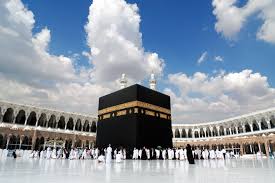
My Lord, I come to Your door as a beggar complete indigence, bringing only my humility and shame. A beggar who has neither a joli nor a begging-bowl.A beggar slain by his desires and cravings. Having squandered the treasure of Deen and intellect at the hands of the ego; Having sacrificed contentment of heart at the altar of lust and pleasure.
Losing my wealth in the quick-sand of heedlessness and sin. I have come to seek refuge under the covering of your Kaabah. Through the stains of sin the heart’s world is suffering. Aspirations are weak, the will broken and hope is dead. From whence should I find the strength to express the heart truly?
For in this snare have I passed every moment of my life. In short, having been burnt at the stake of my own ill-deeds. In abject poverty due to the evil of my state. To you have I brought my ill-stricken fate. Empty-handed of any deed befitting your House.
This House of yours, which is your court of Love and Grace, O Lord Tis wholly Light and the repository of all Lights O Lord Being completely ignorant of the manners of your Doorstep. A beggar knowing not how to beg. My tongue fails to convey my heart’s feeling. O Lord, have mercy on this wordless speech! These eyes are dry, O Lord, knowing not how to weep Festering spots in the heart that can’t be cleansed out. O my Lord I have come to your door as a beggar wholly indigent, in abject humility and full of shame.
By Shaykh-ul-Hadīth, Hadrat Mawlānā Muhammad Saleem Dhorat hafizahullāh
Once, I was reading an article wherein the author had stated that from among all the favours of Allāh ta‘ālā, for every one of them there can possibly be something that may substitute it, to some extent if not fully, apart from the favour of time, for once passed, no amount of effort can bring it back neither can anything substitute it. Take the example of the favour of sight. When lost, its restoration is not totally inconceivable. Even in the state of blindness, perception, to some extent, is possible with the help of other physical senses.
So a bounty whose value excels that of others in every respect deserves to be expended carefully and in worthwhile activities. Yet we witness that carelessness shown by people in the bounty of time is more than in any other favour of Allāh ta‘ālā.
Every moment that passes by takes away a portion of our lives. The more we grow in age the less becomes our expectancy of living further in this world. Time is the only possession of this life, which decreases constantly and with precise regularity, yet in a very unnoticeable manner.
An Urdu poet has stated that the passing of time in every man’s life is as quiet and (yet) as certain as the melting of ice.
So it is of extreme importance that we utilise our time in fruitful and rewarding pursuits and not waste it away as we usually tend to do. Let us learn to value time in the forthcoming holidays, and then, if Allāh ta‘ālā wills, we will gradually become accustomed to it and maintain the attitude throughout the year.
The easiest method of preventing yourself from wasting time as well as gaining most from it is to prepare a timetable for yourself. This is not dissimilar to making a budget in the domain of economics. If one wishes to increase in one’s savings one will have to make a budget, thereby defining the limits of expenditure. On the contrary, if a person walks around with his entire income in his pocket, without any allocation of money, and continues to spend as the need arises, far from saving up any further, he will end up resorting to and depleting the original savings. So as we manage our finances for economical reasons so should we manage our time and maintain the same economical attitude here too.
Now as far as wasting time is concerned, there isn’t obviously a single way to do that. People will naturally waste time according to their respective inclinations or dispositions. Some may resort to completely meaningless activities and others may prefer to just sit idle and laze around. Moreover, some may become victims of overindulgence or fall a prey to perpetual self-satisfaction. Whichever the case, what is important to remember here is that the worst form of wasting time is to indulge in sinning and displeasing Allāh ta‘ālā. The displeasure of Allāh ta‘ālā is caused by the mere wasting of time too, but sinning will call for His extreme anger and invite His wrath. This is another point, which we need to earnestly reflect upon. For some temporary enjoyment we readily sacrifice our eternal abode of pleasure. For some trivial materialistic pleasure we are prepared to displease our Creator, the One Who has provided us with a vast array of bounties and different forms of lawful satisfaction of desires. Indeed He is the One Who has given us this very strength and capability which we are using to commit sins. How can we possibly displease Him?
My brothers, in reality, there is hardly any sacrifice in refraining from sins. Many of us feel that it is extremely difficult or almost impossible to abstain from sins. This is nothing but an illusion from Shaytān. Even the little discomfort we may experience in restraining ourselves from fulfilling unlawful desires is caused by Shaytān. We should make a habit of keeping ourselves aloof from all sinful areas. It would be difficult to control and subdue the desires once having slipped. For instance, one should always keep one’s gaze down when walking the streets, as it would be difficult to avert the gaze once it falls on the opposite gender. According to a Hadīth, the gaze is a poisonous arrow from among the arrows of Shaytān. One who safeguards his eyes only due to the fear of Allāh, (far from being painful) he will find the sweetness of Īmān in his heart. (At-Targhīb)
To conclude, I would like to emphasise that in the coming holidays, and afterwards, we should manage our time and desist from wasting it, and in particular, refrain from committing sins and thereby displeasing Allāh ta‘ālā.
(Extracted from ‘Time – A Valuable Asset’ published by the Islāmic Da‘wah Academy)
• Please forward this message on to all your contacts•