Categories
Spirituality

Watch YOUR Words!

بسم الله الرحمن الرحيم

Manner of Advising

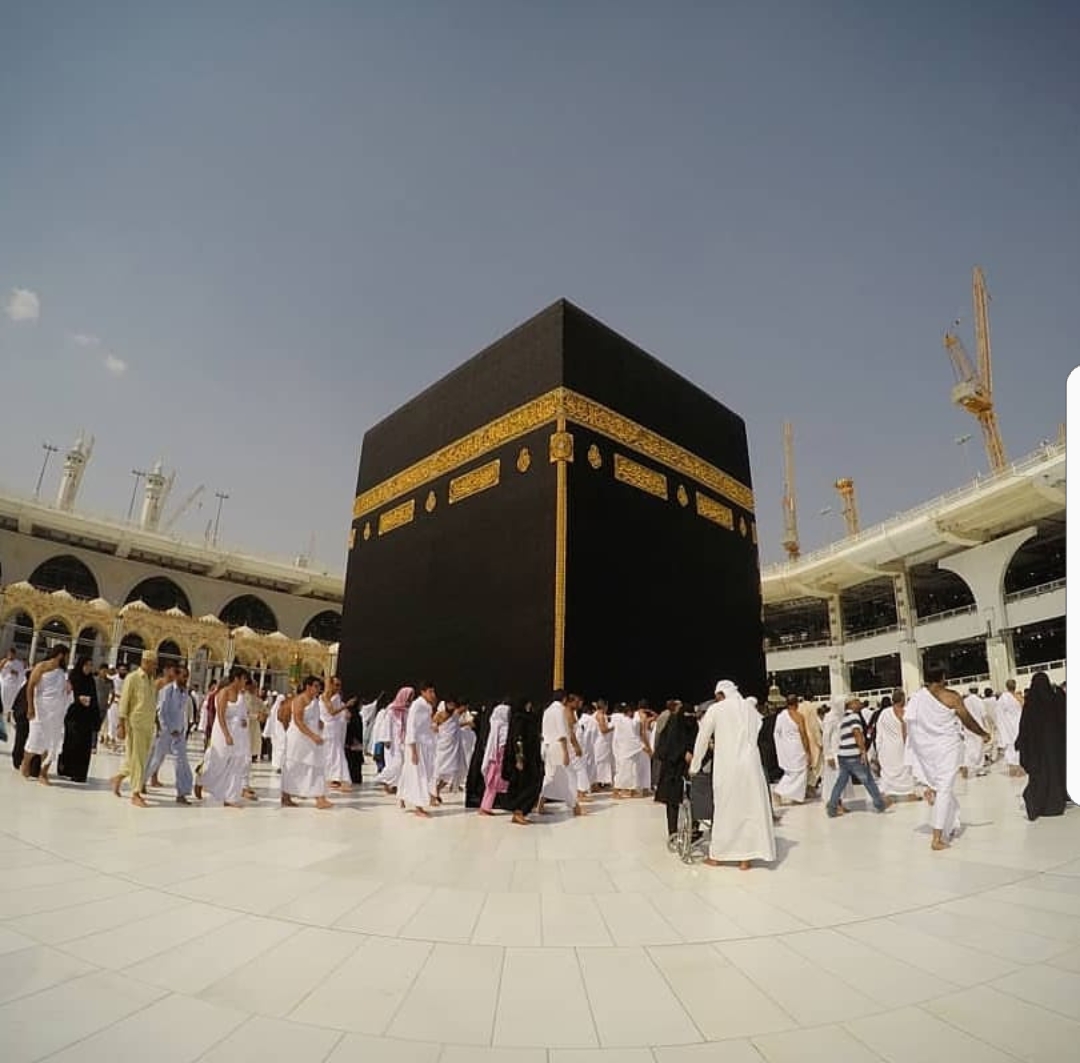
The Messenger of Allah (sal Allahu alaihi wa sallam) said: “O Umar! You are a strong person. Do not jostle through the crowds to reach the black stone lest you injure the weak. If you find an opening, then touch it, otherwise, simply face it and utter Tahleel and Takbeer (laa ilaaha illallaah and Allaahu akbar).” [Musnad Ahmad]IMG_9831

On one occasion the Prophet (sal Allahu alaihi was a sallam) noticed that Umar (radi Allahu anhu) was making Tawaf around the Kaabah and as he wished to touch the black stone, he jostled through the crowds and kissed it. Umar (radi Allahu anhu) was very muscular and strong and on his way to the black stone he could have harmed someone. The Prophet (sal Allahu alaihi wa sallam) wanted to advise him in this regard, so in order to mentally prepare him for advice he started by saying, “O Umar, you are a strong person.” Umar (radi Allahu anhu) became pleased upon hearing this. The Prophet (sal Allahu alaihi wa sallam) then said, “Do not jostle through the crowds to reach the black stone.”

There was once a king who saw in a dream that all his teeth had fallen out. He called a dream-interpreter, told him what he had seen, and asked him to interpret it.

When the interpreter heard the dream his complexion changed and he began to repeat, “Allah’s refuge is sought! Allah’s refuge is sought!” The king became worried and asked, “What is the interpretation of my dream?” The interpreter said, “After many years pass, your wife and children will die and you will be all alone in your kingdom!”

The king screamed, became furious, and began to hurl abuses and insults. He then ordered that the interpreter is imprisoned and called for another interpreter. He again related to him what he had seen in his dream and asked him for the interpretation.

The dream interpreter smiled and said, “Glad tidings dear king!” The king said, “What is the interpretation of the dream?” The interpreter said, “It means that you will live for very long – so long that you will be the last of your family to die, and you will remain a king your entire life.”

The king became very pleased, showered him with gifts, and remained content with him whilst angry with the first dream-interpreter. In reality, both interpretations were the same, the difference was in the way in which the interpretation was conveyed.

A man’s flesh is not fit for eating nor is his skin fit for clothing – there is nothing in him except the sweetness of his tongue.


Anonymous

Rabiul Awwal 1440

Categories
Shaykh Saleem Dhorat

The Best Garment

بسم الله الرحمن الرحيم

By Shaykh-ul-Hadīth, Hadrat Mawlānā Muhammad Saleem Dhorat hafizahullāh

Blessing of Clothing

The great Muhaddith, ‘Allāmah An-Nawawī rahimahullāh, in his masterpiece Riyād-us-Sālihīn, begins the discussion on clothing with the following verses of the Glorious Qur’ān:

O children of Ādam! We have sent down to you the dress that covers your shame and provides adornment. As for the dress of taqwā [piety] that is the best. (7:26)

… And made for you garments that protect you from heat, and garments that protect you in your battles. (16:81)

We learn two very important lessons about clothing from these verses of the Qur’ān. The first lesson is that clothes are a blessing from Allāh ta‘ālā. Commenting on the phrase, “We have sent down to you”, the commentators of the Qur’ān have stated that clothes are a blessing from Allāh ta‘ālā as the sources from which clothing is produced, e.g. cotton, are created by Allāh ta‘ālā and man has no role to play in the creation of the source. Likewise, clothes are a blessing from Allāh ta‘ālā because it is Allāh ta‘ālā alone who inspires us with the ability and imagination to utilise these resources to manufacture and produce clothing. 

Purpose of Clothing

The second lesson is that clothing serves three main purposes. The first purpose is to cover and conceal the ‘awrah. The ‘awrah is that portion of the body which should not be revealed without a Shar‘ī necessity. Thus, we can imagine what a great bounty clothes are; for without clothes how would we be able to cover our ‘awrah and thus maintain our dignity and honour?

The second purpose is to protect the body from heat, cold and other physical harms. Hence, we have different types of clothes to match different climates and also for different activities. For example, we have specially designed wear such as armour and camouflage clothing that is used in unique circumstances such as wars, to protect the wearer.

To reflect our nature, Allāh ta‘ālā mentions a third purpose of clothing, that is to adorn and beautify. We can further understand these three purposes through an everyday example. A man can wear a sheet that will cover his ‘awrah which is sufficient to fulfil the minimum Shar‘ī requirement. However, rather than limit himself to this, he will also wear a jubbah (thobe) and a shawl, to not only safeguard his body but also make himself look more presentable. The masnūn du‘ā as related by Sayyidunā ‘Umar radhiyallāhu ‘anhu upon wearing new clothes highlights some of the above purposes:

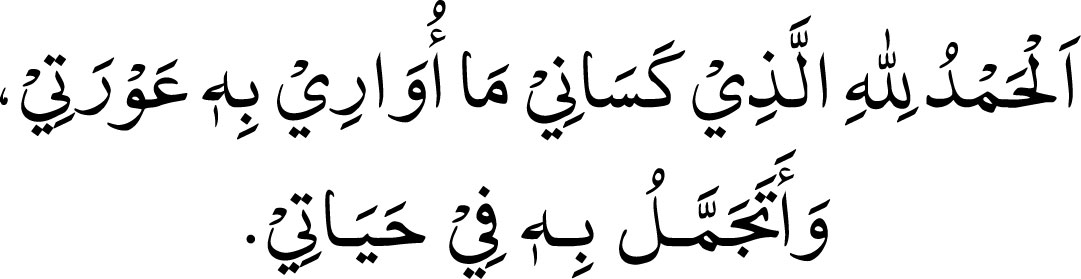
All praise is for Allāh who has dressed me in such clothing that covers my ‘awrah and which also aids me in my beautification. (At-Tirmidhī, Ibn Mājah)

Beautification is a Worthy Trait

Jamāl (beautification) is an action approved and indeed recommended by our Sharī‘ah. The Sīrah of Prophet sallallāhu ‘alayhi wasallam also teaches us to keep in mind beauty when clothing ourselves. In a hadīth we find the following narration:

Indeed, Allāh is beautiful and loves beauty. (Muslim)

Therefore, when dressing and adorning ourselves we should make the following intentions:

1) to acquire the Pleasure of Allāh ta‘ālā.

2) to follow the sunnah of Rasūlullāh sallallāhu ‘alayhi wasallam.

3) to please my near and dear ones, e.g. my spouse, my parents, my children. This is also a deed in itself liked by Allāh ta‘ālā, thereby increasing His Pleasure.

Due to his exalted taqwā and spiritual status, Hakīm-ul-Ummah Hadrat Mawlānā Ashraf ‘Alī Thānwī rahimahullāh was not inclined towards adornment. However, the renowned Shaykh would, keeping the third intention in mind, adorn himself in moderation and refrain from total abstinence.

Two Major Pitfalls

Whilst beautification is recommended by the Sharī‘ah, there are two major pitfalls that must be avoided. The first is an incorrect intention. To adorn oneself for show, pride, or to display exclusivity, are all intentions that must be avoided. Dressing with this in mind that ‘no one has the clothes I have’, or ‘no one looks or should look like me’, or ‘my clothes show that I am better than everyone else’, are all thoughts which reflect an incorrect intention and are not permitted. Hence, it is essential to constantly review and rectify our intentions in this regard.

The second pitfall is of extravagance. Extravagance is usually the consequence of a person’s incorrect intention to show off, to feel better than others and to display their greatness. There is a fine line between beautification and extravagance. Designer wear is a good example when trying to make this distinction. If we buy an item of clothing worth £25 for £100, only because it has a specific label, we should question ourselves ‘What is driving me to do this? If I can purchase the same product, of the same quality, for a much cheaper price, what am I paying the extra for?’ When we question ourselves in this way, it will expose the incorrect intention that we are spending to help satisfy our inner pride and desire to maintain our ‘status’ and ‘exclusivity’, leading to extravagance in spending.

Therefore, as Muslims we must ensure whilst adopting adornment and beautification that one remains within the limits of the Sharī‘ah, by reviewing the intention and abstaining from extravagance.

The Best Clothing

O children of Ādam! We have sent down to you the dress that covers your shame and provides adornment. As for the dress of taqwā [piety] that is the best. (7:26)

The verses of the Glorious Qur’ān also direct our attention to another form of dress, a type of garment which conceals, protects and beautifies the inner self. This garment, is the garment of taqwā and is essential for every person, for it is this garment that covers and subdues the radhā’il, i.e. those negative traits of the heart, such as pride and jealousy, which a person would be ashamed of and would not want others to see. Also, it is the garment of taqwā that helps a person adorn his inner self with the fadā’il, i.e. the praiseworthy traits of the heart, such a humility and generosity, which beautify a person’s character. It is the garment of taqwā which also provides a person protection from all the trials of this world and the Hereafter.

Therefore, it is the ‘Libās-ut-Taqwā’ (the dress of taqwā) which is the greatest garment a person can adorn. The Glorious Qur’ān reminds us of this by using the phrase ‘that is the best.’  The outer appearance may temporarily deceive the onlooker, however ultimately the great beauty or ugly nature that lies within will be revealed. We experience this in our day to day lives. A person may be wearing the most striking of clothes but if the inner self is not adorned then, despite the initial positive impression, upon interaction we find the person unappealing.

True concealment, true protection, and true beauty in this world and more importantly in the Hereafter is only achieved when the inner self is ‘dressed’ with the clothing of taqwā. Therefore, whilst continuing to use the blessing of clothes to beautify our appearance, we should give more attention to the beautification of the inner self. 

May Allāh ta‘ālā grant us the tawfīq to use the blessing of clothes in a manner which acquires His Pleasure and to adorn ourselves with the best of clothes, taqwā. Āmīn. 

© Riyādul Jannah (Vol. 29 No. 10, Oct 2017)

Categories
Marriage

Love Notes – Part 1

Love Notes –  Shaykh Yahya Ibrahim, Australia

بسم الله الرحمن الرحيم

love notes

  • A study looked at Muslim couples who get divorced:
  • Shaykh mentioned 68% of couples in the UK will divorce in the first 3 years of marriage.
    ○ Most of those who got divorced are educated
    ○ Many of them had the kind of jobs, where they intervene to defuse conflict
    ● The intent of the course is to speak about love to Muslims from a philosophical perspective
    ● We will talk about what makes you, you?
    ○ What does Islam offer, to make you the best of you
    ● Look at the words that are used to describe marriage and love in Islam
    ○ Imam Ibn Hazm coined the word soul mate – the first time westerners saw that a soul can love another soul

○ Imam Ibn Qayim RH has a book called Rawdat Al Muhibeen
○ Ibn Ul Jawzi RH – Said if a man does not know how to love, he should eat hay, because he’s a donkey
○ Muslims saw that we should cling onto one another and love one another so we can become khulafah on the earth → so that children can receive the earth in a way that is better than the way that we received it, that is the concept of khulafah
● There is no book of hadith that does not mention the love between the Prophet SAW and his wives
○ The year that Khadijah RA died, became the year of sadness
○ The Prophet SAW is a role model
● What the poster doesn’t show
○ Doesn’t show what’s behind them
● When the Prophet SAW talks about marriage, he says it’s half of your deen
○ You actualize a lot of the characteristics of Islam during your relationship with your spouse
○ The money that a man spends on his family is “sadaqah” [Muslim]

  • When you say the shahadah, it has conditions,
    ○ You begin to learn the importance of Allah when you gather knowledge [ilm]
    ○ The second step is [yaqeen] certainty
    ○ That leads you to [inqiyad] submission, which leads you to practice, in the way that Allah swt requested
    ○ Number 5 is [sidq] to be more truthful with Allah swt
    ○ and that leads you to [Ikhlas], having enough, other than Allah, put all my trust to
    ○ Last level, is love [hob] → you begin loving Allah too much to miss prayer.
    ● Love is the last level of worship, and some people worship things that they should, Allah doesn’t say worship he says love “yohiboonahu ka hob illah”
  • ‘Uboodiya (worship) → anything Allah loves for you to do, whether it is a word you say, an action you do, or a feeling in your heart
    ● We are not here just to talk about romance, we are here to talk about love, loving your dad, your mom, your country.

Definitions

● The origin for the word “husband” or “spouse” is very different in English and Qur’anic Arabic
● Husbandry: “convincing a bull to sire a cow”
● Other words for “spouse” in the Quran
زَ وج ■
● [2:35]
● two distinct, unique individuals that upon joining, become one so you don’t see the seam between them.
ِلبَاس ■
● [2:187]
● your inner intimate garment is called libas; nobody is as close to you as that garment
● “libas ul harb” the armour of war, she is the shield from the dunya
َصا ِحبَة ■
● 42 words for love in the Arabic language
● Sahib: the one that walks with you for life

ن
قُ رةَ أَ ْعُي
● [25:74]
● “fills the eyes of your husband”
● “there is no provision greater than that of a righteous woman. She is a women that when a husband sees her, he feels happiness in the heart” [Muslim]
ِحصن ■
● She’s your fortress, palace, castle
● You are the moat that surrounds her
بَعِلي ■
● [11:72]
● “My spring/fountain of all good”
● He is the one that showers me with good, with his words, his wealth, etc
● That is how Sarah describes Ibrahim (AS)
● He created the heavens and earth in truth. He wraps the night over the day and wraps the day over the night and has subjected the sun and the moon, each running [its course] for a specified term. Unquestionably, He is the Exalted in Might, the Perpetual Forgiver. He created you from one soul. Then He made from it its mate… [39:5-6]
○ When Allah talks about all these dualities (heavens/earth, night/day, sun/moon), He inserts one singularity: one soul.
○ when you get married, you’re two separate entities that come together from one pairing

So exalted is Allah when you reach the evening and when you reach the morning. And
to Him is [due all] praise throughout the heavens and the earth. And [exalted is He] at
night and when you are at noon. He brings the living out of the dead and brings the
dead out of the living and brings to life the earth after its lifelessness. And thus will you
be brought out. And of His signs is that He created you from dust; then, suddenly you
were human beings dispersing [throughout the earth]. And of His signs is that He
created for you from yourselves mates that you may find tranquillity in them; and He
placed between you affection and mercy. Indeed in that are signs for a people who give thought. And of His signs is the creation of the heavens and the earth and the
diversity of your languages and your colours. Indeed, in that are signs for those of
knowledge.
Surah Rum [30:17-22]

– He speaks about light and day – He speaks about the lifeless earth coming back to life and thriving with vegetation – Then he talks about the soul vs dust – And in the middle of all these he talks about the relationship in partners, and it is no longer about the dualities, it is about the singularity

→ Someone from yourselves, mates He likes it to- “signs” His about talking by verse ends AND begins -إِ ن فِي َٰذَِل َك َلَيَا ت – saying, “pay attention” – Prophet (SAW) – when Adam was created, our souls were created “like ants” – there’s a moment where the soul is brought to life. you’re born into this life and your soul itself is not extinguishable – Prophet (SAW) (Hadith of Imam Bukhari) – The souls when they were created in the time of Adam, they were brought into groupings, and the souls became familiar with one another – A long essay is written about this hadith, and it says if there is a bright soul, and it enters into a room of 1000 dark souls, and one bright soul, that soul would attach itself to the other bright soul – souls gravitate to each other … or make you hate each other’s guts – The concept of soul mates for us isn’t just husband and wife – your bffs, your parents, your teachers – scent is powerful – sometimes you might smell something in the air, maybe Coco Chanel like grandma wore…sometimes it really takes you back to a certain time in your life – Your soul remembers people, just like your scent does, and it brings warmness into your heart he said he ,(soul) روح the about asked was SAW Prophet the When – couldn’t say much that is in the knowledge of Allah and we don’t know much about it – Sometimes our soul pushes back people we should be attracted to, and that is because we need to purify our soul effort requires purification – قد أفلح من زكاها – – we attempt to connect with people for marriage and on paper they seem like reasonable candidates…but at that moment when you push back someone who is good, his soul might be too clean, and your soul might be a bit tarnished – your soul might not be accessible to that righteous man/women Good the with up matched usually is Good The – الطيبون لطيبات –

When you are looking for marriage – you need to make sure your soul is accessible to pious souls – don’t always put it on the other person

Quranic Stories about Spouses

The Qur’an is a holistic document that outlines a lifestyle for us. There are many lessons and examples for us to draw from.
Adam (AS)
○ He asks for a “sahibah”, someone with him
○ Jannah is not enough. You need someone who loves you
■ Even the shaheed, looks behind and Allah gives him the news of them joining you
○ Allah creates for him and blesses him with his wife Hawa’
○ Allah tells Adam (AS) to not eat from the tree as Iblees is an enemy to you and Hawa [20:117]
■ (according to hadith, the greatest thing that the little shayateen can do to make Iblis happy is to convince a man and his wife to split up)
○ Iblis wanted to uncover the blessing that Allah SWT gave Adam, and expose their bad
○ Responsibility for the sin is greater on Adam (AS) (very different from other scriptures)
■ [20:121]
○ Adam AS and Hawa RA were separated when they descended to Earth
■ Jeddah got its name from Jaddah, the Arabic word for grandmother. It is where Hawa’ is believed to have descended
■ Adam AS ‘arafa-ha, or, “recognized her” a little before Maghrib and it is the same day we commemorate on ‘Arafa during Hajj
■ That is when Adam made that dua’a “Rabbana dhalamna anfusana…”
“Our Lord, we have wronged ourselves, and if You do not forgive us
and have mercy upon us, we will surely be among the losers.”
■ That dua’a and that moment of worship commemorates a moment of love that millions of people recreate on Yawm al ‘Arafa
■ Then they came together, and worshiped Allah SWT The first place that a person made sujood to Allah SWT was Adam, inside the fortified walls of the ka’abah.
Ayyoub (AS)

○ Lots of time people say, we should have patience/endurance like Ayoub (AS)
○ For the first 50 years of his life, Allah gave him prosperity
■ (he had 7 daughters and 7 sons, wealth, the people who he was sent to preach to accept him)
○ After 50 years of prosperity, Allah began to test him.
■ The earthquake made his house collapse and children all died at once;
■ All his servants were killed and wealth looted;
■ people thought he was a false prophet, because “why would God do this to a righteous prophet? he must be cursed.” everyone left his side;
■ His body became decayed and sickly
○ His wife stayed. This man who had everything, lost everything, except his wife
■ The woman who was a mistress of the house became a servant
■ People did not want to be near her as to not “catch her curse”
■ She would ask Ayoub to make dua’a to Allah, and Ayoub said “I am shy to ask Allah after 50 years of prosperity, to ask Allah for relief after only 4 years of hardship”
■ His wife came back with food and when he asked where it came from she pulled back her scarf (she had cut her hair and sold it for food)
○ After seeing his wife suffer, this man (AS) of patience made dua’a “My lord harm has touched me and my family, and you are the most merciful of those who show mercy”
■ It was as if Allah was just waiting for him to ask…
■ A spring gushed forth and Ayyub (AS) drank from the spring, and became young and has been given their life again and everything returned to him
■ The thing that moved Ayoub was love, it is that he loved his wife more than his own patience
○ The right of the servant is to be put before the right you owe Allah CIRCUMSTANTIALLY
■ If your wife (or mom or dad etc) falls sick, and you were going to hajj and your ihraam is on and your foot almost out the door, you stay.

→ The right your family member has on you is greater than that obligation to Allah
■ Abdullah Ibn Mubarak RH – Went for hajj and saw a dream of those who made hajj and their hajj was accepted. He saw the face of a man and where he lived
● Abdullah immediately went to see him. Upon meeting the man, he found that he had not made hajj! The man said that he was on his when he saw an impoverished man. He realized that he that the wealth he had planned to use to go
Love Notes By Sh Yahya Ibrahim 5 to hajj would be enough to get the man in need on his own two feet. So he gave it to him and made dua’a that he would get to go for Hajj later. THAT is the man that Abdullah saw with a shining face.
● Prophet Dawood (AS)
○ King of his time, had many wives
○ Looked over his marketplace and saw a beautiful woman. He asked if this woman is spoken for? They said no, but she is promised to the general.
■ for a moment Dawud (AS)’s heart thought “if that man becomes Shaheed… Allah give him Jannah” lol
○ (In Surah Saad)
■ Allah sent two men (really angels) that jump in front of him and he reels back. One of them says “don’t be scared, we are two men that are quarrelling. He has 99 sheep and I have 1 (representing blessings), and he keeps desiring my 1 sheep to complete his 1 00.
■ Dawud says, he has wronged you to even suggest that he should give you your sheep.
■ Then it clicked in his mind that it was a test from Allah! It was a message indicating that he (AS) have been blessed with so much, and that generally is the one who has that one sheep…so Dawud (AS) fell in prostration
○ The stories of the Quran are full of love and passion
Nuh (AS)
○ Imagine you are some sheikh, and you are on the pulpit for Juma’a and you are telling it as it is…Then your wife walks out and says “It’s all nonsense! He is making it all up!” Your son is sitting there and saying, “PSHHH, don’t listen to this guy. He knows nothing.” (People would be like, when your family believes, then come talk to me lol”)
○ Your wife and your son become adversaries and they become leaders of those who disbelieve
○ Imagine that is you, just a sheikh – Imagine being the Prophet of Allah
○ Nuh AS never gives up
○ Nuh is on a ship on land that has been experiencing a drought for years and people are looking at him like he is crazy – until Allah swt orders the sky to let down its rain, and the sky gushes until the waves become the size of mountains
■ And Nuh asks his son, belief in God so I can let you on the ship, his son says, I don’t believe in you or your god or your ship, I’ll go up to that mountain and it will protect me from the waters
■ So he says, my son, none will be protected except those that are on this ship, and then he refuses and he becomes one of those who drowned
■ Nuh says to Allah “When you promise, it is true, you said you would save me and my family, he is part of me and he drowned” so Allah said, “he is not your family, forget him”
● The illegitimate is not to be loved, Allah will always get you out of those drowning waters and until the last moments Allah will provide you what is good – but he will never make the illegitimate, legitimate
● What makes you and I who we are? Why are the stories of the messengers something that still resonates with us?
○ Part 1: Jasad – 70% of us is water, 30% is organic
■ The difference between us and pigs is less than 1% (genetically speaking)
■ In the Quran: Those who know God, but do not accept God are like Cattle
○ Part 2: Mind
■ Rational being, we think and can anticipate what is happening
■ Allah has blessed the son of Adam with the mind, drugs and intoxicants are haram because they take away the mind
■ Don’t think that animals do not have emotions and feelings too
■ Sheikh plays this video
● Sometimes we think we are the only beings that actually matter
● Ibn Qayim writes 60 pages on Allah quoting the ant
○ Ant knows delegation & authority
○ Knows what is home & what isn’t
○ It knows name “Solomon”, and his troops (knows our functions)
○ And the ant makes an excuse (if they trample you then they don’t know)
○ Ibn Qayyim lists 11 types of language that the ant uses
■ Allah inspires the bees regarding how it can live its life
■ Don’t ever think that the world around you is meaningless, simple experiments show that there is so much more in the world that Allah created
■ They are a nation, just like you are a nation
○ Part 3: Soul
■ There are 3 components, and this 3rd part is what makes us insaan
■ The majesty of the soul lives in the heart – The heart is the throne of the soul
● The chest is what protects the heart
● Haritha (one of the sahabah) is walking and the Prophet SAW says how are you and he says I woke up a mu’min, Prophet SAW said why? He said when I pray it is if I see Allah but I do not see him; when I sin, I see the fire, but it is not
Love Notes By Sh Yahya Ibrahim 7 there; When I do good, I see Jannah, but I do not see it – So Prophet SAW touches his chest and he says you are a believer
● Hope, mercy, love of God is in your chest, it is important to keep that spirit true
● When Allah talks about Imaan he says Allah opened his chest to Imaan (that is the imagery given to us by Allah SWT)
● That is why the heart is so important to talk about love because the heart is what governs the rest of us
● When your heart is closer to Allah, it is easier to come closer to people à that is the beauty of the dua’ of Musa “’ishrahly sadry”, open my heart to people
● The premise of this class is to bring our hearts closer to Allah so that we can come close to his servants
■ The 3 levels are ascending levels
■ Islam also has 3 levels, Islam, Ihsan and Iman; Each of those 3 levels matches our 3 parts
● Islam (Jasad) – You must physically say the words of the shahadah, pray, fast, do Hajj, and give zakat, Islam matches the physicalness of you jasad
● Imaan (Akl) – Matches your mind, the 6 articles of faith cannot be qualified/rationalized, but they are believed. Iman came to subdue the rationale that pulls you away from Allah
● Ihsan (Ruh) – Even though you cannot see Allah in life, your heart is always aware of Allah. Everything you witness in life connects you to Allah
○ Imam Sufyan al Thawri is walking out of the masjid, and a man begins to abuse him, his students try to stop him, he says no leave him and he says “I know the sin that I did that brought this upon me”
○ Imam Sufyan RH would give his students 3 rules when teaching them:
■ Correct what is between you and Allah, and he will help you correct what is between you and mankind
■ Fix what is between you and Allah privately, he will make your public good with others
■ Remember Allah when you don’t need him, and he will know you when you need him
○ There are angels whose job is to catch our hadith (dua’a) and throw it back at us because it is not worthy of ascending – hadith of the Prophet SAW armour.

Categories
Ruqya

Jinn Aashiq – A Lustful Demon! 

PHOTO-2018-11-05-10-15-25 (1)
بسم الله الرحمن الرحيم

The Jinn, in general, are a creation of Allah (ﷻ), and their origin is mentioned in several verses of the Quran.

Allah (ﷻ) says:

❝And the Jinn he created from a smokeless flame of fire.❞

[Ar-Rahman: 15]

❝And the Jinn We created before from scorching fire.❞

[Al-Hijr: 27]

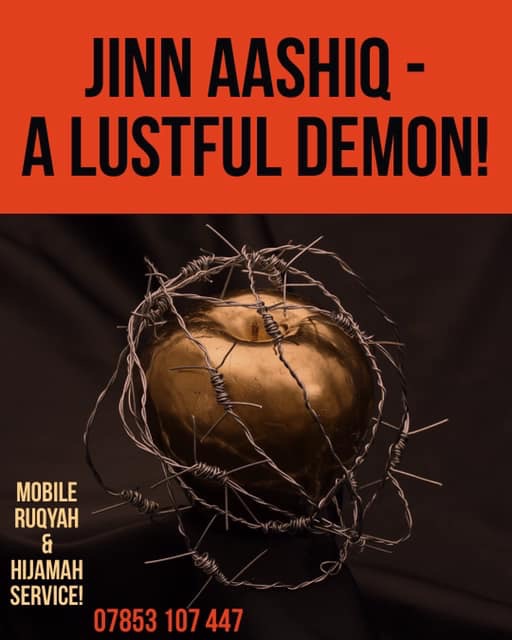
❝A Jinn Aashiq❞ is a Jinn that is settled in the body and exploits the victim in a lewd and offensive manner.

This is a form of oppression which should be eliminated by using methods of Ruqyah prescribed in the Islamic Shari’ah.

Jinn Aashiq cases are usually complex and tangled.

However, even though this subject isn’t something new, many people have a lot of misunderstandings and misconceptions in regards to it.

Sheikh al-Islam Ibn Taymiyyah (ﺭﺣﻤﻪﺍﻟﻠﻪ) said;

❝The possession of man by Jinn can be out of sexual desire, evil notions or love just as can happen with humans. This is fahsha (immoral) and forbidden conduct, that is if the two agreed on the act. However, if the Jinn is acting on this out of his own will, it is oppression.❞

The one who’s committing this act must be informed of their actions and they will be judged according to Allah and His Messenger’s laws which were sent for man and jinn.

Shaykhul Islam Ibn Taymiyyah RH said taking pleasure of something or someone is to get what they want from the person as they wish or desire.

This falls under all types of pleasure.

But no oppression will go unpunished either in this world or the next as Allah (SWT) says in the Qur’an:

❝And mention (O Muhammad), the Day when He will gather them and say, ❝O company of Jinn! You have (misled) many of mankind.❞

And their allies among mankind will say, ❝Our Lord! Some of us made use of others, and we have (now) reached our term which You appointed for us.❞

He will say; ❝The Fire is your residence wherein you will abide eternally, except for what Allah wills. Indeed, Your Lord is Wise and Knowing.❞

There are many different types of JINN AASHIQ in terms of character, look, strength etc.

There are some who possess a person and feel the emotions as us humans feel towards someone such as love, care and the need to protect towards the victim they possess.

Some, on the other hand, show a more sinister type of emotions such as possessiveness, and ❝enjoy❞ the body as though they own it by causing pain and many complex physical and psychological problems.

Either way, Jinn Aashiq can cause the victim immense difficulties and complications in their lives, relationships, and their physical and mental well-being.

People could be afflicted with these types of Jinns for various reasons.

Categories
Ruqya

EVIL EYE AND ENVY(AYN & HASAD)

PHOTO-2018-11-05-10-15-26.jpg
بسم الله الرحمن الرحيم

⚫ THE CONCEPT OF THE EVIL EYE (AYN)

A person who afflicts others by the evil eye is known as ❝Al-Aa’in❞ and a person affected by the evil eye is called ❝Al-Ma’yoon.❞

Imam ibn Al Qayyim (ﺭﺣﻤﻪﺍﻟﻠﻪ) said in his book Zaad al Ma’ad:

❝It is the arrow that is taken out from the soul of the envious individual, the one who causes the affliction of the evil eye, and then it is fired upon the subject of the evil eye. This individual can be affected sometimes and manage to escape it at other times.

If one encounters this and is exposed to it then there will be no protection from its effect, however, it then becomes imperative if one encounters this to take care and prepare themselves with the best defence and not allow it to be implanted upon them.

It is in this manner that a person can protect themselves from the envious individual and not be affected by them. Sometimes these arrows return to the one to whom they belong and this archery makes the envious individual feel the same negativity in his life as the negativity he tried to push on the subject.❞

Allah (ﷻ) says:

❝And indeed, those who disbelieve would almost make you slip with their eyes when they hear the message and they say; ‘Indeed, he is mad.’❞ 

[Al-Qalam: 51]

Imam ibn Katheer (ﺭﺣﻤﻪﺍﻟﻠﻪ) uses this verse as evidence to show that the evil eye is real and that it has the ability to affect people since Allah (ﷻ) mentions ‘those who disbelieve would almost make you slip with their eyes when they hear the message.‘

An incident which is narrated from the time of Prophet Muhammad (ﷺ) saw the Quraish ask some people who were known to give the evil eye to another person which could cause illness, death or some other effect to put it on the Prophet (ﷺ).

However, Allah (ﷻ) protected the Prophet Muhammad (ﷺ) from those who were intent on destroying him with Ayn.

Imam ibnul Qayyim (ﺭﺣﻤﻪﺍﻟﻠﻪ) mentioned in his book Zaad al Ma’ad that some people have denied the effects of Ayn; he describes these people as arrogant with no knowledge.

According to some scholars, the concept of affecting a person with the evil eye (Ayn) can be likened to the effect when a person walks into a room and they feel embarrassment or shyness due to people looking at them, perhaps causing the face to change colour.

Another example could be when someone sees someone they fear and they become pale in the face.

Imam ibnul Qayyim (ﺭﺣﻤﻪﺍﻟﻠﻪ) describes it as a physical or spiritual effect that leaves the eye and affects the human being.

⚫ THE DIFFERENT TYPES OF EVIL EYE (AYN)

There are different types of Evil Eye which a person can become afflicted with. They are:

‎(العين) Ayn – The eye from someone who may love or know you and not have evil intentions towards you.

‎(الحســـد) Hasad – The envious eye from someone who hates or dislikes you or something you have but wants it removed from you.

‎(النفس) Nafs – The admiring eye which a person can put on themselves.

‎(النظرة) Nathara – The evil eye which comes from the Jinn.

Evidence for the different types of Evil Eye (Ayn)

The Prophet (ﷺ) said:

❝The evil eye is real and if anything were to overtake Qadr (divine decree), it would have been the evil eye.❞ 

This alludes to the speed of the evil eye and expresses that if anything was to overtake the decree of Allah (ﷻ) it would have been the evil eye, i.e. in its speed.

▪Hasad

Iblees envied Adam (عليه السلام) as he disliked his creation and the fact he was ordered to prostrate to him. He thought he was better because he was made from fire and Adam (عليه السلام) was created from clay.

Therefore it was only envy which pushed iblees to transgress and disobey the order of Allah (ﷻ).

▪Nafs

The Prophet (ﷺ) said; ❝Whoever among you sees something in himself or in his possessions or in his brother that he likes, let him pray for blessings for it because the evil eye is real.❞

[Narrated by Ibn al-Sunni, ]

▪Nathara

This originates from the evil eye of a Jinn.

The evidence for this is the narration of Umm Salamah (رضي الله عنها) who said the Prophet (ﷺ) saw in her house a slave girl with discolouration on her face so he (ﷺ) said: ❝Perform Ruqyah for her, for she has been afflicted by the eye of a Jinn.❞

From the above, we see that the Evil eye can be given by a human or by a Jinn. It is also known that animals can give the evil eye too when they look at something.

There are many stories and encounters concerning this and Allah (ﷻ) knows best.

⚫ EVIDENCE FOR THE EXISTENCE OF ENVY (HASAD)

Allah (ﷻ) says:

❝Many of the people of the Scripture (Jews and Christians) wish if they could turn you away as disbelievers after you have believed out of envy from their own selves, even after the truth has become manifest unto them (i.e that Muhammad (ﷺ) is Allah’s Messenger).❞

[Al-Baqarah: 109]

Allah (ﷻ) also says: ❝Or do they envy people (i.e. Prophet Muhammad (ﷺ) and his followers) for what Allah has given them of His bounty? But we had already given the family of Ibraheem the Scripture and wisdom and conferred upon them a great kingdom.❞ [An-Nisa: 54]

Allah (ﷻ) also says:

❝And from the evil of the envier when he envies.❞ (Al-Falaq: 5)

⚫ THE SIMILARITIES AND DIFFERENCES BETWEEN THE EVIL EYE AND ENVY.

The Evil eye (in Arabic: Ayn, in Urdu: Nathara) is an illness which some people (not everyone) carry.

It entails looking at a blessing that someone has within themselves or from that which they possess from worldly possessions with amazement or liking it. This then leads to dwelling on the matter, continually looking at the person who has the thing which he feels jealous towards and subsequently leading to an attack described as rays emitting from a person’s eyes (and their soul) and subsequently affecting him physically/mentally causing him to become ill. One doesn’t need to physically look at someone to give them the evil eye, even a blind person can give the evil eye. One can even give the evil eye merely by listening to the description of a person’s blessings.

[Zaad Al Ma’ad: volume 4 page 149]

The evil eye is like an arrow which comes from the soul of the one who envies the one who is envied and on whom the evil eye is put; sometimes it hits him and sometimes it misses.

If the target is exposed and unprotected it will affect him but if the target is cautious and armed the arrow will have no effect and may even come back on the one who launched it.

[Extracted from Zaad Al Ma’ad]

According to Shaykh Khalid Al-Hibshi (حفظه الله) it is something evil that comes out of the soul and then attacks the person.

Allah (ﷻ) himself commanded the Prophet Muhammad (ﷺ) to seek refuge with Him from the envier.

He (ﷻ) said (interpretation of the meaning):

❝And from the evil of the envier when he envies.❞

(Al-Falaq: 5)

Allah (ﷻ) says in another verse (interpretation of the meaning):

❝And verily those who disbelieve would almost make you slip with their eyes (through hatred).❞

(Al-Qalam: 51)

In a Hadith narrated by Abdullah ibn Abbas (رضي الله عنه), it says;

❝A’odhu bi kalimaat-Illaah it-taamah min kulli shaytaanin wa haammah wa min kulli a’ynin laammah (I seek refuge in the perfect words of Allah, from every devil and vermin and from every envious eye).❞

[Bukhari – 3191]

The meaning of ❝vermin❞ (haammah) is lethally poisonous animals and insects.

The meaning of ❝envious❞ (laammah) is that which causes harm because of jealousy (i.e hasad).

The word ❝Haasid❞ (envier) is more general in meaning than the word Ayn (one who puts the evil eye on another).

The scholars disagreed over whether or not the evil eye is restricted only to jealousy, whilst agreeing that not every jealous person gives the evil eye.

The difference of opinion follows:

1• One group said; ❝Everyone who gives the evil eye is jealous but not every jealous person gives the evil eye.❞ This is the Fatwa of the Permanent Committee for Research and Ifta’ in Saudi Arabia.

2• Another group said: ❝Not everyone who gives the evil eye is jealous and not every jealous person gives the evil eye.❞

This is the opinion of a group of scholars.

The evidence for this is that Ayn can even be given to yourself, your own children and even when joking.

The evidence for this comes from the following Hadith:

❝Whoever among you sees something in himself or in his possessions or in his brother that he likes, let him pray for blessings for it because the evil eye is real.❞

[Ibn al-Sunni in A’mal al-Yawm wal-Laylah, page 168; Al-Haakim]

This Hadith explains that a person may harm himself, his wealth, his children, his wife etc by the evil eye.

⚫ EVIDENCE IN THE QUR’AN.

Allah (ﷻ) says:

❝Many of the People of the Scripture wish they could turn you back to disbelief after you have believed, out of envy from themselves even after the truth has become clear to them. So pardon and overlook until Allah delivers His command. Indeed, Allah is over all things competent.❞

[Al-Baqarah: 109]

❝Or do they envy people for what Allah has given them of His bounty? But we had already given the family of Abraham the Scripture and wisdom and conferred upon them a great kingdom.❞

[An-Nisa: 54]

❝And from the evil of the envier when he envies.❞

[Al-Falaq: 5)

Various steps leading to envy:

1• Enmity

2• Supremacy

3• Pride

4• Wonder

5• Fear

6• Love of authority

⚫ ENVY IS OF VARYING DEGREES.

1 – A person wants the blessing to be taken away from his Muslim brother/sister even if it does not come to him; rather he does not like Allah (ﷻ) to bless anyone else as that upsets him/her.

This person may actively work to remove the bounty from another person without necessarily destroying the bounty itself.

He may do this with his speech or actions and may do whatever it takes to bring an end to the blessing from the envied person.

2 – Where a person wants a blessing to be taken away from someone else because he hopes that it will come to him. This person does not just seek to remove that bounty from another person but also works to get the bounty for himself.

3 – Where he wishes for himself a blessing like that which someone else has without wanting it to be taken away from the other person.

This is permissible and is not called hasad rather it is called ❝Ghibtah❞ (envy that is free from malice).

The worst are those who simply wish to destroy the bounty regardless of whether they themselves get it or if it is simply destroyed. They only want to destroy that blessing because it was not given to them in the first place. Then there are those who cannot remove the feeling of envy from their souls. They cannot control it but they do not like it and they wish they could remove it from themselves. Those people, Allah willing, are not sinful for their state that they cannot control. People who have Hasad sometimes don’t know that they have hate towards others. They are in denial to themselves but their actions and speech are obvious to others.

Hasad (Envy) needs to be rectified by a person looking into their soul.

Umar (رضي الله عنه) said;

❝Bring yourselves to account before you are brought to account. Don’t become superstitious or paranoid but get in touch with your soul and purify it as the soul is the doorway to your heart. The soul and heart are interconnected with each other, therefore if one is corrupted the other will be corrupted. The soul is like a child that wants to indulge in pleasure all the time. Your brain tells the soul what’s right and wrong. The heart feeds off whatever the soul indulges in and gets affected by whatever the brain tells it to do. Once a person taps into this then he becomes someone who is in control. Hasad (destructive jealousy) causes a great deal of harm in this world and in the Hereafter.❞

Narrated from Az-Zubayr ibn al-A’waam (رضي الله عنه),

The Prophet (ﷺ) said:

❝There has come to you a disease of the nations before you, jealousy and hatred. This is the ‘shaver’ (destroyer); I do not say that it shaves hair but that it shaves (i.e destroys) faith. By the One in Whose Hand is my soul, you will not enter Paradise until you believe and you will not believe until you love one another. Shall I not tell you that which will strengthen the love between you? Spread the greetings of peace amongst yourselves.❞

[Tirmidhi, 2434]

Concerning the meaning of the phrase ❝it shaves (destroys) faith❞,

At-Tayyibi (ﺭﺣﻤﻪﺍﻟﻠﻪ) said:

❝Hatred takes away faith like a razor takes away hair.❞

[Tuhfat al-Ahwadhi bi Sharh Jaami’ al-Tirmidhi]

Shaykh al-Islam Ibn Taymiyyah (ﺭﺣﻤﻪﺍﻟﻠﻪ) said in his book Amraad al-Quloob: (diseases of the Heart)

❝Whoever finds in himself any hasad towards another has to try to neutralise it by means of attaining taqwa (piety, the consciousness of Allah ﷻ) and Sabr (patience).

He should hate that the feeling of hasad is in himself. But the one who does wrong to his brother by word or deed will be punished for that.

However, the one who fears Allah (ﷻ) and is patient is not included among the wrongdoers and Allah (ﷻ) will benefit him through his taqwa.

Nobody is free from hasad, but the noble person hides it whilst the base person shows it.❞

A person will not be brought to account for whatever crosses his mind but he will be brought to account for what he says and does.

The Prophet (ﷺ) said:

❝Allah will forgive my nation for their mistakes, what they forget and what they are forced to do (through coercion).❞

[Bukhari – 2033]

The envious that doesn’t try to remove the envy from his own heart, there is a difference of opinion on whether this type of person is sinful or not.

According to Ibn Rajab (ﺭﺣﻤﻪﺍﻟﻠﻪ) those that remove hasad from their hearts, pray for the person whom they have hasad towards and tell others of their goodness, they remove the hasad so much so they begin to love the person and love that Allah (ﷻ) has bestowed them with this bounty.

These people are amongst the highest level of faith as they love for their brother what they love for themselves and this is what everyone should strive for.

⚫ HADITH RELATED TO THE EVIL EYE.

The Prophet (ﷺ) said:

❝The evil eye is real and if anything were to overtake Qadr (divine decree), it would have been the evil eye.❞

This alludes to the speed of the evil eye and expresses that if anything was to overtake the decree of Allah (ﷻ) it would have been the evil eye, i.e. in its speed.

Narrated from Abdullah Ibn Abbas (رضي الله عنه), he said;

The Messenger of Allah (ﷺ) said:

❝The evil eye is real and can bring down a person from a high mountain.❞ 

[Sahih al Jami’ 4146]

What is meant here is that the evil eye follows a person by Allah (ﷻ)’s will until it causes him to fall from a mountain.

Another understanding is that Ayn is so powerful it could bring down the highest mountain. We must therefore really consider the effects it can have on the human body.

Narrated from Sahl ibn Haneef (رضي الله عنه) that the Prophet (ﷺ) came out and travelled with him towards Makkah until they were in the mountain pass of Al-Kharar in Al-Jahfah.

There Sahl ibn Haneef did ghusl (bathed), and he was a handsome white-skinned man with beautiful skin.

Amir ibn Rabee’ah, one of Banu Adiyy ibn K’ab looked at him whilst he was doing ghusl and said;

❝I have never seen such skin as beautiful as this, not even the skin of a virgin,❞ upon those words Sahl fell to the ground.

They went to the Messenger of Allah (ﷺ) and said;

❝O Messenger of Allah, can you do anything for Sahl because by Allah he cannot raise his head.❞ He said, ❝Do you accuse anyone with regard to him?❞ They said; ❝Amir ibn Rabee’ah looked at him.❞ So the Messenger of Allah (ﷺ) called Amir and rebuked him strongly.

He said; ❝Why would one of you kill his brother? If you see something that you like, then pray for blessings for him.❞ Then he said to him; ❝Wash yourself for him.❞ So he washed his face, hands, forearms, knees and the sides of his feet, and inside his izaar (lower garment) in the vessel.

Then that water was poured over him (i.e. Sahl) and a man poured it over his head and back from behind. He did that to him then Sahl got up and joined the people and there was nothing wrong with him.

[Ahmad, Malik, An-Nasai’ and Ibn Hibban. Classed as saheeh (authentic) by al-Albani in Al-Mishkat]

In another narration, the Prophet (ﷺ) came out and travelled towards Makkah, until they were in the mountain pass of Al-Kharaar in al-Jahfah.

There Sahl ibn Haneef did ghusl, and he was a handsome white-skinned man with beautiful skin. Aamir ibn Rabee’ah, one of Banu Adiyy ibn Ka’b looked at him whilst he was doing ghusl and said:

❝I have never seen such beautiful skin as this, not even the skin of a virgin,❞ thereupon Sahl fell to the ground.

They went to the Messenger of Allah (ﷺ) and said;

❝O Messenger of Allah, can you do anything for Sahl because by Allah he cannot raise his head.❞

He said, ❝Do you accuse anyone with regard to him?❞ They said, ❝Aamir ibn Rabee’ah looked at him.❞

So the Messenger of Allah (ﷺ) called Aamir and rebuked him strongly.

He said, ❝Why would one of you kill his brother? If you see something that you like, then pray for blessings for him (saying TabarakAllah)❞ Then he said to him, ❝Wash yourself for him.❞

So he (Aamir) washed his face, hands, forearms, knees and the sides of his feet and inside his izaar (lower garment) in the vessel.

Then that water was poured over him (Sahl, and a man poured it over his head and back from behind.

He did that to him then Sahl got up and joined the people, after which there was nothing wrong with him.

Narrated by Abdullah ibn Abbas (رضي الله عنه), Allah’s Messenger (ﷺ) said:

❝The influence of the evil eye is a fact. If anything were to precede the divine decree it would have been the influence of an evil eye. Therefore when you are asked to take a bath (as a cure) from the influence of the evil eye, you should take a bath.❞

[Sahih Muslim Hadith 5427]

Therefore the person who has been afflicted by Ayn should try to get the water of the person who has afflicted him and bathe with it.

Narrated by Umm Salaamah (رضي الله عنها)

The Prophet (ﷺ) once saw a young girl who had a certain expression on her face, so He said;

❝Seek an Islamic formula for her because she is touched by the evil eye.❞ 

[Bukhari]

⚫ THE EFFECTS OF THE EVIL EYE.

Shaikh Khalid Al-Hibshi (حفظه الله) says that Ayn has a tremendous amount of power. It has an influence in all areas of a person’s life, whether religious affairs, worldly affairs, as well as moral characteristics etc.

Some of the effects are summarised below:

• Effect on the minds: IQ, wit, memory, ability to focus, understanding and assimilation.

• Effect on the livelihood: Wealth, income, provisions etc.

• Effect on beauty: hair, face, skin colour, the body etc.

• Effect on religion: worship, humility, character, integrity etc.

• Effect on a person’s morality: modesty, truthfulness, courage, good characteristics etc.

• Effect on marital and family life: happiness, pregnancy, childbirth, miscarriages, raising and loving children, discord etc.

• Effect on ages: longevity, age relative to appearance, death, etc.

• Effect on the body: power, speed and activity, health and wellness, skills etc.

• Effect on livestock: camels, bringing down birds from the sky etc.

• Effects on nature: plants, trees and fruits, damage, burns, ripeness, shrivel and die etc.

• Effect on inanimate objects: cars, all kinds of devices, gold, women’s cosmetic application or products.

⚫ EVIDENCE FROM THE SUNNAH.

Narrated by the freed slave of Az-Zubayr (رضي الله عنه) he said the Messenger of Allah (ﷺ) said:

❝The disease of the nations who came before you has started to spread amongst you; jealousy and hatred. This is the ‘shaver’ (destroyer). I do not say that it shaves hair but rather that it shaves (destroys) faith. By the One in Whose Hand is my soul, you will not enter Paradise until you believe and you will not believe until you love one another. Shall I not tell you of that which will strengthen love between you? Spread the greetings of peace amongst yourselves.❞ 

[Tirmidhi]

Narrated by Abu Hurairah (رضي الله عنه) said:

The Messenger of Allah (ﷺ) said:

❝My nation will be stricken with the disease of the other nations.❞ 

They said: ❝What is the disease of the other nations?❞ 

He (ﷺ) said:

❝Insolence, arrogance, accumulation of wealth, competition in worldly gains, mutual hatred and envy until there will be wrongdoing and then killing.❞ 

⚫ SIGNS AND SYMPTOMS – EVIL EYE AND ENVY.

• Constant yawning without wanting sleep.

• Constant burping without eating.

• Symptoms increase when reading or listening to the Qur’an.

• Itching when the person afflicted carries out an act for which the evil eye has been given, For example, if the evil eye has been given because of a person’s wealth, they will start itching when they come into contact with money.

• The appearance of spots and boils on the body/face.

• Hot and cold flushes for no reason.

• Tight chested.

• Tiredness/Laziness.

• Insomnia.

• Waswasah. (constant whispering)

• Putting on weight without necessarily eating more.

• Cases of Cancer.

• Some cases of Psychological conditions such as delusion and fear.

• Forgetfulness and sleepiness while doing studying, reading Quran or going to school etc.

• Headaches.

• Allergies, rhinitis and sinusitis.

• Sneezing a lot for no reason.

• Cold/ flu.

• Hair Loss.

• Darkening under the eyes.

• Becoming pale.

• Permanent headaches.

• Spots under the skin.

• Pains at the mouth of the stomach which doctors cannot explain.

• The desire to get out of the house or hatred in staying indoors.

• The feeling of death and despair.

• Seeing dead people in your sleep, lizards or cats.

• To see people who have given you the evil eye looking at you in a strange and scary way.

• Physical ailments which doctors cannot explain and going from one problem to another.

• Seeing ants in the house.

• Children crying constantly for no reason.

And Ultimately Allah (ﷻ) knows best!

⚫  Explanation in detail about Evil Eye and Envy By Shaikh Khalid Al-Hibshi;

Part 1;

https://youtu.be/drAVQPaHE7k

Part 2;

https://youtu.be/FvUMk3hafEk

Categories
Current Affairs articles

In Pursuit of Happiness…

بسم الله الرحمن الرحيم

Allah says: “Know that the life of this world is but amusement and diversion and adornment and boasting to one another and competition in increase of wealth and children – like the example of a rain whose [resulting] plant growth pleases the tillers; then it dries and you see it turned yellow; then it becomes [scattered] debris. And in the Hereafter is severe punishment and forgiveness from Allāh and approval. And what is the worldly life except for the enjoyment of delusion.” ( Qur’an 57:20)

moneyHappiness or Money?

“Too many people spend money they haven’t earned, to buy things they don’t want, to impress people that they don’t like.”

I believe that money can’t buy you happiness. Sure, having a lot of money is a great thing and gets rid of the stress of financial insecurity. But real happiness can’t be bought by money. Thinking about life has led me to think about this popular belief and realise it’s completely true. Although being financially secure is one of the best things in the world, it won’t necessarily bring you happiness. Many people dream of being rich. They think of all the things they can buy with money such as big houses, fancy cars, and long vacations. People make it their goal to get into a good college to get a good job and make a lot of money. With financial security, people think they have more time to spend relaxing and being happy. There are so many success stories of people going from “rags to riches” and people try to follow their footsteps and do the same thing. Basically, we all get this idea that being rich is a great thing and it will guarantee happiness, but is it true? On the flip side, there are also people who have gone from millionaires (karor pati) to living off benefits (road pati).


As Muslims we are taught to rely on Allah SWT for our sustenance, Allah provides. Obviously, tie your camel then trust in Allah. I would like to narrate a passage from a lecture of an Imam from Madinah –  Shaykh Muhammad al-Mukhtar ash-Sinqitee (Allah preserve him): “The happiest of people is the one who addresses his complaints to Allah and not to his creation. The happiest of people is the one who puts his certainty in Allah and does not put his certainty in Zayd or Amr (i.e. people). If a person was in debt and your friend said I will talk to such and such a person he is wealthy. And your debt will be relieved very easily by that person. How certain will you be about your debt being settled and your hardship being removed?

But how about the King of Kings the One who has depositories of the Heavens and the Earth in His hand? How about the Most Generous, which the fullness of His Hand is not affected by the continuous spending, night and day. O Allah! Make our poorness to You, and our richness in You. Be rich in Allah, have trust in Allah. People turning away from you is indeed a blessing from Allah, He wants you to turn to Him.”

Abu Huraira (Allah be pleased with him) reported Allah’s Messenger (ﷺ) as saying:

“Many a people with dishevelled hair are driven away from the door (but they are so pious) that if they are to swear in the name of Allah, He would definitely fulfil that.” (Saheeh Muslim)

The happiest of people are the one who says, “Ya Rabb!” – and Allah answers his supplications. By Allah! Happiness is not in wealth; if it was in wealth, the happiest of the people would have been Qaroon, but he was amongst the most unfortunate and miserable of people, “And we caused the earth to swallow him and his home.” (28:81)

Wealth is not happiness and happiness is not when you ask people and they give you. True happiness is when Allah will open the doors of heaven for you, Allah make us from them. Ameen!

It was narrated from Abū Hurayrah (raḍiy Allāhu ʿanhu) that the Messenger of Allāh (sall Allāhu ʿalayhi wa sallam) used to tie a stone to his stomach because of hunger. (Ibnul Arabi in Mu’jam)

Money only makes a person want more money – it creates greed and thrives off the desire for more and more. I heard someone recently say regarding another person who has a fulfilling business that ‘he’s lazy and not enthusiastic’ simply because he has shown a level of contentment within his business and refuses to advance it further.

Why? Because, unlike many many others, by Allah, he has resisted that monetary lust and has sukoon/peace in the amount he has. And why was he called lazy? Because unfortunately, today, many people think that the successful and admirable one is he who is able to keep the revenue rolling constantly until there is more money than one will EVER need.

Abū Saʿīd Khudri (Allah be pleased with him) reported that Allāh’s Messenger (sall Allāhu ʿalayhi wa sallam) said,

“The world is sweet and green (alluring) and verily Allāh is going to install you as vicegerent in it in order to see how you act. So avoid the allurement of women: verily, the first trial for the people of Isrā’īl was caused by women. (And in the ḥadīth transmitted on the authority of Ibn Bashshar the words are:) so that He should see how you act.” (Saheeh Muslim)


The feeling of constantly wanting to generate money has terrible, subconscious effects on oneself. The person is in a constant trance-like mode whereby he is forever thinking about the next project that will bring him a profit and in this there is no barakah/blessings in his day for any extra Qur’an, adhkar and Islamic progression. Many so-called religious folks try justifying their love for wealth and materialism by stating companions such as Uthman Ghani (Allah be pleased with him) and AbdulRehman ibn Awf (Allah be pleased with him) who were wealthy… Dear brothers and sisters, with the wealth of Uthman (Allah be pleased with him) must come the Taqwa of Uthman as well! Scholars have also got sucked into materialism and consumerism, please see this article on scholars charging for Da’wah.

The Prophet (sall Allāhu ʿalayhi wa sallam) was seen by ʿUmar (raḍiy Allāhu ʿanhu) with dust on his clothes from having slept on the floor. ʿUmar (raḍiy Allāhu ʿanhu) wished to provide the Prophet (sall Allāhu ʿalayhi wa sallam) with a more comfortable bed and the reply was,

“What have I to gain in this world? The like of this world is as that of a traveller who is travelling in the sun and he sits under a tree momentarily and then gets up and continues on.” (Tirmidhi)

For example, In “The High Price Of Materialism” Tim Kasser says, No matter how many fancy designer clothes, cars, or jewels they might obtain, no matter how big their house or how up-to-date their electronic equipment, the lost opportunity to engage in pleasurable activities and enjoy each others’ companionship will work against need satisfaction, and thus against their happiness.

Happiness is the most valuable aim of a human being. While the earth is getting complicated and changing day by day, almost all people are trying to have a happy and fulfilling life. During this pursuit of happiness, our relationships play a crucial role. In the pace of life, when we have encountered some stressful or disappointing situation or cases, in order to take a breath we always consult our families and fly into our family’s arms. If we have our own families and their real support, it is the most reliable way to reach happiness and relief. But sometimes people can be in a dilemma between possessions and relationships. This is the point of collapsing real happiness because when the passion of money comes to a person, he starts to abandon his family. He thinks as if money will bring them happiness and a good life. But it won’t. As Tim Kasser says in the article of Mixed Messages “a focus on materialistic values detracts from well-being and happiness. For example, when spouses spend most of their time working to make money, they neglect opportunities to be with each other and do what most interests them.” And again in Downshifting in Britain

As you can see in these sentences as long as people don’t allocate enough time for their families, there is no way to make them happy.love life

“Difficulties in managing work-life balance can have a detrimental impact on the quality of the relationships between parents and children and the parent’s responsiveness to the child, with implications for child outcomes. This is particularly important for every young child, with evidence suggesting that it is best for children if they can receive intensive parental contact for the first months (HM Treasury & DTI 2003, p 13-14).”

The word ‘happy’ is defined by the Oxford dictionary as: “Feeling or showing pleasure or contentment,” however happiness means different things to each individual person. Most people’s definition of happiness would include words along the lines of ‘love’ and ‘health’, and others may include ‘family’ ‘friends’ ‘belief’ ‘achievement’ these are all things that money does not give you. The truly happy people I’ve known have been those who were engaged in meaningful work, paid or unpaid. These people were so busy living their lives in pursuit of something larger than themselves that they had no time to wonder, “Am I happy?” They just were.

The other most important step to reach happiness is our satisfaction. Because actually, the money doesn’t make us happy, it can help us just by providing some satisfaction. When we lost our satisfaction, it means we lost our happiness and this is exactly what our possessions do. Lots of people in consumer countries and societies think that they always need more money than they have now, even if they are wealthy and rich people. In the book of Clive Hamilton, this situation is stated with this sentence: “The trouble with the rat race is, even if you win, you are still a rat.” Because of the society that they belong to, they are convinced that more money means always more happiness. So without exception, all people are trying to have more possessions to be satisfied by being able to buy what they need.

In conclusion, I believe that money provides temporary satisfaction but that is up to you to figure out how to truly be happy. You need to start with basics like enough money for food and shelter, but if you try to build on your fortune then you must keep your priorities right; friends and family first. If you lose your money, then who will be there for you to catch you when you fall from that high horse that you have been riding for so long? Your friends and family. My definition of happiness would be living a healthy life surrounded by my family and friends, yes I would need money for food and shelter but after that, how much do I really need?

Anas bin Mālik (Allah be pleased with him) narrated that the Messenger of Allāh (sall Allāhu ʿalayhi wa sallam) said:

“Whoever makes the Hereafter his goal, Allāh makes his heart rich, and organises his affairs, and the world comes to him whether it wants to or not. And whoever makes the world his goal, Allāh puts his poverty right before his eyes and disorganises his affairs, and the world does not come to him, except what has been decreed for him.” (Tirmidhi)life.jpg

Ismail Ibn Nazir Satia (One who is in dire need of Allah’s forgiveness, mercy and pleasure)

24 Rabiul Thani 1440


Categories
Poems

‘A DRONE OVER THE SKIES OF MADINAH …’

(The Final Crusade)IMG_9150

Ask yourself: if the Prophet SAW was with us today,
If he spoke the same words and lived the same way,

If he returned with the same message to relay,
How long would the forces of the world let him stay?
Back then, he taught humankind to: ‘Bow down to none,
No idol, no tyrant, no oppressive nation,

Keep your heart and mind free from their domination,
True power is with God, so don’t fear anyone!’
Quraysh let him be so long as he was benign,
And to his message, they thought that few would incline,

But when he preached openly, would not bend his spine,
The state turned against him, for he had crossed the line;
At first, they rushed to him seeking some compromise,
They’d give him the mic if he just ceased to chastise,

The ills around him they feared he would neutralize,
But he would not clothe his words in any disguise;
And he persisted in making more minds aware,
Of society’s false gods of which to beware,

Of the tyrants of Earth, so the state could not bear,
And his “freedom of speech” vanished into thin air;
Choking him as he prayed, they tried suffocation,
Then imposed three years of economic sanction,

Signed off authorizing his assassination,
He was hunted in his land, forced to migration;
To track down this “radical”, the vast land they’d comb,
Abu Jahl led the pack, his mouth frothing with foam,

Put him on a ‘Wanted’ list in his own home,
Like Jesus Christ before him at the hands of Rome;
And the Romes of today at whose hands we’re abused,
Who preach to us values from which they’re self-excused,

How similar the tools of repression they used,
The tyrants of past and present are ever fused;
Today, he’d see us consumed by the same fires,
With the gods in our hearts these worldly desires,

And the gods of the Earth nations and empires,
Headed by killers and professional liars;
He laid siege to Qaynuqa’ for one woman’s fear,
So what would he say to those who gang-raped ‘Abeer?

Muffled ‘Aafia’s screams as she shed tear after tear?
And occupy Muslim countries year after year?
He’d come back to remind us to: ‘Bow down to none,
No idol, no tyrant, no oppressive nation,

Keep your heart and mind free from their domination,
True power is with God, so don’t fear anyone!’
In a repeat of that reality uncouth,
Imagine he stood and struggled for the same truth,

And had the same impact on society’s youth,
Would they not once again fight this man nail & tooth?
Of course, they’d first test him to see what he’s about,
Would he stay true like before, or would he sell out?

Would fear of the state instil in his mind some doubt?
No doubt, he’d be a mountain shaking off their clout;
In an era where his inheritors deprave,
The trust of their knowledge so their skins they would save,

He’d be an inspiration for every field slave,
Craving an example of the fearless and brave;
Their think-tanks would scramble to counter his appeal,

Find scholars for dollars with whom to make a deal,
To persuade us: ‘The Prophet is just full of zeal,

Grieving injustices – quote – “perceived” and not real!’
They’d wiretap him as he said: ‘Bow down to none,

No idol, no tyrant, no oppressive nation,
Keep your heart and mind free from their domination,
True power is with God, so don’t fear anyone!’
Then they’d name him on a federal indictment,
American court would charge him with incitement,

Through Surat at-Tawbah – marked ‘Criminal Statement’
Khalid bin al-Walid as his co-defendant;
They’d say he conspired from the North to the South Pole,
And seek a life sentence with no chance of parole,

In a bright orange suit on lockdown in the Hole,
Such do they treat those spirits they cannot control;
Like the rest of us who have committed no crime,
But to be a proud Muslim at this point in time,

As the war on his message has reached its full prime,
Giving those who live by it more mountains to climb;
When they saw that in this message he would persist,
They would designate him a global terrorist,

And just like Quraysh, they would pound an angry fist,
Before placing his name on their own target list;
Over the skies of Madinah, they’d send a drone,
Distribute ‘Wanted’ posters with his bearded face shown,

Talk to local tribes, make the reward money known,
For those who capture or kill him and retrieve each bone;
They’d study Badr and Uhud, learn his strategy,
And profile those who pledged to him under the Tree,

Try to identify his ‘Number Two’ and ‘Three,’
Is it Abu Bakr, ‘Umar, ‘Uthman, or ‘Ali?
To the Prophet’s Mosque, they’d send an entire brigade,
To round up the Ansar who had given him aid,

To kick down his family’s door in a night raid,
To make him the target of their final crusade;
Because his message would still be: ‘Bow down to none,
No idol, no tyrant, no oppressive nation,

Keep your heart and mind free from their domination,
True power is with God, so don’t fear anyone!’
Imagine if the Prophet SAW was with us today,
If he spoke the same words and lived the same way,

If he returned with the same message to relay,
They’d reserve him a cell at Guantanamo Bay …
صلي الله عليه و سلم
طارق مهنا

Tarek Mehanna
Monday     9th of Dhu al-Hijjah 1431
15th of November 2010
Plymouth Correctional Facility, America
Isolation Unit – Cell #108
FOOTNOTES:

1.) Abeer Qasim al-Janabi, a 14-yr old Iraqi girl who was gang-raped,
beaten, shot, and burned along with her parents and siblings by American soldiers in March of 2006, south of Baghdad. (May Allah have Mercy on them)
2.) Referring to the hadith: “The scholars are the inheritors of the Prophets.”
3.) Referring to the Pledge of Ridwan given under a tree on the day of Hudaybiyah, as mentioned in Surat al-Fath, v.18.
Categories
Muslim men

When You’re Gay and Muslim – Finding Allah’s Meaning in All of It

When You’re Gay and Muslim – Finding Allah’s Meaning in All of It

Waheed Jensen is a Muslim male in his mid 20’s, struggling in this world with being young, open-minded and gay, trapped in a global community of Muslims who claim to follow Islam but lack the application of its most basic tenets. Working to make the world a better place for Muslims and non-Muslims alike. A version of this article appeared on Altmuslimah and VirtualMosque.com.

Screenshot_2017-11-19-14-54-20.png

Ever since I began trying to understand life, one of the crippling realizations about the Muslim communities I reached was this: We tend to bury our problems in a dark hole, dismiss them and hope they will never come back to haunt us. But they often do. We overlook many of our familial, social and cultural issues until they multiply and are about to explode in our faces; at that point, we are notorious for pointing fingers and crying over spilt milk.

Our room is filled with elephants that we barely have an inch to stand, yet we remain oblivious and hope things will get better.

Allow me today to describe one of those elephants. A strange elephant. Allow me to dissect it and hand it over to you, that you may ponder and hopefully open your heart and mind.

Let me start off by saying these three words: I am gay.

Even though you do not know who I am, and maybe the mere fact that I just came out to you right this instant may offend you, confuse you or drive you away from reading the remainder of this article. Let me assure you, this is not one of those articles that tries to promote homosexuality or deliver an airbrushed and Islam-oriented version of all those pro-homosexuality arguments.

Yes, I am gay and I am Muslim, and I am here to offer you a small glimpse into a journey of struggles, passions and hopes. I do not intend to delve into the story of Prophet Lut and his people, talk about the evolution and progression of the LGBT community during the past century, present arguments for or against same-sex relations, or even try to prove my own opinion. I really hope you can read and reflect, and I pray that this small effort of bringing the picture a little closer to you might make the slightest bit of difference in raising awareness, and hopefully open healthy discussions on the topic.

I wholeheartedly believe, in concordance with Islam and its teachings, that sodomy is a major sin. I am against same-sex marriage and intercourse, and I am not in favour of any progressive movements that attempt to explain Quranic verses about People of Lut or sodomy from a modernist or post-modernist approach – in other words, arguments that try to find a leeway and claim that that is a legitimate Islamic perspective.

I hope that this will not drive away readers who are excited about the topic but may be uncomfortable with my statements. I have adopted this position after years of introspection, research, counselling and personal prayer, and I am coming forth today to share with you some of those experiences.

Why Am I Different?

Homosexuality has been present in humanity for centuries, and for as long as it has been there, homosexuals have been struggling with themselves, their families and society at large. To me personally, there was always something different. I could feel it in me from a very young age. Something that I could not explain to others because I thought they would not understand, let alone accept, or maybe because I was too young and immature at the time that I was not entirely sure what ‘it’ was.

It crystallized around puberty; when all the raging hormones started kicking in, those tendencies became obvious. And then the real struggle began.

The struggle led to an explosion of questions. “Why am I different? Why am I not like the rest of my friends or family members? Is this even normal? Am I sick?” Not finding the proper answers, I kept on putting these questions aside. “Maybe it’ll go away. Maybe it’s just a phase.” In my case, it never went away and it was not a phase.

With time I learned that this is something abhorred religiously, culturally and socially. So I tried to adapt. “How do I balance between the feelings and tendencies I have with what my religion, culture and social norms dictate?” So I began a journey of self-exploration and interacting with others, learning from religion, media as well as prominent persons, like religious scholars and major social figures. My schemas kept changing, and I kept on adapting.

Many of us may be brave enough to rebel against what others seem to ‘dictate’ on us, while others suppress their urges, often hiding their identities from those closest to them, generally out of fear, or maybe because they are not just ready to come out yet. I belong to the latter group.

To this date, I have never had the courage to tell my parents or close family members, but I have come out to a close friend of mine a few months ago, and he was extremely supportive Alhamdulillah (all praises to Allah).

One of the most dangerous pitfalls I have personally experienced was thinking that God hated me. He was mad at me. “I must have done something wrong in my life to deserve this ‘punishment’… If God does not accept homosexuality, then why am I a homosexual?” Whether Muslim or not, people struggling in silence can be more prone to deviating to dangerous paths.

So, you find many struggling homosexuals also dealing with bullying, drinking problems, substance abuse, domestic violence, poor academic performance, career problems, pornography or sex addictions, sexually-transmitted diseases, mood disorders like depression and anxiety, and many other issues. (1) I had my own share of bullying, academic problems and mood disorders. Our struggles multiply with time, and many even contemplate suicide.

This is especially true in cases where the individual tries to discuss the issue – often it is just those desires or thoughts that are tackled, not the actual act – with his/her parents or family members who are not receptive to those ideas. If not shown sympathy, care and love, he/she is often shunned, harassed, scorned and sometimes even tortured.

A lot of gay men and women are forced into arranged marriages, taken to local Imams to ‘heal them from their calamity and wrath of God’, or even killed. (2) Some of them take their own lives by themselves. Others live in constant torment while some flee their homes and families in search for a more welcoming environment. That and many have not even yet engaged in any sexual acts whatsoever.

Why We Have Difficulty with Other Muslims

This is why I, along with many fellow homosexual Muslims, find the Western alternative very striking: It offers acceptance and understanding. Things that we dearly miss in our communities, even though we may realize deep down that there is something terribly wrong, the fact that there is someone who accepts us and fights for us and not against us is incredibly more appealing. When we try to talk to other Muslim seemingly-pious and God-conscious brothers and sisters about our sexuality and are shunned by their lack of empathy, respect and understanding, would you find it surprising that we take comfort in talking to non-religious people about our struggles in hopes to find an open mind and a loving heart?

Ironically, the spirit of Islam is all about empathy, tolerance and understanding, yet the practice of Islam carried out by many Muslims shows the opposite.

Trust me, I understand that it is a difficult topic to open up with others, especially people coming from conservative backgrounds. It is difficult news for you to receive, just as it is difficult for me to handle, let alone share with others. However, the fact that I choose to come out to specific people means that those people are exceptionally special to me. To us.

It takes a lot of courage, incredible determination and a full dose of anxiety and fear to even think about coming out to someone, that you can imagine the damage we have to endure when the other person dismisses us or shows no empathy or mercy. It seems like a lot to handle if you ask me.

I remember the first time I decided to come out to someone, I was going through an overwhelming period in my life, yet Alhamdulillah I had some seeds of piety and religiosity inside me. I was around 18, and he was a non-religious psychologist and counsellor. I went to an appointment with him, tried to beat around the bush but ultimately came out to him. And, he was accepting. Later on, I found out that many struggling homosexuals came to him for advice and counselling.

I was hoping that, with the aid of therapy, my orientation would change – this is scientifically known as reparative or conversion therapy; while many studies have been conducted on it and some patients have reported success, a great number of psychiatrists and counsellors have reported failure and more harm done to the patients than good. The progress of my visits culminated in him putting forward the idea of accepting who I am and going all the way with it – in other words, experience my entire sexuality without restraints.

At that point I was really uncomfortable with his proposal, as it was against my Islamic beliefs and my own virtues.

During that same period, I was doing my own reading and researching, trying to find a proper Islamic “solution,” crying for help and praying that I am guided to what Allah pleases. One of the most heartwarming responses was given by a psychiatrist who also has a profound knowledge of Islamic shariah (legal rulings). He was hosted on a TV show, and he was speaking so graciously, so open-mindedly, that his words hit the right chord and I was immediately awe-struck. I cried after finally having found an answer with which my heartfelt ease.

That was pure bliss, Alhamdulillah.

Why Am I Homosexual?

The gist of the talk is the following: Homosexuality as an orientation is a disorder in one’s fitrah (human nature and disposition). “Treatment” of such a disorder involves therapy, familial and social support, personal discipline and a whole lot of other things. However, this therapy, which is tailored on a case-by-case basis, may or may not work. The mode of therapy is different between individuals, just like every case of homosexuality is different between people.

Mind you, the term “therapy” here is used loosely to mean dealing with the issue from different aspects rather than reverting one’s sexual orientation.

If many of us, homosexuals, dive deeper into our childhood and upbringing, we can pinpoint certain events that have taken their toll on us one way or another. Many of us have experienced child abuse, be it sexual, physical or intense emotional abuse that was brutally damaging to our body and soul, or lived in dysfunctional families that ultimately caused a lot of psychological damage. (3)

I, for one, had my own share of psychological and sexual abuse as a child from people closest to me and witnessed intense domestic violence that crippled my mind for a decent period of time. Such events were so incredibly powerful that they became ingrained in my psyche and took their toll on my thinking and behaviour.

Others have been desensitized to issues related to sexuality and gender roles from a young age, that their perception of masculinity and femininity is quite erroneous. I can recall several stories of struggling homosexuals I know who grew up in homes where one parent was more dominant in their life (e.g. present most of the time while the other was absent, provided greater emotional, psychological and social support while the other did the exact the opposite), such that either parent’s gender became more dominant on their lives and personas, and hence their perception of gender and sexuality deviated from the normal.

It is worth noting, however, that many people grow up in normal environments with no such issues during childhood, yet end up finding themselves attracted to the same gender. So there is no discrete thumb rule or cause as to whether someone will end up identifying as a homosexual or a heterosexual. It is not a simple black or white situation.

In addition to the above, it has been asserted that there are other acquired causes – we are bombarded on a daily basis with sensual and sexually-explicit material, from billboards, magazines and newspaper articles, to online material on social media websites. Sex and sexuality are heavily emphasized in TV shows, readings and discussions, whether openly or not. We have become accustomed to seeing semi-naked and naked bodies, our concepts of beauty, femininity and masculinity have radically evolved over time and we have become desensitized to these matters. (4)

There is an unbelievable amount of time and resources spent on creating better bodies: muscular, dreamy and good-looking men, and gorgeous women with “perfect” facial and body features. In addition, many of the inter- and intra-gender boundaries have drastically changed over time. Taken together, these matters overwhelm the human mind, and the effects are undoubtedly palpable.

Again, these and countless other events affect people’s heart, mind, body and spirit differently. People struggle to cope in different ways. Some people, like myself and countless others, may eventually find themselves with a specific worldview, having had a culmination of experiences, as well as a specific orientation that may or may not be modifiable. Just like these examples are struggling in and of themselves, homosexual thoughts and tendencies are no less than struggles as well.

Will I Have a Partner in Life?

When I see married men and women sharing affection, enjoying companionship and raising children, it hurts. A lot. Not the jealous I-hope-they-lose-all-that kind, but the painful realization that this is not something I can ever attain. Because of my situation, my ibtila’ (struggle in life), the idea of marrying someone from the opposite sex is not practical at all or even fair for me or my potential spouse. Many shuyukh advice homosexuals to get married for their tendencies to dissolve; while this may work with a handful of people, a large number of us does not find it physically or mentally plausible.

Many of the things other people, including those shuyukh themselves, take for granted – like relationships, marriage and having children – are the exact things we struggle with day in and day out. Personally, and unlike Muslim heterosexuals, I do not have safe and lawful options through which I can channel and fulfil those desires. Therefore, I try my best to remain steadfast and struggle for the sake of Allah. If that is not incredible Jihad, I do not know what counts as such.

While it may seem unfair and even preposterous to some people to keep struggling and not fulfil our desires, especially in this time and age, that is where the beauty lies. Within Islam, we are not held accountable for our thoughts, feelings, desires and tendencies as long as we do not act upon them. There are three ideas worth mentioning here.

First, Allah has promised in the Quran that He “does not charge a soul except [with that within] its capacity” [2:286]. Taken in line with Islamic teachings, this means that Allah knows how painful my struggle is and knows that I can handle it. Every time I ponder upon this idea, I am overwhelmed with incredible awe and gratitude. Of all people across centuries, He has chosen specific people for this particular test. Indeed, life is nothing but a few years and the True Life is in the Hereafter, so no matter how agonizing the struggle is, there will be an end to it.

Second, there is an immense reward and unimaginable blessings, both in this life and the Hereafter, by staying true to God’s decree and struggling for His sake. The greater the struggle, the more the rewards in sha Allah (God willing).

Third, and just like the popular saying goes, “when God closes one door, He opens another.” So, if issues like intimacy and procreation may seem like dead ends for Muslim homosexuals, we find openings in other aspects of life. Many homosexuals across history have been known for incredible gifts in writing, public speaking, music, cinema, scientific discoveries, literature and art. (5) Studies have reported that homosexuals exhibit high levels of empathy and compassion compared to heterosexuals. (6)

Because we have suffered and are constantly struggling, we have big hearts that know no boundaries. If we utilize our God-given gifts wisely and for the greater good, we can do wonders inshaAllah.

We All are Trying to Find Answers

Of course, there are Muslim homosexuals and pro-gay rights advocates who adopt a completely different perspective. Some try to balance between their religious duties while keeping in line with their orientation; in other words, they carry out their desires yet remain true to their duties. Others denounce Islamic rules altogether arguing that in modern times, such rules do not apply, hence they call for a reformation in Islamic laws taken for granted as solid foundations of religion.

Others are still struggling between balancing Islamic law and their own sexuality, searching for answers that provide them with ultimate satisfaction.

I am in no way trying to prove myself right and others wrong. This article is solely intended to highlight some of the struggles I go through as a Muslim homosexual, and I have taken the liberty at some points to speak on behalf of fellow struggling homosexuals because of our shared tribulations. Whatever your position is on this matter, I respect you and love you as a human being, your desires are legitimate and in no way make you less of a human being.

However, based on my beliefs, I do not accept specific actions that you may do which go against Islamic law. And there again, you are no less of a human being, and I still respect you as an individual. This falls at the heart of Islam – if someone like me who is struggling with his/her own desires can adopt such a stance, then so can everyone else. Maybe if we focus less on demonizing other people and concentrate more on helping one another, things would start to change for the best.

If you are a homosexual reading this, please know that my heart is with you. I of all people understand the daily struggles you are going through, and I salute your bravery and high spirit. Please remember that Allah is Merciful and Forgiving, no matter how much people tell you otherwise. Stay strong, and if you ever fall into the traps of Shaytan (the devil), repent to the Almighty with a pure heart and know that He accepts and welcomes the sincere. Pray to remain steadfast. Fasting is a powerful weapon so try your best to fast regularly.

Also, try to do sports and channel your energy in healthy ways. Surround yourself with the good company of pious people, and keep daily companionship of His Book. Pursue a higher purpose in life, for you are already on a high track. Trust me, I understand that the struggles may reach excruciating levels – it is at those moments that our inner cores are tested.

Make your struggles entirely for His sake, and they will be worth it. You will come out stronger and braver than before. With today’s explosion of sexuality and acceptance of same-sex relations, do not swallow the bait. Keep yourself in the company of Him for that is all that ultimately matters.

If you are a heterosexual reading this and assuming you may be uncomfortable with such a topic, I understand that this may be overwhelming for you at first glance. Take it easy on yourself, and certainly take it easy on others. We all have our own struggles, so let us make this journey we call life a little bit less difficult for one another. Let us shift our focus from pointing out each other’s faults and instead work together for more empathy, compassion and love.

There is a difference between respecting someone and accepting his/her actions; the former must be there at all times. If we disagree or have different lifestyles, and certainly if we make mistakes, please do not judge us. Bear with us. Listen to us, be there for us, for if you ever need us we will be there for you.

Even though we may not get the chance to experience what it means to have a spouse, be intimate or even raise a family in this life, I pray that Allah accepts our struggles for His sake and fulfil our desires in the Hereafter. Yes, I am a gay Muslim, and I am proud – proud that Allah has chosen me and many other brothers and sisters for this particular struggle in this life. And for that, and for all His countless blessings we say, Alhamdulillah.

“I hope that the world turns and that things get better. But what I hope most of all is that you understand what I mean when I tell you that, even though I do not know you, and even though I may never meet you, laugh with you, cry with you… I love you. With all my heart, I love you.”
(V for Vendetta)

1. Lee, R. (2000). Health care problems of lesbian, gay, bisexual, and transgender patients. Western Journal of Medicine, 172(6), 403–408.
2. Kesvani, H. (2015, April 18). Meet The Gay Muslims Living In Straight Marriages. http://www.buzzfeed.com/husseinkesvani/gay-muslims-in-straight-marriages
3. Schneeberger, A. R., Dietl, M. F., Muenzenmaier, K. H., Huber, C. G., & Lang, U. E. (2014). Stressful childhood experiences and health outcomes in sexual minority populations: a systematic review. Social psychiatry and psychiatric epidemiology, 49(9), 1427-1445.
4. Qadhi, Y. (2009, April 13). Dealing With Homosexual Urges: Yasir Qadhi to Muslim Student. http://muslimmatters.org/2009/04/13/dealing-with-homosexual-urges/
5. Rictor Norton (compiler), “The Great Queers of History, Part 1: Born before 1800″, 1 May 2004 <http://rictornorton.co.uk/greatgay/greatgay.htm>.
6. Salais, D. A., & Fischer, R. B. (1995). Sexual preference and altruism. Journal of Homosexuality, 28(1-2), 185-196.

Categories
Marriage

Anger with Spouse

img_20170704_002003https://inheritorsofquran.files.wordpress.com/2015/01/10_58.png?w=510&h=85

Amazing Dua of Rasulullah Sallallahu  alayhi wasallam for love and unity:
A senior Alim from the UK relates:
On a recent trip to Saharanpur, we were fortunate to meet Hadhrat Mawlana Aaqil Sahib (Damat Barakatuhum), a great Muhaddith of India, and the son in law of Sheikhul Hadeeth, Hadhrat Mawlana Muhammad Zakariyya Kandhalvi (RA).
Whilst sitting with him, he taught us this beautiful dua and mentioned to us that Allah Ta’ala has put a great effect on it.
People who are not getting along very well with friends and relatives, couples who are fighting and arguing regularly should read this dua in abundance.
He mentioned that one particular Alim had fallen into some family feuds and a result was suffering much worry and grief. After reciting this dua several times, he was relieved of this grief.
Hadhrat Mawlana also mentioned that once he was in Madinah Munawwarah and a woman met his family in the Haram Shareef at the time of Maghrib. She complained about her relationship with her husband saying that he had become very cold towards her on this journey and was not speaking to her at all. Hadhrat Mawlana’s respected family taught her this dua and encouraged her to recite it regularly.
The next morning at the time of Fajr when she met her again, this woman could not stop thanking her for saying that her husband’s entire mood has changed and he has become much warmer towards her!
By reciting this dua abundantly, In sha Allah the hearts will be united:
اَللّٰهُمَّ اَلِّفْ بَيْنَ قُلُوْبِنَا، وَأَصْلِحْ ذَاتَ بَيْنِنا، وَاهْدِنَا سُبُلَ السَّلاَمِ، وَنَجِّنَا مِنَ الظُّلُمَاتِ إِلَى النُّوْر
وَجَنِّبْنَا الْفَوَاحِشَ مَا ظَهَرَ مِنْهَا وَمَا بَطَنَ
وَبَارِكْ لَنَا فِىْ أَسْمَاعِنَا، وَأَبْصَارِنَا وَقُلُوْبِنَا،وَأَزْوَاجِنَا،وَذُرِّيَّاتِنَا
وَتُبْ عَلَيْنَآ اِنَّكَ أَنْتَ التَّوَّابُ الرَّحِيْم
O Allah! Put affection amongst our hearts,
Set right our matters between ourselves,
Guide us to the ways of peace,
Take us away from darkness towards Noor (light),
Save us from all kinds of indecency, the apparent as well as the hidden,
and Bless our hearing,
our seeing,
our hearts,
our spouses and
our children,
and Turn in Mercy upon us.
Indeed You are The One who greatly Accepts repentance,
One Who is repeatedly Merciful.
(Al-Hakim)


Categories
Current Affairs articles

LANTERNS OF GUIDANCE (33) NOTHING IS COINCIDENTAL

Hadhrat Mufti Muhammad Taqi Uthmāni Sahib حفظه الله has shared the advice of his illustrious father Hadhrat Mufti Muhammad Shafee Sahib رحمه الله who used to say; “It is wrong to say (as people often exclaim) that it was a ‘coincidence’ because nothing in this world was a coincidence.” Everything happens as Allah Ta’ala جل جلاله desires it to happen. It is our habit to describe anything we do not expect as a coincidence. The fact is that Allah Ta’ala جل جلاله is the Master and Creator of this universe; He جل جلاله maintains and sustains it and everything happens as He جل جلاله wishes. Nothing can happen against His جل جلاله desire.
Hadhrat Mufti Muhammad Taqi Uthmāni Sahib حفظه الله states that we must not rely on our plans and strategies but the underlying factor is that we must have faith in مسبب الاسباب – Allah Ta’ala جل جلاله is the Preparer of means or causes.
REFLECTIONS: TURN TO ALLAH TA’ALA جل جلاله
Hadhrat Mufti Muhammad Taqi Uthmāni Sahib حفظه الله has stressed that we turn to Allah Ta’ala جل جلاله in our duaas. Even if we have the means and power, we are compelled to turn to Allah Ta’ala جل جلاله. We are forgetting to turn to Allah Ta’ala جل جلاله.
Hadhrat Mufti Muhammad Taqi Uthmāni Sahib حفظه الله has said that when Pakistan was created, there was great turmoil. At that time, the houses of the Muslims reverberated with the Āyate Kareemah:
لا اله الا انت سبحانك اني كنت من الظالمين
There was no appeal for anyone to recite this duaa but rather it was a spontaneous response from the Muslims. Even the women made duaa excessively for the welfare of the Muslims. The result was that Allah Ta’ala جل جلاله saved the Muslims.
But let us examine the turmoil today. We witness murders before our eyes but we are unmoved and we do not turn to Allah Ta’ala جل جلاله. There is no concern for duaa and we do not hear of any household that is making a practice of duaa daily. On the contrary, Muslims stay in their homes in negligence tied down to their televisions (in the current scenario, being absorbed by social media). In the prevailing circumstances, are we not inviting the punishment from Allah Ta’ala جل جلاله? We are not willing to desist from transgression.
For the sake of Allah Ta’ala جل جلاله, let us have mercy on ourselves. Turn to Allah Ta’ala جل جلاله; every Muslim can do it. Let us each offer two rakaats Salatul Hajah (for the fulfillment of our needs). This will take two to three minutes. Thereafter, make duaa for three minutes. Please! Let us give the suffering Ummah five minutes of our time daily. Can we not stand before Allah Ta’ala جل جلاله and implore Him جل جلاله for mercy and favourable conditions? If we cannot sacrifice a few minutes, then what right do we have to say that we are saddened by the pitiful plight of the Ummah?
It is essential that we make a daily practice of Salatul Hajah. Furthermore, let us be a source of mercy to ourselves and the Ummah by removing the objects of disobedience in our homes. For the sake of Allah Ta’ala جل جلاله, let us give up sins! Make it a habit to weep before مسبب الاسباب and recite the Āyate Kareemah:
لا اله الا انت سبحانك اني كنت من الظالمين
Also let us repeat يا سلام repeatedly imploring Allah Ta’ala جل جلاله for peace and security.
ayat-kareematasbeeh-yunus2
Instead of wasting our time on futile discussions, the need of the hour is to turn to Allah Ta’ala جل جلاله. May Allah Ta’ala جل جلاله grant each one of us the ability to fortify our ta’alluq with Him جل جلاله and invite peaceful circumstances through acts of obedience.
آمين يارب العالمين