Categories
Muslim men Muslim women

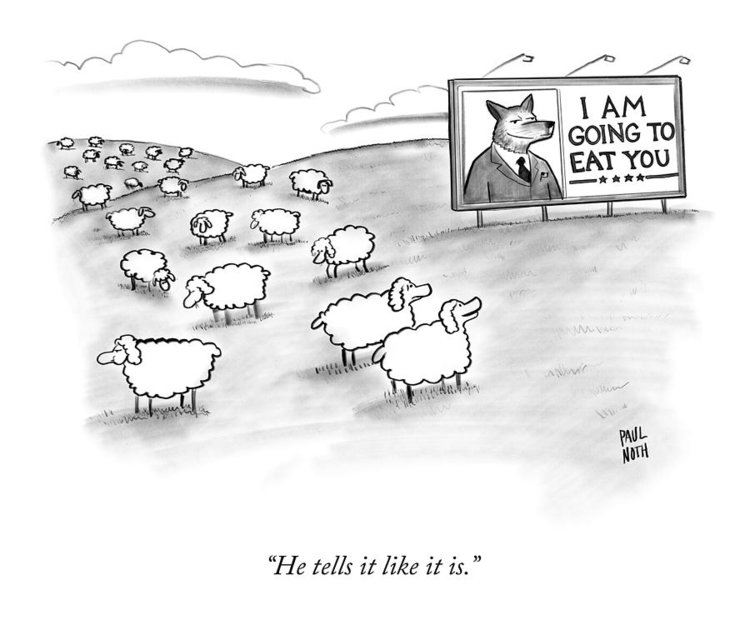
Unapologetically Telling The Truth Is A Terrible Thing to Admire

Why do we value “unapologetically telling the truth like it is” so highly? When did this become an actual thing that we lionize and aspire to? Why do we celebrate those who do this?

What’s the point of telling it like it is, even if people hate it? And what does it say about us as a community if this is how sincerity and authenticity is expressed? When did it become some type of significant accomplishment that is lauded by others?

There’s obviously an immediate benefit. You gain notoriety, fans, social media engagement, and maybe even just enough of a following to leverage a career (or presidency) out of it.

I have noticed a trend lately, particularly in discourse about Islamic issues online, where people are being heralded and promoted for telling it like it is.

This culture appears to be an overreaction to another problem (as most extremes often are) – speaking about issues without any principles, or watering down and politicizing them. When something in regards to the religion is watered down, the perception is that this is done from a position of weakness.

By speaking the unapologetic truth harshly, a person may feel they are taking on a task for the community that others are not. They are giving voice to a perspective that may otherwise be silent. They are providing objective and accurate intellectual analysis without any emotion or sugar-coating.

Validation follows. Others encourage them for speaking up and saying the things they are unafraid to say. This makes the person feel they are taking on an important task on behalf of the ummah, and continue to do so. Then they get more fans and comments, and the cycle continues.

This validation loop, particularly online when it is in the form of likes and comments, makes it challenging to engage criticisms of this approach objectively. After all, everyone is telling you this is incredible – why should you listen to the few uptight people who are so focused on tone instead of the unapologetic truth bomb you are dropping on people?

This justification comes from prioritizing the utility of giving a correct point of view over how it is delivered – especially when this point of view is drowned out by all the people with the wrong understanding.

When given real feedback on tone or etiquette, people who pride themselves on being unapologetic or authentic will respond by deflecting this advice. Focus on the intellectual merits of the argument they’ll argue. Or they will deflect it by pointing to some type of bad character on the part of people who hold the opposing viewpoint as them. Don’t worry about my bad attitude, worry about that other person’s character instead. Or they’ll appeal to authority and declare that they already have teachers or mentors that give them advice, so they are free to dismiss comments no matter how legitimate. For people who pride themselves on being objective or intellectual, these are all profoundly childish responses.

What is billed as being authentic or unapologetic is really a mask for laziness and ego.

The Qur’an lays out a model that we’ll refer to as the ‘high-competency’ approach:

By an act of mercy from God, you [Prophet] were gentle in your dealings with them—had you been harsh, or hard-hearted, they would have dispersed and left you—so pardon them and ask forgiveness for them. Consult with them about matters, then, when you have decided on a course of action, put your trust in God: God loves those who put their trust in Him (3:159).

Where in this ayah does it appear that the approach of telling the cold hard truth would fall?

Telling the unapologetic truth without regard for how people take it is the easy way out. Anyone can do that. The problem is that it does not work. It causes people to get turned off. Those who lionize this approach will counter by saying, “so what?” They put the blame on the people who can’t handle the message instead of taking responsibility for how they deliver it.

That’s why it’s lazy. It’s a low competency form of delivering a message. The only people who celebrate it are ones that already agree with it. It does not accomplish the ultimate task of winning hearts and minds or changing someone’s viewpoint.

Instead, it puts the focus on the person giving the message – how courageous, authentic, and direct they are. This makes the communication inherently ego driven because the intended audience is now ignored. The actual content of a person’s message also gets lost as they start to craft their identity around speaking forcefully instead of effectively. They show no concern for the recipient of the message, only in themselves.

The task of winning hearts and minds, or changing someone’s ideological worldview, is not done through a hot take on Facebook. It is done as the ayah above indicates – with kindness in dealings with them.

Giving hot takes on social media builds fans and followings, not relationships. The ultimate irony is that unapologetically speaking the truth actually prevents people from developing the relationships to affect positive change in the community because no one wants to be around them.

“How well you take criticism depends less on the message and more on your relationship with the messenger. It’s surprisingly easy to hear a hard truth when it comes from someone who believes in your potential and cares about your success.” –Adam Grant

It requires the hard work of building relationships with people and building community. True leaders understand that this requires years of investment into people – not all of which will be documented on social media. Success means playing the long game.

It means going to a tyrant like Fir’awn, and still speaking kindly because the ultimate intent is different than to just tell it like it is.

It means that when the young man walks into the masjid of the Prophet (s) and asks permission to commit zina (adultery), that the Prophet (s) takes him and teaches him kindly. He could have easily reminded him about the jurisprudential rulings about adultery, and the prescribed punishment – no doubt that would be unapologetically speaking the truth. But it would not have achieved the intended outcome, so the Prophet (s) had to take the approach that would actually produce results.

But wait, what about all the times in the life of the Prophet (s) when harshness was used? Didn’t he speak the truth clearly? Yes. There are always going to be situations where this is called for strategically as a tool intended for a specific result. The problem we are highlighting is not of speaking the truth clearly, but one of expressing it in a harsh way such that people are turned off. And worse, people who respond to the harshness with cheerleading and zealousness instead of genuine care and concern for the one who is wrong to gain some sense of rectification.

There is something deeper at play here than ego or taking the easy way out. Authenticity.

Authenticity is the buzzword we use to express sincerity. When I tell it like it is, I am being authentic and sincere. Not fake. Not a sell-out.

Authenticity presents a paradox: Do you do what’s effective, or do you do what is true to yourself? We might reach a certain level of success and influence by being a certain way. The challenge is getting to the next level. If that means suddenly changing how I communicate or speaking with what I term to be watered down political jargon, then no thanks. This is the mindset that allows us to morally justify our unapologetic approach, and actually double down on it when told to act otherwise.

Authenticity is a barrier to personal growth. We use this idea of it representing sincerity as an excuse to keep from changing. We have to shift from delivering the information people need to know (low-level) to creating the conditions of increasing learning (high-level).

This requires putting in the work to change our approach and character.

The Prophet (s) said that ‘the two characteristics that led the most people into Paradise were consciousness of Allah and good character’ (Tirmidhi).

Don’t let anyone subvert this in the name of unapologetically speaking the truth.

Low competency individuals are drawn to telling it like it is. High competency individuals are attracted to painting the vision of how things could be – and building the bridge to help and serve people in getting there.

https://www.ibnabeeomar.com/blog/unapologetically-telling-the-truth-is-a-terrible-thing-to-admire


he-tells-it-like-it-is-paul-not

Categories
Personalities

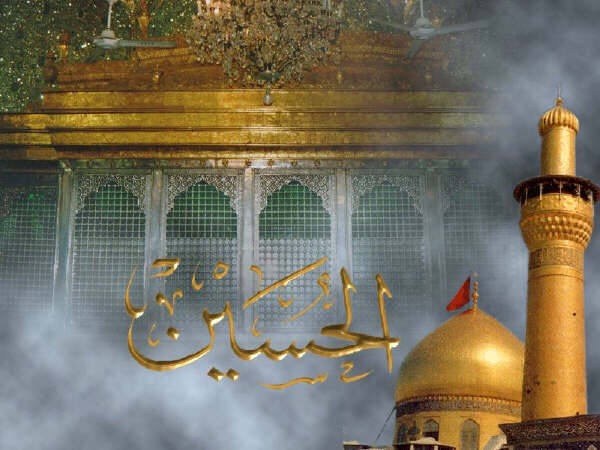
A MUST READ:  Biography of Sayyiduna Hussain (RadiAllahu Anhu)

By Shaykh Abdul Raheem Saheb (hafidhahullah). img_4162
Born: Sha’ban 4AH
Demise: 10 Muharram 61AH
Age: 57
Lineage:
Maternal Grandfather: Rasulullah (Sallallahu Alayhi Wasallam).
Maternal Grandmother: Khadija al-Kubra (Radiallahu Anha)
Mother: Fatima Zahra – The leader of the Ladies of Jannah (Radiallahu Anha)
Father: Ali al-Murtadha, – the Fourth Rightly Guided Caliph (Karramallahu Waj’hahu).
Birth:
He was born in Sha’ban 4AH.
He was brought to Rasulullah Sallallahu Alayhi Wasallam, who was overjoyed. He chewed a date and placed it in the newborn’s mouth which he began to suck. The first thing to enter his stomach was Rasulullah’s blessed saliva. He then gave Adhan & Iqamat in his ears and named him Hussain RA. On the 7th day, he instructed that the head should be shaved, and that Sadaqah of silver should be given equivalent to the weight of the hair. Thereafter he did the Aqeeqah, (sacrificed two goats for him).
Hussain RA was looked after and breastfed by Ummul Fadhl (Radiallahu Anha), the wife of Rasulullah (Sallallahu Alayhi Wasallam’s) uncle Abbas. She mentions that once Rasulullah Sallallahu Alayhi Wasallam was holding Hussain in his lap and was in a cheerful mood. He suddenly began to cry. She enquired about the reason. He replied “Jibreel just informed me that my Ummah will one day kill this beloved son of mine.” (Bayhaqi)
Few Hadith in virtues of Hasan & Hussain RA:
Hadith: “O Allah! I love Hasan and Husain! You also love them, and love those who love them.” (Tirmidhi)
Hadith: “Hasan & Husain are the leaders of the youth of Jannah.” (Tirmidhi)
Hadith: “Hussain is mine and I am Husain’s. May Allah love the one who loves Hussain. Hussain is a mighty grandson”. (Ibn Majah)
Hasan RA is one year older than Hussain RA and they are both Sahabah. They have also narrated few Ahadith directly from their grandfather Sallallahu Alayhi Wasallam.
Hussain narrates that his grandfather Sallallahu Alayhi Wasallam said, “It is from the beauty of a person’s Iman that he leaves aside things that don’t concern him”
He also narrates, “If a person is afflicted with a calamity which consequently comes to haunt him later on, however at that time he recites ‘Inna lillahi Wa Inna Ilayhi Rajioon’;  Allah will give him the same reward which He gave him on the first day.” (Ibn Majah)
Both brothers resembled their grandfather Sallallahu Alayhi Wasallam although this was more noticeable in Hasan than Husain Radiallahu Anhuma.
In the Eyes of Sahaba RadiAllahu Anhum
Ibn Kathir writes, “Sayyiduna Abu Bakr RadiAllahu Anhu used to show great respect to the family of Rasulullah Sallallahu Alayhi Wasallam. He used to treat Hussain with love, affection, and special attention. Same was the case with Sayyiduna Farooqe A’zam and Sayyiduna Uthman Ghani Radiallahu Anhuma.” (Al-Bidayah 8/36, Tajalliyate Safdar vol1 p487)
When Farooqe A’zam Radiallahu Anhu fixed allowances, he gave Hassan and Hussain the allowance of the Badr participants i.e. 5000 each.
When clothes for distribution came from Yemen, Farooqe Azam Radiallahu Anhu said that these (clothes) are not good enough for Hasan & Hussain. Thereafter, he ordered special clothes be tailored for them. When they were sent, sayyiduna umar called both brothers in front of the gathering and gifted them.
When the daughter of Kisra by the name of Princess Sheherbanu was brought to Madinah Munawwarah among the captives, Sayyiduna Umar (Radiallahu Anhu) said, “She is only suitable for Hussain.” He gave her to Sayyiduna Hussain who freed her and married her. She gave birth to his son Ali Ibn Al Hussain who was later titled  Imam Zain al-Abideen, due to the beauty of his worship.
During the Khilafat of Shaykhayn (Abu Bakr & Umar Radiallahu Anhuma), Sayyiduna Hussain was still growing up. In 26AH, during the Uthmani caliphate, he took part in the conquest of Tripoli. He was instrumental in that victory as well many others that followed.
In 30 AH, he was with Sayyiduna Saeed Ibn Al-Aas (Radiallahu Anhu) in the conquest of Tabristaan, and thereafter in the conquest of Jurjaan.
In 34 AH, when the rebels surrounded the residence of Sayyiduna Uthman Ghani Radiallahu Anhu and were thirsty for his blood, this brave prince offered his life, along with a group of youth. They would stand by the door and would guard the house of Uthman Radiallahu Anhu, drawing the rebels back. Despite repeated requests to finish off the rebels and having the ability to do that, Uthman Ghani Radiallahu Anhu forbade them from shedding a single drop of blood for his protection. In the end, the rebels forced their way in to the neighbours’ property and jumped the walls. They then murdered Uthman Ghani Radiallahu Anhu. Inna lillahi Wa Inna Ilayhi Rajioon.
After the Shahadah (martyrdom) of the oppressed Caliph, the Muhajireen & Ansaar pledged their allegiance to Sayyiduna Ali Karramallahu Waj’hahu. Sayyiduna Hussain was at his father’s side throughout the five years of his caliphate. He was a very obedient and humble son and took part in the notable battles of Jamal and Siffeen.
After the death of his father, he treated his elder brother Sayyiduna Hassan Radiallahu Anhu, like a father figure. He would always be at his side and consult him in important affairs.
After remaining khaleefa for just 6 months, Sayyiduna Hasan handed the reign of leadership to Sayyiduna Muawiyah Radiallahu Anhu. Sayyiduna Muawiyah radiallahu anhu treated the Ahle Bayt with utmost respect. He had fixed an allowance of 100,000 per annum for Sayyiduna Hasan & Hussain Radiallahu Anhuma. When they would travel to Shaam or Sayyiduna Muawiyah would come Madina Munawwarah, they would treat each other with generosity and hospitality.
When Sayyiduna Hassan died in 50AH, Sayyiduna Hussain became the eldest among the prophetic household. He was the best person on the face of the earth at that time. Once Sayyiduna Abdullah in ‘Amr ibn al-Aas Radiallahu Anhu was sitting in the Haram shareef, near the Ka’ba, when Sayyiduna Hussain radiallahu anhu entered. He looked at the radiant face of Sayyiduna Hussain and remarked, “Among all the people on the face of this earth, this person is the most beloved to the angels of the heavens. Sayyiduna Abdullah Ibn Abbas Radiallahu Anhu would feel proud in holding on to the stirrup of Sayyiduna Husain’s saddle when he would ride on the horse.”
Martyrdom
When Sayyiduna Muawiyah died in 60AH, his son Yazeed became his successor. Yazeed was only in his thirties. The Muslim community were not happy at his appointment. This was due to Yazeed’s transgression.
Not all cities under the Muslim rule pledged their allegiance to Yazeed. On the contrary, there were many who refused to accept his leadership. As a result, two groups materialised among the Sahaba. Sayyiduna Hussain and Sayyiduna Abdullah ibn Zubair Radiallahu Anhumaa were of the opinion that Yazeed should be confronted and removed. Whereas Abdullah ibn Umar and Abdullah ibn Abbas Radiallahu Anhuma were hesitant about this, not because they doubted Yazeed’s Fisq but because they feared the killing that would follow the confrontation.
Kufa was one of the main cities in Iraq during this time. The people of Kufa invited Sayyiduna Hussain Radiallahu Anhu to remove Yazeed and unite the ummah. They made promises of pledging allegiance to him. During this time, they wrote hundreds of letters to him. Sayyiduna Hussain Radiallahu Anhu was in Makkah Mukarramah at the time.
He sent his cousin Muslim Ibn Aqeel Ibn Abi Talib (Radiallahu Anhu) to look into the matter. When Muslim ibn Aqeel reached Kufa, people began to pledge allegiance to Sayyiduna Hussain at his hands. He wrote back saying the whole city is echoing with your name and that you should come immediately.
Sayyduna Hussain (Radiallahu Anhu) left along with his immediate family members and many distant relatives and friends. Sayyiduna Abdullah Ibn Abbas Radiallahu Anhuma tried to stop him, not because he supported Yazeed, but because he knew the treacherous nature of the people of Kufa. They had betrayed Husain’s father Sayyiduna Ali Karramallahu Waj’hahu.
Sayyiduna Hussain however left. Along the way he received the news that in Kufa, events had taken a turn for the worse. Yazeed had sent an order from Damascus that the  governor be changed and he instructs the newly appointed governor Ubaidullah Ibn Ziyad to be strict on his opponents. He caught and murdered Muslim Ibn Aqeel (Radiallahu Anhu). Subsequently people deserted Sayyiduna Hussain (Radiallahu Anhu), in fact turned against him.
An army was dispatched to capture or kill Sayyiduna Hussain (Radiallahu Anhu) and his caravan. They cornered him and he reminded them of their invitation and showed them their letters. But they refused to acknowledge those letters.
He asked them for respite of the night preceding Aashura. This happened to be the night preceding Friday. He instructed his caravan to spend the night in worship and in supplication. He busied himself in worship as well. He instructed his sister Sayyida Zainab Radiallahu Anha not to lament after his martyrdom, because martyrdom would be a source of elevation for him.
When he lay down for a bit, he saw his grandfather and our beloved Prophet (Sallallahu Alayhi Wasallam) in a dream. The noble prophet Salallahu Alayhi Wasallam instructed him to be patient.
The following morning, the army attacked the caravan. Sayyiduna Husasin Radiallahu Anhu’s family and friends defended him but they were outnumbered. The opposing army consisted of four thousand well-armed soldiers, whereas the caravan consisted of no more than a hundred males, some children and ladies of the household. They were being slain one after the other. Sayyiduna Hussain Radiallahu Anhu was brave like his father and he too was fighting until he was left alone.
They had been defending from morning until the afternoon until the time of Jummu’ah beckoned. Due to being travellers they had to pray Zuhr. Sayyiduna Hussain asked for respite so that they may perform Salah, but they refused and he prayed Zohr Salah with indication (ishaarah).
He was extremely thirsty and wanted to drink some water from the river nearby. However, when he approached the water, one wretched person shot an arrow at him and thus prevented him from drinking. He became extremely weak due to the blood which was seeping from his wounds and at this juncture, a curse came out of his lips. He said, “May you also die with thirst.” And it so happened that the assailant died from an illness which made him thirsty and no matter how much water he drank his thirst wouldn’t go.
No single person had the courage to attack him out rightly. They would approach him in batches, shoot arrows from a distance and then flee when Sayyiduna Hussain Radiallahu Anhu would turn towards them. They decided to ambush him collectively. It was then that Shimr Zil Jawshan struck his head and others severed it from his body. Some vile individuals trampled over his slain body with their horses.
Inna lillallahi Wa Inna Ilayhi Raajioon.تصميم الاربعين 1
Sayyiduna Hussain (Radiallahu Anhu) gave his precious life in order to establish Haqq (truth). He did not surrender to falsehood even though they did make proposals and promises.
The oppressors did not stop with him, they even attempted to kill the children as well. Imam Zainul Abideen was ill and unable to take part. He was therefore kept in the tent with the ladies. The enemies did barge in the tents and attempted to kill him but his aunt Zainab grabbed hold of him and shouted at them upon which they retreated.
Sayyiduna Husain’s severed head was taken to Ubaidullah Ibn Ziyad, the governor of Kufa. He touched the lips with a stick in his hand and praised the beauty of the face. One elderly Sahabi could not take it and remarked, “Don’t do that! I have seen the Prophet Sallallahu Alayhi Wasallam kissing that face”
Then the severed head and the family members were sent to Yazeed in Damascus. He showed some remorse upon the killing. Allah knows how genuine he was. He sent the family back to Madinah Munawwarah.
Allah Ta’ala’s decree is astonishing. Exactly 6 years later, Ubaidullah Ibn Ziyad was killed on the same day of Aashura in the year 67AH. His severed head was brought before Mukhtar Ibn Abi Ubaid ath-Thaqafi. The people saw a small snake come out of his mouth and then go back through the nose. It did this for a bit and then disappeared inside.
The Ahle Bayt remained extremely calm despite the tragic passing away of Sayyiduna Hussain Radiallahu Anhu and many of their relatives. When they returned to Madinah Munawwarah, there were cries of grief from everywhere.
Yazeed and the murderers did not last long. The murderers all spent the rest of their lives in a terrible state, and died very quickly. Yazeed also died within just 3 years. May Allah Ta’ala deal with him in the manner he deserves.
Ibn Abbas Radiallahu Anhu was in Makkah Mukarramah at the time. He was resting when he saw Rasulullah Sallallahu Alayhi Wasallam in a dream. His hair appeared dishevelled and he had a bottle of blood in his hands. Upon Ibn Abbas Radiallahu Anhuma’s enquiry, he replied “I have just been to the place where Hussain was martyred. I collected this blood to present in the court of Allah on the Day of Judgement.”
Abu Uthman Nahdi migrated from Kufa to Basra, saying, “I can’t stay in a city which murdered the grandson of Rasulullah Sallallahu Alayhi Wasallam.” Another Tabi’ee said, “If I was among the army that murdered Hussain, and I was allowed to enter Jannah… I would still feel ashamed of myself.”
Some narrations say that the sky suddenly turned black on that fateful day in Karbala. Some also narrate that, in baytul maqdis, when a stone would be turned, they would see blood beneath it.
It was a huge tragedy. Imam Shafi’ee (Rahmatullahi Alayhi) has composed poetry in relation to the martyrdom of Sayyiduna Hussain in which he declares the total innocence of Sayyiduna Hussain Radiallahu Anhu. He says,
ذبيح بلا جرم كآنَ قميصه.  صبيغ بماء الأرجوان خضيب
تزلزلت الدنيا لاٰل محمد.    وكادت لهم صُم الجبال تذوب
يُصَلَٰي علي المبعوث من اٰل هاشم.    و يغزيٰ بنوه ان ذَا لعجيب
“Slaughtered for no reason. His shirt was so red as though it was dyed with a red colour.
The world shook apart for the family of Muhammad. The massive mountains were close to melting.
How Ajeeb?? People send peace & blessings upon the Prophet from Banu Hashim and then kill his children!”
The Ahle bayt carried on with their lives. The Ummah moved on. The assailants suffered in this world as they will do so in the hereafter. It is pointless to keep wailing and lamenting upon this tragedy. Therefore, commercialising this tragedy is even worse.
Shias fabricate stories; some depict blood pouring on a stone and then say that this is Husain’s blood still flowing until today. Others visit a piece of cloth, which they claim, is from the tent of Sayyiduna Hussain Radiallahu Anhu in Karbala. Others make an effigy of Hussain Radiallahu Anhu and then carry it around. All these are innovations and we should never ever take part in such activities nor should we admire them. The Shias of today are not even Shia; they are mushriks. The Shias of the previous eras would never do such khurafaat.
If we are to remember the death of Hussain, then think for a moment “Where are we in our lives in comparison to the sacrifices of Hussain and the family of the Prophet? When and where do we stand up for justice, truth and Haqq? Hussain is performing salaah with isharah (indication) in the battlefield whereas we miss salaah for small reasons. We should take some lessons from Hussain and bring them into our lives.
May Allah guide the Ummah. Ameen
Shaykh Abdul Raheem Saheb (hafidhahullah)
www.Tafseer-Raheemi.com
Facebook.com/ShkhAbdulRaheem
Categories
Current Affairs articles

Integrate, NOT Assimilate!

brit

This was narrated by Qari Ismail Samni (Allah fill his grave with noor), Bolton: “Shaykh AbulHassan Nadwi (Allah have mercy upon him) visited the UK and a programme was held for Ulama. At the start of the talk, Shaykh mentioned a dream in which he saw the blessed and glorious vision of the Final Messenger, the Seal of the Prophets ﷺ. In the dream, the Prophet ﷺ mentioned that he had his eyes on the Muslims of England (mere nazar England walo par hein).

On hearing this, the Ulama present were delighted and overjoyed. After which Shaykh stated, ‘There is no need to be so happy! Let me explain… if a mother has two children, one is playing in the garden and the second is playing near the fire. Which child does the mother have her eye on? Obviously, the one near the fire. Similarly, the interpretation of the dream is the Prophet ﷺ has his eyes fixated on the people of England because your Imaan is at risk. You may ask how? The Muslims of Makkah and Madinah will not sell their Imaan, because they are surrounded by Muslims and they are living in a Muslim country. At the most, they will commit sins. Same for the people of Pakistan, they will not sell their Imaan. As for the Muslims for India, they live in a Hindu country but totally oppose the actions of the Hindus. They dress differently, worship differently and keep Masjids and Hindu Temples separate.

What I have seen in the UK, especially in the young generation, step by step and inch by inch they follow the non-Muslims in every way; in their dress; in their food; their hairstyles; and their whole lifestyle. You are surrounded by non-Muslims, it is very easy to sell your Imaan living in the West.'”

Mawlana then continued his bayan.

It is December, the time of the year we see festive decorations and lights all around the country. Christmas is coming soon… Living in a non-Muslim country, how should we participate in this Christian festival? Are we allowed to attend Christmas parties? Should we let our children partake in Santa’s Grotto? When they attend school they want to play a part in the nativity play, is this Halal? Further, on Christmas day should we exchange gifts with our families and our Christian neighbours? Can we prepare a turkey dinner on Christmas day and enjoy it with the family? I won’t answer all these questions, but it is food for thought, further to the dream I mentioned in the start.

See full fatwa

I will, however, like to touch on an issue increasing in the UK, having a turkey dinner on Christmas day. It is forbidden for a Muslim to prepare a turkey dinner on Christmas because this is an imitation of non-Muslims. It is confirmed in an authentic narration that “whoever imitates a people is one of them.”

Saying that the family gathers on this day and this is not with the purpose of imitating the non-Muslims but due to the fact that this day is a (bank) holiday, then this does not make it permissible for you to do this, because, in essence, you are imitating them. Gathering on this day could be on any other kind of food, why then have specifically a turkey dinner? Is this not imitating them even in the kind of food they eat?

The prohibition of resembling the non-Muslims is not restricted to inward actions [beliefs, actions of the heart] and intentions, but also to outward actions. It is for this reason that the Prophet ﷺ prohibited us from performing the prayer at sunset and sunrise, and he ﷺ said that it rises between two horns of the devil and the polytheist prostate to it at this time, despite the fact that a Muslim prays to Allah and not to the horns of the devil. However, the Prophet ﷺ forbade us from performing the prayer at that time regardless of our intention.

The Prophet ﷺ also used to differ from the people of the book even in the way they combed their hair.

Indeed, there are many narrations of the Prophet ﷺ about differing from the people of the Book in regard to both words and actions.

Therefore, we advise you to fear Allah and not imitate the polytheists and act in conformity with them in their festivals and traditions which are peculiar to them.

One should explain to the family, that it is permissible for the family to gather on that day because it is a holiday but without making this day as a festival and imitating the non-Muslims in their eating traditions and the like. It should be a family gathering like all other gatherings throughout the year [without any special food, settings or decorations].

Ismail Ibn Nazir Satia (One who is in dire need of Allah’s forgiveness, mercy and pleasure)

29 Rabiul Awwal 1440

Categories
Muslim women

Dua and Surahs for Pregnancy/Labour

Congratulations to you and your family on your bun in the oven. Allah bless you with a healthy and happy baby who lives and strives off faith and Islam, I hope Allah grants you the coolness of your eyes.

baby.jpg

Motherhood! A very exciting experience and something I believe most women desire and dream for, as they are born nurturers. Amidst all the excitement, shopping, and getting your homes ready for this new addition to the family, sometimes you can forget the spiritual connection with that Exalted Being who has blessed us with this amazing journey.

No one said pregnancy and labour would be or is easy. But if you want that cute bundle of joy in your hands, then you have to push through (no pun intended!) these nine months and labour and show yourself that “you’ve got the power!”

Please remember to thank Allah for blessing you with this opportunity that many desire and don’t have. Don’t take even a split second for granted. Make it a habit of reciting:

اَللّٰهُمَّ لَكَ الْـحَمْدُ وَ لَكَ الشُّكْرُ

“O Allah, all praise and gratitude is for you”

Let me get to the point, here are some dua’ and some adhkar to help you through.

Students of Habib ‘Umar bin Hafidh (hafidhahulah), of Yemen collected this list of recommendations some years ago, for those amongst us who are pregnant or struggling with infertility.

Daily

  • Surah Inshiqaq (Surah 84) – to be recited daily throughout the pregnancy
  • Surah Luqman (Surah 31) – to be recited daily during the 1st trimester when the baby’s brain, mental faculties and nervous system are developing, this Surah helps the baby’s brain develop.
  • Surah Yusuf (Surah 12) – to be recited in the 2nd trimester when the child’s physical appearance is forming, for beautiful physical appearance.
  • Surah Maryam (Surah 19) – to be recited in the 3rd trimester as labour approaches
  • Ya Lateef” – to be recited 129 times every morning and evening

7th month only

  • The husband should recite Surah Inshirah (Surah 94) 152 times on the baby

Labour

  • The first ayat of Surah al-Fath’ (Surah 48)
  • Ya Lateef”
  • Surah Maryam (Surah 19) for ease in labour (you can also play on YouTube)
  • Surah Inshirah (Surah 94)
  • As salaam Alaikum ayuha-nabee wa rahmatullahi wa barakatu”

General advice

  • Shaykh Muhammad Ba Shu’ayb once advised, for the sake of any children we are to have to recite all our adhkar and awrad everyday and to ensure that we pray as many prayers in congregation with our spouse.
  • Read as much Qur’an as possible.
  • Try and do as much salawat on the Prophet (saw) as possible – in particular Salat al-Tunjina’ and “As salaam Alaikum ayuha-nabee wa rahmatullahi wa barakatu”
  • As babies are said to be able to recognise certain sounds and music from their time in the womb, reading certain texts such as the “Book of Assistance” by Imam al-Haddad, is advised in order to bring about recognition.
  • One of the Habaib also advised pregnant women to look at pictures of the Ka’aba when she was too tired to actively engage in ibadah.

For those trying to conceive children

  • Recite Surah Fatiha (Surah 1) 41 times in between the sunnah and fardh of Fajr prayer.
  • Recite verse 38 of Surah Imran (Surah 3) as many times a day as possible.


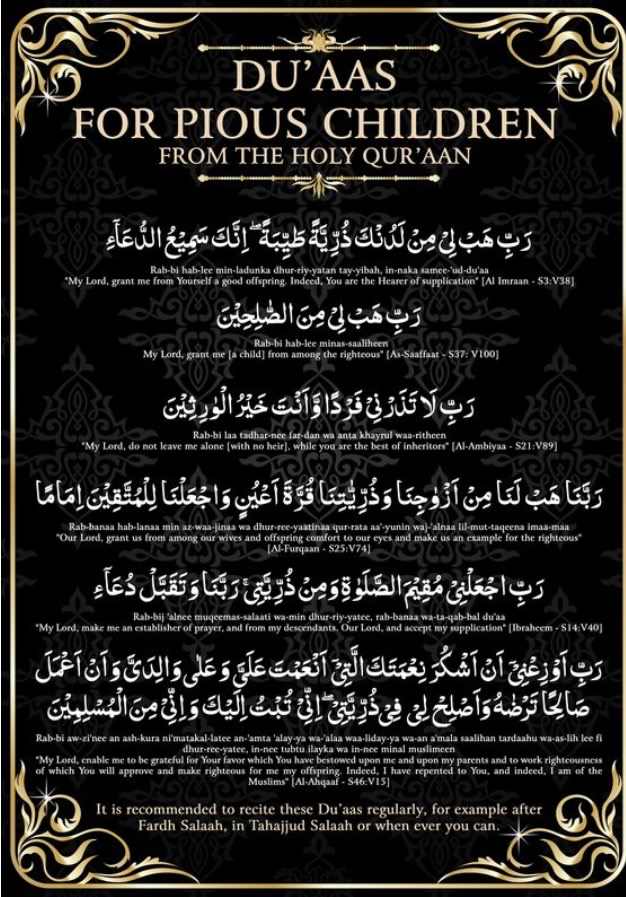
In addition to that, ask Allah to bless you with pious children like our beloved Prophet Zakariya (AS) did:

رَبِّ هَبْ لِي مِنْ لَدُنْكَ ذُرِّيَّةً طَيِّبَةً إِنَّكَ سَمِيعُ الدُّعَاءِ

“O Allah bestow onto me from You, pure children. Verily you are the listener of du’aas”

Other Ulama suggest in your last month recite the first five ayahs of Surah Al-Inshiqaaq abundantly, as this will help with an easier delivery and labour. Or increase the recitation of Surah al-Inshiqaaq if you were already reciting from the start of the pregnancy.

Abstain from listening to music and replace that with recitation or Quran or adhkar, as it has scientifically been proven that the child is able to recognize certain sounds in the womb. Let’s bless our unborn child with the words of Allah (S.W.T). Then follow that habit through postnatal and you will be surprised as to how much comfort your child will get from listening to the words of Allah (S.W.T) from as early as birth. I’ve seen it with my very own eyes.

Please stay away from sin, talking ill of people and slander. Try to stay pure at heart and tongue and you will see your children grow to reap the benefits.

Print and keep the list of dua’ for pious children (below) and make a habit of reciting them often. One way to do this is to tape it to the wall next to your dresser mirror and recite the dua (or just a couple of them if your kids or husband are impatiently waiting for you to get ready!) as you get ready in the morning.preggy

Lastly, advice from Mufti Ikramul Haq Saheb (hafidhahullah) of Blackburn: “Through experience, we have seen placing the book ‘Muwatta Imam Malik’ under the pillow at the time of labour, eases labour pain.”

Allah grant you all ease and peace throughout the pregnancy, a smooth labour, as well as granting you pious children, righteous and the coolness of your eyes. Ameen.

Ismail ibn Nazir Satia (One who is in dire need of Allah’s forgiveness, mercy and pleasure)

Rabiul Awwal 1440

Categories
Personalities

Sweet Memories

IMG_8353


In Memory of My Late Father, NazirAhmed Daud Satia (1947 – 2013)


Here in Blackburn was where his life started,

He wasn’t just a man, he wasn’t just a father, but so ever kind-hearted;

Principled, firm, full of awe and his beauty shone through,

With a voice so strong, every word spoken true.


In India, is where his life began,

His move to England was Allah’s plan.

Justice was his strength, his aura so majestic,

Community work, joining ties, his charity and courage were fantastic.

His sincerity, selflessness, humility and much more,

Such men are rare, that’s for sure.


Memories of Abba, I will cherish forever,

I pray in Jannah we will be together.

His aura and character sticks in my mind,

His laughter and smile it was one of a kind!


You are now far from our sight

Your beauty disappeared like the day covered by night.

Thank you for a lifetime of lessons I will never forget,

It only seems like yesterday when your sun finally set.


The next stage of your life has been set to begin,

Allah elevate your status and resurrect you without a single sin,

We miss you deeply and wish you all the best,

Allah bless you with every stage of success.


I won’t be sad, I won’t shed a tear,

I know the angels await you, they proclaim: “Do not be sad and do not fear.”

I pray you rest forever in peace and harmony, I pray you will never have pain or ache,

Know for sure, we all love you deeply for Allah’s sake.


Your son, indebted to you forever (Five years on).

19 Rabiul Awwal 1440

Categories
Poems

WORDS as sharp as sWORDS ⚔️

1-1-Cosplay-Free-Shipping-Sword-Movie-Lord-of-The-Rings-The-Hobbit-Frodo-Baggins-72cm.jpg_220x220.jpg
Words can be sharp, as sharp as a sword,
Sometimes we need to let them out because of the stuff we hoard.
But before you speak, take my advice on board,
Think before you speak, think of your Lord.
Don’t let your words out loosely, like marbles rolling down the road,
The cost of such a tongue is astronomical, one which you can’t afford.
When you speak, speak clearly, not like deciphering a code,
Some murmur and mutter, like they’re in sleep ? mode!
Using hurtful words can sometimes strike a chord,
They may get you in trouble or attract a nasty horde (a crowd).
We all make mistakes and we are all flawed,
We need to ensure before we wag our tongues our words are pored (examined).
If you have nothing good to say, keep your lips ? sewed,
Don’t let your words out, let them be stored.
Otherwise, on Qiyamah you will carry a heavy load,
Because words can be sharp, as sharp as a sWORD!?
Audio: https://www.youtube.com/watch?v=ejFLIy2Atx8
Sword_topNteaser
Ismail ibn Nazir Satia (one who is in dire needs of Allah’s forgiveness, mercy and pleasure).
19 Rabiul Awwal 1440
Categories
Muslim men

International Men’s Day

PIERS MORGAN’S ADVICE ON INTERNATIONAL MEN’S DAY: Don’t let hypocritical radical feminists turn men into a bunch of neutered, grovelling, blubbering doormats, ladies – or we’ll ALL live to regret it

I have a confession. I am a man. The worst? I’m actually proud to be a man and I like being masculine

I have a confession to make.

This isn’t easy, and I’ve taken a long time to summons up the strength to do it.

I’m aware that just by admitting to what I’m about to admit, I will subject myself to all manner of global shame and ridicule.

I’ll be taunted, abused, shunned and reviled.

But as Sir Winston Churchill once so rightly said: ‘You have enemies? Good. That means you’ve stood up for something, sometime in your life.’

OK, here goes…

I am a man.

Yes, on International Men’s Day 2018, I am hereby identifying as the biological sex that I was born to.

This alone is enough to risk making me a social pariah these days, but that’s not even the worst of it.

I’m a man who’s actually proud of being a man, and who also likes being MASCULINE.

Sorry.

I realise this is a horrendous thing to say, and I can only offer my insincere apologies to all the radical feminists now exploding with rage as they read my shocking statement.

If there’s one thing they loathe even more than the M-word, it’s the longer M-word.

But why?

Masculinity simply means ‘having qualities or appearances traditionally associated with men.’

That’s it, nothing more sinister.

Yet thanks to women of radical feminist persuasion who’ve gleefully hijacked the #MeToo and #TimesUp campaigns to serve their own man-hating purpose, masculinity has become the most controversial, detestable word in the English lexicon.

And it’s now impossible to be ‘masculine’ without also being accused of ‘toxic masculinity’.

Radical feminists (here’s Madonna in her shirt touting her ‘radical’ position) have hijacked the #MeToo and #TimesUp campaigns to serve their own man-hating purpose, masculinity has become the most controversial, detestable word in the English lexicon

Even Prince Charming whisking Cinderella off from captive hell to a life of happiness is an evil that must be expunged from society – led by furious Keira Knightley and her ultra-feminist knights in PC armour.

‘Cinderella waits for a rich guy to rescue her,’ she sneered. ‘Don’t. Rescue yourself! Obviously!’

Fine empowering words until you remember that the Prince gallantly saved Cinderella from abuse and slavery and they genuinely loved each other.

Then it doesn’t seem quite so ‘obvious’, does it?

One of the very worst of the many terrible things about radical feminism is the scourge of pathetic male virtue-signallers that urge them on.

As an obvious (or so I thought..) tongue-in-cheek joke this morning, I tweeted: ‘Happy #InternationalMensDay! Stay strong lads, we’re not illegal – yet.’

Most people reacted in the way I would react if someone else had tweeted that – by laughing.

Others weren’t so amused, bombarding me with hateful abuse about my supposed ‘toxic masculinity’.

A man named Box Brown, who has a verified Twitter account and claims to be a New York Times best-selling cartoonist, replied simply: ‘Die.’

How laughably hypocritical; this angry little clown races to attack what he presumably perceives to be my aggressive maleness, yet does so by saying he wants me dead.

Hypocrisy is sadly a prevalent theme with much of modern feminism.

The likes of Kim Kardashian and Emily Ratajkowski have both built hugely lucrative careers out of stripping off in the supposed name of ‘feminist empowerment’.

Hypocrisy is sadly a prevalent theme with much of modern feminism. Kim Kardashian and Emily Ratajkowski have built lucrative careers out of stripping off for ‘feminist empowerment’

When in fact what they’re really doing is selling nudity and sex.

I have no problem with that – just don’t pretend it benefits any other woman or is anything that Emmeline Pankhurst and her Suffragettes would have ever done.

They were too busy risking their lives to win women the right to vote than to have time to writhe naked in spaghetti and ludicrously claim they were doing so to liberate womankind.

When I say this kind of thing, women ask me to cite an example of what I consider real feminist empowerment.

So let me give you one from yesterday when a 17-year old German girl driver named Sophia Flörsch was competing in her first Formula 3 World Cup race at the Macau Grand Prix.

The race featured male and female drivers, and she qualified purely on merit.

On the fourth lap, she struck another driver’s car as she approached a bend at 175mph.

The collision caused Sophia’s car to spin out of control and catapult several hundred yards through the air into a wall.

It’s the most horrifying car crash I have ever seen, and everyone who watches it would presume she must have died.

But Sophia lived, despite fracturing her spine.

And within a few hours, she tweeted: ‘Just wanted to let everybody know that I am fine but will be going into surgery tomorrow morning. Thanks to everybody for the supporting messages. Update soon.’

No fuss, no playing the victim.

Can you even imagine the scale of self-pitying hell that would be unleashed on the unsuspecting public if any of the Kardashians had a minor 25mph car prang today in which they broke a diamond-encrusted toenail?

Sophia has an incredible talent for driving a car, and incredible courage too. She is a rising star in a male-dominated sport determined to prove she can mix it with the men and I applaud her for it.

THAT is true feminist empowerment – not flipping the bird in topless selfies to millions of impressionable young girls.

While I joke about International Men’s Day, of course I understand and appreciate there is a very serious side to it too.

The stats tell the grim story: 76% of suicides are men, 85% of homeless people are men, 70% of homicide victims are men, men serve 64% longer in prison and are 3.4x more likely to be imprisoned than women when both committed the same crime.

So it’s not all a patriarchal bed of roses being a man.

But I fully accept that women have historically been treated unfairly in terms of equality, and that many women continue to be treated unfairly.

I also fully accept that women have been subjected to far more harassment, sexual abuse and domestic violence than men.

That is where the #MeToo and #TimesUp movements have performed a valuable public service in highlighting and exposing genuinely bad, unacceptable and in some cases criminal behaviour.

In fact, I don’t know any of my male friends who wouldn’t agree with that.

However, what I refuse to accept is that all masculinity is therefore now automatically a bad thing or that being a man is suddenly something to be ashamed about.

Nor do I believe that most women actually want the kind of neutered, emasculated, papoose-clad, permanently apologising doormats that radical feminists are trying to make us become.

Let me therefore offer some friendly advice from a man who loves women:

Men like me don’t want to hear that universities (and one in Wales, UK actually did this,.) have banned the word ‘mankind’ because it’s offensive to women, not least because ‘women’ itself contains the word ‘men’.

We don’t want to be told we can’t appreciate a female star’s beauty because it’s offensive to feminists, then see feminists like Ellen de Generes openly objectifying famous men’s bodies at awards shows – to no complaint.

We don’t want to be informed that James Bond has to stop hitting on women because it’s now deemed politically incorrect, especially as none of the women he ever hits on seem to be anything but ecstatically thrilled about it.

We don’t want to be disapprovingly frowned at for opening doors for women or standing up for them on trains or when they walk into a room, or paying the bill for dinner if we want to. Chivalry is a good, not oppressive thing.

We want to pride ourselves on being a protective modern day hunter and provider, in whatever capacity that manifests itself to the benefit of a woman or family – without promptly being labelled a ‘dinosaur’ or ‘caveman’.

We’d like to preserve the right not to be seen blubbing in public every five minutes just to prove we’re in touch with our emotional side.

In short, we’d just like to still enjoy being men if that’s OK?

Just as we’d like women to enjoy being women.. and yes, for gender-fluids to enjoy being men AND women if that makes them happy.

The best conversation I’ve had about all this was with the singer Annie Lennox who said it was ‘important to bring men with you’ on the feminist journey.

‘But,’ she cautioned, ‘the debate has to be less hostile to men for that to happen.’

Exactly.

You probably didn’t know that today is International Men’s Day. After all, it doesn’t receive much publicity, despite having been celebrated on this day since 1991. International Women’s Day is a different matter. That you will have heard of, and may well have taken part in. We all agree that we need to celebrate and promote women.

But, by the same token, we need to celebrate men. Even just a little. And, today is the best time to question our reluctance. I invite you, for example, to ask yourself the last time you read an article praising men. No, not an article praising one man (like an explorer, carer, sportsman or teacher), nor an article about a group of men, such as a team of rescuers or medics.

I’m talking about men as a whole. Cast your mind back. You can’t remember, can you? Indeed, have you ever read such an article?

And yet you’ll be familiar with articles praising women. According to recent media reports, women are better than men at working under pressure, taking financial responsibility, teaching, managing people, caring, driving, showing stamina, raising money, being surgeons, being doctors and being engineers. And those are just the ones I found through a quick Internet search.

In summary, women are better at lots of things. But men, it appears, are better at, well, nothing. No wonder there’s a crisis of masculinity.

Some might say that there darn well should be a crisis of masculinity, given the horrendous revelations of sexual harassment and assault over the last year. Why should we give men any credit at all, given what we’ve learned?

It’s an understandable view. Sexual harassment is horrible and unforgiveable. If anyone harassed or assaulted a woman or girl in my family, the red mist would descend more quickly than you could say ‘metoo’. But how many men are guilty? One in five? One in ten? A small minority, certainly. Yet, we seem to be blaming men in general.

According to the narrative, men can only be the baddies. Last month there was even a debate about whether hate crimes against men should be recognised. Just think about that: we accept because it is obviously right to do so, that misogyny is disgusting. Yet we are ready to pontificate about whether hate crimes against men are even worthy of our attention.

And while we are right, of course, to strive for equality between men and women at the top, where men still dominate, we should also cast an eye lower down, where there are twice as many homeless men as women, ten times more male than female prisoners, and three times more men than women who commit suicide. Oh, and a million children are growing up without their fathers.

In her speech in Downing Street upon becoming Prime Minister, Theresa May said her priority would be to help the disadvantaged, pointing out that “If you’re a white, working-class boy, you’re less likely than anybody else in Britain to go to university”. Two years on, nothing has changed.

Yet, we still think the male gender is always the nasty gender.

Consider the men you know – family, friends, colleagues and acquaintances.  Most of them, like most women, have great qualities. Up and down the Britain, millions of them care for their families, are loyal to their friends, work hard and behave as decent citizens. They are not an abusive, privileged elite. They are good people with noteworthy qualities.

So, let’s recognise them. Today’s their day.

Categories
Personalities

Imam Bukhari RH

by Shaikhul Hadith Mufti Ebrahim Saheb Desai 

IMAM BUKHARI & HIS FAMOUS AL-JAAMIUS-SAHIH

1. Name
Abu Abdullah Muhammad ibn Ismail ibn Ebrahim ibn Mugira ibn Bardizba Al Ju’fi Al Bukhari.

2. Birth and Lineage
Born on Friday (after Jumuah) 13 Shawwal 194 A.H. Passed away on Friday 1 Shawwal 256 A.H. (the night before Eid-ul-Fitr) (Hadyus Saari – pg.477).

Bardizba was a fire worshipper. His son Mugira accepted Islam on the hands of Ju’fi the governor of Bukhara. That is why the name Ju’fi appears at the end of his name. There is not much mention about Imam Bukhari’s grandfather, Ebrahim. However, his father, Ismail, was a muhaddith and Ibn Hibban has rated him in the 4th category of reliable muhadditheen. He has narrated from Hammad ibn Zaid and Imam Malik. Abu Hafs Kabir says that he was present at the time of Ismails death when he heard him say: “I do not have a single dirham of doubt in my earnings.”

3. Abilities (Remarkable Memory)
When Imam Saheb was 11 years old, he was once at the lesson of Imaam Daakli and Imaam Daakhli narrated the following sanad: Sufyan from Abu Zubair from Ebrahim. Imaam Saheb said that this sanad is incorrect because Abu Zubair did not narrate from Ebrahim. When it was checked up, Imaam saheb was correct. (Hadyus Saari pg.478).

Hashid bin Ismail mentions that Imam Bukhari (R.A.) in his youth use to come to the Mashaaikh of Basra but he never used to write. After 16 days, we rebuked him for not writing down the notes (Ahadith). After a while, he said: “You have rebuked me enough – bring your kitabs.” Haashid says: “We brought our kitabs and Imam Saheb mentioned each and every hadith with their sanads and also corrected our kitabs and said: “You think I’m wasting my time!” (At that time there were over 15 000 Ahadith taken from those Mashaaikh of Basra) (Hadyus Saari pg.478).

Once Ishaaq bin Raah-weih mentioned that I know the 70 000 Ahadith mentioned in my book like I’m looking at them. When this was mentioned to Imam Bukhari (R.A.), he replied: “You are astonished at that, perhaps in this time and age, there are such people who know 200 000 Ahadith as mentioned in the kitaab (by this Imam Saheb was referring to himself) (Hadyus Saari pg.487).

Once when Imam Bukhari went to Baghdad, the muhadditheen got together and took 100 Ahadith and mixed up their sanads (chain of narrators) and matan (text). Thereafter 10 muhadditheen were appointed to present ten of these Ahadith each to him incorrectly. When each Hadith was presented, he replied each time with these words: “I don’t know this Hadith.” After all the Ahadith were presented to him, he mentioned each Hadith as it was narrated by those ten muhadditheen and then mentioned the correct version of each one (Hadyus Saari pg.486).

Abu Azhar (R.A.) says; “Once when Imam Bukhari (R.A.) came to Samarkand, 400 muhadditheen got together and mixed up the sanads of Iraq with Yemeni sanads and the sanads of the Haram with the Yemeni sanads in trying to make Imam Saheb commit a mistake, but not one mistake was taken out by anyone of the 400 muhadditheen.

4. Ustaads
Imam Bukhari (R.A.) said he has more than 1000 Ustaads. He knows the chain of narrators of every Hadith from every Ustaad. Ibn Hajar has categorized Bukhari’s Ustaads into 5 groups:

  1. Tabi’een
  2. Contemporaries of Tabi’een but did not narrate.
  3. Heard from elderly Tabi’een.
  4. Narrates from his colleagues who were his seniors.
  5. Narrates from his juniors.

5. Students
90 000 people have heard the Bukhari Shareef directly from Imam Bukhari (Hadyus Saari pg.491).

6. Sacrifices
Imam Bukhari (rahmatullahi alaih) invested his money of inheritance from his father’s estate and he should receive 500 dirhams monthly. All this used to be spent in attaining knowledge.

When he went to Adam ibn Abi Ayas there was a delay in receiving money – he ate grass, after 3 days somebody gave a bag of coins.

He got sick, his container of food was shown to doctors, they said this is like the Raahibs. Imam Bukhari did not eat curry for 40 years. When people insisted, he accepted to have bread and sugar as curry.

7. Piety and Character
Imam Bukhari said: “From the time I knew backbiting is haraam I never spoke ill about anyone.”

The need once arose for Imam Bukhari (R.A.) to travel by sea. He had with him 1000 ashrafis (gold coins). While on the ship, he met a person who became very close to Imam Saheb. One day (while on the ship) that person began shouting when asked the reason for the shouting he mentioned that he had a thousand Ashrafis that were missing. While every passenger on the ship was being searched, Imam Bukhari (R.A.) threw his 1000 Ashrafis into the sea. After all the passengers on board were searched and the money not found, the people began rebuking that person. When the journey ended that person came to Imam Bukhari (R.A.) and enquired as to what he had done with the money. Imam Bukhari (R.A.) replied that he had thrown it into the sea. That person asked why he had borne such a huge loss. He replied: “Are you not aware that my entire life has been devoted to the Ahadith of Rasulullah (Sallallahu Alayhi Wa Sallam) and my authenticity is very renowned. I was not prepared to lose what I had earned my entire life because of a few gold coins.” (Zafrul Muhassileen – pg.103)

Whilst practising archery, the arrow hit a bridge and damaged it. He asked the owner for forgiveness and offered to repair it.

Abu Hafs Kabir sent goods to him which he promised to sell to somebody at a certain price. Others offered a higher price. He refused.

Imam Bukhari (R.A.) mentioned: “I did not write any Hadith in this book before taking a bath and performing 2 rakats and I deduced this kitab from 600,000 Ahadith in 16 years.

8. Imam Bukhari’s Mazhab
1). According to ibn Taimiyyah (R.A.), Imam Bukhari was a mujtahid and an independent Imam.

2). Allama Taqi’uddeen Subki has regarded him as a Shafi because he was the student of Humaidi, who was a Shafi. This conclusion is not correct because then Imam Bukhari should be regarded as a Hanafi in view of Ishaaq ibn Raahwa – Imam Bukhari’s Ustaad being a student of Abdullah ibn Mubarak and Abdullah ibn Mubarak was a Hanafi.

3). Ibn Qayyim (R.A.) says Imam Bukhari, Muslim and Abu Dawood were strong followers of Imam Ahmad ibn Hambal.

After studying and closely looking at Imam Bukhari one will realise that Imam Bukhari did not follow any one Imam, he has his independent views on many issues, therefore Allama Anwar Shah Kashmiri (R.A.) and Sheikh Zakaria (R.A.) have the same view as that of Allama Taimiyya that Imam Bukhari is a mujtahid.

Hazrath Moulana Fazlur Rahman is of the opinion that Imam Bukhari’s Usools (fundamental principles) is not known, it is difficult to regard him as an independent Imam and Mujtahid.

My humble view is that not knowing the Usool of any Imam is not a criterion to disqualify him from being a mujtahid, just as there were many other mujtahids other than the famous and commonly known 4 Imams. Their usools are not known, but they were mujtahids or else it would mean that there were only 4 mujtahids in this Ummat. Yes, one may say that since the usools of Imam Bukhari are not known, he cannot be followed, just as we cannot follow for eg. Sufyan Sawri, Sufyan Uyaina, etc. etc.

9. Demise
Imam Bukhari very frequently became a victim of differences and disputes and he breathed his last in that condition. He was expelled from Bukhara 4 times.

1st – When he issued a ruling that foster relationships are effective even by drinking goat and sheep milk. This was in his early days. There is speculation whether this incident is true or not.

2nd – Many Ulama of Bukhara held the opinion that Iman is not makhlooq, because of that those Ulama had to leave Bukhara. Imam Bukhari was also amongst them.

3rd – After his experience with Imam Zuhli in Nishapur, Zuhli wrote to the Ameer of Bukhara complaining about Imam Bukhari which resulted in his expulsion.

Concerning the dispute with Imam Zuhli in Nishapur – When Imam Bukhari came to Nishapur he was very warmly welcomed and Imam zuhli, who was also the Ustaad of Imam Bukhari, encouraged the people to benefit and listen to ahadith from Imam Bukhari. Once somebody asked the question whether Kalamullah is makhlooq or not. Imam tried to evade the question but upon insisting he answered that Kalamullah is not makhlooq but our reciting the kalamullah is maqluq. People did not fully understand this and made an issue that Imam Bukhari says that “lafzi bilquran maklooq.” Imam Zuhli said, He (Imam Bukhari) is a bid’ati and no one should go to him. People left Imam Bukhari (R.A.) except Imam Muslim and Ahmad ibn Salama. Zuhli did not allow any person who subscribe to Imam Bukhari’s view or associated with him to sit in his lesson. Imam Muslim and Ahmad ibn Salama chose to be with Imam Bukhari. A few days later Imam Bukhari left Nishapur and went to Bukhara and was expelled from there. This was the third time he was expelled from Bukhara. There is some speculation that when Imam Bukhari began having discourses in Nishapur, Zuhli’s discourses were not largely attended hence Zuhli initiated Imam Bukhari’s removal from Bukhara. And Allah Ta’ala knows best

4th – Imam Bukhari was called to Bukhara and he received a very large reception. Ameer of Bukhara, Khalid Zuhli asked him to come to his place and teach his children Bukhari Shareef. Imam Bukhari refused and Khalid then used people to make objections on Imam Bukhari’s beliefs and thus he was finally expelled from Bukhara. Imam Bukhari cursed Khalid and within a month Khalid was dismissed and imprisoned.

After Imam Bukhari was removed for the fourth time by Khalid. He went to Khatang (today Khaja Abad) by his relatives. Abdul Quddus (R.A.) says that I heard Imam Bukhari making dua in tahajjud: “O Allah, the earth has become narrow for me despite its spaciousness, therefore call me to you.”

Gaalib ibn Jibraeel says – I was in Khartang when people of Samarqand sent a messenger to propose and invite Imam Bukhari to Samarqand. Imam Bukhari got ready to go and after walking about 20 steps he felt weak and lied down and breathed his last. This was on the night of Eid – 256 A.H. After his death, musk scent emitted from his grave. His opponents came to the grave to make tawbah. Upon his death, 2 persons saw a dream in which he made ziyarah of Rasulullah (Sallallahu Alayhi Wa Sallam) and the Sahaba (radhiallahu anhum) and they were waiting for somebody. Rasulullah (Sallallahu Alayhi Wa Sallam) said that they are waiting for Imam Bukhari.

10. IMAAM BUKHARI AND THE HANAFIS

Imam Bukhari’s family and friendly ties with Abu Hafs Kabir’s family.
Imam Bukhari was a student of Abu Hafs Kabir, he made sima of Jami Sufyan from him. Even after that Imam Bukhari and Abu Hafs Sagheer (Kabirs son) were contemporaries and colleagues in studying. It is obvious that because of Imam Bukhari and his family being close to Abu Haf’s family (Abu Hafs used to render financial help to Imam Bukhari) he was aware of the fiqh of the Ahnaaf.

In fact he first studied all the books of Abdulla ibn Mubarak who was a student of Abu Hanifa and member of the fiqh shura committee of the Ahnaaf.

However later in life when Imam Bukhari came into contact with Imam Humaidi and Nuaim Khuzaaie, who were very strongly opposed to the Ahnaaf – he too was influenced by their anti-Ahnaaf attitude.

11. Writings and Other Compilations
Imam Bukhari wrote many kitabs besides Bukhari Shareef (Al Jamius Sahih). Hereunder are some books which are written by Imam Bukhari

  1. Al Aadaabul Mufrad
  2. Juz – Raf-e-Yadain
  3. Juz – Qiraat-Kalful-Imam
  4. At-Taareekh-Al Kabeer – Al Awsat-As Sageer
  5. Kitabul Ashribah
  6. Kitabul Hibah
  7. Mabsoot
  8. Kitabul Ilal
  9. Kitabul Wuhdaan
  10. 10. Af’aalul Ibaad

11. ABOUT HIS BOOK AL-JAMIUS-SAHIH

Motivating factors of compiling Bukhari Shareef,
There were many books written on hadith but there were mixtures of Sahih and Daeef ahadith. Imam Bukhari felt that there should be a compilation of only Sahih ahadith. Once while sitting in the gathering of Ishaaq ibn Raahwai he (Ishaq) expressed his wish that a book of Sahih ahadith be compiled, when he heard this, his feeling of compiling such a book was strengthened and this was later consolidated with a dream wherein he (Imam Bukhari) saw a dream that he was waving away flies from Rasulullah (Sallallahu Alayhi Wa Sallam) with a fan. The dream was interpreted as Imam Bukhari will sift out the fabricated Ahadith form the authentic Ahadith.

The dominant purpose of compiling Bukhari Shareef from the motivating factors was to compile and gather only Sahih ahadith. Apart from that, Imam Bukhari designed and brightened his book with other aspects as well, for eg., he would deduce fiqhi aspects from the hadith, he would express the authenticity of the hadith by presenting another sanad (chain of narrators). He also explains the meaning of many ahadith etc. It is due to the above factors that the hadith in Bukhari Shareef are not in a subject or topic sequence. However, Imam Muslim has arranged and compiled his book according to a topic sequence.

13. Specialities of Bukhari Shareef
1. It is the first book compiled only on Sahih ahadith.

2. It took the author 16 years to compile his book. The tarajims (topics) were prepared at the Rawdhah Mubarak.

3. Abu Zaid Mirwazi Shafi, who was a very fond shafi was sleeping in the mataaf area when he made ziyarat of Rasulullah (Sallallahu Alayhi wasallam) who asked him, why do you not make research and read my book. Abu Zaid asked: “O Prophet of Allah which is your book?” Rasulullah (Sallallahu Alayhi Wa Sallam) replied the book of Muhammad ibn Ismail ie. Bukhari Shareef.

4. When reading at the time of difficulties and hardships, matters are made easy.

When read in a boat it does not sink.

5. There are 22 Sulusiyyaats in Bukhari Shareef. However, Darami has more sulusiyyaats than Bukhari Shareef.

14. Conditions of Choosing a Hadith
Muhammad Maqdasi says that the conditions of choosing a hadith in Bukhari Shareef are not mentioned by the author himself. The muhadditheen have pondered and studied the book and deduced these conditions, presuming they were the criteria set out by the author. Tahir Maqdasi says that the conditions of choosing a hadith in Bukhari Shareef are:

  1. The narrator is unanimously reliable. Here a question may arise as to why is there discussions on the reliability and authenticity of many narrators in Bukhari Shareef. Ibn Humam has answered this that certifying a narrator as reliable or unreliable is not absolute (qat’ie). A muhaddith certifies according to his understanding and research.
  2. The chain of narrators must be an unbroken one (itti’saal – see page five).
  3. If two narrators narrate from every narrator it is better but not a condition.
  4. Haakim, author of Mustadrak says it is a condition of Bukhari Shareef that there always be two narrators from a narrator. This is not correct. The first and last hadith indicates that even narrations with one narrator is accepted. In fact, there are about 200 such ahadith in Bukhari Shareef. Ziya Maqdasi has prepared a book Galaaibus Sahihain on this matter.

Hereunder is a more clear explanation as to what type of narrators are chosen by Imam Bukhari.

Imam Zuhri has five Islam & Muslims of students:

  1. Very reliable in memory and authenticity and always or for a very long time stayed in the company of Imam Zuhri.
  2. Also very reliable but stayed lesser than the first group.
  3. Stayed with Zuhri but were criticized by some.
  4. Did not stay with Zuhri and were criticized by some.
  5. Weak and unknown narrators.

Imam Bukhari took narrators of the first category, seldom would he take from the second category. Imam Muslim would take from the third category as well.

Abu Dawood and Nasai would take from the third category.

Tirmizi from the fourth category, Tirmizi is more superior to Abu Dawood because he discusses the reason a hadith is weak, etc.

Imam Abu Dawood uses the fifth category to support and consolidate. (Read after the section on itti’saal.)

A question arises that if according to Imam Bukhari, the chain of narrators must be an unbroken one, why are there ahadith-e-muanan (hadith with an-an).

According to Imam Bukhari for a hadith muanan to be under the category of unbroken chain of narrators, the narrator and from whom he is narrating must be contemporaries and must meet at least once.

In order to clearly understand the above, the following must be understood:
The narrator and from whom he is narrating, if they are not contemporaries, such a narration is named as Irsaale Jali.

If they are contemporaries but they did not meet, this is called Irsaale Khafi.

If they are contemporaries, met but narrates something he did not hear, this is Tadlees.

According to Imam Bukhari, the two must meet at least once. According to Muslim, merely being contemporaries is sufficient. Imam Bukhari views this as a possibility of being Irsaal, hence the narration will not be of an unbroken chain (muttasal).

One may raise an objection that according to Imam Bukhari, meeting once is sufficient, but still, there is a possibility of non-narration. The answer is that we are discussing a narrator who does not practice Tadlees. A mudallis’s narration is not muttasil, hence disqualifies from being accepted.

In the light of the above discussion, it is clear that Bukhari shareef is more superior to Muslim or any other book on hadith. Dare Qutni says:

The statement of Abu Ali Nishapuri: “There is no other kitaab on the surface of this earth more sahih than Muslim Shareef,” is opposed by Nishapuri’s Ustaad, Imam Nasai, who said there is no better book than Bukhari Shareef.

However, it must be noted that the superiority of Bukhari Shareef over Muslim Shareef and other books of ahadith is on a general basis, not that every hadith of Bukhari Shareef is more superior to any hadith in any other book of hadith.

15. The Topics (Taraajim) of Bukhari Shareef

  1. Sometimes the purpose of Imam Bukhari is not literal. He says something and means isharatun-nas or dalatun-nas.
  2. Imam Bukhari does not repeat a topic if so the purpose is different.
  3. Generally, the topic is like a claim and the ahadith follow it as proof, but in many instances, he means to explain the meaning of the following hadith.
  4. A tarjuma sometimes has two meanings, clear and unclear. People think and assume the clear meaning, hence they experience difficulty in reconciling the topic with the hadith, whereas the unclear meaning is the purpose of Imam Bukhari.
  5. Sometimes there is no link between the topic and hadith quoted under it, but the hadith with that link is nearby, if not further in the kitab, or maybe it is not in Bukhari Shareef, because it does not conform with the conditions of Bukhari Shareef.
  6. Sometimes with the topic, Imam Bukhari quotes sayings of sahaba and tabi’een (radhiallahu anhum), but those sayings have no direct relevance.
  7. Sometimes there is a baab but no hadith under the baab. The reason for this is that the hadith is somewhat related to the previous baab, just like the fasal of the fuqaha. Imam Bukhari’s purpose is also probably to sharpen the brain, that one ponders in the hadith and deduce some valid point.
  8. Sometimes there is a tarjama but no hadith under it. This is of different types:
    Either there are verses of quran after the topic, or the verses are part of the topic. In the above two, the verses are sufficient substantiations. However if there is a topic and no verse or hadith, the reason is either that the hadith is not in conformity with the conditions set out by Imam Bukhari or the hadith is mentioned elsewhere and to avoid exact repetition, he did not mention it or for sharpening the brains, that one ponders over a hadith to substantiate.
  9. Sometimes a topic is mentioned twice, the purpose of the second is to elaborate on the first one.

10. Sometimes such a topic is mentioned that does not need any explanation but he brings it to refute an opinion of some muhaddith. This is common in Bukhari Shareef against Musannaf Abdur Razzak and Ibn Abi Shaiba.

16. Repetitions in Bukhari Shareef
Generally, Imam Bukhari repeats a hadith but with a different chain of narrators or different words. However, there are about 21 or 22 places in Bukhari Shareef wherein there are exact (sanad or words) repeated. This is indeed a very negligent number in comparison to the vast number of ahadith in Bukhari Shareef. However, where a hadith is repeated but with a different chain of narrators or different words, the benefits of reporting them are:

  1. When one sahabi narrates a hadith, that same hadith is narrated by another sahabi, the purpose of quoting the other sahabi’s narration is to remove the misconception of non-familiarity (garaabat).
  2. One narrator quotes the hadith short, the other complete, Imam Bukhari quotes both as narrated by the narrators.
  3. A hadith is narrated with different words, for every change of word he brings a different topic and repeats it.
  4. If there are two possibilities in one narration, of broken and unbroken chain of narrators (muttasil and ghair muttasil) Imam Bukhari quotes both possibilities to indicate that the irsaal does not prevent the itti’saal’s acceptance.
  5. Similarly, if there are two possibilities, of dependant (mawkuuf) and complete (marfu) narrations.
  6. In some chain of narrators, if there is an addition, Imam Bukhari brings both versions to show that both are correct.
  7. One narration is muanan, the other chain expresses meeting, Imam Bukhari brings both to remove doubt.

17. Important Books related to Bukhari Shareef

  1. Aini (762-855 A.H.) – He wrote his sharah (commentary) over a period of 27 years. This sharah consists of 25 volumes. In this meanings of the words in the hadith are given and the link between the topic (baab) and hadith and many other aspects.
  2. Fathul Baari (Ibn Hajar Asqalani 773 – 852 A.H.) – This sharah was written over a period of 25 years. It consists of 13 volumes. Before this sharah, Ibn Hajar wrote (Alhadyus Saari) an introduction to Bukhari Shareef and Taghleequt-Taaleeq. After Aini wrote his sharah, Ibn Hajar wrote Intiqaasul I’tiraaz to answer Ainis objections. In Aini and Fathul Baari, there are answers of the same objections by one another. This was also due to some students eg. Burhaan ibn Khizar attending both discourses and informing both of them accordingly. However both the sharah have their own beauties and positive features, but Aini is easier to refer to and understood quickly, due to its concise and orderly fashion.
  3. Irshaadus Saari (851- 923 A.H. Qastalani) – This sharah is also known as Sharah Qastalani. This sharah is a synopsis of the above two sharahs.
  4. Alkawaakibud-daraari (Allama Kirmaani 717-786 A.H.) – The author was sleeping by the kaba and there he was inspired to keep this name for his sharah.
  5. Faizul Baari (Allama Badre Aalam) – Has written the main points from Allama Anwar Shah Kashmiris lessons in Bukhari Shareef.
  6. Alabwaab Wat-taraajim (Hazrath Sheikh Zakariyya) – This is a must reference for Abwaab as well as other important discussions.
  7. Laamiud Daraari – (Moulana Yahya Saheb) noted the points from Hazrath Moulana Rashid Ahmed Gangohi’s discourses of Bukhari Shareef.


You may refer to the following books for an in-depth understanding on the issue of Taqleed (following a particular Madhab).

1- The legal status of following a Mazhab by Mufti Muhammad Taqi Usmani

http://www.islamibayanaat.com/EnglishLiterature/LegalStatusOfFollowingAMadhab-MuftiTaqiUsmani.pdf

2- Differences of the Imams by Sheikhul Hadeeth  Moulana Zakariyya (Rahmatullahi Alayhi)

http://www.slideshare.net/IslamicBooks/differences-of-the-imams-by-shaykh-zakariyya-kandhelvi-ra

Categories
Poems

O Companions of the Prophet ﷺ!

IMG_9149O Companions (R) of the Prophet ﷺ!

To him, you were so beloved

How did it feel to address my Nabi (S) directly?

And listen to him answering so calmly?

O Companions (R) of the Prophet ﷺ!

To him, you were so beloved

How did it feel to take the Shahadah for the very first time?

After the message was revealed and Hira he did climb?

O Companions (R) of the Prophet ﷺ!

To him, you were so beloved

How was it to proclaim, “I bear witness that there is no God but Allah and YOU are his slave and Messenger?”

You were the first believers and your Imaan was so strong despite you being fewer

O Companions (R) of the Prophet ﷺ!

To him, you were so beloved

How did it feel to steal a glance at his shining face?

What did you feel when reached for an embrace?

O Companions (R) of the Prophet ﷺ!

To him, you were so beloved

When Jibreel descended, did you see his blessed forehead perspire?

With words from above, which then did us inspire

O Companions (R) of the Prophet ﷺ!

To him, you were so beloved

How was my Nabi’s ﷺ smile when he was pleased with you?

Did you see his eyes glow? Did his teeth show?

O Companions (R) of the Prophet ﷺ!

To him, you were so beloved

How was his beloved face when he didn’t approve?

Did his eyes show his displeasure? Did his face redden?

O Companions (R) of the Prophet ﷺ!

To him, you were so beloved

Where were you when you heard the tragic news?

Did you fall to your knees? Did you think it was true?

O Companions (R) of the Prophet ﷺ!

To him, you were so beloved

How was Madinah after his death?

When you lay him in his grave to rest?

O Companions (R) of the Prophet ﷺ!

To him, you were so beloved

He spent his days and nights praying for us all

We pray to be united with him in the Hereafter

Zainab Bint Husain

Categories
Current Affairs articles Miscellaneous

40 Sacred Hadith on Archery

c700x420.jpg1 From the collection of Sahih Muslim
On the authority of `Uqbah bin `Amr, may Allah, exalted be He, be well-pleased with him, who said, “I heard The Holy Prophet, peace and blessings of Allah Almighty upon him, say while he was delivering a sermon from the pulpit – minbar,

“Prepare to meet them with as much strength as you can afford,
verily, strength lies in archery,
verily, strength lies in archery.’”

and the Messenger of Allah has spoken in Truth

2 From the collection of Sahih Muslim

On the authority of `Uqbah bin `Amr, may Allah be well-pleased with him, who said,
“I heard the Holy Prophet, Allah’s peace and blessings be upon him, say

“Lands will be thrown open to you and Allah will suffice you against their evil, but none of you should give up sporting with his arrows, and you shall know.’”

and the Messenger of Allah has spoken in Truth

3 Selected by at-Tabarani

On the authority of Sa’d ibn Abi Waqqas, may Allah’s favour be upon him, who related,
“The Holy Prophet, peace and blessings of the Almighty be upon him, said,

“You must use archery, for it is good for him who engages in warfare.’”

and the Messenger of Allah has spoken truly

4 Related by Abu ash-Shaykh and Ibn Abi Dunya

On the authority of Abu Hurayrah, Allah Almighty’s favour be upon him, from The Holy Prophet, may Allah the Exalted bless him and give him peace, who said,

“Learn the throwing of arrows, and do not be averse to it, for the area between the two targets holds a garden of the gardens of paradise.”

and the Messenger has spoken truly

5 Chosen by ad-Daylami in his Musnad

On the authority of Abu Sa’id al-Khudri, may Allah Almighty be well-pleased with him, who related that The Holy Prophet, may peace and blessings of Allah be upon him, said,
“Learn the casting of arrows and the Qur’an.”

and the Messenger of Allah has spoken truly

6 Narrated by al-Bayhaqi the Sunan

On the authority of Abu Rafi’, may Allah be pleased with him, who related, “I asked The Holy Prophet, may peace and blessings of Allah Almighty be upon him, `Do children have rights over us as we have rights?’ The Holy Prophet, peace and blessings from Allah Almighty be upon him, replied,

“Yes, the father has the same legal obligations towards his son as the son towards him.” And he said, “The rights of the son over his parent is that he should teach him writing, swimming, and the casting of arrows and that he should leave him in a good legal inheritance.’”

and the Messenger of Allah has spoken truly

7 Selected by ad-Daylami

On the authority of Jabir, may Allah Almighty be well-pleased with him, who narrated, “The Holy Prophet, peace and blessings of Allah Almighty be upon him, said,

“Teach your sons the shooting of arrows!’”

and the Messenger of Allah has spoken truly

8 Selected by Abu ash-Shaykh

On the authority of Abu Qilaba, may Allah Almighty be well-pleased with him, who narrated, “The Holy Prophet, peace and blessings from Allah Almighty be upon him, said,

“Teach your young boys both archery and swimming.’”

9 Selected by Abu ash-Shaykh and others
On the authority of al-Qa’qa bin Abi Hidr, may Allah be well-pleased with him, who said, “The Holy Prophet, peace and blessings of Allah Almighty be upon him, said,

“Dress like the Ma’d, adopt rough clothing, wear simple garments, surpass one another in jousting, and walk barefoot.’”

and the Messenger of Allah has spoken truly

10 Abu Da’ud and others

On the authority of `Uqba bin `Amr, may Allah Almighty be well-pleased with him, who related, “I heard The Holy Prophet, peace and blessings from Allah Almighty be upon him, say, 
“Verily, with one arrow Allah almighty will admit three individuals into paradise :
the maker of the arrow who fashions it with good intent,
the archer who shoots this arrow and
the person who gathers it up (after it has been shot).’”

and the Holy Prophet has spoken truly

11 Selected by Abu ash-Shaykh

On the authority of Najiya, may Allah’s favour be on him, who related, “With a quiver in my hand, I was passing by an old man sitting by the gate of Bani Sulaym. He spoke to me and said, `Will you sell me the arrows you hold in your hand or not?’ I said, `I will sell it.’ And the old man said, `Verily I shall buy it, though I can no longer shoot it. Then he said to his servant girl,

`Oh slave girl, go check my quiver and tell me whether it is full up or not! 
For I heard The Holy Prophet, may Allah send peace and blessings upon him, say,

“Attend to your quivers!’”

12 Related by an-Nasa’i and al-Bayhaqi

On the authority of `Ata ibn Abi Rabah, may Allah Almighty be well-pleased with him, who narrated, “I saw Khalid bin Abdullah and Jabir bin `Amru-l-Ansari, may Allah Almighty’s favours be upon them both, casting arrows. As one of them wearied, the other said to his companion, `You have grown weary of casting arrows, but I have heard these words from The Holy Prophet, peace and blessings of Allah Almighty be upon him, who said,

“Everything that is done without the remembrance of Allah (Dhikrullah) is vain distraction and idle play, but for these four accomplishments :

a man walking between the two points of the archery ground, training his horse, learning how to swim and jesting with his family.’”

and the Messenger of Allah has spoken truly

13 Reported by al-Qarrab

On the authority of Abu ad-Darda’, may Allah Almighty shower His favours on him, who narrates from The Holy Prophet, peace and blessings from Allah Almighty be upon him, who said,

“All games are idle play but three things :
the riding of horses,
the casting of arrows,
and a man playing with his wife ;
And of these the most beloved to me is the casting of arrows.”

14 ad-Daylami

On the authority of Ibn `Umar, may Allah Almighty be well-pleased with them both, from The Holy Prophet, peace and blessings of Allah Almighty be upon him, who said,
“What an excellent diversion for a man is the casting of arrows; and whoever 
leaves archery after having learnt it, he has rejected a gift of grace.”

and the Holy Prophet spoke truly

15 Selected by ad-Daylami

On the authority of `Abd-ur Rahman ibn Shumasa that Qusaym al-Layth said to `Uqba bin `Amr, may Allah Almighty be well-pleased with him, as he was walking back and forth between the two targets (on the archery ground) “How is it that you keep going between these two points, whereas you are already an old man?” To this `Uqba replied, “Were I not for this world that I heard from The Holy Prophet, peace and blessings from Allah Almighty be upon him, I would not take this upon myself.” And he said, “I heard him say,

“Whoever learns archery, only to later abandon it, he is not one of us.’”

16 Selected by Abu ash-Shaykh

On the authority of Ibn `Umar, may Allah Almighty be well-pleased with them both, who narrates that The Holy Prophet, peace and blessings from Allah Almighty be upon him, once missed a certain man. The Holy Prophet, upon whom be blessings and peace, said,

“Where is that missing person?

And one of them said, “He has gone gaming.”

And The Holy Prophet, Allah’s peace and Blessings upon him, said,

“What have we to do with games!”

And one man said, “O Prophet of Allah! That man has gone to cast his arrows.”

Thereupon The Holy Prophet, peace and blessings of Allah Almighty be upon him, said,

“The casting of arrows is not one of the unlawful games; indeed, casting arrows is the very best of your pastimes.’”

17 Narrated by Abu ash-Shaykh

On the authority of Abu Hurayra, may Allah be well-pleased with him, who recalled, “The Holy Messenger, peace and blessings of Allah Almighty be upon him, said,

“The casting of arrows is a share and a characteristic of the shares of Islam.’”

and the Holy Prophet has spoken truly

18 Reported by Abu ash-Shaykh

On the authority of Abu Umama, may Allah Almighty be well-pleased with him, who said, “The Holy Prophet, peace and blessings of Allah be upon him, said,

“Men have not drawn anything but that the bow had an advantage over it, and more.”

and the Messenger of Allah has spoken truly

19 at-Tabarani

On the authority of Saiyidina Ali, may Allah Almighty be well-pleased with him, who relates, “On the morning of Ghadir Khumm The Messenger of Allah, peace and blessings of Allah Almighty be upon him, wound my turban and its end fell down upon my shoulder. Then he said,

“Verily, the Lord, exalted be His Majesty, assisted me on the day of the battle of Badr and on the day of the battle of Hunayn with angels, and they were with this turban wound in this manner.”

Then the Holy Prophet, may Allah Almighty send peace and blessings upon him, went on to say,

“Truly the turban is a barrier between the Muslims and the idolaters.”

Then he donned his armour and, while holding an Arabian bow in his blessed hand, his eye fell upon a man who had in his hand a Persian bow. The Holy Prophet, peace and blessings from Allah Almighty be upon him, said to him,

“Put that away from your hand and take this Arabian bow and these spears of metal; Allah in His exalted Majesty will then support your faith and make you firm in faith and establish you in the land.’”

20 Narrated by al-Bayhaqi

On the authority of Jabir bin Abdullah, may Allah be well-pleased with them both, on the authority of The Holy Prophet, peace and blessings from Allah Almighty be upon him, who said,

“My love necessarily goes to whoever moves back and forth between the two points (the shooting place and the target of the archery field) with an Arabian bow, not with the bow of Chosroes (Persian kings).”

and the Messenger of Allah has spoken truly

21 Related by at-Tabarani
On the authority of Abi Darda’, may Allah Almighty be well-pleased with him, on the authority of The Holy Prophet, peace and blessings of Allah Almighty be upon him, who said,
“Everyone who walks between the two points of the archery field will have 
merited the reward for a good deed for every step he takes.”

and the Holy Prophet has spoken truly

22 Selected by Abu ash-Shaykh and ad-Daylami

On the authority of Abi Darda’, may Allah Almighty be well-pleased with him, on the authority of The Holy Prophet, may Allah’s peace and blessings be upon him, who said,

“Whoever removes his wrap from his shoulders and walks between the two targets of the archery field, will receive the reward for the freeing of a believing slave for every single step.”

and the Holy Prophet has spoken truly

23 Selected by Ibn Abi ad-Dunya

On the authority of Abdullah bin Jarad, may Allah be well-pleased with him, who said,

“The Holy Prophet, may Allah bless him and give him peace, liked shooting arrows between the two targets, and he used to run along with his Companions.”

24 Selected by ash-Shaykh

On the authority of Anas bin Malik, may Allah be well-pleased with him, who said, “I saw The Holy Prophet, peace and blessings from Allah Almighty be upon him, chewing a bowstring of sinew, and he firmly spliced the end of his bow with it while he was fasting on a day of Ramadan.”

and the Messenger of Allah has spoken truly

25 Selected by an-Nasa’i
On the authority of Ka’b bin Murra, may Allah Almighty be well-pleased with him, who said, “I heard The Holy Prophet, peace and blessings from Allah Almighty be upon him, say,

“Shoot! He whose arrows reaches the enemy, provided his arrow is shot in the way of Allah, Allah will raise him one level in paradise.’”

and the Messenger of Allah has spoken truly

26 Selected by at-Tabarani
On the authority of Anas, may Allah Almighty be well-pleased with him, who said, “The Messenger of Allah, peace and blessings from Allah Almighty be upon him, said,

“Whoever shoots an arrow in the way of Allah, will receive the reward of freeing a slave; and this is his ransom from the fire.’”

and the Messenger of Allah has spoken truly

27 Selected by at-Tabarani in his book `Al-Awsat’

On the authority of Anas, may Allah be well-pleased with him, who said, “The Messenger of Allah, peace and blessings of Allah Almighty be upon him, said,

“He who shoots an arrow in the way of Allah, whether it falls short or reaches its target, his reward for his arrow shall be as the reward for the freeing of four people of the sons of Isma’il, had he freed them.’”

and the Messenger of Allah has spoken truly

28 Selected by at-Tabarani in his book `al-Kabir’
On the authority of Muhammad Ibn-ul-Hanafiya, may Allah be well-pleased with him, who said,
“I saw Abu `Amru-al-Ansari, may Allah Almighty be well-pleased with him, on the day of Siffin, and he had taken the pledge of allegiance at `Aqaba and fought in the Battles of Badr and Uhud ; now he was bent over from fasting and he said to his servant boy, “Give me cover with the shield!” and the servant boy gave him cover so that he was thereby protected from his enemy whilst he drew the bowstring, weakly until he was hit by three arrows, shooting which he did not return. Thereupon he said, “I heard the Messenger of Allah, may Allah’s blessings and peace be upon him, say,

“If a person shoots an arrow for the sake of Allah and His good pleasure, regardless of whether his arrow reaches or falls short of his enemy, that shot will be a light going ahead of him on the Day of Resurrection.’”

and the Messenger of Allah has spoken truly

29 Related by al-Bukhari
On the authority of Abu Usayd as-Sa’idi, may Allah be well-pleased with him, on the authority of his father, may Allah Almighty be well-pleased with him, who said, “The Messenger of Allah, peace and blessings of Allah Almighty be upon him, said,

“On the days of Badr and Hunayn, we joined ranks against the Quraysh and they have joined ranks against us; should they subdue you, go for your arrows.’”

and the Messenger of Allah has spoken truly

30 Selected by at-Tabarani

On the authority of Hussein Ibn as-Sa’ib Ibn Abi Lubaba, on the authority of his father, may Allah Almighty be well-pleased with him, who said, “It was the eve of `Aqaba or the eve of the Battle of Badr when The Holy Prophet, on whom be blessings and peace of Allah Almighty, spoke to those of the Ansar and the Muhajirin who were with him,

“How will you fight the unbelievers on the morrow?”

And `Asim Ibn Abi-al-Aflah said in answer to this, “O Messenger of Allah, first of all, we shall take up the bow and arrows; and if they have drawn close to us, up to two hundred cubits or around that distance, the shooting of a variety of bows begins ; and when they have drawn even closer, the shattering with stones, and when they have drawn yet closer within the reach of our lances, the play of lances begins until the lances are broken ; after that comes the contest of the swords, and this is the manner of battle, O Messenger of Allah.” Upon this The Holy Prophet, upon whom peace, said,

“Thus war is revealed to the people of faith.”

then he gave the command for it and said,

“He who engages in battle with the enemy, let him fight in the manner of Asim.”

and the Messenger of Allah has spoken truly

31 Upon which all (Traditions) are agreed

On the authority of Sa’d ibn Abi Waqqas, may Allah Almighty be well-pleased with him, who said,
“The Messenger of Allah, may Allah Almighty bless him and grant him peace, supplied me with arrows on the day of Uhud and The Holy Prophet, peace and blessings from Allah Almighty be upon him, said to me,

“Shoot, oh Sa’ad, may my father and mother be your ransom!”

also on this authority, may Allah Almighty be well-pleased with him, he said, “The Messenger of Allah, may Allah Almighty bless him and grant him peace, did not join both his parents (in this turn of phrase) for anyone else before me, and I was the first to cast arrows at the unbelievers.”

and the Messenger of Allah has spoken truly

32 Related by Abu ash-Shaykh and al-Hakim

On the authority of Sa`d ibn Abi Waqqas, may Allah Almighty be well-pleased with him, “The Messenger of Allah, peace and blessings from Allah Almighty be upon him, said to me also on the day of Uhud,

“Oh Allah, guide his shot and grant his supplication”

and the Messenger of Allah has spoken truly

33 Chosen by al-Bukhari

On the authority of Salama bin al-Akwa’, may Allah Almighty be well-pleased with him, that The Messenger of Allah, may Allah Almighty bless him and grant him peace, stepped out to the people of Bani Aslam, while they were staging an archery competition in the marketplace, and he said to them,

“Shoot, ye sons of Isma’il! For verily, your forefather was an archer; and I am with the tribe of so-and-so.”

Thereupon they hesitated, and The Holy Prophet, peace and blessings from Allah Almighty be upon him, asked,

“What is it with you?”

and they said, “How shall we shoot while you are with the tribe of so-and-so?” and The Holy Prophet, peace and blessings from Allah Almighty be upon him, said,

“Go ahead, and shoot, for I am with all of you.’”

and the Messenger of Allah has spoken truly

34 Narrated by at-Tirmidhi
On the authority of Abu Hurayra, may Allah be well-pleased with him, who said, “The Messenger of Allah, peace and blessings from Allah be upon him, spoke,

“No wager is permitted except with animals having soles (khuf or hooves – hafir) or with the casting of arrows (nasl).’”

and the Messenger of Allah has spoken truly

35 Chosen by Abu ash-Shaykh

On the authority of Anas, may Allah Almighty be well-pleased with him, who said, “The Messenger of Allah, may Allah Almighty bless him and grant him peace, said,

“Whoever acquires a bow in the way of Allah, from him Allah the exalted fends off poverty and need through its blessings.”

and the Messenger of Allah has spoken truly

36 Selected by at-Tabarani in his book `As-Saghir’

On the authority of A’isha, may Allah be well-pleased with her, who said, “The Messenger of Allah, may Allah bless him and grant him peace, said,

“There is no harm for any of you to take up your bow when you are overtaken by care, and thereby do away with your worries.’”

and the Messenger of Allah has spoken truly

37 Chosen by Abu ash-Shaykh

On the authority of Abu Khirash, may Allah be well-pleased with him, who said, “I heard al-Qasim relate about The Messenger of Allah, may Allah Almighty bless him and grant him peace, that he passed by some people shooting arrows with bows, and one of the Companions said, “I see that they have not yet prayed their obligatory prayers, which would be better than what they are doing,

O Messenger of Allah.” And the holy prophet, Allah Almighty bless him and grant him peace, then said,

“Their bows are better unless they miss the prayer time.’”

and the Messenger of Allah has spoken truly

38 Chosen by Abu ash-Shaykh

On the authority of Ibn `Umar, may Allah Almighty be well-pleased with them both, who relates,

“The Messenger of Allah, peace and blessings from Allah Almighty be upon him, spoke,
“The angels witness three things:
the wager of the horse-race,
the shooting with the bow,
and the pleasantry of a man with his wife.’”

and the Messenger of Allah has spoken truly

39 Chosen by at-Tabarani
On the authority of Rafi` bin Khadij, may Allah Almighty be well-pleased with him, who related, that he went out on the day of Uhud, and The Messenger of Allah, may Allah Almighty bless him and grant him peace, wished him to return to Medina, for he thought him to be too young. But his uncle told The Holy Prophet, that Rafi’ was an archer and a teacher of archery, whereupon The Holy Prophet, on whom be blessings and peace from Allah Almighty, permitted him to come along.

and the Messenger of Allah has spoken truly

40 On the authority of Salama bin al-Akwa’, may Allah Almighty be well-pleased with him, who related, “I asked The Messenger of Allah, peace and blessings from Allah Almighty be upon him, about the permissibility of praying with the bow and the leather quiver: was this permissible or not?” The Holy Prophet, may Allah Almighty bless him and send him peace, replied,

“Pray with the bow but leave aside the leather quiver.’”

and the Messenger of Allah has spoken truly

15 Safar 1440