Categories
Poems

From a Proud Son…

Seven Years Today… NazirAhmed Daud Satia (Allah drench him in His mercy)

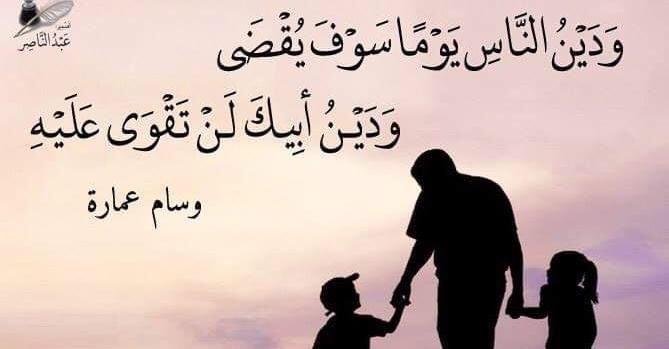
“The debt of people will be one day be repaid, the debt of your father can never be repaid.”

The world lost a gentleman of the very first degree,
A brave, noble, humble man, I’m sure you’ll all agree
.


He did not win a peace prize, did not cure the common cold,
He did not defend his country, he did not accumulate wealth and gold
.


More than that he was my dad, a leader, a loving friend,
A father to be proud of, a fighter ’til the end.

From a proud son…

Ismail ibn Nazir Satia (one who is in dire need of Allah’s forgiveness, mercy and pleasure)

27th November 2020 – 7 years today

Categories
Ruqya

Ruqya Kit

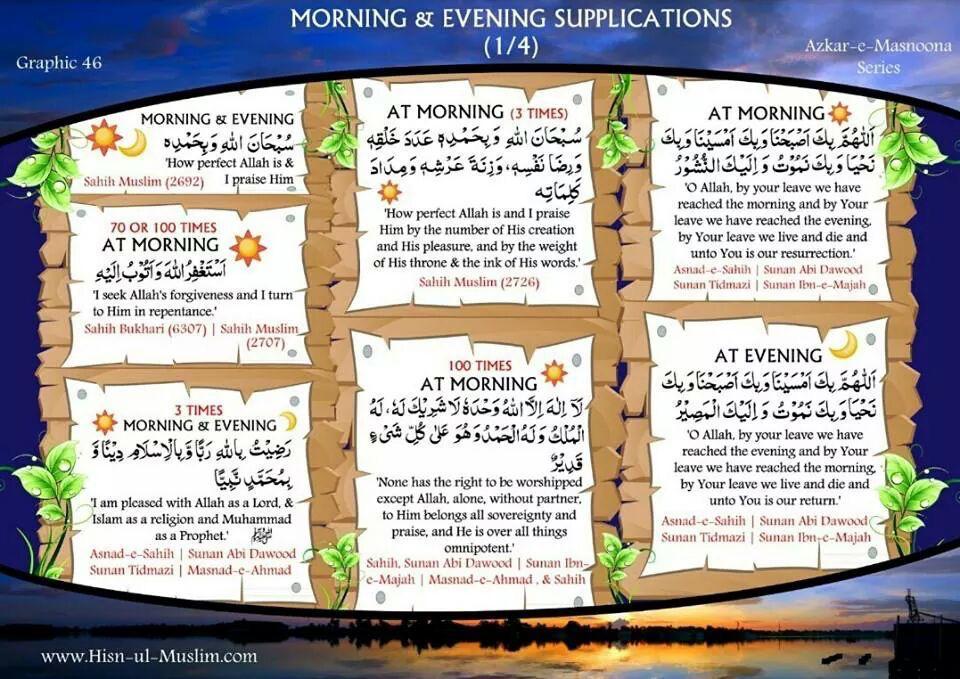
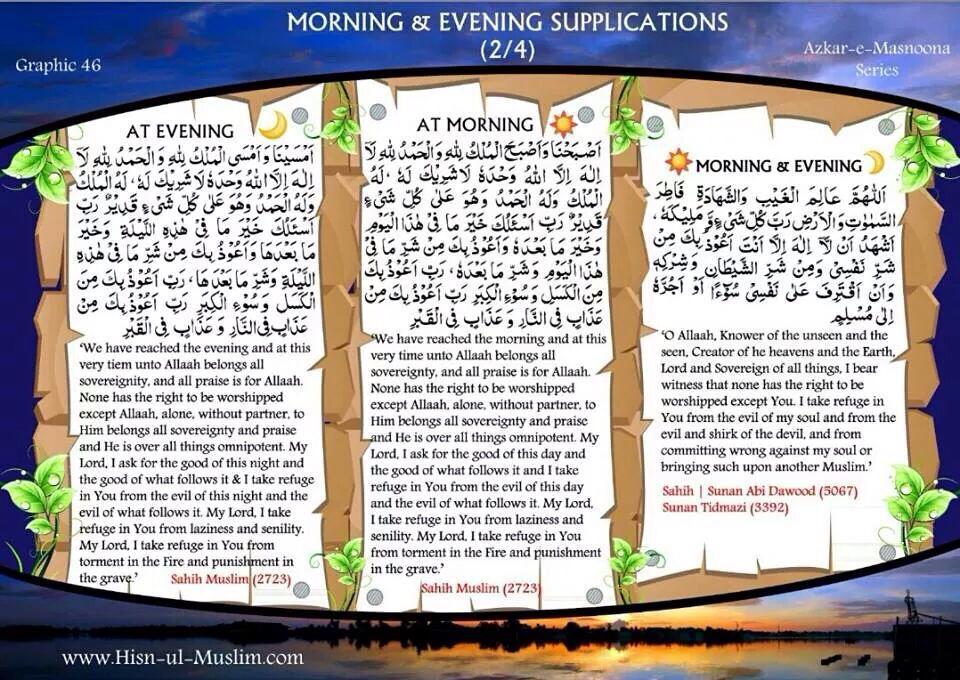
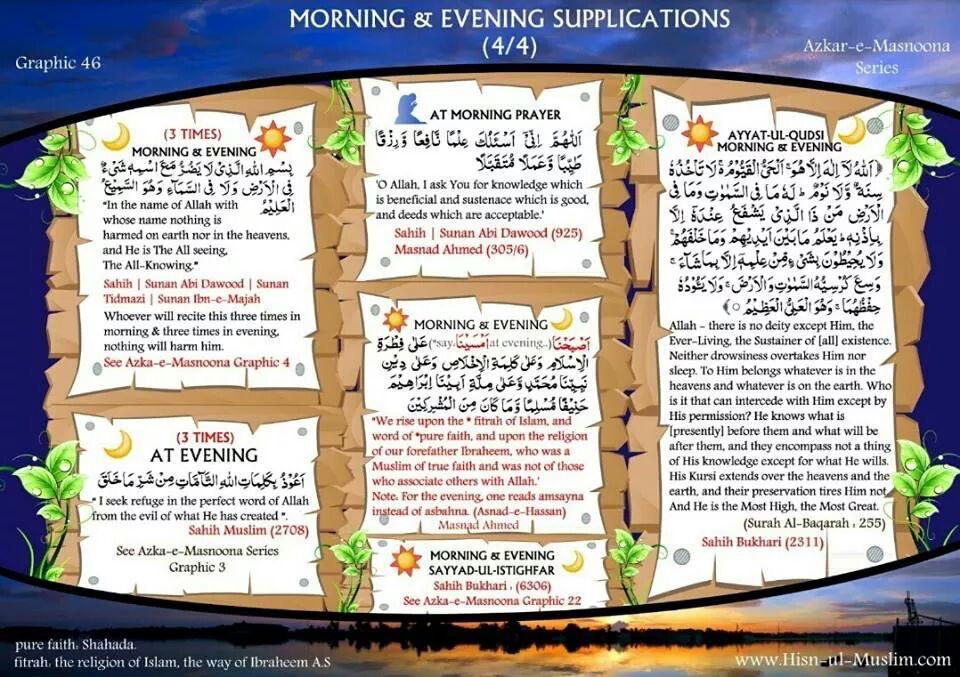
Read daily after Fajr (morning) and Asr (evening)
Listen to the Ruqya Daily at home, NOT when driving nor at work!
The Messenger of Allah (ﷺ) said: “Do not turn your houses into graves. Indeed Ash-Shaitan does not enter the house in which Surat Al-Baqarah is recited.” (Tirmidhi)
How to do Ruqya on yourself

https://www.schoolquran.com/ISLAMIC-BOOKS/English/Manzil_Arabic_English_Version.pdf

MANZIL IN ENGLISH

Categories
Miscellaneous

9 Tips to Improve Your English

1) Know your audience and choose your style accordingly.

2) Read and practise! Read newspapers especially broadsheets, highlight words and remember them. 

3) Listen and practise! Listen out for beautifully spoken English, find scholars online who speak well and use good terminology, write down the words they use and implement them into your own terminology.3) Use Apps such as Grammarly

4) Find your best ‘English’ person and ask them nicely to proofread and/or give feedback. Remember, this takes time so try not to become too reliant and learn from them so you can become confident yourself.

5) Use a dictionary NOT necessarily a thesaurus. It’s always cringingly obvious when someone has tried too hard; use sophisticated language but let it flow naturally. Like Orwell said, why use a long word when a short word will do.

6) Commas and apostrophes are cool. Teach yourself the rules regarding these.

7)  Vary your sentence lengths so your writing sounds interesting/exciting/dramatic. Use conjunctions to create longer sentences but use short sentences too. A short sentence immediately after a long sentence always adds drama. 

8) Keep it clean and simple. Don’t over complicate your writing in the attempt to impress. This will only discompose your reader and the main purpose of your writing will be lost.

9. Finally, start a blog. Writing will help you tremendously.

Ismail ibn Nazir Satia (one who is in dire need of Allah’s forgiveness, mercy and pleasure)

10th Muharram 1441

Categories
Poems

Violence and Silence

You can’t fight violence with silence,

With silence there will always be a consequence.

Right is always right, wrong is always wrong,

This isn’t a fancy poem, this isn’t a musical song.

———————————————————————————

Whether you are Black, Brown, Yellow or White,

Whether your skin is dark or your skin is bright,

I don’t know why y’all get into a fuss and a fight,

We were all created different, but equal and right.

——————————————————————————–

Some of you look at Black people and say it’s so tight,

I think that in itself is racist – that is the height.

There are other words too but I wouldn’t ever write,

You might wana stop your tongue, you might wana give it a bite.

———————————————————————————

When you look at it in hindsight,

Whether you are brighter than the sun or darker than the night,

There’s no need to hurl abuse heavy as a meteorite,

Cos that will cause the fire to spread and you will ignite.

Just because you’re White doesn’t mean you’re right.

————————————————————————-

You can come from Africa, Ghana, Somalia or Nigeria,

Doesn’t mean you are low or should be treated as inferior.

You can be brown and come from China, Japan, Pakistan or India,

Doesn’t give you the liberty to be proud or think you are superior.

——————————————————————————-

Iraq, Libya, Yemen and Syria,

Tunisia, Palestine, Bolivia and Algeria …

We all have something in common, something familiar

It may sound strange, sound weird and peculiar.

But that’s what God taught us, what is in the Shareeah,

He SWT never judges you by your face, always by your interior.

—————————————————————————-

We’re all a bit racist, we’re all a bit stereotypical,

I don’t expect worldwide change from my words – but I hope they’re powerful and not just lyrical.

I’m not a politician, I’ve never been political,

I just speak my mind, speak my heart, which is just typical.

——————————————————————————–

I practise what I preach, I don’t wana sound hypocritical,

But racism is growing, it’s reaching its pinnacle,

This isn’t a myth or made up – it’s actually statistical.

——————————————————————-

Black, White, Woman or Man,

The message is simple, one you can understand.

It ain’t just and it ain’t fair,

To judge someone by the texture of their hair or their colour of skin,

To judge someone by the country they’re from or the village they live in,

Racism comes from within and needs to be thrown in the bin.

—————————————————————————

Murder is wrong, murder is pain, and murder is sinister,

Remember that’s somebody’s brother somebody’s sister.

I blame the people in power, the president and prime minister,

They don’t control their words and justify saying it was a tiny tongue twister.

——————————————————————————-

It was those people who created the Us and Them,

We’ve seen kids dying cos of this as young as ten,

Stuff that makes your heart and mind shake and shiver,

You don’t want to watch these things, I still feel the quiver.

They don’t care about our women, they don’t care about our youth,

They feed them lies and keep them away from the truth.

————————————————————————–

Pain is still pain, blood is still blood,

We’re are all from Adam (peace be upon him), from the same mud.

********************************************************

This poem was written to highlight the ongoing racism and prejudice in America, after the killing of George Floyd. We are all brothers and sisters in humanity, we should all feel the pain of Black people in America and across the globe. The Holy Qur’an teaches us:

“…if any one slew a person – unless it be for murder or for spreading mischief in the land – it would be as if he slew the whole people: and if any one saved a life, it would be as if he saved the life of the whole people.”
[Al-Qur’an 5:32]

Such is the value of a single human life, that the Qur’an equates the taking of even one human life unjustly, with killing all of humanity. Thus, the Qur’an prohibits homicide in clear terms.

Ismail ibn Nazir Satia (one who is in dire need of Allah’s forgiveness, mercy and pleasure)

9 Shawwal 1441

Categories
Current Affairs articles

Forty Hadith on Plagues and Epidemics

To proceed,

The tradition in Muslim religious literature of gathering collections of forty Hadiths dates as far back as the first century after the Hijrah. Abdullah ibn Mubarak al-Marwazi (Allah have mercy on him) is thought to be the first to have gathered forty Hadith in a collection. Perhaps the most well-known collection is that of Imam an-Nawawi (Allah have mercy on him), which has been translated into English, and on which there are several commentaries.

The practice of gathering forty Hadiths springs from a Hadith, narrated through several Companions, which puts the spiritual rank of religious scholarship within easy reach of the ordinary believer: “Whoever memorises forty narrations for my nation in matters of this religion, Allah will raise him up a scholar and I shall be an intercessor and witness for him on the Day of Rising.”

Allah make us from them.

Ismail ibn Nazir Satia (one who is in dire need of Allah’s forgiveness, mercy and pleasure)

15 Shaban 1441

Categories
Poems

Six Years On…

Abu Hurairah (RA) narrated that the Messenger of Allah (peace be upon him) said: “Three supplications are accepted, there is no doubt in them (about them being accepted): The supplication of the oppressed, the supplication of the traveller, and the supplication of his father against his son.”

(Jami`at-Tirmidhi, Book 27, Hadith 11)

Six years on, how quickly time has gone.

Six years on, the knight that once shone,

Is resting in his grave, with the help of no one.

He is covered from head to toe in dust, every single bone,

We can no longer hear his voice, nor listen to his tone.

We are deprived of his beautiful countenance[IS1] , the crispy smile was always known,

A smile which could melt a heart, even if it was made out of stone.

You spread your warmth everywhere, your seeds of graciousness were planted like an acorn,

Today, we see those fruits and high they have grown.

Allah protected you yesterday and will protect you today from even the prick of a thorn,

Because you left this world with a clean heart, not owing a debt and not owing a loan.

Let this rhyme be a reminder, for each and every one of us that we too have a time,

Death hovers over all of us, just like a drone.

Death falls suddenly and takes your soul as fast as a cyclone,

Death doesn’t announce on a speaker system, nor uses a microphone.

Ismail ibn Nazir Satia (one who is in dire need of Allah’s forgiveness, mercy and pleasure)

Categories
Ruqya

Why Ruqya?

بسم الله الرحمن الرحيم

We will all be aware that every sect, race, and religion has corrupt and bad individuals. As Muslims, we believe Islam is perfect, but Muslims are not. In light of this, we will understand teachers are meant to educate our children but many abuse our children. Doctors are meant to cure the ill, there are doctors who have killed people. Police officers are meant to protect the people, we often hear of the police abusing their power and authority. This in no way or shape means we stop using the above services, which would be preposterous and outrageous for anyone to claim that. What we would advise is we be cautious and take preventive measures, as the rule is “prevention is better than cure.”

In recent times, there has been a lot of exposure to Black Magic, Taweez, Ruqya and Jinns etc. The aim of this article is to accurately, fairly and accurately clear some of the myths regarding this subject.

We will start by explaining and proving from Quran and Hadith whether or not Black Magic exists, as well as Jinns and Jinn possession. There are a lot of Muslims out there who deny one of these or ALL of these.

The Evidence

BLACK MAGIC: Even the Prophet ﷺ had Sihr (black magic). His enemies got the most powerful sorcerer. The effect of it was He kept thinking he needed to do a ghusl. It was done by a Jewish man Labeed ibn A’sam, who took hair from the comb of the Prophet ﷺ and date skin from a tree. Eventually, they found the well which had date palms like the devil’s horns. The Hadith is in Bukhari.

JINN: The Messenger of Allah ﷺ said, “There are Jinn in Madinah who have become Muslim. When you see one of them, call out to it for three days. If it appears after that, then kill it, for it is a Shaytan.” (Imam Malik)

EVIL EYE: Ibn ‘Abbas RA reported Allah’s Messenger (ﷺ) as saying: “The influence of an evil eye is a fact; if anything would precede the destiny it would be the influence of an evil eye, and when you are asked to take bath (as a cure) from the influence of an evil eye, you should take bath.” (Muslim)

Corrupt Practices

Whether you do down the Taweez route or the Ruqya route or any other route. It is YOUR job to ensure the person treating you or your family member is treating you according to Quran and Hadith. Allah has blessed everyone with Aqal and intellect. You don’t need to be a Mufti to know the difference between right and wrong, a lot of these things are basic common sense. For example, the Mawlana giving Taweez or the Raqi should not touch women, there is no reason for him to do this. It is not permissible for a man who believes in Allah and His Messenger to put his hand in the hand of a woman who is not permissible for him or who is not one of his mahrams. Whoever does that has wronged himself (i.e., sinned). 

It was narrated that Ma’qil ibn Yassaar said: the Messenger of Allaah (peace and blessings of Allaah be upon him) said: “For one of you to be stabbed in the head with an iron needle is better for him than that he should touch a woman who is not permissible for him.” 

Narrated by al-Tabaraani in al-Kabeer, 486

Extortionate Prices

Why do some Raqis charge extraordinary prices? One must understand the field of dealing with Black Magic and Jinn is not an easy one. They are risking their own lives and their wife’s and children’s. Raqis face a lot of backlashes and even face illnesses because of the work they do, most people don’t understand this. Unlike a doctor or a dentist or any profession really, they treat the patient and go home and switch off. Whereas most Raqis if not all get severe backlash which affects them and their families. Hence, they must do a LOT of protection and adhkar themselves. So the prices are justified, but I will add those who work from home should reduce the costs as they don’t have much expenditure compared to someone working in a clinic. Clinics have to pay rent, £40-£50 an hour is justified for the risk-taking a job they are doing.

Now, there is a rumour going around and apparently is started from an Alim in Yorkshire who goes around telling the masses, “If someone charges you for Ruqya or Taweez their work is not effective.” Subhan Allah! I have had people ring me with the same information. There is nothing wrong with receiving payment for reciting ruqya for one who is sick because it is proven in al-Saheehayn that a group of the Companions of the Prophet (peace and blessings of Allaah be upon him) set out on a journey and travelled until they made came near one of the Arab tribes. (These people were either kafirs or very stingy, (as Imam ibn al-Qayyim RH mentioned in al-Madaarij). They asked them for hospitality, but they refused to do so. Then the leader of that tribe was stung, and they tried everything but nothing helped him. Then some of them said, why don’t you go to those people who are staying (nearby)? Maybe some of them have something. So they went to them and said, O people, our leader has been stung and we have tried everything and nothing helped him. Do any of you have something? One of them said, yes, by Allah. I will perform ruqya for him, but by Allah, we asked you for hospitality and you did not give us anything, so we will not perform ruqya for you unless you give us something in return. So they agreed on a flock of sheep, then he started to blow on him and recite Al-hamdu Lillaahi Rabb il-‘Aalameen. Then he recovered quickly from his complaint and started walking, and there was nothing wrong with him. Then they have them what they had agreed to, and some of them (the Sahabah) said, Let us share it out. The one who had performed ruqya said, Do not do anything until we come to the Prophet (peace and blessings of Allah be upon him) and tell him what happened, and we will wait and see what he tells us to do. So they came to the Messenger of Allah (peace and blessings of Allah be upon him) and told him what had happened. He said, “How did you know that it is a ruqya?” Then he said, “You did the right thing.”

Narrated by al-Bukhari (2115) and Muslim (4080).

Self-Ruqya

What is the need to go to these people when the Hadith talks about self-ruqya and praying on yourself or a family member can pray manzil on you? This is correct, you can perform on yourself. Like the Prophet, ﷺ recited Surah Falaq and Surah Naas, cup his hands and blow into them, then rub all over his blessed body. At other times He ﷺ would pray Ruqya over his family members. But this is a bit like home remedies, when you have the flu or cold you can treat yourself. So, for certain minor cases, you can do self-ruqya. But nobody would disagree that if you have a major illness you need to see a doctor or even go to the hospital to seek professional advice and help. Likewise with certain cases, especially Jinn possession a person needs to see a Raqi to gain professional advice. Because what happens is when the family recite Ruqya or play it on YouTube the patient will react and the family are unaware of how to deal with the situation or they are too scared. Hence some Imams and Mawlanas need to be careful on the Mimbar before giving wrong advice like, “don’t go to raqis” “it’s all money-making” “ruqya is just a fashion” AstaghfirUllah!!! Ruqya is an authentic Sunnah of the Prophet ﷺ, especially when these imams don’t do their homework.

Categories
Ramadhan

Ramadhan Is Over

Ramadhan is over
And we need to continue the spirituality,
But we all know the reality,
Just look at the Masjid in your nearest locality,
Ramadhan is over and so is its hospitality,

Did you change and improve your personality?
Is Islam in your blood, is it a practicality?
Will it remain another 11 months, what is the possibility?
Or have you already exhaled all your spiritual oxygen, is that a probability?
So before you return to normality,
Remember that in your grave only good deeds matter, not your wealth or financial stability.

Ismail ibn Nazir Satia (one who is in dire need of Allah’s forgiveness, mercy and pleasure)

1 Shawwal 1440

Categories
Ramadhan

9 Things to Consider Before You Give Charity

  1. The first and most important point is to make sure the charity is Shariah Compliant. Let us not be naïve and think everything that has the words “Islam” or “Islamic” before it, is according to Qur’an and Hadith. Many charities do activities which are violating the laws of Allah SWT, you do not need to be a Mufti/Scholar to know this. For example, mixed events, music in their videos, qawwali is becoming common, fashion shows and makeup tutorials… the list goes on. Every sane Muslim knows these things are totally wrong in the name of Islam.
  2. Make sure the charity is under the supervision of at least one Alim or a group of qualified scholars. We see charities opening on every street corner, many of these brothers and sisters do not have knowledge of the basics of Islam. They are collecting our Zakah and Sadaqah, how can we guarantee it will be distributed correctly and accurately?
  3. Give to needy charities and not the GREEDY ones! You should be giving your money to the neediest places and the neediest charities. Some charities accumulate 40-50 million pounds a year, others are very close. Check their annual reports or search on the Charity Commission Website. Check to see how much of that money is being spent, why give your Zakah to a charity that still hoards last year’s Zakah?
  4. Ask your charity if they take admin costs for Zakah and Sadaqah, some charities take astronomical amounts! Although it is permissible to take from Sadaqah, one must ask a local Mufti if it is permissible to take admin costs from Zakah: https://islamqa.org/hanafi/qibla-hanafi/37024
  5. Ask your charity how quickly they distribute Zakah. As mentioned in point 3, some charities get millions every year. A lot of this money is hoarded in their bank accounts as they are unable to spend this money instantly. Which could mean your charity still has last year’s Zakah gathered up! Do you really want to give them this year’s Zakah? Some charities have a 30-day policy i.e. they distribute your Zakah within 30 days, I personally think this is an excellent idea.
  6. Don’t be ashamed to ask how much they pay their employees, their PR managers and the CEO. We hear about charities taking ridiculous wages due to help from Gift Aid etc. Unfortunately, the concept of kindness and consideration is disappearing from some charitable people.
  7. “You donate for the sake of Allah!” I am sure you have all heard this one before? Some defensive charity workers reply with the above statement when questioned about their practises and money management. The statement is incompetent and uneducated. Just because we donate for Allah does NOT mean in any way, shape or form we cannot question people. It is our God-given right, we are living in 21st Century Britain.
  8. Now we come on to charities collecting door-to-door. Most of us, unfortunately, donate blindly, we do not ask for a receipt, nor a charity reg number. Some of these people are not even Muslim, they just grow a beard and wear a hat or hijab for women. We must follow protocol, and ask for a certificate where it applies. We need to get rid of our ignorance and stop saying, “We donate for Allah and it is all in his hands” Definitely, you donate for Allah, but does that mean you donate to thieves and crooks because of your sheer naivety? Learn to ask a few questions, ask for their website (give it a quick google search on the doorstep), their head office location, which countries they work in etc.
  9. Make an intention, The intention is important for Zakah. AS for Sadaqah/Lillah most of us give Ma Sha Allah, very generously. But we do not make an intention, for esale thawab, for Shifa, safety from calamities, multiple intentions can be made In Sha Allah. Allah accept from one and all. Ameen.

Ismail ibn Nazir Satia (one who is in dire need of Allah’s forgiveness, mercy and pleasure)

10 Ramadhan 1440

Categories
Ramadhan

A to Z-akah

Intro

Zakah is not just any form of voluntary charity, almsgiving, tax or tithe. Nor is it simply an expression of kindness or generosity. Zakah is all of these combined and much more, for it also includes Allah-consciousness as well as spiritual, moral and social objectives. Zakah is a Divine injunction and an ordinance from Allah Himself. It is not a personal matter or a voluntary contribution; rather, it is an obligation for which one will be called to account before Almighty Allah SWT. Zakah is indispensable as it helps achieve reform, both financially and spiritually. It eliminates misery and greed from hearts and consolidates the Islamic economy, leading to its stability and prosperity.

Virtues

The Qur’an describes Zakah as 1. The means by which to attain Allah’s mercy: “With My Punishment, I visit whom I will, but My Mercy extends to all things. That (Mercy) I shall ordain for those who have God-consciousness and give their Zakah and those who believe in Our Signs.” (Surah Al-A`raf 7:156).

2. A precondition to achieve victory: “Allah will certainly aid those who aid His (cause); for verily Allah is Full of Strength, Exalted in Might, (Able to enforce His Will). (They are) those who, if We establish them in the land, establish regular prayer and give their Zakah, enjoin the right and forbid wrong: with Allah rests the outcome of all affairs.” (Surah Al-Hajj 22:40-41).

3. A sign of brotherhood in religion: “But (even so), if they repent, establish regular prayers, and give their Zakah, they are your brethren in Faith.” (Surah Al-Taubah 9:11). 4. A distinctive feature of the faithful community: “The Believers, men and women, are protectors one of another: they enjoin what is just and forbid what is evil: they observe regular prayers, pay their Zakah and obey Allah and His Messenger. On them will Allah pour His Mercy: for Allah is Exalted in Power, Wise.” (Surah Al-Taubah 9:71).

Definition

The word Zakah is the infinite form of the verb “zaka”, meaning to grow, to increase and to purify. When said about a person, it means to improve or to become better. Consequently, Zakah means, blessing, growth, cleanliness and betterment.

In the Shari’ah, the word Zakah refers to the determined share of wealth prescribed by Allah to be distributed among the deserving categories of those entitled to receive it. Zakah is a divinely ordained institution and is regarded both as a right of Allah as well as the right of the poor. In fact, an Islamic government can forcibly take Zakah from the rich if the rich withhold it.

Zakah in the Qur’an The word Zakah is mentioned thirty-two times in the Qur’an. In thirty from these thirty-two, Zakah is in its technical meaning of paying Zakah. From these thirty, Zakah has been interlinked with Salah, the obligatory prayer, twenty-eight times.

  1. It is important to have a fixed date (in the Islamic calendar) when you pay your Zakah annually to avoid late payment. If you cannot remember the date you first became the owner of the Nisab, then the date should be estimated. If this is not possible, then a specific Islamic date should be selected arbitrarily and adhered to annually.
  2. Zakah is not due on children who are minor and prepubescent in the Hanafi school. However, according to the Shafi’i, Maliki and Hanbali schools, Zakah is obligatory on the wealth of minor children also.
  3. Zakah on buy-to-let property Zakah is not due on the market value of one’s buy-to-let property. It is only payable on the net rental income on one’s Zakah anniversary.
  4. If you have borrowed money, you can deduct the forthcoming 12 months’ worth of repayments from your total balance of Zakatable assets, the same applies for a mortgage. The reason for this is to ensure a Zakah payment doesn’t impact your ability to repay the debt owed to others.
  5. Zakah on money lent to others. Money lent to others is still Zakatable. Zakah is due on it yearly whilst lent. However, you can pay yearly for it, or pay for all previous years once you get money back.
  6. Zakah on home businesses & home catering. If you run a catering business from home or even sell small items such as cakes and biscuits, Zakah is payable on the price you sell these items.
  7. Zakah on a joint account. If the share of one partner can be determined in a joint account, they will be liable to pay that amount. Otherwise, a couple can treat their joint account as 50:50 and pay accordingly.
  8. Liability deductions for Zakah. If you’ve booked to go for Hajj and owe the travel agent, you can deduct the amount owed from your Zakah calculation. Zakah is not payable on that amount – it is as if it doesn’t exist as it is engaged with a current expense.
  9. Zakah is not due on personal belongings regardless of their value such as one’s house, car, clothes, phones, laptops, appliances and furniture.
  10. The Hanafi School treats all gold and silver jewellery as Zakatable, regardless of whether it is worn or stored. However, the other schools of Fiqh treat gold and silver for personal use as exempt from Zakah.
  11. Zakah for gold stores: Have you ever wondered how much Zakah is due on a gold store?? Every gold/silver item in the store is Zakatable at their retail price. A goldsmith may give the gold in Zakah if he does not have that sufficient cash flow.
  12. Zakah is not payable on unlawful earnings from non-Shariah compliant avenues. 100% of the earnings must be dispensed in charity as a relinquishment of unlawful wealth & not as a rewarding act.
  13. Zakah can be paid in advance of one’s Zakah anniversary. Once, Al-Abbas (may Allah be pleased with him) came to the Prophet ﷺ and asked if he could pay Zakah in advance. The Prophet ﷺ permitted paying in advance. Al-Tirmidhi) A business may set up a monthly direct debit of Zakah to spread their Zakah payments across the year. However, these instalments should be in advance for the following year & not in arrears.
  14. If Zakah has not been given for several years, then it still must be given. The person must think carefully about how much money the person had every year and then give Zakah accordingly. It is better to give a little extra as a precaution.
  15. Zakah is not payable on the value of diamonds, other precious stones in one’s ownerships and in jewellery.
  16. It is an obligation to pay Zakat on one’s business stock. Samurah bin Jundub (may Allah be pleased with him) said: ‘’The Messenger of Allah ﷺ commanded us to give Sadaqah (Zakah) on what we intended to trade.’’ (Abu Dawud)
  17. One month’s worth of council tax can also be deducted and if your phone bill falls within your Zakah anniversary date you can deduct one month’s bill.
  18. It is wrong to estimate Zakah e.g. Last year I gave £200, so this year it must be the same. As you may have cash in the house which is extra and sometimes a person has £200-£300 in his/her house including their wallet and purse. This must be added to the Zakah assets.
  19. Interest money must ALL be given to the charity without hope for reward/.
  20. Zakat al-Fitr/Sadaqah al-Fitr has the following benefits: 1) It’s an atonement for any shortfall in Ramadhan of the payer 2) it’s a means of happiness & a provision for the recipient on Eid day.

Approved by Mufti Ibrahim Saheb Raja (Ustadh of Hadith at Bury Darul Uloom)

Without Zakah, there can never be profit in business. Sayyidah Aishah (may Allah be pleased with her) narrates: “Sadaqah (Zakat) is never intermingled with any amount of wealth without destroying and rotting it.” (Al-Bayhaqi)

Zakah payments preserve your wealth, they do not destroy nor deplete your wealth. Interest income depletes your wealth. “Allah destroys interest and increases charity. And Allah does not like every sinning disbeliever.” (Quran 2:276)

Give Zakah & Sadaqah to help the needy people & the suffering Ummah with a firm conviction of the promises of Allah for you in this world & Hereafter for spending your wealth.

When Zakah is not paid, a business portfolio is exposed to loss of blessings & the displeasure of Allah. Therefore, despite an annual turnover of millions & a high-profit margin, a business person is exposed to loss in this world and the Hereafter.

Imam al-Sarakhsi states that a Zakah payer receives more reward in giving Zakah to his needy, eligible relatives in another town as it entails maintaining family ties together with discharging their obligation.-(Mabsut)

Ibn RH said, “The best of charity [and zakah] is that which the greatest need, or is a means to the greatest benefit.” [Hashiya Ibn Abidin] Make your Zakah revive & resuscitate the Ummah.

The four mainstream schools of Islamic jurisprudence all agree that Zakah is due immediately. Zakah is an immediate obligation as Allah has instructed us to pay immediately in the following verse: “And give its due on the day of its harvest.” (Qur’an, 6:141)

Ismail ibn Nazir Satia (one who is in dire need of Allah’s forgiveness, mercy and pleasure)

1 Ramadhan 1440