Categories
Current Affairs articles

The Dangerous Relationship Between Money & Dawah

http://www.islam21c.com/islamic-thought/muslim-speakers-dawah-money/

All praises be to Allāh, and may peace and blessings be upon His prophet Muḥammad (sall Allāhu ʿalayhi wa sallam). By the grace of Allāh, the following remarks are not indicative of most Du’āt and scholars, but it is nonetheless a growing problem which needs to be nipped in the bud…

Introduction

I have been contemplating talking about the issue of Muslim speakers charging a lot of money for “Dawah” for a long time. Although I was initially reluctant to speak about it, I came to the decision to do so as the problem is getting no better. I feel that treatment for this problem should be sought and the issue can no longer be taken lightly. The key issue for me is the fact that Muslim speakers are among the carriers of the legacy of our Prophet (sall Allāhu ʿalayhi wa sallam). As such, whether they realise it not, they are role models for Muslim communities. Allāh (subḥānahu wa taʿālā) says,

“Allāh will exalt in degree those of you who believe, and those who have been granted knowledge…”[1]

Likewise His Prophet (sall Allāhu ʿalayhi wa sallam) said,

“Scholars are the heirs of the Prophets, and the Prophets bequeath neither dinar nor dirham, rather their inheritance is knowledge, so whoever acquires it has gained a great share.”[2]

Dawah (calling) to Allāh is the noblest activity a person can be involved in. Allāh says in the Quran,

“And who is better in speech than one who invites to Allāh and does righteousness and says, ‘Indeed, I am of the Muslims!’?”[3]

This should not be treated as a job otherwise it will lose its spirit and the main factors that instil it with the power of influence: Barakah (divine blessing) and Ikhlās (true sincerity). These are not just two common Islamic words used to describe what is needed for giving simple reminders in Masājid. Rather, they are the fundamental ingredients for any successful Islamic movement that aims to transform complex societies. Hence, preachers, callers to Islām, speakers, students of knowledge and scholars need to build them and maintain them in themselves first, before asking others to have them. No Dawah will flourish and be successful, no matter how “professional looking” it may be, without the blessings of Allāh – which is a reward for the truthfulness of the people behind it. Allāh taught us the supplication of the Prophet Shuʿayb (ʿalayhi al-Salām):

“And my success is not but through Allāh. Upon Him I have relied, and to Him I return”.[4]

Allāh also says:

“And if only the people of the cities had believed and feared Allāh, We would have opened upon them blessings from the sky and the earth; but they denied [the messengers], so We seized them for what they were earning.”[5]

The Muslim community should also protect their Imāms, scholars and speakers. Although these remarks might be seen as criticism of Islamic speakers and scholars, they should also serve as a protection for them against their nafs (self; ego) and the temptations of earthly wealth. The Prophet (sall Allāhu ʿalayhi wa sallam) warned us that there is nothing more fearful and destructive to a person’s Dīn than the fitna (trial) of wealth and fame.

“Two hungry wolves set upon the midst of a flock of sheep are no more destructive to them than a man’s greed for wealth and fame is to his Dīn.’‘[6]

Muslim speakers should acknowledge that the fitna and desire for wealth and money are the second and third biggest temptations of the triangle of temptations: women, wealth and fame. Hence, they should read this article with a positive mind-set while seeking to improve and rectify their shortcomings. To illustrate what we are talking about, what follows are some unfortunate examples of the wrong practices that are becoming more and more common when Dawah organisations invite speakers to deliver Islamic courses or lectures.

It must be stressed, however, that this is not the case for Dawah in general, al-Hamdu lillāh. A great multitude of Imāms, du’āt and scholars continue to uphold the lofty standards set by the example of the Messenger of Allāh (sall Allāhu ʿalayhi wa sallam). This is why the rise of this problem is all the more crucial to highlight and nip in the bud before it begins to tarnish the carriers and conveyors of Prophetic guidance.

Real life examples of the problem

– A speaker was invited to a city to attend a conference. During his stay in the city he visited a mosque for a Friday prayer. For whatever reason, the Khatīb of the mosque was not present and the speaker was approached and asked to deliver the khutbah in the mosque in the city in which he was already present. He said he would do so if he were paid an extra £1,000.

– A speaker delivered a lecture at an event. After this he sat amongst the members of the audience. There so happened to be a 10 to 15 minute segment in which a brother was supposed to offer reminders to the audience but he was unable to do so. The organisers asked the speaker to cover these 15 minutes. He requested an extra £200 to step out of his chair and share a reminder with the audience.

– One speaker was invited to speak at an event as it was known he would be travelling nearby on his way back to his home country. The organisers requested he make a stop-over at their event and offered to pay the difference in the journey. The speaker agreed to attend on condition that his entire travel expense be paid for, including the full price of his ticket. He requested a stay at a 5-star hotel as it would be a 12 hour stop over, and he later called to inform the organisers that he would be bringing his wife and required her ticket to be paid for as well.

– An Imām was invited to lead Tarāwīḥ prayers in a mosque in Ramadān. Because his recitation was widely appreciated, the mosque requested he extend his time leading the prayers each night from one hour to an hour and fifteen minutes. For extending his Salah for fifteen minutes, the Imām demanded more money.

– Some speakers even assign their personal assistants to speak on their behalf. They claim they are professionals and hence ask for “professional” contracts between the organisation of the speaker and the organisation inviting the speaker. I was shown a “professional” contract in which a speaker outlined his payment demands and stipulated that if the money was not paid on time a charge of 20% would be added to the fee. Perhaps they thought that charging riba (interest) is part of “professionalism”!

This is becoming ridiculous. The sorts of things some speakers are asking to be paid for or compensated are getting out of hand. The organisations that are inviting them are usually grassroots organisations that depend on donations from the public sphere. These organisations have budgets managed by the penny in order to run their activities and events, and yet, some of our speakers, our shuyūkh and our du’āt are demanding business class flights, specific types of beds, chauffeurs, masseuses and all manner of luxury. A brother in an Islamic organisation once told me that a speaker specifically defined Evian bottled water as the only water he drinks!

– I was once invited to a particular country to take part in a conference for a new organisation. They invited a number of speakers from different countries and they offered all of us business class flights. As this is a far away country, the business class would cost them unbelievable amounts of money. I thought of the poor children who are dying everyday due to hunger across that country and of myself taking a business class flight to that country, or to any other country, for Dawah. I remembered how Sheikh ʿAbdulraḥman al-Sumait (raḥimahu Allāhu), the most active Muslim preacher in that same region, used to travel for over 30 years in many such countries to deliver real Dawah. I also remembered Sheikh Sāliḥ al-Hussayyin, a senior scholar of Saudi Arabia who was also the Chief of the Administration of the Affairs of the Two Holy Mosques. His position and family made it feasible for him to travel in first or business class, and yet, he refused to do so as he was giving Dawah; in fact there were reports that he used to sleep in a masjid instead of in hotels during his travels.

While I thought of this, I was so embarrassed that I could not bring myself to accept the offer to travel in business class for Dawah. When I arrived there, I found that all the other speakers had accepted the offer. No one denied it! I was utterly confused.

I showed my surprise at the offer and the acceptance of the offer despite the financial difficulties this organisation—and in fact its whole country—was going through. Their answer was simply: We never requested it, we just accepted their offer.

After my answer for a question regarding this issue was uploaded online, I received so many messages from many brothers, sisters and organisers who were suffering in silence. They provided detailed examples of speakers’ demands. A brother sent me the following:

“It’s a big crisis! I’ve seen du’āt who asked for £6K per day! One speaker from the U.S. asked for £75K for one weekend. Two speakers wouldn’t pray Tarāwīḥ in Ramaḍān when on tour and, instead, spent their nights playing PlayStation games in their hotel rooms. Some speakers have a list of restaurants they will eat in and refuse to eat anywhere else. Some are driven by brothers for an entire tour but don’t even bother to learn the brother’s name because ‘he’s only a driver’. Some even refuse to give reminders after jamaʿah prayer during Ramaḍān and when they do finally say some words, they repeat the exact same reminder that has been on their YouTube channel for years; nothing new.”

Another brother told me a speaker asked for 50% of the money that was raised during a fundraising event. Another told me about a speaker who was getting £1,500 every day in Ramaḍān for fundraising for different organisations. A fourth brother told me about an organisation that arranged a tour for an Imām leading Tarāwīḥ in Ramaḍān who was charging mosques or halls £5,000 per night. A speaker requested through his “secretary” a First Class ticket for making a journey within Europe, which would not take more than two hours despite the fact that it is four times the price of the Standard class.

Some of these examples are incomprehensible; the most ridiculous one being that the director of an Islamic organisation told me of a speaker who asked for 5 personal assistants to accompany him for his journey to deliver two or three talks in a conference. His justification was,

“We should not accept that actors and footballers are paid more than Islamic preachers.”

It is an unfortunate truth that on many occasions, many speakers from many countries seem to be more keen to capitalise on people’s needs. It is not about £10 or £1,000. The problem is the concept and the attitude some of these speakers have; that they would make inordinate demands to give Dawah, to give reminders to people, to lead Salāh. This is not Dawah, this is a holiday and a business.

Double Standards – Actions Speak Louder Than Words

The matter here is not about whether it is ḥalāl or ḥarām to make money from giving Dawah. One of the many issues we have towards this attitude is the double standards of these speakers who promote one manner of living and yet they take advantage of others to live another lifestyle. As speakers we are quick to quote a number of āyāt on the distractions of the life of this world, those āyāt that confirm that this life is merely an amusement or game.

“Know that the life of this world is but amusement and diversion and adornment and boasting to one another and competition in increase of wealth and children – like the example of a rain whose [resulting] plant growth pleases the tillers; then it dries and you see it turned yellow; then it becomes [scattered] debris. And in the Hereafter is severe punishment and forgiveness from Allāh and approval. And what is the worldly life except the enjoyment of delusion.”[7]

As speakers we encourage people to be fearful of Allāh so that they may be charitable and not be so indulged in the Dunya. We remind our listeners of the ḥadīth of the Prophet (sall Allāhu ʿalayhi wa sallam) who said, “Is not the world cursed and everything in it? It is so except for the remembrance of Allāh and what facilitates it…”[8] or his (sall Allāhu ʿalayhi wa sallam) advice to fear the Dunya.

Abū Saʿīd Khudri reported that Allāh’s Messenger (sall Allāhu ʿalayhi wa sallam) said,

“The world is sweet and green (alluring) and verily Allāh is going to install you as vicegerent in it in order to see how you act. So avoid the allurement of women: verily, the first trial for the people of Isrā’īl was caused by women. (And in the ḥadīth transmitted on the authority of Ibn Bashshar the words are:) so that He should see how you act.”[9]

How could I possibly discourage people from being so immersed in the luxury of the Dunya and then be the first one to chase its luxury and decoration?

Requesting travelling expenses or other such necessary expenses is understandable. Even requesting, openly and honestly, that you would appreciate any money the organisation is able to pay is acceptable, although it is not necessarily the best. But, why must it be a First Class flight? Why must it be a 5-star hotel? Why must the room be a particular width and length with a particular window view? We must bring an end to such nonsense and extravagance.

As a courier of the words of Allāh and His Messenger, I should feel embarrassed to ask for luxurious enticements of the Dunya that I have no need for. If we were to tell people who donate their money to our organisations that their money would go to pay for the luxury and ostentation of certain speakers we could be sure they would decline the need to listen to these speakers. Here I ask every single speaker who requests luxury treatment: do you really care for the hundreds of thousands of children who die every day due to a lack of basic necessities? If you are talking about Dawah and caring for people’s religion, then you should ask yourself whether you care for thousands of poor people who leave Islām due to evangelicals taking advantage of their financial needs.

Examples from the life of the Prophet (sall Allāhu ʿalayhi wa sallam)

In response to what I am sure is the primary ‘reason’ behind these speakers’ demands—that they have families to support—I must ask: Is this lecture you are going to deliver the only source of income you have? And, if it is so, do not make a business out of it. Dawah is not meant to be business or to make money. This leads us to another important point which is the need for Muslims to establish their own institutions that can fund these speakers. It is a call for businessmen to sponsor not only Dawah projects but imāms, scholars and speakers. Until then, speakers should remember that they are the leaders for the Ummah and leaders are required to sacrifice more than the rest of the Ummah. This is how all our leading predecessors lived their lives following the model of the Prophet (sall Allāhu ʿalayhi wa sallam):

The Prophet (sall Allāhu ʿalayhi wa sallam) was seen by ʿUmar (raḍiy Allāhu ʿanhu) with dust on his clothes from having slept on the floor. ʿUmar (raḍiy Allāhu ʿanhu) wished to provide the Prophet (sall Allāhu ʿalayhi wa sallam) with a more comfortable bed and the reply was,

“What have I to gain in this world? The like of this world is as that of a traveller who is travelling in the sun and he sits under a tree momentarily and then gets up and continues on.”[10]

It was narrated that ʿĀ’ishah (raḍiy Allāhu ʿanha) said: The Messenger of Allāh (sall Allāhu ʿalayhi wa sallam) never ate his fill of wheat bread for three days in a row, until he passed away.[11]

She (raḍiy Allāhu ʿanha) also said: We used to look at the new moon, then the new moon, then the new moon, three new moons in two months, and no fire would be lit in the houses of the Messenger of Allāh (sall Allāhu ʿalayhi wa sallam). She was asked: What did you live on? She said: The two black ones, dates and water, but the Messenger of Allāh (sall Allāhu ʿalayhi wa sallam) had some neighbours from among the Ansār and they had milk-animals; they would send some of their milk to the Messenger of Allāh (sall Allāhu ʿalayhi wa sallam) and he would give it to us to drink.[12]

It was narrated from her (raḍiy Allāhu ʿanha) that she said: The Messenger of Allāh (sall Allāhu ʿalayhi wa sallam) died when there was nothing on my shelf that a living being could eat except a handful of barley.[13]

And she (raḍiy Allāhu ʿanha) said: When the Messenger of Allāh (sall Allāhu ʿalayhi wa sallam) died, he had not eaten his fill of bread and olive oil twice in one day.[14]

It was narrated that an-Nuʿmān b. Bashīr (raḍiy Allāhu ʿanhu) said: ʿUmar mentioned what people had got of worldly gains and he said: I saw the Messenger of Allāh (sall Allāhu ʿalayhi wa sallam) spending the whole day suffering because of hunger, and he could not even find inferior-quality dates with which to fill his stomach.[15]

It was narrated from Anas b. Mālik (raḍiy Allāhu ʿanhu) that the Prophet (sall Allāhu ʿalayhi wa sallam) never ate soft bread or a roasted sheep until he met Allāh.[16]

It was narrated that Ibn ʿAbbās (raḍiy Allāhu ʿanhu) said: The Messenger of Allāh (sall Allāhu ʿalayhi wa sallam) would remain hungry for several nights in a row, and his family would not be able to find any supper, and most of their bread was barley bread.[17]

It was narrated from Abū Hurayrah (raḍiy Allāhu ʿanhu) that the Messenger of Allāh (sall Allāhu ʿalayhi wa sallam) used to tie a stone to his stomach because of hunger.[18]

ʿAmr b. al-Hārith (raḍiy Allāhu ʿanhu) said: The Prophet (sall Allāhu ʿalayhi wa sallam) left nothing behind except his weapon, his white mule and some land that he left behind as a charity.[19]

We could go on and on in describing the life of the Prophet (sall Allāhu ʿalayhi wa sallam) but I hope this will suffice for our speakers, imāms and duʿāt. Unfortunately, some will not be convinced and would still argue that this was the Prophet (sall Allāhu ʿalayhi wa sallam) and they cannot be like him. They may also say that the context has changed. It is for this reason I am dedicating an entire, and rather lengthy, article to discussing this issue.

Making money from Dawah:

On another note, it should be mentioned that scholars have differed on whether taking money to teach Qur’ān in particular or Islamic knowledge in general is acceptable. The two opinions are:

(i) that it should be taught for free;

(ii) that it is permissible to accept payment for it.

Each side has his own evidence and proofs and hence there is not much point of using these textual evidences themselves to give preference for one opinion over the other. Rather, we should focus on what is agreeable by all or most of the scholars. The speakers, when taking money for delivering lectures or any Islamic activity, should bear in mind some key points:

I. Their intention should not be money, wealth, the Dunya or doing business. Rather, it should be Dawah. Receiving salary or compensation should be, at best, a secondary intention. The best rule to apply here is what Ibn Taymiyyah mentioned regarding taking money to perform Ḥajj. If we make Ḥajj for someone with the intention of making money our Ḥajj will be invalid, however, if we accept money in order to facilitate us making Ḥajj then, inshā’Allāh, we receive the reward of Ḥajj. Similarly, we may take money to be able to give Dawah, but we should not give Dawah in order to take money.

II. Speakers should not take advantage of the situation as it means that they are using Dawah for a personal gain. Furthermore, it is unethical to take financial advantage of situations related to the Dīn. I have seen speakers take advantage while staying in the hotel as it was paid for by the organisers. In a single night, one speaker made a telephone call which cost more than £130. Another speaker was eating and drinking as if he had been starving for a year.

III. In the case of the speaker who does not have a job, then he should deal with Dawah as he would deal with a job, expecting similar payment, contractual agreements, penalties or even compensation. However, some du’āt and speakers have business managers to run the financial issues related to his Dawah. Before agreeing to deliver a lecture, the organisers have to go through a nightmare in negotiating the terms and conditions with personal assistants or business managers. If the speaker is in a difficult financial situation I recommend he make a request of the organisers to be given anything they can afford by way of a gift or help. He should not make it the fee for his talk. 

Anas b. Mālik narrated that the Messenger of Allāh (sall Allāhu ʿalayhi wa sallam):

“Whoever makes the Hereafter his goal, Allāh makes his heart rich, and organises his affairs, and the world comes to him whether it wants to or not. And whoever makes the world his goal, Allāh puts his poverty right before his eyes, and disorganises his affairs, and the world does not come to him, except what has been decreed for him.”[20]

IV. Speakers should remember that whatever amount of money they save an organisation will be considered as Sadaqah given by them. When the speaker avoids requesting luxury accommodation, transportation or food, then he is actually saving some money that will later be used for Dawah.

V. Speakers should remember that any behaviour can be given a justification. However, they should remember that they are dealing with Allāh. Allāh is supervising all of our actions.

“Rather, man, against himself, will be a witness, Even if he presents his excuses.”[21]

VI. It is impermissible, in many cases, for Muslim organisations to spend Dawah money on luxuries or what is beyond the need. Examples include business class tickets, expensive hotels, food and transportation or even spending money. The fundamental principle is, Sadaqah money is to be spent according to what it was requested for along with the intention of the giver. The organisation is just an agent to distribute the money on behalf of the giver and hence they do not have the freedom to spend it the way they decide. This is a topic I will elaborate on in further detail in another article, inshāAllāh.

My dear brothers and sisters, we have to remember that Allāh is our Master and our Lord. He owns everything and He controls everything. He turns the heart of people and He aids those who aid His Dīn. He is the one who said,

“O you who have believed, if you support Allāh, He will support you and plant firmly your feet.”[22]

Hence, we should remember that no matter how hard we try to be successful in our Dawah, the first element for success of our Dawah comes from Allāh. He (subḥānahu wa taʿālā) gives success in Dawah to those whom He knows are honest, sincere and truthful about Dawah.

“And Allāh will surely support those who support Him. Indeed, Allāh is Powerful and Exalted in Might.”[23]

Source: www.islam21c.com

Notes:

[1] Al-Qur’ān, 58:11

[2] Narrated by Tirmidhi, Abū Dāwūd and others.

[3] Al-Qur’ān, 41:33

[4] Al-Qur’ān, 11:88

[5] Al-Qur’an 7:96

[6] At-Tirmidhi

[7] Al-Qur’ān, 57:20

[8] Sunan At-Tirmidhi 2322

[9] Reported by Saḥīḥ Muslim, no 2742.

[10] Jami` at-Tirmidhi 2377, Book 36, Hadith 74

[11] Narrated by al-Bukhāri (5374) and Muslim (2970)

[12] Narrated by al-Bukhāri (2567) and Muslim (2972)

[13] Narrated by al-Bukhāri (3097) and Muslim (2973)

[14] Muslim (2974)

[15] Muslim (2978)

[16] Narrated by al-Bukhāri (5385)

[17] Narrated by at-Tirmidhi (2360); classed as Ḥasan by al-Albāni in Saḥīḥ at-Tirmidhi

[18] Narrated by Ibn al-A‘rābi in al-Mu‘jam (21); classed as Ḥasan by al-Albāni in as-Silsilah as-Saḥīḥah (1615)

[19] Narrated by al-Bukhāri (3098)

[20] Tirmidhi Vol. 4, Book 11, Ḥadīth 2465. Some scholars believe that it is strong and some believe that it is weak.

[21] Al-Qur’ān, 75:14-15

[22] Al-Qur’ān, 47:7

[23] Al-Qur’ān, 22:40

Categories
Shaykh Saleem Dhorat

Taqwā and its Benefits

By Hadrat Mawlānā Muhammad Saleem Dhorat hafizahullāh

After the passing of Ramadān, it is important that we remind ourselves of the most important lesson the blessed month left us with, that of bringing Taqwā into our lives and doing our utmost to hold fast to it, until we breathe our last.

The importance of Taqwā cannot be over emphasised. Allāh ta‘ālā has mentioned the word Taqwā in the Glorious Qur’ān around 70 times in the imperative form and over 250 times in its various derivative forms. The Glorious Qur’ān begins with the statement:

This Book has no doubt in it – a guidance for the Muttaqīn. (2:2)

In other words, though in principle the Glorious Qur’ān is a guidance for all, only those who develop the quality of Taqwā can truly benefit from it.


Definition of Taqwā

Taqwā has been defined in many ways; the summary and conclusion of which is that a person creates a barrier between himself and the disobedience to Allāh ta‘ālā. Consequently, he will never plan to commit a sin, rather he will exert all efforts to abstain from any form of disobedience to Allāh ta‘ālā. The result of this will be every type of success in both worlds. Allāh ta‘ālā states:

…And fear (disobeying) Allāh so that you may become successful. (3:200)


Benefits of Taqwā

There are many benefits for the one who adopts Taqwā as stated in the Glorious Qur’ān: 

1. Allāh ta‘ālā will make all matters easy for him. Allāh ta‘ālā states:

.…And the one who fears (disobeying) Allāh, He shall bring about ease for him in his affair. (65:4)

2. Allāh ta‘ālā will provide him with a solution to all his problems. Allāh ta‘ālā states:

.…And the one who fears (disobeying) Allāh, He shall bring forth a way out for him, (65:2)

3. Allāh ta‘ālā will sustain him from all aspects. Allāh ta‘ālā states:

(And the one who fears (disobeying) Allāh).… And shall provide for him (what he needs) from where he does not even imagine (65:3)

4. Allāh ta‘ālā will be with him and assist him. Allāh ta‘ālā states:

Surely, Allāh is with those who adopt Taqwā (16:128)

….be sure that Allāh is with the Muttaqīn (9:36)

5. Allāh ta‘ālā will forgive his sins. Allāh ta‘ālā states:

.…And the one who fears (disobeying) Allāh, He shall cancel (forgive) his sins… (65:5)

6. Allāh ta‘ālā will grant him a huge reward. Allāh ta‘ālā states:

(And the one who fears (disobeying) Allāh)….He shall give him a huge reward. (65:5)

7. Allāh ta‘ālā will grant him Mercy in both worlds. Allāh ta‘ālā states:

And this (Qur‘ān) is a blessed Book We have sent down. So follow it and adopt Taqwā, so that you may be favoured with mercy. (6:55)

And My Mercy extends to everything. So, I shall write it (i.e. the mercy) for those who adopt Taqwā, and pay Zakāh, and those who do believe in Our verses… (7:156)

8. Allāh ta‘ālā will grant him safety from all fear and grief. Allāh ta‘ālā states:

…those who adopt Taqwā and correct themselves will have no fear, nor shall they grieve. (7:35)

9. He will gain the upper hand over Shaytān. Allāh ta‘ālā states:

Surely when the Muttaqīn are touched by the temptation (to do evil) from Shaytān, they become conscious (of Allāh), and their eyes instantly open (i.e. they realise Shaytān’s plot and ignore the temptation). (7:201)

10. He will become beloved to Allāh ta‘ālā. Allāh ta‘ālā states:

Surely, Allāh loves the Muttaqīn. (9:4)

11. Allāh ta‘ālā will grant him safety from enemies. Allāh ta‘ālā states:

If you keep patience and adopt Taqwā, their cunning shall not harm you at all. (3:120)

12. Allāh ta‘ālā will grant him the ultimate success in the form of Jannah. Allāh ta‘ālāstates:

Here is the description of the Paradise promised to the Muttaqīn: underneath it the rivers flow; its food is everlasting and (so is) its shade. This is the ultimate abode of the Muttaqīn … (13:35)


The Acquisition of Taqwā

In order to become deserving of these priceless benefits, it is very important that we make a serious effort to bring Taqwā into our lives. Allāh ta‘ālā through His infinite mercy informs us how to achieve this, as when Allāh ta‘ālā commands the adoption of Taqwā in the Glorious Qur’ān, He follows this with another command which is a way to acquire Taqwā. The following actions are a summary of these commands, which if inculcated, will ensure a person acquires Taqwā:

1. Submission to the Will of Allāh ta‘ālā.

Allāh ta‘ālā states:

O you who believe, fear (disobeying) Allāh, as one should with regards to Allāh, and let not yourself die save as Muslims (totally submitted to Allāh). (3:102)

The submission of the body and soul to the Will of Allāh ta‘ālā enables us to inculcate the essence of Taqwā in our lives. Submission to the Will of Allāh ta‘ālā was the highlight of the life of Sayyidunā Ibrāhīm ‘alayhis salām who is duly remembered in these blessed months. Taking lesson from episodes of submission by the Ambiya‘alayhimus salām and the pious predecessors gives us an insight into the reality of submission. Only when we try to emulate such submission to the Will of Allāh ta‘ālā, will the great quality of Taqwā diffuse into a person’s heart.

2. Adopting correct speech.

Allāh ta‘ālā states:

O you who believe, fear (disobeying) Allāh, and speak in straightforward words. (If you do so,) Allāh will correct your deeds for your benefit, and forgive your sins for you. Whoever obeys Allāh and His messenger achieves a great success. (33:70-71)

The importance of speaking in a truthful and just manner and speaking of good things, in particular the remembrance of Allāh ta‘ālā, must not be taken lightly. The guarantee of Jannah has been promised by Rasūlullāh sallallāhu ‘alayhi wasallam to the person undertaking to use his tongue correctly. Being mindful of what one utters will assist in bringing a reformation to the heart and develop Taqwā.

3. Contemplating the Day of Reckoning.

Allāh ta‘ālā states:

O you who believe, fear (disobeying) Allāh, and each person must consider what he (or she) has sent ahead for tomorrow. (59:18)

Keeping a watchful eye over one’s actions and reflecting on how they will be judged by Allāh ta‘ālā on the Day of Resurrection, will lead a person to adopt Taqwā.

4. Being conscious that Allāh ta‘ālā is All-Seeing and All-Knowing.

Allāh ta‘ālā states:

…And fear (disobeying) Allāh. Surely Allāh is fully aware of what you do. (59:18)

Recognising the fact that Allāh ta‘ālā is fully aware of our actions and is recording every minute detail of our lives, is sufficient for a person to create a barrier between himself and the disobedience to Allāh ta‘ālā.

5. Adopting pious company.

The above four methods of acquiring Taqwā all share a common trait, that of being fully aware and alert at all times. Whilst living in this world we become engrossed in our daily lives, which leads to negligence and absent mindedness. Therefore, it is imperative that we frequently adopt some form of reminder for ourselves. The adopting of pious company gives a person a two-fold benefit in the endeavour to bring Taqwā: it serves as a constant reminder of the need to acquire Taqwā; and the company of the pious is in itself an effective tool for the acquisition of Taqwā. Allāhta‘ālā states:

O you who believe, fear (disobeying) Allāh, and be in the company of the truthful (i.e. pious). (9:119)

And regarding the truthful, Allāh ta‘ālā says:

Those are the ones who are truthful, and those are the Muttaqīn. (2:177)

May Allāh ta‘ālā grant us all the tawfīq to strive for the great quality of Taqwā. Āmīn.

© Riyādul Jannah (Vol. 25 No. 8, Aug 2016)


• Please forward this message on to all your contacts

Categories
Shaykh Saleem Dhorat

A Simple Yet Effective Solution To Our Current Problems

By Hadrat Mawlānā Muhammad Saleem Dhorat hafizahullāh

In the period before the advent of our beloved Messenger sallallāhu ‘alayhi wasallam, the whole world was engulfed in the darkness of ignorance. Humans were uncivilised, morally decadent and devoid of good character. When Allāh ta‘ālā sent the Leader of all the Ambiyā ‘alayhimus salām and the Seal of the Messengers ‘alayhimus salām, Muhammad Rasūlullāh sallallāhu ‘alayhi wasallam, the entire world was illuminated. By following his example and teachings people of all backgrounds and creeds, Muslim and non-Muslim alike, have achieved great successes throughout the ensuing fourteen centuries.

The underlying reason behind success in following his example is that Allāh ta‘ālācreated His beloved Rasūl sallallāhu ‘alayhi wasallam the best in every way. Whenever the Sahābah radhiyallāhu ‘anhum described a particular characteristic of his, they would always qualify it with the superlative it deserved. They described him, for example, as the most generous, the most knowledgeable, the most courageous etc. Their descriptions proclaim quite clearly to all who followed his era that in every praiseworthy trait Rasūlullāh sallallāhu ‘alayhi wasallam was ‘The Best’.

Even objective non-Muslims, have had no option but to praise the Messenger of Islāmsallallāhu ‘alayhi wasallam.

George Bernard Shaw writes:

I have studied him – the wonderful man and in my opinion far from being an anti-Christ, he must be called the Saviour of humanity. (The Genuine Islam, Vol 1 No8, 1936)

Pandit Gyanandra Dev Sharma Shastri, at a meeting in Gurakhpur, India (1928) said:

They (Muhammad’s critics) see fire instead of light, ugliness instead of good. They distort and present every good quality as a great vice. It reflects their own depravity… The critics are blind. They cannot see that the only ‘sword’ Muhammad wielded was the sword of Mercy, Compassion, Friendship, and Forgiveness – the sword that conquers enemies and purifies their hearts. His sword was sharper than the sword of steel. 

Lamartine said:

Philosopher, orator, apostle, legislator, warrior, conqueror of ideas, restorer of rational doctrines, of a religion without images; the founder of twenty terrestrial empires and of one spiritual empire, that is Muhammad. As regards all standards by which human greatness may be measured, we may well ask, is there any man greater than he? (Histoire de la Turquie, Vol II, Paris, 1854)

A critic, David Samuel Margoliouth, an Oxford University Professor of the early 20th century, wrote a biography of Rasūlullāh sallallāhu ‘alayhi wasallam. He writes in his preface:

The biographers of the Prophet Mohammed form a long series which it is impossible to end, but in which it would be honourable to find a place. (Margoliouth, Mohammed and the Rise of Islam, 1905)

When Gandhi read the sīrah of Rasūlullāh sallallāhu ‘alayhi wasallam in two volumes, he commented:

When I closed the second volume I was sorry there was not more for me to read of that great life. (Gandhi, Young India, 1924)

The sīrah (life or biography) of Rasūlullāh sallallāhu ‘alayhi wasallam is full of lessons. It is an ocean that has no shore, meaning the sīrah is never-ending when it comes to deriving lessons from it. It is from the miracles of Rasūlullāh sallallāhu ‘alayhi wasallam that his life has been recorded and preserved in such detail. All credit goes to his beloved Companions radhiyallāhu ‘anhum who recorded this beautiful life with great care and detail to the extent that his humorous statements have also been preserved, and have proven to be an ocean of knowledge. Let us study an example:

Anas ibn Mālik radhiyallāhu ‘anhu narrates how Rasūlullāh sallallāhu ‘alayhi wasallamwould try cheering up his younger brother by saying a little rhyme:

O Father of ‘Umayr! What has happened to the nughayr (a type of bird)? (Al-Bukhārī)

The small child would be delighted at the rhyme and by the fact that Allāh’s Messenger would call him, a mere toddler, Father of ‘Umayr!

This is one small and seemingly insignificant episode from the life of Rasūlullāhsallallāhu ‘alayhi wasallam, but the ‘Ulamā having pondered over this statement of Rasūlullāh sallallāhu ‘alayhi wasallam were able to deduce over sixty religious precepts from it. Such is the power and depth of a single humorous statement, what can one say about his formal and serious statements!

The blessed sīrah is truly a light and full of guidance for all circumstances and situations we may encounter in life. Allāh ta‘ālā says:

Indeed, there is a beautiful example for you in the Messenger of Allāh… (33:21)

The life and teachings of Rasūlullāh sallallāhu ‘alayhi wasallam are truly comprehensive that a day will never come when the Muslims will not be able to find a solution through them to any issue they encounter. Guidance can be found in his teachings on every subject matter. And if we follow these beautiful teachings, we will become successful in both worlds.

So we need to emulate the Prophet sallallāhu ‘alayhi wasallam in all aspects of our lives: ‘aqā’id (beliefs), ‘ibādāt (acts of worship), mu‘āmalāt (dealings and transactions), mu‘āsharāt (social conduct) and akhlāq hasanah (good character). It is unfortunate that many of us have confined Dīn to the first two branches, ‘aqā’id and ‘ibādāt, only. Rasūlullāh sallallāhu ‘alayhi wasallam has warned of destruction for such people. Once Rasūlullāh sallallāhu ‘alayhi wasallam asked his Sahābah:

‘Who is a poor person?’ They replied, ‘A poor person amongst us is he who has neither dirham nor wealth.’ Rasūlullāh sallallāhu ‘alayhi wasallam said, ‘The poor person in my Ummah will be one who will come on the Day of Judgement with hissalāh, sawm and zakāh; however, he swore at someone, accused someone, unlawfully consumed the wealth of someone, killed someone and hurt someone, then his good deeds will be given to his victims. And if his good deeds are exhausted but the compensation of his victims remain, then their sins will be taken and entered in his account and he will be thrown in the hell-fire.’ (Muslim)

In addition to protecting our good deeds, the practice of mu‘āmalāt, mu‘āsharāt and akhlāq hasanah presents the beauty of our Dīn to the whole of humanity, as they predominantly relate to social interaction. The life of Rasūlullāh sallallāhu ‘alayhi wasallam and of those who followed him to the highest degree, contain numerous episodes of winning the hearts of people, through practically demonstrating these branches of Dīn.

If we strive to make our lives fully in accordance with the teachings of the Prophetsallallāhu ‘alayhi wasallam and emulate him in every way, then we will become the beloved of Allāh ta‘ālā.

Say [O Prophet sallallāhu ‘alayhi wasallam], ‘If you really love Allāh, then follow me, and Allāh will love you and forgive you your sins. Allāh is Most-Forgiving, Very-Merciful.’ (3:31)

Once we become His beloved, we will automatically become the beloved of His entire creation. The Prophet sallallāhu ‘alayhi wasallam has said:

When Allāh ta‘ālā makes a servant His beloved, then Allāh ta‘ālā summons Jibra’īl‘alayhis salām and says, ‘Indeed, Allāh ta‘ālā loves such a person; you too love him.’

When Jibra’īl ‘alayhis salām hears this command of Allāh ta‘ālā, his heart is infused with love for this person. Such a person is now the beloved of Allāh ta‘ālā and Jibra’īl‘alayhis salām. Then, Allāh ta‘ālā commands Jibra’īl ‘alayhis salām to address the dwellers of the heavens and say;

Indeed, Allāh ta‘ālā loves such a person; you too love him.

Upon hearing the command, their hearts too are infused with his love.

Then this person is granted acceptance amongst the people on the earth [resulting in everyone entertaining love for him]. (Al-Bukhārī)

This is a simple solution to the problems that are blighting the entire world at the moment; in fact, this is the only solution. As Muslims, we should endeavour to adopt the way of the Prophet sallallāhu ‘alayhi wasallam in every facet of our lives. Our ‘aqā’id (beliefs), ‘ibādāt (acts of worship), mu‘āmalāt (dealings and transactions), mu‘āsharāt (social conduct) and akhlāq hasanah (good character) should all be like that of the Prophet sallallāhu ‘alayhi wasallam.

If we desire that the people of the world look at us with love and respect, then we need to resolve to live our lives according to the way of the Prophet sallallāhu ‘alayhi wasallam so that we become the beloved of Allāh ta‘ālā and as a result become the beloved of the entire creation.

Let us resolve today, assess/review our lives and rectify any shortcomings. When our actions completely reflect the teachings of the beloved of Allāh ta‘ālā, then spiritual blessings will become apparent which will resolve all our issues of this world and the Hereafter. This is a very pertinent matter at the current time and needs our utmost attention. If we make a firm resolution to learn the way of the Prophet sallallāhu ‘alayhi wasallam and act upon it accordingly – whether the action is fard, wājib, sunnah or mustahabb – then success awaits.

© Riyādul Jannah (Vol. 24 No. 1, Jan 2015)


Muhammad sallallāhu ‘alayhi wasallam

Our Beloved Nabī

Indeed, there is a beautiful example for you in the Messenger of Allāh… (33:21) 

One of the greatest gifts we can give our children is to help them develop love and appreciation for the life of the Messenger of Allāh ta‘ālā. Studying the exemplary sīrah of our beloved Nabī sallallāhu ‘alayhi wasallam is a source of many blessings, one of which is the fostering of good morals and character. A sound knowledge of sīrah is also essential to truly understand Islām and to convey it to others.

In this booklet the renowned Islamic scholar and spiritual mentor, Shaykh-ul-Hadīth Shaykh Mawlānā Muhammad Saleem Dhorat hafizahullāh, presents a brief account of the life of our beloved Nabī sallallāhu ‘alayhi wasallam. Primarily aimed at children, it can also serve as an introduction to sīrah for people of all ages.

To order your copy, please email publications@idauk.org for details. 

Madrasahs, schools, Islamic societies etc. wishing to purchase in large quantity, may email publications@idauk.org or call 0116 262 5440.

Categories
Muslim men

How smoking causes cancer


Butted out cigarette

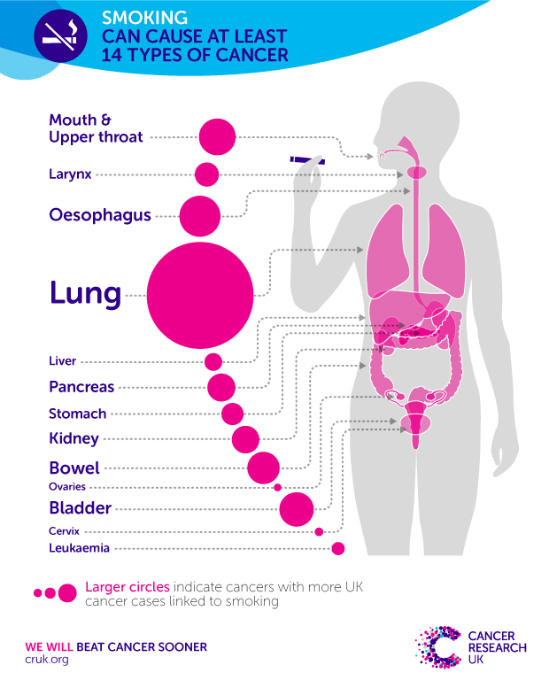
Smoking is by far the biggest preventable cause of cancer. Thanks to years of research, the links between smoking and cancer are now very clear. Smoking accounts for more than 1 in 4 UK cancer deaths, and nearly a fifth of all cancer cases.

The good news is that many of these deaths are preventable, by giving up smoking. Speak to your GP or pharmacist, or visit the NHS Smokefree(link is external) pages for free advice and support to give you the best possible chance of quitting.

Which cancers are caused by smoking?

Chemicals in cigarette smoke enter our blood stream and can then affect the entire body. This is why smoking causes so many diseases, including at least 14 types of cancer, heart disease and various lung diseases.

cancers caused by smoking

Smoking causes more than 4 in 5 cases of lung cancer. Lung cancer has one of the lowest survival rates of all cancers, and is the most common cause of cancer death in the UK.

Smoking also increases the risk of at least 13 other cancers including cancers of the mouth,  pharynx (upper throat), nose and sinuses, larynx (voice box), oesophagus (gullet or food pipe), liver, pancreas, stomach, kidney, bowel, ovary, bladder, cervix, and some types of leukaemia Smoking could increase the risk of breast cancer, but any increase in risk is likely to be small.

More information about different cancer types.

What influences the risk of cancer from smoking?

Smokers have a much higher risk of lung cancer than non-smokers, whatever type of cigarette they smoke. There’s no such thing as a safe way to use tobacco.

Filters and low-tar cigarettes make little difference – your lung cancer risk is not lower compared to smokers of average cigarettes. This may be because smokers tend to change the way they smoke in order to satisfy their nicotine craving, for example by taking bigger puffs or smoking more cigarettes.

The more cigarettes you smoke a day, the higher your risk of cancer. If you aren’t able to quit completely, cutting down the number of cigarettes you smoke a day can be a good first step. Even light or social smoking can harm your health so keep trying to stop entirely.

Scientists have found that the number of years you spend smoking affects your cancer risk even more strongly than the number of cigarettes you smoke a day. For example, smoking one pack a day for 40 years is even more dangerous than smoking two packs a day for 20 years.

The serious damaging effects of smoking cannot be cancelled out by leading an otherwise healthy lifestyle, like keeping fit and eating healthily. The best way to reduce your risk is to give up smoking completely(link is external).

How does smoking cause cancer?

The main way that smoking causes cancer is by damaging our DNA, including key genes that protect us against cancer. Many of the chemicals found in cigarettes have been shown to cause DNA damage, including benzene, polonium-210, benzo(a)pyrene and nitrosamines.

This is already bad news, but it’s made worse by other chemicals in cigarettes. For example chromium makes poisons like benzo(a)pyrene stick more strongly to DNA, increasing the chances of serious damage. And chemicals like arsenic and nickel interfere with pathways for repairing damaged DNA. This makes it even more likely that damaged cells will eventually turn cancerous.

Smokers are also less able to handle toxic chemicals than those with healthy lungs and blood. Chemicals in cigarette smoke make it harder for smokers to neutralise or remove toxins, and can make their immune systems less effective too.

How long does it take for smoking to cause cancer?

It usually takes many years, or decades, for the DNA damage from smoking to cause cancer. Our bodies are designed to deal with a bit of damage but it’s hard for the body to cope with the number of harmful chemicals in tobacco smoke. Each cigarette can damage DNA in many lung cells, but it is the build up of damage in the same cell that can lead to cancer. However research has shown that for every 15 cigarettes smoked there is a DNA change which could cause a cell to become cancerous. This is why it’s better to give up smoking sooner rather than later.

http://www.cancerresearchuk.org/about-cancer/causes-of-cancer/smoking-and-cancer/how-to-stop-smoking


Breathing in other people’s smoke, also called second-hand smoke, can cause cancer. Passive smoking can increase a non-smoker’s risk of getting lung cancer by a quarter, and may also increase the risk of cancers of the larynx (voice box) and pharynx (upper throat).

Second-hand smoke can cause other health problems too. Every year, second-hand smoke kills thousands of people in the UK from lung cancer, heart disease, stroke and the lung disease Chronic Obstructive Pulmonary Disease (COPD).

How does second-hand smoke affect children?

Second-hand smoke is particularly dangerous for children. Children exposed to passive smoke are at higher risk of respiratory infections, asthma, bacterial meningitis and cot death. Second-hand smoke has been linked to around 165,000 new cases of disease among children in the UK each year.

For children, the majority of exposure to second-hand smoke happens in the home. Smoke can spread throughout the home, even if you open the windows. Almost 85 percent of tobacco smoke is invisible and smoke particles might also build up on surfaces and clothes, although the impact of this is not yet clear. If you are a smoker, smoking outside can help reduce your child’s exposure.

Is smoking in cars bad for passengers’ health?

Second-hand smoke can reach very high levels inside cars because it is a small enclosed space.

During your journey, children in the backseat will be exposed to average smoke levels around three times the European recommended air pollution limit. But the level varies depending on how much you smoke, if you have all the windows fully open or air con on. Peak levels can reach as much as 35 times this limit.

Since 1 October 2015 it has been an offence to smoke in a vehicle carrying anyone under the age of 18 in England(link is external) and in Wales(link is external).

Does second-hand smoke contain dangerous chemicals?

There are 2 types of tobacco smoke:

  • Mainstream smoke, which is directly inhaled through the mouth end of the cigarette
  • Sidestream smoke, which comes from the burning tip of the cigarette

Second-hand smoke is made up of sidestream smoke and exhaled mainstream smoke, mixed with the surrounding air.

Sidestream smoke is about 4 times more toxic than mainstream smoke, although people inhale it in a more diluted form. This is because sidestream smoke contains much higher levels of many of the poisons and cancer-causing chemicals in cigarettes, including:

  • At least 3 times as much carbon monoxide
  • 10-30 times more nitrosamines
  • Between 15–300 times more ammonia

What’s in a cigarette?


You may think a cigarette is just tobacco wrapped in paper, but it’s much more than that. When a cigarette burns it releases a dangerous cocktail of over 5,000 different chemicals. Many of these chemicals are poisonous and more than 70 may cause cancer, according to the International Agency for Research on Cancer (IARC). And it’s not just the smoker who is exposed to these chemicals, because there are also high levels in the smoke coming off the tip of a cigarette while it burns. So anyone around the smoker breathes them in as well.

This page has information on some of the poisons in cigarette smoke that we know are linked to cancer. To learn more about the impact of these chemicals in the body, see our How smoking causes cancer page.

Chemicals can get into cigarettes in different ways. Some are found naturally in the tobacco plant, some are absorbed by the plant from the soil, air or fertilisers, and some are formed when tobacco leaves are processed or are added by the tobacco industry. Others form when a cigarette burns, so are only present in the smoke coming off a cigarette.

What's in a cigarette?

Many of the cancer-causing chemicals in tobacco and cigarette smoke have other suprising uses too:

  • Benzene – an industrial solvent, refined from crude oil
  • Arsenic – a poison, used in wood preservatives
  • Cadmium and lead – used in batteries
  • Formaldehyde – used in mortuaries and paint manufacturing
  • Polonium-210 – a highly radioactive element
  • Chromium – used to manufacture dye, paints and alloys
  • 1,3-Butadiene – used in rubber manufacturing
  • Nickel – used to protect metals from corrosion
  • Vinyl chloride – used to produce plastic and vinyl products
  • Beryllium – used in nuclear reactors
  • Ethylene oxide – a disinfectant used to sterilise hospital equipment
  • Polycyclic aromatic hydrocarbons – a group of dangerous DNA-damaging chemicals, including benzo(a)pyrene
  • Ortho-Toluidine – used in the production of weedkillers
  • 4-aminobiphenyl and 2-naphthyl-amine – used in dye manufacturing until it was banned in the EU

And then there are tobacco-specific nitrosamines – a group of cancer-causing chemicals only found in tobacco.

This cocktail of chemicals is why there is no safe way to use tobacco and the best thing a smoker can do for their health is to stop smoking completely.

The free Stop Smoking Services help thousands of people quit every year, so if you are looking for the best possible chance of success, talk to your doctor or pharmacist or visit NHS Smokefree(link is external).

Shisha and other types of tobacco


paan with tobacco

Tobacco can be used in many different forms – but all are linked to cancer. There is no safe way to use tobacco.

Other tobacco products aren’t safer than cigarettes

Tobacco can be used in many different forms – but all are linked to cancer. There is no safe way to use tobacco.

  • Cigars and pipes are known to increase the risk of many cancer types including lung, mouth and upper throat, food pipe (oesophagus), voice box (larynx) and stomach. Smoking these products is just as bad for you as smoking cigarettes.
  • Roll-up tobacco contains the same cancer-causing chemicals as manufactured cigarettes. Roll-up cigarettes aren’t any safer than regular cigarettes
  • Smoking bidis, the most common form of tobacco in South Asian communities, also causes the same types of cancer as other tobacco products such as cigars.

Does smokeless tobacco increase cancer risk?

Smokeless tobacco includes a wide variety of products which can be used in different ways, chewed (‘dry chewing tobacco’), sucked (‘moist oral tobacco’) or inhaled (‘nasal snuff’). Scientists have shown that many forms of smokeless tobacco increase your risk of mouth, oesophageal (food pipe) and pancreatic cancers.

Most smokeless tobacco products in the UK are used by South Asian communities. In these communities, dry chewing tobacco is often used as part of a ‘betel quid’ or ‘paan’. These consist of a mixture of betel nut (or areca nut), slaked lime and various herbs and spices, wrapped in a betel leaf.

Betel nut itself can cause cancer, so chewing betel quids can cause mouth cancer even if no tobacco is added.

Most types of smokeless tobacco contains at least 28 different chemicals that can cause cancer. Smokeless tobacco users can be exposed to similar, if not higher, levels of cancer-causing tobacco-specific nitrosamines (TSNAs) and nicotine than cigarette smokers. So, like cigarettes, smokeless tobacco is both dangerous and highly addictive.

Does shisha increase cancer risk?

Many people think shisha is harmless but this is not the case – shisha contains tobacco. Shisha, also called hookah or waterpipe, smokers inhale flavoured tobacco through a long pipe attached to a water bowl. Shisha smokers still inhale toxic cancer-causing chemicals and addictive nicotine.

A shisha pipe

Unlike cigarettes, shisha is burnt using charcoal so users can also be exposed to dangerously high levels of the poisonous gas carbon monoxide. Levels of carbon monoxide in the body from smoking shisha can be up to 17 times higher than from cigarettes and can cause carbon monoxide poisoning.

Looking at all the evidence together suggests that smoking shisha could at least double your risk of lung cancer and may be linked to some other cancer types.

Does snus increase cancer risk?

Snus is a special type of smokeless tobacco that is used in Sweden. It is banned in most other countries in the EU. Snus is manufactured using a special process that considerably lowers the levels of TSNAs in the finished product. Because of this, snus may be less dangerous than other types of tobacco.

But it still contains these cancer-causing chemicals at a low level. Snus use has been linked to pancreatic cancer, but not mouth or lung cancer.

It is possible that snus could be used specifically to help hardcore smokers, who are unlikely to quit through other means, to stop smoking altogether. But so far the evidence is uncertain and the International Agency for Research on Cancer has concluded that smokeless tobacco should not be recommended for quitting smoking.


http://www.cancerresearchuk.org/about-cancer/causes-of-cancer/smoking-and-cancer/smoking-facts-and-evidence

Categories
Dhulm/Oppression Poems

A man was born…

dead

A man was born 69 years ago,

Brave, courageous, a fighter for the truth,

A man was born 69 years ago,

Who was no ordinary man, not a weak man but strong and valiant.

A man was born 69 years ago,

Who was kind, loving, warm and friendly,

A man was born 69 years ago,

Who had a heart of gold, but stayed firm and bold.

A man was born 69 years ago,

Who loved helping people, but never asked for help,

A man was born 69 years ago,

Who was thoughtful and caring, but fierce and daring.

A man was born 69 years ago,

He couldn’t see wrong in front of him, didn’t matter if it was his own kith and kin,

A man was born 69 years ago,

Selfless, sacrificing, noble and respected.

This man left us three years ago,

Silently, returned to his Lord SWT,

This man left us three years ago,

Our lips were silent, but our hearts spoke

This man left us three years ago,

Even if we tried to forget him, it’s difficult to hide the painful tears.

In Memory of Abba

Ismail Ibn Nazir Satia (One who is in dire need of Allah’s Forgiveness, Mercy and Pleasure).

27 Safar 1437

Categories
Shaykh Saleem Dhorat

The Ummah is One

By Hadrat Mawlānā Muhammad Saleem Dhorat hafizahullāh

“All the believers are like one body. If the eye experiences pain then the whole body will experience pain. If the head experiences pain then the whole body will experience pain.” (Muslim)

Together we all form a single body. We are like the limbs and organs of the same body. If we constitute a single body, then if an organ of the body experiences pain, the whole body should feel it. When a person suffers from a severe headache, his eyes will not say, “I have read too much today, therefore I want to rest!” The rest of the body will not say to the head, “It is your problem, you solve it yourself.” The ears will not say, “I am feeling very tired. It is twelve o’ clock midnight; therefore, I want to go to sleep. You sort your problem out.”  

This headache becomes a problem for all the organs of the body. The brain thinks, “What shall I do? How may I bring cure to this pain?” The legs will walk towards the telephone, the hand will pick up the receiver, the finger will dial, the ear will listen, the tongue will speak and the mind will absorb what the doctor is saying, hence the whole body will function to bring relief to the head.

Rasūlullāh sallallāhu ‘alayhi wasallam, through this similitude, has taught us that if we see a Muslim brother/sister in pain, then we should also feel pain and grief. How many of us today experience pain at the sight of someone’s suffering? How many of us try to solve the problem? How many of us even listen to the problem? How many of us even bother to say a few words to comfort and console the person? And if we find ourselves helpless in doing anything, then how many of us pray for this person, “O Allāh, remove his/her difficulty.”  

This is an extract from the booklet ‘Love & its Limits’
published by the Islāmic Da’wah Academy


• Please forward this message on to all your contacts

Categories
Current Affairs articles

Keeping Warm in Winter

Sulaym ibn Aamir RH narrates that when winter would come, Sayyiduna Umar ibn al-Khattab (Radhiallahu Anhu) would be extra mindful of them and write to them, advising: “Winter, which is an enemy, has come, so prepare for it with wool, leathers socks, and socks. Use wool as your under-clothing and outer-clothing, because the cold is an enemy that enters quickly but leaves slowly.”
winter
Ibn al-Rajab al-Hanbal (Rahimahullah) comments that Sayyiduna Umar (Radhiallahu Anhu) would write this advice to the people of Shaam when it was conquered in his era, as he was worried that the Companions RA and others who had not previously experienced such cold would be harmed by the cold of Shaam. This was out of his complete well-wishing, graceful vigilance, compassion and safeguarding of his subjects. May Allah be pleased with him. (Lataa’if al-Ma’aarif).
Following in the footsteps of Sayyiduna Umar (Radhiallahu Rnhu), the following is some important advice on what we can do to protect ourselves against the cold and stay warm this winter:
Wear warm clothes
The best way to protect against cold and stay warm is to wear warm clothes, especially when going outdoors into the cold.
Allah mentions warm clothing amongst His many favours: “And the grazing livestock He has created for you; in them is warmth [i.e., warm clothes] and [numerous] benefits” (Qur’an, 16:5). He also said, “And from their wool, fur and hair is furnishing and enjoyment for a time” (Qur’an, 16:80).
Wearing a number of thin layers, especially clothes made of cotton, wool and fleecy fibre, helps to keep the body warm. Keeping the feet warm and dry is particularly important, not forgetting footwear with good grips during icy/snowy periods.
Even if you are going out into the cold for a few minutes, to put the bins out perhaps or to get something out of the car, wrap up warm; a few moments of being exposed to the cold is enough to make a person ill.
Keeping your head warm with a scarf or hat is important, as a lot of body heat is lost through the head.
Eating Properly
Good nutrition is vital to keep the body warm. Hot meals (soups in particular) and hot drinks will help you stay warm throughout the day. Wholegrain, legumes (lentils, peas, chickpeas, beans) root vegetables (potatoes, carrots, turnips etc.), vegetables in general, citrus fruits, spices (in moderation!) and herbs (especially ginger), almonds, walnuts, pistachio and other nuts, dried fruits (especially dates and figs) are excellent choices to boost our health during winter.
Keep the House Warm
Cold and damp houses negatively affect our health, so keeping the house warm is a must for staying healthy during winter. We sometimes overlook the most obvious things which make our houses cold, such as unnecessarily opening windows and not attending to draughts under doors, so think about ways to minimise heat escaping from the house; this will also help to reduce heating costs.
Taking Care of Others
As Muslims, it is our duty to be concerned about the welfare of others and not just be concerned about ourselves. Allah’s Messenger ﷺ said, “None of you truly believes until he loves for others what he loves for himself.” (Bukhari, Muslim).
We should be checking on relatives, elderly neighbours or anyone who is more vulnerable during the cold, ensuring they have what they need to stay warm and safe, especially during the night. If we can save an elderly person the trouble of going out in the cold and do their shopping for them, or run other errands for them, we should do so and earn immense reward from Allah.
And let us not forgot the spirit of Sayyiduna Umar ibn al-Khattab (Radhiallahu Anhu) towards the people of Shaam, who are currently enduring extreme hardship and struggle, with many of them battling against the bitterness of winter without ample clothing, food and shelter.
There are a number of reliable charities that are providing much-needed provisions to our brothers and sisters in Shaam, and other parts of the world. Each Muslim home should aim to provide for at least one family this winter and help alleviate the suffering Allah, out of His Mercy, has saved us from.
May Allah keep us all in His protection, and make us all a means of blessings, comfort, guidance and happiness for others.
Ameen Ya Rabb!
29 Safar 1439
Categories
Muslim men Muslim women

My Suicide Letter…

And do not kill yourselves. Indeed, Allah is to you ever Merciful. (4:29)

suicide.jpg

Recently, I came across an article which made my hair stand and gave me goosebumps, as I live just next door: http://www.blogpreston.co.uk/2016/02/preston-has-highest-suicide-rate-in-the-uk/

A horrifying statistic about Preston has emerged in new figures about suicide. Preston has the highest suicide rate in the UK compared to other towns and cities. There are nearly 19 suicides each year in the city per 100,000 people. The figures, which come from the Office of National Statistics, are based on the period from 2012-2014. It also shows the suicide rate in Preston has been rising sharply in the last few years.

The highest level of suicide in UK towns and cities
Preston – 18.6
Middlesborough – 17.6
Hastings – 17.4
Blackpool – 17
Warwick – 16.6

A few points we all need to consider, as we all go through hardship, pain and suffering:

“Allah burdens not a soul more than its scope.” (2:286)

Allah only gives you what you can handle, in simple terms. If you cannot deal with it Allah will not give it to you. Because as Muslims we believe Allah is al-Hakeem (The Wise), al-Aleem (All-Knowing). Allah knows the past and the future.

So why do we feel we can’t cope anymore?

There are numerous reasons to this, first being our sins weigh us down. Excessive sinning leads one to become despondent. Secondly, we have become ungrateful. Instead of counting our blessings, we as humans tend to count our problems more.

“And He giveth you of all that you ask for. But if you count the favours of Allah, never will you be able to number them. Verily, man is given up to injustice and ingratitude.” (14:34)

Suicide is increasing in Britain and in Muslims, but it is a major sin in Islam. The Prophet (peace and blessings of Allah be upon him) stated that the one who commits suicide will be punished with something like that with which he killed himself.

Why do people commit suicide?

They have had enough of life or they have no hope left that they can carry on. Sometimes Muslims lose hope in Allah SWT and in their religion. They pray, they fast, give charity but Allah’s help doesn’t seem to come or is delayed. This happens to every single one of us in life, some more than others. But is suicide the solution? More importantly, is it permissible to end our own life?

At some point or another we all think about suicide, we all have bad days and ‘very’ bad days. Problems and difficulties are temporary but remember suicide is not temporary. Do you want to commit suicide to end your life or end the problems you have?

Suicide is not the solution AT ALL. A person must remain positive at all times, life is not perfect. Allah did not promise us a perfect life, otherwise this world would be Jannah.

Abu Hurairah narrated that the Messenger of Allah (peace and blessings of Allah be upon him) said: “The world is a prison for the believer and Paradise for the disbeliever.” (Tirmidhi)

Life is short and temporary, so are the problems and trials and calamities we face in life. Whether you are currently in a state of bliss or depression, “this time will pass.” Nothing lasts forever, not your happiness nor your sadness. This world does not even last forever, it will surely end.

If you think that nobody cares, or is there for you, then you have a loving Lord. Allah SWT loves you.

In Saheeh Muslim it is narrated from Abu Hurayrah (may Allah be pleased with him) that the Prophet (peace and blessings of Allah be upon him) said: “Allah has one hundred parts of mercy, of which He sent down one between the jinn, mankind, the animals and the insects, by means of which they are compassionate and merciful to one another, and by means of which wild animals are kind to their offspring. And Allah has kept back ninety-nine parts of mercy with which to be merciful to His slaves of the Day of Resurrection.” (Muslim, al-Tawbah, 6908)

It was narrated that ‘Umar ibn al-Khattab (may Allah be pleased with him) said: “Some prisoners were brought to the Messenger of Allah (peace and blessings of Allah be upon him), and there was a woman among the prisoners who was searching (for her child). When she found her child she embraced him and put him to her breast. The Messenger of Allah (peace and blessings of Allah be upon him) said to us, ‘Do you think that this woman would throw her child in the fire?’ We said, ‘No, by Allah, not if she is able not to.’ The Messenger of Allah (peace and blessings of Allah be upon him) said, ‘Allah is more merciful to His slaves than this woman is to her child.’”  (Agreed upon)

So do not despair in the mercy of Allah, rather turn to him and remember Him. Obey Him and His help will come. If we knew the wisdom behind Allah’s orders and decisions for us, our hearts would burst out of love for Him SWT. We have to understand and accept Allah always does what is best for us.

“And it may be that you dislike a thing which is good for you and that you like a thing which is bad for you. Allah knows but you do not know.” (2:216)

Abu Hurayrah (may Allah be pleased with him) narrated that the Prophet (peace and blessings of Allah be upon him) said: “Whoever throws himself down from a mountain and kills himself will be in the Fire of Hell, throwing himself down therein forever and ever. Whoever takes poison and kills himself, his poison will be in his hand and he will be sipping it in the Fire of Hell forever and ever. Whoever kills himself with a piece of iron, that piece of iron will be in his hand and he will be stabbing himself in the stomach with it in the Fire of Hell, forever and ever.” Narrated by al-Bukhari, 5442; Muslim, 109.

It was narrated from Thaabit ibn al-Dahhaak (may Allah be pleased with him) that the Messenger of Allah (peace and blessings of Allah be upon him) said: “Whoever kills himself with something in this world will be punished with it on the Day of Resurrection.” Narrated by al-Bukhari, 5700; Muslim, 110.

From these Hadith it is apparent that suicide is not permissible in Islam – it is Haram.

Suicide is not kufr that puts a person beyond the pale of Islam as some people think, rather it is a major sin that is subject to the will of Allah on the Day of Resurrection: if He wills, He will forgive it, and if He wills He will punish for it. So do not neglect to make du’aa for them and be sincere in doing so; perhaps that may be the means of Allah forgiving them.

It was narrated that Jundub ibn ‘Abdullah (may Allah be pleased with him) said: The Messenger of Allah (peace and blessings of Allah be upon him) said: “Among those who came before you there was a man who was wounded and he panicked, so he took a knife and cut his hand with it, and the blood did not stop flowing until he died. Allah said: ‘My slave hastened to bring about his demise; I have forbidden Paradise to him.” Narrated by al-Bukhari, 3276; Muslim, 113.

be-kindest

A FEW MORE FACTS:

Myth: People who are suicidal want to die.

Fact: The majority of people who feel suicidal do not actually want to die; they do not want to live the life they have. The distinction may seem small but is in fact very important and is why talking through other options at the right time is so vital.

Myth: Talking about suicide is a bad idea as it may give someone the idea to try it. 

Fact: Suicide can be a taboo topic in society. Often, people feeling suicidal don’t want to worry or burden anyone with how they feel and so they don’t discuss it. By asking directly about suicide you give them permission to tell you how they feel. People who have felt suicidal will often say what a huge relief it is to be able to talk about what their experiencing. Once someone starts talking they’ve got a better chance of discovering other options to suicide.

Myth: If a person is serious about killing themselves then there is nothing you can do.

Fact: Often, feeling actively suicidal is temporary, even if someone has been feeling low, anxious or struggling to cope for a long period of time. This is why getting the right kind of support at the right time is so important.

Myth: You have to be mentally ill to think about suicide.

Fact: Most people have thought of suicide from time to time and not all people who die by suicide have mental health problems at the time of death. However, many people who kill themselves do suffer from their mental health, typically to a serious degree. Sometimes it’s known about before the person’s death and sometimes not.

Myth: People who talk about suicide aren’t serious and won’t go through with it.

Fact: People who kill themselves have often told someone that they do not feel life is worth living or that they have no future. Some may have actually said they want to die. While it’s possible that someone might talk about suicide as a way of getting the attention they need, it’s vitally important to take anybody who talks about feeling suicidal seriously.

“The majority of people who feel suicidal do not actually want to die; they do not want to live the life they have.”

suicid


Ismail Ibn Nazir Satia (one who is in dire need of Allah’s Forgiveness, Mercy and Pleasure).


Key facts (2017)

  • In 2017 there were 6,213 suicides in the UK and Republic of Ireland.
  • Of these, 5,821 suicides were registered in the UK and 392 occurred in the Republic of Ireland.
  • In the UK, men are three times as likely to take their own lives than women.
  • In the Republic of Ireland, men are four times more likely to take their own lives than women.
  • In the UK, the highest suicide rate was for men aged 45-49.
  • In the Republic of Ireland, the highest suicide rate was for men aged 25–34 (with an almost identical rate for men aged 45–54).
  • In Northern Ireland, suicide rates for both men and women are higher than other UK nations – however, rates are not necessarily directly comparable.

Key trends (2017)

  • In the UK, there has been a significant decrease in male suicide. The male suicide rate is the lowest in over 30 years.
  • In Scotland, the overall suicide rate decreased between 2016 and 2017 – this appears to be driven by a decrease in the female suicide rate.
  • In Scotland, suicide in young men increased for the third consecutive year in 2017.
  • In Northern Ireland, the suicide rate has remained relatively stable between 2016 and 2017. There was an increase in the male suicide rate and a decrease in the female rate.
  • In the Republic of Ireland, suicide has continued to fall in both men and women.
  • In the Republic of Ireland, rates have fluctuated more than in the UK in recent years, but they are currently at their lowest since 1989.

Categories
Shaykh Saleem Dhorat

How to Acquire Husn Al-Khatimah


11th Safar 1438 AH ~ Friday 11th November 2016

By Hadrat Mawlānā Muhammad Saleem Dhorat hafizahullāh

If we study the lives of the pious servants of Allāh ta‘ālā, i.e. the Ambiyā, Sahābahradhiyallāhu ‘anhum, the Muhaddithūn, Fuqahā, Awliyā, we will find one common factor in their lives, and that is their concern for securing Husn Al-Khātimah so that they are successful in the Court of Allāh ta‘ālā. Despite their lives being full of virtue, they would worry and pray for death in the state of īmān and Islām. 

Allāh ta‘ālā quotes the du‘ā of Yūsuf ‘alayhis salām in the Glorious Qur’ān:

…O Creator of the heavens and the Earth, You are my guardian in this world and the Hereafter. Make me die a Muslim and make me join the righteous. (12:102)

This is because a single word of disbelief at the time of death can erase the benefits of a lifetime of virtue and obedience. On the other hand, a person may live a life of sin and vice, and then be granted the blessing of īmān in the final moments of his life, thereby securing the success of both this world and the Hereafter. Through His infinite Grace and Mercy, Allāhta‘ālā inspired me with six points, which will secure Husn Al-Khātimah and a good death for ourselves, which in turn will result in a good outcome in the Hereafter, Inshā’allāh.

1. Adopt Taqwā (fear of Allāh ta‘ālā). Taqwā holds the power to repel all the forces which weaken one’s īmān and at times snatch it away. This can be understood from the verses wherein Allāh commands the believers to adopt Taqwā. We understand from them that once a person becomes a believer, the method of safeguarding that belief is adopting Taqwā. And Taqwā simply means to create a barrier between disobedience to Allāh and ourselves. Another name for this Taqwā is Istiqāmah (steadfastness), because when a person, after accepting īmān, remains steadfast upon the Commands of Allāh, he will not disobey Him. Allāh ta‘ālā mentions:

Surely, those who have declared: ‘Our Lord is Allāh’, then remained steadfast, on them the angels will descend, saying, ‘Do not fear, and do not grieve; and be happy with the good news of Jannah (Paradise) that you had been promised. We have been your friends in the worldly life, and (will remain as such) in the Hereafter. And for you here is whatever your souls desire, and for you here is whatever you call for.’ (41:30)

So when one accepts īmān by saying, “My Lord is Allāh”, and thereafter safeguards this īmān by remaining steadfast in carrying out the Commands of Allāh and staying away from every disobedience, then Allāh will reward him with a good death, as is indicated in the verse above, that the angels will descend with special mercy at the time of his death. The commentators of the Qur’ān have mentioned that the angels of mercy are always with those who are steadfast on Dīn; however, the special indication given in this verse is that at the time of their death, the angels become visible to them, who give them the glad tidings of Jannah from their Lord.

2. Love the pious and spend time in their company. The pious people are the people of Taqwā. The effect of loving them will create in one the desire to spend time in their company, and in doing so the effect of their taqwā will rub onto one’s self. Allāh ta‘ālāmentions: 

O you who believe, adopt taqwā, and be in the company of the truthful. (9:119)

We need to firstly accept īmān, which alhamdulillāh we all do, and thereafter safeguard our īmān by adopting Taqwā, which can be acquired by staying in the company of those who already have it. The term ‘The Truthful’ used here is another name for those who have Taqwā, as mentioned in another place in the Qur’ān:

…Those are the ones who are truthful, and those are the God-fearing. (2:177)

Similarly the Prophet sallallāhu ‘alayhi wasallam states in a hadīth:

On the Day of Judgement, a person will be with whom he loved. (At-Tirmidhī)

If a person entertains love for the pious, he will be with them in the Hereafter, and the pious people will be granted entry into Jannah, for which īmān is a prerequisite. Thus, we can deduce that such a person will die in the state of īmān.

3. Giving in charity. Spending in the path of Allāh ta‘ālā cools the Anger of Allāh. If Allāhta‘ālā is angry with a person, what chance is there for him to have a good death? Therefore, charity paves the way for one to die in the state of īmān, as indicated by the Prophetsallallāhu ‘alayhi wasallam: 

Sadaqah (charity) extinguishes the anger of the Lord and prevents an unpleasant death. (At-Tirmidhī)

An unpleasant death could either mean death without īmān or death in an undesirable state, i.e. as a victim of a tsunami, hurricane, or earthquake. Inshā’allāh, a person will be saved from both types of death.

4. Carrying out acts upon which the intercession of the Prophet sallallāhu ‘alayhi wasallamis guaranteed. In various narrations, the Prophet sallallāhu ‘alayhi wasallam has encouraged carrying out certain good acts, the virtue of which is that the intercession of the Prophetsallallāhu ‘alayhi wasallam will become incumbent for the doer. One should inquire about and learn such acts from reliable, authentic sources and act upon them. The intercession of the Prophet sallallāhu ‘alayhi wasallam is of two types. The first being that on the Day of Judgement, when every human will be gathered in the Plain of Resurrection, every soul will be in a state of extreme worry and fear regarding its fate in the court of Allāh ta‘ālā. At this tense moment, the Prophet sallallāhu ‘alayhi wasallam will intercede on behalf of the whole humankind and request Allāh ta‘ālā to begin the reckoning. The reckoning will thus begin, and this is known as the ‘general intercession’. Thereafter, once the process of reckoning begins, the Prophet sallallāhu ‘alayhi wasallam will specifically intercede on behalf of many individuals of his ummah, with the permission of Allāh. Only a person who dies in the state of īmān will be worthy of receiving this ‘special intercession’ of the Prophet sallallāhu ‘alayhi wasallam. The glad tidings of intercession upon various good actions is this ‘special intercession’ which is exclusively for people with īmān. It can be therefore understood that those carrying out these good acts will die with īmān, as only they will be worthy of this ‘special intercession’. One example of such an act is reciting the du‘ā after the adhān.

5. Repeatedly thank Allāh ta‘ālā for the great bounty of īmān, for Allāh ta‘ālā promises: 

If you express gratitude, I shall certainly give you more. (14:7) 

It should be kept in mind that gratitude should be expressed in 3 ways:

  • By acknowledging and contemplating over this great bounty in one’s heart and mind that Allāh has granted this to me through His Grace only without my deserving it.
  •  By verbally expressing one’s gratitude.
  • By fulfilling the Commands of Allāh in regards to this bounty.

If we acknowledge the bounty of īmān with our heart and mind, express praise for Allāh verbally and carry out the demands of this ni‘mah (blessing), i.e. adopt Taqwā, then Allāh will increase this ni‘mah of ours inshā’allāh.

6. Make du‘ā for a good death and for a pleasant abode in the Hereafter. You may do this in your own words or by using supplications from the Qur’ān and ahādīth, for example: 

O Allāh, forgive our living and our dead, those present from among us and those absent, our young and our old, our males and our females, O Allāh whoever you keep alive from among us, keep him alive on Islām, and whoever you give death to, give him death upon īmān. (Ahmad)

Allāh ta‘ālā mentions the supplication of the knowledgeable people: “Our Lord, do not let our hearts deviate from the right path after You have given us guidance, and bestow upon us mercy from your own.” (2:8)

If we strive to do the above and ask Allāh ta‘ālā sincerely, then inshā’allāh, He will grant us this great bounty of death in the state of īmān.

May Allāh ta‘ālā grant us the true understanding of the reality of the Hereafter and grant us the tawfīq to adequately prepare for it. Āmīn.

© Riyādul Jannah (Vol. 21 No. 2, Feb 2012)


• Please forward this message on to all your contacts 

Categories
Shaykh Saleem Dhorat

Friends


Friends

By Hadrat Mawlānā Muhammad Saleem Dhorat hafizahullāh

It is very important for every Muslim to make sure that his choice of friends and the company he keeps is correct. It has been proven through experience that the habits and behaviour of friends and associates slowly enter into an individual. Without realising, a person begins to adopt the style and behaviour of his friends. We are all witnesses to this fact. Sadly, I can recall many incidents where those who were pious, religious and good in character lost all of their good qualities because they kept bad company and associated with an inappropriate circle of friends. I have also seen others who were drowning in sins and evil, who underwent a complete revolution in their lives after adopting the company of a pious person of high moral standards. Rasūlullāh sallallāhu ‘alayhi wasallam advised,

A person is on the way of his friend. Therefore he should think very carefully whom he is making a friend. (At-Tirmidhī, Abū Dāwūd, Ahmad)

Sincere Friends

We need friends who are sincere, genuine and, true in their friendship. Those who care for our well-being from every aspect are true friends. Those who have concern not only for the needs of this temporary life but also for the requirements of our everlasting life are our real friends.

Allāh is Sufficient for Love

There is only one Supreme Being Who is worthy of ‘true’ love and friendship and this is Allāh ta‘ālā. For love and friendship, He alone is enough. Rasūlullāh sallallāhu ‘alayhi wasallam commented,

If I were to take a khalīl (intimate friend) other than my Lord, I would have taken Abū Bakr. (Al-Bukhārī) 

Here, despite such close ties and such a strong bond of friendship with Sayyidunā Abū Bakr radhiyallāhu ‘anhu, Rasūlullāh sallallāhu ‘alayhi wasallam explains that the highest level of intimacy is reserved only for Allāh ta‘ālā. However, when one becomes engrossed in Divine love and then in the light of this love, one befriends and loves somebody, then inshā’allāh this form of friendship will prove beneficial in both worlds.

This is an extract from the booklet ‘Friendship & our Young Generation’
published by the Islāmic Da’wah Academy