What a great reminder in these uncertain times, I have seen a few versions of this but this one was the best and it’s worth sharing and reminding all our families and friends.
The deceased Kuwaiti writer Abdullah JarAllah (RH) said:
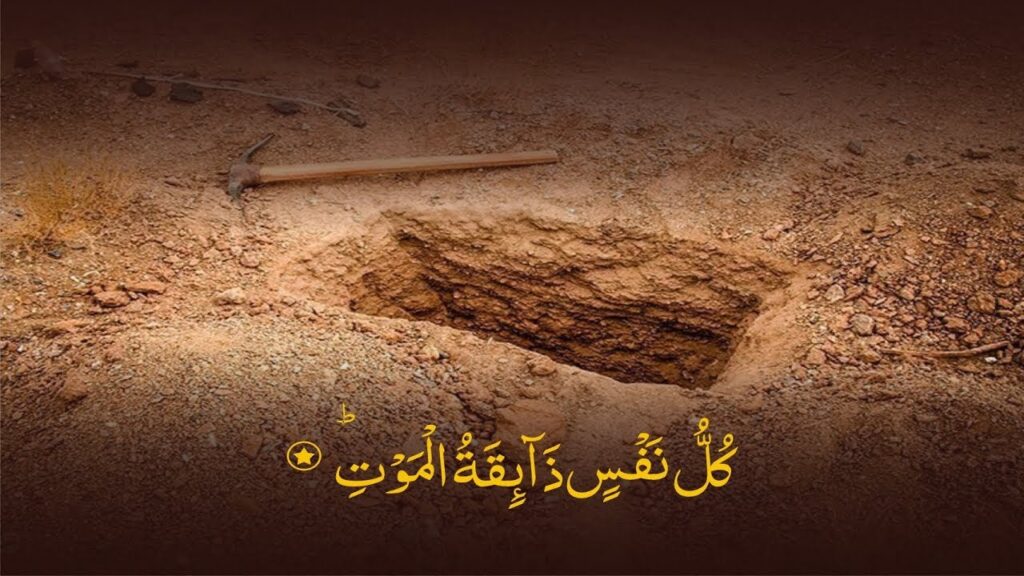
I will not worry about my death nor be unduly concerned about my body for my Muslim brothers will do the needful. 1- يجردونني من ملابسي…They will disrobe me 2- يغسلونني…And wash me 3- يكفنونني …And enshroud me 4- يخرجونني من بيتي …And take me from my home 5- يذهبون بي لمسكني الجديد ( القبر ) …And they will carry me to my new abode (the grave) 6- وسيأتي الكثيرون لتشييع جنازتي…And many will come to participate in my Janaaza بل سيلغي الكثير منهم أعماله ومواعيده لأجل دفني …Many of them would have taken time off their jobs or cancelled appointments in order to attend my burial. وقد يكون الكثير منهم لم يفكر في نصيحتي يوما من الأيام …And most of them would not have reflected a day over my advice… 7- أشيائي سيتم التخلص منها …My belongings will be disposed of… مفاتيحي …my keys كتبي …my books حقيبتي …my briefcase أحذيتي …my shoes ملابسي وهكذا…my clothes and so on وإن كان أهلي موفقين فسوف يتصدقون بها لتنفعني … And if my family are amenable, they will donate it (my things) to benefit me.. تأكدوا بأن الدنيا لن تحزن علي…rest assured, the world would not mourn my passing ولن تتوقف حركة العالم …and the movement of the world wouldn’t stop واﻻقتصاد سيستمر …and trading will continue ووظيفتي سيأتي غيري ليقوم بها …and someone else will do my job وأموالي ستذهب حلالاً للورثة …and my wealth will be lawfully inherited by my heirs بينما أنا الذي سأحاسب عليها !!!whilst I will be taken to task for it: a little, or a lot, nothing unaccounted for القليل والكثير …النقير والقطمير … و إن أول ما موتي هو اسمي !!! The first thing I will lose upon death will be my name; that is why upon my death they will ask: “where is the body?” لذلك عندما اموت سيقولون عني أين ” الجثة “..؟ولن ينادوني باسمي ..!and they will not call me by my name وعندما يريدون الصلاة علي سيقولون احضروا “الجنازة” !!!When they want to perform the salat they will say: “bring the bier”, and they will not call me by my name! ولن ينادوني باسمي ..!وعندما يشرعون بدفني سيقولون قربوا الميت ولن يذكروا اسمي ..!And when they are ready to bury me, they will say “bring the deceased…” and they will not mention my name… لذلك لن يغرني نسبي ولا قبيلتي ولن يغرني منصبي ولا شهرتي …Due to this I will not be deceived by lineage, or my tribal affiliation and neither my status nor fame will beguile me… فما أتفه هذه الدنيا وما أعظم ما نحن مقبلون عليه …How insignificant this world is, compared to what we will face فيا ايها الحي الآن … اعلم ان الحزن عليك سيكون على ثلاثة أنواع:O, YOU WHO ARE ALIVE RIGHT NOW, KNOW THAT SORROW FOR YOU ARE OF 3 TYPES: 1- الناس الذين يعرفونك سطحياً سيقولون مسكينThose who really knew you, and they will say (miskeen) 2- أصدقاؤك سيحزنون ساعات أو أياماً ثم يعودون إلى حديثهم بل وضحكهم 2. Your friends who will remain sad for hours or days, then they will return to their discourses and entertainment 3- الحزن العميق في البيتسيحزن أهلك أسبوعا… أسبوعين شهرا… شهرين أو حتى سنةوبعدها سيضعونك في أرشيف الذكريات!!!3. Deep sorrow at home. Your family will be sad for a week or two, a month, two months or even a year after which you will be but a memory… انتهت قصتك بين الناسوبدأت قصتك الحقيقيه وهي الآخرة Your story ended amongst people, but your real story just began, and its the hereafter… لقد زال عنك: 1- الجمال …2- والمال …3- والصحة …4- والولد …5- فارقت الدور…والقصور6- والزوج …You have been divested of beauty, wealth, health, children, houses, castles and wife… ولم يبق معك الا عملكوبدأت الحياة الحقيقية And nothing remains with you except your deeds (that you used to do). And you have now begun the “real” life… والسؤال هنا :ماذا أعددت لقبرك وآخرتك من الآن ؟؟؟The question here is what have you PREPARED for your grave and your hereafter FROM NOW? هذه حقيقة تحتاج الى تأمل … This reality needs some deep reflection لذلك احرص على :so safeguard 1- الفرائض …the fard prayers and duties 2- النوافل …nafl/ voluntary works 3- صدقة السر …secret charity 4- عمل صالح …Good deeds 5- صلاة الليل…the tahajjud لعلك تنجو so that you may be saved ان ساعدت على تذكير الناس بهذه المقالة وانت حي الآنستجد أثر تذكيرك في ميزانك يوم القيامة بإذن الله…If you helped remind people through these utterances, while you are alive presently, if Allah wills, you will find the effect of your reminder in your scale of good deeds on the Day of Judgement. (وذكّر فإن الذكرى تنفعُ المؤمنين) And remind, most certainly, reminding is fruitful for the believers لماذا يختار الميت “الصدقة”لو رجع للدنيا why do you think the dead wish to perform charity if they return to the Earth? As Almighty has stated: “Oh my Lord if only you gave me a little respite, I would surely give in charity كما قال تعالى( رب لولا أخرتني إلى أجل قريب فأصدولم يقل : He didn’t say لأعتمر I’ll perform umrah او لأصلي Or so I could pray أو لأصوم Or so I could fast قال العلماء : ما ذكر الميت الصدقة إلا لعظيم ما رأى من اثرها بعد موتهThe ulema said that the dead mentioned charity due to what (s)he saw of its great effect after his / her death فأكثروا من الصدقة SO GIVE PLENTY CHARITY ومن افضل ما تتصدق به الآن 10 ثوان من وقتك لنشر هذا الكلام بنية النصحفالكلمة الطيبة صدقة.And the best of charity you could possibly do at this moment is to spend 10 seconds to forward this advice as a reminder; after all a good word is a charity💐.
“He grants to whomsover he wishes a female and He grants to whomsoever he wishes a male.”(49:42)
Having children is a great blessing of Allah SWT and not having children is also a blessing of Allah SWT. This post is aimed at parents who have children and are able to have children, appreciate this blessing which many other couples are praying day and night for, crying out loud for and raising their hands in the middle of the night for… If you are able to have children then have children in plentiful and don’t stop Allah’s taqdeer by following society and its norms… “hum dow awr hamare dow” isn’t an Islamic concept.
I’m not targeting parents who only have one child or two then are unable to conceive etc. I’m talking about this Western idea of family planning and pre-planning our lives like non-Muslims. I understand the fear of modern-day fitnahs and how bringing children into the world has a worry attached with it but Allah is bigger and our trust and hope should lie in Him. I’m sure the only son wants a brother and so does the only daughter. This makes a big difference, especially when the kids grow up.
Ismail ibn Nazir Satia (one who is in dire need of Allah’s forgiveness, mercy and pleasure).
Then Shayṭān whispered to him; he said, ‘O Ādam, shall I direct you to the tree of eternity and possession that will not deteriorate?’” [20:120]
You see, Iblis is a master of distorting reality. The tree that Allah had commanded them to not come near, was now being called the tree of eternity. Iblīs will either take the goodness and make it appear as evil or take evil and make it appear as something good. In this case, Iblīs is taking something evil and making it appear as something good. The evils in society are given a positive name and as a result, we may accept it. Shayṭān will make Zina look enticing and call it making love. Iblīs makes people think about sexual freedom and not think that it is a big deal to have sex outside of marriage. We see the effects in our society: divorce, single parents raising kids, STDs, etc.
Iblīs will never remind you of these things. Iblīs deceives people into thinking things are good. He will get people to label each other. When you label someone, you can distort reality very easily. You turn people into caricatures and stereotypes and then can attack the stereotype irrespective if that is actually true of the person you are addressing. It is one of the tricks he uses most frequently.
1. “I pray my Salah and Manzil, then trust Allah. Nothing can harm me! Why would I need Ruqya?”
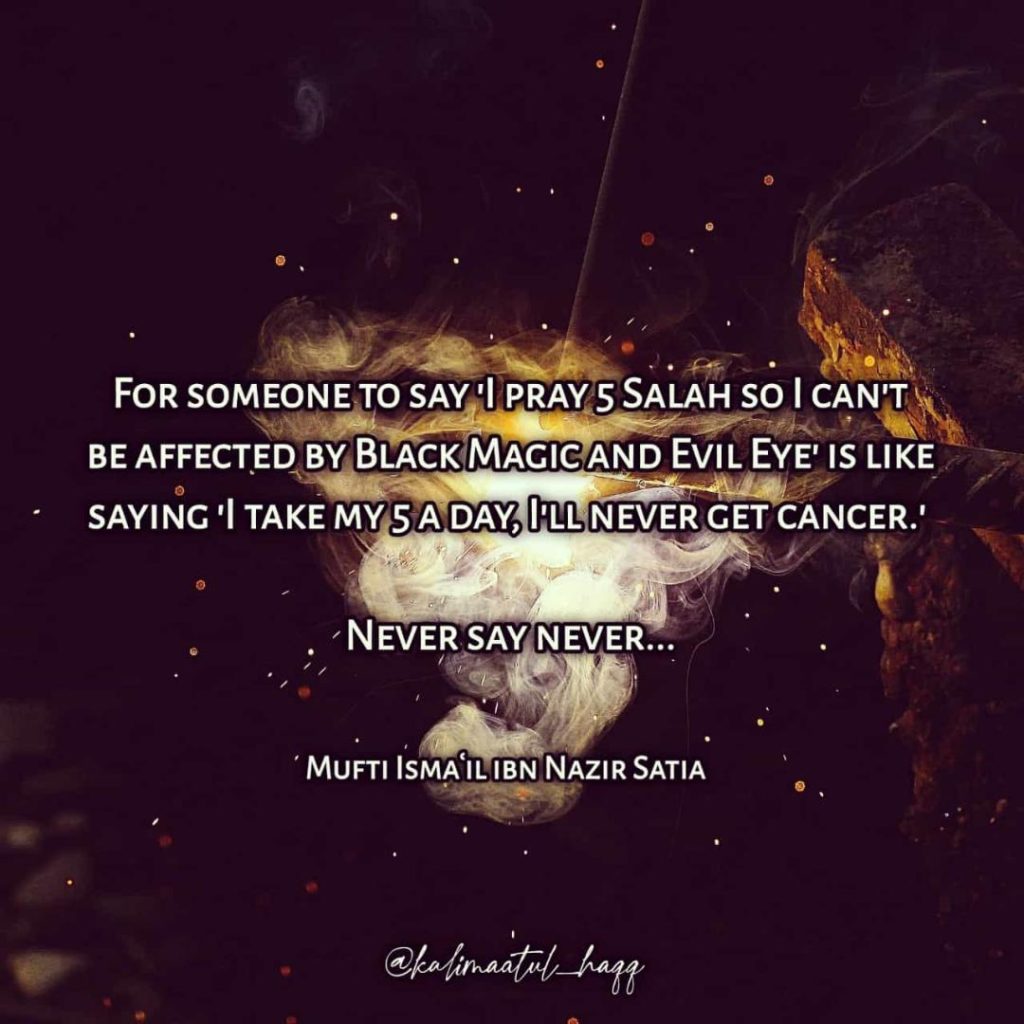
A simple answer for such people is that the Prophet PBUH also prayed Salah and read the Qur’an, rather the Qur’an was revealed upon him. Despite such noble piety, He PBUH was still affected by jinn/jadoo for six months and wasn’t aware (some scholars say even longer). Salah and Qur’an/Manzil are the best forms of protection, they do help, but a person can still be affected by nazar and jinn etc.
NB: We do not stop anyone from reading Manzil and general Qur’an as this does help immensely if someone casts evil eye on you despite your Salah and Qur’an it will only affect you 20%-30%, because you have a certain amount of protection.
2. “I went for Ruqya once it didn’t make a difference, black magic never really goes away.”
This is a statement we hear often because people have unrealistic expectations from Raqis. They want us to fix all their life problems, marriage, kids, work, house and maybe get us that fancy new car too?? And when those expectations are not met it leads to disappointment and frustration.
Secondly, Ruqya is never a one-time fix, this is the biggest mistake people make because most people need a few sessions.
Thirdly, patience is needed. It takes time for these things to heal. A person can have black magic for 10 years and expects it to go in a day or a week? Even medical doctors can’t cure cancer in a week.
You don’t change GPs every week, in a like manner don’t go to one Raqi today, another one next week, then try Taweez in India, by February you’re on Chinese herbal medicine and then back to anti-depressants. Stick to one method for at least 6 months, if it doesn’t work go to someone else, but do regular treatment.
3. “Ruqya is soo expensive and they tell you to drink Zamzam regularly also expensive, and buy Ajwa dates even more expensive! Ruqya is a rip-off!!”
Money means a lot to us all, we all value and love our money, but do we love our health? Mental and physical health… that’s what it boils down to. If you value your health, you will spend the money you spend all your life earning to save that health. But not everyone does, and nobody admits it.
Dear brother and dear sister, have you ever contemplated the amount of money you spend on takeaways/restaurants. The amount brothers spend on cigarettes and shisha. The amount sisters spend on make-up and handbags? Shoes? None of the above save your health! Cut down on these and save £20 for Zamzam/Ajwa… I’m not an accountant, but you can do the maths, we happily spend on futile things because shaytan loves to mislead us.
Ruqya is expensive and the reason is the nature of the field and the risks we take to do this job. It’s not easy and it’s not ABC, don’t compare us to a dentist or optician who opens at 9 am and closes at 5 pm. Raqis have to do so many things in the background to protect themselves to treat you, it also affects their family and house. Not to mention the backlash from doing Ruqya which comes in many forms.
But we must apply the ‘common sense rule’. If someone is charging in the 100s, then Shariah says use your Aqal and run, as you run from a lion. Don’t get conned!
Look for those who have decent and reasonable prices, bearing in mind those who run from clinics have rent to pay (costs add up). I’m only explaining, not justifying.
Again, I will say, I rarely hear people complain about dentists and opticians who have high rates! Private health care rips your wallet, arm, and leg off…
4. “I’ve heard these guys are all bogus, they make stories up. And it’s all money-making!”
Nobody likes stereotypes. Nobody. But we all get angry and emotional at some point in our lives and blurt a few things hidden in our minds, because of our bad experiences. You are allowed to have bad experiences and even talk about them, just don’t generalise. The word ‘all’ is dangerous, especially when it’s due to the actions of a few individuals.
The police are meant to protect us and uphold the law, often they break the law. There are corrupt police officers, does that mean all coppers are bent? #LoD
Teachers are meant to educate our children in school and madrasah, many teachers abuse our children, physically and sexually. Do you still send your children to school or do you generalise?
Doctors are meant to save our lives, but many doctors have killed their patients. Have you stopped going to the hospital?
My point is every sector has a few rotten apples, but you can’t say that everyone is the same. You get genuine people in the world and corrupt people, we need to look for genuine Raqis.
I have never denied the fact that there are fake healers, even in the Taweez/Aamil world. Don’t look at social media and YouTube, everyone looks good on there! Sisters particularly need to be careful as these predators often target vulnerable women. Always go with a mahram and ask questions if you have doubts about their diagnosis, don’t be bamboozled.
5. “Isn’t there a Hadith to the nearest effect, 70,000 people will enter Jannah without accountability on Qiyamah. One group is those who don’t seek Ruqya.”
The Hadith is correct, but like with most Hadith they need interpretation and commentary, they shouldn’t be taken literally, otherwise, it can cause confusion (generally speaking not just for Ruqya). There are Hadith that the Prophet PBUH urinated standing up? Do we follow such Hadith?
The different meanings of the “one who did not seek ruqya.”
1. There are certain pious individuals who have 100% reliance on Allah SWT and they never turn to the creation for help, like the Prophets AS and the Sahabah RA and even in the general public we have the Saints of Allah, they shouldn’t seek Ruqya as it goes against their tawakkul.
2. They do not ask anyone for Ruqya until the affliction happens, some individuals who panic seek Ruqya before the affliction, this is incorrect.
3. They believe Allah cures not the Raqi, so their belief is correct.
4. They refrain from shirk in their Ruqya, like the Ruqya in pre-Islamic times.
5. They try Ruqya or treatment themselves first then seek it from others. Self-Ruqya is important, to learn and teach it to others.
These are the answers given by Shaykh Khalid Hibshi, KSA
6. “I believe my issues are mental health or even medical. I don’t need Ruqya, because I don’t believe in jinn/jadoo.”
An increasing issue, especially in Europe and the West, where Mental Health issues are accepted and Jinn/Jadoo issues are rejected, denied and marginalized. So where is the balance and correlation between them all? We, as Muslims should believe in Mental Health, it’s a growing reality. Our lifestyle, our diet, and the fast-moving technology are usually the causes.
As for believing in Ruqya and Jinn/Jadoo, be careful before you get your defense shield up. Ruqya is reciting verses of the Qur’an and the treatment is everything mentioned in the Hadith. There is a Surah in the Qur’an called ‘Surah Jinn’. The Prophet PBUH and many of the Sahabah RA were affected by Black Magic. To deny the above is a major sin, and we need to watch our words before we deny them haphazardly.
It is mainly men who deny these things and even some scholars are negative towards jinn/jadoo issues (wait for day 10 and the reality of Ulama/Imams).
To believe in one thing you don’t need to deny another, to believe in mental health (because you suffered) doesn’t mean you deny jinn/Jadoo. But I’ll be honest, I do feel mental health is overrated, everything is mental health nowadays! Especially with the millennial kids and millennial parents, they don’t believe in jinn/Jadoo as much. The reason is the secular society we live in, the NHS and Media promote Mental Health massively. Well, my answer is My Nabi and My Allah promote jinn/Jadoo issues far more, it is endorsed in the Qur’an and Hadith. We do believe in mental health but mental health doesn’t believe in us.
Many people suffering from jinn/jadoo will suffer mental health issues and vice versa, jinn/jadoo can be a contributing factor in mental health and medical issues. Ruqya has helped people who suffer from Anxiety, Depression, Severe Migraines, even in cases of Cancer Ruqya has helped. Some were given ‘all clear’ and others said Ruqya helped with (the pain of) Chemo. That doesn’t mean we deny medical issues, it just endorses what Allah SWT has said, “The Quran is Shifa.” If doctors and medical experts know everything and cure all, why are soo many people still suffering day and night pills after pills;
CT scan = Clear.
MRI = Clear.
X-ray = Clear.
But they are still in pain and agony? Please do explain.
7. “I’ve had soo much Ruqya done, been to a dozen Raqis. Why am I not getting better? Why doesn’t it go away?”
Some people don’t get better and don’t see major improvements, there are reasons for this: i) People don’t act upon the advice we give them. They don’t pray salah and manzil, let alone surah baqarah (which is long). Men don’t go to the masjid, sisters don’t want to cover up and wear hijab, how on earth will you get better? Apart from a miracle…
ii) Sihr/Jadoo can be repeated. Just like Covid-19, you can get it once and you can get it twice (some have had it thrice). You can also get jadoo again, because the people doing it repeat it. Hence, I say never give up Manzil and Surah Baqarah, keep drinking Ruqya water, and use olive oil regularly. Most people become complacent once they see signs of improvement.
iii) The one doing Black Magic is close to you. Nobody likes to hear that, but often true. I don’t suggest accusing people, but the worst cases for us are when the perpetrators of Sihr are family members. Hence they keep feeding you and you lose all spirituality and religiosity.
Food is the strongest source of Black Magic, they feed you by mixing it in your food (usually sweet things, cakes, biscuits, or tea). The food enters your body, flows through your blood, eventually, you are fully ‘jadoofied’. A man’s whole personality can change, good men/women can become bitter and evil, harsh and arrogant.
If you find the concept hard why a family member would do jadoo, father on his own son? Wife on her own husband? One word: control. Control is what everyone craves, but not everyone gets it. Black Magic will give you that control (temporarily), and hellfire (permanently).
8. “You treated my brother who got better instantly, but I am not seeing results despite praying manzil regularly and reading surah baqarah etc.”
Yaqeen and conviction is an important aspect of Islam, it makes all the difference in treatment (medical or spiritual). Even if you take a paracetamol your belief should be Allah SWT cures, not the tablet. If you come for Ruqya you need to believe Allah SWT cures, not the Raqi. The higher the level of Yaqeen the quicker the ilaaj.
Two people can come for Ruqya with different mind-sets and see different results. Many come to ‘test’ us and see if it works. Totally wrong mindset, such people need to stick to MOT testing and not test the words of Allah SWT. If you are cured, Allah SWT cured you and if you weren’t cured there is a deficiency somewhere.
One of the greatest things I have learnt from Ruqya is trust in Allah SWT, hope in Him, and being optimistic about Allah SWT in all situations. It’s a real test of your Imaan. “I am as my servants think of me” (Hadith Qudsi). Think good of Allah SWT and the results are amazing!
One of the best clips on Husne Dhann with Allah SWT for Arabic listeners.
A line from the clip, “One of the pious predecessors used to say, even if Allah SWT enters me into the Hellfire, I will still tell the people of Hell: I love Allah SWT!”
Subhan Allah! Despite being entered into Hell, to still say I love Allah (because He is fair) is real love and optimism. Allah grant us a share of it. Ameen.
9. “I have heard Raqis don’t like Aamils and people who do Taweez, is this true? Because they say all Taweez are shirk!”
There is a hadith that states ‘amulets/taweez are shirk’, but there is also a hadith (which nobody quotes) that states ‘Ruqya is shirk’. As always, Hadith need interpretation and commentary. The answer to both Hadith is that those amulets which contain the words of Shirk and associating partners with Allah SWT are Shirk. The same applies to Ruqya of jahiliyya/pre-Islam which contains Shirk is not allowed.
Taweez is a grey area though and we need to be careful what sort of taweez we use. If it is clear and legible, then good, if it is a Qur’an ayah you know, then okay. But if you don’t know what it says in the taweez, avoid it like the plague. Why risk it?
Many taweez have been opened to find hair and blood inside. Others had the names of Shaytan and pictures of Shaytan. Hence, we always promote Ruqya which is clear and Qur’anic, it makes sense. The method of treatment is found in the Sunnah. Why have cotton when you can have silk?
As for the hatred, Taweez vs. Ruqya, I have never been intimidated by anyone who does Taweez, Alhumdu Lillah. But I am not sure about the other way round. I have heard many Aamils who spread all sorts of rumours about Raqis, it’s like we are stepping on their toes! If what they do is “kosher” why do they panic when someone starts Ruqya?
Why the use of such adjectives like “dodgy mawlana” or “Magician molsab”? Carry on with what you do silently… but ruqya does damage for some of them, because their works are far, far from kosher. It is the work of Shaytan! Black magic comes from somewhere…
And often that somewhere are Peers and Mawlanas who sell Taweez containing shirk and black magic. People who do Black Magic don’t sit in a castle dressed in black with a cat and cauldron, that’s Harry Potter! In real life, they are our own scholars making millions of dollars. Be warned!
The truth is always bitter, but bitter medicine has always proven to cure faster than any other. And remember half these stories you get from Aamils are absolutely bogus, many claim to keep jinns for info, even that is questionable whether their jinns exist? But people love to hear their fascinating stories!
10. “I recently went to a counsellor with my husband, the counsellor is also an Alim. We talked about jinn/jadoo issues to which he replied, “shut that topic down, no such thing! 99% of these jinn/jadoo issues are just mental health!”
The best to the last… Ulama and jinn/jadoo issues! First and foremost, we need to understand scholars are scholars, not God! They study in Darul Uloom for 6/7 years to give them “training” in Qur’an/Hadith.
I choose my words carefully, ‘training’, they don’t qualify to know everything. Then they’re told to further their studies on their own or specialise in specific fields. But the majority don’t, many don’t even know Qur’an and Hadith properly let alone specialise in something, let alone know about Mental Health and Jinn/Jadoo issues. Just like this scholar mentioned above. When I put on my trench coat and glasses, I realised he also works in a school? Imagine how many people he is misleading because of his arrogance! You know I will always challenge these molvis… so I called him and gave a plethora of evidence, hadhrat jee put the phone down! I apologised for hurting his ego.
For years, I wondered and wandered through different avenues to work out why soo many Ulama are against Ruqya and negative towards jinn/jadoo issues.
Once I listened to a talk relating the story of Imam Ahmad ibn Hanbal RH, in his time someone came and said, “O Imam! Fulan ibn Fulan denies the issue of jinn!” Imam Ahmad RH: “This is the Shaytan talking on his tongue.” This meaning shaytan will target ulama/imams and misguide them, to mislead the masses, there is plenty of evidence for this. It is important for ulama to have protection against sihr/jinn.
We will always reach out to Ulama who are wrong and correct them, there is no harm. It is better than gheebat-ing, especially in a dars of hadith. That’s right, even senior scholars can be corrected. Recently, our intel told us a senior Shaykhul Hadith sat in a lesson of Bukhari blasting Ruqya and blasting me! What was my sin? Educating people on Black Magic and Ruqya.
Subhan Allah! It’s a shame ulama don’t have the courage to ring me or tell me to my face, especially when I’m not doing anything wrong… these are the elders we are told to respect since we were small. I wonder if they are elders or oldies?
Ismail ibn Nazir Satia (one who is in dire need of Allah’s forgiveness, mercy and pleasure).
Learn to appreciate your family. We might argue with siblings and get annoyed, we might dislike the decisions made by our parents, but there are so many people out there that have lost their parents or they’re distant for whatever reason. During the lockdown, these people realised what a close-knit family means.
We must appreciate our deen – Islam. Many of us received Islam on a plate, we were born in Muslim families, hence we take it for granted. Covid-19 has brought many people closer to Islam, through sickness and health. We all remembered Allah SWT more, whether it was out of fear or thankfulness.
Which brings me on to valuing your health. When we are young we think we will live forever and nothing can harm us. As we get older and our immune system gets weaker, we understand we must appreciate our good health. Especially our mental health is very important. Going for walks regularly and exercising.
Life is the most unpredictable thing, but it is certain. Nobody debates death. In the UK almost 50,000 lives have been lost due to this pandemic. Make the most of your life, live for today, don’t delay good work.
Before the lockdown, we did what we wanted to, when we wanted to, value your freedom. Many countries have a lockdown all-year-round under the dictatorship rule. Value your house and safety and security.
The importance of unity – the virus is not a one-man battle, we are ALL in the same boat and we ALL need to work together to overcome it. Let’s stop discriminating some communities and blaming them for the spread of the virus.
Charities have been great during the lockdown, hats off to all the churches and mosques who opened their doors to help the vulnerable. Many who lost their jobs were in need of basic food parcels, we must learn to appreciate the little things in life.
Everyone had more time, kids were at home with online school and Madrasah. Parents were WFH and Masjids were closed so we were praying at home. This all meant we had more free time: to waste or to value? Your time is your life, value every minute, rather every second.
If you still have a job, be thankful. Most of us get bored or fed up of the 9-5 system and feel it’s’ a burden. Thousands of people have lost their jobs and are struggling financially. Be grateful and say, Alhumdu Lillah for your income; little or large! You have a roof over your head… Ma Sha Allah!
Be a ray of sunshine – it doesn’t take much to brighten someone’s day.
Ismail ibn Nazir Satia (one who is in dire need of Allah’s forgiveness, mercy and pleasure)
This poem was written to highlight the ongoing racism and prejudice in America, after the killing of George Floyd. We are all brothers and sisters in humanity, we should all feel the pain of Black people in America and across the globe. The Holy Qur’an teaches us:
“…if any one slew a person – unless it be for murder or for spreading mischief in the land – it would be as if he slew the whole people: and if any one saved a life, it would be as if he saved the life of the whole people.” [Al-Qur’an 5:32]
Such is the value of a single human life, that the Qur’an equates the taking of even one human life unjustly, with killing all of humanity. Thus, the Qur’an prohibits homicide in clear terms.
Ismail ibn Nazir Satia (one who is in dire need of Allah’s forgiveness, mercy and pleasure)
The tradition in Muslim religious literature of gathering collections of forty Hadiths dates as far back as the first century after the Hijrah. Abdullah ibn Mubarak al-Marwazi (Allah have mercy on him) is thought to be the first to have gathered forty Hadith in a collection. Perhaps the most well-known collection is that of Imam an-Nawawi (Allah have mercy on him), which has been translated into English, and on which there are several commentaries.
The practice of gathering forty Hadiths springs from a Hadith, narrated through several Companions, which puts the spiritual rank of religious scholarship within easy reach of the ordinary believer: “Whoever memorises forty narrations for my nation in matters of this religion, Allah will raise him up a scholar and I shall be an intercessor and witness for him on the Day of Rising.”
Allah make us from them.
Ismail ibn Nazir Satia (one who is in dire need of Allah’s forgiveness, mercy and pleasure)
The first and most important point is to make sure the charity is Shariah Compliant. Let us not be naïve and think everything that has the words “Islam” or “Islamic” before it, is according to Qur’an and Hadith. Many charities do activities which are violating the laws of Allah SWT, you do not need to be a Mufti/Scholar to know this. For example, mixed events, music in their videos, qawwali is becoming common, fashion shows and makeup tutorials… the list goes on. Every sane Muslim knows these things are totally wrong in the name of Islam.
Make sure the
charity is under the supervision of at least one Alim or a group of qualified
scholars. We see charities opening on every street corner, many of these
brothers and sisters do not have knowledge of the basics of Islam. They are
collecting our Zakah and Sadaqah, how can we guarantee it will be distributed
correctly and accurately?
Give to needy charities and not the GREEDY ones! You should be giving your money to the neediest places and the neediest charities. Some charities accumulate 40-50 million pounds a year, others are very close. Check their annual reports or search on the Charity Commission Website. Check to see how much of that money is being spent, why give your Zakah to a charity that still hoards last year’s Zakah?
Ask your charity
if they take admin costs for Zakah and Sadaqah, some charities take
astronomical amounts! Although it is permissible to take from Sadaqah, one must
ask a local Mufti if it is permissible to take admin costs from Zakah: https://islamqa.org/hanafi/qibla-hanafi/37024
Ask your charity how quickly they distribute Zakah. As mentioned in point 3, some charities get millions every year. A lot of this money is hoarded in their bank accounts as they are unable to spend this money instantly. Which could mean your charity still has last year’s Zakah gathered up! Do you really want to give them this year’s Zakah? Some charities have a 30-day policy i.e. they distribute your Zakah within 30 days, I personally think this is an excellent idea.
Don’t be ashamed to ask how much they pay their employees, their PR managers and the CEO. We hear about charities taking ridiculous wages due to help from Gift Aid etc. Unfortunately, the concept of kindness and consideration is disappearing from some charitable people.
“You donate for the sake of Allah!” I am sure you have all heard this one before? Some defensive charity workers reply with the above statement when questioned about their practises and money management. The statement is incompetent and uneducated. Just because we donate for Allah does NOT mean in any way, shape or form we cannot question people. It is our God-given right, we are living in 21st Century Britain.
Now we come on to charities collecting door-to-door. Most of us, unfortunately, donate blindly, we do not ask for a receipt, nor a charity reg number. Some of these people are not even Muslim, they just grow a beard and wear a hat or hijab for women. We must follow protocol, and ask for a certificate where it applies. We need to get rid of our ignorance and stop saying, “We donate for Allah and it is all in his hands” Definitely, you donate for Allah, but does that mean you donate to thieves and crooks because of your sheer naivety? Learn to ask a few questions, ask for their website (give it a quick google search on the doorstep), their head office location, which countries they work in etc.
Make an intention, The intention is important for Zakah. AS for Sadaqah/Lillah most of us give Ma Sha Allah, very generously. But we do not make an intention, for esale thawab, for Shifa, safety from calamities, multiple intentions can be made In Sha Allah. Allah accept from one and all. Ameen.
Ismail ibn Nazir Satia(one who is in dire need of Allah’s forgiveness, mercy and pleasure)