Categories
Muslim men

International Men’s Day

PIERS MORGAN’S ADVICE ON INTERNATIONAL MEN’S DAY: Don’t let hypocritical radical feminists turn men into a bunch of neutered, grovelling, blubbering doormats, ladies – or we’ll ALL live to regret it

I have a confession. I am a man. The worst? I’m actually proud to be a man and I like being masculine

I have a confession to make.

This isn’t easy, and I’ve taken a long time to summons up the strength to do it.

I’m aware that just by admitting to what I’m about to admit, I will subject myself to all manner of global shame and ridicule.

I’ll be taunted, abused, shunned and reviled.

But as Sir Winston Churchill once so rightly said: ‘You have enemies? Good. That means you’ve stood up for something, sometime in your life.’

OK, here goes…

I am a man.

Yes, on International Men’s Day 2018, I am hereby identifying as the biological sex that I was born to.

This alone is enough to risk making me a social pariah these days, but that’s not even the worst of it.

I’m a man who’s actually proud of being a man, and who also likes being MASCULINE.

Sorry.

I realise this is a horrendous thing to say, and I can only offer my insincere apologies to all the radical feminists now exploding with rage as they read my shocking statement.

If there’s one thing they loathe even more than the M-word, it’s the longer M-word.

But why?

Masculinity simply means ‘having qualities or appearances traditionally associated with men.’

That’s it, nothing more sinister.

Yet thanks to women of radical feminist persuasion who’ve gleefully hijacked the #MeToo and #TimesUp campaigns to serve their own man-hating purpose, masculinity has become the most controversial, detestable word in the English lexicon.

And it’s now impossible to be ‘masculine’ without also being accused of ‘toxic masculinity’.

Radical feminists (here’s Madonna in her shirt touting her ‘radical’ position) have hijacked the #MeToo and #TimesUp campaigns to serve their own man-hating purpose, masculinity has become the most controversial, detestable word in the English lexicon

Even Prince Charming whisking Cinderella off from captive hell to a life of happiness is an evil that must be expunged from society – led by furious Keira Knightley and her ultra-feminist knights in PC armour.

‘Cinderella waits for a rich guy to rescue her,’ she sneered. ‘Don’t. Rescue yourself! Obviously!’

Fine empowering words until you remember that the Prince gallantly saved Cinderella from abuse and slavery and they genuinely loved each other.

Then it doesn’t seem quite so ‘obvious’, does it?

One of the very worst of the many terrible things about radical feminism is the scourge of pathetic male virtue-signallers that urge them on.

As an obvious (or so I thought..) tongue-in-cheek joke this morning, I tweeted: ‘Happy #InternationalMensDay! Stay strong lads, we’re not illegal – yet.’

Most people reacted in the way I would react if someone else had tweeted that – by laughing.

Others weren’t so amused, bombarding me with hateful abuse about my supposed ‘toxic masculinity’.

A man named Box Brown, who has a verified Twitter account and claims to be a New York Times best-selling cartoonist, replied simply: ‘Die.’

How laughably hypocritical; this angry little clown races to attack what he presumably perceives to be my aggressive maleness, yet does so by saying he wants me dead.

Hypocrisy is sadly a prevalent theme with much of modern feminism.

The likes of Kim Kardashian and Emily Ratajkowski have both built hugely lucrative careers out of stripping off in the supposed name of ‘feminist empowerment’.

Hypocrisy is sadly a prevalent theme with much of modern feminism. Kim Kardashian and Emily Ratajkowski have built lucrative careers out of stripping off for ‘feminist empowerment’

When in fact what they’re really doing is selling nudity and sex.

I have no problem with that – just don’t pretend it benefits any other woman or is anything that Emmeline Pankhurst and her Suffragettes would have ever done.

They were too busy risking their lives to win women the right to vote than to have time to writhe naked in spaghetti and ludicrously claim they were doing so to liberate womankind.

When I say this kind of thing, women ask me to cite an example of what I consider real feminist empowerment.

So let me give you one from yesterday when a 17-year old German girl driver named Sophia Flörsch was competing in her first Formula 3 World Cup race at the Macau Grand Prix.

The race featured male and female drivers, and she qualified purely on merit.

On the fourth lap, she struck another driver’s car as she approached a bend at 175mph.

The collision caused Sophia’s car to spin out of control and catapult several hundred yards through the air into a wall.

It’s the most horrifying car crash I have ever seen, and everyone who watches it would presume she must have died.

But Sophia lived, despite fracturing her spine.

And within a few hours, she tweeted: ‘Just wanted to let everybody know that I am fine but will be going into surgery tomorrow morning. Thanks to everybody for the supporting messages. Update soon.’

No fuss, no playing the victim.

Can you even imagine the scale of self-pitying hell that would be unleashed on the unsuspecting public if any of the Kardashians had a minor 25mph car prang today in which they broke a diamond-encrusted toenail?

Sophia has an incredible talent for driving a car, and incredible courage too. She is a rising star in a male-dominated sport determined to prove she can mix it with the men and I applaud her for it.

THAT is true feminist empowerment – not flipping the bird in topless selfies to millions of impressionable young girls.

While I joke about International Men’s Day, of course I understand and appreciate there is a very serious side to it too.

The stats tell the grim story: 76% of suicides are men, 85% of homeless people are men, 70% of homicide victims are men, men serve 64% longer in prison and are 3.4x more likely to be imprisoned than women when both committed the same crime.

So it’s not all a patriarchal bed of roses being a man.

But I fully accept that women have historically been treated unfairly in terms of equality, and that many women continue to be treated unfairly.

I also fully accept that women have been subjected to far more harassment, sexual abuse and domestic violence than men.

That is where the #MeToo and #TimesUp movements have performed a valuable public service in highlighting and exposing genuinely bad, unacceptable and in some cases criminal behaviour.

In fact, I don’t know any of my male friends who wouldn’t agree with that.

However, what I refuse to accept is that all masculinity is therefore now automatically a bad thing or that being a man is suddenly something to be ashamed about.

Nor do I believe that most women actually want the kind of neutered, emasculated, papoose-clad, permanently apologising doormats that radical feminists are trying to make us become.

Let me therefore offer some friendly advice from a man who loves women:

Men like me don’t want to hear that universities (and one in Wales, UK actually did this,.) have banned the word ‘mankind’ because it’s offensive to women, not least because ‘women’ itself contains the word ‘men’.

We don’t want to be told we can’t appreciate a female star’s beauty because it’s offensive to feminists, then see feminists like Ellen de Generes openly objectifying famous men’s bodies at awards shows – to no complaint.

We don’t want to be informed that James Bond has to stop hitting on women because it’s now deemed politically incorrect, especially as none of the women he ever hits on seem to be anything but ecstatically thrilled about it.

We don’t want to be disapprovingly frowned at for opening doors for women or standing up for them on trains or when they walk into a room, or paying the bill for dinner if we want to. Chivalry is a good, not oppressive thing.

We want to pride ourselves on being a protective modern day hunter and provider, in whatever capacity that manifests itself to the benefit of a woman or family – without promptly being labelled a ‘dinosaur’ or ‘caveman’.

We’d like to preserve the right not to be seen blubbing in public every five minutes just to prove we’re in touch with our emotional side.

In short, we’d just like to still enjoy being men if that’s OK?

Just as we’d like women to enjoy being women.. and yes, for gender-fluids to enjoy being men AND women if that makes them happy.

The best conversation I’ve had about all this was with the singer Annie Lennox who said it was ‘important to bring men with you’ on the feminist journey.

‘But,’ she cautioned, ‘the debate has to be less hostile to men for that to happen.’

Exactly.

You probably didn’t know that today is International Men’s Day. After all, it doesn’t receive much publicity, despite having been celebrated on this day since 1991. International Women’s Day is a different matter. That you will have heard of, and may well have taken part in. We all agree that we need to celebrate and promote women.

But, by the same token, we need to celebrate men. Even just a little. And, today is the best time to question our reluctance. I invite you, for example, to ask yourself the last time you read an article praising men. No, not an article praising one man (like an explorer, carer, sportsman or teacher), nor an article about a group of men, such as a team of rescuers or medics.

I’m talking about men as a whole. Cast your mind back. You can’t remember, can you? Indeed, have you ever read such an article?

And yet you’ll be familiar with articles praising women. According to recent media reports, women are better than men at working under pressure, taking financial responsibility, teaching, managing people, caring, driving, showing stamina, raising money, being surgeons, being doctors and being engineers. And those are just the ones I found through a quick Internet search.

In summary, women are better at lots of things. But men, it appears, are better at, well, nothing. No wonder there’s a crisis of masculinity.

Some might say that there darn well should be a crisis of masculinity, given the horrendous revelations of sexual harassment and assault over the last year. Why should we give men any credit at all, given what we’ve learned?

It’s an understandable view. Sexual harassment is horrible and unforgiveable. If anyone harassed or assaulted a woman or girl in my family, the red mist would descend more quickly than you could say ‘metoo’. But how many men are guilty? One in five? One in ten? A small minority, certainly. Yet, we seem to be blaming men in general.

According to the narrative, men can only be the baddies. Last month there was even a debate about whether hate crimes against men should be recognised. Just think about that: we accept because it is obviously right to do so, that misogyny is disgusting. Yet we are ready to pontificate about whether hate crimes against men are even worthy of our attention.

And while we are right, of course, to strive for equality between men and women at the top, where men still dominate, we should also cast an eye lower down, where there are twice as many homeless men as women, ten times more male than female prisoners, and three times more men than women who commit suicide. Oh, and a million children are growing up without their fathers.

In her speech in Downing Street upon becoming Prime Minister, Theresa May said her priority would be to help the disadvantaged, pointing out that “If you’re a white, working-class boy, you’re less likely than anybody else in Britain to go to university”. Two years on, nothing has changed.

Yet, we still think the male gender is always the nasty gender.

Consider the men you know – family, friends, colleagues and acquaintances.  Most of them, like most women, have great qualities. Up and down the Britain, millions of them care for their families, are loyal to their friends, work hard and behave as decent citizens. They are not an abusive, privileged elite. They are good people with noteworthy qualities.

So, let’s recognise them. Today’s their day.

Categories
Muslim men

Why We Don’t Pray When We’re On Our Period – A Reflection on Allah’s Attributes As The Merciful and The Creator

https://myrihla.com/2017/08/17/why-we-dont-pray-when-were-on-our-period-a-reflection-on-allahs-attributes-as-the-merciful-and-the-creator/img_20170905_121646

I came across the post below on Buruj Lan-dan’s page on why we as Muslim women don’t pray when we’re on our monthly periods, and it’s a topic that’s been on my mind for a while so I wanted to share it with you adding my own reflections at the end.

Why don’t we pray when we are on our monthly cycles?

A dear friend of mine explained it to me and it blew me away. May Allah protect her always.

There is not a deed as great as the prayer. And no one is excused from it under any circumstances. Even men in battles are commanded to pray in whatever way they can.

But the only time a servant of Allah is entirely excused from praying and from even making up the missed prayers is when as a woman you suffer from all the difficulties that come with menstruation.

I love how my friend worded the wisdom behind it.

“Allah has mercy on you because He knows no one around you will”

Your boss doesn’t care if you come late to work because you were suffering from cramps in the morning. Your children don’t demand any less on those days of weakness and tiredness. Your husband doesn’t have any more patience with your mood swings when sadness or anger overwhelms you for no reason. When you step out, nobody knows how much your body either aches or how much your mind is distracted by incessant thoughts. You are on your own.

So, Allah the Most Merciful, Ar-Raheem, Ar Rahman, removes His obligation on you because no one else will.

We could’ve been commanded to make them up – if the reason was purely Taharah (purity) but we weren’t. He gives us a break when no one will.

The other time a woman is excused is when she has given birth. Her body, her mind labours to bring another life into the world and becomes occupied with taking care of it – and again Allah excuses her.

This is what makes me fall in love with Allah and Islam even more. For only Allah could know the intricate details of our struggle and give us what we need the most – mercy. – From Buruj Lan-Dan’s Facebook Page

My Reflection

It’s common for us to jokingly refer to our periods as holidays because we’re absolved from the responsibility of praying. After a few days however the effect quickly wanes and we find ourselves craving the doses of serenity that we get through prayer. One of the focal benefits of Salah is that it forces us to remember Allah SWT hence being away from it can sometimes make us feel like we’re no longer in that state.

Whenever I’m on my period, I’m reminded of the ayah below:

“We will show them Our Signs in the universe, and in their own selves until it becomes manifest to them that this (the Quran) is the truth” [Fussilat 41:53]

On the earth are Signs for those of assured Faith; as also in your own selves: will yet not then see?” [Al-Dhariyat 51:20 – 21]

In fact, my periods are a time when I am heavily conscious of Allah. Marvelling at the creation of my body and how perfectly it functions. Especially on months when I go through heavy periods, and I’m continually amazed at the way my body self-regulates. (No kidding, some days I feel like I’m gonna bleed out!) There are different ways in our lives that Allah reminds us that is Al-Khaliq, The Creator, and for me, my menstrual cycles are a special reminder of the one who has created me and created me in the best of forms.

I mean think about it, having regular menstrual cycles is a sign that the body is functioning normally, so remember to thank Allah for your health and the numerous blessings that he has given you through your body.

Categories
Muslim men Muslim women

Teenage Years

بسم الله الرحمن الرحيم

Teenage Years: Most Difficult for the Parentssophie-sollmann-632775-unsplash

“I never asked to be born!”
“Stop trying to control my life!”

“I hate you!”
You thought you were over the hard part—changing diapers and being awakened throughout the night by your crying baby, dealing with an uncontrollable two-year-old “monster,” and trying to handle a mischievous child, who was always getting into trouble at school. But now comes the really hard part—coping with a rebellious, often rude and obnoxious, teenager. 
Muslim Parents: Not Immune from Teenage Problems
The teenage years have historically been a difficult period for parents in America, with very few exceptions. Struggling to find their own place in the world, teenagers often rebel against the ways of their parents. They want to experiment to find out what is best for them. And, unfortunately, Muslim parents may also face many of the same problems with their teenagers that non-Muslim families face.
Muslim children can also be tempted to drink alcohol or take drugs, be physically attracted to someone of the opposite sex in their class, skip school, or get involved in the wrong crowd.
No doubt, it will be a traumatic experience for a Muslim family to find out that their son or daughter is taking drugs, secretly going out on dates with the opposite sex, or getting in trouble with the police, but it could happen. And what if they become addicts, contract AIDS by having unmarried sex, or become a mother or father before marriage. Our great dreams for our children could suddenly turn into nightmares. It has happened to other Muslim families.
This is, of course, a very frightening thought for most parents. Some will merely say that it won’t happen to their Muslim child. But others will take action and look for ways to prevent these problems or to better handle them if they arise. 
Although no two families have exactly the same situation, there are some general guidelines for dealing with Muslim teenagers that might be useful.
We should teach them from an early age about Allah Ta’aala , the Prophets AS, the Sahabah RA, and the great heroes of Islam.
If we develop in them a love for Islam and provide them with righteous examples for their heroes, they will be much less likely to go astray. A person wants to be like his heroes. If he admires Prophet Muhammad Sallallahu Alaihi Wa Sallam, Abu Bakr Radhiyallahu Anhu, and AliRadhiyallahu Anhu, he will try to follow their example. If he admires a rock star or a gang leader, he will want to be like them. If we inspire our children with good examples, when they are tempted to do wrong, they will, InshaAllah, remember these examples and remain steadfast. 
Although I was raised as a Christian and didn’t embrace Islam until I was in my 20s, I was greatly influenced by the Biblical stories of Prophets like Nuh, Ibrahim, Musa, and Isa (Peace be upon them all). Although the Biblical stories were not in their pure form, they still inculcated in me a love and respect for the way of the Prophets. Although I fell into many of the temptations of youth, Alhamdulillah, I always felt something within me holding me back from going too far. While many of my friends went headlong into a highly destructive way of life, I believe that my knowledge of, and affection for, the Prophets helped me to return to a better path.
We must be very careful about our children’s friends
During the teenage years, children often care more about what their friends say than what their parents or elders say. According to a hadith, “Man is upon the path of his intimate friend; so let each look to whom he takes as a friend.” If our children have good, sincere, and righteous friends, the chances are good that our children will be like them. If, on the other hand, our children hang around with children who take drugs and get into trouble, our children will likely take drugs and get into trouble. 
Therefore, it is essential from an early age that we try to get our children involved with good children. One way to encourage this is by regularly taking them to the mosque (be careful not creating disturbance) or by sending them to an Islamic school where they will have the opportunity to meet and interact with Muslim children. We should be worried though if our children start hanging around with bad-mannered and disrespectful children.
We should encourage our children to participate in wholesome religious, social, and sports activities
Bored teenagers are more likely to look for fun and excitement in the wrong place. “Idle hands are the devil’s (shaytan’s) workshop,” someone once said. If teenagers’ lives are full of good and exciting things to do, they will not have the time or the desire to get involved in bad things. 
We should try to channel their teenage zeal into constructive avenues
Sometimes, teenagers begin to criticize the way of life of their parents and society, and parents are often angered by this. However, we must keep in mind that sometimes they may be right. Our lives and our society are not perfect, and teenagers may have fresh insight into how to improve them. In Living With Teenagers: A Guide for Muslim Parents, Ruqaiyyah Waris Maqsood writes:
“Teenagers are idealists—they want to change the world, and make it a better place. These are not bad ideals, and it is a great pity that adults have forgotten their own ideals in the rat race of daily life. You, the parent, may have ended up as just a hard-working nonentity in some quiet niche in life; a teenager who is a real idealist may end up as a famous person, a reformer, a politician, an aid worker —who knows. The future lies there before them.
It is therefore a foolish parent who tries to ridicule and trample on that young idealism. If it is consistent with Islam, it should be fervently encouraged, and not set at naught.”
If a teenager is idealistic and wants to improve the world, we should encourage him and help him. If he if full of zeal but lacks the proper direction, we should help him to use that zeal constructively. If we get teenagers involved in helping those in need and in working for important causes, their zeal could make a tremendous impact.
We should sometimes admit that we are wrong
Parents make mistakes. If we admit to our children that we are wrong at times, they will not always feel that they have to rebel against us and prove that we are wrong.
We should listen to our children
Sometimes, children act out in order to get our attention. If we give them our attention freely, they will not have to seek it in destructive ways. Also, by listening to our children, there is a greater chance that they will confide in us and ask us questions, rather than seeking answers from negative sources.
We should do what we say
Teenagers hate hypocrisy, and many of them seem to have a built-in radar for detecting it. If we want them to listen to us and take our advice, they must trust us. If we tell them not to drink, but drink ourselves, they will not respect us.
The teenage years are usually difficult, and parents need to prepare for them before they arrive. If parents have built a strong, trusting, and loving relationship with their children before the teenage years, their children will be less likely to go astray. It is very difficult to see one’s child going in the wrong direction and not know how to stop him from destroying himself. But if we work hard to instill in them the right values early and try to help them develop a wholesome lifestyle without being overbearing, perhaps we can prevent such a tragedy from ever occurring.
Categories
Muslim men Muslim women

O Traveller to the Haram! Part II

بسم الله الرحمن الرحيم

madeenah.jpg

Continued…

Hajj

For those going first time it is easy to get lost, there are a lot of hotels and sometimes they all look the same to you and you might be quite a distance from the Haram. For the first few days go with someone to the Haram, and remember the walk back and picture a big hotel or shop nearby, e.g my hotel is near Hilton or behind Movenpick. Keep the hotel card, especially if you have elderly parents with you.

Remember, those going for Hajj there will be approximately 3 million people in Hajj. Thinking of that should give you the ability to be more patient. Hajj is nothing but an expression of love. During the journey towards Allah, the haji bears all difficulties with great patience. Also, bear in mind there will be delays. If you arrive late at Arafat or Muzdalifah you will still be rewarded for your intention so do not fret or frown. Arafat day try and spend the most time in Dua from Dhuhr to Maghrib in a standing position (as long as possible). Arafat to Muzdalifah is usually a difficult one as most if not all of the people take the buses as it is dark after Maghrib. It is ideal to walk the rest of Hajj, saves you from the headache of buses. If your bus is late, spend the time in dhikr and Qur’an not talking or gossiping or on WhatsApp and social media. Don’t let Shaytan take advantage.

Can I also say about keeping yourself clean during the days of Hajj? Please don’t neglect personal hygiene and yes stick to the restrictions…but there are going to be millions of people there and there will be germs everywhere, keep a fragrance-free hand gel and keep washing your hands to stop spreading any unwanted germs. When sneezing and coughing remember to use tissues and wash your hands if possible after.
Allah SWT has made things easy for us now, personal hygiene is more important at times like this not just for you but to take other people into consideration too, the elderly the sick those who have terminal illnesses who will be around if you’re not washing to keep clean you will spread germs.

There are even some things that recite the talbīyah alongside a muḥrim when one recites it. “There is no Muslim who recites the talbīyah during the Ḥajj andʿUmrah but that everything which is to his right and left also recite it with him. Whether it is rocks, trees or even soil, to the farthest ends of the earth in each direction, from here and from there.” (Tirmidhī)

THE SIGNS OF HAJJ E MABROOR & HAJJ E MAQBOOL
Hajj e mabroor is where no mistake is made for which penalty will have to be given.
Hajj e maqbul is the hajj that has been accepted by Allah, this also includes performing the hajj with lawful money.
Sometimes both these words are used for the term accepted hajj.
A sign of an accepted hajj is that the pilgrims life changes from bad to good, love for the hereafter increases, and the desire for worldly things decline.
Five times daily salah ,zakah, fasting in the holy month of Ramadhan and for women a full sharee purdah.
Previous fasts and salah must be completed through qadha, unpaid zakah must be paid and the sunnah of Rasulullah SAW must be learned and practiced upon.
Become a practising muslim and abide by the laws of Shariah.
Allah grant all the hajis and hajyanis hajj e mabroor and maqbool Ameen thumma Ameen

Miscellaneous

Daily Items to take to the Haram/Masjid: Drawstring bag for slippers, musalla, water bottle, Qur’an, dua books/tasbih, mobile phone and money.

Janazah Salah Sayyiduna Abu Hurayrah (radiyallahu ‘anhu) reports that Rasulullah ﷺ said: “Whoever attends the funeral procession and offers the Janazah Salah, will get a reward equal to one ‘qirat’, and whoever accompanies it till burial, will get a reward equal to two ‘qirats’. It was asked, “What are two qirats?” He answered, “Like two huge mountains.” (Sahih Bukhari, Hadith: 1325 and Sahih Muslim, Hadith: 945)

For those travelling for the first time, there will be Janazah Salah after every Fardh Salah almost. You will hear an announcement, “As-Salah ala Al-Amwaat” or “As-Salah ala Al-Atfaal” (Prayer for the deceased or prayer for children). We should seize the opportunity as it takes only a few minutes to pray. As a lot of people tend to forget the method and women may never have prayed Janazah Salah, the method is here:

Method of Janazah Salah:

The manner of performing Salatul Janazah is as follows:

The body of the deceased must be placed in front of the Imam who leads the Salah.

The Imam stands in line with the chest of the deceased.

Everyone in the congregation must have the intention of performing Salaah Al Janazah for the sake of Allah and in prayer for the deceased.

Make the intention of praying behind Imam.

One must then say Allahu Akbar while raising both hands as in Takbeer At Tahreema (the same manner in which one raises his hands to begin the daily Salah).

Then fold your hands as one does in his daily Salah.

At this time, one must recite the 1) Thana. The Thana is:-

“Subhanakallahumma wa bihamdika wa Tabarakasmuka wa Ta’aala Jadduka wa laa ilaha Ghairuka.”

2) After this, a person must say Allahu Akbar again, but must not raise his hands.

At this time, one will recite the Durood, (preferably the same as recited in the daily Salah).

3) Then say Allahu Akbar once again without raising your hands. After this takbeer, one will make the dua for the deceased.

Based on who the deceased is, one will recite the relevant dua. That is, there is a special dua for adults, one for a minor boy and another for a minor girl.

The dua for an adult is:

Allaahurnmaghfir li hayyinaa wa mayyitinaa wa shahidi­naa wa gha-ibinaa wasaghiri­naa wa kabirinaa wa dhakari­naa wa unthanaa,

Allaahumma man ahyaitahu minnaa fa’ahyihi ‘alal islam wa man tawaffaitahu minnaa fatawaffahu ‘alal imaan.

O Allah! Forgive those of us that are alive and those of us who are dead, those of us that are present, those of us who are absent, those of us that are young and those of us that are adults; our males and our females. O Allah! Whomsoever of us you keep alive let him live as a follower of Islam and whomsoever you cause to die, let him die as a believer.

The dua for a girl child is :

Allaahum maj ‘alhaa lanaa fa-ra—tanw waj ‘alhaa lana aj-ranw wa zukhranw waj ‘alhaa lana shaafi’atan wa mushaf-fa;ah

O Allah, make her our forerunner, a source of reward and treasure and make her plead for us and one whose plea has been accepted.

The dua for a boy child is:

Allaahum maj ‘alhu lnaa fa-ra—tanw waj ‘alhu lana aj-ranw wa zukhranw waj ‘alhu lana shaafi’an wa mushaf-fa’aa

O Allah, make him our forerunner, a source of reward and treasure and make him a pleader for us and one whose plea has been accepted.

NOTE: If you don’t know any of the above Duas then pray Rabbana Aatina Fid Dunya hasanah wa fil Aakhirati Hasanah wa qina azaaban naar.

When the Salatul Janazah is finished the body should be taken to the cemetery for burial.

And Allah knows best.Madinah 71Madinahh 76

Travel Insurance
Travel insurance is not permissible even if claims are restricted to exceptional circumstances. Hadhrat Mufti Taqi Uthmani (madda zilluhu) writes in his book, contemporary fatawa: “It is a well-settled principle of Sharî’ah that every transaction between two parties in which the payment by one party to the other is certain while payment by the other party depends upon a contingency (which may or may not occur) is included in Qimâr (gambling) and gharar (deception) and is, therefore, unlawful. (Page 122) “….all the insurance policies available with traditional insurance companies run on a commercial basis have an element of interest or Qimar or both. Hence, they are not allowed in Shari’ah.” (page 164)  Allah (SWT) Knows Best.

Women and Jamat

As most women don’t attend the Masjid for Salah in the UK, they may not know how to perform missed Rak’aat with the imam:

You will stay in the sitting position with imam in the last Rak’at for tashahhud until he does the second salam in case he does sajdah e sahw after the first salam. So as soon as he finishes his second salam you will stand up to finish your missed rakats.
Method:
1 RAKAAT MISSED The Muqtadi must recite Surah Faatiha and a Surah.
2 RAKAATS MISSED The Muqtadi must recite in both Rakaats Surah Fatiha and a Surah.
3 RAKAATS MISSED In the first Rakaat, the Muqtadi must recite Surah Fatiha and a Surah and then sit for Tashahhud.
After Tashahhud, he must stand up for the second missed Rakaat and recite Surah Fatiha and a Surah.
In the third missed Rakaat, he must recite Surah Fatiha only.
4 RAKAATS MISSED In the first two Rakaats recite Surah Fatiha and a Surah.
In the second two Rakaats recite only Surah Faatiha. (Shami vol 2 pg. 346)

Witr in Ramadhan

Those who go for Umrah in Ramadhan, usually have a dilemma whether or not to pray Witr with the imam. As the imam will pray 2 rak’ah then 1 separate. It is allowed for Hanafis (people who follow Hanafi fiqh) to follow the imam in Witr. Please see fatwa below:

https://nawadir.org/2016/04/02/witr-salah-in-makkah-and-madinah/

The preferred view of Hadhrat Mufti Muhammad Taqi Uthmani Saheb (hafidhahullah) is pray 2 rak’ah nafl with the imam and then don’t pray the 1 rak’ah separate, just make dua in the qunoot/dua after rukoo.

Also, after Taraweeh Salah there is no announcement for Witr like the Masajid in England. So many people stand up for Witr thinking it is still Taraweeh and their intention will still be for Taraweeh, which will invalidate the Salah. It would be nice if they could announce Witr Salah in the Haram, otherwise we must keep a track of Rak’ahs.

Thieves

Keep your belongings with you at ALL times. In the hotel keep your suitcase and luggage locked, do not trust anyone, not even the workers. Take minimum money to the Haram, 40-50 Riyal. You should not need more than that, maximum 100 Riyal. The day you decide to go shopping, take extra money. But on a daily basis, you might need money for a drink/ice cream or something to eat. There are thieves everywhere! As blessed as Haramayn Shareefayn are, unfortunately the thieves are NOT. They will cut your pockets and run. Men should try and sew pockets into their trousers for safety. Keep your mobile and money in there. Women keep small handbags and keep them close to you, not dangling off your shoulder. Then there are other thieves or beggars who make stories up! They lost their passports or documents. Or even say they lost their wife and children. I personally do not give a Riyal to any of these guys, not because I am stingy but I want my money to go to the right place. If you don’t believe me, read this:

https://babarahmad.com/2016/08/29/pilgrims-guide-to-predators-on-hajj/

If you want to give Sadaqah or Zakah give it to the cleaners in Haram. With Zakah, you have to let them know it is Zakah.

If your belongings do get stolen or lost, there is a lost and found office called “daftarul mafqoodaat” in Arabic. It is near Safa and Marwa but far, far behind it. You have to go outside and it is a long walk, I’ll be honest. Try praying these duas:

1.
اللَّهُمَّ رَادَّ الضَّالَّةِ وَهَادِي الضَّالَّةِ أَنْتَ تَهْدِي مِنَ الضَّلَالَةِ ارْدُدْ عَلَيَّ ضَالَّتِي بِقُدْرَتِكَ وَسُلْطَانِكَ فَإِنَّهَا مِنْ عَطَائِكَ وَفَضْلِكَ
“O Allah, the Returner of the lost, and the Guide of the lost, You guide the lost. Return to me what I have lost by Your power and Your domain, for surely It was Your gift and grace in the first place”.
(Al Hisnul Haseen)
2.
يا جامع الناس ليوم لا ريب فيه
اجمع بيني وبين مالي إنك على كل شيء قدير.
Allahuma ya jami’ an-naas li yawmin laa rayba feeh ijma’ bayni wa bayna dhaallati.
“O Allah, Gatherer of mankind on the day in which there is no doubt. Connect me with my lost item.”
(Fathul qadeer)

فِيهِ آيَاتٌ بَيِّنَاتٌ مَّقَامُ إِبْرَاهِيمَ

In it are clear signs (among which is) the Maqam-e-Ibrahim.

maqam-ibrahim-masjidil.jpgMaqam-e-Ibrahim refers to the stone on which Nabi Ibrahimﷺ would stand when he was building the Ka‘bah. As the height of the building rose, the stone would automatically rise, lifting Nabi Ibrahimﷺ so that he could continue to build the Ka’bah, and when it was time for Nabi Ibrahim ﷺ to return to the ground, the stone would automatically descend.

The impression of the blessed footprints of Nabi Ibrahim ﷺ can be seen in the stone until today. It is obviously a miracle for a stone to automatically rise and descend, based on the need of the person standing on it, and for a hard stone to soften sufficiently so that it could be imprinted with his footsteps. It is for this reason that Allah Ta‘ala says that the Maqam-e-Ibrahim contains clear signs (that will guide one to recognize Allah Ta‘ala).

The Maqam-e-Ibrahim is housed in a round structure made from glass and metal, located on the mataf, close to the door of the Ka‘bah.

‘Abdullah bin ‘Amr (radhiyallahu ‘anhu) reports that Rasulullah ﷺ said, “The Hajr-e-Aswad and Maqam-e-Ibrahim are two precious stones from the precious stones of Jannah. Allah Ta‘ala has extinguished their radiance. Had Allah not extinguished their radiance, they would have illuminated everything between the east and the west.” (Sunan Tirmidhi #878)

Take it easy

If you are going for Umrah in Ramadhan, take it easy as you are fasting as well as doing Tawaf and other acts of Ibadah. Sometimes just going to and from the Masjid can be tiring. Be sure to look after the elderly and those in your group too. If you are going for Hajj, do not tire yourself before Hajj. Some people do excessive Tawaf and Umrah before the days of Hajj then feel weak before Hajj. Remember you are “there for Hajj” make the most of it and be prepared for the 5 main days in sha Allah.

Waqf

Ibn Majah (757) narrated a hadeeth, “Whoever removes anything harmful from the mosque, Allah will build for him a house in Paradise.”

Anything found in the masjid is Waqf, please us it carefully, including the cups for Zamzam. Many people waste the cups and do not dispose of them correctly. A masjid MUST be kept clean; whether it is your local Masjid or Masjid Haram. Just because it is an extremely large Masjid does not mean it can be littered. Also on a side note, I would just like to mention here, many mothers make their children wear socks or t-shirts with picture or cartoons. This is completely Haraam! Please avoid this.

Purpose

Keep on remembering the purpose you are here for, and make a daily schedule/routine. When the heat overburdens you, remember the heat of hell fire. If you are stood in long queues or waiting amongst crowds of people, think of Qiyamah and the multitudes of people. I believe Haram Shareef is the only place you can depict Qiyamah, truly. When listening to the Qur’an in Salah, imagine the time when Jibreel AS descended upon the Prophet (peace and blessing be upon him).

Halal Food

Beware. Not all food is reliable in Saudi Arabia, especially chicken as we all know a LOT of the chicken is imported. Try and ask a reliable mufti saheb in the UK for an up to date list of reliable restaurants/takeaways. Please don’t be naive and think it is a Muslim country, so everything is Halal. Ask the workers if the chicken is “Watani” which means local/slaughtered in Saudi Arabia. When I went for Umrah in Ramadhan 2018, I asked Mufti Ibrahim Saheb Raja of Blackburn as Mufti saheb visits Haramayn ever year. He enumerated the following: in Makkah alTazaj in Bin Dawood and also the McDonald’s, he said near Ibrahim Khaleel road there are many Pakistani restaurants that serve Watani chicken, you just need to ask and confirm. In Madinah, there are much more. To name a few, Rawi, At-Tabakh, Nirala, Miraj and Dawoodiya.

Niqab

Ma Sha Allah! I will always praise and support women who wear the niqab, it is one of the greatest Jihads of the time – whether home or away. But, sadly, many women go to the holy lands and stop wearing their niqab or it becomes part-time. My dear sisters, simple advice is that you wear a niqab for many years. Some of you since you were teenagers. Not a single non-mahram has seen your face! Then you go for Hajj/Umrah and uncover your face because it’s too hot or at lunchtime for ease or in the hotel because you feel suffocated. Remember, there will be many men travelling with you from your locality and relatives who have never seen your face. Is it worth it for a few weeks to lose this modesty? Stay strong in sha Allah, Allah’s Jannah awaits you. You will be the queens of Jannah.

Maidnah 765

Madinah Munawwarah

Shaykh Haji Faruq Saheb (Allah have mercy on him) would say, on the road to Madinah try and pray Surah Kawthar 1000 times. Once you enter Madinah start continuous durood, so before you reach Masjid Nabwi ﷺ your salutations reach the beloved Prophet ﷺ.

“There are angels of Allah SWT who convey to me the salutations of the Ummah.” (an-Nisai)

Take a booklet of forty duroods and pray daily along with a fixed amount of other duroods, 100, 200 etc.

Read Seerah books beforehand or take one with you to inculcate the love of the Prophet ﷺ

The rule is not to harm anyone, anywhere. But in particular, make an extra effort in Madinah Shareef not to argue or cause inconvenience to anyone. Even the animals, birds, plants etc. This is the City of the Prophet ﷺ, the City of Mercy.

DO NOT COMPLAIN! If you do not like something, stay quiet. Women, in particular, have a habit of commenting and criticising negatively. Such silly mistakes can deprive someone of visiting the holy lands again. There is a famous story of a man who visited Madinah and had some yoghurt. He found the yoghurt sour and complained! The same night the Prophetﷺ came in his dream and said, “If you don’t like the yoghurt of my city, then don’t come again.”

Mount Uḥud even loves those who obey Allāh and His Messengerﷺ

“Uḥud is a mountain which loves us and which we love.” (Bukhārī)

Imām al-Nawawī (Allah have mercy upon him) comments and says: “Mount Uḥud truly loves us because Allāh has endowed it with a quality whereby it is able to feel love.” (Sharḥ al-Nawawī)

Salat was Salam upon our beloved Prophet ﷺ be done from anywhere in Masjid Nabwi but better in front of the Rawdhah Mubarak.

Try and pray at least two Rak’ah in Riyadhul Jannah, without pushing or causing inconvenience.

Shaykhul hadith Hadhrat Mawlana Muhammad Zakariyya (Allah have mercy upon him) would say, “When shopping in Madinah, make an intention to benefit the people of Madinah.” And I would like to add, do not haggle too much with the residents of Madinah.

Try and visit the place of Badr about 2 hours from Madinah Shareef. And there is a well on the way Bi’r Shifa. The water is known for Shifa/cure.IMG_9149

For those who do not know much about which dates to buy, I am no expert but the standard dates which people generally buy are:

Ajwa

Kalmi

Sukary

Safawi

Sugai

Ambar

Try and go to a date farm rather than the date market, the farms are not far from Masjid Nabwi ﷺ. And remember each type of date has its quality. E.g. You will get cheap Ajwa 40 or 50 Riyal per kilo but that will be low quality. Whereas the 60-70 Riyal per kilo will be higher quality, much larger and softer.

There are many suggestion boxes, usually near the doors/gates. Feel free to make positive suggestions. There are definitely many improvements to make in both places, we need to think of them and criticise constructively. We need to become a thinking Ummah, we need to produce deep thinkers in sha Allah. Also, take a notebook and pen and write down any thoughts you get. Sitting in the Haram you get some remarkable thoughts, don’t let them go! It could be changes to your life or something beneficial for the Ummah. Alhumdu Lillah, both parts of these blogs were a result of taking a notepad and jotting things down which I thought would benefit people. If you are a poet, writer, blogger, pen down your love and contemplations for these places to spread the respect and sanctity of these places. Here are two poems I wrote:

Centre of the World; Centre of Islam

Under the Green Dome

Lastly, use your time wisely and make it fruitful and productive. You never know when you will go again. Avoid arguments, this is not the place for arguments. Please don’t treat it like a holiday, you are not in Dubai or Morocco! They said in Arabic, “al-Istiqamah fawqa alf Karamah.” Steadfastness is better than 1,000 miracles! When you return back to the UK, keep up with your Salah, wearing Hijab or keeping a beard and practicing every Sunnah. Especially those Sunnah connected with Hijab. Reflect on your age and life. How you can change and remove sin and vice from your life.

Allah accept your Hajj/Umrah and make it easy and bring you back safely. Fi Amanillah.

Please pray for me too.

Ismail ibn Nazir Satia (One who is in dire need of Allah’s forgiveness, mercy and pleasure)

1 Dhul Qa’dah 1439

Madinah 888
Madinah 1907 C.E.
Categories
Muslim men Muslim women

Opening of Bukhari Shareef by Hadhrat Mufti Muhammad Taqi Uthmani Saheb (Hafidhahullah)

بسم الله الرحمن الرحيم

Masjid Hidayah, Old Trafford – 14/04/2018

Background

Allah has granted this book a miraculous, wonderful and astounding status in terms of acceptance.

Imam Bukhari (Allah have mercy upon him) is buried in Uzbekistan, near Samarqand.

Ishaq ibn Rahwaye (Allah have mercy upon him) is the teacher of Imam Bukhari (Allah have mercy upon him), he authored a book, “Musnad Rahwaye” which is actually being published now. Once in class, Imam Ishaq stated, “I wish all the Saheeh Hadith of the Prophet (peace and blessings be upon him) were gathered together in one compilation.

There were already books gathered with Haidth, but contained Saheeh, Hasan and Dhaeef Hadith.

The Dream and Glad Tidings

This comment of his teacher, ignited a burning fire in the heart of Imam Bukhari (Allah have mercy upon him), and he had an ardent passion to fulfil this request. Immediately after, Imam Bukhari (Allah have mercy upon him) had a dream of the Prophet Muhammad (peace and blessing be upon him). In the dream Imam Bukhari (Allah have mercy upon him) had a fan in his hand, through which he was sending coolness to the blessed and illuminous face of our beloved Prophet (peace and blessings be upon him). The interpretation of which was, ‘I will gather Saheeh Hadith together, distinguishing them from the other unauthentic Hadith.’ He was very fortunate to be blessed with this honour. He would scrutinise and examine each Hadith carefully, sifting and picking out the authentic Hadith.

Scrupulousness and Diligence

For every Hadith, he would do Ghusl, pray 2 rak’ah and perform Istikharah. Mufti Saheb mentioned there are different narrtions as to how many Hadith in total are compiled in Bukhari Shareef. Some Ulama say, 7,000+ and some 8,000+ if we go with the minimum number, 7,000 Hadith – this would mean Imam Bukhari (Allah have mercy upon him) performed at least 14,000 rak’ah of Salah, performed Ghusl 7,000 times and then did Istikharah.

Thereafter he would show his Ustadhs; Abu Zur’ah (Allah have mercy upon him), Yahya ibn Mu’een (Allah have mercy upon him) and Ishaq Rahwaye (Allah have mercy upon him).

Islam and Arabs

The Arabs have pride and rightly so, they would have pride that Islam was established in Arabia. But Imam Bukhari (Allah have mercy upon him), was a resident of Bukhara. His Arabic wasn’t the most eloquent and articulate. He was accomplishing this task.

The weakest part of Bukhari Shareef in terms of linguistics is Kitabul Tafseer. This is evident, because Imam Bukhari (Allah have mercy upon him) wasn’t an expert of the Arabic Language. Hence some of words weren’t translated the best. For example,

يزاد في هذا الباب “هَمّ” هذا الحديث  instead of the word ايضاً

The word “هَمّ” is Farsi, but instead of ايضاً he wrote that word.

Thus, the Ummah has a consensus the most authentic book after the book of Allah is al-Jami al-Bukhari. A person cannot become an Alim without studying Bukhari Shareef.

The Student’s Enthusiasm

Allah opens ‘Uloom for the teacher upon the eagerness and zeal of the student. Just like a baby cries and milk draws forth from the chest of the mother.

Haji Imdadullah Muhajir Makki (Allah have mercy upon him) once stated to his students, “Whatever you have achieved is through me, but if you did not have the burning desire in your souls I would not have had such inspirations and stimulus as well.”

Remember, in the time of the Prophet (peace and blessings be upon him), Abu Jahl and Abu Lahab were also present. But they had no zeal to learn and change.

Sanad/Chain

Our chain (sanad) is very important to us, this differentiates us from other religions. No other religions have such a system of “Sanad.” My Shaykh, Dr Abdul Hayy Arifi (Allah have mercy upon him) used to state a parable:

If there was a train that travelled from Karachi to Lahore, it was a fast train, very clean and travelled with speed. When it left the station at Karachi the station master attached a very old carriage at the end of this fast train, so that it can get “serviced.” When the train moved, the old carriage started squeaking! Somoene asked the old carriage, “Where are you going?” It replied, “You are lauhing at me, because my state is weak and poor. I may look deprived and pathetic, but the truth of the matter is when this new train reaches Lahore… so will I! Because my buffer and chain couplers are attached to this fast train.”

Likewise our connection to Ulama and pious people should be close and strong.

Imam Malik (Allah have mercy upon him) said: “If it were not for the Asnaad, people would say what they wanted.”

If we look at the Bible/Injeel and those people who sanctify this book, as Muslims we do as well to a certain extent. There is no chain to prove this book is still authentic. 300 years passed after Eesa (peace and blessings be upon him), there were many different variations of the Bible. In Nice, France, there was a conference in which all the priests decided we need to know which Bible is authentic. There was great dispute and disagreement. They decided to pray to God and fall in prostration and pray to Allah, at the same time they put all the Bibles on a table in a locked chamber. We pray that those Bibles which are fabricated, they fall on the floor. All night they did this, upon the crack of dawn they opened the door of the chamber. All the Bibles had fallen on the floor, except four. The historian who narrates this story further adds, they decided that four Bibles were authentic. But they had forgotten to write who had the keys to the chamber for that night!

Acquiring Knowledge Under a Teacher

It is important to study with a teacher, because of the student’s passion Allah blesses the teacher with noor and uloom and barakaat. This isn’t possible when the student studies alone. The system of studying under a teacher is finishing, it is very rare in the world such Hadith books are taught from start to finish. It only exists in India/Pakistan, due to the blessings of our Akabir. Many times I have experienced, I have done my motala for the a Hadith lesson, looked at the commentary as well. But in the lesson such things came into my heart that I had not known or researched. Quran and Hadith has been made by Allah in such a way in cannot be studied alone.

Never Miss a Hadith

In Karachi, we have 400-450 students in the final year – Dawrah. At least 60 -70 have never missed a Hadith, let alone missing a lesson. We call them ‘sahib e tarteeb’.

“All actions are dependent upon their intentions.”

“انما الاعمال بالنيات”

This Hadith is abused many times by people, they use it for wrongful purposes. People perform wrong actions and say, “my intentions are good. My heart is clean!” This is wrong, knowledge is important.

E.g. Someone is praying Salah incorrectly, you went ahead and showed him his mistakes which could break his Salah. He ignored you and said, “All actions are dependent upon their intentions… so my Salah is okay and correct!” This is wrong. You cannot use this Hadith to justify your wrong actions and lack of knowledge.

My late father, Hadhrat Mufti Muhammad Shafi’ (Allah fill his grave with noor) went for Hajj. When he reached Mina he had some guests who were known to be religious and in the political field, they arrived to meet him. My father questioned them if they had performed Rami? One replied, “No! I have made a representative (wakeel) on my behalf to perform Rami (stoning).” My father reprimanded him saying, “This is not permissible when you have the capability. This is only for those people who are unable to perform Rami!” The man said, “انما الاعمال بالنيات” (all actions are dependent upon their intentions). To which my father laughed and said, “If that was the case, there is no need for a representative as well. Just make an ‘intention’ of Rami.”

A wrong action does not become correct because the intentions are good. E.g a person steals money to give in Sadaqah, this is wrong.

Niyyah (intentions) play a major role in our everyday life, a mubah action can be rewarded if the intentions are good. If a person eats food to gain strength for ‘Ibadah and to do shukr, he/she will be rewarded accordingly. It is the same for spending time with one’s wife, to please her and act upon the Sunnah – you will be rewarded. The Prophet of Allah (peace and blessings be upon him) raced with his wife, showed her the Ethiopian slaves playing for entertainment. All of this can gain reward if your intentions are correct.

My late father went for Hajj when I was a young boy 12 or 13 years old. Upon his return, he gifted me with a watch. I was so happy as I had never worn a watch before this. He remarked, “I bought this watch so you can tell the times for Salah. That should be your intention for wearing it.” Just look at the intention and reward behind this.

My late brother Muhammad Zaki (Allah have mercy upon him) who passed away many years ago, he would sing Naats and Nasheeds. He also had beautiful writing. When he learnt to write my father said, “Your first letter will be written to Hadhrat Mawlana Ashraf Ali Thanwi (Allah have mercy upon him).” When Hadhrat Thanwi received the letter, he replied, “It is pleasing to see you can write in such a fashionable way. But make your intention to write in such a nice manner, that it makes it easy for people to read, I am making you into a Sufi.”

People have different definitions of ‘Sufis’, a true Sufi is he who does everything for Allah. Not the one who flies in the skies!

It is vital we correct our intentions on every action we carry out. Mufti Saheb then mentioned the Hadith of the first group of people being thrown into Hell; one of which will be Ulama, those who learnt Ilm and taught for other than Allah.

Allah save us. Ameen.


Hadhrat Mufti Muhammad Taqi Usmani Saheb (Hafidhahullah) is one of the leading Islamic scholars living today. He is an expert in the fields of Islamic Jurisprudence, Economics, Hadith and Tasawwuf.

Born in Deoband in 1362H(1943 CE), he graduated par excellence form Dars e Nizami at Darul Uloom, Karachi, Pakistan. Then he specialized in Islamic Jurisprudence under the guidance of his eminent father, Mufti Muhammad Shafi RH, the late Grand Mufti of Pakistan. Since then, he has been teaching hadith and Fiqh at the Darul-Uloom, Karachi.

Translation

My Lord, I come to Your door as a beggar complete indigence, bringing only my humility and shame. A beggar who has neither a joli nor a begging-bowl.A beggar slain by his desires and cravings. Having squandered the treasure of Deen and intellect at the hands of the ego; Having sacrificed contentment of heart at the altar of lust and pleasure.

Losing my wealth in the quick-sand of heedlessness and sin. I have come to seek refuge under the covering of your Kaabah. Through the stains of sin the heart’s world is suffering. Aspirations are weak, the will broken and hope is dead. From whence should I find the strength to express the heart truly?

For in this snare have I passed every moment of my life. In short, having been burnt at the stake of my own ill-deeds. In abject poverty due to the evil of my state. To you have I brought my ill-stricken fate. Empty-handed of any deed befitting your House.

This House of yours, which is your court of Love and Grace, O Lord Tis wholly Light and the repository of all Lights O Lord Being completely ignorant of the manners of your Doorstep. A beggar knowing not how to beg. My tongue fails to convey my heart’s feeling. O Lord, have mercy on this wordless speech! These eyes are dry, O Lord, knowing not how to weep Festering spots in the heart that can’t be cleansed out. O my Lord I have come to your door as a beggar wholly indigent, in abject humility and full of shame.

Categories
Current Affairs articles Muslim men

To Debate or not to Debate?

بسم الله الرحمن الرحيم

argue

Narrated by Aisha (Allah be pleased with her) : The Prophet (ﷺ) said, “The most hated person in the sight of Allah is the most quarrelsome person.” (Bukhari)


There’s an amazing Hadith found in Musnad Ahmad, Tabarani, Ibn Majah, Tirmidhi and others… It says, “No people have gone astray after having been upon guidance, except that they were given argumentation.”
ما ضل قوم بعد هدى كانوا عليه إلا أوتوا الجدل
If you’ve been around Muslim life long enough, you can sense when a time-wasting black-hole is developing. It’s very tempting to go in swinging. Most youth do simply out of lack of experience. But for those who’ve been around the block, what is the point of experience, if you simply keep falling for the allure of the black hole.
Whenever an issue comes up, our stance is that we just state the position—insist on it no matter what—and move on. One of the signs of misguided groups is that they’re always arguing. In contrast, the path our Ulama have put us upon — Allah guard them and protect them — is one in which we’re really just too busy for nonsense. We have Quran to review, and still more to memorize. We have to brush up on our Arabic regularly. Fiqh needs to be delved into. Sound Aqidah needs to be taught. Hours of dhikr need to be logged. And on top of that, there is charity to be given, youth-work to be done, Janazahs to attend. Before all of that we have families to take care of. And then suddenly, it’s Ramadhan and all of that goes on hold and we put our souls through the car-wash.
Through Masajid, retreats, trips abroad, etc, life as a Muslim makes you meet so many different types of people, that it broadens your experience and polishes your Akhlaq. People are always changing. One year they’re into something knee deep and another year, they’ve balanced out. One becomes more forgiving, calm and over-looking. With every year that passes, and every drama that comes around, reaches its high point and then and rolls away like a receding wave, you come to realize what really matters in life and in deen. And that causes a person to side-step jidaal, argumentation. State your point—you may have to state it often—then move on and leave off arguing.
Imam Malik (Allah have mercy on him) was approached by a man who asked him for a debate. Malik said, “What happens if I win?” The man said I will follow you. Imam Malik (Allah have mercy on him) said, “And if you win?” The man said, then you follow me. Then Imam Malik (Allah have mercy nn him) said, “What if a third person comes and defeats both of us?” The man said, then we both follow him. Malik concluded: “Constantly changing your beliefs is not a sign of steadfastness. I know what I am upon and I have no doubt. You however, are upon doubt. So leave me alone and go debate someone else filled with doubt.”
(Tartib al-Madarik)
One of his students said, “Shall I not try to argue with them to prove to them the truth?” Imam Malik (Allah have mercy on him) replied, “Just state the position and leave it at that. If he wants to follow it, he will.”

(Tartib al-Madarik)

It was narrated that Hudhaifah (Allah be pleased with him) said: “I heard the Messenger of Allah(ﷺ) say:‘Do not acquire knowledge in order to show off before the scholars, or to argue with the foolish, or to attract people’s attention, for whoever does that will be in Hell.'” (Ibn Majah as weak)
Those who will last the test of time are those who have something to offer. Something objective, meaty, beneficial, balanced and diverse.
Allah make us from those people, both as students and transmitters.
And Allah keep us away from argumentation, the sign of misguided people and groups.

Ameen.

Ibn Abbas (Allah be pleased with him) that the Messenger of Allah(ﷺ): “Do not argue with your brother, do not joke with him, and do not make a promise, only to not fulfill it.” (Tirmidhi as weak)
Dr Shady Elmasray (Hafidhahullah)
Categories
Muslim men Muslim women

Convert or Revert?

بسم الله الرحمن الرحيم

Is every child born a Muslim?636227225989015538-1172236555_islam-5

Abu Hurayrah (Allah be pleased with him) narrates, the Prophet (Allah’s peace and blessing be upon him) said, ‘Every child is born in a state of fitrah, and then his parents make him into a Jew, a Christian or a Magian.’ (Bukhari & Muslim).

The Hadith does NOT say every child is born a “Muslim.” The word fitrah can be translated as ‘natural disposition’ or ‘natural instinct’; upon this understanding one can take fitrah to be in some sense a kind of innate characteristic. This Hadith is commonly misunderstood, it does not mean every child is born a Muslim. What it actually means is, every child is born upon nature. And the natural state of every human being is one of clarity, purity, of being in a pristine form, of being unpolluted and unadulterated by external factors. That natural state is conducive to a person accepting Islam and inclines one towards the beauty of Islam. But not exactly makes him a Muslim. As that child grows up those external factors influence him. If the external factor is corrosive and corrupting, they will becomes disinclined towards Islam. But they will not made apostates in childhood. The full Hadith narrated by Imam Bukahri, Imam Malik, Imam Muslim and Imam Ibn Hibban continues… The Prophet asked the Sahabah, “Do you see any animal mutilated when it is born?” Then the Sahabah asked, “What if that child died in his infancy?” The Prophet replied, “When Allah created them Allah knew best what they were going to do.” *End of the Hadith.*

If every child was born a Muslim, there would have been no need for the Sahabah to ask that question: “What if that child died in his infancy?” As all babies are born Muslim – but this is incorrect. We abstain from commenting on the children of the Christians, Jews, and polytheists who die in infancy.

If every child WAS born a Muslim, we could use the term “revert” when they revert back to Islam. But every child is born upon Fitrah, which means they are ‘inclined’ towards Islam, BUT NOT BORN MUSLIM as many assume. Had they all been born Muslim, this would mean they left Islam i.e. became Murtad (apostate) and then returned back to Islam. My question is when did they become Murtad? The answer is never. Hence it is wrong to use the term “revert.”

So every child is not born a Muslim, please see video for further misunderstood verses by Shaykh Riyadh Haq:

Please click here

Also, https://www.islam21c.com/theology/am-i-a-convert-or-a-revert/

حَدَّثَنَا الْقَعْنَبِيُّ، عَنْ مَالِكٍ، عَنْ أَبِي الزِّنَادِ، عَنِ الأَعْرَجِ، عَنْ أَبِي هُرَيْرَةَ، قَالَ قَالَ رَسُولُ اللَّهِ صلى الله عليه وسلم ‏”‏ كُلُّ مَوْلُودٍ يُولَدُ عَلَى الْفِطْرَةِ فَأَبَوَاهُ يُهَوِّدَانِهِ وَيُنَصِّرَانِهِ كَمَا تَنَاتَجُ الإِبِلُ مِنْ بَهِيمَةٍ جَمْعَاءَ هَلْ تُحِسُّ مِنْ جَدْعَاءَ ‏”‏ ‏.‏ قَالُوا يَا رَسُولَ اللَّهِ أَفَرَأَيْتَ مَنْ يَمُوتُ وَهُوَ صَغِيرٌ قَالَ ‏”‏ اللَّهُ أَعْلَمُ بِمَا كَانُوا عَامِلِينَ ‏”

Abu Hurairah reported the Messenger of Allah (May peace be upon him) as saying :

Every child is born on Fitrah (inclination towards Islam), but his parents make him a Jew and a Christian, just as a beast is born whole. Do you find some among them (born) maimed? The people asked : Messenger of Allah! What do you think about the one who died while he was young? He replied : Allah knows best what he was going to do. (Abu Dawood)

Ismail Ibn Nazir Satia (one who is in dire need of Allah’s forgiveness, mercy and pleasure)

8 Rajab 1439

Categories
Muslim men Muslim women

Honey

بسم الله الرحمن الرحيم

Why Does Raw Honey Crystallise, Set Or Become Solid

Why does raw honey crystallise set or become solid?

Why does my honey have sugar in it? Has it gone bad? Why has my honey separated into solid and liquid layers?

These are some of the questions that we are commonly asked by customers trying raw honey for the first time.

You can’t blame them. Think of the last time you went to the “honey” aisle in a supermarket. Didn’t the “honey” look like a clear, thick, runny liquid? Not a single crystal in sight?

We say “honey” because supermarkets do not sell honey, they sell a processed sugary syrup that looks and tastes like honey… but it is not honey.

Why does raw honey crystallise?

Why does raw honey crystallise set or become solid?

Raw honey, which is honey that has not been heat-treated or filtered, is basically a solution high in natural sugars. The two main natural sugars in raw honey are fructose and glucose.

The ratio of fructose to glucose varies from honey to honey. Since honey is a natural product, honey from the same hive might have more fructose and less glucose one year and then the next year it might have less fructose and more glucose.

The balance of fructose and glucose in raw honey determines the speed and type of crystallisation of honey.

Glucose, which occurs naturally in raw honey, is what crystallises because it is less soluble than fructose. Fructose is more soluble than glucose so it remains fluid.

Honeys with a higher fructose content crystallise slower than honeys with a low fructose content.

Why do some raw honeys separate into two layers?

Why does raw honey crystallise set or become solid?

Some honeys form fine crystals that swim around in the liquid honey. Other honeys form heavier, denser crystals which sink to the bottom separating the honey into two layers.

Honey with a high pollen content crystallises quicker, forming dense crystals. This is because as the natural glucose in the honey begins to crystallise it latches onto the pollen and begins to clump around it.

These honeys tend to be set or solid at room temperature.

So speedy crystallisation is sometimes proof that the honey is raw and unprocessed.

Why does supermarket “honey” stay runny for a long time?

Supermarket “honey” is not honey. It is a solution that was once honey but has been heat-treated and filtered to extract the glucose out of the honey. The fructose remains, which is highly soluble, and thus more likely to remain liquid.

Sometimes supermarket “honey” crystallises because remnants of glucose in the “honey” begin to crystallise.

Does crystallisation mean the honey has gone bad?

Why does raw honey crystallise set or become solid?

Crystallisation does not affect raw honey one bit except changing its colour and texture. All the beneficial nutrients and enzymes in the raw honey remain after crystallisation.

In fact, crystallisation actually preserves the taste of the honey and makes it easier to use. The crystals release different flavours as they melt in the mouth and it is easier to spread on toast or to eat straight from the spoon.

Does crystallisation mean that sugar has been added to the honey?

This is a question we are frequently asked. As explained above, honey is a solution of natural sugars. Quite why someone would want to add more sugar to something that is already sweet is something we have yet to understand!

Why does raw honey crystallise set or become solid?

How can I transform crystallised honey into runny honey?

Simply put the jar of raw honey into a container of hot water for a few minutes until the honey warms up and the crystals dissolve.

However, take care to ensure that the temperature of the honey does not exceed 37C (body temperature) otherwise you will start to kill off the beneficial living nutrients in the honey.

So next time you see a jar of raw honey that has begun to crystallise, or separate into two layers, treat it as a gift and take it as proof that it is in fact raw, unprocessed honey.

And if you are still not convinced that crystallised raw honey tastes better than the completely runny version, try our Raw Organic Rainforest Honey from Brazil. It has delicious crystals that release different flavours as they melt in your mouth!

latinhoneyshop.com: single origin gourmet honey from the exotic parts of Latin America

Seven Reasons Why Raw Honey Is Good For You

Seven Reasons Why Raw Honey Is Good For You

Most people know that raw honey is good for you in some way but they don’t really know how or why.

Here are seven quick reasons why raw honey is good for you.

Remember that raw honey is different to supermarket “honey”. Supermarket “honey” is not really honey because it has been heat-treated and filtered, leaving it with hardly any goodness.

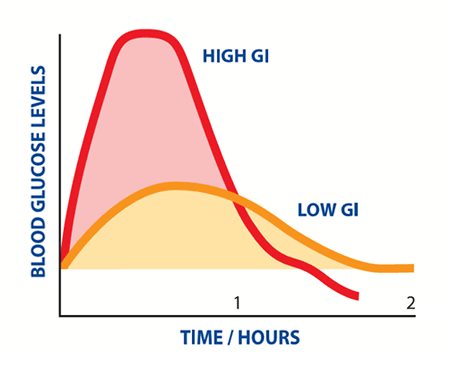
1. Raw honey has a low glycaemic index (GI)

The glycaemic index is a ranking of carbohydrate foods according to how they affect blood glucose levels.

Glycaemic index and raw honey

High GI foods spike the blood glucose level quickly in a process that triggers the body into storing more fat. Examples of high GI foods are potatoes, white rice, white bread, processed (white) sugar, white pasta.

Low GI foods provide a steady stream of glucose into the bloodstream, which allows the body to use this energy efficiently without storing it as fat. Low GI foods include porridge, lentils, beans, wholegrain foods and honey.

2. Raw honey contains enzymes that help to digest food

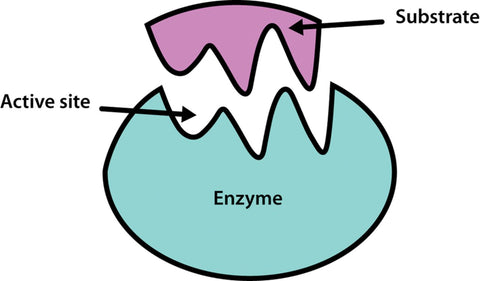
Raw honey contains enzymes, natural substances that break down food so it can be better absorbed by the body.

Enzymes in raw honey

Some of the enzymes naturally occuring in raw honey include diastate, invertase, glucose oxidase, peptidase and others.

3. Raw honey destroys harmful bacteria in the body

Raw honey contains hydrogen peroxide, which destroys harmful bacteria upon contact.

4. Raw honey contains probiotics that enhance digestion

Raw honey probiotics

Raw honey contains probiotics, living bacteria that are beneficial to the body. When raw honey enters the body it floods the digestive system with probiotics that enhance digestion and reduce flatulence and constipation.

5. Raw honey contains vitamins and minerals

Raw honey contains an impressive array of vitamins and minerals that the body needs to function efficiently. Unlike vitamin supplements, these occur naturally in raw honey.

6. Raw honey contains antioxidants

The body contains toxins known as free radicals that go around the body attacking cells and living tissue, causing damage and aging. Antioxidants are substances that destroy free radicals so they can no longer harm the body.

Antioxidants in raw honey

Raw honey contains a very high number of antioxidants that get to work immediately upon entering the body. Other high antioxidant containing foods include blueberries, pomegranates and broccoli.

7. Raw honey does not spoil

Bad bacteria that causes food to spoil cannot survive in raw honey. The acidity, lack of water and hydrogen peroxide naturally present in raw honey does not allow bad bacteria to go off, even after thousands of years.

In 2015, Egyptian archaeologists excavating the pyramids found sealed pots of wine, olive oil and honey. According to ancient Egyptian beliefs, these items were placed there over 3000 years ago to nourish the souls of the dead in the after-life.

The wine had gone off, the olive oil had gone but… the honey was as good as if it were harvested yesterday!

Raw honey in ancient Egyptian tombs

Latin Honey Shop – single origin raw gourmet honey from the exotic parts of Latin America

Categories
Muslim men Muslim women

Changing Perspective

Bismillah,

We often believe that being tested and going through problems in our life is due to our sins.Makkah Rihaal

Sayyidah Aminah (Allah have mercy on her) lost ‘Abdulllah (Allah have mercy on him) when she was just 18. Our master Muhammad, ﷺ the sinless and pure lost his father, mother and grandfather by 8. Hasan (Allah have mercy on him) and Husayn (Allah have mercy on him) lost Lady Fatima (Allah have mercy on her) when they were 7 and 8; Sayyiduna ‘Uthman (Allah have mercy on him) buried 2 of his wives. Sayyida Khadijah (Allah have mercy on him) lost 3 infant sons her in lifetime. Lady ‘A’isha (Allah have mercy on her) lived off dates and water because there was nothing in the house. Mus’ab ibn ‘Umayr (Allah have mercy on him) was disowned by his parents as a youth. Abu Hurayra (Allah have mercy on him) didn’t owe a single thing, would tie stones to his stomach, and couldn’t sleep at night due to severe hunger. Bilal (Allah have mercy on him) was beaten and abused because of his faith. Prophet Yusuf عليه السلام was wrongly accused by a woman and he was locked up. Prophet Musa عليه السلام was separated from his mother as a baby. Prophet Nuh’s عليه السلام son rejected him. Prophet Lut’s عليه السلام wife denied him. Prophet Ibrahim عليه السلام didn’t have kids until old age. Prophet Ayyub was tested with illness. 

Trust me, your test is just a living proof of how much Allah loves you.

madeenah
You’re not married and people think something is wrong with you. You’re raising a child alone and people totally overlook you. You’ve been divorced and people look down upon you. You’re over 25 and people think you’re too old. You’re a widow and no one ever thinks your good enough. 
Rabi’a al-Adawiyya (Allah have mercy on her) never married and she is considered one of the greatest saints of this Ummah. Lady Maryam (Allah have mercy on her) never got married and she is from the 4 greatest women Allah ever created. Sayyiduna ‘Isa عليه السلام ascended to heaven and he was unmarried, yet he is a Prophet.
Lady Hajar (Allah have mercy upon her) nurtured Prophet Isma’il عليه السلام in Makkah alone whilst it was a barren desert, due to the command of Allāh. Sayyidah Aminah (Allah be pleased with her) lost her husband before our master Muhammad ﷺ was born. The Prophet’s ﷺ wife, Lady Safiyyah (Allah be pleased with her) had been divorced and then widowed before he married her. Lady Khadijah (Allah be pleased with her) had 2 children from previous marriages and was 40 years old when he married her. Lady A’ishah (Allah be pleased with her) had no children. Lady Asiya (Allah be pleased with her) was married to the greatest tyrant, Fir’awn. Our communities looks down upon people and judge, yet it is strange that some of the greatest men and women Allāh ever created and made role models for us had come from such circumstances and situations. Never feel inferior or unimportant. Don’t listen to their opinions and meaningless words. Be content with the Decree of Allāh Azza wa Jallah. Raise your head and be proud.
Shaykh Muhammad Aslam,
Graduate of Fath al-Islami (Damascus) 
Founder of City of Knowledge & Prophet of Change, Isyllabus Tutor & International Speaker.

Enquiries For Lectures: Info@CityofKnowledge.co.uk
Questions For FB Live:Questions@ProphetOfChange.com

Categories
Muslim men Muslim women

I Want My Child To Become a Hafidh of the Qur’an.

“Verily, we revealed the reminder (Qur’an) and we are its guardian.” (15:9)

Narrated ‘Ali bin Abi Talib (Allah be pleased with him) that the Messenger of Allah (ﷺ) said: “Whoever recites the Qur’an and memorises it, making lawful what it makes lawful, and unlawful what it makes unlawful, Allah will admit him to Paradise due to it, and grant him intercession for ten of his family members who were to be consigned to the Fire” (Tirmidhi as weak).


Alhumdu Lillah, it is through the sheer grace and mercy of Allah, al-Kareem, we find so many people memorising the Holy Qur’an in the UK.  In a small country like England, there must be thousands of Huffadh, Ma Sha Allah – Tabarak Allah – Fa Lillahil Hamd.  Where I live, in Blackburn, there must be approximately 1,000+ Huffadh (male and female) in the whole town – Alhumdu Lillah.  We should not take this lightly, rather, we must thank Allah profusely; firstly, for the blessing of the Holy Qur’an and secondly the blessing of memorising/hifdh.  There are countries in the world that don’t have a hundred Huffadh in the whole country, let alone a thousand in a town.  Most of these efforts have been in the last quarter of a century.  If we rewind back twenty-five years ago, there were very few places that offered Hifdh classes and those that did, the class sizes were very small (less than a dozen boys).  Back in the 70s and 80s, places like Bradford and Dewsbury only had one Hifdh class in the whole town, and there was a handful in Lancashire, as well as one in Bolton.

This is all down to the miraculous nature of the Holy Qur’an.  One may question, how?

If we were to give these boys and girls who are memorising the Holy Qur’an a book in English, any book of any genre and they were told to memorise it, would they be able to?  Surely they should be able to learn a page each day from the book, just like they learn a page a day from the Holy Qur’an. And this should be easier, as it is in their language but, we seldom find such children.  This in itself is an indication that memorising the Holy Quran is not based entirely on the child’s memory but it is upon the merit of the Holy Qur’an being a miraculous book.  This is a special favour bestowed upon this Ummah, as previous nations were not able to memorise their holy scriptures en masse, thus we will not find a person who has memorised the Bible in its entirety, nor the Torah. ‘And We have indeed made the Qur’ân easy to understand and remember’ (54:17).

So, whoever strives to memorise it and recite it regularly, it will be made easy for him, and whoever turns away from it, will lose it.  ‘According to reports from the Banu Israil themselves, the ruler of Rome, Anitos Apifonis got every single copy of the Tawrah and burnt it until not a single copy was left. The same happened to the Bible so the original transcriptions became extinct as a result of the attacks of Titus of Rome…’ (An Approach to the Qur’anic Sciences).

Nowadays, we have a wholesale of Huffadh and a greater bulk on the production line wanting to become a Hafidh.  This all seems good and well on the surface but, we must remember a Hafidh is a soul chosen by Allah SWT to protect His book, like the verse mentions, ‘Verily, we revealed the reminder (Qur’an) and we are its guardian’ (15:9).

However, let us bear in mind, becoming a Hafidh is not Fardh Ayn (obligatory on everyone).  The Sahabah (Allah be pleased with them) were not all Hafidh, some only knew a few verses or just a Surah.  Great Imams like the Master of Hadith, Imam Bukhari (Allah have mercy upon him) was not a Hafidh, some of the greatest scholars in later times like the esteemed Allamah Anwar Shah Kashmiri (Allah have mercy upon him), the honourable Shaykhul Hadith Mawlana Yunus Saheb (Allah have mercy upon him) were not Hafidh of the Holy Qur’an.  If these scholars who had photographic memory were not Hafidh, why do some parents force their children to memorise?  Parents need to have a balance with their approach towards Hifdh, otherwise, this can have negative consequences later on in life.  Becoming a Hafidh has great rewards, no doubt, but we also need to bear in mind if your child is not cut out for it, please do not force them and suffocate them.  Consequently, such children may end up completing their Hifdh, but rarely keep up with their revision thereafter and this has severe punishments attached to it.  Becoming a Hafidh is only part one, retaining your Hifdh is part two and this is the bigger commitment.  Memorising and retention are both as important as each other.  It is more virtuous that your child learns the last ten Surahs voluntarily and remembers them till death, rather than forcing him/her to memorise the full Holy Qur’an and he/she later forgets it.  They will then be committing a major sin as the verse explains, ‘The one who turns away from my message, he shall have a straitened life, and We shall raise him blind on the Day of Judgement’ (Surah Tahaa).

My purpose is not to be negative and discourage parents from Hifdh; it is merely an eye-opener and a gentle reminder of the realities.  We frequently hear the virtues of a Hafidh, but seldom hear the other side which are the warnings of forgetting the Holy Qur’an.  For now, let us ponder upon the following:

  • Not every child HAS to become a Hafidh.
  • The virtues of a Hafidh are great, but the warnings for those who forget the Holy Qur’an are just as great.
  • Becoming a Hafidh does not guarantee you Jannah, you must act upon the Holy Qur’an and carry out other obligations such as salah, fasting, keeping a beard, good etiquette and so forth.
  • Memorising the Holy Qur’an is not a medal to be worn around the neck once completed.  It has implications and we must repeat and revise it until our death along with leading Taraweeh salah.
  • A Hafidh is not like someone who has obtained a degree or achieved a certificate and has no further obligations.  The Hafidh has a duty thereafter to i) behave like a Hafidh according to the Sunnah ii) to understand the Holy Qur’an, especially what is halal and haram.

Narrated by Samurah bin Jundab (Allah be pleased with him), the Prophet (ﷺ) said in his narration of a dream that he saw, ‘He whose head was being crushed with a stone was one who learnt the Qur’an but never acted on it, and slept ignoring the compulsory prayers’ (Bukhari).

My aim is to create a balance – alongside all the virtues of Hifdh, there are also the punishments for forgetting the Holy Qur’an.  This does not necessarily mean forgetting the whole Qur’an, it can be a Surah or even just a verse.  Many people learn Surah Yaseen or parts of the Amma para (30th) in childhood, then later in life tend to forget it – the same punishment applies there too.

From Anas bin Malik (Allah be pleased with him) that the Messenger of Allah (ﷺ) said: ‘The rewards for my Ummah were displayed before me, even (the reward for) the dust that a man comes out of the Masjid with. The sins of my Ummah were displayed before me, and I have not seen a sin worse than that of a Surah or an Ayah of the Qur’an which a man learned and then forgot’ (Tirmidhi).

‘And We have indeed made the Qur’ân easy to understand and remember’ (54:17).

So, whoever strives to memorise it and recite it regularly, it will be made easy for him. And whoever turns away from it, will lose it.  Imam Ibn ul-Munadi (Allah have mercy on him) said in Mutashabih al-Qur’an (p. 52), ‘The Salaf were always afraid of forgetting Qur’an after they had memorised it because this was classed as a shortcoming.’ Imam Suyooti (Allah have mercy on him) said in al-Itqaan (1/106), Forgetting it is a major sin.’  As was stated by Imam Nawawi (Allah have mercy on him) in al-Rawdah and others, because of the Hadith “I was shown the sins of my Ummah…”

For a Hifdh family (who have a child/ren memorising Qur’an), they need to prioritise.  They need to realise that memorising the Qur’an isn’t an honour bestowed on just anyone.  Yes, you are the type of parents, if the Oxford Dictionary had a definition for you, it would read thus,

Hifdh parent
/hɪfdh parent/


noun.
“a mum or dad whose social, emotional, physical and psychological decisions are governed by what para their children are memorising”

When one commits to this, they need to put their heart and soul and mind into it, and everything else is secondary.

Every Muslim parent wants their child to be successful in both worlds and to keep them focused on the straight path.  One of the surest ways to raise one’s child firmly on the Deen is to create a connection with the Holy Qur’an which has been explicitly sent down as a guidance for mankind.  For this connection to take place, one needs to create an affinity for this book to inspire feelings of attachment.  Understanding the Holy Qur’an and exploring its depth can all be developed later in life, but as long as parents are able to create an association between the child and the Holy Qur’an, the most important job of all is done.

IMG_1355

Tips for parents, In Sha Allah

Your intention should be correct for making your child a Hafidh – to please Allah SWT and to inculcate love for the Holy Qur’an in your child.  We often hear parents talking about ‘free tickets to Jannah because my child is a Hafidh.’  It’s like the poor child is carrying the sins of the whole family and if he does not complete Hifdh then the family are doomed for Hell. La Hawla Wa Laa Quwwata Illa Billah.

  1. First and foremost, observe your child’s memory skills and conclude if your child has the ability to memorise the Holy Qur’an by testing his current Surahs and Duas.  As your child becomes better at reciting the Quran, inspire him to memorise portions of the Quran such as the short Surahs, and some important, daily ones like Surah Yaseen and Surah Al-Mulk. Explain to them the importance of these various Surahs as well to create an understanding and an extra bond with the Quran.
  2. Instil the love of the Holy Qur’an into your children by buying them an audio Qur’an.  Play short Surahs whilst in the car or even on YouTube at home as they are easier to memorise – do this daily, in the morning or at night.
  3. Start early –“learning when young is like engraving on stone.”  From birth (or even in the womb), recite the Holy Qur’an to them in a beautiful voice.  Let the sound of your Qira’ah evoke love and an attachment to the Quran for them.  What would be better is to recite the Quran after Fajr, so that when your child opens his/her eyes in the morning, the very first sound he/she hears are the Words of Allah.
  4. Set goals and rewards.  Treat your child with positive reinforcements like their favourite chocolate or extra playtime when they complete a Surah/Para as this will motivate and encourage them further.  Constantly remind them of the reward and that their efforts are not being wasted.
  5. Set a timetable at home that works simultaneously and effectively with school time and school work.   Arrange two short learning sessions rather than one long one – from personal experience, after Fajr and after school is effective.  Most, if not all, experienced teachers advise the best time to memorise to be after Fajr.  Memorisation during the daytime has also proven to be effective as long as the child is stress-free and is not heavily distracted with mind-numbing game consoles and other technology.
  6. If you like, you can create a healthy competition between your children, however, DO NOT compare your children, because every child is unique.  Set different goals for each depending on their capabilities and see who reaches their goal first.
  7. Model what you want your children to emulate – children learn most from their parents’ actions rather than their commands.  Engage yourself with the Holy Qur’an, try to memorise parts of it yourself and you will notice that your children will take more interest in picking up the Holy Quran themselves.  Actions speak louder than words.
  1. Provide the right environment with the right ambience – the child’s surroundings are equally as important as the actual memorisation itself. A serene and quiet environment can reduce time spent on memorising a page by almost 10-15% as well as making it easier to retain, as the mind does not have to process and turn-off distractions.  Try selecting a place with greenery as plants tend to emit a positive energy.  The inner spiritual surroundings of the heart and soul are even more important.  It is hard for the Holy Qur’an to exist in a heart that is occupied with music, television, cartoons and games.  It is the job of the parent to create an environment conducive to learning the Qur’an by keeping their children away from negative influences, and providing them with the opportunity to go regularly to the Masjid, meeting good Muslims, pious people and attending gatherings where they can learn about the Deen.  A hifdh family is different from a normal family.
  1. To pace is better than to race.  Some children can learn three pages every day, others struggle with three lines.  Every child is different so pace your child according to his level.  Do not put a timeline on when the hifdh needs to be finished as this can make the child panic, lose confidence when deadlines are not met and are put under unnecessary pressure.  Many parents demand and force (even sub-consciously) their child to finish their hifdh ‘before their GCSE exams’ or ‘before starting college’ so that ‘it’s out of the way’.  Although this seems practical, it can sometimes have an adverse effect with the child wanting to quit due to feeling unable to finish ‘on time’.  Even if it is a lifelong task, remember ‘quality is better than quantity’. Quran is easy to memorise and remember – consistency and patience is the key.  Let your children learn with love in their hearts, rather than force and stress.
  2. Last but not least, be patient and do not get angry when your child makes mistakes.  Every child is different, and you must not create despondency in them by becoming exasperated. Try and sit with them to help them learn, encourage and give a mother and father’s support. Make dua to Allah SWT to help your child and to keep them on the path of learning throughout their lives. Pray Tahajjud and give Sadaqah on behalf of them. The Prophet (ﷺ) said: “Three supplications are answered, there being no doubt about them; that of a father (for his children), that of a traveller and that of one who has been wronged” (Abu Dawud).

In your sajdah, when it rains, when you’re fasting, when you’re walking or driving or about to sleep—every moment—make Duʿâ for Allah to open the Holy Qur’an for your child, to make it easy for them to memorise, to make them successful in their memorisation and for them to love, live and teach the Holy Qur’an through all of their intentions and actions.

Memorising the Holy Qur’an may seem like an insurmountable mountain in the beginning but with every step you take up that mountain, the body will get stronger, In Sha Allah, and with time, consistency, determination and perseverance, it will get easier, they’ll get faster and eventually they will make it to the very top of that mountain!

NB: One addition, particularly for mothers, is to feed your child some memory boosting foods, such as raw honey, Zamzam water, olive oil, dates and almonds.  Please avoid unhealthy and takeaway food or anything that has a lack of vitamins and minerals, contains high cholesterol, white sugar, carbonated beverages, processed carbohydrates and overeating in general.  Children should get sufficient sleep and a good amount of exercise.  Exercise causes more oxygen to transfer to your brain and a lack of exercise leads to laziness, weight gain, and internal health issues, and will consequently affect memorisation and other mental faculties.

The second issue is that of a teacher, i.e. finding a good teacher.  The Holy Qur’an cannot be learnt without a teacher. Even the Messenger of Allah (ﷺ) learnt from angel Jibreel (Alayhis Salam). Similarly, Allah’s Messenger (ﷺ) taught the Holy Qur’an and listened to it from his Companions (Allah be pleased with them).  A good teacher will not only correct one’s recitation but also teach the correct Tajweed and pronunciation.  From my own experiences of teaching children who have left other Madrasahs or classes that run from home, there seems to be a lot of emphasis on sabaq i.e. the new lesson.  Little or no emphasis is being put on their revision i.e. dawr.  Alongside this issue is of some classes being full to the brim.  I strongly believe that having 15-20 students in a Hifdh class is far too much, especially when the allocated time is typically two to two and a half hours per day.  Having this high number of children in one class, in that amount of time, is extremely unfair on them as they do not receive the full desired and needed attention.  This then leads me on to the extortionate fees at such places.  So, we have this short amount of time for the high number of children receiving minimum attention, at £10 – £15 per week. Anyone can do the maths and see that some Madrasahs, unfortunately, are turning into a business.  Unfortunately, some teachers are too focused on ‘quantity’, rather than ‘quality’ and there is ample proof of this.  I am no saint nor a great scholar but if you are teaching the Holy Qur’an solely to make money or business, your teaching will be bereft of any sort of barakah and noor.


“The best among you (Muslims) are those who learn the Qur’an and teach it (Sahih Bukhari)


Tips for teachers In Sha Allah:

  1. Having a pure intention: Whether it is memorising the Qur’an or doing anything else for the sake of Allah SWT, the single most important thing needed for the success of that goal is to have the right intention. One must secure one’s intention purely for the sake of Allah SWT, for even if the person does not achieve success in this world, his success is guaranteed in the hereafter.  Do not make your Madrasah/Class a money making business. Also, remind your students to have a firm intention for Allah SWT.
  2. “And recite the Qur’an (aloud) in a slow, (pleasant tone and) style”(73:4).   Ali (Allah be pleased with him) commented on this verse saying, “Tarteel is Tajweed of the letters and recognising the places of Waqf (stopping).  Before teaching the children Hifdh, please ensure their Tajweed is rectified and their pronunciation is correct as incorrect pronunciation can change the meaning.
  3. Don’t have an age limit for your class, as there is no real age when to start Hifdh and it is never too late – In Sha Allah. Some teachers do recommend age seven, others recommend eleven.  My personal opinion is that some children are seen to mature before others so can start earlier.  Sometimes children of the same age are worlds apart in their understanding and receptiveness.  Sometimes a child who is brilliant in school might have a harder time with the Holy Qur’an.  Judge your student for who he is before embarking him on the journey to learn the Qur’an.
  4. Ensure your students have one specific copy of the Holy Qur’an from which he/she reads all the time.  A visual image of the page leaves an imprint in the mind making it easier to recall later.
  5. Encourage students to read melodiously and beautify their recitation as much as they can. It is pleasing to one’s ears and provides an incentive to continue with the memorisation.  It helps to make one’s memorisation firm and strong because any mistake will instantly feel and sound incorrect as it will distort the harmony of the rhythm one is used to.  A Miswak is instrumental in this, it cleans the teeth but also clears the throat.  Ali (Allah be pleased with him) said: “Verily, your mouths are the pathways of the Qur’an, therefore cleanse your mouth with the Miswak thoroughly” (Ibn Majah).
  6. Keep rewards charts/stickers for the children; praise them regularly for their good efforts and gently correct them when they falter.  Avoid negativity, never use a loud voice, harsh words or insulting remarks when it comes to instructing or motivating your students.
  7. “And if an evil suggestion comes to you from Satan, then seek refuge in Allah. Indeed, He is Hearing and Knowing” [7: 200].  Shaytan will always try and stop this meritorious deed. Remind your students of the virtues of the Qur’an and becoming a Hafidh of the Qur’an. Consistency is key and there are no holidays or weekends when you are memorising Quran.  Students should be trained (as well as parents) to understand that any time off will most certainly have repercussions on their learning.  Also, try not to give too many holidays in summer and in Ramadhan too as this can be disastrous in Hifdh class.
  8. The Ustadh should always remain in a state of Wudhu, reminding the children to keep their Wudhu for as long as possible. “Truly, Allah loves those who turn unto Him in repentance and loves those who purify themselves (by taking a bath and cleaning and washing thoroughly their private parts, bodies, for their prayers, etc” [2: 222].  The Prophet (ﷺ) used to remain in a state of cleanliness and Wudhu.  This is one of the best ways to keep Shaytan from influencing us and whispering evil thoughts.  Allah SWT loves those who keep themselves clean and it is only His love and protection that can help us defeat our greatest enemy.
  9. I was reading online about a particular Ustadh in another country whose Hifdh class students were known to be the best in the town. Why? Every month he would gather the students one evening and make them lead in Tahajjud, they would read their Qur’an that they had memorised that month. This might be hard, but not impossible!  If not for Tahajjud, maybe one weekend in the daytime make them lead in Nafl Salah.  This will boost their confidence and also train them for Taraweeh, which is the litmus test for every Hafidh.
  10.  And finally, the last point but probably the most important – there is absolutely no excuse or justification for physical beating or abuse when it comes to teaching.  This was never seen in the life of the Prophet (ﷺ) nor the illustrious companions (Allah be pleased with them).  I know of many adults who have either left Islam or abandoned the Holy Qur’an at an older age because of the harshness that was associated with it at a younger age, due to culture and not religion.  I always say, “give them sweets and avoid the beats.”

NB: Teach the students Adab/etiquettes – how to hold the Holy Qur’an with respect, not to make drawings in their holy Qur’an and always carry the Holy Qur’an in their right hand.  It is very sad to see, more often than not, children walking home with their holy Qur’ans in their left hands, which is such a basic etiquette generally forgotten by Ustadhs.

Exclusive advice from Umm Muhammad (a hafidhah class teacher)

I felt girls are usually left out when it comes to Hifdh, even though this is changing now. Alhumdu Lillah, in Blackburn we have half a dozen Hafidhah classes. So I asked one of the local teachers to write a few paragraphs, as advice for girls.

My personal experience is girls have a better attention span when it comes to learning and focusing. However, they are fragile by nature (especially when they are younger).

It is more beneficial for girls to start at a young age (before puberty) as it gives them a head start and they will not be disturbed by their menstrual cycle.  However, Hifdh can be started at any age, as stated previously in the book.

Once girls start their menstrual cycle it becomes a little harder due to the number of days they are taking off from learning and revising each month.  The impact of this is it is harder for them to get back into a routine and they can struggle with sabaq para and dawr (revision) as a result.

Repetition: Begin with one verse or a group of verses and repeat it/them until you’ve committed them to memory.

Writing – Go over the verse with your finger over and over. For visual and kinesthetic learners, the process of moving one’s hand to dictate the verses, combined with the visual focus of spelling every word correctly, helps commit the verses to the brain’s long-term memory.

For kinesthetic learners, movement is key to learning.  Directing the verses means acting out key elements in verses with hand or head movements. So, for example, if the verse is discussing rain, one can use one’s fingers to make the movements of rain coming down from the sky. If the verse mentions an elephant, one can use one’s arms to make the trunk of an elephant.  This would only be applicable for those who know the Arabic translation of the Qur’an.

In comparison to boys there is less emphasis and encouragement on girls to do Hifdh, as there is fear that due to their menstrual cycle and childbearing, females can forget or have less time to revise. Whilst this may be true, a person who has memorised and has revised well in their student years will not find it too difficult to maintain, In Sha Allah. I completed my Hifdh after marriage, Alhumdu Lillah!

Memorising the holy Qur’an is like working out with weights. At first, when you begin lifting weights, you lift a certain amount that you can handle and heavier weights may seem impossible.  You may look at others who lift weights and stare in awe as they lift so much more than you feel you could ever do.  But if you lift those same weights every day or every other day for a year, they become too light for you! You add more weights as your body strengthens and eventually even those are too light. So you continue to add as your body becomes stronger, faster, and all of what you previously used to lift no longer proves challenging.

It’s the same way with the Holy Qur’an.  It takes practise. Commitment. Time. Focus. Energy. And if you aren’t doing it every single day and working with a teacher on a daily basis, it’s going to take even longer. That’s okay.  It is not a race. You do not need to finish your entire memorisation in a year or two or even three or four if you have all these other life responsibilities going on.  Enjoy the journey of memorisation. When you’re frustrated, take a short break to rejuvenate and regroup, and then begin again.

Always remember, a female doing Hifdh is full of blessings – for herself and her family/children. Finally, only women have this blessing of conceiving and if a woman recites Qur’an regularly during her pregnancy, surely the barakah will be seen on the newborn child.  If a non-Hafidha can also recite Holy Qur’an, surely it is much easier for a Hafidhah to recite off by heart whilst carrying out her daily chores.

I hope to see more girls becoming Hafidhah and learning the meaning of the Qur’an, along with teaching Tafsir and Tajweed, In Sha Allah. The importance of learning is just as much in women as it is in men.  My advice to the Ummah at large is to show respect to such girls, just like we respect the males as well.

I will conclude with some advice for those who are either fully Hafidh or have memorised a portion of the Qur’an but are struggling to revise and refresh it.  It was narrated that ‘Abdullah (Allah be pleased with him) said the Prophet (ﷺ) said: “It is not right for any one of you to say, ‘I have forgotten such and such.’ On the contrary, he has been made to forget. Try to review the Qur’an, for it is more likely to escape from men’s hearts than camels (let loose)” (Bukhari, 5032).

I read these lines of poetry written by Imam Shafi’ee (Allah be pleased with him) when he complained to his teacher about a weak memory and they have stayed with me since:

I complained to Wakee‘ RH about my poor memory:
Give up your sins, was his advice to me;
For knowledge is a light from divinity,
And the Light of God is veiled by iniquity.


If one strives hard to review the Qur’an regularly, there will be no sin on him even if he does forget some of it, for Allah sees the effort.  The blame is on those who neglect the Qur’an and fail to review it and read it regularly.  Let’s put it this way: the blessings of memorising the words of Allah and the barakah it brings to the life of a Muslim cannot be beaten!  My advice would be to memorise as much as you can even if it is an Ayah and review it every day, for the Qur’an will be a great companion to have in the grave and on the Day of Judgement.  Additionally, for Madrasah teachers who aren’t necessarily Hifdh teachers, let them be aware of implementing the memorisation of certain virtuous Surahs such as Surah Waqiah, Surah Mulk, Surah Kahf.  The student may memorise them at the moment but later forget or keep up with its revision as to them this is not necessary because they are not a Hafidh/Hafidhah and also, the whole system of retention is not embedded in them like it is for an actual Hafidh/Hafidhah.

We, the Huffadh need to contemplate once or twice a week about how much Allah Ta’ala has been kind to us that He has made us from the elite of this Ummah.  Are we living up to this title? With what perspective do the people look at us? Do they respect us because of who we are or because of our being from those who uphold the Qur’an? These are just some questions we need to ask ourselves and ponder over – Hadhrat Mawlana Muhammad Saleem Saheb Dhorat (hafidhahullah).

Since there is no book except the Book of Allah that is free from deficiencies or errors, we always welcome and encourage any advice, comments, criticism and corrections so long as they are scholastic and evidence-based.

Allah grants this book His approval.

https://www.youtube.com/watch?v=bC9CykWg-uM

IMG_0430

Ismail ibn Nazir Satia (One who is in dire need of Allah’s forgiveness, mercy and pleasure).

1 Muharram 1439