Categories
Miscellaneous

The Virtues of Zamzam Water

بسم الله الرحمن الرحيم

Zamzam 2.jpgPraise be to Allah.

Zamzam is the name of a famous well in al-Masjid al-Haraam [the Sacred Mosque in Makkah], which is thirty-eight cubits away from the Ka’bah. It is the well of Ismaa’eel the son of Ibraheem (peace and blessings of Allah be upon them both), from which Allah quenched the thirst of Ismaa’eel when he was an infant. His mother looked for water for him, but could not find any. She climbed to the top of al-Safaa, praying to Allah to help her and give her water for Ismaa’eel, then she climbed to the top of al-Marwah and did the same. Allah sent Jibreel, and he struck the earth with his heels, and water appeared.

‘Abbas ibn ‘Abd al-Muttalib رضي الله عنه said: “The people used to compete over Zamzam during the time of Jahiliyyah. People who had children used to bring them and give them to drink, and this was their early-morning victuals. We used to used to think that it was a help for people who had children.” Al-‘Abbas (may Allah be pleased with him): “During the Jaahiliyyah, Zamzam was known as Shabaa’ah (satisfaction).”

Imam Ibn Qayyim al-Jawziyah (may Allah have mercy on him) said: “Zamzam water is the best and noblest of all waters, the highest in status, the dearest to people, the most precious and valuable to them. It was dug by Jibreel and is the water with which Allah quenched the thirst of Isma’eel.”

It was reported in Saheeh Muslim that the Prophet (peace and blessings of Allah be upon him) said to Abu Dhar رضي الله عنه who had stayed near the Ka’bah and its coverings for forty days and nights with no food or drink other than (Zamzam): “How long have you been here?” Abu Dharr رضي الله عنه: “I have been here for thirty days and nights.” The Prophet (peace and blessings of Allah be upon him) said, “Who has been feeding you?” He said, “I have had nothing but Zamzam water, and I have gotten so fat that I have folds of fat on my stomach. I do not feel any of the tiredness or weakness of hunger and I have not become thin.” The Prophet (peace and blessings of Allah be upon him) said: “Verily, it is blessed, it is food that nourishes.” (Narrated by Imam Muslim, 2473).

Other scholars added, with their own isnads, “… and a healing for sickness.” This was narrated by al-Bazzaar (1171, 1172) and al-Tabarani in al-Sagheer (295). In Sunan Ibn Maajah (al-Manasik, 3062) it was reported from Jabir ibn ‘Abd-Allah that the Prophet  (peace and blessings of Allah be upon him) said: “The water of Zamzam is for whatever it is drunk for.”

The Salaf and ‘ulama’ acted upon this Hadeeth. When ‘Abd-Allah ibn al-Mubarak (Allah have mercy upon him) went for Hajj, he came to Zamzam and said, “O Allah! Ibn Abi’l-Mawali told us from Muhammad ibn al-Munkadir from Jabir رضي الله عنه  Your Prophet (peace and blessings of Allah be upon him) said, ‘The water of Zamzam is for whatever it is drunk for.’ I am drinking it to ward off thirst on the Day of Resurrection.” Ibn Abi’l-Mawali is thiqah (trustworthy) so the hadeeth is hasan (good).

Ibn al-Qayyim (may Allah have mercy on him) said:“Myself and others tried seeking healing with Zamzam water and saw wondrous things. I sought healing with it from a number of illnesses, and I was healed by the permission of Allah. I saw someone who nourished himself with it for a number of days, half a month or more, and he did not feel hunger; he performed Tawaf along with the other people just as they did. And he told me that he consumed nothing but Zamzam water for forty days and he had the strength to have intercourse with his wife, to fast and to perform Tawaf numerous times.” Zaad al-Ma’ad, 4/319, 320.

Shaykh Ibn ‘Uthaymeen (may Allah preserve him) said:

“So you should have the intention of what you want to gain by drinking this water. He should drink his fill, i.e., fill his stomach with it until it is filled to the ribs, because this water is good. A hadeeth has been narrated concerning this: the difference between the believers and the hypocrites is drinking one’s fill of Zamzam water.” (Narrated by Ibn Majah in al-Manasik, 1017; al-Hakim, 1/472). Imam Al-Boosairi RH said: this is a saheeh isnaad; its men are mawthooqoon [trustworthy].

This is because Zamzam water is not sweet; it is somewhat salty, and the believer only drinks this somewhat salty water out of faith, believing that there is barakah (blessing) in it. So when he drinks his fill of it, this is a sign of faith. (Sharh al-Mumti’, 7/377, 378, 379).

Perhaps Allah did not make it sweet so that people would not forget that the meaning of drinking it is an act of worship. Whatever the case, its taste is fine and there is nothing wrong with it. We ask Allah to quench our thirst from the Cistern (al-Hawd) of His Prophet on the Day of the greatest thirst. May Allah bless our Prophet Muhammad SAW. Ameen.

The Prophet (blessings and peace of Allah be upon him) described this water itself as: “It is blessed, it (even) serves as food.”  Narrated by Muslim (2473). According to a report narrated by al-Bazzar, at-Tabarani, al-Bayhaqi and others, there is the addition, “and a healing for sickness.” See as-Sunan al-Kubra (5/147).

The apparent meaning of the evidence, in sha Allah, is that this barakah is general and applies to all Zamzam water, whether it is in Makkah or has been taken to other countries. Therefore more than one of the scholars said that it is permitted to take Zamzam water out of Makkah and that its barakah and specific characteristics remain even after it has been taken elsewhere.

Shaykh al-Islam Ibn Taymiyah (may Allah have mercy on him) said: “Whoever takes any Zamzam water elsewhere, it is permissible; the salaf used to take it elsewhere.”

Imam As-Sawi al-Maliki (may Allah have mercy on him) said: It is recommended to take it – meaning Zamzam water – elsewhere, and its specific characteristics remain, contrary to the claim of those who say that it loses its specific characteristics. End quote.

Haashiyat as-Saawi ‘ala ash-Sharh as-Sagheer (2/44). Something similar is stated in Minah al-Jaleel Sharh Mukhtasar Khaleel (2/273)

Shaykh ‘Ali ash-Shibraamilsi ash-Shafa‘i (may Allah have mercy on him) said: The words “Zamzam water is for that for which it is drunk” include those who drink it anywhere other than in its location. End quote. Hashiyat Nihayat al-Muhtaj (3/318)

It is sunnah to drink one’s fill of Zamzam water and to quench one’s thirst.

The fuqaha’ have mentioned the etiquette that is mustahab (recommended) when drinking Zamzam water, such as facing the Ka’bah, saying Bismillah, pausing to take a breath three times, drinking one’s fill, praising Allaah after one finishes, and sitting whilst drinking it, as one should do when drinking other kinds of drinks. As regards the hadeeth of Ibn ‘Abbas (may Allah be pleased with him), who said, “I gave the Prophet (peace and blessings of Allah be upon him) Zamzam water to drink whilst he was standing,” (reported by al-Bukhari, 3/492), it is taken to mean that it is permissible to drink whilst standing, and the disapproval of doing so is understood to mean that it is makrooh. The scholars also recommended that the person who drinks Zamzam water should sprinkle some of it on his head, face and chest, make lots of du’aa’ when drinking it, and to drink it for a purpose that will benefit him in this world or the next, because of the hadeeth in which the Prophet (peace and blessings of Allaah be upon him) said: “The water of Zamzam is for whatever purpose it is drunk for.” (Reported by Ibn Maajah, 2/1018; see Al-Maqasid al-Hasanah by al-Sakhaawi, p. 359).

It was reported that when Ibn ‘Abbas رضي الله عنه from the water of Zamzam, he said: “O Allah, I ask you for beneficial knowledge, plentiful provision and healing from every disease.”

Al-Daynoori (may Allah have mercy on him) that al-Humaydi (may Allah have mercy on him) said: “We were with Sufyan ibn ‘Uyaynah (may Allah have mercy on him), and he told us the hadeeth about the water of Zamzam being drunk for whatever purpose it is drunk for. A man got up and left the gathering, then he came back and said, ‘O Abu Muhammad, is the hadeeth which you told us about the water of Zamzam saheeh?’ He said, ‘Yes.’ The man said, ‘Just now I drank a bucket of Zamzam so that you would tell me one hundred hadeeths.’ Sufyan (may Allah have mercy on him), ‘Sit down,’ so he sat down and he told him one hundred hadeeths.”

Imam Ibn Hajar al-Haythami (may Allah have mercy on him) said in Tuhfat al-Muhtaaj (4/144): he may take it back to his homeland so as to seek healing and barakah for himself and others. End quote.

As-Sakhkhawi (may Allah have mercy on him) said: “Some people say that its virtue remains so long as it is still in its original place, but if it is moved elsewhere it changes. But this is something for which there is no basis. The Prophet (blessings and peace of Allah be upon him) wrote to Suhayl ibn ‘Amr telling him: If my letter arrives at night, do not wait until morning, and if it arrives by day, do not wait until evening, before you send me some Zamzam water.”

And in the report it says that he sent him two containers; at that time he was in Madinah, before the conquest of Makkah.

This hadith is hasan because of corroborating evidence. Similarly, ‘Aa’ishah (Allah be pleased with her) used to take Zamzam water with her and she stated that the Prophet (blessings and peace of Allah be upon him) used to do that and that he would carry it in vessels and skins, and he would pour it over the sick and give it to them to drink. If a guest came to Ibn ‘Abbas (Allah be pleased with him), he would honour him with Zamzam water. ‘Ata’ (Allah have mercy upon him) was asked about taking Zamzam water (away from Makkah, after visiting) and he said: The Prophet (peace and blessings of Allah be upon him) al-Hasan and al-Husayn (may Allah be pleased with them) used to do that.

The two angels washed the heart of the Prophet (peace and blessings of Allah be upon him) when he was a child after they had taken it out, then they put it back. Al-Hafidh al-‘Iraqi (may Allah have mercy on him) said: “The reason why the Prophet’s chest was washed with Zamzam water was to make him stronger so that he could see the kingdom of heaven and earth, and Paradise and Hell, because one of the special qualities of Zamzam is that it strengthens the heart and calms the soul. The report about the chest of the Prophet (peace and blessings of Allah be upon him) being washed with the water of Zamzam is proven in the hadeeth of Abu Dharr رضي الله عنه, who reported that the Prophet (peace and blessings of Allaah be upon him) said: “My roof was opened when I was in Makkah, and Jibreel (peace be upon him) came down and opened my chest, then he washed it with Zamzam water. Then he brought a gold basin full of wisdom and faith, poured it into my chest, and closed it up again. Then he took me by the hand and ascended with me into the first heaven.” (Reported by al-Bukhari, 3/429).

There is nothing wrong with selling Zamzam water or transporting it from Makkah.

If Zamzam water is mixed with other water, the mixture will have the barakah of Zamzam as much as the ratio of Zamzam in the water. That is because the person who drinks the mixture will inevitably drink some of the Zamzam water that has been mixed with other water, so it is true to say that he is drinking it. Zamzam 3

http://www.theidealmuslimah.com/2014/10/25/10-facts-benefits-of-zam-zam-water/

Bismillah

1.The Story of how it came to be
This accurate account of the origin of Zamzam holds with it an exquisite message…
Hajar (Alayhis salam) made use of the small amount of food that Ibrahim (Alayhis salam) left for her and her baby, but ran out eventually and was soon thirsty and hungry-her milk dried up, her baby Ismail (Alayhis salaam) became hungry and began to cry. Hajar couldn’t afford to see her son in pain so climbed up the hill which was later called As-Safa, to see if there was anyone on the horizon. She saw no one. She then climbed down, and reaching the valley, ran to the other hill, later called Al–Marwa, doing the same again, all this time her son twisting and turning in hunger. She repeated this seven times, and on the 7th time reached the top of the hill and heard a sound. To her amazement she found it coming from beneath the feet of Ismail (Alayhis salam).
At that point, Jibra’eel (Alayhis salaam) began digging the well of Zamzam from beneath his feet. Hajar was excited to contain the water, it being a desert and so arid and dry-the water would seep into the ground, and she tried making a pool to contain it.

The Prophet (Sallallahu alayhi wasalam) said, (Allah have mercy on the mother of Isma’eel) ”If she had left the water, (flow naturally without her intervention), it would have been flowing on the surface of the earth.”
 {Sahih al-Bukhari 3365,Vol. 4, Book 55, Hadith 584}

So because of her efforts to contain the water, Zam-zam amazingly became a well.

Hajar (Allah have mercy on her) before the water was brought out of the ground, running in search, probably heart-broken and crying in pain at the suffering of her son, did not know what Allah was preserving for her in the future. If she knew that a time would come when millions from all parts of the world would follow in her footsteps, she probably may never have cried. And one can only imagine her reward in the hereafter if that were her reward in this world.

So when experiencing challenges in life, remember that Allah may be hiding something for you in your future.

Zamzam

2. Its Names
The names of Zam-zam are many, over 60 according to some experts and scientists, its names derived from its characteristics. Some of the familiar ones are:

  • Murwiya (derived from the Arabic word meaning ‘quenched’)
  • Shabbaa’a- (derived from ‘satisfying’)
  • Maymouna

3. Positive Energy
Within Zam-zam is an ingredient different to other waters, which heals and helps energetic and cell systems within the human body. The German Scientist Dr Knut Pfeiffer,and head of the largest medical centre in Munich, has studied Zam-zam with his colleague and assistant Husam Othman. A miracle in itself is that the Zam-zam specimen they studied still extraordinarily increased dramatically the energetic fields in human cells having travelled from Saudi Arabia to Munich, sustaining climate changes, probably having gone through an X-ray machine at customs, and then being stored for approximately two weeks. The opposite reaction would exhibit with other types of water especially if stagnant for some time, including water from Munich which is considered chemically pure.

The Prophet (peace and blessings of Allah be upon him) said: “The best water on the face of the earth is the water of Zamzam; it is a kind of food and a healing from sickness.” {Saheeh al-Jaami’, 3302}

4. Uncontaminated
Zam-zam has been flowing from the Ka’aba for over 4000 years. Samples taken from all water sources in the world contain some germs in it. Through studies by Doctor Yahya Koshak (expert on Zamzam), it has been proven that Zam-zam does not contain any contaminants. It is an established scientific fact that pools or water wells tend to grow vegetation such as algae– especially in warm climates. Amazingly this is not the case in the well of Zamzam. It has remained free from biological contaminations.

5. Its Purity
Evian – water from the highest part of the French Alps is renowned for its high mineral content and purity, and a high percentage of bicarbonates (357mg/l). Murwiya contains 366mg/l of bicarbonates, and is purer, in fact, the purest water on earth.

6. Healing Nature
Scientific proof shows that Zamzam contains healing components due to its higher content of calcium and magnesium salts and natural fluorides which present germicidal properties.

It was reported in Sahih Muslim that the Prophet (Sallallahu ‘alayhi wa sallam) said to Abu Dhār رضي الله عنه, who had stayed near the Ka’bah and its coverings for forty days and nights with no food or drink other than (Zamzam): “How long have you been here?” Abu Dhār رضي الله عنه, “I have been here for thirty days and nights.” The Prophet (Sallallahu ‘alayhi wa sallam) said, “Who has been feeding you?” He said, “I have had nothing but Zamzam water, and I have gotten so fat that I have folds of fat on my stomach. I do not feel any of the tiredness or weakness of hunger and I have not become thin.” The Prophet (Sallallahu ‘alayhi wa sallam) said, “Verily, it is blessed, it is food that nourishes.”

7. The miracle of its Origin
Mecca is built on a mass of igneous rock, and due to the process in which they form, these rocks have no pores and – due to partial melting of the minerals of which the rock comprises -cause any existing pores to close up. Science tells us that water reservoirs can only exist in rocks that are highly porous and permeable. Geologist Dr Zaghloul Al-Najjar, head of The Committee of Scientific Signs in the Quran and Sunnah states that this simple and great fact verifies the sanctity and holiness of the land.

8. Hadith substantiates its Science
Origins of the water was a mystery until tunnels were dug around Makkah, where engineers and workers found hairline fractures in the solid mass of rock that stretched for kilometres in either direction through which Zamzam was seeping out, extensive fractures which could only be caused by a mighty impact. Sunnah states that it’s because of the strong blow with which Jibra’eel Alayhis salam struck the earth that Isma’eel Alayhis salaam was able to drink.
The well isn’t that deep, 30 metres in fact of which 13 metres or a little less are filled with compressed sediments from the valley which don’t allow water to flow out. Below this is about 17 metres of igneous rock through which the water flows through these long hairline fractures in the rock, where it gains its high mineral content beneficial to both the body and soul of man.

9. It Manifests for what it is Drunk

The Messenger of Allah (peace and blessings of Allah be upon him) said: “The water of Zamzam is for whatever it is drunk for.”
{Narrated by Ibn Majah, 3062}

This is a hasan hadeethA myriad of cases exist that testify to the healing nature of Zam-zam. Drinking Zamzam with the sincere intention of fulfilling a need, such as healing a physical ailment, being freed from poverty or distress, even achieving calm in the wake of any type of anxiety, gives way to Allah fulfilling these needs. One could continue drinking it until one is completely healed.

The Prophet (Sallallahu alayhi wasalam) used to wash his chest with Zamzam to gain courage and relieve anxiety through Allah’s grace, before visiting the heavens; he would drink it and use it for Wudhu.

10. Water fasting.
Water fasting isn’t something new and has even been done during the time of the Prophet (Sallallahu alayhi wasalam). Revisit the hadith in point 6:

It was reported in Sahih Muslim that the Prophet (Sallallahu ‘alayhi wa sallam) said to Abu Dhār (Allah be pleased with him), who had stayed near the Ka’bah and its coverings for forty days and nights with no food or drink other than (Zamzam): “How long have you been here?” Abu Dhār (Allah be pleased with him) said, “I have been here for thirty days and nights.” The Prophet, sallallahu ‘alayhi wa sallam, said, “Who has been feeding you?” He said, “I have had nothing but Zamzam water, and I have gotten so fat that I have folds of fat on my stomach. I do not feel any of the tiredness or weakness of hunger and I have not become thin.” The Prophet, Sallallahu ‘alayhi wa sallam, said, “Verily, it is blessed, it is food that nourishes.” {Narrated by Imam Muslim, 2473}

Some of the positive benefits of a 48 hour Zamzam fast are an increase in the number of blood platelets and increased immunity through an increase in white blood cells, as well as a detoxifying effect on the body. Murwiya (Zam-zam) also increases haemoglobin levels, which result in increased energy levels. Testimonials state that these fasts eradicate morning breath, and hunger pangs, also providing a noticeable nourishing effect on the body.

References
http://www.youtube.com/watch?v=VonRItb61sw
http://www.youmuslim.com/video/40975/dr-knut-pfeiffer-islam%20s-zamzam-water-positive-effect-on-human-cells/
http://www.youtube.com/watch?v=cHm2y1mpTLw
“The Book of Zam Zam”, by Doctor Yahya Koshak
http://islamqa.info/en/6831

Authored by Sister “M”
Edited by Noorain Fathima

Zamzam 1

Categories
Current Affairs articles

Burma: Where Were the Muslims?

By Khalid Baig
 jeremy-bishop-295475.jpg
Just imagine the year is 2100 CE, long after we are all dead. A school child is studying Muslim history of the last century. He finds extremely disturbing events that took place at the beginning of that century. More than a million people were persecuted with murders, expulsions from homes, and dishonoring of Muslim women. The most disturbing fact is that it was not that Muslim armies fought and lost; these were simply one-sided battles with armies of murderers, rapists, and thugs victimizing innocent and helpless people.
Where were the Muslims, he wonders. He finds that despite a successful effort by their adversaries to reduce their numbers through birth control, there were still 1.2 billion of them in the world. They were on all continents, in all countries. More than 50 countries in the world had majority Muslim populations and Muslim rulers. Did they have no armies or weapons? Actually, they had big armies and lot of weapons. One country was even a nuclear power and had successfully developed ballistic missiles that could hit faraway targets. Another Muslim country with a big army was just next to the troubled area. Some of the countries were very rich. Together, they had sufficient resources to stop the atrocities.
Maybe they did not get the news of the tragic events in time. Actually, they did have good communication equipment. Although they did not really control that equipment and those controlling it used to color and distort things a lot, yet Muslims everywhere were able to hear and see the horrors faced by their fellow brothers and sisters as they were taking place. They saw their plight, they heard their cries, but not a soldier moved from the Muslim world to help those whose lives, honors, and properties were being trampled simply because they were Muslims.


Maybe they had become totally indifferent to the plight of their fellows. Maybe they had lost their faith— no, lost their soul — so they just did not care. Actually, despite all their problems, individual Muslims all over the world were still deeply concerned about their fellows. They talked about them. They raised money for them. They prayed for them. They desperately petitioned whoever they thought could help.
Then what was happening? The student is perplexed. As he continues to dig through historical accounts, he finds something curious. As the massacres were continuing in Burma, a big army assembled by Saudi Arabia was busy attacking Muslims in Yemen.
Their enemies had certainly done their part in igniting the flames of those internecine wars, but they had tried that throughout history. The intriguing development that facilitated this fiasco was a strange new ideology that had gripped the Muslim world. The devastating ideology was that of the nation-state. According to it each Muslim country was an independent nation. And so they became. Each with its own national flag, national anthem, national days, and national interests. As Muslim governments took legitimacy from the concept of nation-state, they owed their allegiance to it also — when they did not owe their allegiance to their foreign masters. In the halls of power, the ummah died. Muslim leaders did talk about the ummah but only as a remote, ceremonial entity. The governments and armies were there to protect the national boundaries and national interests; nobody looked after the boundaries or interests of the ummah.
The murders, arsons, and dishonoring of women in Kashmir was not the concern of anyone except Pakistan and that only because the area was a strategic source of Pakistan’s water. If it were not for the “national interests,” Pakistan would have nothing to do with them either. The brutalization of Muslims in Palestine was not the concern of anyone except the Palestinians themselves. Even Jerusalem and Al-Aqsa had become Palestinian problems. Burma was responsibility of no one, because it did not exist at all on the new maps of national interests.


It was a bizarre ideology, exported by the colonial powers so their hold would remain strong even after they had formally given up the colonies. But in those strange days people normally had one of two reactions to most anything that came from their former colonial masters; they either welcomed it, thinking it would bring them progress and happiness, or they became resigned to it thinking it inevitable. However, the ideology of nation-states was exactly opposed to the Islamic idea of one ummah and life was torn between the conflicting concepts. Hajj symbolized the dichotomy. It was the annual reminder that Muslims are one people, as believers from all over the world wore the same two-sheet dress, circumbulated the same Ka’ba, making the same commitment “O Allah I am here”. It had also been turned into a reminder of the most important belonging of a pilgrim: his passport. Without that certificate of belonging to a nation-state no one could perform Hajj or even move from one point to another in the sacred land.
The student finally understands the ideological trap that guaranteed the tragedies of Burma and Bosnia and Kosova and Iraq and Afghanistan and … and… an endless list. But he cannot figure out why did Muslims of the period allow themselves to be so trapped. Did they not remember the Qur’anic declaration, “The Believers are but a Single Brotherhood.” [AlHujarat, 49:10]. Did they not remember the Qur’anic command, “Hold fast together the Rope that Allah has extended for you and do not dispute among yourselves.” [Aale-Imran, 3:103]. Did they not remember the hadith, “Muslims are one body. If any part of the body is suffering the whole body feels the pain.” Did they not know that the devastating idea of nation-states was actually the idea of creating permanent divisions in the ummah?  What was going through their minds? Why did they allow themselves to be imprisoned in the cage of that stinking nationalism?
He gives up. History is so full of intrigues!
Post Script:
People have been asking why Pakistan is indifferent to the plight of Burma’s persecuted Muslims plight.
This is the wrong question to ask. For Pakistan is not indifferent. It has extended its hand of support —- to, yes, the Burmese government. 

https://www.dawn.com/news/1313519
“The governments of Pakistan and Myanmar are now in “advanced negotiations” to licence-build the JF-17, a single-engine multi-role fighter jet, IHS Jane’s Defence Weekly, an independent defence news agency, reported.”
What is more, they are quite proud of this achievement.
“According to PAC chairman Air Marshal Javaid Ahmed, the first sale of Pakistan-made jets to a foreign nation has been a “milestone in the country’s aviation history.”
http://www.defencebd.com/2016/10/myanmar-air-force-ordered-16-jf-17.html

Of course this was nearly two years after the report that showed strong evidence of genocide of Burma’s Muslim by its government.
http://www.aljazeera.com/news/2015/10/exclusive-strong-evidence-genocide-myanmar-151024190547465.html

(In 1999 I wrote Kosova: Where were the Muslims. Nearly two decades later it is the same story. This article is an adaptation of the earlier article).
Categories
Miscellaneous

Why Does Helping Another Person in Distress Make You a Hero?

Why Does Helping Another Person in Distress Make You a Hero?

By Babar Ahmadship

A passenger was once travelling on a ship when someone threw him overboard into the deep ocean. The waves engulfed him and, unsurprisingly, he tried his best to do everything he could to survive. The alarm was raised on the ship. The other passengers heard the call. Some of them did nothing because they were afraid of the deep water. Some of them did nothing because they were afraid that they might be thrown overboard themselves. And some of them did nothing because they thought it was no use, there was little chance of saving the man.

But other passengers came to the aid of the man in distress. One of them ran to the captain and pressured him to stop the ship. Another flung in a rubber ring. Another threw a rope to the drowning man. One of them even jumped into the ocean and swam out to try and save the man. Most of these passengers did not know who the drowning man was or how he ended up in the ocean; they simply saw a fellow passenger in distress.

ships

The situation was serious. The water was cold and sunset was approaching. The drowning man flailed his arms desperately to keep afloat but he felt himself slipping away. Frigid, salty water began to wash into his mouth and nose. He began to lose hope.

While some passengers tried to save the man, other passengers stood on the deck in tears as they watched the scenario unfolding in front of them. They felt unable to do something practical to save the drowning man. So they shouted out words of comfort to the man. They told him to hold on just a little longer because help was on its way. Most of these passengers did not know who the drowning man was or how he ended up in the ocean; they simply saw a fellow passenger in distress.

When the drowning man saw their tears and heard their cries, he suddenly felt a burst of energy inside him. Up to that moment, his fight for survival had only been about himself. But when he saw that there were others who were worried about him and invested in him, he realised that he had to survive for their sake, even if he no longer had the energy to survive for his own sake.

With the encouragement of the well-wishers, the drowning man managed to keep himself afloat long enough for the rescuers to arrive and save him.

A hero is someone who makes a positive difference to the life of another person.

Who are the heroes in this story?

A) The drowning man, who did what he had to do to survive.
B) The passengers who rescued the man and encouraged him to survive.

Why Does Helping Another Person in Distress Make You a Hero?

shipwreck.png

The writer Mustafa Sadiq alRafei says, “When I looked into history, I found a small number of individuals whose lives mirrored the life cycle of a grain of wheat. They were torn from their roots then crushed then ground in mills. Then kneaded with fists, then rolled out and baked in ovens at high temperatures,  just so they would provide food for others!”

Patiently persevere in the face of hardship hoping for a good outcome because you never know how many dead hearts you will bring to life in the process. No hardship lasts forever.  There’s always an end!”

Babar Ahmad, HMP, UK
Categories
Current Affairs articles

Qurbani – ‘Sacrifice’ or just comparing the price?

Unfortunately, Qurbani has become rather like car insurance, where one searches for the lowest quote and the cheapest price, this should not be the case.
 
We shouldn’t think of Qurbani or any obligation in Islam as a burden or tax. Rather, we should fulfil it for solely the pleasure of Allah SWT.
 
Give to the “needy” countries.
Give to the “poorest” country.
Don’t go for the lowest quote.
 
Did you know there are many Muslims who don’t eat meat all year round, only on Eid? Remember that next time you’re licking those chicken legs and nibbling on that Kobeda.
 
I feel sooner or later, we will have websites or apps like ‘gocompare’… ‘goqurbani’ that will compare charities and countries then show which are the cheapest animals, Astaghfirullah.
 
My gripe is we earn thousands of pounds and when it comes to spending for Allah SWT, we are tight fisted – La Hawla Wa La Quwwata Illa Billa.
 
The saddest part of all of this is, how deep our selfishness goes. The word ‘Udhiyyah’ (Arabic), ‘Qurbani’ (Urdu), actually means ‘sacrifice’. It really shows whether we love Allah or just love our pockets, our purses and our bank accounts.
 
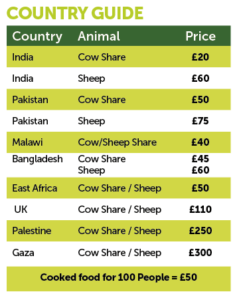
Lastly, many of you reading this will be from Bangladesh/India/Pakistan. Let’s not just focus on these countries, we have many of our Muslim brothers and sisters around the world who are living in extreme poverty. I understand that some of these other countries have extortionate rates for an animal. If we all go for a £20 share in a cow from India and just want to absolve ourselves from this obligation, who will feed the Muslims in Iraq and Palestine where a large animal costs almost £2,000 (approx £300 per share). It is advised that family and friends get together and offer a ‘Nafl’ Qurbani in these countries, i.e. split the cost between them, if they can’t afford a full share. A great way of doing this is with the intention of Esale Thawab. This Eid, let’s not deprive anyone In Sha Allah, Allah soften our hearts, Ameen.
 
Please bear in mind, Qurbani comes once a year and we eat meat on a regular basis in the UK.
 
ASK YOURSELF: ARE YOU SACRIFICING OR JUST COMPARING THE PRICES?!
 
 
(Mawlana) Ismail Ibn Nazir Satia (one who is in dire need of Allah’s forgiveness, mercy and pleasure).
 
1st Dhul Qa’dah 1438


Categories
Poems

Hey Mr?! Don’t step the line…

fine lne

There is a fine line between being nosy and trying to help out,

There is a fine line between being arrogant and being confident.

There is a fine line between being obnoxious and being bold or brave,

There is a fine line between being argumentative and speaking up (haqq).

There is a fine line between being immature and cracking a joke,

There is a fine line between being passive or apathetic and being merciful.

There is a fine line between flirting and being polite,

There is a fine line between being two-faced and trying to compromise between two parties.

There is a fine line between treating your religion as a buffet (pick and choose) and having true spirituality and religiosity,

There is a fine line between acting hypocritical by being sweet with someone (on their face) and offering Salam and a handshake.

There is a fine line between being racist and having banter (racist jokes are just as wrong),

There is a fine line between simply being a coward (afraid to say the truth) and using Hikmah (to avoid a worse situation).

There is a fine line between bribing someone and being generous,

There is a fine line between complaining, moaning or whinging and constructively criticising.

There is a fine line between being negative and being a realist (perhaps the reality is negative),

There is a fine line between free speech and free hate; one encourages debate whilst the other incites hatred and violence.

There is a fine line between showing off (Riyaa) and showing your deeds to encourage or motivate others.

And finally, (lol) …There is a fine line between putting make-up on and looking as though you had a fight with Crayola!

Ismail Ibn Nazir Satia

(One who is in dire need of Allah’s forgiveness, mercy and pleasure).

8 Rabiul Thani 1437

Categories
Muslim men

Dear Abba

In memory of my late father, Haji NazirAhmed Daud Satia (Allah illuminate his grave).

The Eyes Tear,
The Heart is in Pain,
But (with my tongue) I will only say that which is pleasing to Allah,
And we are indeed sad at your departure.

20151212_154603[1]Dear Abba,

Today, 27th November 2015 we commemorate two years after you returned to Allah SWT. Two years since you left an empty spot in our hearts. Two years of grief, sorrow, memories and much patience. Two years since a vacuum has not been filled and indefinitely will not be filled. Simply because I believe you were not just a father and a grandfather. You were a unique man, a resilient, robust, righteous man. You were a man that stood up for his people, you stood up for what was right, if the whole world was against you. That’s all I saw for 28 years. There were and are few men in the world like you, but the world needed such great men, and still does.

A man asked the Prophet, when he had put his leg in the stirrup: “Which kind of Jihad is best?'” He said: “a word of truth spoken before an unjust ruler.” (Nisa’i)

People talk about Umar (Radhiy Allaho Anho) – who most certainly was a great man of justice and principles. People talk about Malcolm X (Rahimahullah) who was an advocate of truth and equality. These are my heroes too!

But Abba, I need not look far, when I had a role model in front of my own eyes. You taught us morals, values, justice and principles.

You taught us the true way of life.

You taught us how to defend and stand up for ourselves in the cruel and evil world we live in.

You taught us how money and power changes the best of people, and not to be materialistic. Rather keep a heart; a loving heart, a giving heart, a forgiving heart.

You taught us, rather reminded us how when you and your parents came from India, you had nothing. So be grateful for what we have as it is all from Allah, if you show ingratitude – He will take it away! Likewise, we came with nothing and we will leave this world with nothing.

The most amazing thing you taught us, was conviction in Allah. Something which even the most knowledgeable of people lack in this day and age. Your Yaqeen – that Allah does everything and how Allah’s help comes, was admirable.

Such were the lessons we learnt.

“That is Allah’s grace which He bestows on whom He wills, He is the Owner of Mighty Grace.” (62:4)

Abba, it is said in history books, Khattab the father of Umar (Radhiy Allaho Anho) was known for reconciling between tribes and his own people. Allah SWT made his son a leader, an Imam of justice and Taqwa. When I read this, I remembered you. You spent your entire life reconciling between people. How many marriages did you save, how many brothers and sisters who had stopped talking did you unite, and how many transactions did you witness to be carried out fair and honest. You never feared losing respect and honour, rather you did what was right. A great example of the verse below:

“You honour whom You will and You degrade whom You will. In Your hand is [all] good. Indeed, You are over all things competent.” (3:26)

You always prayed to Allah (and taught us too), to keep you independent. Never reliant upon anyone but Him. Allah granted this desire of yours.

No doubt, you were a respected and honourable man. A community man who was noble and worthy. A selfless and self-sacrificing man. A man who was principled and upright.

Ahumdu Lillah! All praise be to Allah (alone) for all of that.

Abba they say, “How you live is, how you will die.” Well, we certainly saw that in your life Ma Sha Allah! You spent over 20 years as a Chairman of the Sunnat Jamat in India. It was your life, your soul, your everything. And the last thing you did before your demise, you were in a meeting for the Sunnat Jamat, which went on half way through the night. Which inevitably was the cause of your heart attack. It is fair to say, you died fighting for what was right, for justice, for a cause you spent most your life doing.

Abba, you engaged and participated in many noble causes throughout your life, you were a generous and charitable man. You initiated many projects particularly in India, your birth place and it was always at the centre of your heart and mind.

The Messenger of Allah (ﷺ) said:

“Whoever starts a good tradition which is followed, then for him is a reward, and the likes of their rewards of whoever follows him, there being nothing diminished from their rewards. (Tirmidhi)

This was eloquently said in the speech given Mawlana Abul Qasim Saheb (Hafidhahullah), at your funeral. His words were loud and clear,

“Today we are bidding farewell to a good man, rather a good ‘friend’ to us all. He will surely, most definitely be missed. He was a religious, holy and spiritual man. He was devout and sincere. He took his people forward, he brought them together, and he was the epitome of unity. He cared for one and all, he was the height of brotherhood. A man of Da’wah and Tabligh. He was concerned and always asking about our Darul Uloom (Markaz, Dewsbury). His greatest worry was regarding the ‘Watan’ – India. As he felt he owed it to the people left behind, so they can better their lives just as we had done (in the UK). He would visit India every year but would not return until he had accomplished a new project or finished an old one.”

Abba, it was hard on your funeral day. I remember it like it was yesterday. There were scores of people at the Janazah – Fa Lillahil Hamd! It was hard to sprinkle the soil on your face and see you for the last time. People had travelled from all over the country, those who you kept good connections with. Something else you instilled and embedded in our hearts and minds, to keep good ties with people and particularly those who had favours (Ihsan) upon you.

Aishah RA who said: “The Prophet SAW said,

‘If a Muslim dies and his funeral prayer is attended by a group of a hundred Muslims, and they all sincerely pray for his forgiveness, he is forgiven’. (Ahmad, Muslim, and Tirmidhi)

Ibn ‘Abbas RA reported: “I heard the Prophet SAW saying:

‘If a Muslim dies and a group of forty people, who do not associate any one with Allah, pray for him, their prayer is accepted and he is forgiven’.” (Ahmad, Muslim, and Abu Daw’ud)

Abba, there were many signs of your ‘good death’. We all heard you praying and doing Dhikr as you lay in the hospital bed. Friends of mine who came to visit you said they heard you reading the last few Surahs of the Qur’an. Throughout your life you constantly did Dhikr and had a Tasbih in your hand.

The Messenger of Allah (ﷺ) said,

“He whose last words are: `La ilaha illallah’ (There is no true god except Allah) will enter Jannah.” Abu Dawood

After your heart attack, your kidneys were failing, you were unable to excrete the last few days. I remember the pain you suffered. But now all the pain is over In Sha Allah.

Abdullah Ibn Yasar RH said,

“I was sitting with Sulaiman bin Sard and Khalid bin ‘Urfutah, and they said that a man had died as a result of abdominal illness. They wanted to attend his funeral, and one of them said to the other: ‘Didn’t the Messenger of Allah say: Whoever is killed by an abdominal illness, he will not be punished in his grave? The other said: ‘Yes.”’ (Nasai)

Abba, some might wonder why I am writing this when you can’t read it? Well, I know you won’t read it today. But one day you will In Sha Allah. Maybe when we are in Jannah – where we meet next In Sha Allah. It’s going to be quite awesome, as we will both be the same age (what a thought being same age as your father?!).

Mu’adh bin Jabal RA narrated that the Prophet (s.a.w) said:

“The people of Paradise shall enter Paradise without body hair, Murd, with Kuhl on their eyes, thirty years of age or thirty-three years.” (Tirmidhi)

Today, I stood at your grave for a long time. Not stayed for that period since a while. It was cold, wet and windy. But I felt your warmth, I felt peaceful, and a soothing, calm atmosphere. Others have said the same about your grave site. We have full hope and faith that you are being showered in the Mercy of Allah SWT and you are lying in a garden of Jannah. I prayed a full Para today – 29th Juz and will finish the 30th tonight In Sha Allah. All that reward will be yours like a blossom of flowers in your grave.

It was narrated from Abu Hurairah that the Messenger of Allah said:

“When a man dies all his good deeds come to an end except three: Ongoing charity (Sadaqah Jariyah), beneficial knowledge and a righteous son who prays for him.” (Nasai)

Abba, maybe I wasn’t as you wanted me to be or perhaps I’m not as obedient as I ought to be. But one thing I know, I have prayed for you every day since the last two years and I shall continue to do so. I am sorry for not fulfilling your rights, we all are. Please forgive us.

“They rejoice on account of favour from Allah and (His) grace, and that Allah will not waste the reward of the believers.” (3:171)

Recently, someone saw you in a dream sitting with Hadhrat Mawlana Yusuf Motala Saheb (Hafidhahullah) and Mawlana Fadhle Haqq Wadi Saheb (Hafidhahullah). You were all eating on a Dastarkhan (table cloth). Upon interpreting, it was said this indicates your love for these two Alims and your love for Ulama. How can we forget how you were always at the beck and call of Hafidh Patel Saheb (Hafidhahullah) when he used to come Blackburn and your closeness to Hadhrat Mawana Ismail Wadi Saheb (Rahmatullahi Alayhi). And also, from India – Hadhrat Mawlana Talha Saheb (Hafidhahullah) and last but not least Shaykhul Hadith Hadhrat Mawlana Muhammad Yunus Saheb (Hafidhahullah). The latter to whom you sent me in service to him, and what an honour that was.

And lastly, we cannot forget your incredible love for tea. Here’s your mug!

20151128_211702

وَاللَّهِ مَا يُخْزِيكَ اللَّهُ أَبَدًا، إِنَّكَ لَتَصِلُ الرَّحِمَ، وَتَحْمِلُ الْكَلَّ، وَتَكْسِبُ الْمَعْدُومَ، وَتَقْرِي الضَّيْفَ، وَتُعِينُ عَلَى نَوَائِبِ الْحَقِّ

“By Allah, Allah will never disgrace you. You keep good relations with your kith and kin, help the poor and the destitute, serve your guests generously and assist the deserving calamity-afflicted ones.” (Bukhari)

These were the words said to the Prophet (peace and blessings be upon him) by his beloved wife, Khadijah (Allah be pleased with her) after he received the first revelation. I can certainly, without any hesitation say the same words to you In Sha Allah.

Your unworthy son – forever indebted to you.

20151212_154615[1]

O Allah! Grant my dear father Forgiveness. bless him with your Mercy, bestow upon him your Compassion, and make his grave a garden from the gardens of Jannah.

Ameen Ya Rabb.

Ismail Ibn Nazir Satia (One who is in dire need of Allah’s Forgiveness, Mercy and Pleasure).

16 Safar 1437.

Categories
Current Affairs articles

From the Depth of my Heart. . .

Praise be to Allah.

unite

Mankind was one nation, believing in Tawheed, then they differed. Some of them believed and some disbelieved. So Allah sent the Prophets AS with glad tidings and warnings, so whoever believes will enter Paradise and whoever disbelieves will enter Hell. The conflict is still going on between belief and disbelief, truth and falsehood, and will continue until Allah inherits the earth and everyone on it.

Islam is the religion for all of mankind, and Allah has commanded us to convey it to all people. This can only be achieved if we are strong, and strength is based on faith and unity. Hence Allah has commanded all the believers to adhere to His religion and to be united, and not to be divided. Allah says (interpretation of the meaning):

“And hold fast, all of you together, to the Rope of Allah (i.e. this Qur’an), and be not divided among yourselves

[Aal ‘Imran 3:103]

Division, differences and disputes are the cause of the ummah’s defeat, as Allah says (interpretation of the meaning):

“And obey Allah and His Messenger, and do not dispute (with one another) lest you lose courage and your strength departs, and be patient. Surely, Allah is with those who are As-Saabiroon (the patient)”

[al-Anfaal 8:46]

Unity and coming together are among the basic principles of Islam, and there are many aspects of unity in Islam, such as One Lord, one Book, one Prophet, one religion, one qiblah, one ummah.

In order to achieve the unity of the ummah, Islam urges us to adhere to the jama’ah (the group which follows the Qur’an and Sunnah). The Messenger (peace and blessings of Allah be upon him) explained that the hand of Allah is with the jama’ah, and that whoever deviates from that will be in Hell. Allah has enjoined coming together for all acts of worship in order to achieve this unity. Allah addresses the Ummah as one group in all rulings to indicate that they are one ummah, like one body. There is no difference between them; the commands and prohibitions are addressed to all.

Dearest brothers and sisters of the Ummah of Muhammad (peace and blessing be upon him), when we look around the globe today we see the Ummah has become selfish. We don’t see anyone caring for the Ummah, looking out for others and showing empathy towards those who are needy and the suffering. We see an Ummah suffering form individualism, everyone cares about ‘his own’. His own family, his own house, his own children, his own job, his own life and his own future.

The Ummah is devoid of men and women who stand up for the Ummah, who cry for the Ummah. Or even brothers and sisters who PRAY for the Ummah – Allahul Musta’aan.

I absolutely loathe selfishness and self-centred, self-absorbed, self-conceited individuals. If everyone is going to just care for themselves, who will stand up for the oppressed? Who will speak up for those who have been wronged? Who will stop injustice? Who will free the innocent prisoners? Who will protect the orphans and the widows? Who will be there for the lonely ones and the elderly? If you and I refuse to help them and ignore their cries, then I swear by Allah on His Majestic throne – nobody will help them! Nobody! Simply because we were too bothered and busy about earning the next dollar! We were too engrossed in keeping ourselves in shape. Wealth made us negligent. Materialism deceived us in thinking the world is forever.

If the above is true, then may I ask, what difference is there between us and animals? Animals just eat and rest and sleep, so do we. So do those who disbelieve in Allah.

“Let them (disbelievers) eat and enjoy themselves and be diverted by [false] hope, for they are going to know.” (15:3)

This story may only be an anecdote, but it reflects a very powerful lesson:

In a forest, there lived three bulls: a red bull, a black bull and a white bull. Among them lived a lion. The lion never felt he was king of the forest. He felt outnumbered by three bulls, which he was.

One day, the lion said to the red bull and the black bull: “That white bull is so large and white and can be spotted easily in through the trees of our forest. My colour is similar to yours. Let me eat the white bull, and the three of us will blend in well together. Then we will be safe in the forest.”

The red bull and the black bull said: “Go ahead, eat him.”

So the lion ate the white bull.

A few days later, the lion said to the red bull: “You and I look alike, your colour and mine are similar. What do you say I eat the black bull, and the forest will be ours.”

The red bull replied: “Go ahead, eat him.”

And so the lion ate the black bull.

A few days later the lion said to the red bull: “Today I think I will eat you.”

The red bull said: “Let me call my friends to rescue me!”

The lion replied: “Go ahead, call them.”

But the red bull cried out instead in dismay: “I know was eaten the day the white bull was eaten.”unity-pic

Now reflect upon this Hadith:

Thawban – radiallahu ‘anhu – the freed slave of the Prophet sallallahu ‘alayhi wa sallam. He related that the Messenger of Allah said: “The nations are about to call each other and set upon you, just as diners set upon food.” It was said: “Will it be because of our small number that day?” He said: “Rather, on that day you will be many, but you will be like foam, like the foam on the river. And Allah will remove the fear of you from the hearts of your enemies and will throw wahn (weakness) into your hearts.” Someone said: “O Messenger of Allah! What is wahn?” He said: “Love of the world and the hatred for death.” 

Sahih: Related by Abu Dawud (no. 4297), Ibn ‘Asakirin in Tarikh Dimashq(2/97/8) and others.

This hadith explains the first form of weakness, which has befallen the ‘Ummah in all corners of the world, as being a result of inclination to this world, love of it, and being preoccupied with it, whilst turning away from the Hereafter, being distant from it and hatred of death. Hatred of death is a sign of loving this world, since the one who loves this world, hates death. Since, with death, comes the meeting with Allah – the Most Perfect.

Some Benefits of this Hadith

From the hadith, we can conclude the following:-

  1. That the disbelievers attentively observe the Muslim ‘Ummah and study their condition, when they see a weakness they strike at it and if they see a barrier, they destroy it. When they see that the ‘Ummah cannot defend itself, they do not show mercy, since they are the enemies of Allah. So they hate the Muslims because they (the Muslims) call to the worship and obedience of Allah.
  2. The Muslim lands possess many riches, being sources of goods and blessings. This is why the enemies of Allah desire these lands and try to conquer them.
  3. The ‘Ummah has reached a level where it cannot defend its honour, riches nor wealth from its conquering enemies.
  4. The disbelievers have divided the conquered lands of the Muslims between themselves, just like diners when gathered around their dish – what do they do? Each of them takes their portion until he is full; and he will not be content with that which is in his plate, except with that which fills. The Prophet sallallahu ‘alayhi wa Sallam, warned us about this fact – the cutting up of the Muslim lands, for he said: “You will form different armies, an army in Greater Syria (ash-Sham), an army in ‘Iraq and an army in Yemen.” I asked: “Which one shall I be with O Messenger of Allah?” He said: “I advise you with the (army) of ash-Sham and whoever refuses then let him join Yemen and beware. For indeed Allah – the Mighty and Majestic – has guaranteed ash-Sham and its people for me.” Sahih: Related by Ahmad (5/33), Abu Dawud (1/388).
  5. That the disbelievers do not fear the Muslims. At the time of the Prophet sallallahu ‘alayhi wa sallam when the disbelievers heard that the Prophet was preparing to engage them in battle, they would become fearful and turn on their heels. This is what happened at the battle of Tabuk. At this battle, the Prophet sallallahu ‘alayhi wa sallam travelled a months journey to fight the Romans, when they heard of the Messenger of Allah’s, sallallahu ‘alayhi wa sallam, approach they fled. So the Prophet sallallahu ‘alayhi wa sallam said: “I have been given five (things) which no one else before me has been given. I have been aided with fear – a distance of one month’s traveling…  Related by al-Bukhari (1/436) and Muslim (5/3-4) from Jabir ibn ‘Abdullah radiallahu ‘anhu. Allah the – the Highest – states: “Soon We shall cast terror into the hearts of the disbelievers, for that, they made shirk, for which He had sent no authority.” [Al-Qur’an 3:151]

Indeed, fear is a weapon, which Allah implants in the hearts of His enemies. This is why the strength of the Muslims, is not in their great numbers – weapons or wealth – but it is in their ‘aqidah (belief) and they’re adhering to it. For today there are plenty of Muslims, but they are like foam, like the foam carried by the waves. And their riches are many but cannot be for them. Rather, it has become the possession of their enemies. For example, The Muslims today approximate over one billion and they grow in number every day. However, at the same time they are the weakest of nations in every country they are in, being persecuted – why?

Because they have become like foam, like the foam on the waves. Also, the lands of the Muslims possess many riches and minerals, but where does it all end up? With the disbelievers in Europe or America, or it goes to the Jews of Palestine. The Muslim oil constitutes approximately one-third of the world’s reserves, but the Muslims are the poorest of people – why?

Because they do not possess anything from their Din (religion), except a name. So they call to it, but all their riches now belong to their enemies.

O Lord of the Worlds, O Ever-living One, O Self-Existing One!

O Allah! Unite the Muslims.

O Allah! Save us from disunity.

O Allah! Make us brothers like the Ansaar RA and the Muhajireen RA.

O Allah! Protect us from Racism and Nationalism.

O Allah! Save us from differences.

O Allah! Help us to be One.

O Allah! Grant us sympathy and empathy for the Ummah.

O Allah! Save us from selfishness.

Ameen Ya Rabbal-Alameen.

Ismail Ibn Nazir Satia (One who is in dire need of Allah’s Forgiveness, Mercy and Pleasure).

1 Muharram 1437

Ya Rabb! Place the reward of this article in the scales of my Late Father RH, in his mizaan of Hasanaat. I believe he was a man who stood up for the Ummah, he wasn’t a selfish man. He believed in Unity and empathy. He taught me dignity and self respect. I learned from him not to ‘go with the flow’, rather be a force against the tide – no matter what the pressure, no matter what the odds are. And never fear the criticism of the critics. Most importantly, he taught me how to place all reliance on Allah. Because, if Allah can’t help you, nobody can! Two years after his demise, his legacy remains in sha Allah…

Categories
Marriage

When you thought I wasn’t looking.

babyA message every adult should read because children watch you and do as you do, not as you say.

When you thought I wasn’t looking I saw you hang my first painting on the refrigerator, and I immediately wanted to paint another one.

When you thought I wasn’t looking I saw you feed a stray cat, and I learned that it was good to be kind to animals.

When you thought I wasn’t looking I saw you make my favourite cake for me, and I learned that little things can be the special things in life.

When you thought I wasn’t looking I heard you say a prayer, and I knew that there is a God I could always talk to, and I learned to trust in Him.

When you thought I wasn’t looking I saw you make a meal and take it to a friend who was sick, and I learned that we all have to help take care of each other.

When you thought I wasn’t looking I saw you take care of our house and everyone in it, and I learned we have to take care of what we are given.

When you thought I wasn’t looking I saw how you handled your responsibilities, even when you didn’t feel good, and I learned that I would have to be responsible when I grow up.

When you thought I wasn’t looking I saw tears come from your eyes, and I learned that sometimes things hurt, and it’s all right to cry.

When you thought I wasn’t looking I saw that you cared, and I wanted to be everything that I could be.

When you thought I wasn’t looking I learned most of life’s lessons that I needed to know: to be a good and productive person when I grow up.

When you thought I wasn’t looking I looked at you and wanted to say,’ Thanks for all the things I saw when you thought I wasn’t looking.

By Anon.

Categories
Shaykh Saleem Dhorat

The New Year


 The New Year
by Shaykh Mawlānā Muhammad Saleem Dhorat hafizahullāh

Having just completed the year, the ‘New Year’ is seen and heard all around us. However, the question remains as to what should be a Muslim’s take on these events.

Upon the passing of a year, the common trend is to celebrate; people have birthday parties, wedding anniversaries etc. However, in certain spheres this is not the case; take the example of a businessman who at the end of the (financial) year will first take stock of the past year. He will meticulously go through the accounts of the past year taking into account every single penny. He will check to see if he made a profit, and if so then how can he make more in the coming year. He will check his expenses: where did he spend his money? Can he make further savings? All of this is done so that he can make the coming year more profitable than the one that has passed.
This should be the case at the end of the year in every Muslim’s life for we too have been sent to this world as businessmen with the commodity of time; which is life. We will have to one day give account for every second in the Court of Allāh ta‘ālā, when our books of deeds shall be presented.

We will bring forth a book for him that he will find wide open, (and We will say to him) ‘Read your book. Enough are you today to take your own account.’ (17:13-14)

‘Umar radhiyallāhu ‘anhu, emphasising the same, says:

Take stock of your own lives before Allāh ta‘ālā reckons you. And assess yourself before you are assessed by Allāh. And prepare yourselves for the great summoning.

It is our belief that on the Day of Judgement Allāh ta‘ālā will reckon us for everything that we did in the world.

On the day when everybody shall find present before him whatever good he did and whatever evil he did, he will wish there would have been a wide space between him and that (day). (3:30)

No matter how minute or trivial an act we did, we will find that it is present in our book of deeds.

So, whoever does any good act (even) to the weight of a particle will see it. And whoever does evil (even) to the weight of a particle will see it. (99:7-8)

This will be to the extent that in awe people will say:

‘Woe to us! What a book is this! It has missed nothing, minor or major, but has taken it into account.’ Thus they will find whatever they did present before them, and your Lord will not wrong anyone. (18:49)

We need to keep this reality in mind and spend our lives with regular reflection on our actions with Murāqabah and Muhāsabah. Murāqabah means to supervise and oversee oneself to ensure that he/she stays away from disobediences of Allāh ta‘ālā and spends every moment seeking the Pleasure of Allāh ta‘ālā. Muhāsabah means taking account of one’s activities at the end of the day, week and year; and thanking Allāh ta‘ālā for the ability to have performed any good actions and seeking forgiveness for any sins one may have committed. Inshā’allāh, if this is adhered to, then we will see a great change in our lives. We will find ourselves spending every second of our lives with great care.

The end of a year is a time to reflect and say to yourself, ‘Another year from my precious life has passed. Who knows how many more years, if any, I have remaining?’ Let us spend them in those avenues that bring the pleasure of Allāh ta‘ālā and stay away from those things that bring His displeasure, so that we can meet Allāh ta‘ālā in a state that He is pleased with us.

© Riyādul Jannah