By Hadrat Mawlānā Muhammad Saleem Dhorat hafizahullāh
Besides the remembrance of Allāh ta‘ālā there is no other way for the heart to find peace, contentment or tranquillity. The patient suffering from eczema may attain a transient pleasure by scratching, but when he stops scratching, the discomfort returns and the future bodes nothing but difficulty. Likewise, temporary pleasure may be attained by one who disobeys Allāh ta‘ālā, but as soon as he concludes the impermissible activity he is involved in, his heart once again becomes discontent and restless.
No one in the world has a cure for restlessness of the heart. Allāh ta‘ālā has complete control over this condition and has kept its cure solely with Himself. If contentment of heart is lost, the combined efforts of all the world’s doctors, mashā’ikh and resources will be of no avail. Peace and contentment come from one place and one place only – they descend upon the hearts of man directly from the Court of Allāh ta‘ālā; no one else has been allowed power over them.
It is He who sent down peace upon the hearts of the believers… (48:4)
Allāh ta‘ālā is the one who causes peace, tranquillity and happiness to descend, and furthermore, they only descend upon hearts that are capable of accommodating them.
The Airport of the Heart
This concept can be understood by the following analogy. Aeroplanes of different designs do not indiscriminately land at any available airport. Airports are assessed to see what types of aircraft they are suitable for. If the airport is large, of sophisticated design and having a large runway of the best quality then the largest and most advanced aeroplanes will be able to land there. If the airport is not so well equipped then lighter aircraft will use it. If the airport is decrepit, with a runway full of potholes, then even the lightest aircraft will not be able to make use of it.
Our hearts are also airports, with a runway upon which the aeroplane of sakīnah (tranquillity) from Allāh ta‘ālā is designed to touch down. If the airport of our heart is small or if its runway is full of holes and cracks, then the aeroplane of sakīnah from Allāh ta‘ālā will not land. We will need to exert every effort to remove the cracks on the tarmac that have appeared due to our sins. We will need to refrain from sins to stop more cracks appearing. We will need to repent and submit to the commands of Allāh ta‘ālā, for it is with the tarmac of repentance and submission that the cracks of the runway are sealed.
Only after this effort will the aeroplane of tranquillity descend upon the heart. Then, for as long as an individual continues to maintain and rectify the airport of the heart, the aeroplane of sakīnah will continue to land. Its schedule will become fixed and its landings will be continuous.
Those who say: ‘Allāh is our Lord,’ and then remain steadfast, angels will descend upon them and say: ‘Do not fear nor grieve, and be happy with the good news of Jannah that you have been promised.’ (41:30)
At the time of death, Allāh ta‘ālā will send angels with sakīnah to the believers and as a result, they will not fear or grieve. Some mufassirīn state that those believers who strive throughout their lives to keep their hearts pure and clean and shun sin and repent if they slip are visited by angels bringing peace every day. Mufti Shafī‘rahimahullāh has quoted Abū Hayyān rahimahullāh as saying that angels descend upon the believers every day, the effects of which are manifested in their good deeds. The only difference is that until the moment of death, a believer is unable to see or hear the angels as they descend.
This is an extract from the booklet ‘Real Pleasure’ published by
the Islāmic Da’wah Academy.
• Please forward this message on to all your contacts •
Unsubscribe
Remove your address from our mailing list. Unsubscribe.
By Hadrat Mawlānā Muhammad Saleem Dhorat hafizahullāh
The journey to the Hereafter is one which almost every person fears, yet we fail to show any concern for our dear and near ones from the time of their demise to after burial. Our condition at such a critical time is worthy of much lament and shame. Rather than our benefitting the deceased in anyway, we return from the funeral with no benefit to ourselves or to the family; in fact we return with increase in the hurt and grief of the family and maybe sin too. This is because we are neglectful and forget the severity of the stages which our beloved ones are soon to reach. Rasūlullāh sallallāhu ‘alayhi wasallam has said:
If you were to frequently remember the severer of desires, then I would not see you in this condition [of laughing], therefore excessively remember the severer of desires—death, because not a day passes upon the grave except that it says, ‘I am a place of loneliness, I am a place of solitude, I am a place of dust, I am a place of worms and insects.’ When a believing person is buried, the grave says to him/her, ‘Welcome! You were the most beloved of the people who used to walk over me. Since I have been given control over you and you have come to me, you shall see my treatment with you. The grave then opens up as far as one’s sight can see, and a door towards Jannah is opened for him. When a disbelieving person is buried, the grave says to him/her, ‘Most unwelcome! You were the most hated of the people who used to walk over me. Since I have been given control over you, you shall see how I deal with you.’ The grave then closes upon him until his ribs interlock into each other. Rasūlullāh sallallāhu ‘alayhi wasallam interlaced his fingers to express this.
‘Seventy serpents are set upon him; if only one was to spit in the world, nothing would grow till the world remains. They will bite him and torment him until he is reckoned.’ Rasūlullāh sallallāhu ‘alayhi wasallam also said, “The grave is either a garden from the gardens of Paradise, or a pit from the pits of Hell.” (At-Tirmidhī)
Being oblivious to the crucial phase our beloved is going to be facing, we stand around and dwell on worldly matters, eager for the ‘ordeal’ to end and rush back to business. The hope of remembering the deceased and praying for him in the days to come is farfetched. In fact we do not even take care to utilise the time between the point we leave for the janāzah till we return in reading something and sending its reward to the deceased. Moreover, even in the graveyard we can neither focus our minds towards the matter ahead, nor have the fervour to at the least utilise the time spent waiting to recite a few verses or adhkār and pray for the deceased.
The crux of the problem behind this sad culture of ours is that we are completely neglectful of what is to come after death and attend the funeral only to show our faces to the family or the associates of the deceased. The spirit behind attending a funeral has long vanished from our lives. It is time we set the tables straight, otherwise we will be in no better state when our time comes; we can only anticipate a further decline. Our current attitude to attending a funeral is in need of radical reform as we are in no way benefiting anyone.
When attending a janāzah, a person can benefit three parties; the deceased, the relatives and ourselves.
1. Deceased
The first person to benefit from the funeral is the deceased. Rasūlullāh sallallāhu ‘alayhi wasallam said:
When a person passes away and forty people who do not ascribe partners with Allāh, perform his/her janāzah salāh, Allāh accepts their intercession on behalf of the deceased (and forgives him/her). (Muslim)
Obviously, this will only happen if they are all sincere. It is for this reason a large crowd is encouraged and appreciated by the Sharī‘ah, as this gives the probability of forty sincere individuals being present a better chance. If we attend a janāzah and our intentions are only to show our faces, we are not in any way benefitting the deceased as in reality we have not attended. A deed done without sincerity is not accepted and it is as though it does not exist. It is possible that many people have attended a janāzah, yet the large crowd may not comprise of forty sincere people. May Allāhta‘ālā save us all. Āmīn. In attending the janāzah, our attitude has become to attend merely to get ourselves ticked present. Large crowds of people with such intentions will not help the deceased in anyway. We need to assess our intentions and rectify them if needed. Our prime intention should only be the Pleasure of Allāh ta‘ālā and to seek forgiveness for the deceased; then only the deceased will benefit.
2. Relatives
Another primary objective of attending a funeral is to give moral support to the family and relatives of the deceased which is needed at such times by sharing the grief they are experiencing. Imagine no one turning up to the funeral from the community and associates; an avalanche of sorrow and grief would come hurtling down on the family. The more people that attend, the more comfort the aggrieved feel. It is for this reason special encouragement has been given in regards to attending funerals. Rasūlullāhsallallāhu ‘alayhi wasallam has said:
Whoever attends the janāzah and performs the salāh, he will get one qīrāt. And whoever attends the janāzah and remains there until the deceased is buried will get two qīrāt. It was asked; how much is two qīrāt? Rasūlullāh sallallāhu ‘alayhi wasallam said, ‘Like two great mountains.’ (Muslim)
By engaging in meeting people and talking and laughing, do we bring comfort to the relatives of the deceased?
3. Ourselves
Attending a janāzah benefits us too. Firstly, we will gain the reward mentioned above. Secondly, a person will find it easy to contemplate over the life Hereafter, the grave, the reckoning and the shortness and uncertainty of this life. A person can take a lesson from the deceased that a little while ago he was amongst us, happy, enjoying himself, healthy, not a sign that the last seconds are ticking away. The same could be for us, and the next bier that is lifted could be ours. A poet says:
No man is aware of his death; provisions of hundred years have been accumulated but one does not know of the next second!
Looking at the deceased and the graves and contemplating upon the stages of the Hereafter will make us realise that we too need to prepare for this inevitable day.
Every person desires comfort in the eternal life. No matter what spiritual condition a person may find himself in, a believer will never say he does not desire the everlasting bliss and bounties Allāh ta‘ālā has stored for His servants in Jannah. However, the opportunity to succeed in this desire is only until a person is alive; once death sets upon a person this opportunity has slipped from his hands. A dead person himself cannot earn a reward of even one subhānallāh. Therefore, each person should strive for the Hereafter and send forth whatever is possible and leave behind what will benefit him after his demise.
As-sadaqah al-jāriyah is an action from which a person continues to reap rewards even after his death, such as construction of a masjid. Similarly, a person continues to get reward from the knowledge he has left behind in the form of books and students, and also children he nurtured and brought up pious. Other than this a person will not be able to do anything for himself after death.
Rasūlullāh sallallāhu ‘alayhi wasallam has said:
When a person dies, his deeds cease [he does not attain any reward] except for three: as-sadaqah al-jāriyah, knowledge (he left behind) from which benefit is derived, and a pious child who prays for him. (Muslim)
So, earn for yourself as much as possible, as in this day and age we cannot rely on others to pray or send reward. One only has to contemplate and think how much he remembers his own near and dear ones and sends reward for them. Let alone remembering our deceased after many days have passed, let us just take a glimpse at our condition when a loved one from our own house has departed. Seldom will you find a son who will immediately spend some form of charity within an hour of his father’s demise; the thought of making some provision for him before he reaches the grave does not even cross his mind. Relatives and friends will gather and talk of the deceased person’s merits and qualities, but they will not take the trouble of spending money or reciting some supplications or adhkār to send the reward to the deceased. A little assessment of our reaction and behaviour at someone’s funeral will be sufficient for us to make an analogy of what we can expect from people for ourselves. Therefore, the most imperative point for every person is to make an earnest effort for his own Hereafter.
Let us correct our objectives and intentions of attending the janāzah. Inshā’allāh, the sad situation of seeing people wasting time, gossiping about worldly matters, laughing, and being insensitive of the phase the deceased is about to face will all change. Furthermore, if we make an effort from now and change this appalling current culture, then not only will we benefit others, but most importantly we will benefit ourselves, as when our time comes people will only act according to what has become the culture. May Allāh ta‘ālā grant us the tawfīq. Āmīn.
By Hadrat Mawlānā Muhammad Saleem Dhorat hafizahullāh
Wudū is not only a means of external cleanliness, it is also a means of internal purification. As well as removing al-hadath al-asghar (the impurity that arises when wudū is broken) it also purifies the soul and the heart and assists the nafs through the lowly stage of ammāriyyah, through lawwāmiyyah, towards itmi’nān, the stage of perfection.
To fully appreciate how wudū contributes towards this internal cleansing we need to understand that our hearts are corrupted or rectified by our actions, and that our actions come into existence through the function of four parts of the body: the face, head (mind), hands and feet. There is a process by which an action normally comes into existence:
1. First, the inclination to do or not do a particular action is born. This happens by coming face to face with and seeing something, for that is how we understand something to be attractive or repulsive. It is possible for this inclination to arise straight away or at some future time after the encounter.
2. Next, the mind weighs up whether to undertake the action or leave it.
3. Thereafter the feet move one towards doing it or avoiding it, and the arms and hands reach out to accomplish it, or deflect it.
So, as a rule, a human uses these four parts of the body in order to acquire or avoid something.
If these four parts of the body are blessed, through the action of wudū, they will incline towards blessed things; if they are left unclean, they will incline towards filthy things. By washing the face, arms and feet and doing masah of the head in wudū we increase both their power of attraction towards goodness and their power to repel evil.
Therefore, we should do wudū as frequently as we can and try to remain in a state of wudū at all times. Wudū is one of the weapons Allāh ta‘ālā has given believers to ward off the insidious whispers of Shaytān. Washing the face frequently will mean that the eyes will be inclined towards goodness and disinclined to evil. Doing masah often will mean that if confronted with temptation, the mind will decide against it, and when encountering goodness it will decide to acquire it. As the hands and feet – the servants of the mind – are also washed frequently they will support and obey the mind. This is why it has always been the habit of the sulahā (pious predecessors) to remain in the state of wudū at all times. They not only do wudū for salāh or tilāwah, but renew it whenever it breaks.
A special effort should be made to also retire to sleep in the state of wudū. Ḥaḍdrat Shaykh Mawlānā Muhammad Zakariyyā rahimahullāh explains that doing wudū before sleeping wards off bad dreams and Shaytānī whispers during the night, and if combined with the recital of Āyat-ul-Kursī before sleeping, then all the better.
Tahiyyat-ul-Wudū
We should also make a habit of performing two raka‘āt of Tahiyyat-ul-Wudū after completing wudū, as long as it is not a makrūh time to offer salāh and there is enough time before the fard salāh. After Rasūlullāh sallallāhu ‘alayhi wasallam returned from mi‘rāj he asked Bilāl radhiyallāhu ‘anhu, “O Bilāl! Tell me in which of the actions you have done in Islām you have the most hope of reward, for truly, I heard the sound of your footsteps ahead of me in Jannah?”
Bilāl radhiyallāhu ‘anhu replied, “I have done no action that I have more hope in than that whenever I do wudū, any time in the day or night, I perform as much salāh with that wudū as Allāh ta‘ālā has ordained for me.” (Al-Bukhārī)
Attentiveness During Wudū
To derive the greatest benefit from wudū we must do it with understanding, concentration and attentiveness. When Imām Zayn-ul-‘Ābidīn rahimahullāh (the son ofHusayn ibn ‘Alī radhiyallāhu ‘anhu) used to sit down to do wudū, his demeanour would change and he would turn pale. Once, someone asked the cause of the change and he explained that when commencing wudū the realisation would dawn that it is time to stand in the court of the Almighty, and thus his heart would be weighed down by a sense of awe at the Greatness and Majesty of Allāh ta‘ālā.
Our pious predecessors would do wudū with the realisation that they were about to present themselves in the court of the Almighty. They would start preparing for salāh up to an hour beforehand, and utter beautiful supplications during the various stages of wudū, remaining mindful of Him from beginning to end. They would enter the masjid with that attentiveness, offer Tahiyyat-ul-Masjid and the sunnah salāh and then sit in anticipation of the fard salāh, neither looking this way nor that, completely engrossed in the remembrance of Allāh ta‘ālā.
Imagine the connection with the Almighty they would have established when they would finally stand for the fard salāh and say Allāhu Akbar! Shaykh Fadl-ur-Rahmān Ganjmurādābādī rahimahullāh used to say that when placing his forehead on the ground in sajdah, he would feel like never lifting it up again, and he would feel he had placed his head in the lap of Allāh ta‘ālā, and Allāh ta‘ālā was stroking his head with affection. That is why when our pious predecessors would finish salāh they would not feel like leaving the masjid.
It is sad to say that our condition is very different. When the time for salāh approaches we rush through wudū and rush to offer salāh, which we regard as a burdensome duty. Even while doing wudū, our minds are occupied with worldly matters, or we chat and laugh. And after salāh we rush out of the masjid.
May Allāh ta‘ālā instead grant us the ability to follow in the footsteps of our pious predecessors by giving wudū an important place in our lives, and doing it frequently and with attentiveness.
By Hadrat Mawlānā Muhammad Saleem Dhorat hafizahullāh
As believers, we all have a deep yearning to attach ourselves to our Merciful and Gracious Creator. Even the sinful aspire to do something that will please their Master and bring them closer to Him. Out of His sheer Grace and Mercy, Allāh ta‘ālā has created many ways for us to acquire this closeness. One of these is du‘ā.
Du‘ā holds special significance among the many important and spiritually uplifting forms of worship we have been bestowed with. It is an act extremely liked by Allāhta‘ālā as it represents the height of humbleness and submission to the Creator. It is for this reason it has been termed the ‘essence of ‘ibādah’ and even simply ‘‘ibādah’. Rasūlullāh sallallāhu ‘alayhi wasallam states:
Du‘ā is the essence of ‘ibādah. (At-Tirmidhī)
Du‘ā is ‘ibādah. (At-Tirmidhī)
Du‘ā is so important that Allāh ta‘ālā becomes displeased when His bondsman neglects it. Rasūlullāh sallallāhu ‘alayhi wasallam states:
Allāh becomes angry with the person who does not ask from Him. (At-Tirmidhī)
By making du‘ā, we create a special connection with Allāh ta‘ālā whereby love for Him increases, faith in Him strengthens and the doors of boundless mercy are opened for us. If we do not ask from our Creator, we will never be able to create that special relationship.
Take the example of two people, one who is poor and needy and the other who is wealthy and eager to find opportunities to assist the needy. If the poor man were never to ask the rich man for assistance, he would never develop any relationship with him. However, by asking for assistance, a degree of recognition is created. If, at every time of need, he asked the rich person for help, and the rich person gave, then this would surely create love for the rich man in the poor man’s heart. Similarly, witnessing the helplessness and neediness of the poor man, mercy would increase in the heart of the rich man, and he would regard this needy person instrumental in gaining the Pleasure of the Creator. He would advise the poor man not to be hesitant in asking him for help whenever the need arises. Soon the relationship would become such that the rich man would not wait for the poor man to ask, but would bestow his generosity upon him even before that. This is just an example of how mere mortals would behave; the Mercy and Grace of Allāh ta‘ālā are beyond imagination!
Remember, du‘ā is the weapon of the believer. Rasūlullāh sallallāhu ‘alayhi wasallamsaid:
Verily, du‘ā is beneficial against that (affliction) which has descended as well as that which has not [yet] descended; so hold fast, O bondsmen of Allāh, to du‘ā. (At-Tirmidhī)
So we should always remain steadfast with du‘ā. Holding fast to the following points will inshā’allāh help in this regard:
1. We need to create a habit of asking Allāh ta‘ālā for all our needs in every situation. Whether a matter is big or small, difficult or easy, we should turn to Allāhta‘ālā. Our attitude should be that even in circumstances where we are fully confident of success, du‘ā is still our first step. Even for trivial everyday needs we need to adopt the habit of turning to Allāh ta‘ālā. Our first recourse should be du‘ā and thereafter asbāb (means). Unfortunately, our approach is to turn to asbāb first and then to du‘ā, or more precisely, when the asbāb do not deliver the desired result we turn to du‘ā. Rasūlullāh sallallāhu ‘alayhi wasallam has advised us that even if the strap of a sandal breaks, we should ask Allāh ta‘ālā first before going about getting it repaired. (At-Tirmidhī)
2. Make it a practice to say a short du‘ā after every good deed, whether you are in need or not. In reality we are always in need, but sometimes we get the impression that we have no needs. Our circumstances all look favourable; we are healthy, we have sufficient finances, we have security, our children are obedient, etc. The question is: Can we be sure that these circumstances will remain same? We also need to think a little deeper: is my death on Īmān guaranteed? What about the stages of the grave? How will I fare on the Day of Resurrection? In reality, we are always in need and so should always adopt the habit of making du‘ā, even for a short while, after every good deed. If we are short of time, then there are some very concise yet comprehensive supplications which we can make at such moments, e.g.
3. Rasūlullāh sallallāhu ‘alayhi wasallam has taught us many beautiful supplications for various occasions that are amazing in their precision, conciseness, depth of meaning and appropriateness to the occasion. Contemplating their meanings increases one’s faith and love for Rasūlullāh sallallāhu ‘alayhi wasallam. This is such a great favour of Rasūlullāh sallallāhu ‘alayhi wasallam upon us that we can never repay even if we were to spend our entire lives sending salutations upon him.
Prior to my recent operation, I thought it opportune to request my akābir (elders) to make du‘ā for me. Amongst those who are especially affectionate to me is my respected Shaykh, Hadrat Mawlānā Qamaruz-zamān sāhib hafizahullāh. During our conversation, only moments before the operation, Hadrat advised me to recite one of the supplications of Rasūlullāh sallallāhu ‘alayhi wasallam that Hadrat Shāh Wasīyullāh sāhib rahimahullāh used to frequently read.
O Allāh, I ask You for a pure life and a peaceful death and a return that is neither disgraceful nor dishonourable.
Although, this supplication is of a general nature and not stipulated for this particular situation, however, whilst pondering over the meaning of this du‘ā, I felt as if it was especially devised for the very situation I was in. All supplications of Rasūlullāh sallallāhu ‘alayhi wasallam are priceless gems, if only we were to value them. We should learn them and make them part of our daily lives. This will also help us maintain the remembrance of Allāh ta‘ālā throughout the day.
4. There are also many supplications of Rasūlullāh sallallāhu ‘alayhi wasallam that are not specific to any occasion. Our mashāyikh have gone to great lengths to compile these in book form so that we can benefit from them. We should make it a practice to read these compilations so that we can reap their benefits in both worlds.
Two famous compilations are Al-Hizb Al-A‘zam and Munājāt-e-Maqbūl. It is best if we can read both daily, otherwise at least one. If this is also difficult then at the least the abridged version of Al-Hizb Al-A‘zam should be read. Similarly, Allāh ta‘ālāgranted me the tawfīq to compile those supplications in which Rasūlullāh sallallāhu ‘alayhi wasallam sought refuge from certain things. This compilation, called Al-Mu‘awwadhāt, will also bring great benefit if included in one’s daily practices. Istighfār is also a form du‘ā. I was also granted the tawfīq to compile the phrases of istighfār from the Qur’ān in a small booklet, and this will also be of great benefit as part of one’s daily practices.
Let us hold fast to du‘ā. It is a priceless gift and powerful tool granted to us by Allāh ta‘ālā and we should recognise it as such. We should not regard the great gift of du‘ā as a burdensome ritual carried out without any real interest or understanding of its importance.
By Hadrat Mawlānā Muhammad Saleem Dhorat hafizahullāh
In order to fully benefit from this blessed month, the following is recommended:
1. Reading from Fadā’il-e-A‘māl of Shaykh-ul-Hadīth, Mawlānā Muhammad Zakariyyā rahimahullāh. We should sit down as a family at a set time, and read and listen to a portion daily. We should study this book before and during Ramadān.
2. Abstain from every disobedience to Allāh ta‘ālā. Safeguard your eyes, ears, tongue and even the mind. As many sins take place as a result of interacting with people we should minimize this.
3. Prepare a timetable and keep yourself occupied at all times. Stay away from every action and speech which has no benefit in this world or the Hereafter.
4. Make an assessment of all the deeds you have carried out daily. Ask yourself two questions:
a) Have I carried out any deed which will attract the Mercy of Allāh ta‘ālā?
b) Have I committed any sin which will deprive me of the Mercy of Allāh ta‘ālā?
5. Spend as much time as possible in reciting the Qur’ān. The Huffāz should set a target of reciting the whole Qur’ān 10 times, and the non-Huffāz at least 5 times.
6. Read salāh ‘alan Nabī sallallāhu ‘alayhi wasallam, the kalimah tayyibah, the third kalimah, istighfār, etc. in abundance.
7. Engage in du‘ā, asking Allāh ta‘ālā for all the needs of this world and the Hereafter, after the performance of good deeds, before iftār and at the time of Tahajjud.
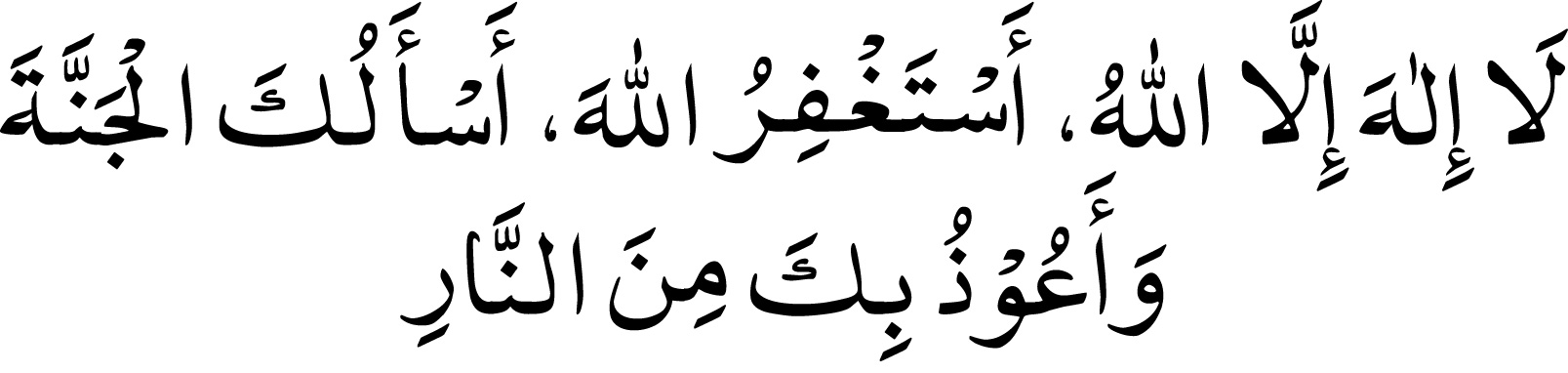
8. Read in abundance:
Lā ilāha illallāh, astaghfirullāh, as’alukal jannah, wa a’ūdhubika minannār.
There is no diety except Allāh, I seek forgiveness from Allāh, I ask from You (O Allāh) Jannah, and I seek Your refuge from the fire.
9. Spend in the Path of Allāh ta‘ālā during the days and nights of Ramadān. Allocate a budget and spend accordingly.
10. Spend the last 10 days in i‘tikāf, for these 10 days are the very cream of Ramadān. Every year Laylat-ul-Qadr (The Night of Power) rotates in these 10 nights.
By Hadrat Mawlānā Muhammad Saleem Dhorat hafizahullāh
It should be the desire of every Muslim to be in the House of Allāh ta‘ālā at all times. A Muslim should feel that if he had no commitments, he would have spent his entire time in the masjid. The heart should always yearn to be in the place most beloved to Allāh ta‘ālā. Any place beloved to Allāh will certainly become beloved to the person who has love for Allāh ta‘ālā, and Love of Allāh ta‘ālā is an essential requisite of Īmān. In one hadīth Rasūlullāh sallallāhu ‘alayhi wasallam has said: “The most beloved places to Allāh ta‘ālā are the masājid.” (Muslim)
Even when he is occupied with matters of the world, such as family, work, etc., the heart of a Muslim should always be attached to the masjid. The Prophet sallallāhu ‘alayhi wasallam has stated in one hadīth that the condition of a believer outside the masjid is that of a fish out of water. A fish obviously has no desire to be out of water and if it is taken out, will long to return, and will remain restless for as long as it is out of water. In the same hadīth, the sign of a munāfiq (hypocrite) has been described as a bird in a cage, longing to be released therefrom as soon as possible. A munāfiq anxiously waits for the salāh or speech to end, so he can leave. The point to reflect upon is that do we feel restless outside the masjid, longing to return to it, and if not, then are we not displaying the sign of a munāfiq?
This hadīth encourages us to inculcate love for the masājid, thereby visiting them frequently and remaining within for as long as possible. If for any particular reason, or due to worldly necessities, one cannot remain longer in the masjid, the desire for staying longer and the urge to return at the first opportunity should at least be present in the heart. It is indeed regrettable to witness that even when not preoccupied with necessary commitments, many Muslims, at salāh times, remain sitting at home or wandering the streets instead of attending the masājid and performing salāh. And even if they do attend, they will make a point to come as late as possible and leave immediately after salāh, only to ‘hang around’ outside with friends. Many have become so negligent that in their haste to leave, they discard the performance of sunnah mu’akkadah as well.
The sunnah salāh has been divided into two categories, mu’akkadah and ghayr mu’akkadah. The sunnah mu’akkadah are those, which Rasūlullāh sallallāhu ‘alayhi wasallam used to perform with punctuality, and exhorted the Ummah to do the same, except on a journey when there is scope for omitting them. Sunnah ghayr mu’akkadah are the non-emphasised sunnah salāh, which Rasūlullāh sallallāhu ‘alayhi wasallamused to perform on a regular basis but had omitted them at times as well, so that the Ummah could differentiate between the two. Many people never perform these at all.
Nowadays, we tend to believe that the sunnah ghayr mu’akkadah (the non-emphasised sunnah salāh) are those which Rasūlullāh sallallāhu ‘alayhi wasallam only performed occasionally. This is the definition that we have in our minds today. This is the very reason why we find a very small number of people performing the sunnah ghayr mu’akkadah. This is indeed a very grave misconception. We should make it a point to perform these with the regularity they deserve.
Coming back to the main topic, I wish to stress once again that love for the masjid (which is indicated by the desire to be present therein) is a necessary requirement. Rasūlullāh sallallāhu ‘alayhi wasallam has said: “There are seven (types of persons) whom Allāh will give protection with His Shade on the Day when there will be no shade except His Shade:…(one of them is) a person whose heart is attached to the masjid…” (Al-Bukhārī, Muslim)
If, however, such inclination does not exist within the heart, then it should be created by compelling oneself to come to the masjid at least fifteen to twenty minutes before jamā‘ah (congregational prayer) time and engage in some form of ‘ibādah. If one finds it difficult to come any earlier than the jamā‘ah time, then one should try and spend some time after the salāh. Moreover, it would also be beneficial to participate in the regular durūs (lessons of Qur’ān or Hadīth) or similar Dīnī lectures that take place in the masjid.
The benefits of visiting the masājid are numerous. Rasūlullāh sallallāhu ‘alayhi wasallam has said: “He who purifies himself in his house and then walks to one of the Houses of Allāh for performing an obligatory act (salāh), one step of his will wipe out his sins and another step will exalt him in status (in Paradise).” (Muslim)
Furthermore, just by entering the masjid with the right foot, one would be gaining the immense reward of practising a sunnah of Rasūlullāh sallallāhu ‘alayhi wasallam. By reciting the prescribed du‘ā (for this occasion) another sunnah would be accomplished. By making the intention of i‘tikāf, at the time of entering, the entire time spent within the masjid will bear the reward of i‘tikāf as well. Besides, one’s presence in the masjid (provided one does not engage in talking about worldly matters) will save one from impermissible speech and actions, which may possibly have been carried out by one outside the masjid.
It has to be remembered that to engage in anything related to worldly affairs whilst in the masjid is not allowed. The acts permissible in the masjid are those which relate to the Remembrance of Allāh ta‘ālā, such as the recitation of the Qur’ān, dhikr, listening to speeches or durūs (lessons) of Qur’ān & Ahādīth, etc. Rasūlullāh sallallāhu ‘alayhi wasallam has said: “The masājid are constructed only for the Remembrance of Allāh and salāh.” (Ibn Mājah)
One more virtue of the masjid pertains to one’s closeness with the imām when insalāh. The closer one is, the more virtuous becomes one’s salāh. Rasūlullāh sallallāhu ‘alayhi wasallam has said: “If people came to know of the blessing of (saying) adhān and (performing salāh in) the first row, they would resort to drawing lots if they had to (to secure these privileges).” (Al-Bukhārī, Muslim)
As we are unaware of the reality of the spiritual world, we have become neglectful of even such great and virtuous acts. In order to understand this, it would help to cite an example in purely materialistic terms. If for instance, a masjid was to announce that all those performing salāh in the first row would be awarded a sum as little as five pounds, for every salāh, one would witness that the first row would be filled up well before the beginning of salāh. Although not a big sum of money, but multiply it by five (for the five daily salāh) and then multiply that by seven (for the seven days of the week), it would add up to a week’s wages. This would certainly attract people to the first row. Unfortunately, we haven’t accorded even the importance and value of five pounds to the virtue mentioned by Rasūlullāh sallallāhu ‘alayhi wasallam.
Dear friends, when we come to the masjid, we should endeavour to obtain a place in the first row. We have plenty of time to talk and gossip outside salāh times. Leave all the mundane activities for another time and come and sit as close to the imām as possible. We should realise that there is a force keeping us away from this reward (and other such rewards) and this is the evil force of shaytān. We have to learn to fight shaytān and endeavour to get closer to Allāh ta‘ālā.
INTENTIONS FOR GOING TO THE MASJID
Many intentions can be made when going to the masjid. Remember, for each intention a separate reward will be attained. Listed below are some possible intentions that can be made.
1. To perform salāh.
2. For going to the House of Allāh ta‘ālā.
3. To obtain reward for the time spent while awaiting the congregation of thesalāh.
4. For the limbs to be safeguarded from sins.
5. For nafl (optional) i‘tikāf.
6. To remember Allāh ta‘ālā in seclusion.
7. To meet fellow Muslim brothers.
8. For the reward of salām (greeting other brothers).
9. For reciting the du‘ā when entering and leaving the masjid.
10. For reciting the Qur’ān.
11. For an opportunity for amr bil ma‘rūf and nahy ‘anil munkar (to enjoin what is right and forbid what is evil).
May Allāh ta‘ālā forgive our sins and overlook our shortcomings and may He grant us the correct understanding of Dīn and His Pleasure. Āmīn.
By Hadrat Mawlānā Muhammad Saleem Dhorat hafizahullāh
The aim and objective of every believer is to acquire the Pleasure of Allāh ta‘ālā, and for that one has to carry out good deeds. These good deeds fall into two categories:fard(obligatory) and nafl (optional). Non-compliance with the obligatory deeds will leave a believer sinful; therefore, priority has to be given to the obligatory commands. But, together with this, an ardent effort needs to be made to perform as many optional deeds as possible.
The Prophet sallallāhu ‘alayhi wasallam says in a hadīth qudsīyy that Allāh ta‘ālā says:
“My servant does not get proximity to Me with anything more beloved to Me than what I have made compulsory upon him. Thereafter, he continues to gain proximity to Me by performing optional deeds, until I love him.” (Al-Bukhārī)
From this hadīth we understand that in order to acquire maximum proximity to Allāhta‘ālā and become His beloved, together with carrying out the obligatory actions, we need to go beyond and perform the optional deeds; then only will we become the beloved of Allāh ta‘ālā. It is therefore of utmost importance that we take the whole package and, whilst carrying out the obligatory deeds, try our utmost to carry out as many optional deeds as possible.
One should, upon seeing his/her weakness in performing obligatory actions, never feel that there is no benefit in performing optional actions. This is an incorrect mindset, as deficiencies in, or lack of obligatory deeds on the Day of Qiyāmah can somewhat be made up through optional devotions. The Prophet sallallāhu ‘alayhi wasallam said:
“Indeed, the first action that will be judged by Allāh on the Day of Judgement shall be Salāh. Our Lord, the Great, the Mighty, despite knowing, will say to the angels, ‘Check my servant’s account (for his Salāh); did he complete it or leave it incomplete?’ If it is complete, then it will be written as such. And if it is found lacking, then Allāh will say, ‘Check if my servant has any optional Salāh in his account. If he has optional Salāh, then complete his obligatory Salāh with this and then reckon him on this deed.’” (Abū Dāwūd)
Similarly, another benefit of performing optional actions, whilst being weak in obligatory actions, is that the nūr (light) created in the heart by these actions will make the heart healthy making obligatory actions easy to perform. Therefore, any small action should not be undermined or underestimated, as one is not aware of the spiritual effect it will have on the heart.
Moreover, many times optional actions which seemed trivial at the time become the means of Allāh ta‘ālā’s forgiveness. We have the famous story of the transgressing woman who upon seeing a thirsty dog gave it water to drink. On account of this one deed Allāh ta‘ālā forgave her and entered her into Jannah. (Al-Bukhārī) Similar is the story of the man who cut a branch from a tree which was hindering people who used that path. The Prophet sallallāhu ‘alayhi wasallam mentioned that he had seen the man strolling in Jannah on account of this deed. (Muslim)
Another important point to keep in mind regarding this is that any action, big or small, should be carried out as soon as the thought of performing it comes to mind. These thoughts to do good are like noble guests. If they are not entertained, they will not return.
Finally, with regards to optional deeds, we see people going to two extremes. Firstly, we have those who when hearing of incidents such as those quoted above about the dog and the branch, become complacent. They think that they have done many such optional deeds and helped many people, so they will most definitely go to Jannah! This is definitely not the correct mindset. Rather, the correct way to look at such incidents is to think that the person in the incident was fortunate. Take the example of a person who escapes a fine from the police for doing something wrong, this does not mean that another should also do the same because he too will escape in the same way! We should therefore continue performing as many deeds as possible. The other extreme people go to is thinking that they are so stooped in sin that a small optional deed will do no good for them whatsoever. This is also incorrect, for no matter how sinful a person may be, every good deed, even if it is the mere saying of subhānallāhor alhamdulillāh, will definitely be beneficial in one way or another.
It is therefore important that we do the utmost to maximise our good deeds with the intention of seeking the attention of Allāh ta‘ālā. If we do, then, inshā’allāh, Allāhta‘ālā will grant barakah in our actions and we will soon find ourselves practicing the whole Dīn, performing both the obligatory and optional acts. May Allāh ta‘ālā grant us the tawfīq.
By Hadrat Mawlānā Muhammad Saleem Dhorat hafizahullāh
Sawm (fasting) means to refrain from eating, drinking and cohabiting from subh sādiq (early dawn) to sunset with a niyyah (intention) of observing fast.
Fasting in the month of Ramadān is one of the five pillars of Islām and is fard (compulsory) upon every muslim who is sane and mature. Fasting has many physical, moral, and social benefits. However, Allāh ta‘ālā has made fasting compulsory so that we become pious and God-fearing.
Fasting will not be valid without niyyah. It is not necessary to express the niyyah in words. However it is preferable to recite Allāhumma asūmu laka ghadan (O Allāh tomorrow I shall be fasting for you only). In the case of Ramadān, it is better to make niyyah in the night. However, should a person fail to do so, then it is permitted to make the niyyah during the day before the majority of the day has passed.
MUSTAHAB (DESIRABLE) ACTS IN FASTING
1. To eat suhūr (the meal before subh sādiq).
2 . To delay the suhūr up to a little before subh sādiq.
3. To break the fast immediately after sunset.
4. To break the fast with dates. If dates are not available then with water.
5. To recite this du‘ā at the time of breaking the fast:-
Allāhumma laka sumtu wa bika āmantu wa ‘alā rizqika aftartu
O Allāh! I fasted for You and in You do I believe and with Your provision (food) do I break my fast.
THINGS MAKRŪH (DETESTABLE) WHILE FASTING
1. To chew items such as rubber, plastic etc.
2. To taste food or drink and spit it out.
3. To collect one’s saliva in the mouth and then swallow it.
4. To clean teeth or mouth with tooth powder or toothpaste.
5. To complain of hunger or thirst.
6. To quarrel or argue with filthy words.
THINGS THAT BREAK THE FAST
1. To eat, drink or indulge in cohabitation intentionally.
2. To burn incense and inhale its smoke.
3. If water goes down the throat while gargling.
4. To vomit a mouthful intentionally.
5. To swallow vomit intentionally.
6. To swallow something edible, equal to or bigger than a grain of gram, which was stuck between the teeth. However, if it is first taken out of the mouth and then swallowed, it will break the fast whether it is smaller or bigger than the size of the grain.
7. To drop oil or medicine into ear or nose.
8. To swallow the blood from gums with saliva. However, if the blood is less than the saliva and its taste is not felt then the fast will not break.
9. Snuffing.
10. To eat and drink forgetting one is fasting and thereafter, thinking that the fast is broken, to eat and drink again.
11. Smoking.
12. To apply medicine to the anus.
13. For women to apply medicine to the urinary organs.
14. To swallow intentionally a pebble, piece of paper or any item that is not used as food or medicine.
In all the above circumstances, only a single fast will become qadā except in the case of number one (1), where qadā and kaffārah both will become obligatory. (Consult an ‘Ālim regarding the rules of kaffārah).
THINGS THAT DO NOT BREAK THE FAST
1. To eat, drink or indulge in cohabitation in forgetfulness.
2. To vomit without intention.
3. To vomit intentionally, less than mouthful.
4. To have a wet dream.
5. To oil the hair.
6. To use surma (collyrium) in the eyes.
7. To drop water or medicine in the eyes.
8. To clean teeth with wet or dry miswāk (a stick used for cleaning teeth).
9. To apply or smell ‘itr (perfume).
10. To swallow a fly, mosquito, smoke or dust unintentionally.
11. To swallow one’s saliva or phlegm.
12. Water entering the ears.
13. To take an injection.
SUNNAH PRACTICES IN THE MONTH OF RAMADĀN
1. To observe tarawīh.
2. To increase the recitation of the Glorious Qur’ān.
3. To observe i’tikāf during the last ten days of Ramadān.
AHĀDĪTH REGARDING THE VIRTUES OF FASTING
Sawm
Sawm is a shield, as long as he (the fasting person) does not tear it up. (An-Nasa’ī)
Note: Fasting is a protection from Shaytān or from Allāh’s ta‘ālā punishment in the hereafter. One who indulges in sins whilst fasting, such as lying, backbiting etc., they become the cause of the fast becoming wasted.
All good deeds are for the one who renders them, but fasting. Fasting is exclusively for me (Allāh). (Al-Bukhārī)
Fasting is a shield and a powerful fortress. (Ahmad, Al-Bayhaqī)
I swear by that being in whose possession is the life of Muhammad! The odour of the mouth of a fasting person is sweeter to Allāh than the fragrance of musk. (Al-Bukhārī)
Fasting is exclusively for Allāh, the reward of it (being limitless) no one knows besides Allāh. (At-Tabrānī)
Suhūr
Verily, Allāh and His angels send mercy upon those who eat suhūr. (At-Tabrānī)
Eat suhūr because in suhūr lies barakah. (Mishkāt)
Iftār
Whosoever gives something to a fasting person in order to break the fast, for him there shall be forgiveness for his sins and emancipation from the fire of Jahannam; and for him (the one who gives) shall be the same reward as for him (whom he fed), without that person’s (the one who was fed) reward being diminished in the least. (Ibn Khuzaymah, Al-Bayhaqī)
Whoever gave a person, who fasted, water to drink, Allāh shall give him a drink from my fountain whereafter he shall never again feel thirsty until he enters Jannah. (Ibn Khuzaymah)
The fasting person experiences two (ocassions) of delight: at the time of iftār and at the time he will meet his Rabb.(Al-Bukhārī)
Not a single prayer made by a fasting person at the time of breaking fast is rejected. (Ibn Mājah)
Whenever a great person passes away, the tremors felt by the world are in proportion to the legacy that that person left behind. In this week’s blog post I reflect on seven lessons in leadership that we can learn from the life of the boxer Muhammad Ali.
Leadership is most valuable during times of crisis
Ali grew up in the ‘Deep South’ of America at a time when black people were still considered inferior human beings to white people. As recently as the 1960s, African Americans were still forced to sit on buses in sections separate to white Americans.
When Ali rose to prominence, the black community in America was suffering from despair, disheartenment and a lack of confidence.
It was in this atmosphere that Ali demonstrated leadership. He realised that wallowing in victimhood restrains a community from growing and moving forward. And so he exhorted his people to do something to change the world around them, rather than sit and cry about it:
“Impossible is just a big word thrown around by small men who find it easier to live in the world they’ve been given than to explore the power they have to change it. Impossible is not a fact. It’s an opinion. Impossible is not a declaration. It’s a dare. Impossible is potential. Impossible is temporary. Impossible is nothing.”
2. Every great leader in history suffered for their beliefs and were reviled before they were revered.
Change is hated by man because people prefer the status quo. No-one likes change, especially those in power.
Once Ali began to encourage his people to believe in themselves, that they did not have to accept the world for what it was, that they could do something to change their lives, he was considered a threat and punished for his beliefs. He was stripped of his title, fined and sentenced to 5 years in prison.
In the eyes of the law, Ali was a convicted criminal. But this did not prevent billions of people around the world venerating him until and after his death.
“I am America. I am the part you won’t recognize. But get used to me. Black, confident, cocky; my name, not yours; my religion, not yours; my goals, my own; get used to me.”
3. Just like cowardice is contagious, so is bravery
In the Quran, fleeing the battlefield is considered a major sin because of the infectious nature of cowardice. When one person flees the battlefield, he injects seeds of cowardice and fear into the hearts of those around him and causes them to flee too.
But likewise, when one man stands up and takes a brave, principled stance, he encourages others to be brave too.
“To be a great champion, you must believe you are the best. If you’re not, pretend that you are.”
4. Leadership is not just about talking the talk, it is about walking the walk
During my years in prison I saw many people who talked tough out in the world, but crumbled to pieces once inside a prison cell. Some of them even turned into rats. Talk is cheap, but action is costly.
Muhammad Ali did not just openly declare his opposition to going to Vietnam to fight. He declared that he was prepared to go to prison, give up boxing and sacrifice everything that was dear to him, for the sake of holding true to his principles.
And true to his word, he was stripped of his title and could not box for several years.
“I have been warned that to take such a stand would cost me millions of dollars… I have nothing to lose by standing up for my beliefs. So I’ll go to jail, so what? We’ve been in jail for 400 years.”
5. The importance of being on the right side of history
Many of the people lining up to venerate Muhammad Ali today were the same people who demonised him when he was disgraced for refusing to go and fight in Vietnam.
As for the few who supported Ali when he was disgraced, they turned out to be on the right side of history. The rest of the American public soon turned against the Vietnam war and the United States brought its troops home.
Nelson Mandela suffered the same fate. The same people who castigated Mandela as a convicted terrorist later lined up to pay tribute to him once the whole world realised that he changed the world for the better.
“The service you do for others is the rent you pay for your room here on Earth.”
6. Publicly accepting your errors of judgement is a sign of strength, not weakness
The strong leader does not run away from his mistakes; he acknowledges them and learns from them. Muhammad Ali first joined the black supremacist sect ‘Nation of Islam’ but once he realised what they were about he publicly disassociated himself from their racist message:
“Hating people because of their color is wrong. And it doesn’t matter which color does the hating. It’s just plain wrong.”
7. People respect you more when you stick by your principles, than when you live your life to please people
Many people did not like some of the things that Muhammad Ali said, or the way that he said them. But he never once cared what people thought of him. He was proud of his beliefs, his lineage and his heritage. He realised early on in his life that if he was to spend his life trying to please people, he would waste his life.
“I know where I’m going and I know the truth, and I don’t have to be what you want me to be. I’m free to be what I want.”
Under the witty, fast-talking, charming man was a humble individual who really loved the world and cared about its people. He realised that he was not going to live forever so he spent his days on earth trying to carve a positive legacy that would remain long after he departed.
“Live every day as if it were your last because someday you’re going to be right,”he used to say.
And on Friday 3 June 2016 Muhammad Ali was right. May Allah have mercy on him.
Generally, after a few years a slave would be freed, especially if he was a Muslim. The slaves saw how the Muslims treated them and it was far better than the Christians.
There was a rule in Spain, a non-Muslim could not keep a Muslim as a slave.
Abu Dharr (Allah be pleased with him) had a slave, he dressed just like Abu Dharr and ate the same food. Someone asked him why he did this. He narrated a Hadith:
Salam ibn ‘Amr reported from one of the Companions of the Prophet, may Allah bless him and grant him peace, said, “Your slaves are your brothers, so treat him well. Ask for their help in what is too much for you and help them in what is too much for them.” (alAdab alMufrad)
When Abu Dharr (may Allah be pleased with him) addressed to Bilal (Allah be pleased with him) with, “You son of a black woman!” and Bilal (Allah be pleased with him) got insulted, he went to the Prophet (peace and blessings of Allah be upon him).
He told the Prophet (peace and blessings of Allah be upon him) “O Messenger of Allah, this is what Abu Dharr has said to me.”
The Prophet (peace and blessings of Allah be upon him) called Abu Dharr and said, “O Abu Dharr you are a man who still has the traits of ignorance in him! I am equally the son of a black woman, as I am the son of a white woman.” (This is because He (peace and blessings of Allah be upon him) was breastfed by a black woman).
In another narration, the Prophet (peace and blessings of Allah be upon him) said, “You are a man who calls to Jahiliyyah, whoever calls to the call of Jahiliyyah, he will be in the fire of Jahannam!” And the Sahabah (may Allah be pleased with them) asked, “What if he prays and fasts?” He (peace and blessings of Allah be upon him) said, “Even if he prays and he fasts.”
Hatim Tai (Allah be pleased with them) had a son Adiy ibn Hatim (may Allah be pleased with them), Adiy was a prince. He once went to Medinah, he was walking in the streets of Medinah when an African girl came and said to the Prophet (peace and blessings be upon him), “My master is harsh on me.” The Prophet (peace and blessing be upon him) answered, “Do not worry, I will speak to him.” He then smiled and said, “Hold my hand and take me anywhere.”
Adiy (Allah be pleased with them) says, “When I saw this I knew the man (the Prophet) was not a prince, as you could not walk with a prince like this. But, I also knew he was not an ordinary man.”
Inside Cordoba Mosque – The largest in Spain (now a Cathedral)
Cordoba
Cordoba fell to the Muslims in 711 A.D. The Muslims marched north, finally reaching Cordoba. Magheeth Rumi exploiting a weak defence managed to enter Cordoba and conquer it. Tariq (Allah have mercy on him) conquered many cities, until the Christians flocked to him. Finally, his men became tired of fighting. Then he began to send small armies to different places, each army had only 700 men. Tariq (Allah be pleased with him) penetrated deep into Spain until men were exhausted of fighting. Then he returned to Cordoba and settled there. Musa (Allah have mercy on him) had instructed Tariq (Allah have mercy on him) to only fight with Roderick. He was annoyed with Tariq’s disregard for his command. Musa left with a large of 18,000 in 712 to Spain. It is reported that Tariq (Allah have mercy on him) was imprisoned for disobeying direct commands. He was later released and reinstated. The Muslims showed a tolerance never experienced before. The majority of the population embraced Islam. They took all of Andalus, besides the Northwest area, from where the Christians regrouped. The leader of this group was, Pelayo. Musa made roads into France, he wanted to take the entire Europe and finally reaching Damascus through Constantinople, but he was called back to Damascus before fulfilling his dreams.
Musa ibn Nusayr (Allah be pleased with them) stayed in Spain for three years. He was now 75 years old. The Caliph – Waleed ibn Abdul Malik (Allah have mercy on him) called him back to Baghdad. The actual reason we are unaware of, but possible reasons
He was powerful and had conquered the whole of North Africa, so Waleed thought he is getting to much authority.
Waleed became insecure, about himself and his relationship with Musa.
So, Tariq ibn Ziyad (Allah have mercy on him) and Musa ibn Nusayr (Allah have mercy on him) went to Waleed (Allah have mercy on him). By the time they reached the Caliph, he was dying. Whenever Musa (Allah have mercy on him) conquered a land, he would send the treasures and booty to the Caliph. On his journey back from Spain he brought all the treasures back but someone advised him not to give the treasures. Musa said he wanted to bring them back. This led to slight tension between Musa (Allah have mercy on him) and Sulayman ibn Abdul Malik, who was the brother of Waleed (Allah have mercy on him), as Sulayman wanted the wealth from Spain. Musa meets the Caliph and shortly afterwards, the Caliph dies in 94h.
When Sulayman took over the throne he despised Musa (Allah have mercy on him), so he tortured him. A 75 years old man was made to stand in the heat of the blazing sun, he already had asthma. Umar ibn AbdulAziz (Allah have mercy on him) was an Umayyid, he was around at that time. He says, “No day was worse for me than seeing the old man, an old mujahid, indebted on the Ummah, the conqueror of North Africa being tortured like this.”
Umar (Allah have mercy on him) went to the caliph and said, “I do not pledge allegiance to a king who tortures old men like this!”
Sulayman uplifted the torture, but paced heavy fines on Musa (Allah have mercy on him).
Some scholars say, they were both at peace with each other later. Others write, they went Hajj together.
He died either of poverty or illness.
Imam Shafi’ee (Allah have mercy on him) said, “Some people die and their evils remains on. Others die and their goodness remains on.”
We all remember the Khayr Musa ibn Nusayr (Allah have mercy on him) left behind. Just like When Hussayn (Allah be pleased with him) was martyred, Yazid was rejoicing. But, in the eyes of Allah Hussayn (Allah be pleased with him) was accepted. Also, Hamza (Allah be pleased with him) – the uncle of the Prophet (peace and blessings be upon him) had his liver chewed and his body mutilated. But, later was known as ‘Asadullah’, The Lion of Allah.
Ibn Mulhim (Allah have mercy on him) says, “It was amazing that Musa (Allah have mercy on him) even went to Waleed (Allah have mercy on him) when he was called. Because he already had Spain and parts of France under his rule.” This shows the sincerity of Musa (Allah have mercy on him). The same happened with Khalid ibn Waleed (Allah be pleased with him), the last four years of his life he did not fight. This was because Umar (Allah be pleased with him) demoted him. The last year of his life, was called the ‘Year of Women’, as he could not fight.
But the story of Musa (Allah have mercy on him) did not end there, they assassinated his son Abdul Aziz (Allah have mercy on him). He was reading Surah Waqiah at the time. All out of spite and hatred. And Abdullah, the other son was also martyred! Inna Lillah…
The head of Abdul Aziz (Allah have mercy on him) was bought to Musa (Allah have mercy on him) whilst he was alive. Sulayman asked Musa (Allah have mercy on him), “Do you know who he is?” Musa said, “This was a pious man who conquered Portugal and the Ummah is indebted to him.”
The reason for killing AbduAziz (Allah have mercy on him) was, he married Roderick’s wife to create ties between the Christians and Muslims. Sulayman thought he would be a sell-out.
Sulayman died in 99h.
“Dominance is only for Allah!” Written on many of the palaces.
Over the next 40 years Spain had 21 or 22 governors, there was absolute mayhem. Muslims had a lot of loss, they were demoralised and lost motivation. There was 100 tonnes i.e. 100 opinions about everything. It was like what happened in Uhud, 50 archers and Saeed ibn Jubayr (Allah be pleased with them).
For this, we say, that the more the Dunya opens up before the people, and they end up concerning themselves with it, they will lose as much of the Akhira as they have gained from the Dunya. The Prophet (peace ad blessings be upon him) said: “By Allah, I am not afraid of your poverty,” meaning I am not afraid of poverty for you, for the Dunya will open up before you, “but I am afraid that you will lead a life of luxury as past nations did, whereupon you will compete with each other for it, as they competed for it, and it will destroy you as it destroyed them.” [Bukhari & Muslim].
The Messenger (peace and blessings be upon him) spoke the truth. This is what has destroyed the people today. What has destroyed the people today, is their competing with one another for the Dunya, and them being as if they were only created for it, and not it created for them. So they have preoccupied themselves with what was created for them over what they were created for. This is backwardness. We ask Allah for protection.
Amongst the famous rulers were:
Samh ibn Khawlani (Allah have mercy on him), the fourth viceroy. He was the viceroy in the time of Umar ibn AbdulAziz (Allah have mercy on him). He was martyred at the siege of Toulouse in 721 A.D. In 1030/721 a man called Bulai, with some renegade Christian took to the mountains to start a guerrilla against the Muslims. Anbasa, moved quite deep along the Rhone River. In 725 A.D. Anbasa was ambushed and killed.
The most successful and tragic expedition as that of Abdul Rehman Ghafiqi (Allah have mercy upon him). Eudes tried to stop but to no avail and called up Charles, who was later known as Martell (Hammer). The Battle of Poiters (Battle of Tours) is regarded as one of the most defining battles in the history of the West. The Muslim army was considerably smaller, Muslims were all infantry and Christians all cavalry. The battle began and raged doe an entire week from 25th to 31st October 732 A.D.
The most disturbing aspect of the history of Spain is the amount of internal strife amongst the Muslims. Arabs against Arabs, Berbers against Arabs, new Muslims against the ruling elite. There are three types of Arabs:
Al-Ba’idah – They existed but no longer do e.g. the people of ‘Aad and Thamud.
Al-Aaribah – The original Arabs i.e. The Yemenis aka Kelbites.
Al-Musta’ribah – Those who became Arabs later. The Prophet (peace and blessings be upon him) was from this category, as Ibrahim (peace and blessings be upon him) travelled to Makkah, Hajar (Allah be pleased with her) did not even speak Arabic. They were also known as Qaisites.
Two later rulers who ignited the wars of racism in Spain were Hudhayfah (728-730) and Haitham (729-730).
Then the Berbers revolted, this led from the inequities between the Arabs and the Berbers. The Berbers were looked down on before Islam, could now equal the Arabs on all fronts. The next to cause great mischief was a man called Shomal (the grandson of Shimr, the man who beheaded Hussain RA at Karbala).
The two armies met at the bank of the Guadelate in 745 A.D. Ibn Khattar’s army was routed.
Abdul Rahman (The Hawk of Quraysh/Falcon of Andalus)
The largest opposition to the Umayyads was the Abbasids; their leader at the time was Abbas, the grandson of Abbas (Allah be pleased with him). Abdul Rahman (Allah have mercy on him) had to flee to save his life. He finally reached the Berber tribe of his mother, Nazfa, situated in Naqur, four years after fleeing. The time was right for Abdul Rahman to make his appearance. Andalus was in a state of chaos due to the internal feuding. He wrote a letter to the Syrians and Ummayads living in Andalus. This iletter was taken by Badr in June 754. Abdul Rahman (Allah have mercy on him) had to wait an entire year in suspense for the response. On August 14th 755 A.D. he arrived in Spain and had mass defection in his favour. He took Seville peacefully. With his victory at Cordoba on 15th May 756, he sealed his name in history. He defeated Yusuf and Shomal. He was crowned the ‘Ameer of the Muslims.’ Mansur often praised his foe and it was him who give him the title, “The Falcon of the Quraysh.”
Abdul Rahman (Allah have mercy on him) did not like to wage war unless there was no other option, hence he would always start with the option of peace. Others were children who were bought from Europe, but they were brought up in Islam and were fundamental to the army and state. He was always ready to help his subjects.
Inside Cordoba MosqueThe gateway to Cordoba [al-Qil’ul Hurriya]
Ismail Ibn Nazir Satia (One who is in dire need of Allah’s forgiveness, mercy and pleasure).