Categories
Shaykh Saleem Dhorat

Hāfiz Ibrāhīm Dhorat rahimahullāh

by Shaykh Mawlānā Muhammad Saleem Dhorat hafizahullāh

In 1991 Shaykh Muhammad Saleem Dhorat hafizahullāh had to give up his teaching post at Darul Uloom Bury and move back to Leicester, the city in which he grew up. The reason why the respected Shaykh had to return was the demise of his father, Hāfiz Ibrāhīm Dhorat rahimahullāh.

Hāfiz Dhorat rahimahullāh was an extraordinary individual who was well loved and respected by all who knew him. He was from amongst those who held a lofty status in piety. That such a noble soul could exist in the twentieth century, leading a normal life in an inner city environment is proof of the vibrancy and power of Islām, and an encouraging example to the rest of us of how we too can lead exemplary lives.

Shaykh Muhammad Saleem states, “Whatever I am is the du‘ā and tarbiyyah of my late father.”

There follows the translation of the letter sent by Shaykh Muhammad Saleem to the akābirīn who were aquainted with his respected father, informing them of his demise, requesting their du‘ās and recounting some of his noble qualities, that are usually found in the friends of Allāh ta‘ālā.
Bismillāhir Rahmānir Rahīm

Leicester, UK  – Dhul Hijjah 1411

Honourable Hadhrat,

Assalāmu alaykum wa rahmatullāhi wa barakātuh

Praise be to Allāh ta‘ālā that through the blessings of Hadhrat’s du‘ās this servant is in good health, and praying for the goodness and safety of Hadhrat.

With much grief Hadhrat is informed that my respected father, Hāfiz Ibrāhīm Dhorat rahimahullāh departed from this world to meet his Creator at nine o’clock, on the morning of Wednesday 21st Zul Hijjah (3rd July 1991) after 73 years of life. “Truly, we belong to Allāh ta‘ālā, and to Him we will return.”

Because of my respected father’s acquaintance with you, I write this letter, anticipating your du‘ā and passing of reward to the deceased.

Allāh ta‘ālā bestowed my late father with many great qualities. After completing his hifz at Jāme‘ah Husayniyah, the well known dārul ‘ulūm at Rander, he remained in the company of the akābirīn and mashāyikh for a number of years and derived spiritual benefit from them. It was also in his youth that he commenced teaching, a service which he continued rendering up to the time of his demise. He has hundreds of students, of which dozens are huffāz and ‘ulamā. During the last few years, due to frailty, he was not officially attached to any madrasah, but still he would listen to the revision of mature huffāz at his home for hours daily, a practise which continued until a day before he passed away.

Allāh ta‘ālā also blessed my respected father with elevated character and disposition. He would meet young and old with a smile. Having performed wudhū at home he would always be first to greet young and old with salām on the way to the masjid. He had affection and attachment for all the Muslims of the city, and held the ‘ulamā in great respect. He showed great affection and love to youngsters, often giving money to children of ordinary Muslims.

My respected father would share with everyone in their occasions of happiness and grief. If someone’s child became an ‘ālim or acquired a degree or started a business, my respected father would congratulate them and pray for their children. A du‘ā for every child was, “May Allāh ta‘ālā make you a helper of His Dīn and a service to humanity.”

On hearing of someone falling even slightly ill he would personally go to visit them, or at least phone them to ask how they were. An official ID card meant that he had access to the hospital to visit patients at any time. He would arrange a lift and visit the sick in hospital and pray for them. Even if someone called for him at two in the morning he would abandon his sleep and cheerfully get ready and attend the patient, reciting the Qur’ān at their side and reassuring them.

If he failed to encounter any of his friends in the masjid he would ask after them. If it turned out that they had gone out of town he would phone them the next day and good-naturedly complain of their not having informed him! If he learned of anyone going on a journey he would make a point of going to meet them before they departed, and again on their return.

My respected father would never critisize or complain about anyone in front of anyone. He himself maintained ties with all and tried his utmost that other Muslims and associates too stayed united. His heart was always clean with regards to others, and he left this world in that state. Possibly it was this untainted relationship with people that Allāh ta‘ālā liked so much, that in his final week Allāhta‘ālā created the means of meeting his loved one’s and associates in an extraordinary way. The opening of the Tablīghi Markaz in Leicester took place in that last week, which was attended by England’s amīr of the Tablīghi movement. People from all around the city and its environs had gathered and my father stayed at the Markaz from morning till night on both days of the gathering and met with everyone. Then, three days prior to his demise the ‘ulamā from around Leicester met at my father’s house for a meeting concerning Jāme‘ah Hayātus Sālihāt, giving him an opportunity to meet them all and offer them hospitality.

My respected father would attend the lectures of any visiting ‘ālim, young or old, whether from the UK or abroad, even if the talks were organised at distant masājid. He was extremely soft-hearted, often crying at the mention of the ākhirah or the blessed name of Rasūlullāh sallallāhu ‘alayhi wasallam, and people present would acknowledge that the tears were spontaneous and without ostentation. After the lecture he would go forward himself to shake hands with the speaker.

My respected father greeted any newcomer in the masjid, whether he was acquainted with him or not. He would sit with the brothers who came in Tablīgh and listen to them. Two days prior to his demise he submitted his name to go to the ijtimā at Dewsbury for ten days. When the Leicester brothers used to go to other towns, the local ‘ulamā and brothers in Tablīgh would ask about my father and talk of his sincerity, and convey their salāms, an indication that his lofty character was well known and that he was held in esteem throughout the country.

My respected father’s connection with educational establishments also remained till the end. He would collect funds during Ramadhān for many UK and overseas establishments. When he was unable to walk he would sign receipts and send youngsters out to collect money. He would also assist visiting ‘ulamā who were collecting charity funds, keeping them at his residence for weeks on end, sometimes for a whole month. My father would tend to them just as he would to a guest of a couple of days. Two days before he passed away he distributed receipts on behalf of Majlis Khuddām al-Dīn with his own hands.

Whenever a masjid was founded or a Dīni project was initiated in the city, he would attend and perform salāh there, give encouragement and offer his assistance. On the occasion of the completion of Sahīh Bukhāri, he would personally organise transport and arrange a group of a dozen or so people to travel to Dārul ‘Ulūm.

My respected father had much sympathy for ordinary Muslims. In the matter of marriage, he would assist parents in finding a match for their children. Just five days before his demise he was busy in assisting some guests who were staying at a friend’s house to find a marriage partner for a member of the family. Finding a contact in a nearby town, he arranged to take the guests in his own car, and not finding a driver took his son along, who is an ‘ālim. He did not accept any form of remuneration for his efforts from the guests.

My respected father was the sponsor of hundreds of poor people in India. Collecting money from family and friends, he would help them by sending funds during Ramadhān, the two ‘Īds and on the occasion of weddings etc. Up to the very end he was responsible for the fees of many boys and girls studying in madrasahs and schools.

My respected father was extremely selfless and humble. Right until the end he would himself carry out all his own personal tasks. In fact he preferred to serve the members of his family and not accept service from anyone. His simplicity was remarkable. His bedding always remained on the ground and he was completely disinclined to worldly pleasures. In fact, necessary matters aside, he took no interest in worldly matters whatsoever.

My respected father showed immense concern for the young generation, especially since mixed schooling was made compulsory by the state. He used to advise people to establish separate schools and madrasahs for Muslim children in order to safeguard children from the effects of a permissive society. Once, a hospital was put up for sale and when my father became aware of it, he personally went to inspect it and remarked, “This building is highly suitable for a madrasah. If the Muslim community purchases it, I will sell my house and give the money as qarz hasanah, and live in rented accommodation.”

Three days prior to his demise, leading ‘ulamā from within Leicester gathered together and conducted a three hour meeting, which resulted in a plan to establish a boarding madrasah for girls over the age of ten, to be named Jāme‘ah Hayātus Sālihāt. The meeting took place on a Saturday evening, and straight after Maghrib the task of meeting people commenced. After Zhuhr on Sunday he participated in a four hour meeting with the committee of a masjid with regards to the new venture, and after ‘Asr he went to view a hospital that was for sale. Before Zhuhr on Tuesday he participated in an important consultation with some ‘ulamā for an hour, but before ‘Asr his health was failing. By Wednesday he had left this world and entered into the Mercy of Allāh ta‘ālā.

Ma‘mūlāt (Practices):

My respected father was always punctual with his Tahajjud, Ishrāq, Salātud Dhuhā, Awwābīn and salāh with congregation. Daily he would recite a minimum of three juz of the Qur’ān, and adhere to his routine of reciting from Al-hizbul A‘zam, Munājāte Maqbool, Dalā’ile Khayrāt, Awrāde Fat’hīyah, Qasīdah Toobā, Salāt and salām and others. In the event of going on a journey, he would complete recitation of the Qur’ān in the morning and take the other books with him in a bag, completing his ma‘mūlāt on the way.

He would always remain with wudhū, his tongue was always moist with the dhikr of Allāh ta‘ālā and he would shower everyone with du‘ās.

Journey to the Akhirah:

Even on the day before he passed away he walked to the masjid to perform all his salāh. He remained in the masjid from ‘Asr to ‘Ishā, and confided to his dear friend, Shaykh Gora, “I feel a light weight on my chest. On the way to salāh I had to sit down, and I have arranged for a car to take me home after ‘Asr. But now I don’t think I will go home, my heart feels so attached to the masjid.”

After ‘Asr, Fadhā’ile Hajj was being read – the part about Madīnah Munawwarah and Masjid Nabawi. As he listened he would say, “Allāh, Allāh,” indicating that he was being greatly affected by the reading. After the reading he met some friends, and made casual mention of his pain, but thereafter carried on talking as if he was perfectly healthy. No one could even tell that he was not well.

After Maghrib Salāh, he sat for the tafsīr of the Qur’ān, and after offering ‘Ishā Salāh he left the masjid and walked home. After completing his ma‘mūlāt he retired to sleep. He attended Fajr Salāh with jamā‘ah and after completing his ma‘mūlāt and Ishrāq retired to sleep.

At nine in the morning, when my mother tried to wake him up she realised that he had passed away. Shortly, the doctor arrived and certified the death, and then the news spread throughout the country and abroad. First of all, the city’s ‘ulamā arrived. My teacher, Shaykh Yusuf Motala hafizahullāh was unable to travel due to illness, but he consoled me and gave me advice over the phone. Shaykh Hāshim, Mufti Shabbīr and other senior teachers hafizahumullāh participated in the janāzah.

Bathing to Burial:

We brothers and the local ‘ulamā performed the ghusl, during which everyone exclaimed aloud that Hāfiz Saheb is smiling! Everyone just stared for a few minutes. It was apparent that he had left this world smiling.

Within five or six hours hundreds of huffāz and ‘ulamā and thousands of Muslims, local and from outside Leicester, had gathered. At four in the afternoon Shaykh Hāshim Patel hafizahullāh, the khalīfah of Shaykh Muhammad Zakariyyā rahimahullāh, led the Janāzah Salāh in an open field. Leicester had not witnessed such a large gathering in a janāzah before. With tear-filled eyes, my father was finally lowered into his grave. The whole process took only a few hours, which is unusual in light of council regulations in this country. Due to its swiftness, many people were unable to participate in the janāzah. As they got to hear the news, people would offer their condolences over the phone and state that they had conveyed reward to the deceased.

The students of Dārul ‘Ulūm Bury also had great affection for my father. Even before the burial they had recited Qur’ān and conveyed the reward to my father. People are still coming to offer their condolences until late at night. The Kalimah Tayyibah has been repeated tens of thousands of times to pass on the reward. Within these twenty-four hours dozens of telephone calls of condolence have been received from the UK and abroad.

After observing all this we get some idea of the acceptance Allāh ta‘ālā has granted my respected father, and the grief of parting from such a compassionate benefactor is somewhat lessened.

We are five brothers in Britain and one in India, and four sisters who are comfortable in their own homes, by the Grace of Allāhta‘ālā. Four brothers have memorised the Glorious Qur’ān. Through the blessing of my father’s du‘ās, I graduated from Dārul ‘Ulūm Bury, and by the Grace of Allāh ta‘ālā I am at present teaching ‘ālim classes in the same institute. My younger brother Hāfiz Ismā‘īl is graduating this year. Caring for our mother is now our responsibility.

I humbly request Hadhrat and Hadhrat’s associates that they send reward and make special du‘ā for my respected father. May Allāh ta‘ālā grant him Jannatul Firdaws, fill his grave with light, enter him into His mercy, accept his good deeds, bring out his excellent qualities in his children too and fulfil the noble hopes and wishes he had. Āmīn.

Wassalām
(Shaykh) Muhammad Saleem Dhorat hafizahullāh

Categories
Shaykh Saleem Dhorat

Love and Reverence for the Prophet Sallallāhu ‘Alayhi Wasallam

by Shaykh Mawlānā Muhammad Saleem Dhorat hafizahullāh

Whenever the blessed name of our beloved Prophet sallallāhu ‘alayhi wasallam is mentioned, the one who is fortunate to utter this name and also the one who is fortunate to hear his name should, with utmost love and reverence, say, ‘sallallāhu ‘alayhi wasallam.’ Nowadays, there is great negligence amongst youth in this regard. Some years ago, with the now older generation, we would see such great love and enthusiasm in reciting salāh ‘alan nabī (durūd); whenever the following verse would be recited in the khuṭbah, everyone would read some formula of salāh ‘alan nabī:


Truly, Allāh and His angels send blessings upon the Prophet; O you who believe! Send salutations and abundant greetings upon him (too). (33:56)

This verse contains a command from Allāh ta‘ālā to send salāh ‘alan nabī as this is an action performed by both Allāh and His angels. However, for the youth nowadays this verse doesn’t bring any response. When it is recited we do not see anyone reading salāh ‘alan nabī audibly or even silently.

The ‘Ulamā have deduced from this verse that it is fard (compulsory) to send salutations and greetings upon the Prophet sallallāhu ‘alayhi wasallam at least once in a lifetime. Thereafter, whenever one participates in any gathering, be it a dars (lesson) on the Qur’ān or ahādīth, a lecture or even an informal gathering, then the first time the blessed name of the Prophet sallallāhu ‘alayhi wasallam is mentioned it is wājib (obligatory) to read salāh ‘alan nabī; thereafter, every time, in the same gathering, whenever the blessed name is mentioned it is mustaḥab (desirable) to read salāh ‘alan nabī each time.

What Love Dictates

Remember, love and reverence for the Prophet sallallāhu ‘alayhi wasallam dictates that even if the sharī‘ah had not stipulated that salāh ‘alan nabī be read when his blessed name is mentioned, we would still send salutations and greetings upon him in abundance.

So, whenever we hear the verse above read in a khutbah, we should read salāh ‘alan nabī. There are many formulae for salāh ‘alan nabī. The most virtuous is the formula that we read in salāh. The shortest formula is ‘sallallāhu ‘alayhi wasallam’. This is the formula commonly used by the Muhaddithūn and is probably the most frequently recited form.

Our love for the Prophet sallallāhu ‘alayhi wasallam should be such that we should not think of it to be a burden; rather, we should be eager to read it whenever we can. If, during a lecture, the scholar is explaining a point and happens not to mention the name of the Prophet sallallāhu ‘alayhi wasallam for some time, we should feel that something is missing and eagerly await the mentioning of the blessed name so that we can say salāh ‘alan nabī.

Love and reverence for the Prophet sallallāhu ‘alayhi wasallam also dictates that we do not shorten his name when writing it. Many, instead of writing ‘Muḥammad’ in full, suffice with writing ‘Mohd’. We write an article or letter of many pages and the only word that we find that we can shorten is the blessed name of the beloved of Allāh sallallāhu ‘alayhi wasallam! Similarly, many do not write, for example, ‘sallallāhu ‘alayhi wasallam’, sufficing with ‘s.a.w’. Again, in the whole letter, article, etc. are these the only words that we can find to shorten? There is a similar trend in the Urdu language where the letters ‘Sād’ or ‘Sād, Lām, ‘Ayn and Mīm’ are used to represent ‘sallallāhu ‘alayhi wasallam’. Ponder for a while that who is planting these thoughts in your mind about shortening the name and salutation for our beloved Prophet sallallāhu ‘alayhi wasallam. What does this show regarding our love and reverence for our beloved Prophet sallallāhu ‘alayhi wasallam?

Writing the Durūd

I remember when I was a student in Dār-al-‘Ulūm, the way we were taught by our elders and the culture in the Madrāsah was such that as the blessed name of the Prophet Sallallāhu ‘Alayhi Wasallam was mentioned again and again, it was very difficult to take down all the notes from the lectures and also write the name of the Prophet sallallāhu ‘alayhi wasallam with salutations. Therefore, in our notes, wherever we had to write the blessed name of the Prophet sallallāhu ‘alayhi wasallam and salutations, we would leave out a blank space and after class, in our own time, with our best handwriting we would write the salutations in our note books.

I would also like to bring an important point to the attention of many lecturers, who speak with the most eloquent language and accents, yet, when it comes to salāh ‘alan nabī they quickly mumble the words, void of love and reverence. Is this the level of our love and reverence for our Prophet sallallāhu ‘alayhi wasallam?

Nothing but Benefit

In reading salāh ‘alan nabī there is nothing but benefit for us:

1.     Allāh ta‘ālā sends ten mercies upon a person who recites salāh ‘alan nabī once.

2.     Ten sins are forgiven.

3.     The person’s rank is raised by ten degrees.

4.     Ten rewards are written for him.

5.     There is acceptance of du‘ā where salāh ‘alan nabī is recited at the beginning and at the end.

6.     The person will be blessed with the intercession of Rasūlullāh sallallāhu ‘alayhi wasallam.

7.     Allāh will forgive his sins.

8.     Allāh is pleased with him.

9.     The person will be nearer to the Prophet sallallāhu ‘alayhi wasallam on the Day of Judgement.

10.   The person will have all his worries removed in this world and the Hereafter.

The great luminary in the field of tazkiyah and ihsān, Shaykh-al-Hadīth, Shaykh, Mawlānā Muhammad Zakariyyā rahimahullāh would often receive letters regarding different problems, and he would reply with appropriate answers. However, one point he would emphasise on in every reply was to be punctual in the recitation of salāh ‘alan nabī.

“There is a solution to every problem in sending salutations upon Muhammad sallallāhu ‘alayhi wasallam.

Daily Practice

Finally, the great shaykh, Shaykh Mawlānā Rashīd Aḥmad Gangohī rahimahullāh would instruct that salāh ‘alan nabī be read a minimum of 300 times daily by every Muslim. In the beginning, we could read the shortest formula of salāh ‘alan nabī mentioned above. After that we should try to recite salāh ‘alan nabī with the most virtuous salāh ‘alan nabī mixed in after every 10-15 of the shortest formula. This figure of 300 should be increased on the day of Friday, as the day of Friday has a special affinity with the Prophet sallallāhu ‘alayhi wasallam.

May Allāh ta‘ālā enable us to read salāh ‘alan nabī in abundance and have true love and reverence for our beloved Prophet sallallāhu ‘alayhi wasallam.

Categories
Miscellaneous

The Great Robbery.

4324797-low-the-great-train-robbery1.jpg

During a robbery in Guangzhou, China, the bank robber shouted to everyone in the bank: “Don’t move. The money belongs to the State. Your life belongs to you.”

Everyone in the bank laid down quietly. This is called “Mind Changing Concept” Changing the conventional way of thinking.

When a lady lay on the table provocatively, the robber shouted at her: “Please be civilized! This is a robbery and not a rape!”

This is called “Being Professional” Focus only on what you are trained to do!

When the bank robbers returned home, the younger robber (MBA-trained) told the older robber (who has only completed Year 6 in primary school): “Big brother, let’s count how much we got.”

The older robber rebutted and said: “You are very stupid. There is so much money it will take us a long time to count. Tonight, the TV news will tell us how much we robbed from the bank!”

This is called “Experience.” Nowadays, experience is more important than paper qualifications!

After the robbers had left, the bank manager told the bank supervisor to call the police quickly. But the supervisor said to him: “Wait! Let us take out $10 million from the bank for ourselves and add it to the $70 million that we have previously embezzled from the bank”.

This is called “Swim with the tide.” Converting an unfavorable situation to your advantage!

The supervisor says: “It will be good if there is a robbery every month.”

This is called “Killing Boredom.” Personal Happiness is more important than your job.

The next day, the TV news reported that $100 million was taken from the bank. The robbers counted and counted and counted, but they could only count $20 million. The robbers were very angry and complained: “We risked our lives and only took $20 million. The bank manager took $80 million with a snap of his fingers. It looks like it is better to be educated than to be a thief!”

This is called “Knowledge is worth as much as gold!”

The bank manager was smiling and happy because his losses in the share market are now covered by this robbery.

This is called “Seizing the opportunity.” Daring to take risks!

So who are the real robbers here?

robbery

Categories
Miscellaneous

The Wisdom Behind God’s Law…

http://www.dailymail.co.uk/…/How-beat-addictions-literally-…


الزَّانِيَةُ وَالزَّانِي فَاجْلِدُوا كُلَّ وَاحِدٍ مِّنْهُمَا مِائَةَ جَلْدَةٍ وَلَا تَأْخُذْكُم بِهِمَا رَأْفَةٌ فِي دِينِ اللَّهِ إِن كُنتُمْ تُؤْمِنُونَ بِاللَّهِ وَالْيَوْمِ الْآخِرِ وَلْيَشْهَدْ عَذَابَهُمَا طَائِفَةٌ مِّنَ الْمُؤْمِنِينَ

The [unmarried] woman or [unmarried] man found guilty of sexual intercourse – lash each one of them with a hundred lashes, and do not be taken by pity for them in the religion of Allah, if you should believe in Allah and the Last Day. And let a group of the believers witness their punishment.
Quran [Surah An-Noor:2]

Indeed Allah is All Wise, He knows what’s better for us, as HE is the One who Created us.

People think that this is extremism and against human rights if it is from Islam, however when they come up with something after 1437 years they think it’s a way forward.

images

24 Rabiul  Awwal 1437

Categories
Shaykh Saleem Dhorat

Shaykh Muhammad Saleem Dhorat (Hafidhahullah)

 http://www.idauk.org/

Shaykh Muhammad Saleem Dhorat (Hafidhahullah) was born on the 7th of November 1962 in Bhoria; a small, rural village in India and from a very young age displayed the signs of piety, trustworthiness, zeal for knowledge and concern for humanity for which he is now well known.

Shaykh Muhammad Saleem Dhorat (Hafidhahullah) arrived in England in 1973 at the age of 11 with his mother and siblings to join his father, Hafiz Ibraheeem Dhorat (Rahmatullahi alayh). Shaykh’s father was serving as an Imam in Leicester

In 1980, Shaykh Muhammad Saleem (Hafidhahullah) Dhorat enrolled to study Islamic Theology at Darul Uloom Al Arabiyah Al Islamiyah which is based in Bury, Lancashire and at that time it was the only institute of its kind in the United Kingdom.

Shaykh Muhammad Saleem Dhorat (Hafidhahullah) after Graduation

After graduating with honours, Shaykh Saleem Dhorat remained at the Darul Uloom for a further five years as a lecturer: a testimony to his academic brilliance and capability. He taught books such as Usulus Shashi, Hidaayatun Nahw, Mirqaat, Hidaayah and the well known book of Hadeeth, Riyaadus Saliheen.

In 1991 Shaykh Muhammad Saleem Dhorat (Hafidhahullah) founded the Islamic Dawah Academy to help people, especially the young, undertsand the teachings of Islam. Initially starting from his home, the Academy has now grown to provide religious guidance, information and courses, advice services, da’wah amongst non-Muslims, youth activities and publications. It regularly holds talk and tours for visiting luminaries from around the world and is recognised for it’s monthly English journal, Riyadul Jannah.

Shaykh’s (Hafidhahullah)  regular discourses throughout the UK and around the world attract huge audiences and many of Shaykh’s thought provoking lectures are recorded and available via a range of media. Perhaps the reason for Shaykh’s widespread appeal and acceptance is because he has a keen awareness of what is going on in our world and he understands what we experience in our day to day life.

Shaykh Saleem Dhorat’s beneficial lectures, talks and programmes can be heard on the Islamic Dawah Academy website.

Adapted from Islamise website.

Maulana Saleem Dhorat's Da'wah Academy

May Allah swt give good health and long life to Shaykh Muhammad Saleem Dhorat (Hafidhahullah) in order that the ummah continue to benefit from his presence, lessons and knowledge, Ameen.

BOOKLETS:

http://www.at-tazkiyah.com/index.php?option=com_content&view=article&id=141:leaflets-booklets&catid=2:uncategorised&Itemid=293

LEAFLETS:

http://www.idauk.org/index.php/increasing-awareness/publications.html?id=127

Categories
Personalities

Bringing Barakah into Our Lives

By Mufti Abdur-Rahman ibn Yusuf

http://www.zamzamacademy.com/2014/06/bringing-barakah-into-our-lives/

dhikr

Life in this world, especially in this day and age, is a struggle. We all know that life in this world is temporary and a test, and a stepping stone to the hereafter, which is the real life. So, what can we do in this world that has the greatest benefit for us, both in this life and the hereafter

There is a hadith in which the Prophet (Allah bless him and give him peace) says that the Day of Judgement will not come until a time when people will be respected and honoured out of  fear, and the most successful person (in this world) will be the base born, son of a base born.

Have we now reached this time? We live in a society where we have celebrities and superstars who are famous simply for being famous! Young boys and girls grow up wanting to be famous just like them, without thinking of the consequences of it.  Today, the easiest way for people to gain recognition is to commit the worst of acts, and such people are the ones young people want to emulate.

To achieve fame because someone has done something good for society or excelled in a particular field is not a problem, and fame can come as a result of dedication and hard work. Everyone has the potential to achieve great heights and do something that brings perpetual reward, even after death. For example, we say rahimahumullah (may Allah have mercy on them) when we remember the great scholars of the past because of the mark they have left on this world. Every time we mention their names, we ask Allah to have mercy on them. This is a real achievement and real ‘fame,’ which has been bestowed upon them due to their hard work.

How did they manage to achieve so much in their short time in this world, such a status that hundreds of years after their deaths we still pray for them? The answer is that their lives had a special enriching component granted by Allah. This ingredient is barakah.

Barakah, the special component

Barakah can be defined as the “attachment of divine goodness to a thing”. In other words, it is the direct help and blessing of Allah Most High. It can only come from Him, and if it is present in something it can transform the nature of that thing and make it more valuable. With a sincere intention to assist others and by making supplication to Allah, He can take our ability, accept it and turn it into something great. As humans, our capabilities can only take us so far. The additional help of Allah is required so that we can fulfil our potential.

An example of His barakah can be seen in a story of a man who was once driving a visiting scholar around London. As they were about to embark on the journey, the man noticed that his car was running low on fuel and that he would have to make a stop soon to fill the car up. During the journey, he became engrossed in conversation with his guest and completely forgot about refuelling, continuing to drive for over an hour. Only later did he realise that he had driven for longer than would have been normally possible with the amount of fuel he had started with. In fact, the fuel gauge had barely moved! This is a clear manifestation of baraka.

Of course, it is not always the case that barakah will manifest itself so openly. We must work hard and pray continuously for barakah. If barakah was granted as soon as we asked for it, it would appear too magical and miraculous for this world, and it would also be taken for granted. We must not become disheartened and lose hope if we confront some difficulties at times. Instead, we must continue to do our best, to ask Allah for his blessing and leave the rest up Him.

In some aspects of life, barakah is more important than in others. Marriage is one of these aspects. We are supposed to be with our spouses in paradise, insha Allah. So baraka in a marriage will help the relationship develop into a strong bond for eternity. In fact, our beloved Prophet Muhammad (Allah bless him and give him peace) used the word barakah twice in one du’a for a newly married couple.

Other areas of life where we should ask for blessing are in our time and wealth. Baraka in wealth gives one contentment and satisfaction and one feels that they are receiving value for their money. Nowadays, despite the fact that technology and other material possessions are there to make our lives easier and save us time, we still feel dissatisfied and struggle to find time to fulfil our responsibilities for both this world and the hereafter. This is a symptom of our lives being devoid of baraka and is certainly something to ponder upon.

Inspiring figures

Many scholars (may Allah have mercy on them) that came before are revered for their contribution to Islam and for spreading knowledge. When we read the vast lists of their achievements, we may think that they lived long lives, but this is not always the case.

One of the most famous scholars in Islamic history, Imam Nawawi RH lived for just 44 years, yet in his short time on this Earth he authored the legendary Riyad al-Saliheen hadith collection and the Arba’in, a collection of 40 hadiths. Both these books are among the most famous hadith collections despite the fact that Imam Nawawi came after so many other renowned scholars. His legacy lives on to this day.

Similarly, Imam Ghazali RH, an accomplished scholar whose work is recognised in both Western academia and Muslim lands, lived only for 55 years. He has been given the title of hujja which means ‘irrefutable proof.’ That is someone who is a proof of Islam’s truth. He is one of the most respected scholars with regard to his contributions to philosophy, theology and spirituality, and authored a number of inspiring books.

Whenever someone reads and learns from these books, their writers are rewarded. Subhan’Allah, how much barakah must these men have been blessed with in their time that they were able to fulfil their duties and secure a high status for themselves in this world? Taking inspiration from them can help us in our efforts to be remembered for something positive and worthwhile too.

Another inspiring figure who lived a life full of barakah is the caliph ‘Umar ibn ‘Abd al-Aziz (may Allah be pleased with him), who had an even shorter life of nearly 40 years. As the ruler, he was able to resolve the land issues of North Africa in just over two years, bringing such benefit to the people that there was nobody left to accept charity. One particularly distinct manifestation of baraka in his life can be seen when he became the ruler. Having spent the entire night in making the burial arrangements of his predecessor, he gave his inaugural lecture to the people and then by mid-morning, began to head home for a nap to remove his tiredness.

His young son stopped him and asked where he was going. He told him that he am going home for a nap and would return at Zuhr. He was berated by his son who asked how he could take a nap when there were many people waiting for him to distribute justice and deal with their outstanding matters that had remained unresolved from the time of his predecessors. “Can you guarantee your life until Zuhr?” the boy asked his father. At this, ‘Umar ibn ‘Abd al-‘Aziz embraced his son and said “All thanks to Allah who has given me children that can help me in my matters.”

This man who was known as the reviver of the first century was so enriched with barakah that his children contributed to his Islamic welfare and progress.

Some steps towards gaining baraka

Having considered the need for baraka and its advantages, how can we gain more blessing in our lives? The scholars say that blessing is linked to certain actions and qualities.

  • Taqwa (fear of Allah): Allah says in the Qur’an, “Whoever fears Allah, He brings forth a way out for him; and provides him (with what he needs) from where he does not even imagine” (65:1-2). The Qur’an promises that a person or community with taqwa will never be in need, meaning that Allah will always provide for them.  Fear of Allah is very important, and is something that we must work to achieve, and to bring it into all aspects of our lives. May Allah grant us all the good fortune to bring taqwa into our lives.
  • Recitation of the Qur’an: Allah says of the Qur’an, “This is a blessed Book We have revealed to you” (38:29). Regularly reading and learning from the Glorious Book can provide us with more blessing in our time and hence ease in our tasks. One hadith states that whoever preoccupies himself with reading the Qur’an to the extent that he neglects asking Allah for things he needs, Allah will give him the best of what people ask from Allah. Clearly, taqwa is a pre-requisite for someone to place such absolute reliance on Allah and for people who attain this level. Indeed they will see the benefit of this.
  • Sincerity of intention: Do not do things just to gain wealth, but rather for a higher purpose. Setting goals and working in order to amass wealth for itself will not produce the same results as working for it while also trying to attain piety and richness of the heart. This would bring more happiness than any amount of money.
  • Repentance: Sins strip away barakah from our lives, while repentance restores the baraka. Hasan al-Basri (may Allah have mercy on him) had a person come to him complaining of a drought in his community and he was told to repent. Another came to see him complaining of poverty, and again he was told to repent. Another came to see him complaining of not having children, and again he was told to repent. He was asked why his advice remained the same whatever the issue he was confronted with. The Shaykh replied that this was not his own advice. It was the advice of the Qur’an and he cited the verses of Sura Nuh: “Pray to your Lord for your forgiveness. Indeed, He is All-forgiving; He will cause the heavens to rain upon you in abundance, and will help you with riches and sons, and will cause gardens to grow for you, and cause rivers to flow for you (71:10-12).

Now that we know how much our predecessors managed to achieve in their relatively short lives, and comparing it to the daily struggles we face to fulfil even our basic responsibilities, we can see the benefit that achieving baraka will bring to us. We should pray to Allah, perform some rak’as of salat frequently, and ask Allah to accept us for the service of His faith, and ask that He grant us all a way of earning perpetual reward and showers us with His blessings, Amin.

Transcribed by Maariyah Dawood

Edited by Ahmed Limbada

Categories
Muslim women

Muslim Women: Achievements and Virtues

By Mufti Abdur-Rahman ibn Yusuf

http://www.zamzamacademy.com/2014/12/muslim-women-achievements-and-virtues/
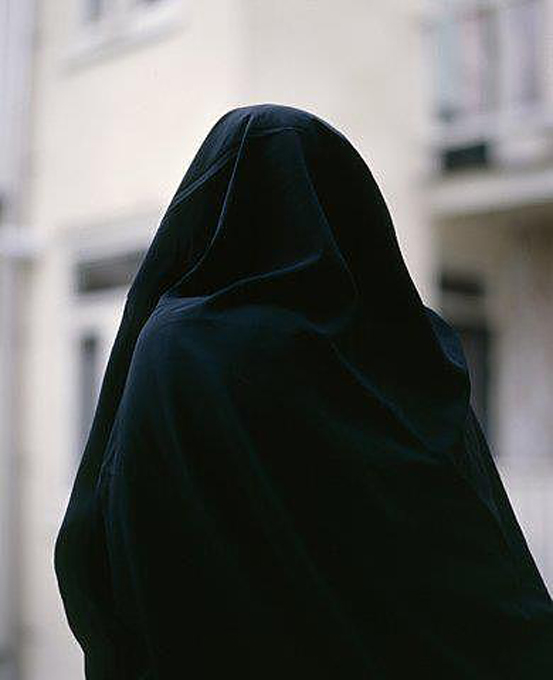
Muslim_Woman_in_black

How does a woman fulfill her relationship with Allah Most High, and at the same time, also serve the community?

There are many extremes in this.  For example, some people believe that women should not be educated at all; that they should be kept completely ignorant so that they don’t know anything beyond the basics of their faith. This is completely rejected by our deen. Mawlana Ashraf Ali Thanawi, for example, compiled the famous work Bahishti Zewar and aimed it particularly toward women. The comprehensiveness of the book suggests it is a work that ought to live on the bookshelf of every home and used as a guidance for every aspect of a woman’s (and indeed her family’s) life. Indeed, such is the usefulness of the book that it is not uncommon to find muftis using Bahishti Zewar as a reference point nowadays.

There is the other extreme, too. There are women who discover some Islamic knowledge by way of their own research and suddenly, they believe they are qualified to derive and deliver Islamic rulings. Seeking knowledge is commendable in its own right, as is the desire to follow Islamic rulings.  At the same time, one must realise that there is an established and functional system that exists for Muslims to acquire knowledge and rulings.  It is when individuals fail to appreciate and engage with this conventional, mainstream system that rogue, isolated and wayward ideas and theories are formulated.

There was a case a few years back where a woman gave the adhan for Friday prayer and another woman led a congregation of men and women.  Needless to say, both actions are contrary to the Shar’ia.  Of course, in both of these examples the women felt they were doing the right thing. Some would argue these women were bringing Islam into the twenty-first century by introducing gender equality to the mosque.  What the women failed to realize is that Islam welcomes individuals looking to revive the faith, but does not require individuals to innovate new practices. After all, Islam has its own code of equality which was established over a thousand years ago independent of any western ideas. Why would Islam suddenly need to be introduced to a modern-day conception of equality?

Here, I would like to mention narrations that show the role of women in education and transmission of knowledge from one generation to another. Undoubtedly, mothers are the first source of information for their children. A look into Islamic history throws up many examples of great scholarly figures like ibn Hajar al-Asqalani, Imam Bukhari and Muslim, and we find that they were brought up in the laps of their mothers. Who knew that young Abu ‘Abdillah Muhammad ibn Isma‘il of Bukhara, later known as Imam Bukhari, would shape the understanding of many Muslim scholars and laymen that came after him?   There can be no doubt that the mothers of these monumental scholars made a significant contribution to their success.  The famous idiom “Behind every great man is a great woman” could not be more relevant than in the life of Imam Shafi’i, who was brought up by his mother alone, who was a widow.   Clearly, many women get closer to Allah Most High than men do because of their devotion and sacrifice for Islam. This is something that our Prophet (Allah bless him and give him peace) did not overlook; our Prophet (Allah bless him and give him peace) would frequently consult with his wives.

Umm Salama (may Allah be pleased with her), the Wife of the Prophet (Allah bless him and give him peace)

The first example is a very famous incident about Umm Salama (may Allah be pleased with her) during the Treaty of Hudaybiya. The Companions travelled from Madina to Makka with the Prophet (Allah bless him and give him peace) to perform the umra but were prevented from doing so by the non-Muslim Makkans. The stand-off was overcome when an agreement—the Treaty of Hudaibiya—was signed, permitting the Muslims to perform umra the following year. Because the Muslims had come with a desire to perform umra this year, they were very disappointed and disheartened. The Prophet (Allah bless him and give him peace) asked them to shave their heads and sacrifice their accompanying animals, so they could come out of the state of ihram (pilgrim sanctity).  However, due to their disappointment, they appeared reluctant to do so.  So, the Prophet (Allah bless him and give him peace) went inside his tent with concern and told Umm Salama, his wife, about what was going on. She told him (Allah bless him and give him peace) to go and sacrifice his animal and shave his own head in front of everyone. The Prophet (Allah bless him and give him peace) came out from his tent and did exactly what Umm Salama (may Allah be pleased with her) suggested.  The advice of Umm Salama (may Allah be pleased with her) proved sound, as the Companions immediately tried to emulate the Prophet’s actions and thus carried out his command.

The Daughter of Abu Bakr, Asma’ (may Allah be pleased with them)

Asma’ bint Abi Bakr was a great Companion from the time she was young. She was the older sister of ‘A’isha and the daughter of Abu Bakr (may Allah be pleased with them all). When the Prophet (Allah bless him and give him peace) and Abu Bakr (may Allah be pleased with him) were migrating to Madinah, Abu Bakr (may Allah be pleased with him) took all of his wealth with him. He did not leave much behind for his family. In his home, there were a few family members; his two daughters, his blind father and perhaps one or two other people. Abu Bakr’s father kept complaining and asking about what Abu Bakr had left behind for them. So Asma’ (may Allah be pleased with her) got some pebbles and covered them up with a cloth and then took her grandfather’s hand, letting him feel the pebbles from over the cloth. Thinking they were coins, the grandfather said that Abu Bakr has left a lot for them. From this we can see how Asma’ (may Allah be pleased with her) used her wit to deal with the situation.

The Daughter-In-Law of Umar bin Khattab (may Allah be pleased with him)

When ‘Umar ibn al-Khattab (may Allah be pleased with him) was the caliph, he was patrolling the streets at night. He decided to take a break and was resting in front of a house. From inside the house he heard a mother and a daughter talking. The mother instructed the daughter to add water to the milk they had so that they would have more to sell. The daughter reminded her that the caliph had outlawed this practice. Though the mother retorted that the caliph wasn’t around to witness this rather dubious practice, the daughter asserted that Allah Most High was the Ever Present, the Ever Watchful and refused to do it.

Like any father, ‘Umar (may Allah be pleased with him) wanted pious spouses for his children. The following day, he ascertained that one of his sons, ‘Asim, was looking to get married.  ‘Umar (may Allah be pleased with him) proposed a marriage between ‘Asim and the girl and they got married. ‘Asim and his wife had a daughter who was known as Umm ‘Asim, who later on married ‘Abd al-‘Aziz ibn Marwan, the brother of ‘Abd al-Malik ibn Marwan (one of the powerful caliphs of the Umayyad dynasty). This daughter gave birth to the great caliph ‘Umar ibn ‘Abd al-‘Aziz. ‘Umar ibn ‘Abd al-‘Aziz was the one who, in a period of two and a half years, sorted out the situation of the Muslim ummah for a while and dealt with all the injustices that had taken place. So it can be seen how piety, especially in women, filters down to others because they have such a great influence and impact on their children and grandchildren.

Owing to the amount of time a mother and child spend together, a more direct and intimate relationship is established. It could be said that the mother’s characteristics are passed down to her child and therefore there is great responsibility on a mother to be an excellent role model.

The Daughter of Imam Malik

It is said that when Imam Malik, a great Imam of fiqh and hadith, was teaching, there would be pin drop silence despite the very large class size. The respect he had for the prophetic hadiths would also be seen in the people who listened to him; people would sit in awe whilst studying hadith with the Imam. The Imam would listen to his students and whenever a student would make a mistake, there would be a knock on the door near to where Imam Malik would sit to alert them to the mistake.  The knock was from his daughter who had memorized her father’s entire hadith collection, the Muwatta’.  Sometimes a young man would pass by the gathering and Imam Malik would remark that Allah Most High grants knowledge and tawfiq only to those He wishes. The boy, who was his son, was not interested in studying and when he would pass by, Imam Malik would make this comment. His daughter, on the other hand, was memorizing and learning from a young age. Imam Malik never prohibited her from engaging in the class. After all, she was observing the etiquette of hijab. There has been no prohibition for women studying the religion as long as the rules and regulations of hijab are observed.

The Daughter of ‘Allama Samarqandi

Among the Hanafi scholars of the 4th and 5th century, there is a great scholar by the name of ‘Allama Samarqandi, the author of Tuhfat al-Fuqaha’ (The gift to the jurists). Among his students was Badr al-Din al-Kasani who also became a great jurist, may be even greater than his teacher. Among the other students of Allama Samarqandi was his own daughter. She was such a great jurist that many people asked for her hand in marriage but she refused. She said that she would only marry someone who could teach her something new. ‘Allama Kasani wrote a commentary on his teacher’s work called Bada’i’ al-Sana’i’. He presented the work to his teacher and when she read it, she realized and appreciated the knowledge that he possessed and accepted his proposal.  Thereafter, all subsequent fatwas issued by this household were jointly signed by the father daughter and son-in-law.  This shows that a woman, too, can be a muftiya and jurist. Unfortunately, we do not see enough of this today. The more sacred knowledge that a woman sincerely acquires, the more observant she becomes of her religion and the more she becomes modest in the sight of Allah Most High.

The mother of the last ruler of Granada, Spain

‘A’isha Umm Muhammad was the mother of Muhammad, the last ruler of Granada, Spain. On the day that he had to surrender Granada to the Christians, he began weeping. What his mother said to him on this occasion has been written down in books and recorded in history. She said to her son:

“O person of vile nature, were you not from noble Arab ancestry? I am ashamed that you were born to me. Your senselessness and impotency has ashamed me to even own you. Were a stone born to me instead!Don’t cry today like a woman over what you could not defend like a man.”

Such was his mother. Instead of succumbing to the maternal instinct of consoling her child, she objectively accounted her son.  This is a great example of how women, at times, keep their senses in situations where men may become despondent and defeated. This is really important given a woman’s influence within the Muslim community. Nobody is going to deny a woman’s contribution to the Muslim society as long as it is done in the right way. The problem we have today is that people are pursuing liberalism and buying into aspects of extreme feminism.  Though some goals of it may be praiseworthy, it is largely misguided.

Motherhood is an extremely cherished concept not only in our faith, but in any human civilization. The problem with some feminists is that motherhood is looked down upon. A woman that chooses to be a housewife or a full-time mother is perceived as less successful than a career woman. A woman being on the board of a big company, meanwhile, is a special thing; it seemingly raises her esteem in the eyes of others and almost gives people a cause for celebration.  But a woman raising great sons and daughters, for example, doesn’t really attract the same kind of celebration. Celebration of motherhood is very important. The way to deal with feminism today is to celebrate motherhood as much as possible.

Celebration of Motherhood: the Story of Hajar (Upon Her be Peace)

Hajar (upon her be peace) was left in the desert by her husband Ibrahim (upon him be peace) according to the command of Allah Most High. She had nothing. No food. No extra clothing. No water.  Ibrahim (upon him be peace) did not even initially provide her an explanation as to why he was leaving her there in Makka. He just took her there, turned around and started to leave. She managed to ask whether this was according to a command of Allah Most High. When he responded in the affirmative, she told him that Allah Most High will not abandon her. Immediately, her maternal instincts kicked in. Her son became thirsty, and she began to run back and forth searching for water seven times in between the mounts of Safa and Marwa. This act of hers was so significant that, thousands of years on, millions of Muslims still emulate this action of hers as a rite of hajj.  Her action of searching for water appeared so simple but Allah Most High made it so significant. It is an achievement of motherhood. It is from this event that we get the blessed water of ZamZam. One could say zamzam is a gift of motherhood.  Also, this is probably the only religious rite the world over in the major religions that celebrates a woman’s action.

The Story of Umm Sharik (may Allah be pleased with her)

At the time of the Prophet (Allah bless him and give him peace), there was a female Companion by the name of Umm Sharik (may Allah be pleased with her). She embraced Islam early on and was a very active member of the community. Umm Sharik decided to give da’wa to the people of the community. She went to the houses of those who were not Muslim and talked to the women about the new faith of Islam, and they started embracing it. Umm Sharik was very successful, and eventually, her tribe found out what was happening. They wanted to punish her and stop her propagation. Her tribe was travelling somewhere and she was tied up outside a tent in the hot desert without any water or shade for several days. After a few days, she became dehydrated and was completely disoriented, so much so, that she did not know what was happening anymore.  One day at noon, when the sun was at its peak and it was really hot, the members of her tribe retired into their tents to take an afternoon nap leaving her alone outside. At this point, she suddenly saw a pot of water coming down from the heaven towards her. She drank from it. It moved away, then it returned and she drank from it again until she was completely satiated and refreshed. Once her tribe woke up and they saw how refreshed she was, they began to wonder what had happened. She told them about the occurrence and how she had received the water, but nobody believed her. They said that she must have taken the water from their supplies somehow while they were asleep. The tribespeople began to check their water supply and found that no water was missing. It was at this point that the truth of her words dawned on them and they all accepted Islam. Her example shows us that if the active people in the community take their obligations seriously, then they can be a source of guidance for their entire community. Likewise, if people are active in wrongdoing, it can filter down to their community and bring about unwanted consequences.

Most problems today exist because of ignorance. There are individuals who are successful in their secular work or career but are not too concerned about their faith.  Sometimes, when such people decide to do something for their faith, they may do so with a lot of zeal but it is generally with superficial knowledge of the faith.  Their Islamic knowledge is sometimes not even enough to get them through their day-to-day obligations, let alone refute or convince others. Such people then stand up to defend the faith against Islamaphobia and other vile attacks against Islam. Although their intention may be praiseworthy, their defense takes the form of “reforming the faith.” They end up trying to apologetically convince people that Islam shares the same values as the secularists, and suddenly you have women leading Friday prayers, calling the adhan and other such activities that are unsanctioned in the faith. These people feel they are sincere in their faith, and want to do something for it, but often forget they lack the correct knowledge or qualification. So out of their ignorance, they engage in ideas and actions that are contrary and far removed from Islam. Such people think they are helping Islam, when, in fact, they are actually hurting it.

Establishment of the Qarawiyyin University

While the famous Azhar University is commonly known as being the first university to be established back in 361 A.H., there already existed another less famous university called Jami’ al-Qarawiyyin in Fez, Morocco.  The Qarawiyyin was founded and built by a woman called Umm al-Banin Fatima bint Mohammed ibn Abdillah al-Fihri. Her father was very wealthy and had taught her well. She was a jurist, and used her inheritance to build Qarawiyyin, a madrasa for students to stay in and learn sacred knowledge. Similarly, Fatima’s sister, Maryam bint Abdillah, founded the Jami’ al-Andalus on the other side of Fez. These women used their wealth for the cause of Islam and did something no man had hitherto accomplished. Similarly, the wife of the caliph Harun al-Rashid had a water canal built, called the Zubayda Canal in Makka, as a water source for the pilgrims to address the difficulty that existed of a reliable water supply. An impressive aqueduct was used to carry the water to the pilgrims and can still be seen today.

These examples show that women, like men, can be activists, savvy problem solvers and visionaries. Unfortunately, there are some people who are suppressed so much that they feel they cannot do anything for their faith, while on the other hand there are those who become prey to the Shaytan, and their misplaced zeal leads them to focus on the absolute wrong things and they end up dividing the community.

The Daughter of Sa‘id ibn al-Musayyab

Sa‘id ibn al-Musayyab was a great tabi’i (an immediate successor to the Companions) also known as the leader of the tabi‘in (sayyid al- tabi‘in). His daughter learned all the hadith that he knew. She was so beautiful and knowledgeable that many people sought her hand in marriage. ‘Abd al-Malik ibn Marwan who became the caliph of the Ummayyads also asked for her hand in marriage but Sa‘id ibn al-Musayyab refused. He had her marry an impoverished student of his. Once after marriage, her husband put on his cloak to leave the house. She asked where he was going and he said to study with her father. She told him to take his cloak of and sit down and she would teach him the knowledge of Sa‘id ibn al-Musayyab. Her husband said about her that she was the most beautiful and the most knowledgeable about the Sunna, and she knew the rights of her husband.

Hadith on the Reward for Women

Women are getting rewarded automatically for doing things that they have to do as part of their human life cycle. They are getting the same reward that men would get for doing things which take a long time to do. They are getting so many rewards in those nine months and beyond. Allah Most High has made both men and women different but at the same time they both can achieve the great stations in the sight of Allah Most High.

Asmaa bint Yazeed (may Allah be pleased with her) came to the Prophet (Allah bless him and give him peace) and said may my father and mother be sacrificed for you O Messenger of Allah. I am a representative of the women to you. God has sent you as a messenger to all the men and women, we have believed in you and your God.  Now we women have been confined to the houses, we bear your children, men have been preferred over women in terms of Friday and the other congregational prayers, visiting the sick, attending funerals, doing hajj after hajj, and more than that, jihad in the path of Allah. When you men go out for hajj, umra, or jihad, we look after your property, we weave your clothes, and we bring up your children. Will we not share with you in the reward? [Note here that the women aren’t seeking to do what men do; they recognise their responsibilities but want to know if they will get a share of the reward.] The Prophet (Allah bless him and give him peace) then completely turned around to the companions and said to them, ‘Have you heard any woman asking about her religion better than this?’ They said, ‘O Messenger of Allah, we never thought any woman could have been guided to do this’. Then the Prophet (Allah bless him and give him peace) turned to her and said ‘Understand O woman, tell the other women behind you, that a wife looking after her husband, seeking his contentment and going along with him is equal to all that.’ The woman went back with her face shining with happiness (Usd al-Ghaba1:1313).

A woman looking after all of her husband’s interests, playing the role of the mother and the woman of the house, is getting an equal amount of reward as her husband when he is out earning a living and generally meeting all his obligations.  The woman is playing a great role which is important for the progeny to continue and for the family to work as a whole.

Shaykh Akram Nadwi, in his book the Muhaddithat, the female hadith scholars in Islam, has compiled numerous volumes on the lives of the women hadith scholars. In his introduction, he writes, “I have worked through much material over a decade and I have spent more than ten years compiling biographical accounts of nearly eight thousand muhaddithat.”  Interestingly, he notes that not one of them has been reported to have considered the domain of family life inferior or to have neglected the duties therein or considered being a woman undesirable or inferior to that of a man.

These stories and incidents are only a few examples to show us the zeal of women, their willingness to participate in society and their desire to achieve great feats in this world. Crucially, women can achieve all this, whilst at the same time playing the role of a daughter, a sister, a wife and a mother.

Transcribed by Rabiah Nargis

Edited by Abdul Aziz

Categories
Personalities

Advice to Students (Studying Islam)

Sayyidi wa sanadi Shaykh Mufti Mohammad Taqi Uthmani (Allah preserve him) gave the following advice to a group of students:

kitab

1) Sacred knowledge is of no use or benefit to the aspiring students unless they act upon their knowledge and base their works upon it. And the most beneficial of works is that which brings one closer to the obedience of Allah Most High.

2) The students must purify their intention as to why they are seeking knowledge. Their intention must be purely and sincerely for the sake of Allah Most High.

3) The students should firmly adhere to the Sunnah (life-example) of the Prophet Muhammad (peace and blessings be upon him) in every aspect and circumstance of their life.

4) The  students must be constantly turning back to Allah Most High (ruju’ ilal-Allah) through their life journey, in all situations. Returning means to seek help from Allah against all difficulties and challenges, to seek to please Him, to seek protection and forgiveness from Him, and to be grateful and humble to Him.

5) The student of knowledge must  make lots of supplication (dua’) to Allah Most High, for every single one of his needs, whether they be needs of this world or the next.

Read more about Advice to Students (Studying Islam) – Islamise by www.islamise.co.uk

Categories
Muslim men

Masjid or Musalla?

By Mufti Abdurrahman ibn Yusuf Mangera – 29 Ramadan 1425

masjid1

What exactly is a masjid? Is there a difference between a masjid, musallâ, and jamât khâna, etc? These are questions which need detailed discussion.

Nowadays, in the west, many Islamic Centers being managed include, among other things, a prayer hall, musallâ, or jamât khâna. Some communities rent an industrial unit, a store front, a house, or an apartment in which members of the Muslim community gather to perform congregational prayer (and in many cases social activities). Many communities actually have purchased property which they consider their masjid.

Which of the above can technically be considered a masjid, and what are the related rulings?

There is a difference between a masjid and a musallâ (or jamât khâna). A musalla (or jamât khâna) literally means a place where prayer is performed or where congregations are held, or worded differently, any temporary place in which worshippers congregate to perform their prayers. A musalla is also a place that has not been made an endowment or not yet intended to become a permanent masjid until the Last Day. In many cases, it is a temporary place from which the community will transfer once they find a more suitable, convenient, or permanent location. Though Muslims today commonly refer to their “musallâ” as their “masjid,” which the literal meaning of masjid (a place where the prostration is made) allows, a musallâ cannot technically be considered a legal [shar’i] masjid. Likewise the reward for prayer in a musallâ is not the same as in a proper masjid.

The Masjid

The masjid is a sanctified area, in which the rewards of prayers in congregation increase 25 to 27 times and where the mercy of Allah descends. It is considered the best of places by the Messenger of Allah (upon him be peace). Ibn ‘Abbas (may Allah be pleased with him) relates:

Masjids are the houses of Allah on the earth. They shine up to the inhabitants of the heavens just as the stars in the sky shine down to the inhabitants of the earth (Tabarânî).

A true masjid, in the legal sense, is a place that has been permanently dedicated to Allah for the sake of prayer, recitation, and His remembrance. Any piece of land that has been dedicated permanently for the sake of congregational prayers will also become a proper masjid. The great Hanafî scholar of Egypt ‘Allâma Tahtâwî states:

Know that for it [piece of land] to be considered a masjid, a building [or structure] is not necessary. Tahtâwi, Kitâb al-Waqf, Ahkâm al-masjid and Qâdî Khân 4:712).

A masjid is normally made into a waqf or endowment (sometimes difficult to establish depending on the legal connotations of endowment in some countries). However, once a masjid is erected, it will always be a masjid and the property of Allah. It cannot return to being the property of any person or community even those who may have paid for establishing it. ‘Allâma Haskafî writes,

If the inhabitants surrounding the masjid wither away and the masjid becomes desolate, it will still remain a masjid according to Imam Abû Hanîfa and Imam Abû Yûsuf until the Last Day, and the fatwâ is on this opinion (Hâwî al-Qudsî)” (al-Durr al-Mukhtâr 3:371).

The Messenger of Allah (upon him be peace) said,

All the earth will disappear on the Day of Judgment with the exception of the masjids for they will join with one another (Suyûtî, Jâmi’ al-Shaghîr).

Designation of a Masjid

A masjid (to become a masjid) must be formally designated by the committee or persons in charge. They do this by defining the area it will occupy and its boundaries. Along with this they can designate other adjoining areas to be used as bathrooms, lobby, storage, etc. The latter however will be considered the auxiliary areas of the masjid and, though part of the endowment, will not classify as “masjid” area that was previously defined by the committee. Therefore, it is possible, for example, to designate only the front half of a large hall (i.e. the first 10 rows) as the “masjid,” while the rest of the hall is classified as a musalla. Once the front half has been designated as such, then that part, both above and below it, becomes a shar’i masjid. This means that neither above it nor below it on any floor can be used for anything but as a masjid. Hence, all rulings that apply to a masjid will now apply to the exact same area directly below it on each of the lower floors (including the basement); and likewise on all floors above it. Constructing toilets, bathrooms, or holding any non-suitable activities above or below the “masjid” area will also be impermissible. However, it is permissible to have toilets or bathrooms constructed out of the boundary of the designated masjid area on any of the floors, since those areas will be considered the auxiliary area of the masjid and not technically the masjid itself. ‘Allâma Haskafî writes in his well-accepted text al-Durr al-Mukhtâr:

“It is prohibitively disliked to have sexual intercourse above the masjid. Likewise it is disliked to urinate or defecate above it because it is a masjid to the peaks of the heavens (Ibn ‘Abidîn adds, “Likewise to the recesses of the earth below”) … it is disliked to enter any impurity into it.… [However] these are not disliked above a room which has been just set aside as a masjid [in a person’s home] nor in the room itself, since that is not a shar’i masjid.… It is permitted for those in a seminally defiled state or menstruating women to enter into it [i.e. a musalla or place especially prepared for ‘Id or funeral prayer] just as is permitted into the extended yard of the masjid [i.e. the overflow area].… (al-Durr al-Mukhtâr with Radd al-Muhtâr 1:441-442).

Hence, no area of the actual masjid prayer area can be excluded from the masjid once designated as a masjid. However, before the plans are finalized and the area is designated a masjid, portions can be excluded from any of the floors above or below where the masjid will be, to be used for something else that is related to the masjid, for instance, a storage area, office for the imâm, a basement for storing masjid amenities, a shop to bring in income for the masjid, etc. Ibn ‘Abidîn writes in his Radd al-Muhtâr,

If they build a room above it for the imam then there is nothing wrong with that, because that is part of the welfare of the masjid. However, once the construction [designation] of the masjid is completed then they want to add a room, it will be prohibited [to change the designated masjid area and add a room for something else in it]. If the committee states that we had intended to do such, their statement will not be upheld [in court] (Radd al-Muhtâr 3:371).

Likewise the Egyptian jurist Ibn Nujaym writes,

It states in the Mujtaba that it is not permitted for the guardian of the masjid to build shops in the masjid or in its courtyard [i.e. the courtyard in which salats are performed during summer in hot countries – also known as the external masjid] (al-Bahr al-Râ’iq 5:249).

Storage Areas and Water Reservoir Above or Below a Masjid

A masjid can have a storage area above or below the actual prayer hall. The storage space below the prayer hall however must be used solely for the amenities of the masjid and must have been designated as such in the masjid’s design phase. Likewise, it would be permitted to have constructed a water reservoir underneath the masjid (as in some Muslim countries). It states in the al-Durr al-Mukhtâr,

If they make a basement beneath the masjid for its welfare [however, ‘Allâma Ibn ‘Abidîn adds here that this should be of limited area], it would be permissible just as is in the Masjid in Jerusalem (al-Durr al-Mukhtâr ma’a ‘l-Radd al-Muhtâr 3:370).

A Residence or Bathrooms Above or Below a Masjid

Although it is permissible to allocate certain parts of the masjid as a room for the imam and other uses from the original plan, bathrooms or a complete apartment for the imam should not be planned directly above the actual masjid area, even during the masjid’s initial design phase, since it is impermissible to have sexual relations, relieve oneself, etc., above or below a masjid. In any case, adding a residence or office to the existing masjid area will not be permissible after the masjid area is designated. ‘Allâma Ibn ‘Abidîn writes,

“It remains [to be ruled], whether it would be permissible if the person making the endowment designates lavatories [bayt li ‘l-khalâ’] to be directly beneath the masjid, as is the case in Masjid Mahallat al-Shahm in Damascus. I have not seen a specific ruling on this. Yes, it states in the Chapter of Endowments [of al-Durr al-Mukhtar] ‘If they make a basement beneath the masjid for its welfare it would be permissible’ so ponder” (Radd al-Muhtar 1:441).

Ibn ‘Abidin however only mentions this analogy between a storage basement and bathrooms in passing, stating that it is an issue in need of further deliberation. It is not based on any strong analogy.

Islamic Centres and Musallas Today

In the case of large Islamic centres today, which include a prayer hall, the prayer hall area could be considered the shar’î masjid, if it has been intended and designated as such. However, the adjacent rooms, such as the lobby, dining hall, children’s room, gymnasium, or offices would be considered as supplementary or extensions of the masjid and hence, not part of the shar’î masjid area, even though they would be part if the endowment [waqf] (i.e. not returnable to any one’s ownership), but the rulings would be different for the two as we will highlight below.

Women in Menstruation

A menstruating women or one who is experiencing post natal bleeding or a person in a seminally defiled state is prohibited from entering into a masjid. The Prophet (upon him be peace) said:

I do not make the masjid lawful for the menstruating women or the one experiencing post natal bleeding (Abû Dâwâd, Ibn Mâja, Tabarânî, Zayla’î has considered it sound [hasan] 1:193-194).

Young Children in the Masjid

It is unlawful [haram] to bring in infants or young children into the masjid if there is a possibility of them polluting the area of the masjid. If they are in diapers and less likely to pollute any part of the masjid, it will still be somewhat disliked (makruh tanzihan) to bring them as they could be carrying filth in their diapers (Radd al-Muhtar ‘ala ‘l-Durr 1:441, Al-Ashbah wa ‘l-Naza’ir, al-Qawl fi Ahkam al-Masjid 407). The Messenger of Allah (upon him be peace said.

Keep your infants and the insane away from your masjids (Sunan Ibn Maja, babu ma yukrahu fi ‘l-masjid).

Sleeping & Eating in the Masjid

It is disliked to sleep or eat in a masjid without the intention of i’tikâf or unless one is a traveler (al-Ashbâh wa ‘l-Nazâ’ir 407)

Congregation for Five Daily Prayers in the Masjid is a Communal Obligation

A congregation for the five daily prayers have to be established in a masjid otherwise the local inhabitants would be sinful for negligence, since it is a wâjib to perform the congregational prayers for the locals in the masjid. ‘Allâma Ibn ‘Abidin writes regarding tarâwîh prayer which is a confirmed sunna and not wâjib:

The apparent purport of their [jurists] statement is that it is a communal sunna to perform it [tarâwîh] in congregation in the masjid, to the extent that if they performed it in congregation in their homes, and no congregation took place in the masjid, they would all be sinful (Radd al-Muhtâr 1:473).

Hence, if this is the case for a confirmed sunna congregation, it would be more binding to have a congregation for every obligatory prayers in each locality. The Messenger of Allah (upon him be peace) said,

There is no salât for the neighbor of the masjid except in the masjid (Dâraqutnî, Hâkim from Kashf al-Khafâ’).

Conversation in the Masjid

It is likewise disliked [makrûh] for one to speak about worldly affairs in the masjid, ‘Umar (may Allah be pleased with him) had designated a special place outside the masjid where people could go and talk.  Ibn ‘Abidin writes,

(It is disliked to speak in the masjid) this is  regarding that talk which is of [a] permissible nature, [and] not regarding other than that which would warrant much greater sin (i.e. if one were to speak of it in the masjid) (Radd al- Muhtâr 5:269).

The Musallâ or Temporary Place of Prayer

All the above restrictions (i.e. that it is disliked to speak of worldly matters in the masjid, etc.) do not technically apply to a musallâ since it is a temporary place for worship. Hence, it can have apartments, bathrooms, etc., above or below it; or itself even turned into such (i.e. an apartment), once it is no longer used as a musallâ. However, it is recommended to treat it as a masjid, since it is being used for similar purposes.

A third floor musallâ within an industrial complex, which has other activities and businesses operating on the other floors (basement included), cannot be considered a shar’î masjid, but rather comes within the definition of a musallâ. ‘Allâma Haskafî writes,

If the basement was designated for any other use [i.e. not for the masjid] or he [the owner] made a room above it and faced the door of the masjid to the street [meaning he made it separate], then it cannot be a masjid. Hence he may sell it… [if he wishes, since it does not become an endowment] the same as if he had made [a portion from] the middle of his home into a masjid, and permitted for the adhân to be called therein – it would not become a masjid.

‘Allâma Ibn ‘Abidîn comments on this by saying:

The reason for the place not being a masjid is because the additional rooms are not designated for the welfare of the masjid. This is explicitly mentioned in the Is’âf, where it says, “If the basement or the floor above it is endowed for the benefit of the masjid or they were properly endowed for that then it would become a masjid (Shurunbulâliyya). It states in al-Bahr [al-Râ’iq] that the summary of this [issue] is that it is a condition for it being considered a masjid that the lower and upper floors need to [also] be a masjid, so that the rights [and ownership] of people is waived from it, as Allah says ‘And verily the masjids are for Allah…'” (Radd al-Muhtâr 3:370).

Although similar laws should be observed in a musalla as in a masjid, since it is emulating a masjid, it is not legally necessary. Therefore:

  • It would be permissible for menstruating women to enter into a musalla to attend classes or lectures.
  • Performing prayer therein would not hold the same reward as praying in a masjid although it would be more than in the home. A hadîth related by Ibn Hajar al-‘Asqalânî from ‘Abdullâh ibn ‘Amr ibn al-‘As states that the reward for a congregation with one’s family members (aside from in a masjid) holds 15 times the reward of praying alone, whereas praying it in the congregation in the masjid holds twenty five times the reward. Ibn Hajar al-‘Asqalânî concludes that the 25 times extra reward is confined to performing it in congregation in the masjid and not in a congregation performed at home. See Fath al-Bârî 106, Mirqât al-mafâtîh 3:145, and al-Bahr al-râ’iq 1:346
  • It would be permissible to eat or sleep in a musalla without having the intention of i’tikâf, which is necessary in the masjid for one to eat or sleep.
  • One can also perform Tahiyyat al-Masjid in a musalla.

A useful setup for women’s prayer could be that there be two room: one connected to the back of the men’s prayer area, which could be intended as being included in the shar’i masjid; and another room behind the first room, which could be a musalla or a multi purpose room for menstruating women or women with children to stay in.

http://www.zamzamacademy.com/2010/08/masjid-or-musalla/

Categories
Shaykh Saleem Dhorat

The Value of Humanity in Islām

By Hadrat Mawlānā Muhammad Saleem Dhorat hafizahullāh

Following atrocities committed in the name of Islām, such as those in Paris, once again misconceptions regarding Islām and Muslims make the headlines and infuse tensions in our society. I believe all of us are duty-bound to contribute to efforts that clear these misconceptions and misunderstandings and share the true nature of this beautiful religion.

The value of life

In light of Islām’s teachings of mercy and tolerance, it is impossible that oppression or the taking of innocent life is permitted in any circumstance. The life of every human, Muslim and non-Muslim, is equally precious and sacred. The value of life is captured in the following verse of the Glorious Qur’ān:

…whoever kills a person not in retaliation for a person killed, nor (as a punishment) for spreading disorder on the earth, is as if he has killed the whole of humankind, and whoever saves the life of a person is as if he has saved the life of the whole of humankind… (5:32)

As Muslims, we value human life irrespective of geography, race and gender. We do not distinguish between the poor and the wealthy, women from men, the less able from the able bodied, as a life is a life, hence sacred and precious. Therefore, a loss of life in any corner of the world is a cause of grief and sorrow for every true Muslim.

During such moments we pray to Allāh ta‘ālā, the Creator, that He grants everyone guidance and fills this world with peace and security. For those who have suffered loss of life, may Allāh ta‘ālā grant them patience and courage. If families have lost their breadwinner, may Allāh ta‘ālā safeguard them from want and poverty. May Allāhta‘ālā grant relief to all from oppression and give every human the good fortune to live in peace and prosperity.

When the hearts and minds of humans become corrupt, be they Muslims or non-Muslims, then they no longer remain human. In their eyes, the worth of a human life becomes devalued and no thought is given to who is being killed, how many are killed and how the lives of innocent people, children, the elderly and women are destroyed. There is total contempt for humanity.

We pray that Allāh ta‘ālā grant those involved in killing innocent people, whether they be individuals, groups or governments, the essence of humanity and the ability to recognise the value of human life.

Developing a proper understanding of Islām

Following the tragic events in Paris, there is a significant focus on Islām and Muslims. At this juncture I would urge my fellow citizens, Muslims and non-Muslims, to learn the teachings of Islām from practising Muslims with knowledge; not from the media. Those in the mainstream media, have not studied Islām in the correct manner and therefore do not appreciate the sciences of Islām and the relationship between them. Many times they comment on verses of the Qur’ān and Ahādīth which are out of context, as they are unaware of the method of how to interpret them and as a result reach incorrect conclusions and cause confusion. It is unfortunate that non-Muslims and ill-informed Muslims also express views based on their own interpretation, without the appropriate requisite knowledge. This has led to the distortion of Islām resulting in the misconceptions we see today amongst the general public, with regards to Islām and its teachings.

I therefore urge all Muslims to study and embrace the teachings of Islām and live their lives according to it. We need to deepen our understanding of the true essence of Islām by benefitting from reliable ‘Ulamā and reading authentic literature. This will enable us to spread the correct message to others and explain the true qualities, attributes and characteristics of Islām. We must also ensure our individual mistakes do not tarnish and distort the image of Islām and Muslims. We must all study Islām to the extent that we are able to present and explain, without any hesitation, the Islāmic point of view regarding topics that are commonly misunderstood by non-Muslims.

Bringing a change

We also need to bring a positive change in our lives by wholeheartedly turning to Allāh ta‘ālā and repenting sincerely from the disobedience to Allāh ta‘ālā. Not only have we neglected our Dīn on a personal level, we have also not shared its beauty with others; a major negligence on our part. In our current circumstances Tawbah and Istighfār will be extremely beneficial, as it is stated in a hadīth:

Whosoever holds fast to Istighfār, Allāh will make for him a way out from every difficulty and will grant him relief from every anxiety and will grant him sustenance from where he expects not. (Abū Dāwūd)

Let us refrain from every act of disobedience to Allāh ta‘ālā and become firm on our belief and worship. It is only when we become the personification of Islām through our dealings (mu‘āmalāt), social conduct (mu‘āsharat) and good character (husn akhlāq), that the true merciful and tolerant character of Islām will be observed and appreciated by all.

May Allāh ta‘ālā grant us all the tawfīq. Āmīn.