Categories
Current Affairs articles

Bangladesh, November 2022 – Charity Trip

Helping, caring and hospitality were some of the great characteristics of our Prophet SAW and the Sahaba RA. Merely having the opportunity to help our Muslim brothers and sisters is something we should be extremely grateful for. It is the poor and needy people who have given the likes of me and you the opportunity to fulfill one of the pillars of Islam and at the same time, the chance to bring the sunnahs of our Nabi SAW into our lives. Likewise, going out for the purpose of aid work gives one the opportunity to express deep gratitude for everything Allah SWT has blessed us with.

Going out to Bangladesh and the Rohingya camps had always been my desire. After following the Rohingya situation so closely back in 2017, and also hearing about the plight of our Rohingyan Muslims first hand few years prior to that created a deep pain in my heart. Since then, I constantly felt a tug inside to go out there, see the situation firsthand, and truly try to envision the suffering these people have been through and are still going through. These are our Muslim brothers and sisters; not only do we have this mighty connection with them but also the fact that they too are South Asians so are culturally very similar to us and would have lived a life very similar to our families back home.

*Cox’s Bazar – Rohingyan Camps* 

The plight and situation of our Rohingyan Muslims in the camps is something very hard to describe. The whole area is a world of its own, a whole world away from ours. There’s throngs and throngs of people everywhere you look, homes, if you can call them homes, so close to each other in proximity that you can actually feel the body heat emanating from the home next door – this camp is one of the most crowded and compact places in the world. No home in the camp is made out of bricks or concrete and no home is bigger than two rooms. No home has its own toilet facilities and no home has a direct water supply. Most homes have more than six people in there so you can imagine the intense heat during the hot and humid summer nights. The heat inside the homes felt more than the heat outside and it was only 30 degrees when we went. We have to remember that this place was a jungle before, it’s all a hilly area with every house on a hill –  once off the main street you are walking through narrow alleyways and small bamboo bridges.

The attitude of the people was all about gratitude, happy to be in a safe place, and trying to live life the best they can whilst trying to get as much support from charities as they can. Local people describe the Rohingyans as hard-working people and from what we saw, over the last few years they have helped build some kind of infrastructure to make the place a bit more livable.

As the midday heat made us sweat and swelter despite being in the shade, our Rohingyan brothers and sisters waited in the heat to pick up their food parcel, a parcel worth so little to us but so much to them. As 1000s gathered, the parcels started to diminish faster and faster and the atmosphere started to become more intense and of desperation; unfortunately, due to our safety the local Bangladeshi people told us to move onto our next project. We moved but the desperation is still there and the plight is dire.

As the day went by and we moved from camp to camp and project to project, we saw the different needs of the people, people who have now been here for over 5 years. Education and particularly an Islamic education is a desperate requirement. Why is this required and why now? There are hundreds of non-Muslim charities working in these camps, they are infiltrating their ideas and ideologies into the minds of these vulnerable people and especially children. A lot of children have not seen anything better; they notice that they are being delivered their education from non-Muslims, food, shelter and medical services all from non-Muslims. It starts off with a cross on a plastic bag and a ‘Hi!’ instead of ‘Assalamu Alaykum and the chasm between them and Islam slowly gets bigger and bigger.  Locals have mentioned that when the Rohingyans first came all the children used to say Assalamu alaykum to one another really loudly but now that’s a distant memory with most of them saying ‘Hi’ and ‘Hello’. It seems innocent and minute on the surface but there is a deeper and more sinister agenda behind it. They are adapting to the ways of the people who are looking after them.

The Rohingyans have the same requirements as us: the need for medical services, the need for proper doctor’s surgeries, hospitals and equipment. At one of the medical surgeries where the main basic services were provided, the Doctor mentioned that a lot of these people require mental health services due to the severe trauma they have been through. We tend to focus on physical health and the need to provide for that but the desperation for mental health support is equally important.

As the day went on we saw that many charities around the world are doing some fantastic work, showing care and love to the people and the local Al-Imdaad team on the ground was exceptional in providing everything from A-Z so that all the different projects can be delivered on time and in the right manner. They worked with constant smiles on their faces, and with an unmatchable dedication and commitment. At a number of different stages they wanted to show us every single house that was donated, but unfortunately due to the heat, location of the houses, and time constraints this was not possible. A lot of the team have now moved into the camp area to be closer to the people and their work. May Allah SWT accept all their efforts. Ameen.

*Bashan Char Island* 

Our trip to see our Muslim brothers and sisters continued the next day to Bashan Char island, an island 4 hours from the mainland and an island that only came into existence in the last 20 years due to silt deposits. This is an island that most human rights and environmental groups have said is not safe to live on. Despite this, the Bangladesh government’s desire to move the Rohingyans to this island was a firm one and in 2020 people started to get shipped to this island. Upon first viewing, we noticed that the island is well constructed, the roads, the homes, primary healthcare centres, a small hospital, and plenty of open space. I would go as far as to say the conditions are a million times better than the camps. Millions and millions of pounds have been spent on the island and it makes you question…why? Is it for the goodness and wellness of the Rohingyans or is it to get rid of the Rohingyans? Everything was really well organised, the place looks aesthetically symmetrical and everything has been well thought through…the cynic in me thinks a bit too well thought through at times. Each house was bricked on the outside, but on the inside bricked only three-quarters of the way up with the top quarter covered in barbed wired, which made the room look like an animal pen. Not only this, but everything can be heard by the neighbours on each of the sides resulting in zero privacy. I can’t tell you if this was done deliberately or just to save on cost, but i can say it will have a psychological impact on the people –  it’s about making them feel inferior.

What is the catch to this island and what are the steps going forward? The island allows the government to have 100% control over the Rohingyans and the catch is it is impossible for them to leave the island. Even we had to travel via a navy ship to the island. Going forward and after speaking to the Rohingyans there, the number one desire is to earn a living for themselves, they don’t want to be dependent on the government and aid. However, this is only possible if Bangladesh allows it. Interestingly, we were told they are looking into this.

The Rohingyans still have a longing and hope to go back to Myanmar one day but for now, this is home and this is where they want to make a living.

This trip has been full of eye-openers, from the camps to the island, we saw our Muslim brothers and sisters suffering 5 years on after being driven out of their homeland. No person should have to live in them conditions, no person should have to survive and be controlled by others, and no person should be desperate for basic necessities in life. 

The most important thing we can do is make dua for these people, that Allah SWT makes it easy for them and makes it safe for them to return to their home country. Remember, these are our Muslim brothers and sisters who have suffered so much and are still suffering today. I’d like to conclude with a hadith of the Prophet SAW: “A Muslim is the brother of a Muslim who does not oppress him nor hand him over, and whosoever is after the need of his brother, Allah will be after his need, and whosoever relieves a Muslim from the plight of distress, Allah relieves him from one of the plights of distress of The Day of Resurrection, and who enshrouds a Muslim, Allah will cover him on The Day of Judgement.”

I pray Allah makes us from those who are able to relieve the plight of others. Ameen.
Categories
Current Affairs articles

We Need One Ummah, Not One Eid

Eid Mubarak and Allah grant you goodness, Ameen!

Every Eid same drama, same “unity” palaver. But, hang on unity is from the Sunnah?

The Quran endorses unity. We forget the Qur’an and Sunnah teach us a lot of things… tazkiyah and purity of the heart being number 1. 

What is the point of one Eid when the hearts aren’t one? The hearts aren’t united?

What is the point of one Eid when we pray Salah shoulder to shoulder but the Ummah isn’t one? 

What is the point of one Eid when our marriages aren’t unified? Surtis don’t marry bharuchis and Indians don’t marry Pakistanis? 

What is the point of one Eid when your masjids don’t allow all Muslims to be members? When your Islamic schools give preference to members from their own village in India?

Can someone tell me what really is the point? I don’t understand. 

Have one Eid or a dozen Eids, but this Ummah will always be fragile and fragmented, until we learn to live like brothers.

Allah purify our hearts from hatred, jealousy and malice and unite this Ummah on the best day of the year. Ameen.

Ismail ibn Nazir Satia (one who is in dire need of Allah’s mercy, forgiveness and pleasure)

1 Shawaal 1443

Categories
Current Affairs articles Marriage

Let’s Talk About Colourism

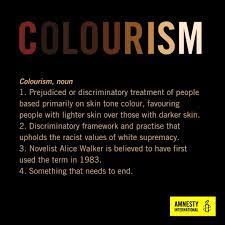
How many times have you heard within your family, something along the lines of ‘he’s really good looking and fair’ or ‘she’s so fair’ with their eyes lit up? How many times have you heard something like ‘it’s all good but he’s quite dark’ with a tinge of sympathy or ‘I hate getting tanned!’ In a tone that’s a little bit uncomfortable? This is colourism. Colourism is a form of heavy discrimination within the same race, it’s internal, it’s a ‘within your own people’ problem… and boy, don’t we all know about it. I still struggle to believe that in 2022, it is STILL an issue, still, a thing that’s got to be spoken about and still an innate disease stirring in and amongst us.

When the British ruled India, discrimination based on skin colour was most visible. The white British foreigners were symbols of power, authority and wealth and thus, light skin served as a signal of high status across the country. Those individuals with a lighter skin colour enjoyed more privileges from the British, were considered to have a more affluent status and gained preference in education and employment and darker-skinned individuals were socially and economically disadvantaged, and this disease continued…

This dangerous phenomenon of colourism passed on, to the extent that huge, ‘forward-thinking’ corporate brands such as L’Oreal have had no qualms in putting up gigantic billboards across the busy roads of India advertising their skin-lightening products with famous celebrities such as Priyanka Chopra (who, ironically, likes to push herself as a humanitarian) being the face of such companies. So, is it really any wonder that the power of colourism has crept into our South Asian psyche so silently and so dangerously, that today in 21st century Britain, we are still so wrapped up about the colour shade of our own people.

In a Hadeeth, it is narrated: ‘We passed by Abu Dharr (Allah be pleased with him) in Rabadha. Abu Dharr (Allah be pleased with him) said, “I had a quarrel with one of my brethren whose mother was of foreign descent, so I vilified him as ‘you son of a black mother’. He went to complain about me to the Prophet ﷺ. When the Prophet ﷺ met me (one day), he said, ‘Abu Dharr, you are someone who still displays Jahiliyyah (ignorance).’ Now, this Hadeeth might be focused on racism rather than colourism but the concept is the same. Discriminating and belittling because of the colour of the skin was deemed as ‘someone who still displays ignorance’ by our Prophet ﷺ. Our beloved Prophet ﷺ was a forward-thinking man, he was progressive in his ideologies and so for him, this was incredibly backwards. He remarked to Abu Dharr (Allah be pleased with him) that he ‘still’ displayed signs of ignorance so imagine if our Prophet ﷺ was to see that 1400 years later, we, the South Asian community, STILL have deeply entrenched traits of colourism within us. We still have marks of ignorance. We still haven’t progressed. We still think fair skin = excellence and dark skin = inferiority.

If we zoom in, we can observe that colourism has played a dark and ugly role in the field of matrimony. I use past tense, but a huge part of me says that should be corrected to the present tense and that colourism still rears its ugly head in marriages. It beggars disbelief when a mother refuses to accept a girl for her son because she’s ‘a bit on the dark side’. When asked for a potential spouse, ‘fair’ is a requirement. Yes, ‘fair’. They are flagrantly and unashamedly stating that a person with darker skin shade is not good enough for their family.

Colourism is heavily embedded throughout South Asian culture. The lack of melanin in your skin isn’t just used as a marking point of attractiveness, but the colour of your skin is frequently used to determine your self-worth. And this toxic rhetoric spills out of the household, out of our communities, and feeds into racism beyond our culture. If we don’t like dark-skinned Asians, we definitely don’t like the Black community – it’s an uncomfortable truth, isn’t it?

I’d like to think the tide is slowly turning. The international brand Unilever recently announced it would no longer use the word ‘fair’ in the name of its popular (in South Asian countries) skin-lightening cream Fair & Lovely. Johnson & Johnson has discontinued two skin care products that promote “fairness”. While, most recently, L’Oreal has stopped using the words “fair”, “fairness”, “light” and “lightening” on its products. So we have some progress. But that’s just the tip of the iceberg. Colourism is so deeply embedded in our communities from the top down and unfortunately, we still have a lot of work to do. We actively need to hold conversations around it to stamp it out properly. It’s a mindset that needs to be changed and reformulated. We have to be more alert to the micro aggressions that have become a part of our daily dialect, especially amongst the older generations (‘she’s so dark’ ‘you need to scrub your tan off’, ‘I wish I was fairer’…) and be brave enough to challenge them.

Ismail ibn Nazir Satia (one who is in dire need of Allah’s forgiveness, mercy and pleasure)

1 Dhul Hijjah 1443

Categories
Current Affairs articles

Superstition in Islam

Many people believe in superstitions so much that they alter their plans or behaviour in order to avoid what they call, “bad luck”. I witnessed this myself, first hand, as I was growing up. My grandmother was very superstitious. Her kitchen floor was always covered in salt because when she cooked she would add a pinch to the pot and throw some over her shoulder for “good luck”. She would actually cross the street and walk an extra block just to avoid the path of a black cat or go out of her way to get around an open ladder so that she would not have to pass under it. My grandmother did all of this for the sake of good fortune and the avoidance of danger.

https://www.khaleejtimes.com/editorials-columns/islam-has-no-place-for-black-cats-and-broken-mirrors

Similar superstitions existed during the lifetime of the Prophet Muhammad ﷺ. The pagan Arabs were especially steeped in superstitions related to birds. They believed seeing certain birds at certain times were good omens and seeing them at other times were bad omens. The pagan Arabs lived and often died as a result of their superstitious beliefs not because the superstitions had any power but rather due to their own ignorance.

Belief in superstitions is considered to be a grave act of shirk, or ascribing partners to Allah, which is the one and only sin that Allah Almighty will not forgive. Nothing in this world, whether it is living or inanimate, has any power save through Allah’s grace. Even by looking at the example of birds this is evident:

Allah Almighty says in the Holy Quran:

“Do they not see the birds held (flying) in the midst of the sky? None holds them but Allah (none gave them the ability to fly but Allah). Verily, in this are clear Ayaat (proofs and signs) for people who believe (in the Oneness of Allah)” (16:79)

This verse clearly shows that Allah is in command of the birds as well as all of Creation. Allah decides where birds fly or roost. The flight of birds is not dependent upon where good luck or bad luck resides.

Superstitions are a trick of the devil to lead humans further and further away from Allah so that on the Day of Judgment he will have some company in hell. The one who believes in superstitions truly has followed the devil and is no longer on the path, which leads to Allah. Prophet Muhammad ﷺ was once asked about superstitious beliefs and this is what Muhammad ﷺ said:

“The best of it is fa’l (belief in good omens) and it should not prevent a Muslim from going ahead (with his plans).

Ignoring superstitions will not harm us in the very least. In fact, by not engaging in shirk we are more likely to please Allah which might actually save us from what we feared in the first place. On the other hand, the one who obeys the devil and their superstitions is more likely to fall right into the disaster they were so keen to avoid! Poetic justice perhaps? However, even if we avoid the belief in superstitions completely bad things may still happen to us. That does not mean the superstitions were correct rather it is in the timing of Allah’s Decree. All things that happen to us, good and bad, come at a time appointed by Allah as a means to test who is the best in faith.

Allah Almighty says in the Holy Quran:

“No calamity befalls on the Earth or in yourselves but is inscribed in the Book of Decrees, before we bring it into existence. Verily, that is easy for Allah.” (57:22)

By not allowing superstitions to guide your life and decisions, you can slam the door right in the devil’s face. Place all of your trust in Allah Almighty who is the Only One deserving of it.

Black Cats

It is permissible to have cats and breed them on condition that you fulfil their rights, even if they are black in colour. But it is better not to get black cats because Shaykh Ibn Taymiyyah (Allah have mercy upon him) mentioned that the jinn may take possession of a black cat, like the case of a black dog, as he said, “The black dog is the devil of the dogs and the jinn take his image much, as well as the image of a black cat because the black colour gathers the satanic forces and it and black has the strength of heat.”

This is possible. Jinns do have the ability to take the form of a creature or serpent. Rasulullah ﷺ is reported to have said:

“A group of Jinn residing in Madinah have accepted Islam, so if any of you see any of these creatures (snakes/scorpions etc.) then he should warn it (to leave) thrice. If it still appears then kill it, for verily it is a Shaytan. “(Sahih Muslim: 2236)

Hafiz Ibn Taymiyyah (rahimahullah) states:

“Jinn can come in the form of black dogs. Similarly they can also come in the form of black cats” (Majmu ‘ul Fatawa, vol. 19 pg. 52)

However this does not mean that every black cat is a jinn. All that this means is that it is possible for a jinn to appear in the form of a black cat.

It was narrated from Anas ibn Malik (may Allah be pleased with him) that the Prophet SAWS (peace and blessings of Allah be upon him) said: “There is no ‘adwa (transmission of infectious disease without the permission of Allah) and no tiyarah (superstitious belief in bird omens), but I like optimism.” They said, “What is optimism?” He said, “A good word.”  Narrated by al-Bukhari (5776) and Muslim (2224). 

It was narrated that ‘Abdullah ibn Mas’ood said: The Messenger of Allah (peace and blessings of Allah be upon him) said: “Tiyarah (superstitious belief in omens) is shirk.” Narrated by al-Tirmidhi (1614)

Shaykh Muhammad ibn Saalih al-‘Uthaymeen (may Allah have mercy on him) said: 

The word tiyarah is derived from the word tatayyur, which refers to superstition about something that is seen or heard; or it was said that it refers to superstition about anything ,whether it is something that is seen or heard, or a time or place. This is more comprehensive as it includes things that are not seen or heard, such as superstition about certain times. 

The basic meaning of tatayyur is pessimism but reference is made to birds (tayr) because most of the superstitions held by the Arabs have to do with birds, so it was connected to them. But the general definition is superstition based on something that is seen, heard or known. 

The Arabs used to regard certain birds, times and persons as unlucky, and this is shirk as the Prophet ﷺ said. 

If a person opens the door to superstition, the world will become a hard place for him and he will imagine that everything is a bad omen. There are even some people who, if they get up in the morning and go out and meet a man who only has one eye, they will regard it as a bad omen and say: Today is a bad day, so such a person will close his shop and not sell or buy anything – Allah forbid. Some of them regarded Wednesday as unlucky and said that it was a day of bad omens and bad luck, and some of them regarded the month of Shawal as unlucky, especially for weddings. The case of ‘Aa’ishah proves that this superstition is wrong, because the Prophet (peace and blessings of Allah be upon him) married her in Shawwal and consummated the marriage with her in Shawal, so she used to say: “And who among you was more beloved to him than me?” Narrated by Muslim. The answer is: No one. 

What matters is that no one should pay any attention to superstition, because it will spoil his life. What we should do is follow the example of the Prophet (peace and blessings of Allah be upon him) who liked optimism, as was narrated by al-Bukhari and Muslim. We should be optimistic, not pessimistic, like some people who try something time after time, then they become pessimistic and think that they will never succeed in it, so they give it up. This is wrong, because if you think that something is good, you should not give it up at the first attempt; try again and again until Allah makes it easy for you. 

Al-Qawl al-Mufeed Sharh Kitaab al-Tawheed (2/39-41); Majmoo’ Fataawa al-Shaykh Ibn ‘Uthaymeen (9/515, 516). 

Superstition is only mentioned in the Qur’an as something followed by the enemies of the Messengers, which indicates that the one who follows it and believes in it is as ignorant as those people, to the extent that he believes in these notions. 

Imam Ibn al-Qayyim (may Allaah have mercy on him) said: 

Allah does not mention superstition except on the part of the enemies of the Messengers, as they said to their Messengers (interpretation of the meaning): 

“ ‘For us, we see an evil omen from you; if you cease not, we will surely stone you, and a painful torment will touch you from us.’

They (Messengers) said: ‘Your evil omens be with you! (Do you call it ‘evil omen’) because you are admonished? Nay, but you are a people Musrifoon (transgressing all bounds by committing all kinds of great sins, and by disobeying Allaah)’” [Yaseen 36:18, 19]

And Allah tells us about the people of Pharaoh (interpretation of the meaning): 

“But whenever good came to them, they said: ‘Ours is this.’ And if evil afflicted them, they ascribed it to evil omens connected with Moosa (Moses) and those with him. Be informed! Verily, their evil omens are with Allah” [al-A’raaf 7:131]

Miftaah Daar al-Sa’adah (3/231, 232) 

Al-Hafiz Ibn Hajar (may Allah have mercy on him) said of the people of the Jahiliyyah: 

Most of them believed in bird omens and relied in that, and they usually came true for them, because the shaytan was making it appear attractive to them, and some traces of that are still present among many Muslims. 

Fath al-Bari (10/213). 

In order to deal with this pessimism which the shaytan instils by whispers and makes attractive to people: 

1 – Put your trust fully and properly in Allah. 

It was narrated that ‘Abdullah ibn Mas’ood (may Allah be pleased with him) said: The Messenger of Allah (peace and blessings of Allah be upon him) said: “Tiyarah (superstitious belief in omens) is shirk, and any one of us may think he sees an evil omen but Allah will dispel it by means of trust in Him (tawakkul).”  Abu Dawood (3910)

Ibn ‘Abd al-Barr (may Allah have mercy on him) said: 

It is proven that the Prophet (peace and blessings of Allah be upon him) forbade tiyarah and said “There is no tiyarah.” That is because during the Jahiliyyah they believed in superstitious omens, and he forbade them to do that and told them to put their trust in Allah, because nothing happens except by His decree and no one has any knowledge of the unseen but Him.  

Al-Tamheed (24/195). 

2 – Go ahead with what you want to do, and do not delay it or change your mind. 

3 – Pray to Allah to free you from this trap of the shaytan, and ask Him for that which is good, and seek refuge with Him from evil. 

It was narrated that ‘Abdullah ibn ‘Amr (Allah be pleased with him) said: The Messenger of Allah (peace and blessings of Allah be upon him) said: “Whoever lets tiyarah (superstition) stop him from doing something has committed an act of shirk.” They said, “What is the kafarah (expiation) for that?” He said, “To say: Allahumma la khayra illaa khayruka wa laa tayra illaa tayruka wa laa ilaaha ghayruka (O Allah, there is no good except Your good, no birds except Yours, and there is no god beside You).”  Narrated by Ahmad (7045)

Types of superstitious belief in bad omens, ancient and modern:

  1. Certain beliefs about days or months, such as Safar and Shawwaal.
  2. Certain belief about birds, such as crows and owls.
  3. Certain beliefs about animals, such as snakes, black cats and monkeys, or their movements, such as the passing of gazelles.
  4. Certain beliefs about types of people, such as a one-eyed man or a hunchback.
  5. Certain beliefs about numbers, such as 13 among the Christians, 7 among the Bedouin and 10 among the Rafidis; in the latter case because they dislike the asharah mubashsharah (the ten Sahabah who were given the certain promise of Paradise) with the exception of Ali (Allah be pleased with him). Hence they will say nine plus one instead of ten.
  6. Certain sounds, such as the voice of a crow or the sound of an ambulance or fire truck.
  7. Frightening or disturbing dreams.
  8. Colours, such as the colour of blood, or yellow.
  9. When the eyelashes of the left eye tremble involuntarily, they say, something bad is going to happen to us.
  10. Calling a child by the name of a living person, such as the father or mother and so on.
  11. Witnessing an accident or a fire in the morning.
  12. Seeing one’s wife’s mother in the morning.
  13. When the right hand or right foot itches.
  14. Stepping over a child
  15. Cutting one’s nails at night
  16. Sweeping the house at night
  17. Refusing to do laundry on Mondays
  18. Opening the scissors and closing them without a reason causes family problems
  19. Twitching of the eyes
  20. Hazazah for the child who has hiccups. They collect any amount of money, whatever it is, from seven people whose name has to be Muhammad, and they take it to a blacksmith to make what they call hazazah, which they then place on the child’s clothes to take away the hiccups.
  21. After giving birth, when the woman is still in the state of nifas or postpartum bleeding, no other woman should enter upon her who has her monthly period, because that will prevent her from having children.

It is not permitted for the Muslim who believes in Allah as his Lord, Islam as his religion, Muhammad ﷺ as a Prophet and Messenger, and in the divine decree, both good and bad, to think that any being, entity or quality can have a specific effect in bringing good or warding off harm, as there is no evidence in shareeah to that effect. This is part of the legacy of jahiliyyah (ignorance) which has been cancelled out by Islam and is regarded as being shirk which negates perfect Tawheed, because it is insinuating thoughts (waswaas) and scare tactics from the Shaytan.

It is like the attitude of the people of Pharaoh, about whom Allah said (interpretation of the meaning): But whenever good came to them, they said, ours is this. And if evil afflicted them, they ascribed it to evil omens connected with Moosa ﷺ and those with him [al-Araaf 7:131]. If some disaster or drought befell them, they blamed it on evil omens which they associated with Moosa ﷺ and the believers with him, but Allah refuted this and said (interpretation of the meaning): Verily, their evil omens are with Allah [al-Araaf 7:131].

Ismail ibn Nazir Satia (one who is in dire need of Allah’s forgiveness, mercy and pleasure)

15th Shaban 1442

Categories
Current Affairs articles

Suicide: Hate the Sin, Not the Sinner!

https://www.youtube.com/watch?v=TV8r4HC2BPs&t=739s

If you are a Barelwi and you always stick up for Barewlis, understand this isn’t Islam.
If you are a Deobandi and you always stick up for Deobandis, understand this isn’t Islam.
If you are a Salafi and always stick up for Salafis, understand this isn’t Islam.
This is called following your ego, and we have many “ego bhais” in ALL societies. 

The same applies to Indians and Pakistanis who stick up for their own… follow Islam and don’t get so so defensive!

If Ulama showed a bit of humility then I wouldn’t need to take to such platforms, we always believe in telling people privately, unfortunately, they don’t always listen. Shame on some Pakistanis and Pakistani Ulama who showed a lack of sympathy towards the poor girl who committed suicide, Ayesha Banu, from India (Allah have mercy upon her).


We all know suicide is Haram. The video of Mufti Tariq Masood saheb where he says, “don’t have mercy upon her” further he make jokes about suicide was TOTALLY insensitive. We all know Mufti Tariq Saheb is very humorous, but so is Mufti Ismail Menk. But the video of Mufti Ismail Menk was far more sensitive and considerate and heartfelt. Defensive Pakistanis said that Mufti Tariq Saheb is humourous, I am sorry Mufti Ismail Menk is far more humorous? He didn’t laugh, nor make jokes, he didn’t even smile. He said we need to look at Ayesha’s background and what led to her suicide. Mufti Tariq didn’t do this, he didn’t even know if the story was true? (A quick google search would have helped mufti saheb). As Ulama, before we do a lecture on ANY topic we are told to do research and motala. Something as sensitive as suicide needed background information on the girl and her story. If you don’t have time, don’t do a bayan.


I have followed Mufti Tariq Masood for years, he is a good speaker. But the reason I’ve had to point this out is due to Pakistanis and Pakistani ulama who are pure and plain defensive. They can’t accept a word against their ‘pukstani ulama’. That’s not following Islam, that is following your ego. I actually don’t follow Mufti Ismail Menk, but we give credit where it’s due, Alhumdu Lillah!

The second category of people I want to call out are the narrowminded Deobandis. They have totally dismissed Mufti Menk’s video, you know why? “He’s not one of us….” Astagh firullah! Disgusting…

“Accept the truth even, if it is from a child.” Fudhayl ibn Ayadh RH.


I am also Deobandi, but we cannot be so narrowminded. Our true akabir and pious predecessors did not ignore the truth when it reached them, they were humble and accepted, even if they were wrong (naturally, they also made mistakes).
A girl lost her life due to domestic violence and long-suffering. And all Pakistani ulama can do is massage their ego? “We are right…” I just hope it’s not because she was “Indian.” Pakistanis pipe up very quickly against Gujaratis and Gujarati racism… we accept that there is racism in Gujaratis. But dear Pakistanis, you also need to accept this maxim, “if you want to criticise others, learn to accept criticism.”

Ismail ibn Nazir Satia (one who is in dire need of Allah’s forgiveness, mercy and pleasure).

29 Rajab 1442

Categories
Current Affairs articles

Twenty Lessons from 2020

Ali (Allah be pleased with him) once was asked: “How have you recognised your God?”

He (Allah be pleased with him) answered: “I recognised God through revoking the determinations and breaking the intentions. When I determined and I was prevented from achieving my determination, and when I intended and fate contradicted my intention, I realised that the Administrator was other than me.”

And so this uneventful year draws to a close and I find myself thinking how much history 2020 made. Be it the pandemic, racial tensions or presidential campaigns across the pond, 2020 has been one long rollercoaster.

Life is full of surprises and if anything, this year has shone a light on how amazingly resilient Allah has created us all. Just when we are about to put our feet up and become a little complacent with our routine in life, the setting suddenly changes and we’re forced to recompose, reshuffle the pieces and refocus the lens a little. And in the midst of this restructure, our unsteady walk exposes us, we trip, we fall and we fail…but we brush ourselves off and stand back up. A quote of JK Rowling comes to mind that ‘It is impossible to live without failing at something unless you live so cautiously that you might as well not have lived at all – in which case, you fail by default.’ This year has been a year of ‘falling’ for many of us but with the tradition of reflection (Muhasabah – account ourselves to ourselves) maybe we can transform the ‘falls’ into life-changing goals.

The biggest lesson that was manifested this year is that ‘Allah never tests a soul more than it can bear’ (Quran, 2:286). There are so many beautiful lessons to learn from this verse alone that could put this whole year into perspective for many of us. This world is a test and each and every one of us will be tested in various ways. A utopian society does not exist and 2020 has very clearly shown us that. Once we truly understand this, we can start to formulate that as Muslims, it is crucial we believe that Allah tests us to make us, not break us. When total fear ensued in March, Allah’s powerful promise in the Quran should have been our zen and reassurance amidst the chaos. Our goal for 2021 is to place our complete trust in Him SWT and His plan. He SWT doesn’t leave us, but we leave Him. He doesn’t move an inch away from us and is closer to us than our jugular vein.

As Ramadhan drew closer and it dawned on us that the Masajid would remain closed and Taraweeh Salah will have to be performed in the homes, a heart-breaking sadness cloaked us. Who will be leading? What will be prayed? How much Qur’an do we know? Will it even feel like Ramadhan? As these questions were being discussed in every household up and down the country, a new lesson was emanating. Alhamdulillah, many homes echoed with the confident recitations of their Huffadh but the hard truth is that there still remained a huge number of us who hadn’t prioritised reading and learning the Quran enough to be able to stand up and confidently take on the musalla. We were always so reliant on the Ulama and the Huffadh that we had become complacent with our own learning journey.  This reminded me of how I will be alone in my grave, just me and my deeds – no Hafidh to fall back on, no Alim to rely on, no one. The closure of the Masajid and the emptiness that came with it threw us into frantic jeopardy but ‘A believer is never stung from the same hole twice’ (Hadith) and so Ramadhan 2020 taught us to never stop learning. Know 10 Surahs from Juz Amma? Make it your goal to learn another 10 this year. Learn Surah Yaseen. Learn Surah Mulk. Learn Surah Rahman. Never stop learning. Create an insatiable hunger for learning. When you get to the end of your life, you want to be able to tell yourself that I spent every year of my life learning something new from the Qur’an and didn’t stay stuck on ‘Madrasah Mode’ from my teenage years.

2020 brought out some of the ugliest faces yet the most soul-soothing actions. Whilst on the one hand racism hit another high, unity in the face of tragedy outshone. The pandemic may have thrust us into isolation but it brought a sense of togetherness that was not seen before. Communities came together, putting aside creed, caste and religion, to help the elderly, vulnerable, isolated with food packages, medicines, shopping and that’s just the tangible needs. Neighbours checked in on one another, more phone calls were made to friends and family, messages dropped in asking how we’re doing. Let’s make it our mission to continue this fulfilling deed. Send that text message, make that two-minute phone call, and don’t just call someone when you need them. Mother Teresa once said, ‘Loneliness is a terrible poverty’ and there are millions of people suffering from that lack of friendship. In these difficult times, make someone feel heard. Our beloved Prophet ﷺ said, ‘You won’t be able to take care of everyone financially; instead, let your cheerful face and good manners take care of all of them’ (Musnad Bazzar).

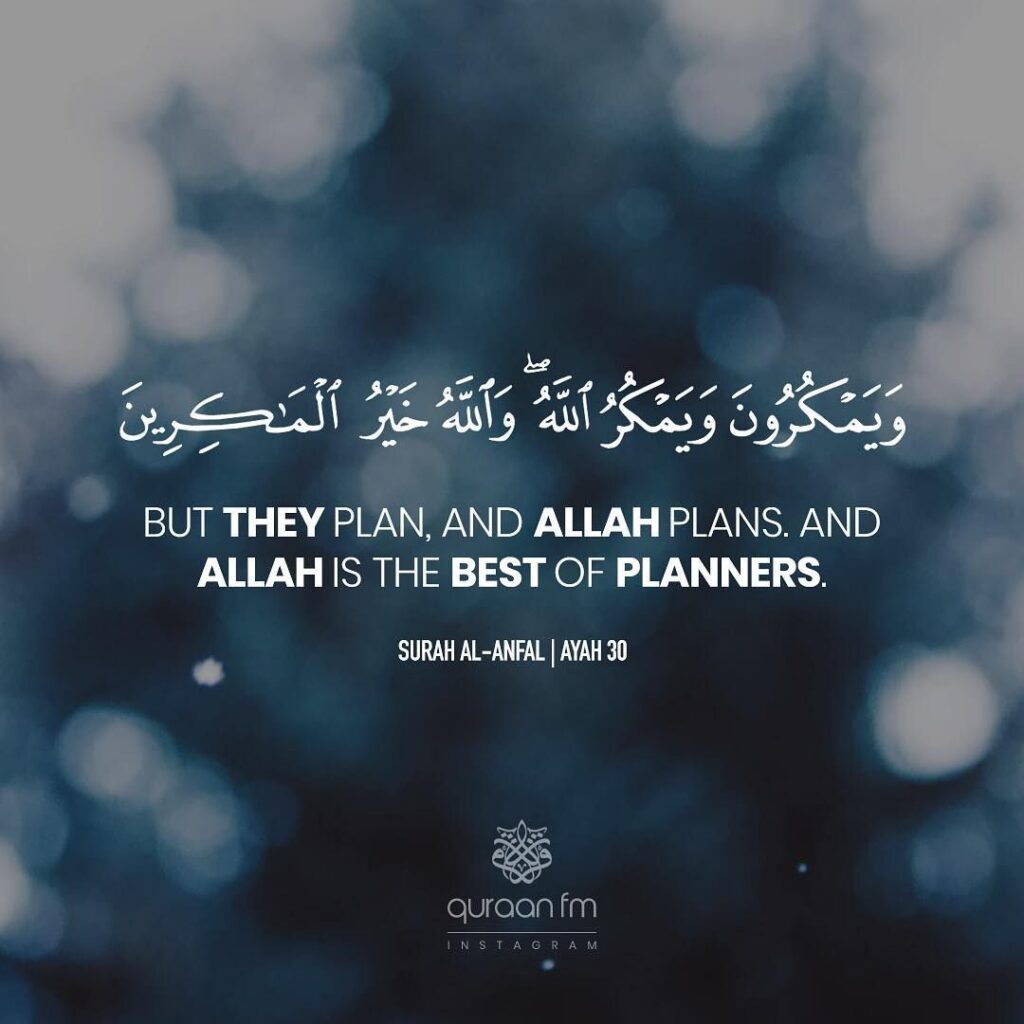
This image has an empty alt attribute; its file name is plannn-1024x1024.jpg


Now we are at the suggestive, somewhat enticing, light at the end of the tunnel stage of the pandemic, we are tested once again. The vaccine is available and whatever side of the fence you sit on, remember that Allah is the Controller. Everything truly belongs to Him alone and he holds authority over everything and everyone. One Quran verse frequently came to mind at different times this year.  Allah says, ‘لمن الملك اليوم، لله الواحد القهار ‘For whom is the dominion today? For Allah, the One, the Supreme’ (Quran, 40:16).  Allah gives and Allah takes. Let’s not talk as if this year has been a year of just the revolutionising scientists against the evil virus, forgetting all along that Allah is the Master, the Withholder, and the Bestower of all things.

It has been a challenging year but for the intelligent believer, no challenge comes without changes.  We may want to be quick to forget all that 2020 put on our plate but let’s remember the lessons it taught us and the goals it guided us to make. 

Constantly ask Allah for ease

Ismail ibn Nazir Satia (one who is in dire need of Allah’s forgiveness, mercy and pleasure)

15 Jamada al-Awwal 1442

Categories
Current Affairs articles

Ulama: United or Disunited?

Below is an extract from Hazrat’s talk on 10/09/18 in Masjid-ut-Taqwa, Pietermaritzburg. It is an explanation of an article by Ml. Ashraf Ali Thanwi (RA), translated by Madrasah Uloomish Shariyyah – mushariyyah@gmail.com. The article text is in blue, Hazrat’s talk is in black. To listen to the talk, click here.

Nowadays, we often hear the complaint that Ulama are disunited. We are accused by the laymen of splitting up the Ummah and being intolerant towards different opinions. Opinions and views that are rooted in falsehood, have no place in Deen. Our nafs inclines towards these views, thus, the one who holds them is viewed in a positive light by the masses. The Ulama who speak out, respectfully yet firmly, against these views are considered “intolerant”.

Due to lack of scholarship and expertise in religious matters, laymen are unqualified to pass a judgement on the religious rulings of our qualified scholars. The views of laymen are personal opinions, the preaching of our scholars are the words of the Qur’an and Sunnah. At times, scholars differing is required. This article sheds light on these times, which we are faced with often in our current era. It is written by one of the greatest religious authorities of our modern era, Hazrat Ml. Ashraf Ali Thanwi (RA).

Not every form of Unity is Praiseworthy and not every form of Disunity is Disparaged/Condemned

Understand properly that unity is only needed and deemed praiseworthy when it is beneficial for Deen, and disunity is only frowned upon when it is detrimental to Deen. When unity is harmful for Deen and disunity is beneficial for Deen, then at that point, disunity shall be sought. The people of this world have clearly understood this reality in their daily activities. Thus, in a court case, when a plaintiff and defendent raise their matter to a court for arbitration, then neither of the two is told, “Abjure your claim, because it has created disunity between the two of you and disunity is discouraged”. Rather, the rule is that the person who is in contradiction of the Truth (Haqq) is told, ‘Return towards the Haqq and abandon your insistence upon the view that is in conflict with the Haqq’. In fact, in some matters, if the plaintiff forgoes his claim, then the government becomes the plaintiff and defends the Haqq.

Friends! If disunity is to be condemned in general, then in a court case, the judge ought to punish both the plaintiff and the defendant, as both are perpetrators of disunity. However, neither does this ever happen nor is it logical for such an opinion to be given. Rather, everyone agrees that although both parties are perpetrators of disunity, one party is doing so to uphold the truth (Ḥaqq) and the other party is doing so to uphold falsehood (Bātil). Hence, after investigation and research, the decree should be given in favour of the one who is upon the truth (Ḥaqq) and the court is required to support him. In this scenario, all agree that disunity is not always denigrated; however, regrettably, this rule is not applied to matters of Deen. In fact, [in matters of Deen], it is said to both parties, ‘Stop disuniting and create unity’.

This is because we do not hold our Deen as sacred as we hold our money, property and worldly affairs. We desire to fight even petty worldly cases in the courts, yet in Deen, we simply do not care the way we ought to. Hence, anyone can say anything and, “be tolerant!” is incorrectly hailed as the correct way forward. Know, that this is incorrect! Deen is not a toy to play with as we please, nor is it plasticine for us to shape as we please.

Support should be given to the Truth (Ḥaqq)

Friends! Why is it not investigated as to whose disunity is based upon an effort to defend the truth (Ḥaqq) and whose is to support falsehood (Bātil)? Then the one who is upon the truth (Ḥaqq) may be supported and pressure should only be out one the one who is upon falsehood (Bātil). As for your commanding both of them to create unity, tell me, why should a person upon the truth (Ḥaqq) unite with someone who is upon falsehood (Bātil)? If unity was to be attained between them, then logically this could only occur in one of three situations:

1) The individual upon the truth (Ḥaqq) abandons the truth (Ḥaqq) and both unite upon falsehood (Bātil), i.e. the pious individual leaves his piety and becomes irreligious.

2) The pious individual stays firm on his piety and the irreligious individual becomes pious.

3) The pious individual abandons some of his piety and the irreligious individual abandons some of his irreligiousness.

Now, those with intellect can decide themselves which of these three situations correlates with sound intellect. Indeed, it is only the second situation that can be labelled as being in agreement with sound intellect; the summary of which is that the pious individual has a right of disuniting himself from the irreligious individual, but the irreligious individual does not have the right of disuniting from the pious individual, rather, he is required to unite with the pious person upon the truth (Ḥaqq).”

Understand from this that unity is not our goal as a Muslim Ummah. Our goal is to uphold the Deen of Allah in order to please Him. If that comes at the expense of disunity, then so be it, for the truth needs to be spoken regardless. The following point explains this further.

An Example of Division

Friends! This [example] of disunity was started by Rasūlullāh Sallallahu Alayhi Wasallam in this world. This is because, before his prophethood, everyone was united upon disbelief. He arrived and broke this unity [upon disbelief], such that he became the cause of separation between father and son. This disunity is described by Allah Ta’ālā with the following glad-tidings:

“Oh you who believe, if you develop Allah-consciousness (Taqwā), he will grant you the Separator and he will remove your sins”

In this verse, Allah Ta’ālā the Almighty has expressed this “Separation” as glad-tidings and he has made [this glad-tiding] dependent upon Allah-consciousness (Taqwa). It is for this reason that the Qur’an is labelled Al-Furqān (the Divider). We realize from this that the Qur’an does not only unite. In some cases, it unites and in other cases, it divides. It commands one to join those who are upon the truth (Ḥaqq) and to disunite from those who are upon the falsehood (Bātil).

Thus, it is a grave mistake that people make in this day and age, that whenever they see disunity between two groups, they consider both of them to be worthy of blame and [they say], “What kind of Muslims are you? That you differ with one another?” Both are then forced to unite which means nothing except that the pious individual should abandon his piety and adopt irreligiousness and that the individual upon the truth (Ḥaqq) abandons the truth (Ḥaqq) and adopts falsehood (Bātil). This is blatantly wrong. Rather, the demand of sound intellect is that when there is disunity between two groups then it should first be established as to who is upon the truth (Ḥaqq) and who is upon falsehood (Bātil)? Once it is known as to who is upon the truth (Ḥaqq), then nothing should be said to the individual who is upon the truth (Ḥaqq), rather, he should be supported (in his disunity with the individual upon falsehood) and the individual who is upon falsehood (Bātil) should be prevented from disuniting with him. The Qur’an explicitly mentions this in one place:

“And so fight those who transgress until they return to the command of Allah”

And if you do not get the opportunity to investigate [who is upon] the Truth, then who has asked you to intervene? Sit at home! Without prior investigation, don’t rebuke others!”

[Ashraful Jawab, pg.476-478, Idarah Ta’lifat Ashrafiyyah: Multan]

Thus, when a person or group oversteps the boundary of Shari’ah and declares their transgression as Islam, it is imperative upon us to speak out and reclaim our religion. Scholars differing is due to their desire to protect Islam from being misunderstood, which we should respect rather than condemn. Allah has blessed us with scholars to remind us when we slip if they do not, who will? It is their duty.

Once in his talk, Hazrat Mawlana. Yunus Patel (RA) was condemning the Ansaar Souk organisers for branding their Souk as “Islamic” when in reality, it is far from it. The organisers called him and blamed him for disuniting the Ummah. The next day during Jum’ah, Hazrat reminded us again from the pulpit that this Souk is not as Islamic as they would like us to believe! He did not hold back in the name of tolerance and unity.

If there were five siblings in one home and their mother designated one day for each child, to decide what she would cook for the day. Let’s say the first child wants chicken curry, the next day the next child wants mutton curry. The mother would see no issue in cooking those meals and sharing it with the rest of the children. However, on the third day, if the third child wants her to cook poison, she would vehemently disagree. Furthermore, out of love, she would rebuke the child, for suggesting something that would harm him and the rest of the family.

In our Deen, irreligious opinions being passed off as Islam, things that were considered haram being regarded as permissible and unreasonable leniency, causes great spiritual harm. It is poison for us which will manifest itself on the Day of Judgement. Our scholars vehemently disagreeing is done out of love, to save us and the Ummah from harm. Therefore, next time you encounter a situation where scholars disagree, rather than making a big issue out of a scholarly disagreement, reflect on the situation first. Support the one on Haqq and encourage those on falsehood to repent. If we are unqualified and we do not know what the scholars are talking about, then leave it and do not get involved. That is better for the Ummah than us adding our uneducated, invalid, opinionated views to scholarly disagreements. May Allah grant us the ability to stay in our lanes, Aameen.

— Hazrat Mawlana. Dawood Seedat حفظه الله

Categories
Current Affairs articles

Why are our children leaving Islam?

By Imam Ajmal Masroor


Today, I am going to write about a very sensitive subject. I know some of you will not like what I am about to share, but I will share it anyway. This writing has been spurred by a message I received from a concerned brother, who was upset by how people were reacting to my Friday sermon from last week. Particularly one part, which I have uploaded here for your information.  
The question of why our children are leaving Islam needs more data and analysis. However, in the absence of such data and analysis, someone has to raise this issue, based on our daily dealings with the community. In the last month, I have dealt with five young women and two young men who have chosen to leave Islam and become an atheist, agnostic or Christian. Their families have been in contact with me seeking help and support. 
Sadly, I have even witnessed this in members of my wider family. This topic is never discussed as people get too emotional, instead of having a measured and civil exchange. It leaves bad feelings and creates distance between family members, so the topic is avoided at all costs. This is not ideal, but we all prefer to save our relationships rather than argue about religion. 
My father, who has passed away, may Allah have mercy on his soul, would be totally heartbroken if he was alive to witness what is happening in his family. He used to share his fears, and almost foresee the future when he told us this story. He once met a retired British army general who told him, “Mr Hussain, you are here in our country as an economic migrant, you will always remain a foreigner, you will never accept Britain as your home, and that’s ok. We don’t want you. But let me tell you something, we will have your children. Many of them will leave your religion and reject your culture, they will be ours in every way!” 
My father was horrified to hear this confident and powerful prediction. He always reminded us to remain true to our faith. He taught us in the best way he knew. I ask God to forgive him and grant him the best rewards. I have two children and I worry about their future too. May God protect them and keep them steadfast in their faith. 
If only I could show you how true that man’s prediction was! If only I could tell my father that his fears are coming true. If only I could tell my father that, while he did his best to protect me from the possibility of leaving Islam, his strategy did not work for many in his family. When I asked him why he put me in an Islamic school, his response was simple, “To keep you in Islam”. While going to an Islamic school is not a guarantee of remaining in Islam, it still worked for me, and for that, I am grateful to him and God. However, for many this has not worked. 
I feel extremely sad that I cannot help my family members to review their position, because they have shut their door to such a possibility. I feel sad that I cannot help other families with such challenging situations. For anyone to accept and live by Islam, being born in a Muslim family is not enough. They have to be willing to explore the religion with an open mind and heart to be intellectually convinced. I pray for them regularly and I continue my quest to find answers and ways to help them return. The door to Islam is always open, and as a fellow Muslim, I feel I have a duty to support people who are struggling to make sense of Islam. 
After speaking to hundreds of people, many who have left, or are considering leaving Islam, here are some of the key reasons I have identified: 
1. Misogyny – Muslims claim that Islam offers men and women equality, but in practice, Muslims do not treat men and women equally. Many women leave Islam because of their experience of misogyny in Muslim society. They feel they are discriminated against, given second class status, excluded, and often treated as the problem. Misogyny manifests its ugly face deeply in every facet of life. Many Muslim women face unequal treatment from the day they are born. They witness their male family members having a different set of rules to them. I am often told by women, “Growing up with brothers and sisters, we found boys could do anything and get away with it. But if we made even one small mistake, we were told that we would bring dishonour upon the family, even the community.” 
Can you imagine the burden placed on young women to be so pure and perfect? Growing up has enough pressure and challenges for the young souls, and adding misogyny is simply soul-destroying. This double standard between the way men and women are treated is wholly wrong. It is in total contradiction to the Islamic teachings of love, respect, justice, excellence and compassion. If the mothers of our future generations are feeling discriminated against and excluded, what does it say about our future? Sadly, Muslim men who behave in this way have contributed to many people, women in particular, leaving Islam. I have observed that more Muslim women leave Islam than men. Why are you surprised to hear this when some of you have treated women so unfairly? 
2. Mosques – These buildings are constructed, at vast expense, with amazing carpets, lighting, bathrooms, domes and minarets. But very little, in comparison, is spent on educating and supporting the Muslims who live in the surrounding areas. They become bubbles, or elite clubs, for Muslim men who hang out at prayer times and hardly connect with the rest of the community. They become places of comfort for those who are already committed to Islam. They do not have a culture of openness or an ambience of invitation. Those who feel no affinity to the faith, or are struggling to make sense of it, would hardly find it a welcoming atmosphere. Yet the mosque of the blessed Prophet Muhammad (peace be upon him) was not only a place of worship but of refuge, shelter, family counselling, social justice, economic development, mental health support, international relations and much more. The mosque of the blessed Prophet led the society in all that was morally healthy. 
The majority of mosques in the UK do not have facilities for women or youth, and where they can be found, they are usually substandard. Women and youth are treated as outsiders. Vast amounts of space lie empty for 20 hours a day. Apart from the five daily prayers and children’s Quran-reading classes, the mosque space is hardly used. Ask a Muslim woman whether she feels involved or included in the mosque! I can guarantee you that the vast majority would say that they feel excluded, uninvolved, unwanted and uninvited. There is only one mosque that I know which is led by an amazing sister, and she has an amazing team of brothers and sisters running the mosque. It is the Wightman Road mosque in Turnpike Lane, North London. Ask the sisters how much nonsense they have to face from the so-called ‘practising’ Muslim brothers! Ask a Muslim woman how included she feels in the mosque? 
Many of the Mosques are not fit the purpose. In Islam, if a mosque excludes a woman from accessing it, then it should not even be called a mosque according to classical scholars. Dr Akram Nadwi discusses this in details in his translations and explanation of the book called “Lawfulness of women attending prayers in the mosque” by Ibn Hazm. When you exclude women from accessing the mosque why are you surprised when they leave the mosques? 
Mosques are not offering sufficient intellectually-based educational, spiritual and social space for our younger generations. They do not come to them because they are not attractive enough. I believe every mosque should have a full-time youth centre based in, or attached to it. A good portion of every Friday’s collection should be assigned to running youth service. Imagine the impact on a whole generation of Muslims who are disconnected from the most important Islamic space! Why should we be surprised to see them leaving Islam? 
3. Imams – For the last 30 years we have been complaining about Imams not speaking English. Now the majority speak English, but the complaints have not abated. Many are inadequately trained to serve their community. They may have knowledge of sharia (Islamic legal system), fiqh (Islamic jurisprudence) and seerah (biographies of the Prophet/s), but what use is it if Imams are unable to relate to the people they are meant to serve? What good are all the books in an Imam’s library, if he is unable to offer adequate intellectual responses to the many daily challenges our youth face? 
Many Imams do not get training in how to deal with the social issues the communities are facing, they do not get sufficient resources to support the community, and they do not even get paid enough to be able to focus in their job. Imams are supposed to be teachers of our children. If they are incompetent what will our children gain except incompetency! I have come across many horror stories of people who have left Islam because of their experience with their local Imam. Some of the awful experiences include being beaten black and blue while learning the Quran, and even experiencing sexual abuse at the hands of some rotten Imams. 
Imams need to be up-skilled to be able to meet the challenges of the community. They need safeguarding training, adequate salaries and resources, professional management, and mentorship by senior scholars. Imams need to respected for their work but also held accountable for their actions. We are all humans, without supervision and accountability we could fall prey of the whispers of Shaytan. Take measures to protect everyone before it’s too late. 
Many people leave Islam because their local Imams are not intellectually capable of responding to their challenging questions including questions on secularism, atheism, sexuality, LGBT and freedom etc. For the new generation, phrases like “God said and the Prophet said” are not enough. They want reasons, proof, evidence and intellectual rigour. People are desperately seeking a safe space to think critically, questions without barriers and doubt with judgment. The first step to knowledge is scepticism. Islam encourages critical thinking, questioning and doubting and Qur’an offers resounding proof of certainty. We need young people to know this and Imams need to promote it. If you cannot present Islam to the community properly why are you an Imam? 
There is a severe shortage of female Islamic scholars. We have failed to invest in institutions to train Muslim women to become Islamic scholars. Women have little opportunity to learn from male Islamic scholars and Imams. Culture plays a role, but Imams almost always stay in the male section of the prayer space. They should be equally accessible to both males and females in safe and secure spaces. Knowledge should not be a male commodity alone. 
When Imams are not able to answer questions adequately, present Islam intellectually or intelligently and are not accessible to women or youth, why are we surprised to see many people leaving Islam?
4. Bad parenting – The most important need of our children is to grow in a safe home. Their most significant teachers are their parents. Children, whose parents are absent or cannot get on with each other and whose family-life is dysfunctional, grow up with deep scars in their hearts and minds. If they see their parents preaching Islam at them, but failing to practice it, they feel let down, betrayed. Many children complain that their parents were the worst examples of Islam. 
Many Muslim children experience very little love when growing up. They may be rarely reassured with words of love, or given hugs, kisses or a tender touch. They grow up with an emotional deficit, and they believe this is due to Islam. Then perhaps, as they get older, if they encounter loving attention from others, they may be attracted to it. In some cases, they get into inappropriate emotional and sexual relationships, and the consequences can be dire. They leave Islam because they feel if Islam shaped their parents, they do not want to be shaped in the same way. 
Our children’s affinity to Islam is largely dependent on how we present Islam to them. We have to strike a balance between gentleness and discipline, leniency and firmness, between conservatism and moderation, between ritualised practices and intellectual underpinnings. We have to nurture our children’s natural dispositions and to inspire hope and aspirations in them. We have to allow our children to make mistakes and learn from them. We have to help our children keep on dreaming, even if their dreams change. 
When we have been a bad example of Islam and have displayed behaviour problems, why are we surprised that our children are leaving Islam? When we have told children that Islam is all about hell and punishment, the wrath of God and eternal damnation, why are we surprised when our children leave Islam? 
5. Ignorance – There is wholesale ignorance about Islam in our community. Religious literacy is not given priority. Professional qualifications take precedence over a solid intellectual foundation of Islamic principles. We have generations who have learned to read the Qur’an without any understanding of its meaning or underlying message, who have been taught rudimentary rituals of Islam, reminiscent of kindergarten level, and whose only connection with God is emotional. 
Many who leave Islam do not know much about their faith. They have no idea why they are even Muslim. They do not know why they pray. They do not understand Islam’s ethical and moral approach to life. They are just Muslims by virtue of being born in a Muslim family with their families emphasising halal meat and prayers. Why are we surprised when Muslims leave Islam? 
In Islam the first order of God is knowledge. It is through literacy and numeracy one can excel in every aspect of life including discovering God. It is through reading, writing and reflecting that one can find true enlightenment. Qur’an is all about reading, writing and reflecting. Did you know that approximately 5% of the Qur’an contains commandments in the form of permissible or prohibitions, the rest of the 95% of the Qur’an is all about deep reflection and contemplation? When the Muslim community suffers from a pandemic of religious illiteracy, why are we surprised when our children decide to leave Islam? 
6. Bad examples – In Muslim community whether in the UK or abroad, true examples of Islamic behaviour are not difficult to find, but sadly they are not widely known. However, bad examples of Islam are all around us. From Muslims claiming to follow Islam and then bombing innocent people, carrying out terrorist activities or setting up a so-called “Islamic state”, to Muslim governments in, for example, Saudi Arabia executing people arbitrarily, killing innocent men, women and children in Yemen out of a quarrel with neighbouring Iran; destroying democracy and establishing a dictatorship in Egypt; detaining people without charge in Algeria; banishing people in Bangladesh; mass-murdering people in Syria, and so on and so on.
We witness corruption in Muslim society at all levels. We see no justice or peace in Muslim majority countries. We see Muslims in the western countries causing trouble between themselves by fighting for mosque management positions, defrauding charities, conducting dishonest businesses, not paying taxes, working while claiming benefits, lying, cheating, selling drugs and getting involved in criminal activities. When our children grow up in or become witness to such behaviour amongst their fellow Muslims why are we surprised when they leave Islam? 
We know Islam does not teach corruption or terrorism, despotism or dictatorship; it teaches freedom, fairness, justice, excellence and compassion. It invites its followers to lead moral and ethical lives, to stand against shamelessness, evil and transgression. It teaches peaceful coexistence and moderation. Sadly, many Muslims do not follow the teachings of their faith. When young people are looking for good examples of their faith and they find it difficult what should they do? Why are we surprised when they leave Islam? 
Did you know that the Muslim population in the UK is less than 5% of the total population but they constitute more than 15% of the UK prison population? This must mean something! Why are there three times more Muslims in prison than there should be? In fact, we should not have any prisoners from Muslim families. When our children see such examples of Muslim society, they feel unimpressed, ashamed, disgusted and they often blame Islam for these ills. Why are we surprised when they leave Islam? 
7. Abuse – Many young people have experienced verbal and physical abuse in their homes at the hands of their patents. Being parents does not give you the right to beat your children and verbally abuse them. Children are a gift and a beauty in our lives, they are creations of God. Any abuse of our children is an abuse of God’s gift. When Muslim parents use Islam to demand their rights from their children, but fail to deliver a safe, loving and nurturing space for their children’s physical, emotional and spiritual growth, they have either been neglectful or abusive to their children. When a child experiences abuse at the hands of their parents they remain scared forever. We should not be surprised when children who have experienced abuse, choose to leave Islam. 
I have reports of many who have experienced sexual abuse from their family members. When Muslims claim sexual purity and chastity and then these children experience sexual abuse from the very people who have been preaching to them about sexual propriety, they feel angry at the hypocrisy. Violating a child is a crime that requires the maximum punishment. It requires society to come together and protect our children. In many cases, children have experienced awful abuse but seen their families and community remain silent or brush it under the carpet. In some cases, children were blamed for talking about it and accused of making up stories. How do you think children feel under such circumstances? Why are you surprised when some of them leave Islam because you are a Muslim and you have perpetrated such a crime or remained silent? 
8. Dull – Many children experience Islam without much fun. They remember how Islam was all about “don’t do this” and “do this”, a constant barrage of instructions. Some say they remember so many things that were haram, it felt like everything was haram. They were not allowed to laugh or joke too much as they were told that Allah does not like it. They were told to pray, fast and read the Qur’an, but not have fun; that they should always remember death and the hereafter, and not get too attached to the joys of life; that they should not watch much TV or go to the cinema because it was sinful. They felt that the element of fun was removed from their childhood because of Islam. 
Even in adult life, they see Muslims who get upset over cartoons, comedies or can’t even take a joke. Islam has become associated with being dull and boring. I hear this from many young people in colleges and universities. They say Islam is too restrictive. It does not allow them to do much. They have got this idea from their observation of Muslims and often of their families. 
I tell them that they would be hard-pressed to find too many rules or restrictions in Islam. The Highway Code, that you must learn if you want to drive, contains more rules than the whole of Islam. However, the criticism of some Muslims being rigid and dull is not unfounded. I sometimes remind older generations to cast their mind to a time when they were young. Islam doesn’t mean dull and boring life – it encourages all good things as long as they are ethical and moral. Have fun and enjoy what God has given you in abundance. 
Sadly, I don’t find it surprising that many young people chose to leave Islam because of their bad experiences with Muslims. We have to listen to the experience of our children and change. We have to live Islam authentically, honestly and with confidence. We have to present Islam intellectually and smartly and most importantly we have to exemplify Islam in our life if we want our children to remain Muslim. 


I say to those who are considering leaving Islam or have left Islam to pause and think – do not judge Islam by Muslims’ behaviour, rather judge Muslims by the teachings of Islam. If you study Islam with an open mind and heart you may find the answers you are looking for. I did!

Categories
Current Affairs articles

An Eye-Watering Story

I am Gujarati: Hands Off My Mosque

ومن أظلم ممن منع مساجد الله أن يذكر فيها اسمه

“And who is more oppressive than he who prevents the mosques of Allah from mentioning His name.”

I write this with a heavy heart and a tear in my eye, never before have I written on behalf of someone who is deceased. That’s right, this message is on behalf of a girl who passed away aged 7.
Before she passed away she desired to visit a Masjid, the house of Allah, but she was refused from several Gujarati Masjids in Blackburn. Why?

One Masjid said her wheelchair will make our carpets dirty?!


Another Masjid said, if we have a fire she will cause a hazard! (She wanted a tour, not admission).


The Masjid that finally gave permission said, just look from the shoe racks??? Which she did and tearfully said, “Mum, is it because I am disabled I didn’t get a proper tour?” Heartbreaking!


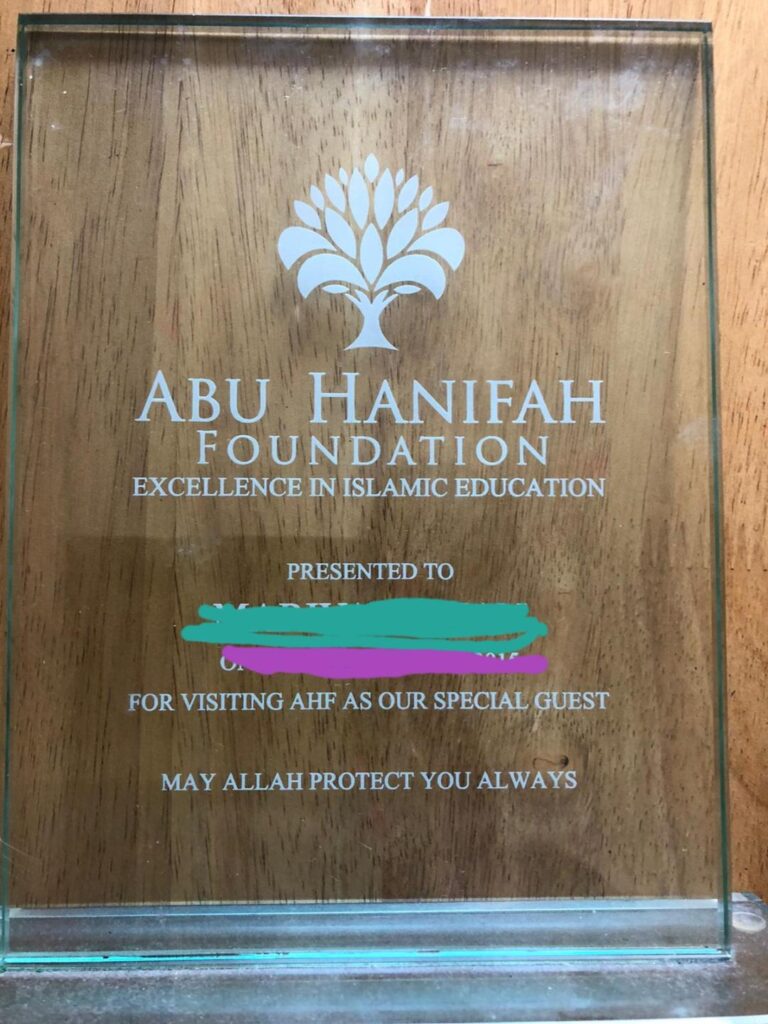
In the end, the Abu Hanifah Foundation gave her a proper tour, their students sang Nasheeds for her and gave her a crystal frame…

THIS IS ISLAM! Respect to AHF, I salute you. 


And shame on the others, you disgust me. I must mention that the girl was a Pakistani and Pakistani is not a code word for Patels. Maybe if she was a Patel, she would have been allowed? 


Dear Gujarati Masters,
I’ll call you by the title you love, let me massage that ego for you. I’m happy to be your slave and servant. Your Masjids are no longer the houses of Allah, they are clubs, where the Gujarati Master throws his weight around and stamps his authority down. Perhaps it doesn’t work at home on the wife and kids?


If your heart doesn’t irk with this story you need to do an “Iman test” toooo many people testing for Corona and not checking that their Iman is positive. Just because these Imams don’t have disabled children, that doesn’t mean you don’t care about disabled children. This family is not related to me, nor do we have disabled children in the family, Alhumdu lillah… but the story still bothered me for nights. 


Before you blame committees of the Masajid… stop right there! The family approached the Imams who are very outspoken on the Mimbar but fragile on the inside I guess, it’s easy to talk the talk I guess. Gujaratis are good for establishing institutions, but not for establishing JUSTICE!

Ulama are incompetent when it comes to these diversity issues. Islam is not just about Salah and Sawm. Islam is a diverse religion, let Ulama open their minds, open their hearts and open their Masajid.

Ismail ibn Nazir Satia (one who is in dire need of Allah’s forgiveness, mercy and pleasure)

24 Muharram 1442

Categories
Current Affairs articles

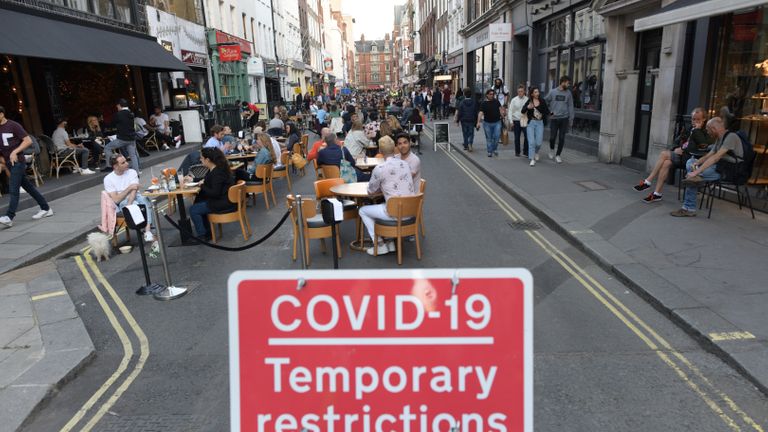
Contemplations on Covid-19

Lessons and reflections during the lockdown:

  1. Learn to appreciate your family. We might argue with siblings and get annoyed, we might dislike the decisions made by our parents, but there are so many people out there that have lost their parents or they’re distant for whatever reason. During the lockdown, these people realised what a close-knit family means.
  2. We must appreciate our deen – Islam. Many of us received Islam on a plate, we were born in Muslim families, hence we take it for granted. Covid-19 has brought many people closer to Islam, through sickness and health. We all remembered Allah SWT more, whether it was out of fear or thankfulness.
  3. Which brings me on to valuing your health. When we are young we think we will live forever and nothing can harm us. As we get older and our immune system gets weaker, we understand we must appreciate our good health. Especially our mental health is very important. Going for walks regularly and exercising.
  4. Life is the most unpredictable thing, but it is certain. Nobody debates death. In the UK almost 50,000 lives have been lost due to this pandemic. Make the most of your life, live for today, don’t delay good work.
  5. Before the lockdown, we did what we wanted to, when we wanted to, value your freedom. Many countries have a lockdown all-year-round under the dictatorship rule. Value your house and safety and security.
  6. The importance of unity – the virus is not a one-man battle, we are ALL in the same boat and we ALL need to work together to overcome it. Let’s stop discriminating some communities and blaming them for the spread of the virus.
  7. Charities have been great during the lockdown, hats off to all the churches and mosques who opened their doors to help the vulnerable. Many who lost their jobs were in need of basic food parcels, we must learn to appreciate the little things in life.
  8. Everyone had more time, kids were at home with online school and Madrasah. Parents were WFH and Masjids were closed so we were praying at home. This all meant we had more free time: to waste or to value? Your time is your life, value every minute, rather every second.
  9. If you still have a job, be thankful. Most of us get bored or fed up of the 9-5 system and feel it’s’ a burden. Thousands of people have lost their jobs and are struggling financially. Be grateful and say, Alhumdu Lillah for your income; little or large! You have a roof over your head… Ma Sha Allah!
  10. Be a ray of sunshine – it doesn’t take much to brighten someone’s day.

Ismail ibn Nazir Satia (one who is in dire need of Allah’s forgiveness, mercy and pleasure)

10th Dhul Hijjah 1441