Categories
Current Affairs articles

In the Shadow of Saints: My Journey from Blackburn to Baghdad

From Blackburn to Baghdad
Alhumdu Lillah, we have just spent seven days in Iraq. It was a profound sacred journey into the heartland of Islamic heritage, many Prophets ﷺ, revered Sahabah RA, Ahle Bayt, knowledgeable Imams and pious Saints graced these very lands. I will share a few notes and thoughts from the visit to Baghdad, Najaf and Karbala. Before I do that, I want to remind everyone when you think of Iraq in modern times, what do you think of? Who do you remember?

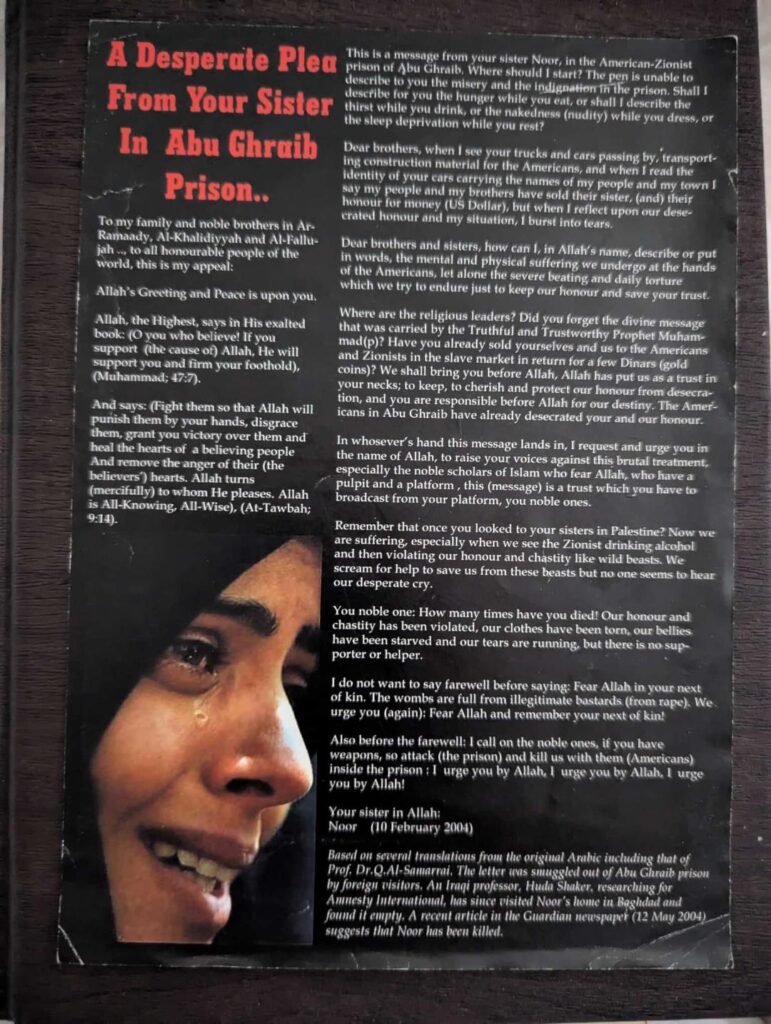
No doubt, you will remember the war also referred to as the Second Gulf War from 2003 – 2011. USA invaded Iraq, the primary rationale for the invasion centered around false claims that Iraq possessed weapons of mass destruction. But no WMD stockpiles were found in Iraq. Thanks to the likes of Jack Straw the then Blackburn MP, aka the architect of the Iraq War, the war led to over a million deaths, young girls being raped and the abuse in Abu Ghraib prison. Some of you may remember the letters that came out of these prisons…
From 2004
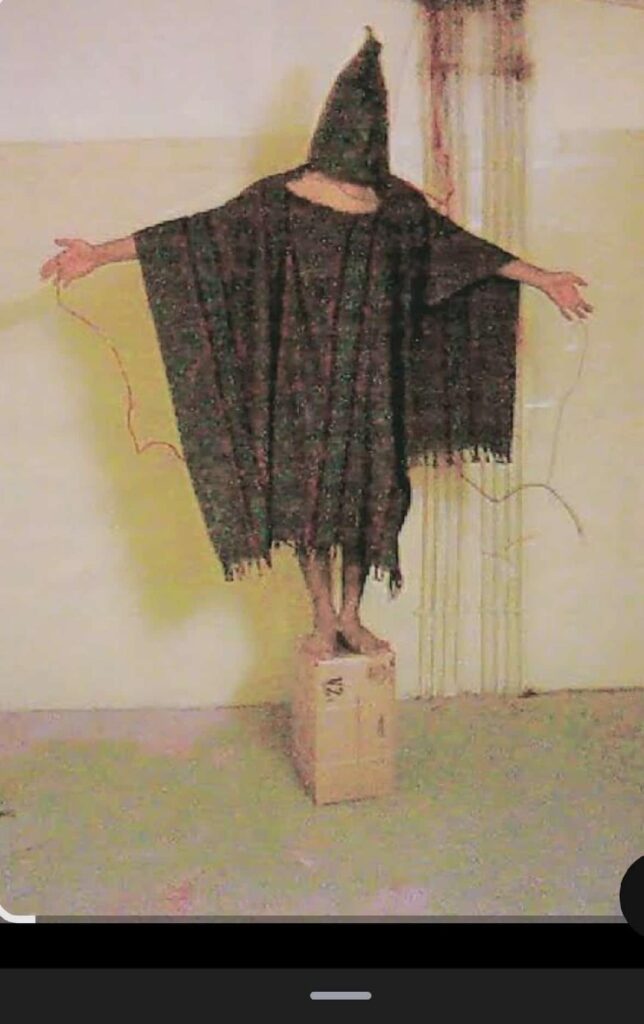
Prisoner abuse at Abu Ghraib prison. Photograph of a hooded prisoner who was forced by US military to stand on a box while attached to wires. The prisoner was led to believe that stepping off the box would result in electrocution.
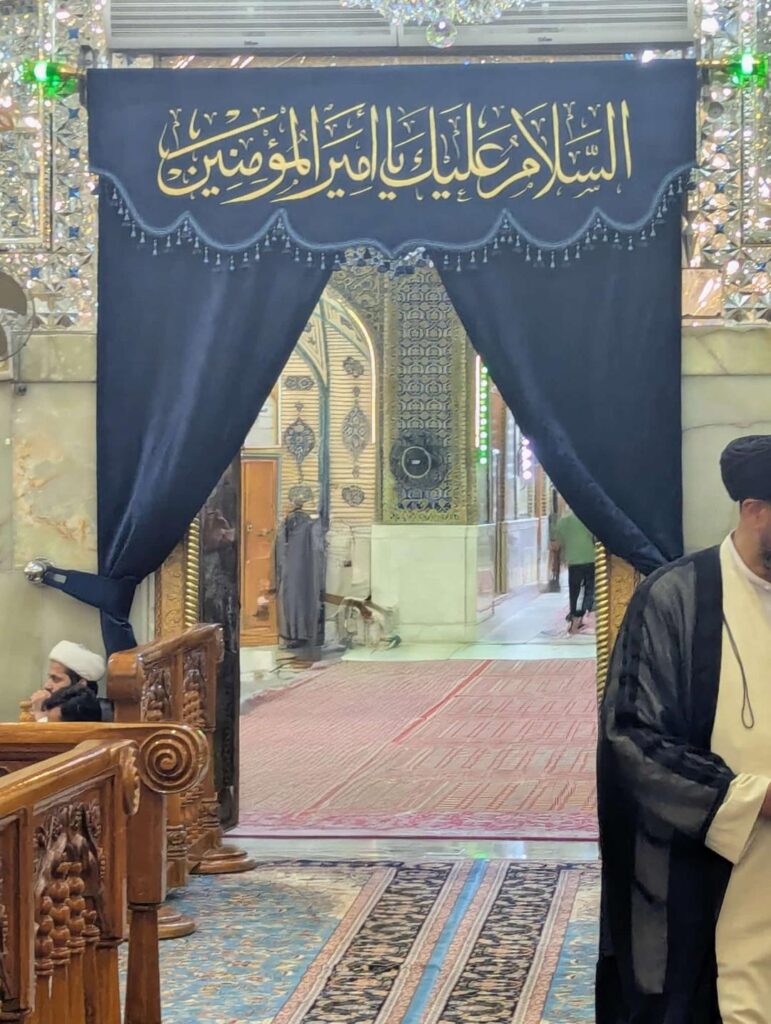
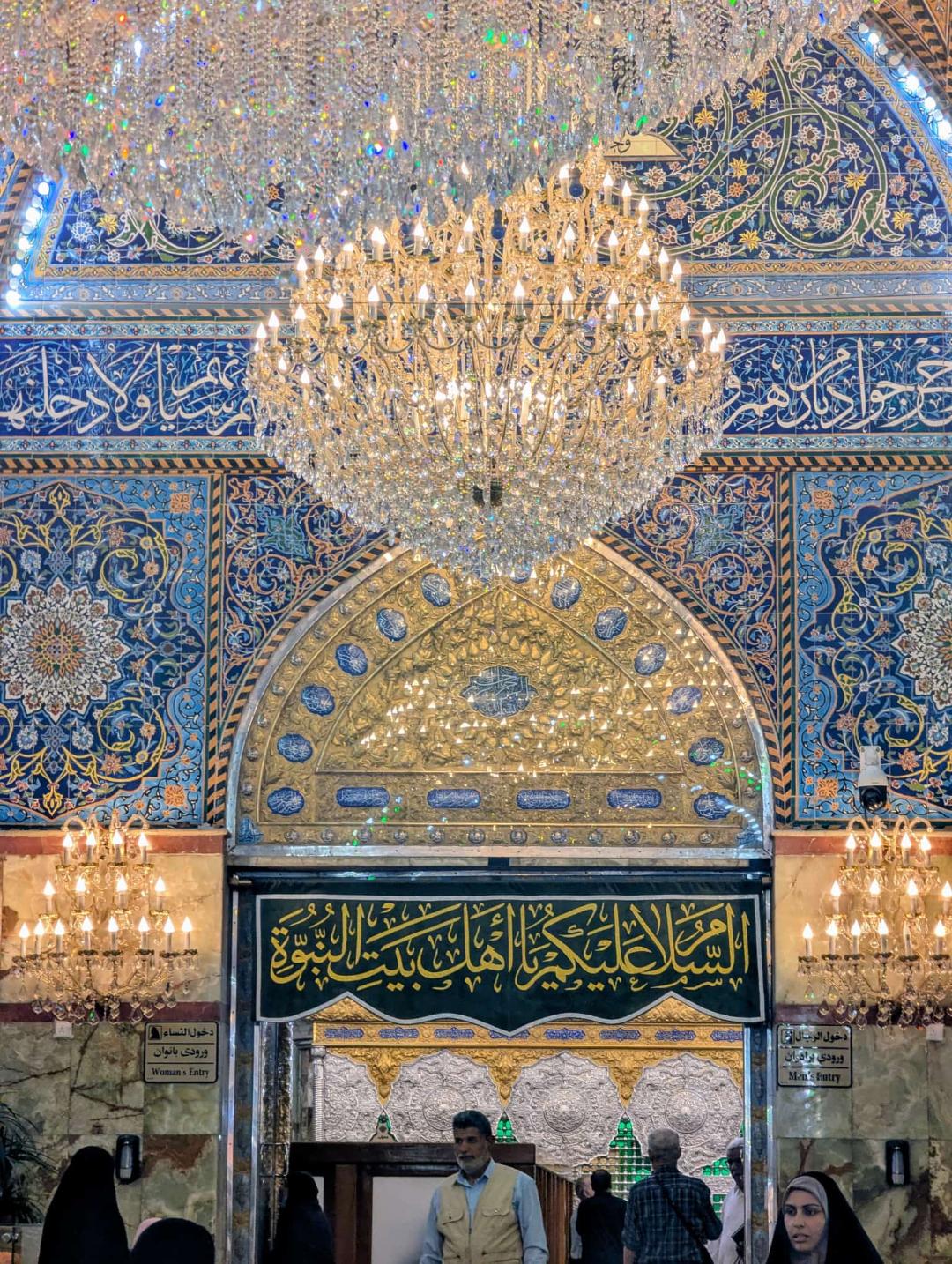
The mausoleum of Sultanul Awliya Shaykh Abdul Qadir Jilani RH in Baghdad, showcasing intricate architectural details and a serene atmosphere.
Day 1
The intention when going to these places is Ziyarat/visiting/learning. You cannot make an intention for thawab/reward: Narrated Abu Huraira: The Prophet ﷺ said,
"Do not set out on a journey except for three Mosques ie Al-Masjid-Al-Haram, the Mosque of Allah's Messenger ﷺ , and the Mosque of Al-Aqsa."

Alhumdu Lillah, on our first day in Baghdad we visited the mausoleum of Sultanul Awliya Shaykh Abdul Qadir Jilani RH. Shaykh was born in Gilan, Iran in 470 A.H. Shaykh was an Arab by descent, being the tenth descendant of Hassan ibn Ali RA. He came to Baghdad in 488 A.H. at the age of 18. After completing his education of religious sciences, he turned to Mysticism/Sufism. Shaykh later became one of the Imams of tasawwuf and Allāh SWT endowed him with many karamaat (miracles).

There is an account narrated about Shaykh Abdul-Qadir Jilani, Allah have mercy on him, that when he set out away from home for the purpose of his education, his noble mother sewed his share of eighty coins into the underarm of his shirt and advised him: ‘Son, do not lie.’ When Shaykh Abdul-Qadir RH departed, on the first day of his journey he passed through a jungle that was inhabited by a large band of thieves and robbers. A party of robbers confronted and apprehended him. The robbers asked: ‘What have you in your possession?’ Shaykh Abdul-Qadir thought to himself that he was being tested in the first stage of his journey; he reflected over his mother’s advice and said:‘I have eighty coins which my noble mother has sewn into the underarm of my shirt.’ The robbers were extremely surprised on hearing this and said: ‘What is this dervish saying! We have never seen such a righteous man!’ They took him and putting him before their chief, related the entire story. When the chief questioned him, Shaykh Abdul-Qadir gave the same response. Finally, when his shirt was torn at the place that he had described, it turned out that there were indeed eighty coins sewn into his shirt. All the robbers were astonished and the chief asked why Shaykh Abdul-Qadir had told them the truth. At this, Shaykh Abdul-Qadir mentioned the advice that his mother had given him...He said: ‘I have set out as a student of religion. If I had told a lie at the very first stage of my journey, what could I ex- pect to attain? And so, I chose to stand by the truth.’ When Shaykh Abdul-Qadir said these words, the chief burst into tears, fell at his feet and repented for his sins. It is said that this chief was the first follower of Shaykh Abdul-Qadir.

In short, truth is a thing that delivers a person in even the most trying and difficult of times.
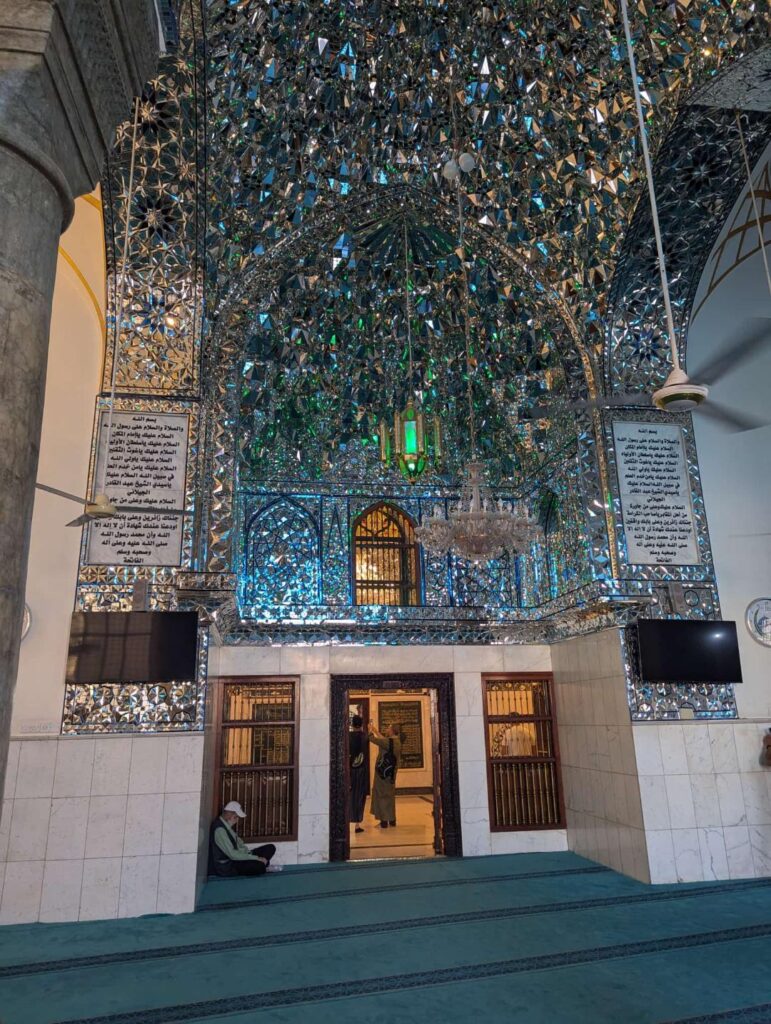
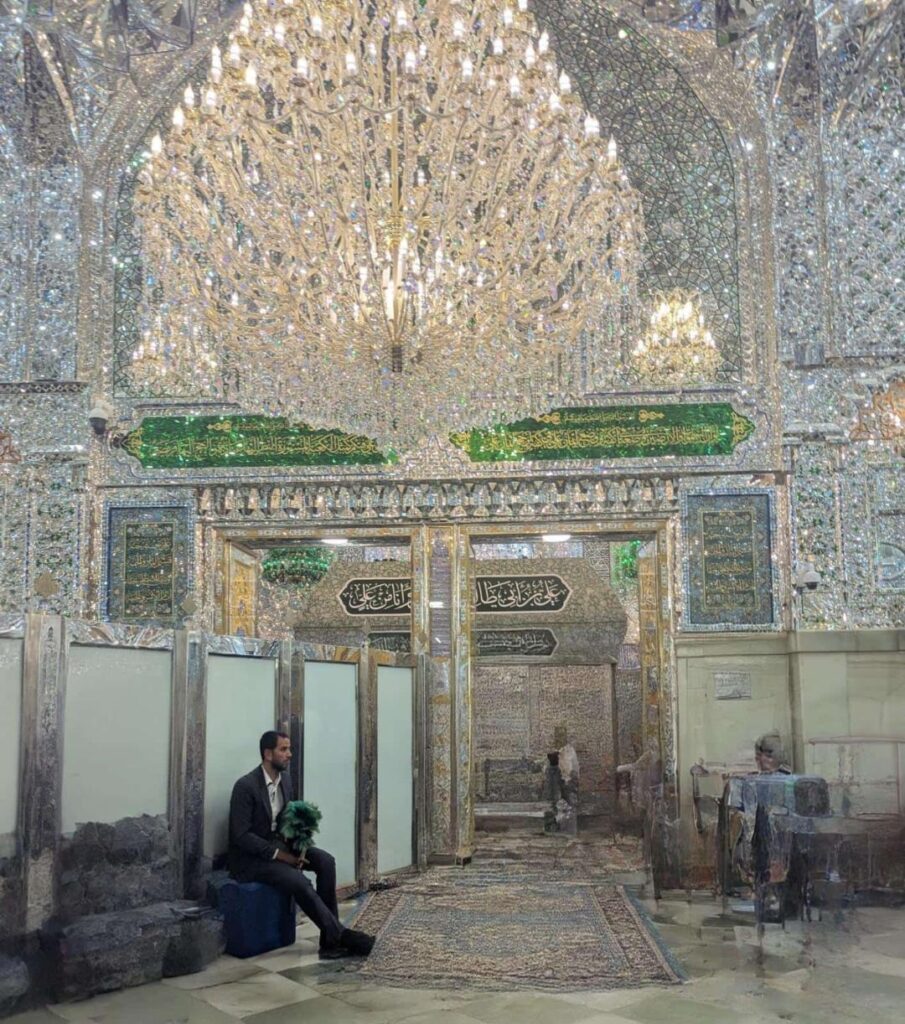
Interior view of the Masjid of Sultanul Awliya Shaykh Abdul Qadir Jilani RH, the whole masjid is studded with diamonds and decorated with chandeliers.
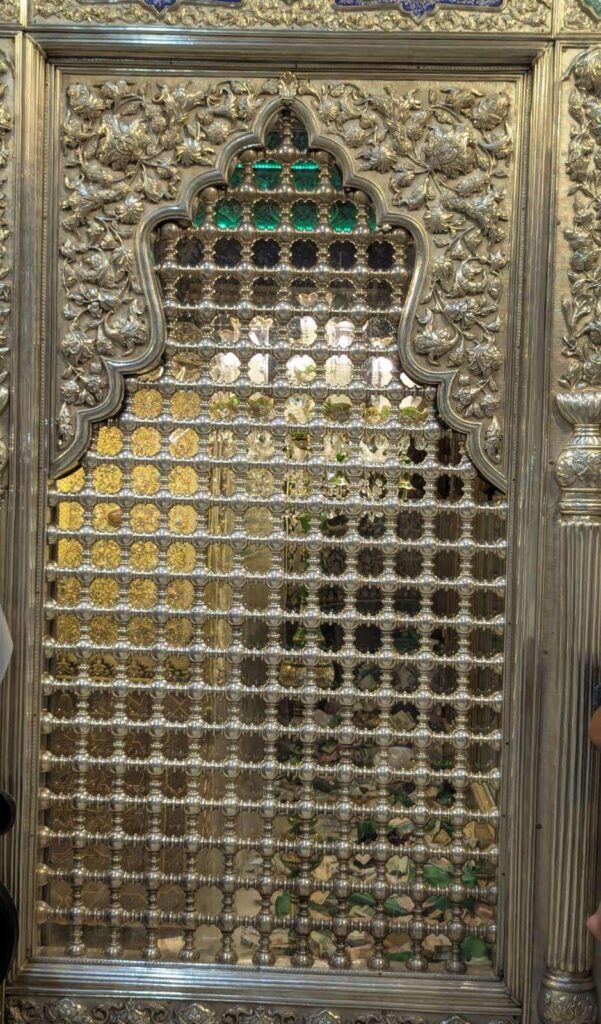
The grave of Shaykh Abdul Qadir Jilani RH in Baghdad.
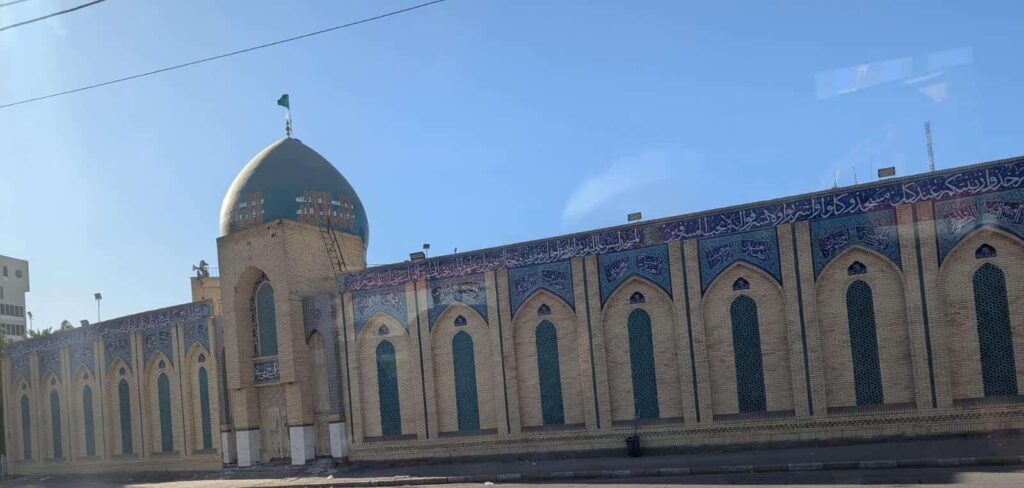
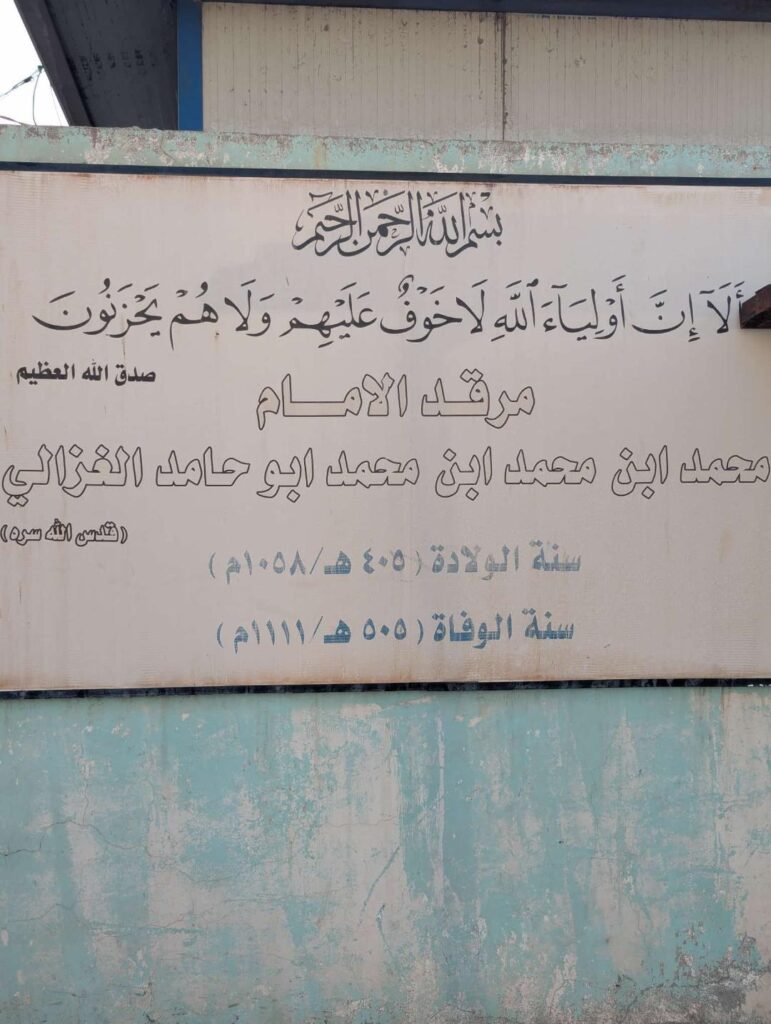
The Mausoleum of Imam Ghazali (Allah elevate his status)


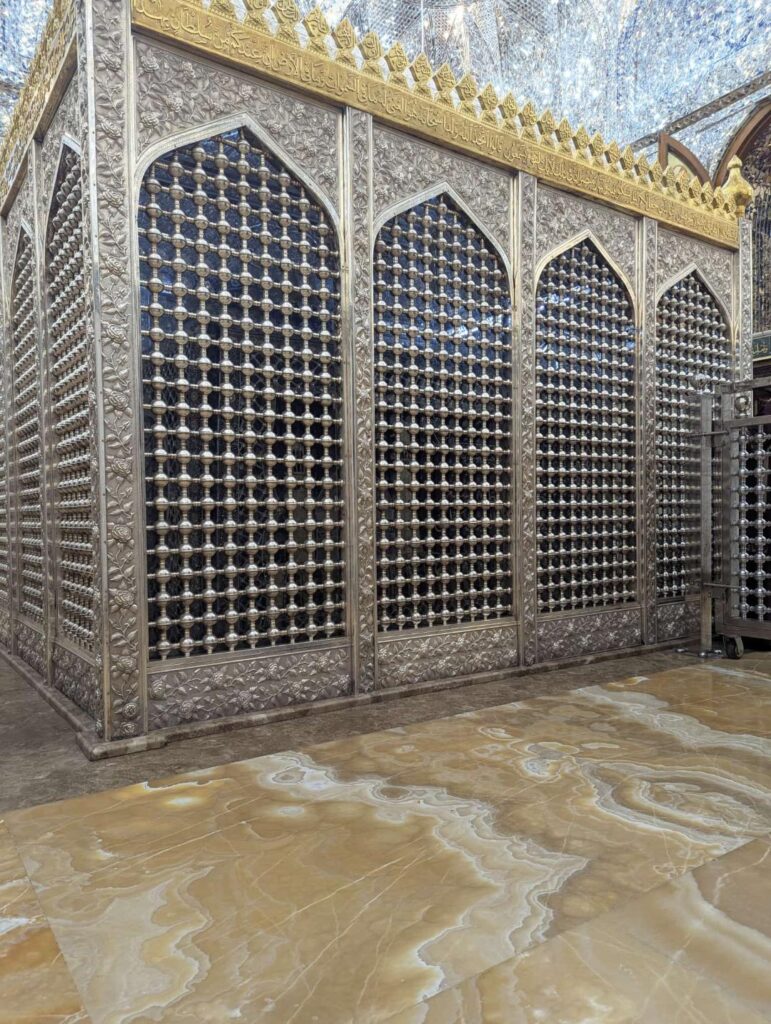
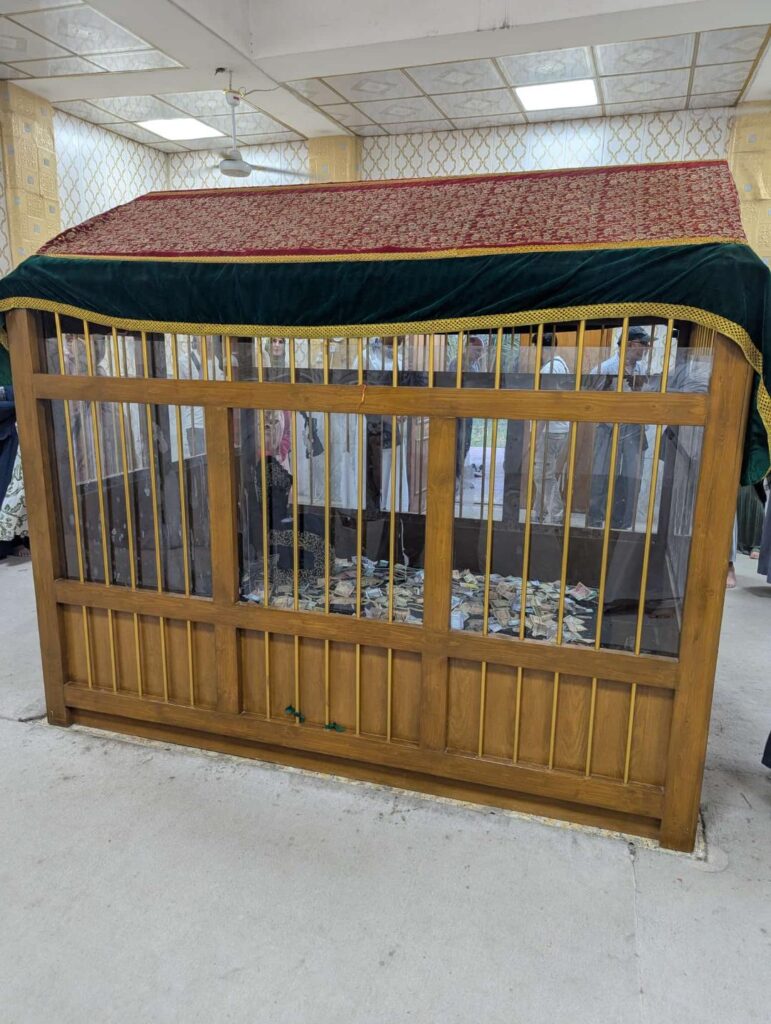
We visited the grave of Abu Hamid Muhammad Ibn Muhammad Al-Tusi al-Ghazali, born 1058-1111, Tus, Iran. Imam Ghazali RH is one of the great jurists and mystics of the 12th century. He wrote on a wide range of topics including Jurisprudence, Theology, Mysticism and philosophy. He was titled the Intellectual Proof of Islam and the Bane of the Philosophers. From childhood Imam Ghazali's inquisitiveness and unquenchable thirst for comprehension of reality was unmatched.Imam Ghazali RH was often scolded by teachers for asking too many questions and engaging in debate. His passion for knowledge is shown from the story below:
Having completed his studies, Imam Ghazali was en route back home. On the way the caravan in which he was traveling was waylaid by robbers. Together with his co-travellers, Imam Ghazali was dispossessed of all his goods. Amongst his possessions were the carefully written notes of the lectures delivered by his ustads. These notes were also taken by the robbers. Imam Ghazali sought out the leader of the band of robbers and pleaded with him...“Your men have taken all my possessions except for the clothes I wear. You may keep the extra clothes and other valuables – I do not lament their loss. However, please ask your men to return the papers they have taken.”
The leader of the band of robbers was amazed at this unusual request. This young man was not worried about clothes and valuables, but he was asking for some pieces of paper to be returned!
Very curious, he asked: “What papers are these?”
Imam Ghazali explained: “I am a student returning home after completing my studies. When my teaWhen my teachers used to lecture, I used to make notes. These are those very pages of ‘ilm that I am requesting to be returned to me.” The leader of the robbers said: “What you have just said fills me with great sorrow and regret. Young lad! Is your ‘ilm on pieces of paper when it should have been in your heart? Papers can get lost. Papers can be destroyed by fire, become parched by the sun, get eaten by moths, become damaged with damp, etc., etc. You are dependent on papers? It fills me with great pity. Your ‘ilm should be in your heart! Be that as it may, your papers will be returned.” He summoned one of his men and ordered him: “Give back to this boy his papers.”The notes were retrieved and returned to Imam Ghazali.
Imam Ghazali was of noble character. He was, moreover, a dedicated student. The words of the gang-leader were like a knife piercing his heart. On reaching home, he lost no time in memorizing all his notes.
These were the scholars of the past who sacrificed everything for knowledge, their dedication is admirable and their zeal for the truth is commendable. This is what shapes history and inspires generations, Allah grant us similar qualities, Ameen.
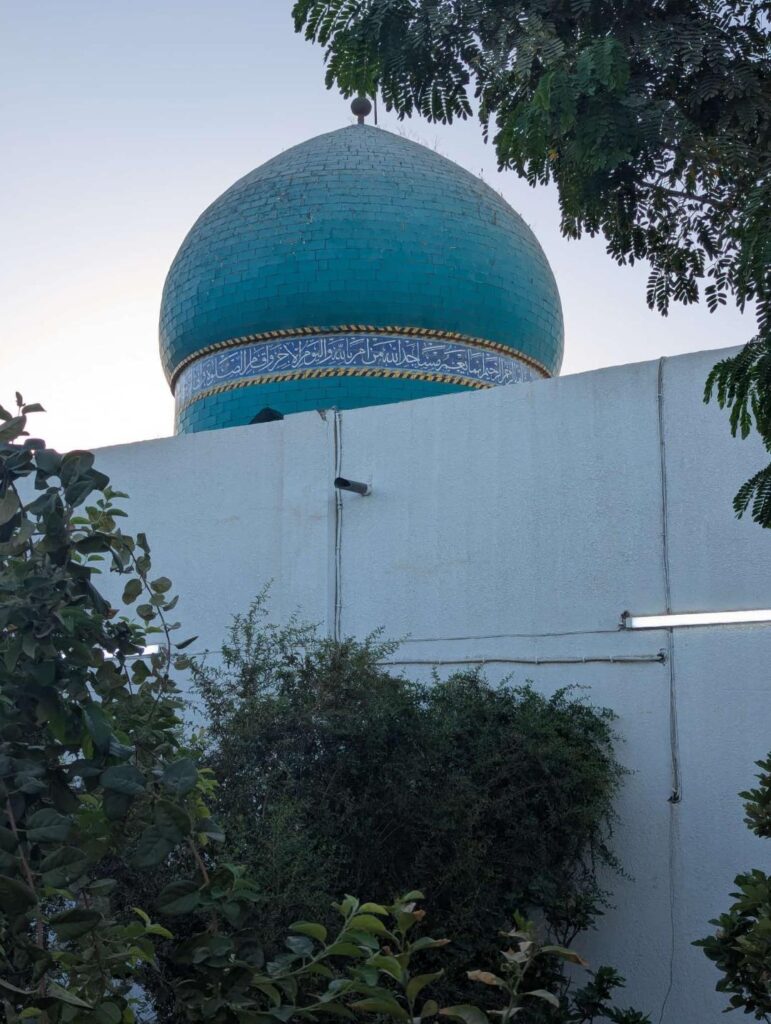
Hujjatul Islam (Proof of Islam)
The Grave of Imam Ghazali (Allah sanctify his secret)
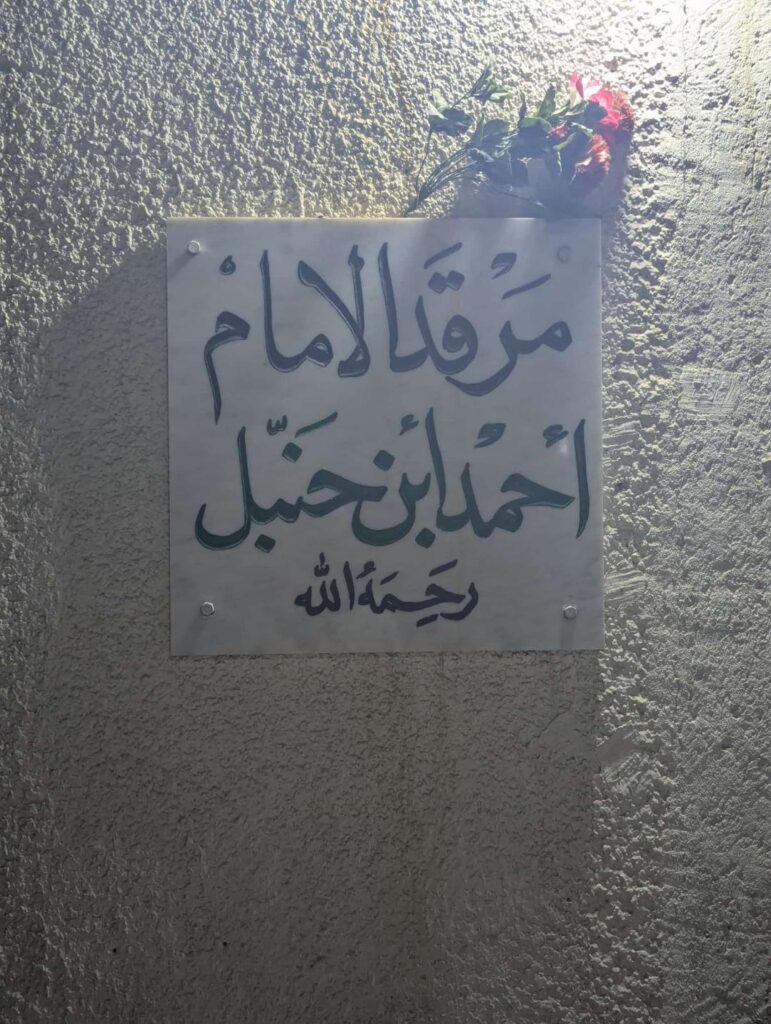
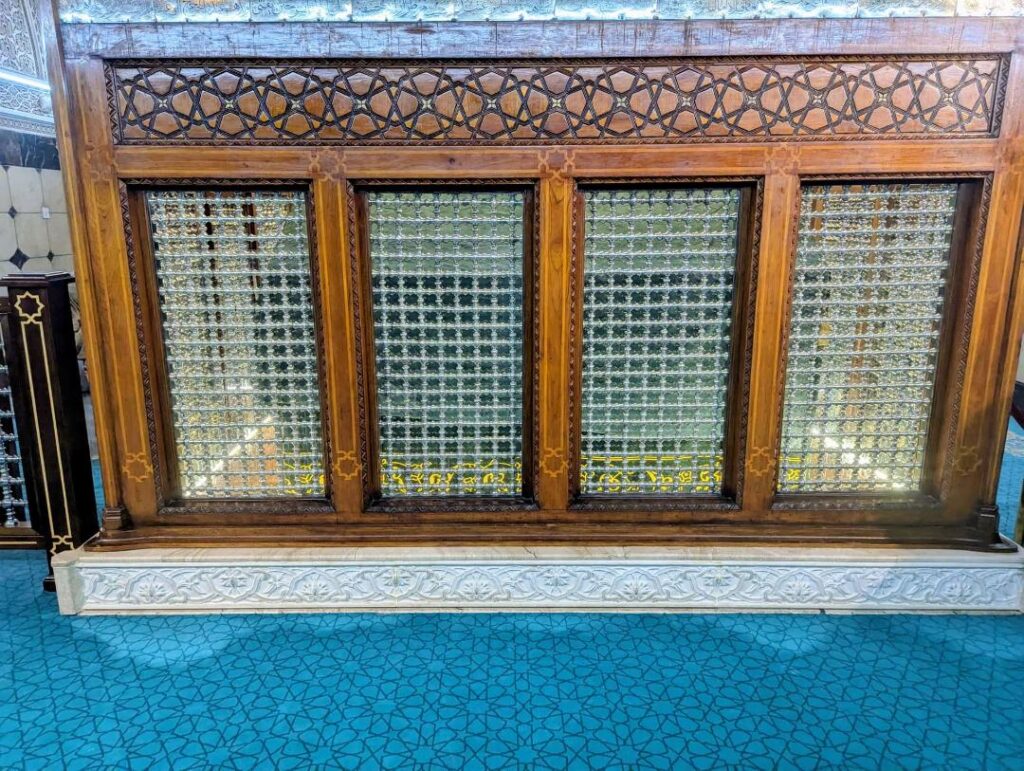
The Mausoleum of Imam Ahmad ibn Hanbal (Allah elevate his status)
I pray Allah SWT sends someone to refurbish the whole area
One of the greatest disappointments of this journey was the grave and house of Imam Ahmad RH had not been looked after. Most tombs in Iraq were well looked after as you saw yesterday and the day before, some with gold plated doors and chandeliers on the ceiling. In the following pages you will see how well and preserved the Shia sites are. Imam Ahmad RH was one of the greatest Sunni Imams, his largest following is in Saudi Arabia and they should fund the upkeep of his tomb. 
In the earlier part of the second century, an ideology called Itizaal creeped into the Ummah. The people following this ideology were know as Mutazilah. This group were regarded as rationalists and philosophers. They would try and justify Islamic teachings and beliefs through ration and intellect. Their centre of focus were mainly issues like the attributes of Allah Ta’ala, seeing Allah in Jannah, predestination, free will, and the nature of the words of Allah, Ta’ala.
They gave preference to intellect, ration, and philosophy over the Divine revelation sent by Allah Ta’ala and over the words of his Prophet ﷺ.This ideology gained popularity during the reign of Mamun Rashid, so much so that it turned into a state religion, and their views were imposed upon the people, and the masses were forced to accept them.
The issue of the nature of the words of Allah Ta’ala, the Quran, became a major tenet of this school of thought and it was considered a criteria for determining ones adherance to the Mutazili school of thought. The Mutazilis held that the Quran (The words of Allah) are a creation of Allah, whilst the Ahlul Sunnah Wal Jamaat maintained that the words of Allah are an attribute (sifat) of Allah and not a creation of Allah.The Mutazilis would punish and torture those who wouldn’t accept their views. Mamun Rashid once summoned all the big Ulama of the time to question them with regard to their beleifs about the nature of the words of Allah Ta’ala. Some of those scholars accepted the views of the Mutazilis, out of fear, whilst other scholars stayed firm on the belief of the Ahlul Sunnah. Out of them, some such as Ishaq Ibn Ibrahim, Bishr ibnul Walid, and Ibrahim al-Mahdi were executed, and many were thrown into prison.
After some time, Imam Ahmad RH was brought before the governor in Baghdad. He was tied with four chains fastening his legs and was told to submit tHe was then brought in front of the Caliph. The Caliph ordered that Imam Ahmad RH should be given 34 lashes. After each whip, Imam Ahmad would say, “Give me some proof from the Quran or Sunnah, then I could accept your view. Imam Ahmad RH was imprisoned and tortured for 28 months. People who felt for him, would visit him and narrated the Hadith to him, that in such a situation one is allowed to even utter words of Kufr to save ones life. Imam Ahmad RH would reply, “But what do you say of the Hadith of Khabbab which says that there were people who were slaughtered into two, but they did not give up their faith.” Subhan Allah!
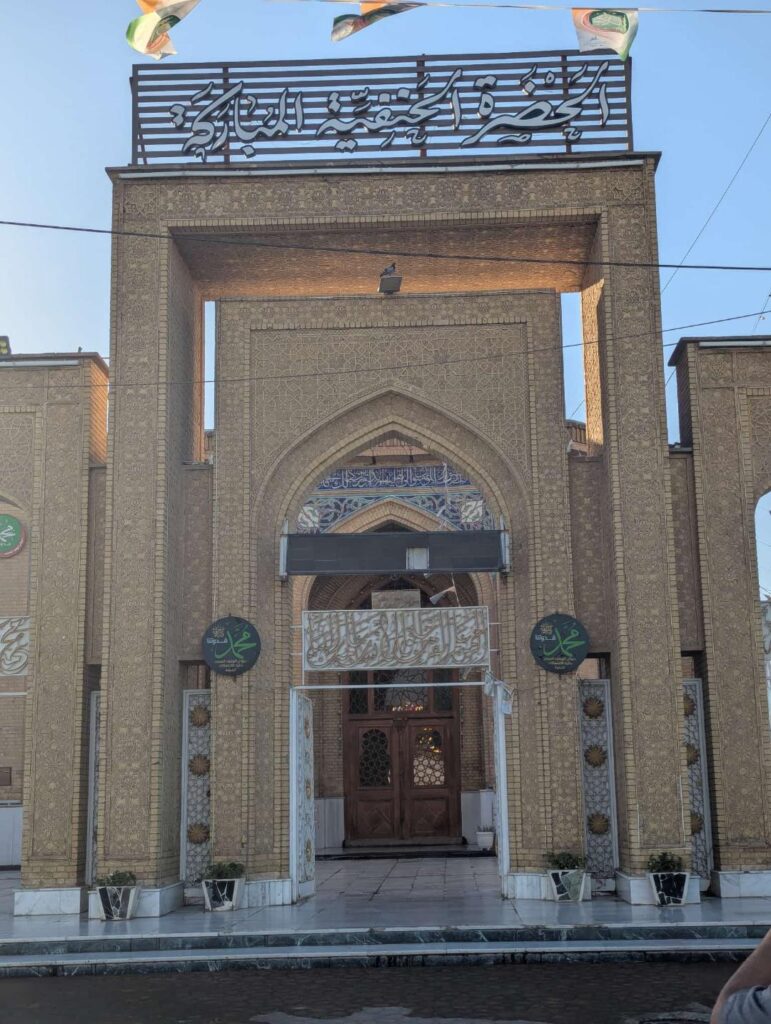
Yahya ibn Ma’een RH: “The people wanted us to be like Ahmad ibn Hanbal. No, by Allah! We are not as strong as Ahmad and we are not strong enough to follow the way of Ahmad “
Mausoleum of Imam Abu Hanifah (Allah be pleased with him)
Day 2
Imam Abu Hanifa's RH full name was Numan ibn Thabit. Imam Abu Hanifa RH was born in Kufa in the year 80 and passed away in 150 after hijrah. Imam Abu Hanifa RH is the first of the four Imams of the different schools of thought. It is the Sunnah of Allah SWT that He executes His will through some natural means which serves to strengthen the faith of those who examine these signs and ponder over them. History reveals that in Islam's darkest times this religion was safeguarded through beacons of light in the form of the righteous individuals who upheld Islam.
Imam Abu Hanifa: The Juggernaut of Jurisprudence
Abu Huraira RA narrates the Prophet ﷺ said: "If deen was suspended from the Thurayya star (Pleiades) and the Arabs are unable to reach it, then a man from the sons of Persia will be able to reach it." (Saheeh Muslim). 
Allamah Suyuti RH mentions that this hadith refers to Imam Abu Hanifa RH. The reason being there was nobody equivalent to that level of knowledge during his time.One of Imam Abu Hanifa’s first areas of focus was the subject of Aqidah. Aqidah is the study of Islamic theology, which was threatened by the deviant ideologies festering in Kufa at the time. Imam Abu Hanifa RH would champion the field, debating against the figures of the aberrant creeds. One of the most noteworthy stories of Imam Abu Hanifa RH that highlighted his knowledge was his confrontation with an orator from the Romeo-Christian land. The man posed three questions: Where is Allah (SWT) facing, what was before Allah (SWT), and what is Allah (SWT) doing right now?In his response to the first question, Imam Abu Hanifa RH lit a candle and asked the man where the light of the candle was facing. He declared, similar to how the light of the candle was not directed one way and filled up the room, the same was true of the nur (blessed light) of Allah SWT. On the next question, Imam Abu Hanifa RH had the questioner count back from ten. He encouraged the questioner to continue after number one and the questioner responded that he could not. Abu Hanifa said in the same way, we do not entertain a “before” to Allah SWT because it is out of our comprehension. Before answering the last question, Imam Abu Hanifa RH requested to give his answer from a high placeThe questioner obliged and Imam Abu Hanifa RH responded to the last question saying Allah SWT had disgraced the questioner by giving the higher physical state to the one who protected his Deen.
Allah grant Imam Saheb coolness in his grave and a lofty status in Jannah, may we follow in his footsteps, Ameen.
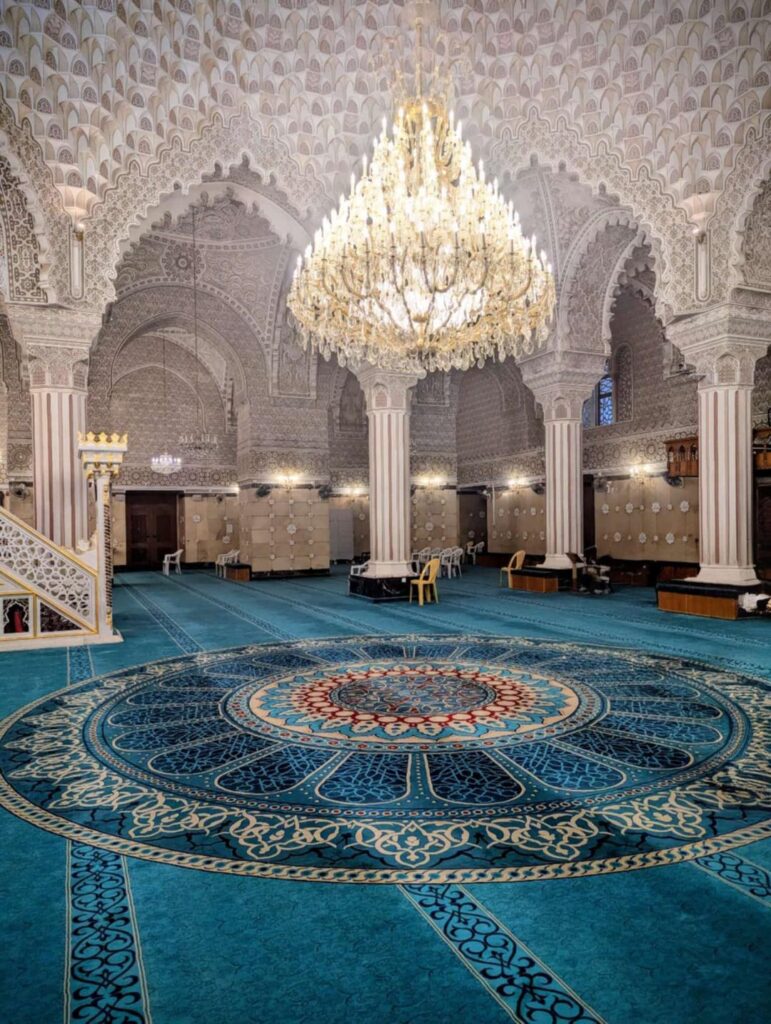
The Masjid of Imam Abu Hanifah RH
The grave of Imam Abu Hanifah RH
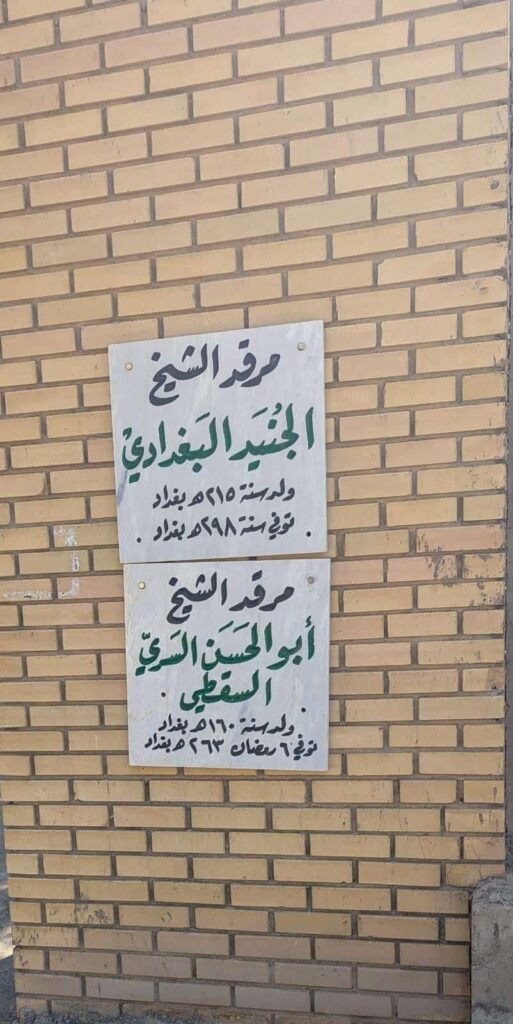
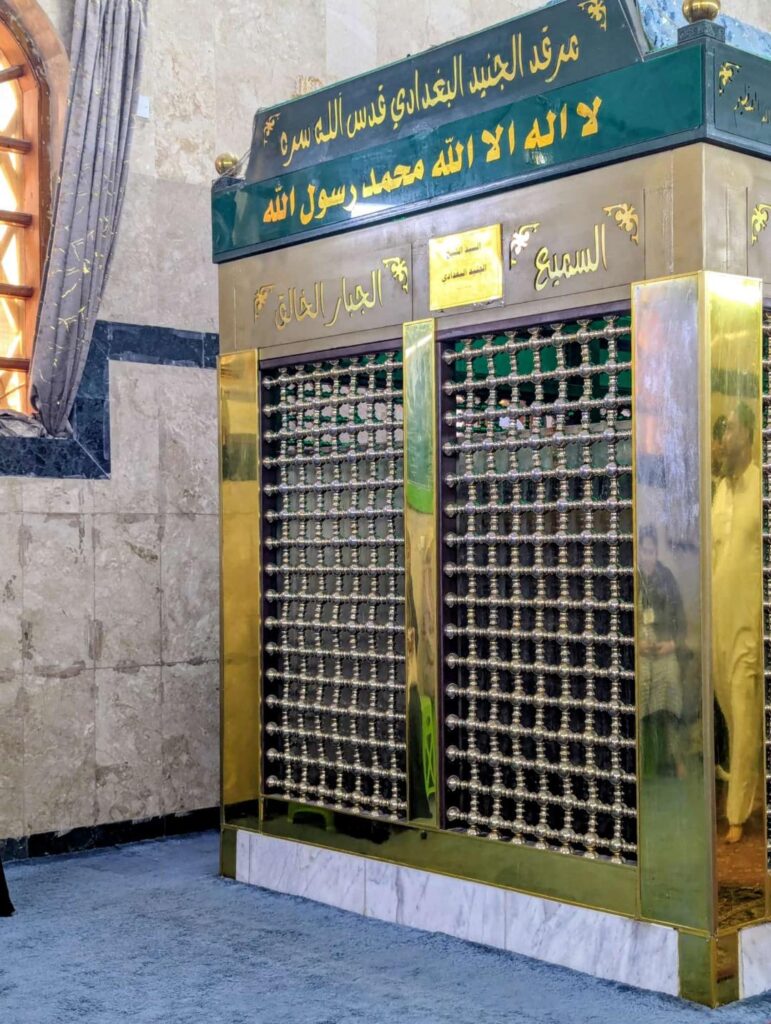
The Mausoleum of Shaykh Junaid Baghdadi and Shaykh Sarri Saqti (Allah have mercy on them)
Junayd al-Baghdādī’s efforts were instrumental in bridging the gap between taṣawwuf and the scholars of fiqh, reconciling their perspectives and earning him broad recognition within Ṣūfī circles. For his commitment to engaging with society and guiding the people without retreating into isolation, he was honoured with the title Sayyid al-Ṭāʾifah (Master of the Ṣūfī Order). In the following, we take a brief glimpse into the eventful life and legacy of Imām Junayd al-Baghdādī RH.
Prior to sainthood, Junaid Baghdadi RH was a skilled warrior and an undefeated world-renowned wrestling champion. One day the King of Baghdad issued a challenge, “Today, if any man defeats Junaid, I will give him whatever he asks.”
A man came forth and accepted the challenge. The crowd gasped in shock for the man was feeble and weak. So weak that his skin was hanging off his bones. The King remarked “It seems that death is calling him. How will he beat Junaid? He won’t withstand a slap.” The man remained firm in his call, he wanted to fight. The fight became official and Junaid entered the arena. Just before the fight took place, the man whispered into Junaid's ear. He said “Everyone is right, I cannot withstand your strike but I have no choice. I have two daughters who are ready for marriage but I own nothing. In my shame, I wish to die. I either jump into the ocean or die by your hands.”
Junaid replied, “If you need wealth, go ask the King and he will help.” The man responded “I cannot ask anyone for anything. I am from the offspring of the Prophet ﷺ, a Sayyid, it is forbidden for me to ask. Now, you can lose and sacrifice your honour of the world but you will gain honour in theJunaid pondered over the offer. If he lost, he would lose his fame and reputation. If he won, with what face would he face the Prophet ﷺ? The whistle blew and the fight commenced. To avoid suspicion, Junaid displayed some finesse in his manoeuvres but allowed himself to be pinned. The man mounted his chest and was victorious.
After succumbing to his first loss, the people disowned Junaid. When he arrived home, he began crying but his heart was content. That night, the Prophet ﷺ came to him in a dream and said, “O Junaid! You sacrificed your honour and kept the dignity of one of my sons. As of today, your name is raised amongst the Awliya.”The next day, the King summoned Junaid and said, “O Junaid, we know you. No man can compete with you and yet yesterday you hardly fought. Tell me this, why did you fall and let the man beat you?”
Junaid responded, “I am not Shimr who stands on the chest of the offspring of the Prophet ﷺ. The man was a Sayyid so how could I stand upon his chest? Yes, I sacrificed my honour for the sake of the Prophet ﷺ and from today I need not wrestle. From today, I shall spend my life in the love of the Prophet ﷺ.”
The Pioneer of Islamic Mysticism
Grave of Shaykh Junaid Baghdadi (Allah sanctify his secret)
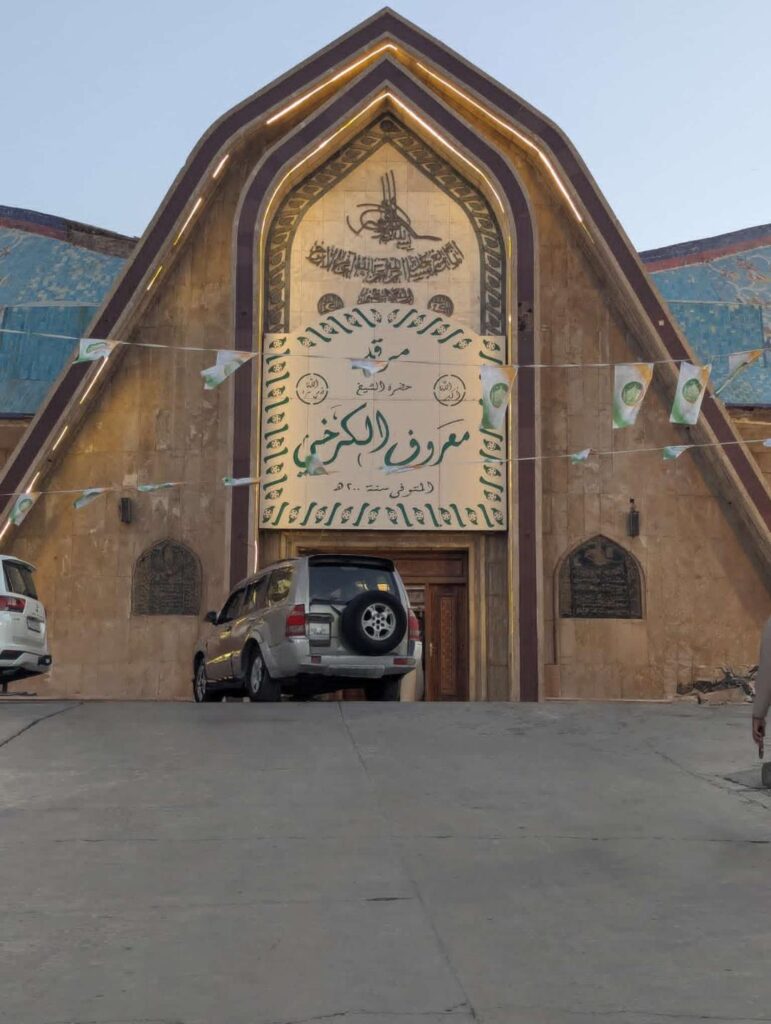
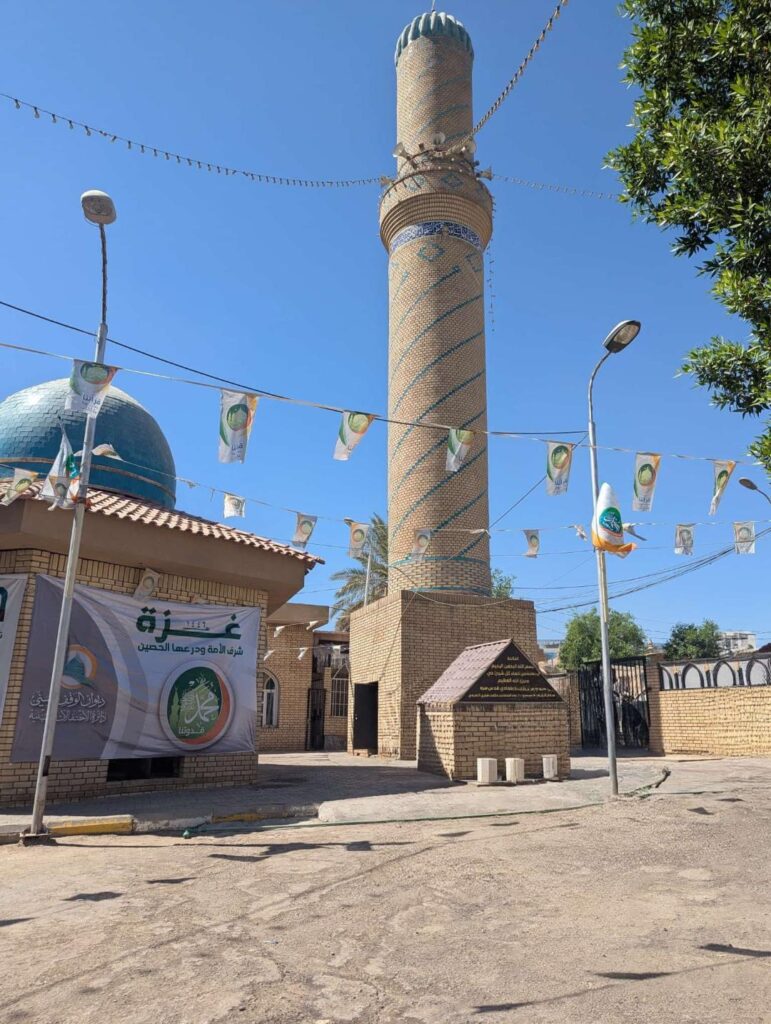
The Mausoleum of Shaykh Maroof Karkhi (Allah have mercy on him)


His full name was Abu Mahfuz Ma’ruf b. Firuz al-Karkhi. Shaykh Ma’ruf al-Karkhi RH was born to Christian parents but, from an early age, he rejected it, even when beaten for it at school, the whole doctrine of the Trinity and declared his conviction that God is One. Eventually, according to the same authority he ran away from home and his parents pined for him. They said in his absence that, so long as he came back to them, they would surely approve and accept whatever religion he chose for himself. Some years later, he did call at their door. He announced himself by name adding that he was now a Muslim. His parents promptly converted to Islam at his hands.

Once one of Ma‘ruf Al-Karkhi RH friends asked him the following, “What is it that has caused you to abstain from the world and from the creation of God, and remain in seclusion, remembering Almighty God? Is it the fear of Death and the grave, or the fear of Hell, or the enthusiasm of attaining Paradise?” Ma‘ruf Al-Karkhi RH said, “O My Friend! You discuss such minor things. What are all these worth in front of the creator Almighty God? All these are but humble subjects of Almighty God. Once you taste the pleasure of his closeness, then you will not think of any of the other things (you have mentioned).”

Shaykh Maroof Karkhi RH is well known for his high ranking in Tasawwuf. His calibre is evident from his students:
Shaykh Junaid Baghdadi RH 
Shaykh Sarri Saqti RH 
Shaykh Bishr Haafi RH 
Shaykh Shibli RH
Even Shaykh Abdul Qadir Jilani would visit his grave for meditation (they were 200 years apart).
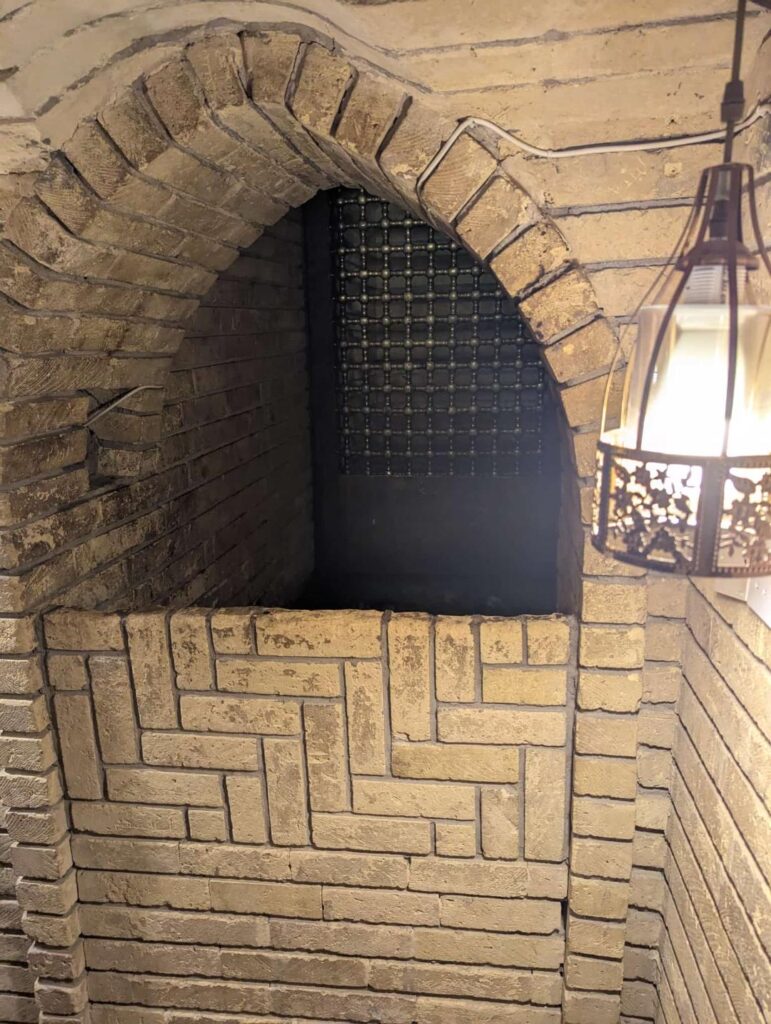
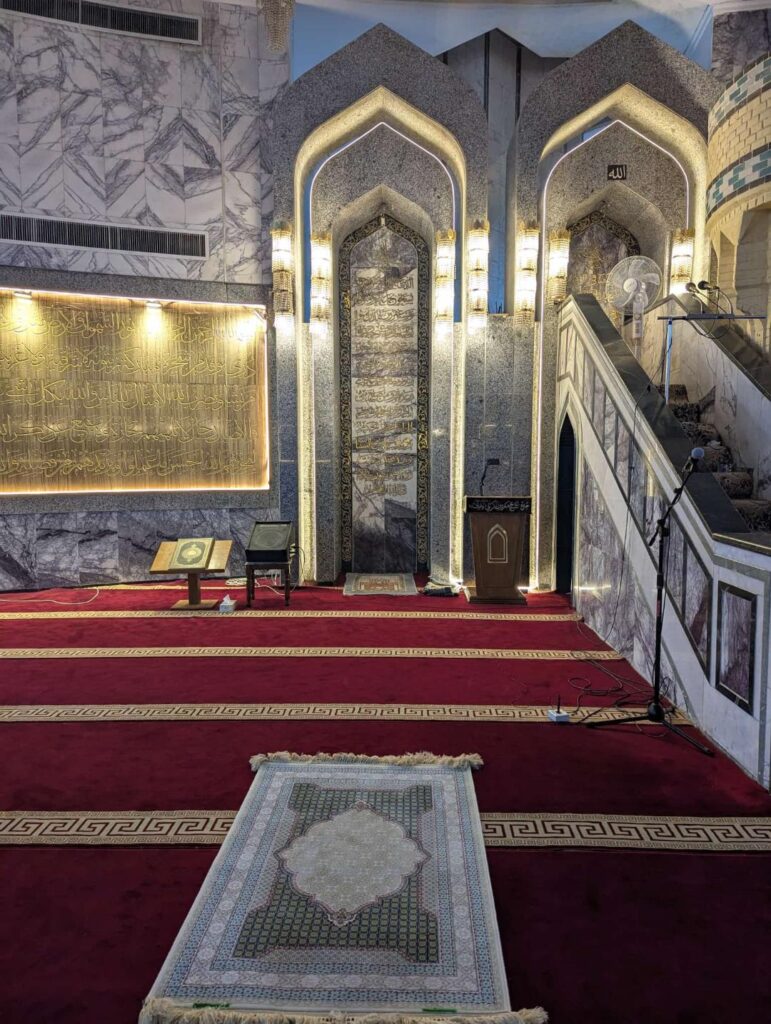
Grave of Maroof Karkhi (Allah have mercy on him)
Masjid of Maroof Karkhi
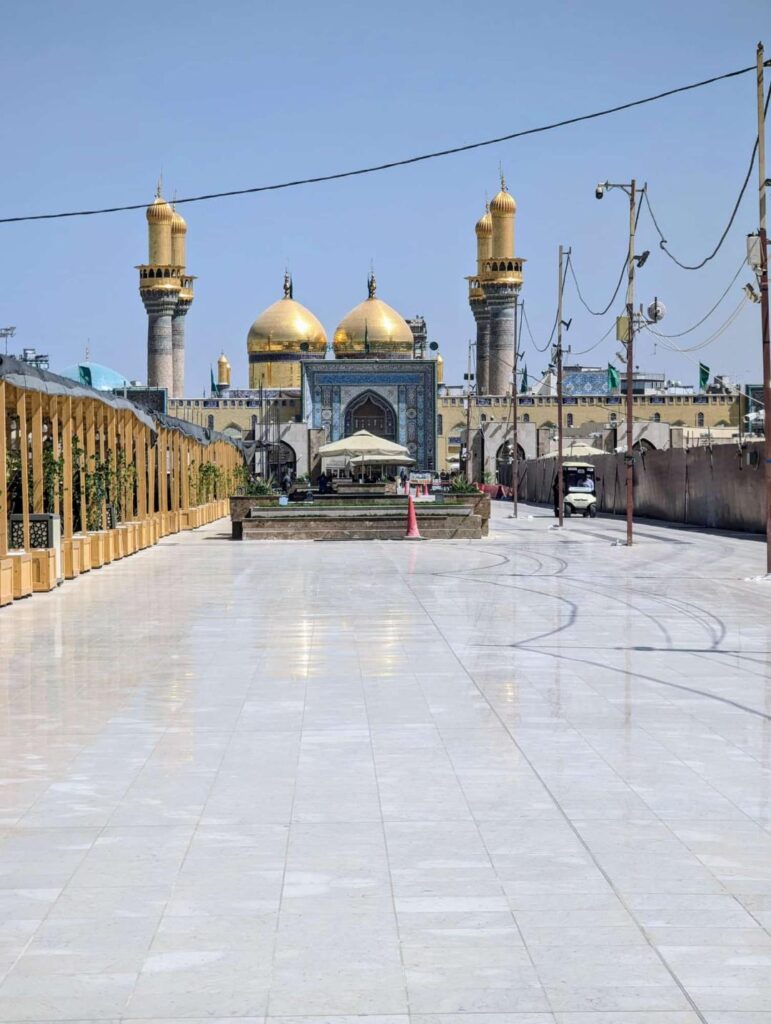
The Mausoleum of Musa Kazim (Allah have mercy upon him)


Musa ibn Jafar al-Kazim (Allah have mercy on him) was the great grandson of Hussain RA. He was born in 745 in Madiha Munawwarah, his father was Jafar al-Sadiq RH.
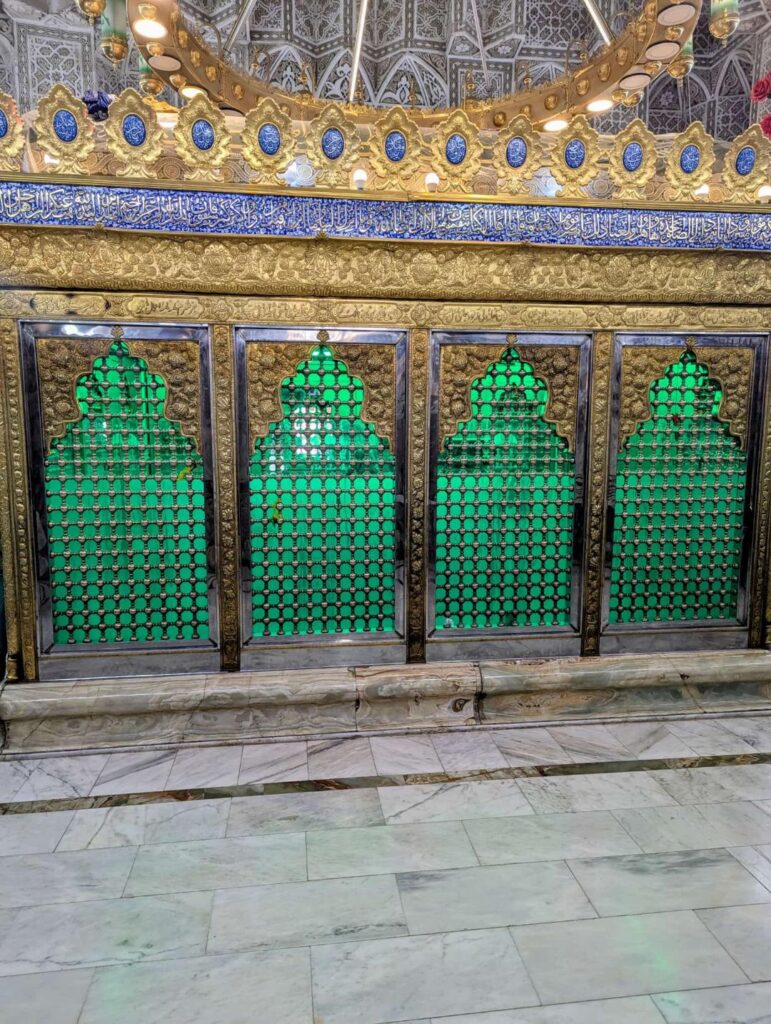
The Twelver Shias class Musa Kazim RH as the seventh Imam. Therefore you will see the tomb decorated with elegance.
The grave of Musa Kazim (Allah have mercy upon him)
The Mausoleum of Imam Abu Yusuf (Allah have mercy upon him)
Imam Abu Yusuf Yaqub ibn Ibrahim (113-182) was the foremost student of Imam Abu Hanifah and the first chief judge in Muslim history, he was also a Hafidh of Hadith.
During the day he would listen to cases and give fatwas, during the night he would teach hadith and fiqh.
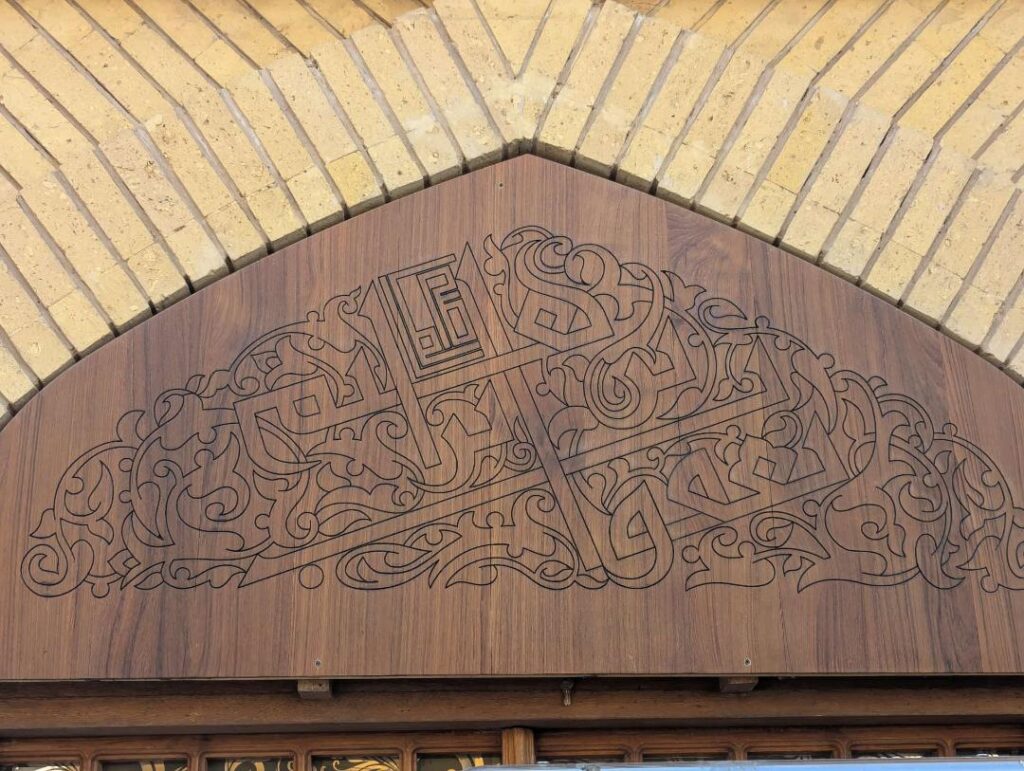
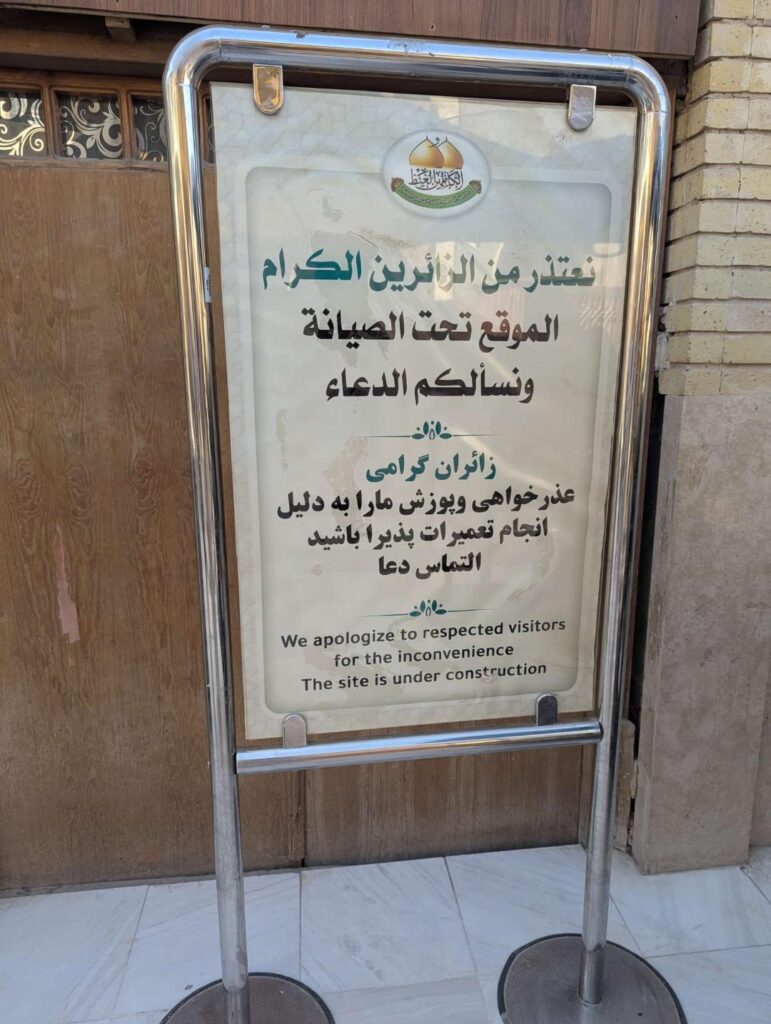
Behind the grave of Musa Kazim RH is the grave of Imam Abu Yusuf RH (tomb is under construction so we weren’t allowed inside)
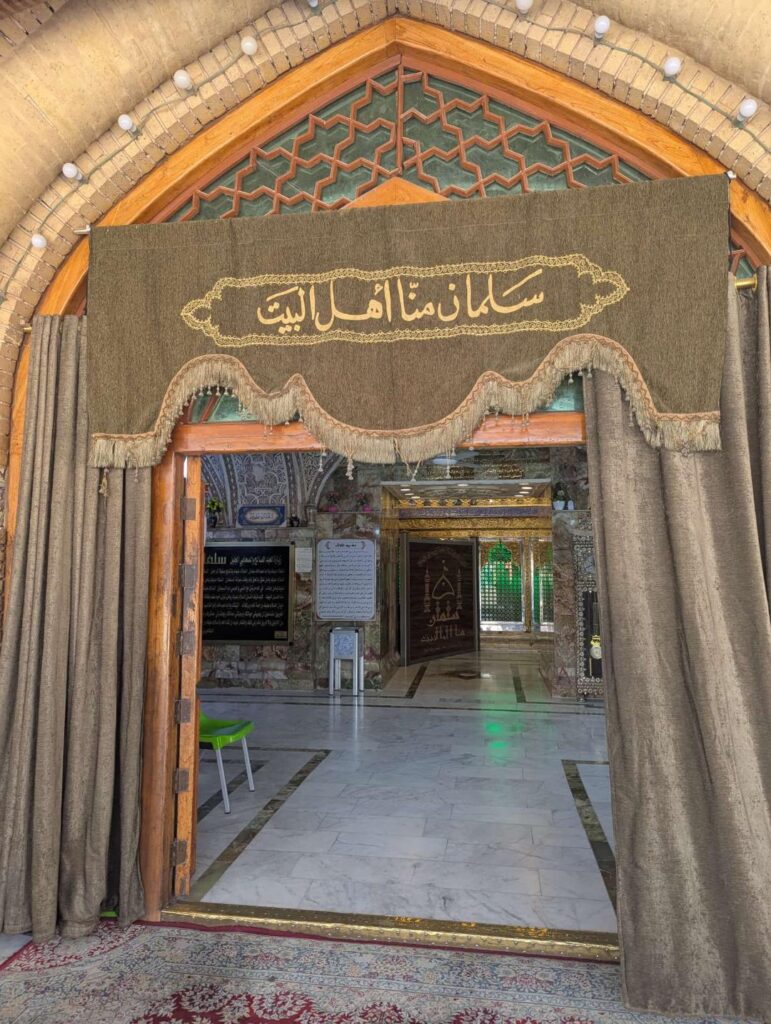
The Mausoleum of Salman Farsi (Allah be pleased with him), Madain
The Grave of Salman Farsi (Allah be pleased with him), Madain
The Prophet ﷺ said: "Salman is one of us - the people of the household." (Mustadrak Hakim)
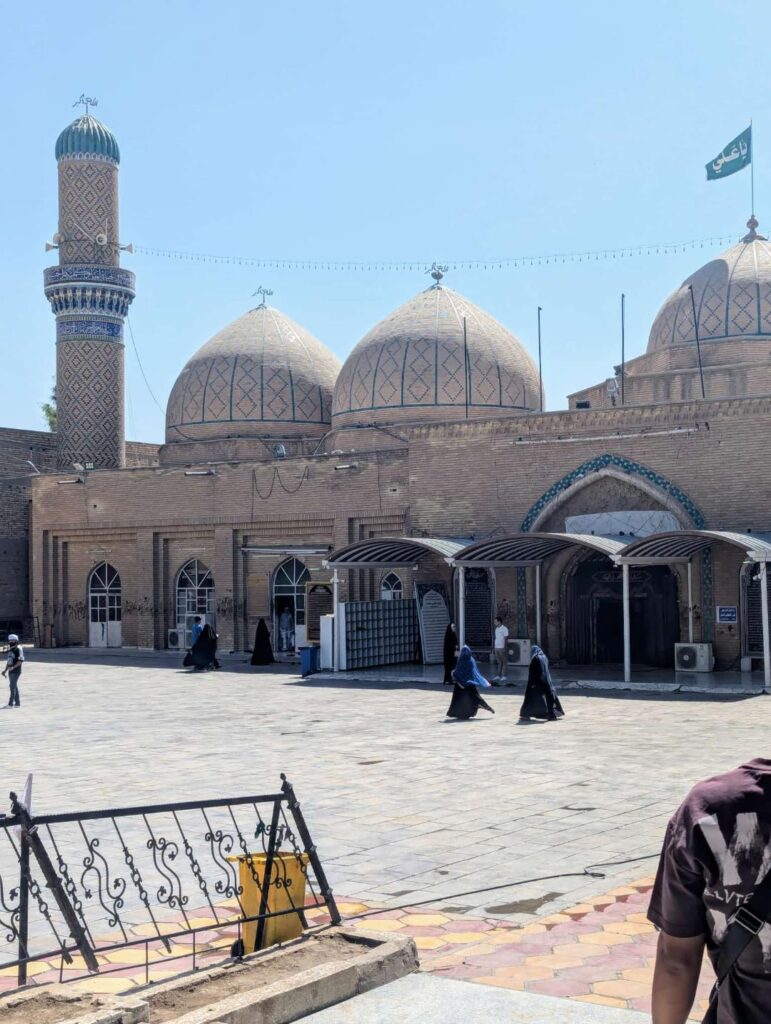
Salman Farsi (Allah be pleased with him), also known as Salman the Persian was a companion of the Prophet Mohammad ﷺ and the first Persian who converted to Islam. Salman Farsi RA was born in Isfahan, Iran, and was originally named Ruzbih. According to traditions, his father, Khushfudan, was an Iranian landholder who practiced the Zoroastrian religion. However, the family later converted to Christianity.
As Salman Al Farsi RA grew up in his hometown in Iran, his father’s love for learning about the new religion encouraged him to send his son to Syria to study under leading Christian scholars. However, Salman Al Farsi RA had other plans. He was eager to learn more about the religion of Ibrahim AS, and he used his travel plan to Syria as an escape in search of the Prophet ﷺ in the land of Arabs.
On his way to Hijaz, Salman Farsi RA was enslaved and sold to a man in the Banu Qurayza tribe in Madinah, an influential Jewish tribe. The event occurred around the same time the Holy Prophet ﷺ had recently migrated to the city from Makkah. Since both Salman Farsi and the Holy Prophet ﷺ were both in Madinah, Salman Farsi RA quickly learned about the presence of a prophet who recently migrated from Makkah.

When Salman Farsi RA first met the Holy Prophet ﷺ in Masjid e Quba in Madinah, he shared some food as a present which the Prophet (P.B.U.H.) accepted, but he didn't accept Sadaqah. Salman RA saw the seal of Prophethood and recognised that Islam's teachings aligned with the religion of Abraham.
After a few more interactions in and outside the masjid, Salman Farsi RA decided to convert to Islam solely inspired by the Prophet’s ﷺ character.
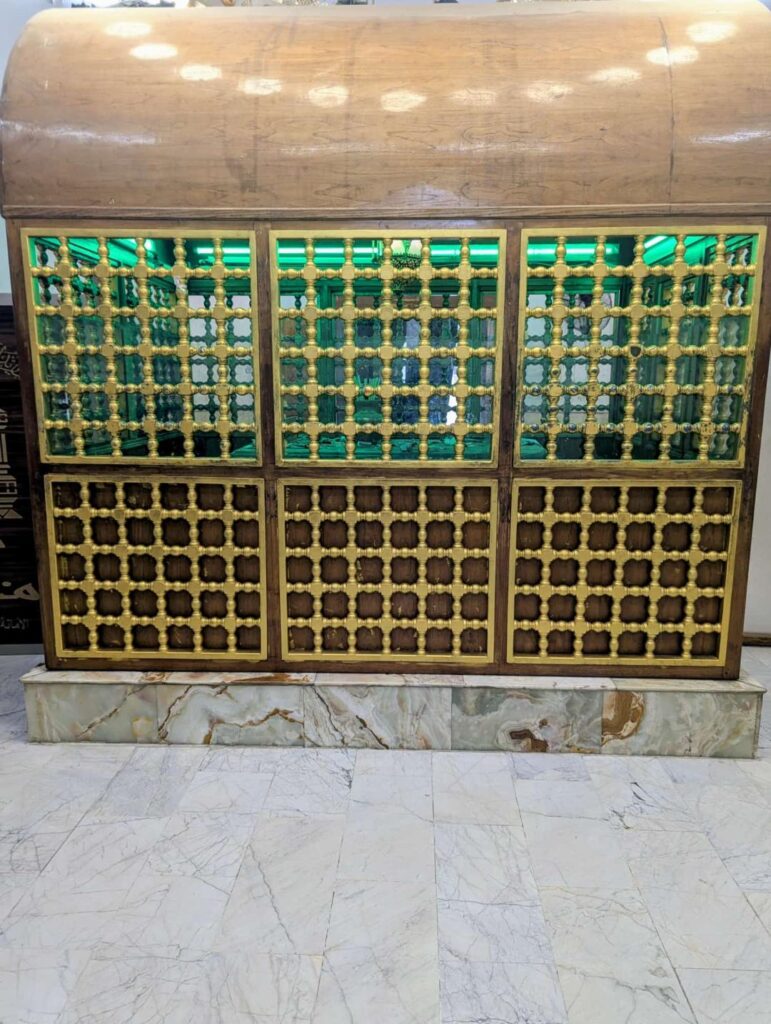
The Grave of Hudhayfah bin Yamaan (Allah be pleased with him)
"If you wish you may consider yourself among the Muhajirin or, if you wish, you may consider yourself one of the Ansar. Choose whichever is dearer to you." With these words, the Prophet ﷺ addressed Hudhayfah ibn al-Yaman when he met him for the first time in Makkah. How did Hudhayfah RA come to have this choice'?
His father, al-Yaman was a Makkan from the tribe of Abs. He had killed someone and had been forced to leave Makkah. He had settled down in Yathrib, becoming an ally (halif) of the Banu al-Ash-hal and marrying into the tribe. A son named Hudhayfah was born to him. The restrictions on his returning to Makkah were eventually lifted.

The gravest problems the Muslims of Madinah had to face was the existence in their midst of hypocrites particularly from among the Jews. Although many of them had declared acceptance of Islam, the change was only superficial, they continued to plot and intrigue against the Prophet and Muslims. Because of Hudhayfah's ability to keep a secret, the Prophet ﷺ confided in him the names of the munafiqin. It was a weighty secret which the Prophet didn't disclose to any other companions. He gave Hudhayfah RA the task of watching the movements of munafiqin, following their activities, and shielding the Muslims from their sinister actions.
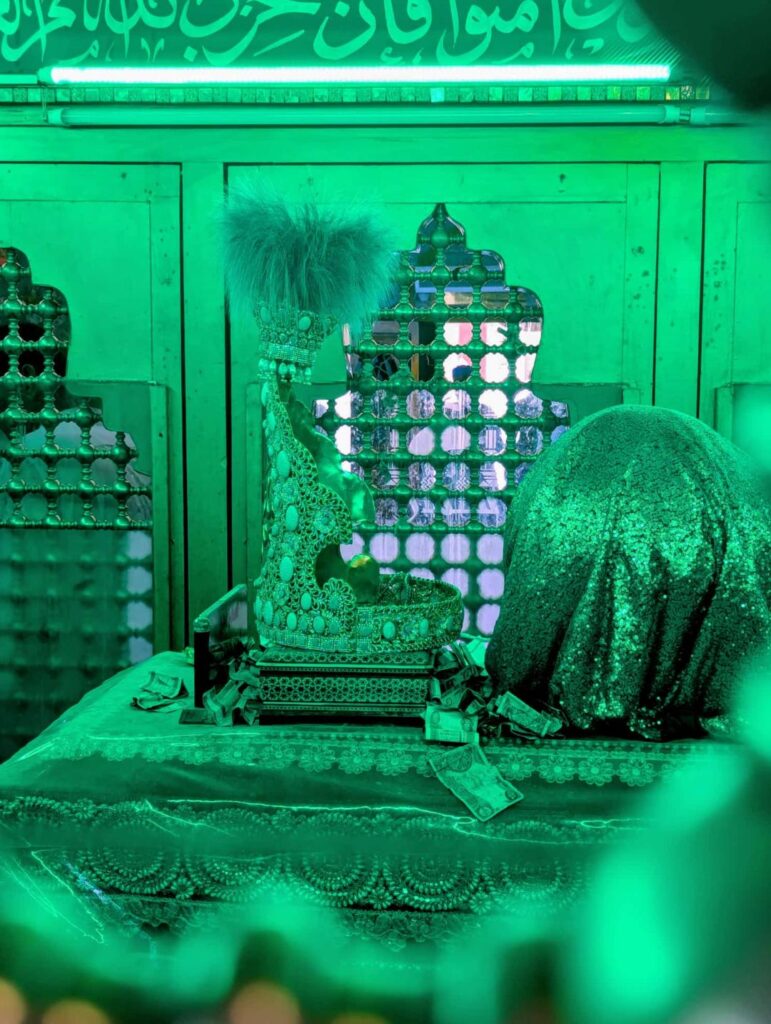
The Keeper of the Secrets (Allah shower his mercy on all the companions of the Prophet SAW)
Karbala – A Story of Pain and Sorrow

The Battle of Karbala took place on the 10th of Muharram in the year 61 A.H., approximately 50 years after the death of the Prophet Muhammad ﷺ. At this time, the Muslim rulership had been transferred to Yazid, son of Muawiyah RA. Yazid’s rulership was filled with corruption and violence, and Hussein RA son of Ali ibn Abu Talib RA and grandson of the Holy Prophet ﷺ took a stand against it. Yazid was hated for his violence, and knew Hussein RA was respected by society.

Thus, in order to validate his methods, Yazid went to force Hussein RA for his pledge of allegiance towards him. Hussein RA was raised in the Household of the Prophet ﷺ and was raised on the principles of truth and justiceAfter refusing to give allegiance to Yazid, Hussein RA took the ultimate stance for justice on Ashura, where he and his 72 companions, outnumbered by Yazid’s army of 33,000 men, were massacred.

The Battle began after the afternoon prayers – with Yazid’s army leading the attack on Hussein RA and his companions. Despite having a limited number on their side, the companions of Hussein RA fought valiantly. Eventually, Hussein RA was killed, and the bodies of the martyrs were trampled upon. This revolutionary act for Justice and to save the Truth of Islam sparks spiritual, physical, emotional, social, cultural, and political revolutions to this day.
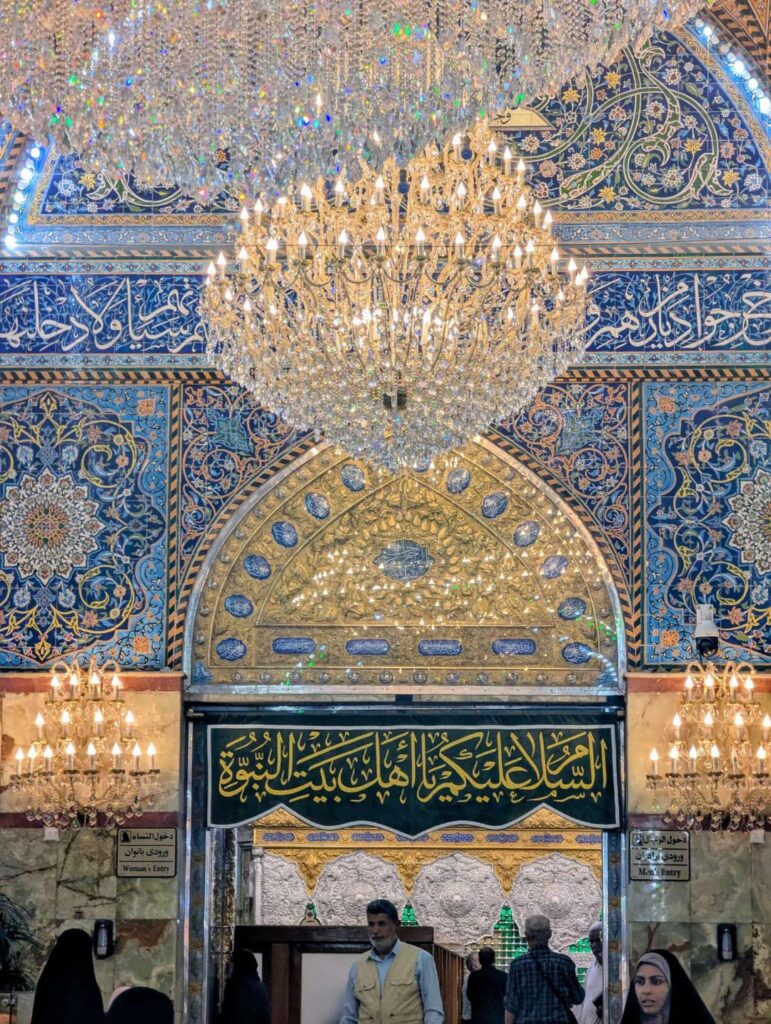
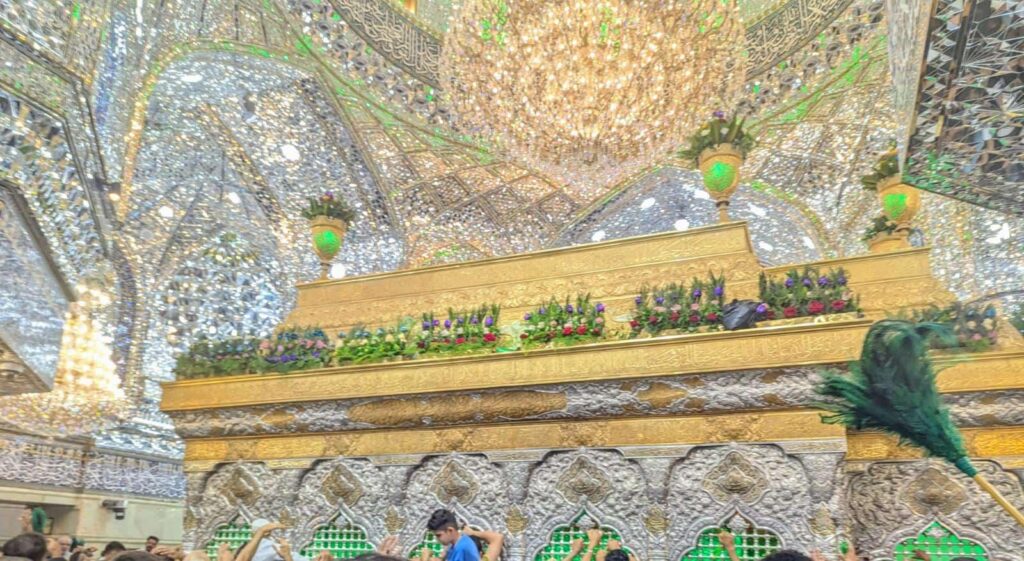
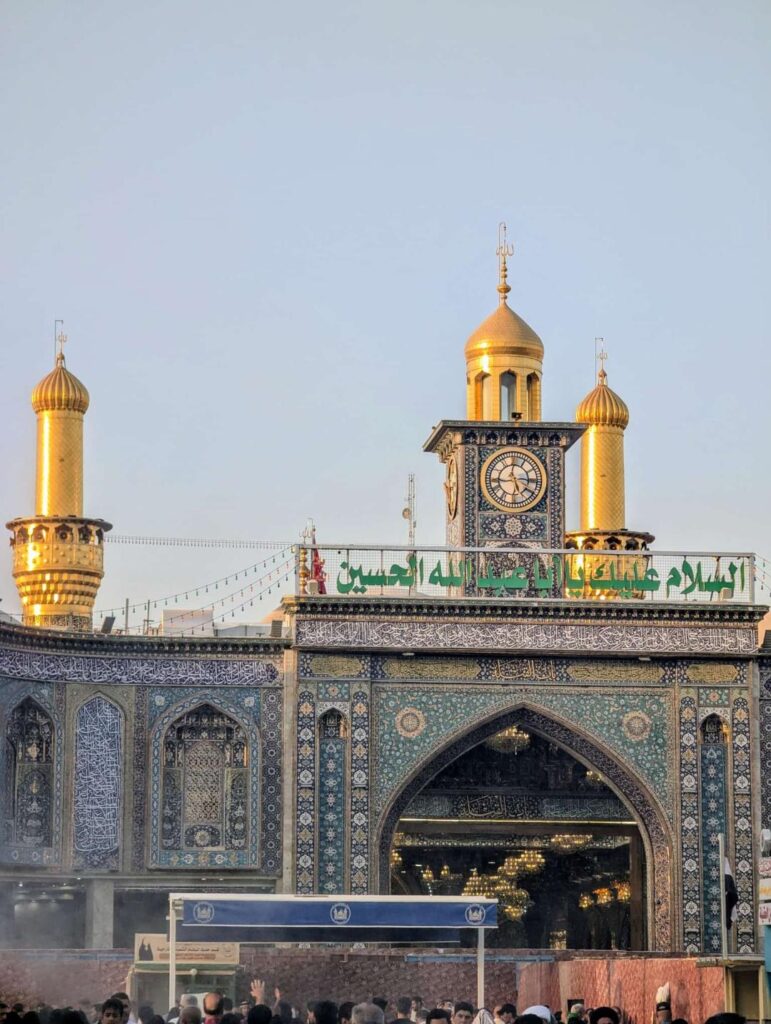
The Mausoleum of Hussain ibn Ali (Allah be pleased with him)
The grave of one of the greatest martyrs of Islam – Hussain ibn Ali (Allah be pleased with them)
Now, we will touch upon Shias and their beliefs in brief:
There are three major branches of Shia Islam, Twelvers, Ismaili, Zaidi. 
The Twelvers are the largest branch, they believe in a line of twelve divinely ordained Imams. Starting with Ali RA and ending with Imam Mahdi. Ismailis started from the sixth Imam Jafar al-Sadiq RA. Zaidis have a lot in common with Sunnis and do not believe in the concept of a hidden Imam.
The Twelvers are the largest group within mainstream Shiaism and they are the group that disrespect and curse Abu Bakr, Umar and Uthman RA due to the belief that they opposed the rising of Ali RA to be caliph.

They also disrespect the mother of believers Aisha RA. They highly respect the companions who supported Ali RA, as the is their first Imam. We have extremists in every sect, some extreme Shias even believe that Prophethood should not have been given to Muhammad ﷺ, rather it should have gone to Ali RA.

The majority of Iran are Twelvers, 95% (80 million). I have to mention this today, for the British youth who have praised Iran and Shias tremendously in the last two years (since Oct 7th) for their so-called support to Gaza. Don't be deceived by what you see online. Who killed Dr Ismail Haniyeh, the leader of Hamas last year in Tehran? Who planted the bombs six months beforehand? (Quoted by Mufti Taqi Uthmani Saheb). When the ceasefire was announced I don't recall any Gazans thanking Iran for their support? Qatar is one of the largest financial donors to Gaza and so is Turkey and there will be many Saudi citizens donating too.

Another notable group are the Alawites, mostly in Syria. They believe in the divinity of Ali RA, or even a trinity of God, Muhammad SAW and Ali. These are the Shias that killed thousands of Sunnis in the Syrian civil war and raped Sunni women in the masjid, with the microphones on, letting the whole town hear the screams of Sunni women getting raped. Think twice before you support them and praise Shia randomly because of some TikTok video you saw. Bashar Al Assad is also an Alawite, the damage he did is unforgivable.There's a lot more I can say on Shias and their hatred and oppression towards Sunnis, even in Iraq, after Saddam Hussain RH was martyred, America have put mainly Shia in charge of the government. Many of the Shia oppress Sunnis, to the point Sunnis are hiding their Sunnism and show that they are Shia. Regardless of whatever I have said above, we mustn't let our differences and hostility blind our hearts from feeling a level of humility, respect and pain when visiting these blessed places as they are the immediate family members of Nabi ﷺ.
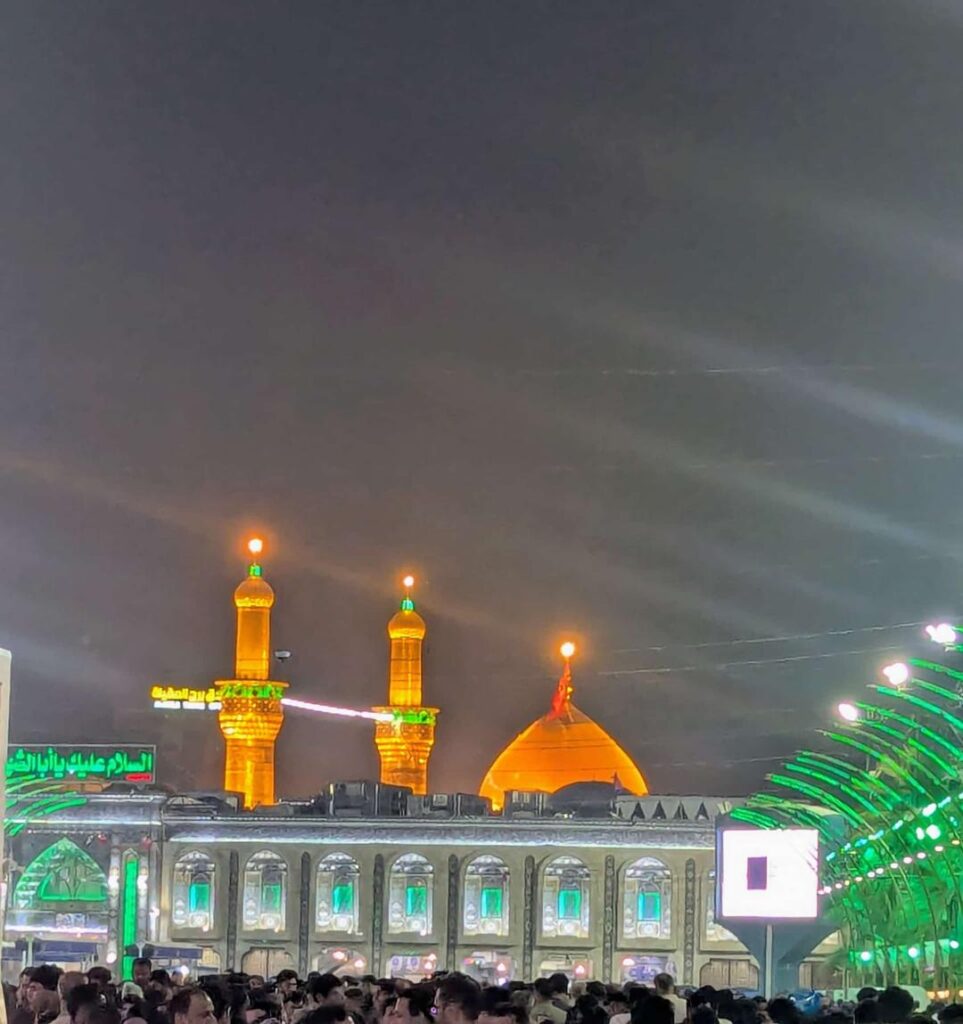
The Mausoleum of Abbas ibn Ali (Allah be pleased with him), Karbala
Abbas bin Ali was the son of Ali and Umm ul Banin RA. Abbas was born on 4th Shabaan 26AH. He was known for his bravery, courage, and loyalty to his family and his faith.
Ali ibn Abi Talib RA married Umm ul Banin after the death of his wife, Fatima bint Muhammad ﷺ. Ali RA was specifically looking to marry a woman who could be the perfect mother figure for his children and birth him a brave and valiant son. Ali RA instructed his brother Aqil RA to find a woman fulfilling these criteria. Aqil RA identified Umm ul-Banin. After some time, Ali proposed to Umm ul Banin RA and married her.
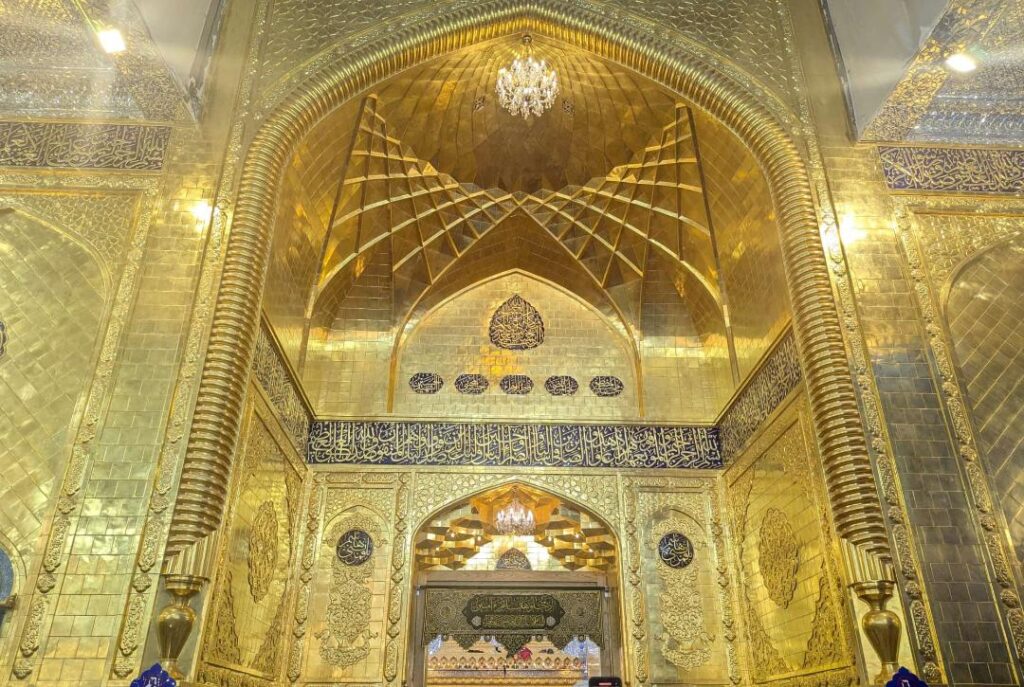
If you wanted to see loyalty, courage, bravery, and piety epitomised in one person, you wouldn’t have to look much further than Abbas bin Ali RA.


The story of Abbas’s quest to fetch water for the women and children at Karbala displayed all his good qualities in one go – none more so than his bravery. The enemies of Hussain RA had taken control of the water supply and denied Hussain RA and his camp access to water. 

On the day of the battle, Hussain RA and his army fought in the unforgiving heat of Arabia whilst not having drunk a sip of water for three days. At one point during the battle, Abbas RA could no longer see the children and women of Hussain’s RA camp suffering from thirst. He decided to take action and fetch water from the Euphrates river, which was located nearby.

Abbas RA reached the river and found that the enemy army had stationed itself around it and was guarding the access to the water. Abbas RA was undeterred and bravely charged towards the enemy, wielding his sword, and managed to break through their ranks and reach the river.

He then filled a bag with water and started to make his way back to the camp. The fact that he did not drink water despite being thirsty and preferred the woman and children to drink first says a lot about his character. On the way back, he was soon surrounded by enemy soldiers who attacked him with swords and arrows. Despite being outnumbered and under attack, Abbas continued to fight fiercely, using his shield to protect the bag of water. In the midst of the fighting, Abbas was struck by an arrow that pierced his eye and had both arms chopped off. He subsequently fell to the ground, called out to Hussain RA and died in his lap.
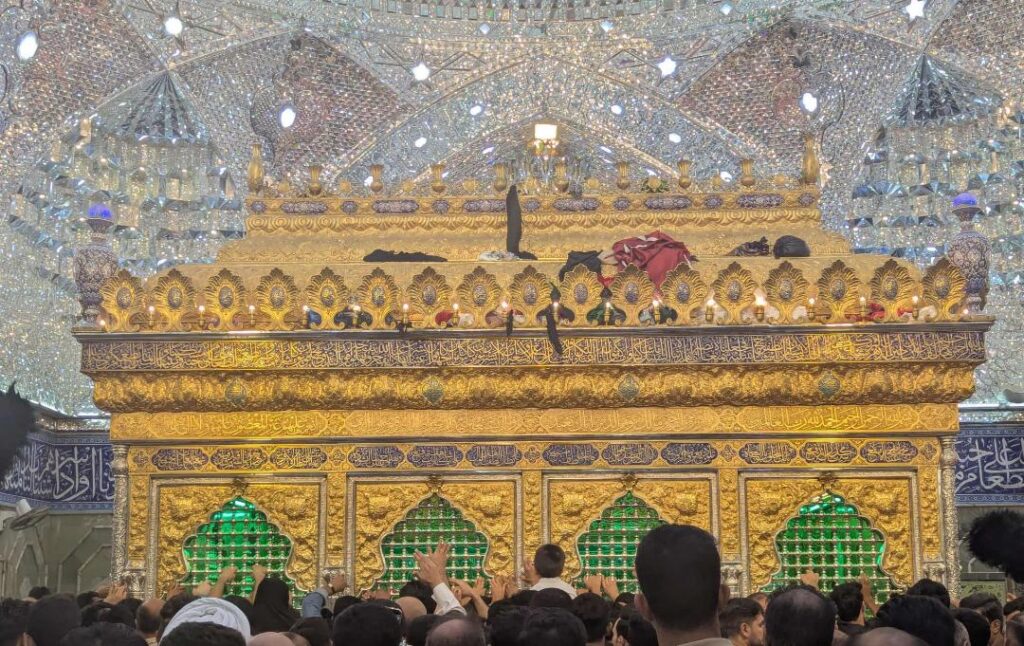
The grave of Abbas ibn Ali (Allah be pleased with him)
Ali ibn Abi Talib RA was the first cousin and son in law of the Prophet ﷺ, the fourth of the four rightly guided caliphs. The period of the Caliphate of Ali RA from 656 until 661 was the most tumultuous in his life. He was accused of failing to pursue the murderers of Uthman RA, foremost among his opponents was Muawiyah RA, the governor of Syria and a relative of Uthman. This led to the battle of Siffeen, which was prophecised in hadith.
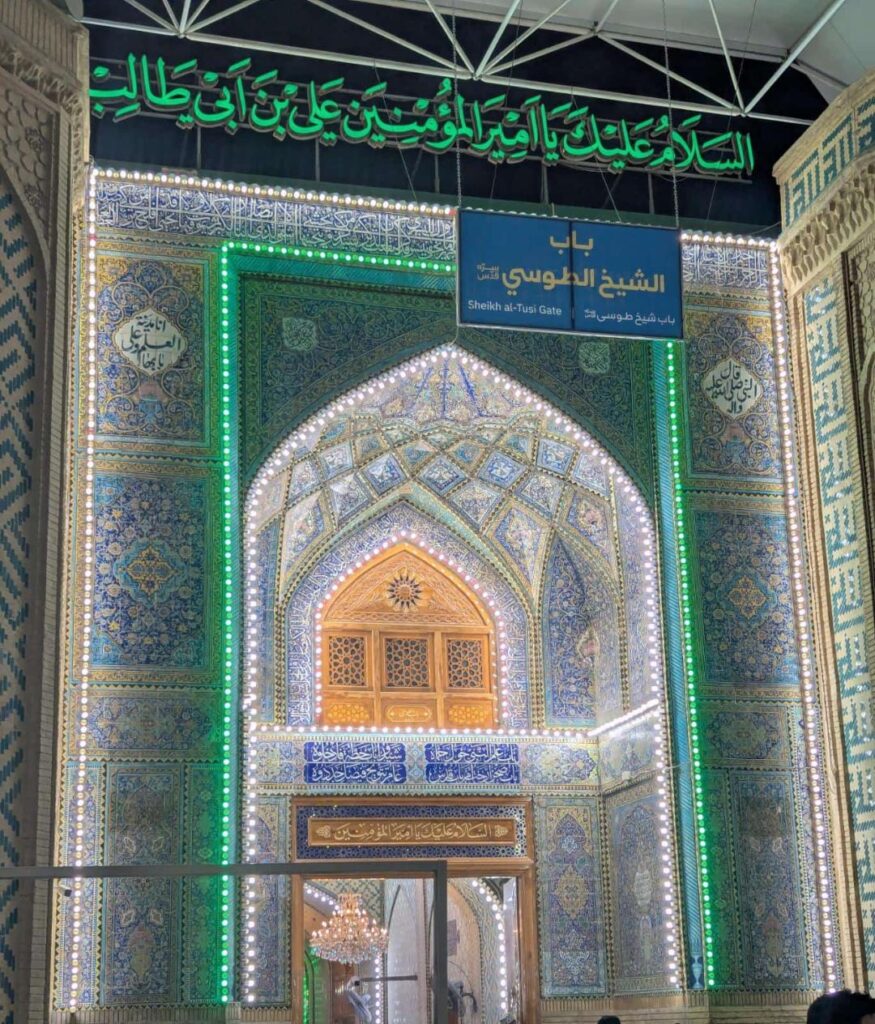
The Mausoleum of “Shere Khuda” Ali ibn Abi Talib (Allah be pleased with him)
كرٌم اللّه وجْهه Allah honour his face
The Grave of Ali (Allah be pleased with him)
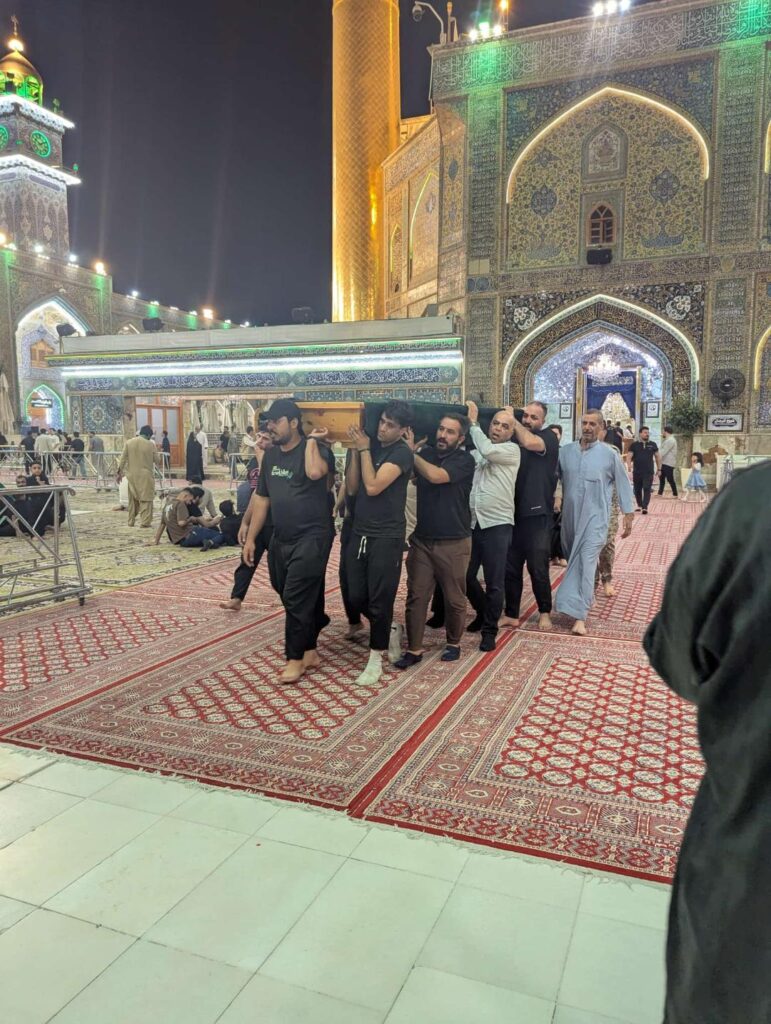
Every 10-15 minutes there are Janazahs, the deceased are mainly Shia Muslims from all over Iraq and Iran, they request to be buried next to Ali RA in Wadee Salam
Wadee Salam, Najaf
https://youtube.com/shorts/QC0sFYPzzyE?si=7XDdDLccCkMbUI8j

The world's largest cemetery, 6 million people are buried there. Every Janazah that comes into the Masjid of Ali RA does a tawaaf of the grave of Ali RA then gets buried in Wadee Salam.
The cemetery has 6 million bodies buried there, due to the fact anyone can get buried in the cemetery, Sunni or Shia from anywhere in the world, to gain the closeness to Ali (Allah be pleased with him).
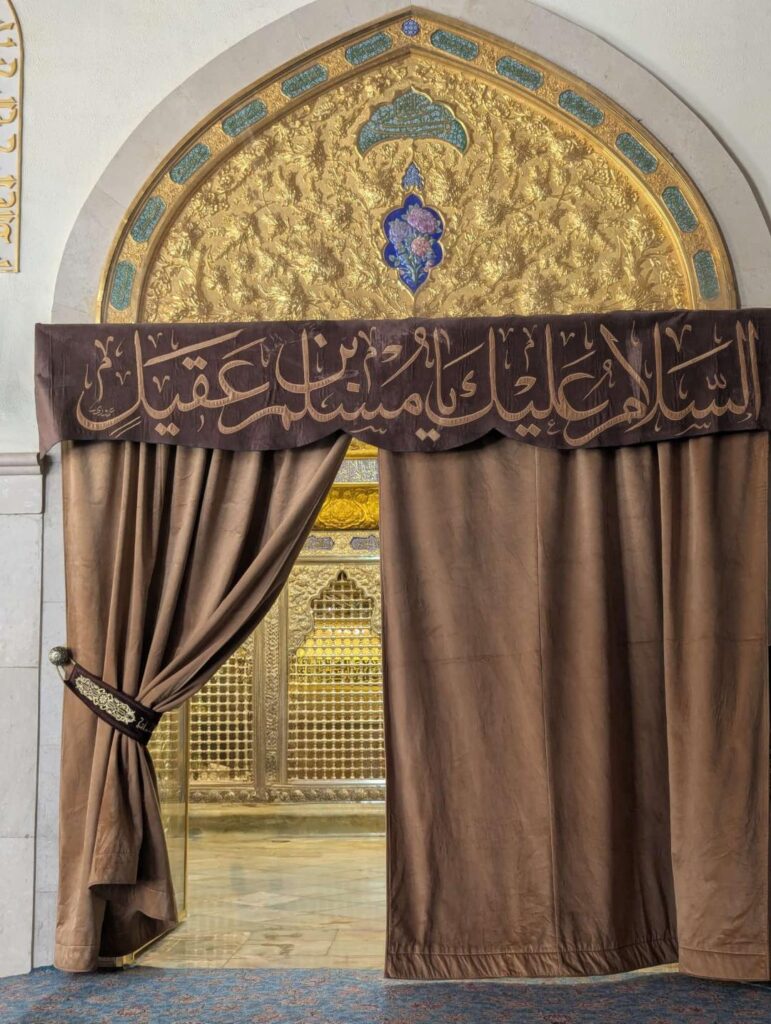
Muslim ibn Aqeel (Allah be pleased with him)
The Grave of Muslim ibn Aqeel (Allah be pleased with him)

Muslim ibn Aqeel RA was the relative of the Prophet ﷺ and the son of Aqil ibn Abi Talib. Muslim ibn Aqeel RA is remembered for his bravery and moral uprightness. The Kufans welcomed Muslim and overwhelmingly pledged to support Hussain RA against the Umayyad rule. Therefore Muslim RA wrote a letter to Hussain RA and urged him to come to Kufa, thus Hussain RA left Makkah. In the meantime Muslim was executed whilst Hussain was unaware.
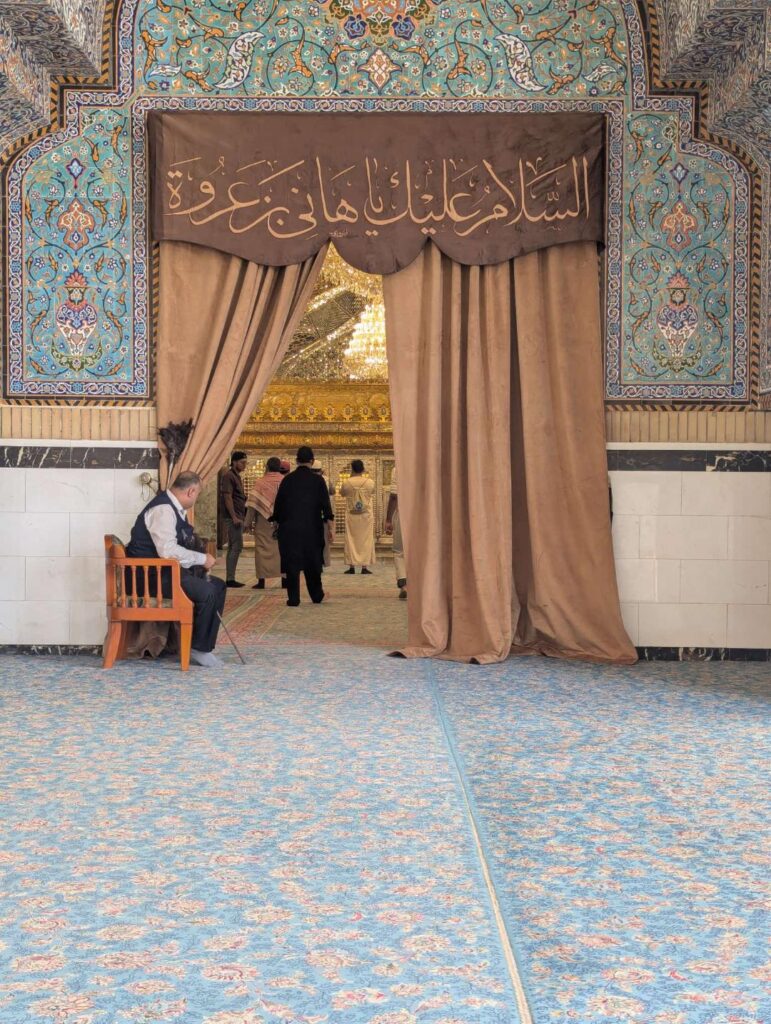
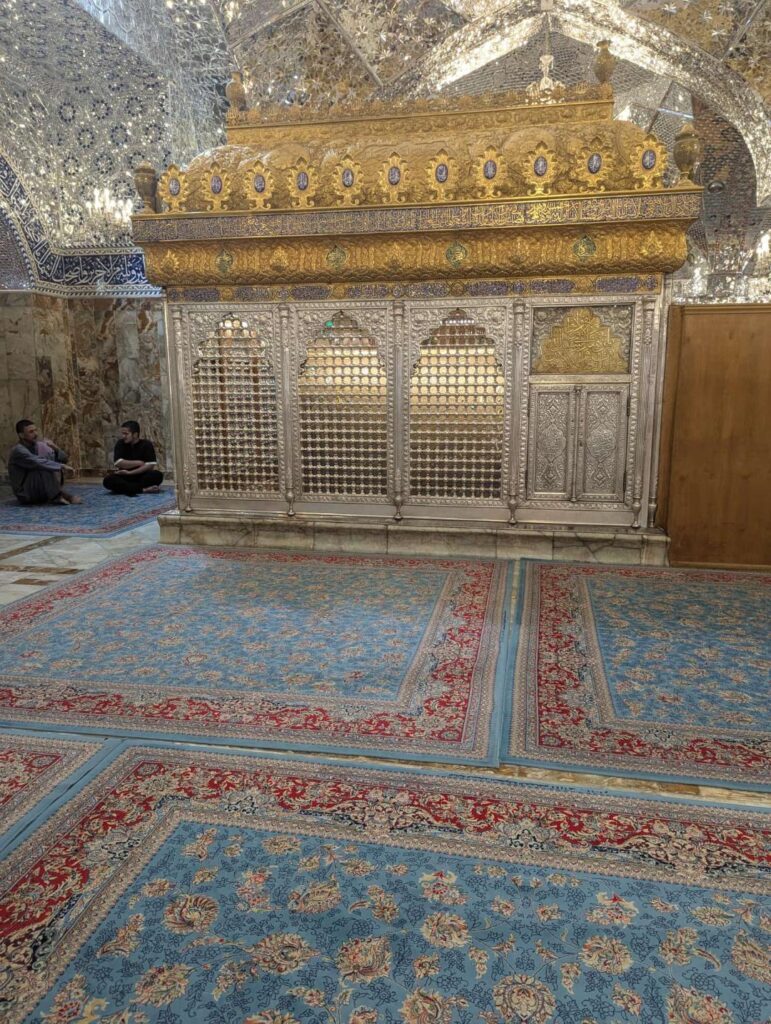
Hani ibn Urwaah (Allah be pleased with him)
The Grave of Hani ibn Urwaah
Who is Hani ibn Urwaah RA?
A Kufan leader who hosted Muslim ibn Aqeel RA. He was later killed by Ubayd Allah ibn Ziyaad, the governor of Kufa.

Why was Hani killed? Yazeed asked Hani, is Hussain on Haqq or me? Hani RA said: "Without doubt, Hussain RA is on the truth!" Yazeed ordered for him to be killed. This is the price you pay for standing on truth and principles. You may lose in this world, but the hereafter is yours.

Ismail ibn Nazir Satia (one who is in dire need of Allah’s forgiveness, mercy and pleasure)

10 Rabiul Thani 1447

Categories
Current Affairs articles

Boycotting 

740 words – 4 minutes read

In our Deen, we have a principle that when it comes to all things, anything is permissible unless there is evidence to deem it prohibited with the exception of acts of worship. When it comes to anything outside of the realm of worship, it is neutral unless there is something that makes it prohibited or praiseworthy. So when you look at any political strategy, you’re not going to be asking the question about whether or not it’s prohibited on the basis of trying to prove whether Nabi ﷺ did it. You’re going to be looking at the implications of that action and if there are any explicit or ambiguous things that come with it that are in violation of the Deen OR if there are elements of it that serve a noble cause and this, if practised with the right intention, could actually be rewardable. Boycotting is one those things that you don’t need to prove whether it’s from the Sunnah but rather analyse the strategy and see how we can make it both useful and faithful.

Sometimes, some things do not have to be directly from sacred texts but from the natural sense of honour and protectiveness and dignity that Allah naturally puts inside us, within our fitrah that naturally makes you feel an aversion or an affinity to certain things. For example, if you were living in Makkah as a secret Muslim and Nabi ﷺ had already migrated to Madinah, would you still do business with Abu Jahal? With Abu Sufyan? Without an order coming from Nabi ﷺ, we would know inside of us that something feels wrong about this. Going to the marketplace and dealing with these people… something feels off without having to hear a single hadeeth of Nabi ﷺ. This should be a natural feeling within us for our brother and sisters.

An incident that comes to mind is something that happened in Madinah between the wife of Nabi ﷺ, Umm Habibah and her father Abu Sufyan. When Abu Sufyan came to speak to Nabi ﷺ regarding the violation of the Treaty of Hudaybiyyah, he entered their home and his daughter, Umm Habibah RA, picked up the mattress Nabi ﷺ would sit on in a way that she could sit on it but not her father, Abu Sufyan (maybe folded it in half). She knows what her father does to the Muslims, she knows her father is an enemy of Islam. Her father was bewildered and asked, ‘Are you protecting that from me or me from it?’ She replies, ‘No, I don’t find it befitting that you sit on the mattress of Nabi ﷺ.’ That wasn’t scriptural. That came from a place of dignity and honour for Nabi ﷺ just like how we should feel for our brothers and sisters who are persecuted by the enemy.

Moving on, boycotting is a form of character building. Yes, it’s inconvenient. Yes, it hampers your privileges. Yes, it means you may have to do things the long and hard way. But this controlling of the nafs will be beneficial in the long run. It’s a personal thing. It strengthens you spiritually because you didn’t feed into every whim and desire of your nafs. It’s a type of personal growth.

Thumama RA was a powerful merchant based in Yamamah from where the Makkans would buy their wheat. In his anger against the Quraysh, he put a stop on the wheat exportations to Makkah to the extent that the prices of wheat shot up, there was extreme hunger in Makkah. This was the first boycott from a Sahabi. Nabi ﷺ didn’t admonish him and him not saying anything is paving way to its permissibility. The boycott was only lifted when they wrote to Nabi ﷺ begging for it to be lifted and out of the kindness of Nabi ﷺ, the boycott was ended and Thumama RA restarted the exporting of wheat into Makkah.

The concept of reducing/removing sins will forever stand and we understand that there are wider ramifications to our sins. That is a personal thing between you and Allah and one that has to be worked on always and forever. Boycotting comes under the ‘body is like one Ummah’ hadeeth. Compassion, empathy, doing EVERYTHING we possibly can. 

Nabi ﷺ didn’t explicitly go out in protests, didn’t petition, didn’t lobby…that doesn’t mean it is impermissible or that it doesn’t have positive results.

Umm Khadeejah

10th Muharram 1447

Categories
Current Affairs articles

Three Electoral Commitments Every Muslim Should Make


21st Dhul-Hijjah 1445 AH ~ Thursday 27th June 2024     
Like the rest of the country, the UK’s Muslim community is also gearing up to vote on Thursday 4th July 2024. The political parties have been campaigning in earnest for some time, outlining their manifestos and stressing their commitments to the nation. During the days preceding polling day, Britain’s Muslims should be asking themselves what commitments they have made when it comes to casting their votes. Below is an article by Hadrat Mawlana Muhammad Saleem Dhorat damat barakatuhum, containing valuable advice for the Muslim voter. 

Three Electoral Commitments Every Muslim Should Make

By Shaykhul-Hadith, Hadrat Mawlana Muhammad Saleem Dhorat damat barakatuhum   

Reaping the Benefits of Progress Allah ta‘ala has placed the desire for progress, and the spirit of mutual competitiveness that accompanies it, into the very nature of man. It is natural for individuals and communities to strive to better themselves and achieve progress. As Muslims, we should open the pages of history to discover those factors which make a nation progressive and prosperous and adopt them, as long as they are consistent with the teachings of our Din. As a result, we too will reap the benefits of progress, insha’allah.Our study should commence with trying to ascertain the secret behind the success of the noble Sahabah radhiyallahu ‘anhum, for they are the ideal role models of a community that attracted success in its every endeavour. A thoughtful investigation will reveal three prominent qualities which can be attributed to their success. In this election season, every Muslim should commit him/herself to observing these three principles, regardless of their preferred party, in order to secure success and achievement, both on a personal and communal level.

Taqwa Abstention from sins is the essence of taqwa and through it Allah ta‘ala has promised relief from every difficulty. The Sahabah radhiyallahu ‘anhum shunned all disobedience to Allah ta‘ala; they neither had a habit of sinning nor were they inclined towards sins.In dealing with the election issue, we must not say or do anything that displeases Allah ta‘ala. Of all the sins to beware of, backbiting and slander are major sins which are a particular threat at such times. One inclined towards a particular party should not backbite or slander a supporter of another party, for in doing so the requirements of taqwa will be compromised; and Divine assistance and blessings cannot be expected in the absence of taqwa.

Ikhlas Every decision taken by the Sahabah radhiyallahu ‘anhum was only for the Pleasure of Allah ta‘ala. Whether standing for election, supporting a party or voting, a Muslim must be pure in his intentions. This intention should be to elect the candidate who will best serve humanity in general, including the Muslim community. If a Muslim has sincerity then his vote will go to the right candidate, for he will expend his energies in finding out who is the best candidate.

Unity Unity is a key factor for the success of any nation; a truly united community can withstand any competition. Individuals should have the courtesy of mutual respect despite their political rivalries. Sadly, the Muslim community is a divided one. Every individual has the right to his own opinion and his own preference, within Dini boundaries; but our mutual differences often transform into malice and enmity towards each other. We go to extremes: if we like something in a particular person, we praise him to the extreme, whereas if we disagree with someone on one issue, we become blind to all the good qualities he possesses. Our dealings are but a faint shadow of the Islamic concept of brotherhood, taught to us by our Beloved Nabi sallallahu ‘alayhi wasallam. True brotherhood demands that whatever our political stripe, we should be able to sit at a table and sacrifice our political allegiances for the sake of Allah ta‘ala and agree to support the candidate who is best for not only the Muslims, but all communities in general. All that is needed to achieve unity is a little sacrifice and the willingness to swallow one’s pride. We should be willing to marginalise our differences in order to progress in a common direction.It may be a good idea for the Muslims of each constituency to unite on a single platform and form a committee which is responsible for recommending the best candidate to Muslim voters. In this way, political parties will try to persuade such committees and as a result, seriously consider the needs of the Muslim community. May Allah ta‘ala grant us all the longing to strive for taqwa, ikhlas and unity. Amin.

Important Points
Every Muslim should keep the following points in mind:
1.    In all circumstances hold fast to taqwa, ikhlas and unity.
2.    The vote is very important. It is a means of electing the person most beneficial for the community and our country.
3.    Voting is a big responsibility. Not voting or voting incorrectly will give authority to the wrong person.
4.    The best candidate deserves our vote.
5.    We should become politically aware.
6.    We should read every party’s manifesto.
7.    We should study party policies and also refer to sincere people in our communities, who possess political acumen.
8.    We should find out which party offers us the best in all spheres of life: education, housing, health, social issues, foreign policy etc. Deciding on a party by just looking at one issue does not constitute farsightedness.
9.    We should think rationally and not make judgements based on emotions.
10. Finally, we should make du‘a to Allah ta‘ala, asking Him to enable us to make the right choice and that He grants success to those who will serve the country and its citizens without any prejudice or wrong. May Allah ta‘ala grant us all success and progress with khayr and barakah. Amin. 
Taken from Riyadul Jannah, Vol. 26 No. 4, Apr 2017 © Islamic Da’wah Academy 

• Please forward this message on to all your contacts •
Categories
Current Affairs articles

Al-Aqsa Reflections II

Hafidh Farhaan Jamadar, Ramadhan 1445/2024

Al Aqsa Reflections 4

Today, we had the opportunity to visit Aqbad Jabal refugee camp, which houses a large collection of families that were displaced in 1948. These people are essentially refugees in their own country. Although they are living in formal dwellings, they remain in a condition of need for food aid and have limited opportunities to earn a livelihood. We distributed food packs including non-perishable items such as oil, flour, rice, beans etc. Some of the young boys also received football shirts which they were overjoyed with.

We also went to a hospital on Mount Olive which is primarily funded by the Kuwaiti government. We met cancer patients from Gaza who have been relocated here to receive chemotherapy treatment, before the war. They are currently in a situation along with their caregivers, where they cannot return home and they remain in temporary accommodation in a nearby hotel. They told us about how their homes have been destroyed, which has meant that their families have been relocated multiple times from place to place. Now they have no homes to return to, making up a small fraction of the over 2 million people that have been displaced.

Finally, we travelled towards the Dead Sea which has significance due to the story of the Prophet Lut (AS). It was also close to the place where Musa (AS) ended up on his way back from Egypt towards Al-Quds, as he did not make it to Al-Aqsa. Musa (AS) is the prophet whose name is mentioned the most by Allah in the Qur’an. Another place we were most fortunate to visit was the place of ascension of Isa (AS). Both of these noble and great Prophets of Allah were sent to Bani Isra’il, but unfortunately they are either not held in high regard or disregarded completely by their tribe.

Reflections:

1. Give charity with your own hands. Many of us in the developed world are so blessed that even our obligatory charity, zakah, is simply given to charities who take on the responsibility of distribution. There is a special feeling of doing it yourself. Aside from the aspect of reward, it is a humbling experience. It gives you a chance to connect with those that are less fortunate and realise the importance of giving sadqah for the sake of Allah.

2. We will probably never know a time where we lose everything we have, it is a reality for the people of Gaza right now. Do whatever you can to support them from your homes in the Western world. But more than anything, come here and speak to the people of Palestine and Al-Quds. Many people outside of Gaza have family there. Alhamdulillah some of them even have avenues of supplying aid, so come and play your part.

3. Despite what you may do for your people, whether it be family, friends or colleagues, you may not always be appreciated. What you do is nothing compared to what the noble prophets Isa and Musa (AS) did for the Bani Isra’il. The lesson is to do everything for the sake of Allah and expect nothing from anyone else, it is Allah who will elevate your status in the hereafter.

The believed place of ascension of Isa (AS) to the heavens

Al Aqsa Reflections 5
Sister Abeer is a Palestinian sister who lives in the Old City, working as an archaeologist but also leading a charity supporting poor families in the old city. She gave us a tour of the old city, sharing with us intimate stories relating to the brutal occupation and providing us with an insight that can only be attained by connecting with the locals.
We heard countless stories which underline the cruel nature of the occupation and the strategy of the settlers to destroy the morale and societal fabric of the Palestinians living in Jerusalem, particularly the old city. It is common for settlers to barge into peoples’ homes in an attempt to force them out of their houses. This highlights how colonialism is happening on both a micro level as well as a state wide macro level. Settlers and the Israeli police physically assault Palestinians with zero repercussions. In the streets, I have seen with my own eyes regular civilians carrying automatic assault rifles designed to kill multiple targets within a matter of seconds. Is this normal? Is this what the West stands by? Is this really done in the name of Bani Isra’il?
The most shocking story we heard was of a woman who returned to her home after a few days away to find that settlers had invaded her home. They refused to leave and she had no intention of giving up the house to them. As a result, up until her death she lived 30 years of her life alongside settlers in her own home, sharing her kitchen and bathroom. They argued every single day, but this was the sacrifice she made for her land, her people and her religion. Another story which almost brought me to tears… a Palestinian family had their water, electricity and all supplies cut off. In the middle of the night the entry to their house was blocked using rocks and cement. They were literally buried alive in their own home. Fortunately, the neighbour realised and was able to help them. Otherwise, what a tragedy that would have been. Is this humanity?
Despite the struggles that they face, the Palestinian people Muslim and Christians alike, are the most generous people that I have ever met in my life. I have lost count now of how many times vendors have refused to take money from me after purchasing something. I’ve had the same experience with Christian business owners. The same experience with children under the age of 10 years old. Their generosity and sense of giving is not something that is taught, it is in their blood. When they say they don’t want anything of this world, they mean it with all of their being. How can you defeat such a people?


Reflections

1. To put it simply, I have never witnessed first hand a community such as the settlers who have come to Palestine. The lengths that they go to just to harm the Palestinians are beyond belief. This level of oppression has to be challenged by all of us, in every capacity that we can.

2. Keep smiling. The Palestinians are always smiling, even though they live in such a situation. It is their way of showing their oppressors that they will never be broken, and showing their Lord that they are grateful for whatever they have.

3. Give to your family, your community, your colleagues, strangers, everyone. Giving does not decrease from one’s own wealth. By giving one can achieve true fulfilment and endless bounty from their Lord.

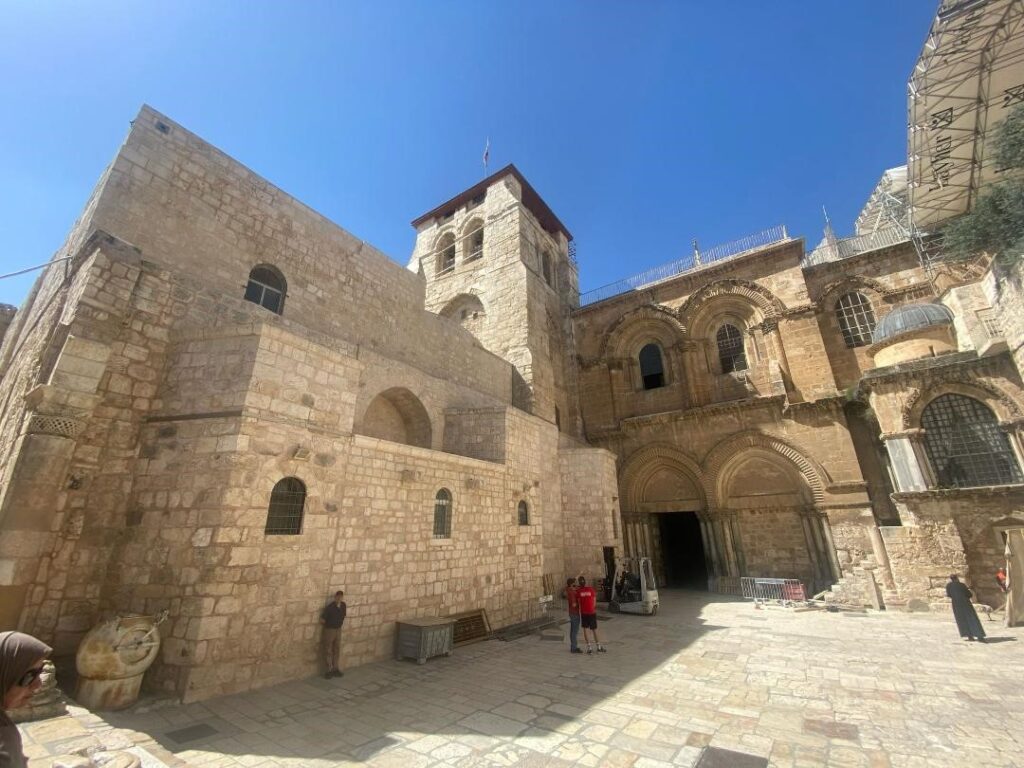
The Church of the Holy Sepulchre, the most holy site for Christians around the world

Al Aqsa Reflections 6
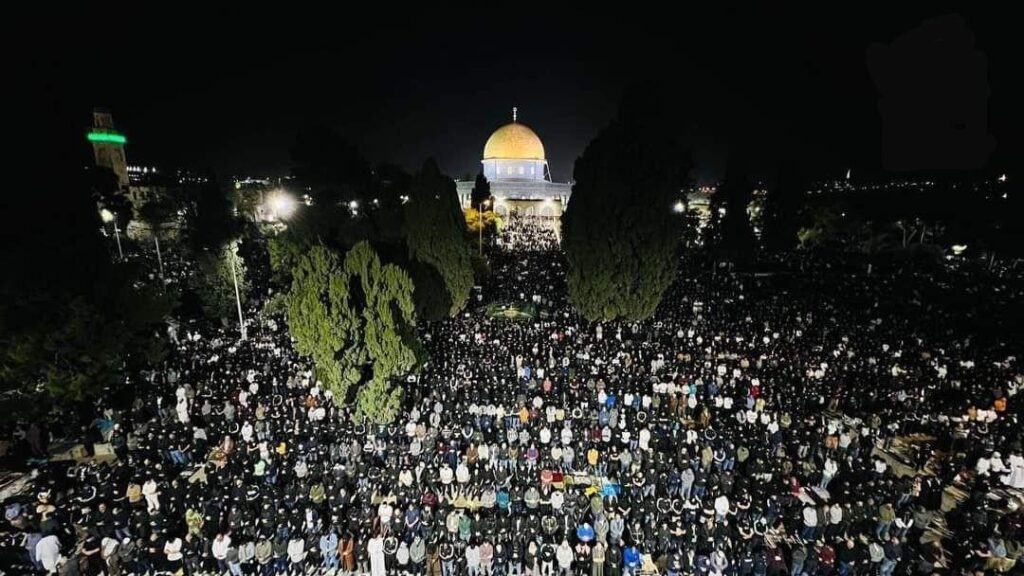
The 27th night of Ramadhan is a special occasion in Masjid Al-Aqsa. People travel far and wide from all over Palestine, flocking to the third holiest site in Islam. For many of these people, it is the only opportunity that they have during the year to visit Al-Aqsa. Estimates suggest that around 250,000 people visited Al-Aqsa during Laylatul Qadr, but it is difficult to know how accurate these estimates are. Those who have been present in previous years suggest that the number is lower this year, though you would not have thought it when seeing that every available space in the entire compound was being prayed upon.
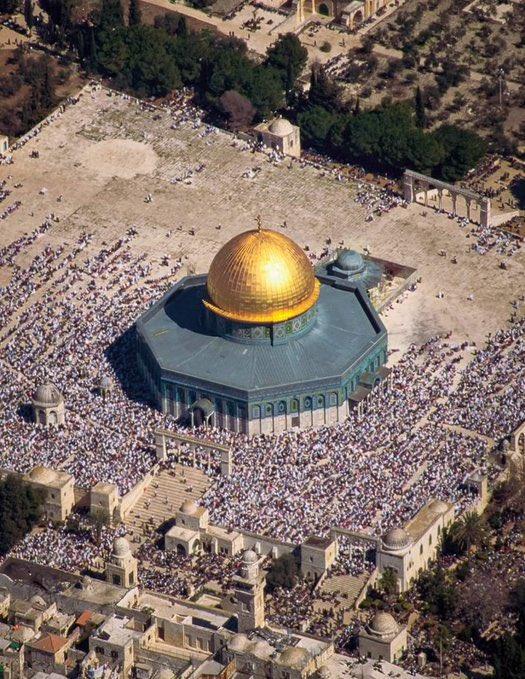
In terms of the time period that people remained in the compound, it was essentially from Fajr on the 26th day of Ramadhan (which was also the day of Jumu’ah) until Fajr on the 27th day of Ramadhan. What is interesting is that the crowd after each of these fajr salaahs was bigger than any other I had seen during my time in Al-Aqsa. After fajr salaah had finished, the area between Masjid Qibli and Dome of the Rock was so packed that there was not a single space where the ground could be seen from overhead. The energy was electric and infectious. The crowd chantedبروح بدم نفيدك يا اقصىThis translates to: We will sacrifice our soul and our blood for you O Aqsa. Note, there was no violence or aggression and no Israeli soldiers were present within the confines of the compound, as they remained on the perimeters at the entry gates. Unsurprisingly, they had to display some element of force. On both nights, a drone was sent to the area between Al-Aqsa and Dome of the Rock. The drone was used to drop tear gas onto the crowd. It was my first experience of this, and it really does sting the eyes and nose, makes you cough and burns your skin. One can only imagine what is dropped from the skies in combat zones.


Reflections:

1. You have to experience 27th night in Al-Aqsa. Though I am against the idea of visiting Al-Aqsa in general as a ‘bucket list trip’, being here on the 27th night should definitely be on that list.

2. Tear gas may not kill, but it is nasty.

3. Regardless of the threat, every Palestinian is ready to lay down their life for Al-Aqsa. This explains why their country may be occupied, but Al-Aqsa still firmly belongs to the Muslims.

A view of the Al-Aqsa compound from overhead on the 27th night of Ramadhan
Categories
Current Affairs articles

Al-Aqsa Reflections

Al Aqsa Reflections 1

Hafidh Farhaan Jamadar, Ramadhan 1445/2024

Having arrived in Jerusalem last night, there are a number of perspectives I could start with. From the stories of the prophets mentioned in the Qur’an, and also those in the Bible and Torah, there are a plethora of prophets who have walked on this blessed land. Ibrahim (Abraham), Musa (Moses), Isa (Jesus), Zakariyya (Zachariah), Yaqub (Jacob), Yusuf (Joseph) and the list goes on. Despite the magnanimity of these chosen men from our past, who each have their own unique story and contribution to mankind, it is the story of a woman that has me most awestruck.
She is none other than Maryam (Mary), daughter of Imran and Hanna, the only woman to be mentioned by name in the Qur’an. Today we were able to catch a glimpse into her private chamber in Al-Aqsa. Her mother Hanna had promised to offer her child to the services of the Temple when she was still expecting. The custom of the time meant that this would only have been done for a male child. Nonetheless, despite her disappointment, Hanna fulfilled her promise and sent Maryam to Al-Aqsa where it was decided that her maternal uncle Prophet Zachariah would be her custodian.
Zakariyya, who had reached old age, was the only person with a key to the chamber of Maryam. The Qur’an relates how he would be shocked by what he would often find therein. Maryam’s devotion to Allah and connection with the Almighty was unmatched. She would be blessed with sustenance, such as fruits which were out of season, which could only have been through divine ordinance.
When she was of the age of 17, she was visited by the Angel Jibreel (Gabriel), who gave her glad tidings of a son. Maryam enquired how this could be so, since she had never had relation with a man. But as Allah had provided sustenance for her without the apparent necessary means, He had also chosen a special woman to carry a special child without the need for a father.
Maryam’s shyness led her to leave Al-Aqsa for the birth of her baby, and retreat to solitude in Bethlehem. Upon her return to Al-Aqsa with her son, she was immediately targeted with the most heinous accusation for a chaste women. In response to this, Maryam was ordered to remain silent by Allah, and she simply pointed at her child. Here Isa, the boy born of a miraculous birth, was given his first miracle. A child of a mere few earthly days said ‘Indeed, I am the servant of Allah. He has given me the book and made me a messenger.’


Reflections:

1. Sometimes we plan and we think that a thing is good for us. Then, reality plays out in contrast to what we planned and we may perceive this negatively. However, just as Hanna’s disappointment at the birth of a daughter was actually the birth of probably the greatest woman who has ever lived, it may be that our disappointments are soon replaced by something which is far better than that which we had planned for ourselves.

2. As for the divine sustenance which Maryam was receiving in her chamber, Muslims believe that each iota of sustenance, whether it be food, drink, wealth, family or emotion, is allocated by Allah. Instead of worrying about things that are beyond our control, we should focus on working hard to attain that which is good for us in this life and the hereafter, alongside recognising that Allah is the sole sustainer by asking from Him alone.

3. Finally, when we are accused of that which we have not done or labelled with tags that are false or inaccurate, is it always necessary for us to respond? Especially when we know that our response will have no bearing on the opposite party, regardless of how eloquent it is or how much it is supported by evidence. Sometimes it is better for the eventual outcome to do the talking. This is why we still talk about Isa (Jesus) and Maryam (Mary) to this day, peace and salutations be upon them both.

A look into the private chamber or Maryam (AS) within Al-Aqsa

Al-Aqsa Reflections 2
Today we had the opportunity to travel outside Jerusalem and visit areas of the West Bank such as Hebron.
My immediate thought is that the people living here are severely disadvantaged and in an extremely difficult situation compared to our brothers and sisters in Jerusalem. The people of Jerusalem benefit from the external visitors, who are able to contribute economically but also socially by contributing to an energy which includes love, solidarity and unity. On the other hand, the economic opportunities are few and far between in the West Bank. Many tourists are discouraged from visiting due to the surveillance and checkpoints. I heard stories of many Palestinian women having to give birth at the checkpoints due to the excessive and unnecessary delays at the checkpoints when trying to access hospitals.
We were invited to visit a centre facilitating for disabled people, which was a real eye opener. The smallest of blessings which Allah has bestowed us with and which we have never been grateful for, is a blessing that they they have never experienced. Further exploring the local areas in the West Bank exposed the scarceness of opportunity here. The desperate situation of the youth means that they may never be exposed to even a fractional percentage of the opportunities that we have as Muslims in the West. Their deteriorating situation over the decades, which has been implemented by design, leaves them with nothing but the pride of their homeland, resentment towards their occupier and hope in the mercy of their Lord the Almighty.
Masjid Ibrahim, the resting place of the Prophet Ibrahim (AS) is located in Hebron in the West Bank. How great must a man have been that Allah honoured him by guaranteeing that each practising person of the Ummah will send salutations upon Ibrahim (AS) and his family multiple times during every salah daily. His life of courage and determination was encapsulated by the myriad of sacrifices that he made for the sake of Allah.


Reflections:1.

Our brothers and sisters in humanity and in Islam need us, more so in the areas of Palestine that have suffered and continue to suffer the most. As Muslims we may regularly travel to our countries of origin, chase temporary luxury in places like Dubai or spend lavishly to sit on white sand beaches. The reality is that we must visit Palestine and contribute with all we have wholeheartedly.

2. We don’t know what it means to be grateful, we will probably never be in a situation which truly tests our gratitude. The smallest glimpse is when we fast between fajr and sunset and feel a little hunger or thirst, despite knowing that a banquet awaits us at iftaar. If there is anything that I would like to take away from today, it is to be grateful to Allahوان شكرتم لازيدنّكم And if you are grateful, I will give you more…

3. What made Ibrahim (AS) so great? Why is he known as khaleel-Allah, the friend of Allah? What did he do in his life to attain such a level, that even today the 3 major religions of the world are known collectively using his name? In short, he was willing to sacrifice at every turn, on the command of his Lord, even when it made zero logical sense. He went against his father and his tribe, he was thrown into a fire for angering the king and he even took a knife to sacrifice his own beloved son. To free ourselves from the shackles of mediocrity, we too must sacrifice.

The rehabilitation centre for people suffering with disabilities in Hebron

Al-Aqsa Reflections 3
On the third day of reflection, I would like to take the time to focus on Al-Aqsa, the primary destination of this entire journey. It is the first qibla, the second masjid to ever be built and the third holiest site in Islam.
The first point to discuss, is what exactly constitutes Masjid Al Aqsa? Is it the dome of the rock? Is it Masjid Qibli where all salah take place? Or is it something else, maybe hidden underground? In short, the entire compound which is demarcated by the unmistakeable stone walls is Masjid Al Aqsa. According to our beloved Nabi Muhammad (SAW), there is not the area of a single hand span within Al-Aqsa except that a Prophet prayed in it or an angel stood on it. Just doing ziyarah of all the different monuments and significant landmarks within Al-Aqsa requires several days, such is its rich history and deep connection with all of the Prophets of Allah.
The people who safeguard Al-Aqsa, the Palestinian people, are a people who have truly been blessed with unique qualities by Allah. They express themselves with a warmth that is seldom found in any other corner of the Earth. Their love for Al-Aqsa is undeniable and unshakable, to even say that they would be willing to sacrifice themselves for the protection of this sacred place would be a disservice. It is much much more than that. For centuries, they have hosted travellers here from all over the world, offering a level of hospitality that is unmatched. Their energy is infectious and their deep rooted love for their homeland simply cannot be expressed in words.
One of the most unique things about Masjid Al-Aqsa, particularly in Ramadhan during the time of my visit, is the family atmosphere that buzzes throughout the Al-Aqsa compound and the city of Jerusalem. The sight of thousands of families gathering between Asar and Maghrib for iftaar is breathtaking, it demonstrates the fact that Al-Aqsa is their home more than their places of residence. Since I have been here, I have not seen or heard a single instance of gentle rebuke within the compound, let alone harsh admonishment. Every day without fail, we have been invited for iftaar by the locals. This leaves us feeling in a deficit, having taken so much when we imagined we were coming here to give.


Reflections 1.

There is no place like Masjid Al-Aqsa. This is the place where all the Prophets gathered and were led in salah by our beloved Muhammad (SAW). One who has love for Al-Aqsa will be loved in return multiple times over, and the one who disregards it is not needed by it, though he remains in need of it. It is our job to protect Al-Aqsa and when the Muslims return to the Qur’an and Sunnah, Al-Aqsa will be free.

2. Our Palestinian brothers and sisters have sacrificed everything that they have for centuries, for the love of Al-Aqsa and their homeland. You will not find a Palestinian home without a physical symbol related to Al-Aqsa. It is our duty to support them with whatever we have and benefit from the goodness and knowledge which they are so willing to give us.

3. If there is anything we can learn from our Palestinian brothers and sisters, it is to love one another as brothers and sisters in faith. If we cannot look each other in the eye and resolve petty disagreements, how could we ever stand shoulder to shoulder on the frontline to protect the borders of Islam, just as they have done and are doing to this very day.

Families making iftaar together around the dome of the rock, the central point of the Al-Aqsa compound
Categories
Current Affairs articles

Five Questions Raised by the LGBTQ Community (or sometimes by innocent children due to lack of knowledge).

Five Questions Raised by the LGBTQ Community (or sometimes by innocent children due to lack of knowledge) from the lecture of Shaykh Yasir Qadhi, Texas.

1. Why does Allah SWT care if two people love each other, same gender or not?

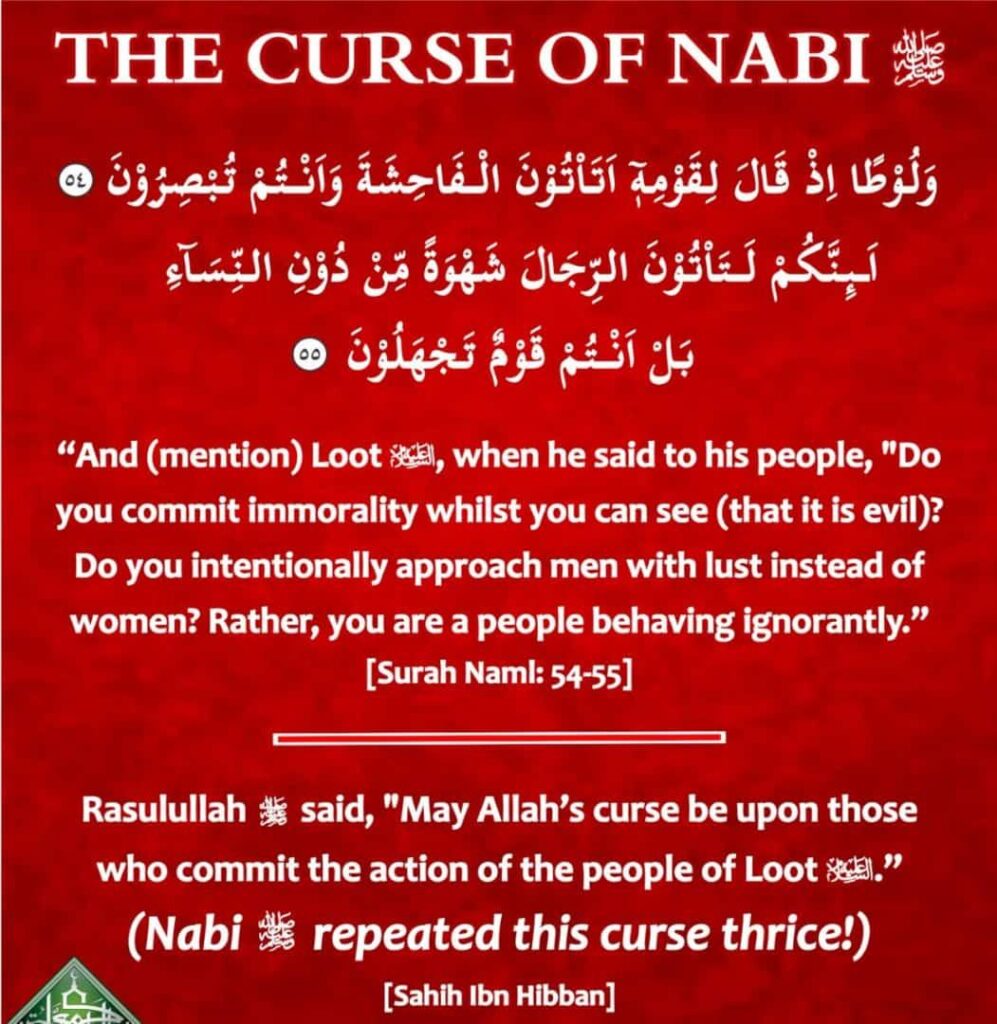
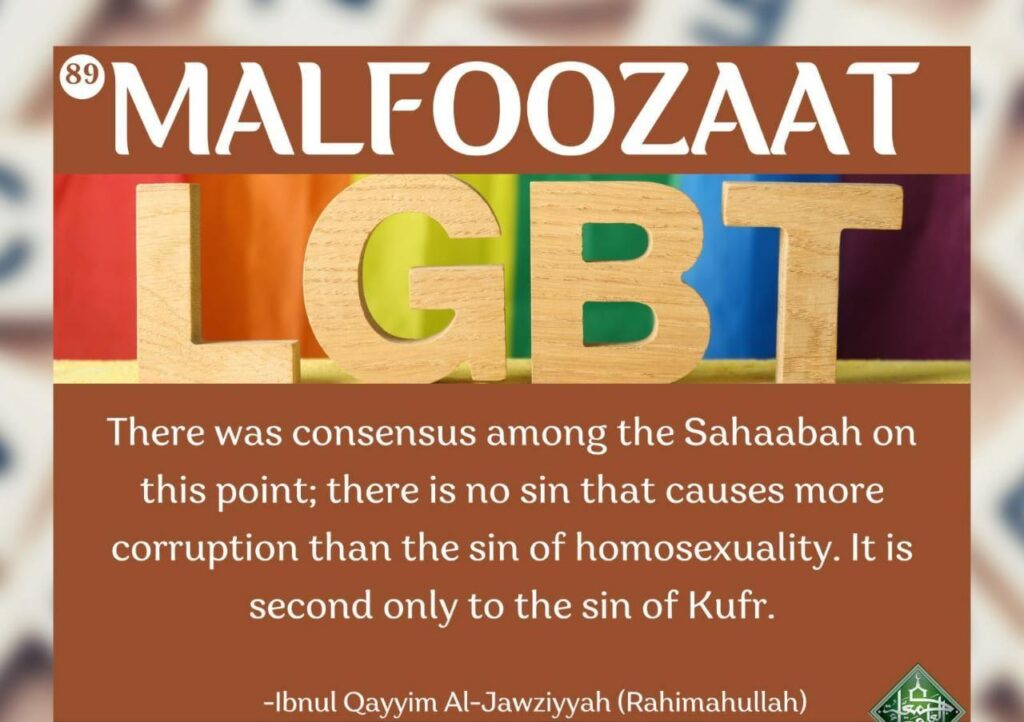
To answer this we need to look at the Qur’an which explicitly mentions the story of Loot AS and uses the word Fahisha. There is “ijma” unanimous consensus that homosexuality is Haram, nobody ever disagreed with that from the Ummah, past or present.

We must remember anything that Allāh SWT prohibited is not only Haram but usually they are things that are harmful and detrimental for us.

Islam promotes opposite gender unions, via this avenue procreation is possible and family life with children is achieved by this. Even in the animal kingdom, we see naturally, the male is attracted to the female. If someone has same-sexsinner, but tendencies and struggles with this habit, they will be a sinner but it’s once you no longer think it’s Haram and be proud of your sin it leads to kufr/disbelief.

2. Why does it matter if two people sin in private? How does it harm Islam? Why do Imams and Preachers need to keep badgering us about it?

Firstly, let us establish some facts, nobody is knocking down your bedroom and nobody is invading your privacy. Every human is a sinner and those sins done in private still need to be preached against and the masses need to be educated regarding them.

What is an open sin?

Abu Huraira RA: I heard Allah’s Messenger (ﷺ) saying. “All the sins of my followers will be forgiven except those of the Mujahirin (those who disclose their sins to the people). An example of such disclosure is that a person commits a sin at night and though Allah screens it from the public, then he comes in the morning, and says, ‘O so-and-so, I did such-and-such (evil) deed yesterday,’ though he spent his night screened by his Lord (none knowing about his sin) and in the morning he removes Allah’s screen from himself.” Bukhari

For example, if a person drinks alcohol, takes drugs or watches pornography (all done in private) we still have a moral duty to teach people the harms of these sins. Nowadays, sins are no longer private, due to a lack of modesty people are openly committing sins, sharing them (on social media), and then justifying them, we have “pride” over our sins, excuse the pun!

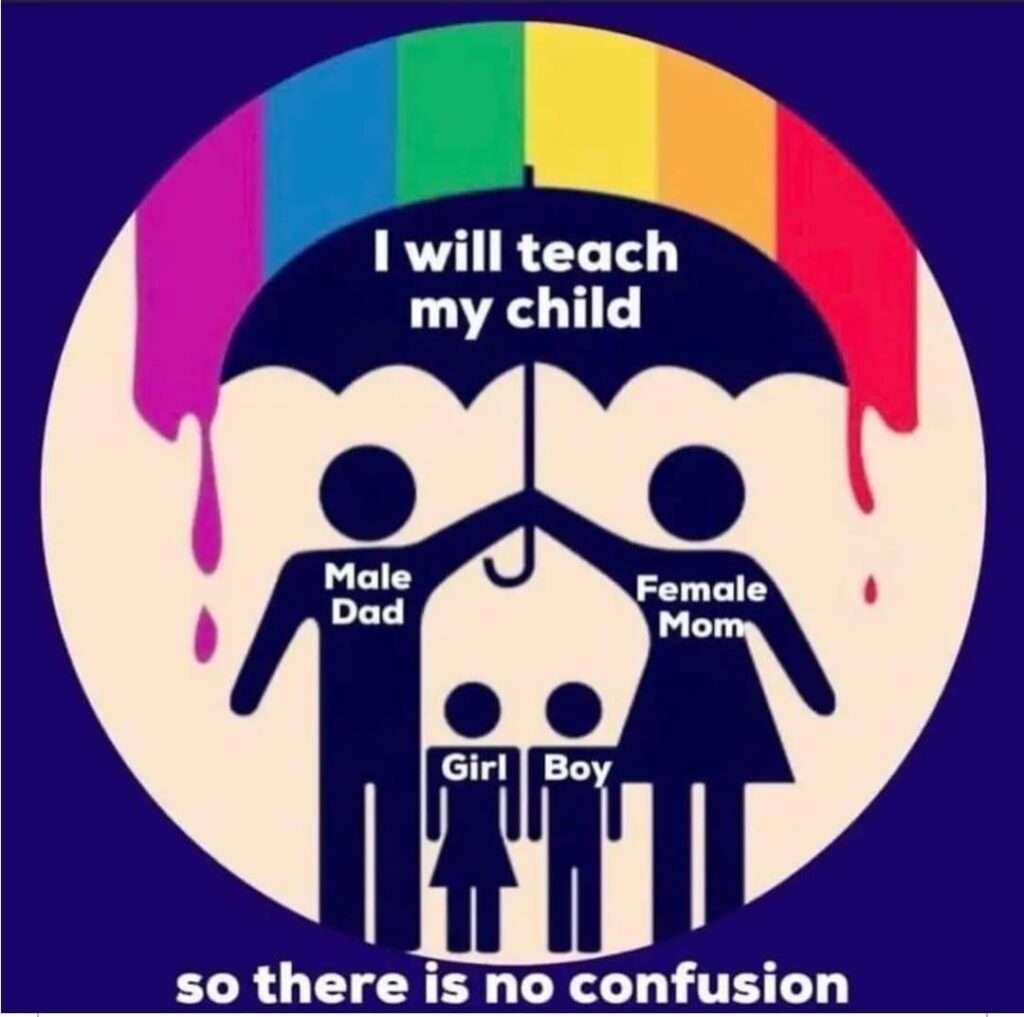
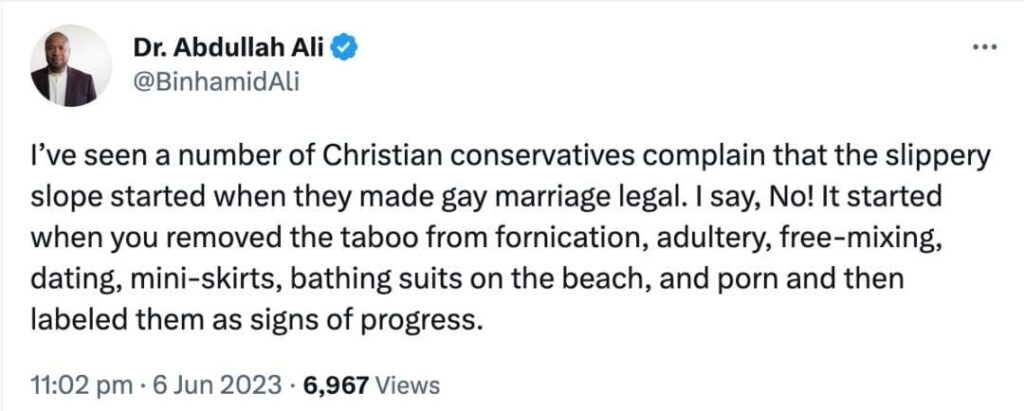
When you commit a sin and regret it, and show remorse you are in the realm of a sinner. But when you commit a sin and flout it, show off, and share it on social media to the point of justifying it then you are no longer a sinner, it is disbelief (kufr). The sin of LGBTQ is no longer a bedroom sin (maybe 20-30 years ago it was). We now have a whole month dedicated to it and millions are being spent to promote it, hence we will preach against it in public!

3. Why do religious people and Imams only talk about the the topic of LGBTQ? There are so many topics like racism, social injustice, and the broken health system. Is it because religious people love talking about sexuality?

We can answer this charge by saying that every sector talks about morality and sexuality in their own way and we Muslims have our way. Even liberalism speaks about their version of sexuality.

WhatAboutIsm

These sorts of questions come under the notion of WhatAboutIsm, don’t fall for it. This notion means to talk about one issue and not another. For example, a father tells his son to make sure you revise for your GCSE exams and pass. The son replies, don’t worry about my revision/exams, Dad. You just make sure you pay the mortgage and the bills and put food on the table! Naturally, the father will reply, what do your exams have to do with the mortgage?

In the same way, people criticise Imams by saying talk about one topic, not another. We see this a lot with workers from the Charity sector who always talk about Syria and Gaza and it’s only about Syria and Gaza, if an Imam talks about Domestic Violence they will say it’s irrelevant and not important. My short answer there are 52 Khutbahs in a year, one for LGBT, one for Syria/Gaza, one for DV, and so forth.

4. Islam teaches us about love, why do you preach against it? Two people love each and you tell us we can’t, isn’t this hate speech?

Nobody is against (halal) love, nobody is against caring for one another. Here we are preaching against the act of sodomy, there’s a big difference. Even if someone had a relationship with the opposite gender before nikah we would preach against it, let alone same-sex relationships which can’t be made halal through nikah.

When an Imam preaches against sin, any sin, it is to teach the masses that this is wrong and unethical. But if a brother comes to us in the Masjid and genuinely tells us he is struggling with the sin of LGBTQ then we will welcome him with open arms and help him to curb his desires, just like we help the alcoholic and the drug addict. Because we are all sinners, join the club! We all sin, maybe just in a different manner.

An article by a gay Muslim who explains his struggles and accepts it as a weakness.

If someone acknowledges they are doing wrong, we will help them. But when you take pride in your sin, how can we take pride in accepting you as our Muslim brother?

5. The LGBTQ Community is one that is a helpful community, they advocate justice and champion our civil rights. You imams with your religious rhetoric are fuelling hatred against them, which consequently leads them to get physically and verbally abused.

Getting help from someone is not a sin, whether they are a Christian or Jew or Gay. But appreciating someone’s help doesn’t mean we facilitate their sin. Read that again

Let us remember in the Seerah a man called Mutim bin Adiyy helped the Muslims but he also worshipped idols, the Prophet SAW appreciated his help and praised him after his death. If someone wants generic help we will help them no matter who they are, like feeding the homeless and handing out sadaqah, we will not ask people their sexual orientation. We will work together where we can.

The Qur’an says, “help each other upon goodness and piety and don’t help each other upon sin and transgression” (Surah Madinah). We will work with any community against racism, injustice and violence but we will not facilitate open sinners. We have a higher Lord SWT to answer to, it’s not a case of you scratch my back and I will scratch yours. No tit for that. Become men of principles.

Dear brothers and sisters, to conclude this topic, our Shariah teaches us purity and wholesomeness, it embraces modesty and shyness. Do not be ashamed of who you are, and do not be enticed by the path of others no matter how dazzling they look. Enter Islam in its entirety and follow the religion completely even if the whole world is against you and doesn’t understand you, we know we are following Haqq that’s all that matters, Allah keep us stead, Ameen.

Categories
Current Affairs articles

Prayer or Protest?

“In Islamic History protests have always made changes. When the Crusaders took over Jerusalem, the Muslims protested in Baghdad.” Shaykh Yasir Qadhi, Texas

When Imam Ahmad ibn Hanbal RH was incarcerated by Mu’tasim his students protested outside the palace of the Caliph. If you are a woman reading this, how can you forget the Suffragette movement that gave women a voice? If you are an Indian or Pakistani reading this, how can you forget Gandhi’s Salt March against the British? If you are non-White reading this, remember George Floyd’s protests a few years ago, fighting for all non-whites in America? Lesson: Protests are powerful!

Protests create awareness for Muslims and non-Muslims. Are you telling me a millions people in London last weekend didn’t raise eyebrows? “What’s going on here?” It was all over the news! People will talk and ask questions about Palestine thanks to demonstrations. What about the people in Gaza? When they see protests all over the world they know we are with them, it gives them hope despite dark times.

One of the biggest objections against protests and protestors is they don’t pray Salah, but march in their thousands?! My question to these religious folk is, is Salah a condition to carry out good deeds? We all know Salah is fardh, but if someone doesn’t pray Salah, they can’t give sadaqah? They can’t listen to an Islamic lecture? We need to start somewhere… Many people have started Salah because of the situation in Gaza.

وَأَن لَّيْسَ لِلْإِنسَـٰنِ إِلَّا مَا سَعَىٰ ٣٩

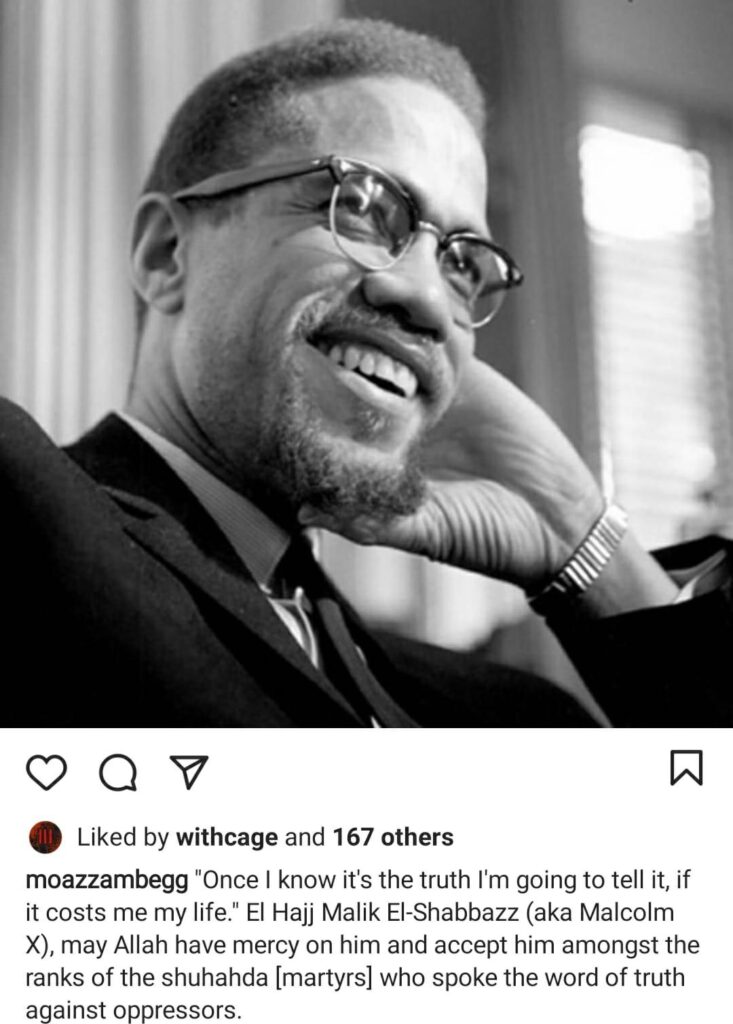
“And that each person will only have what they endeavoured towards.” What’s the point of Protests, you guys haven’t conquered alMasjid alAqsa? We can only make an effort, the results are in the hands of Allah SWT. Many people died fighting for things they didn’t see the results of, like the suffragette movement for women, and Malcolm X for black people in America. If we raise our voices for Palestine, our children or grandchildren will see the results, In Sha Allah

Remember the story of the prostitute who fed a dog water, she was forgiven i.e. granted Jannah. Was she regular in Salah? She fed a dog. Imagine the reward for helping humans, Muslims, Palestinians in the most blessed lands. Whether they pray Salah or not, wear a Hijab or not, you don’t have a right to become judge and jury. Many people who attend the masjid for bayans don’t pray regular Salah, most the jumuah congregation doesn’t pray x5. Where are they all week? Please. Ask them.

There are many flaws to your objections and the truth of the matter is most these Ulama and Tablighis objecting can’t be bothered protesting. We never forced you to. It’s always the وحده لا شريك له whole and soul attitude. “Our work is better” holier than thou… Alhumdu Lillah I am a protestor and clearly a loud and proud one, and have been for many years. But I will not say I am better than those whose line of work is different, because that is the work of God Almighty.

Ismail Ibn Nazir Satia (one who is in need of Allah’s forgiveness, mercy and pleasure).

Categories
Current Affairs articles

Interfaith Dialogue

“We can only live in peace and harmony by talking to each other and learning about each other.”

The phenomenon of ‘Interfaith Dialogue’ has gained importance in the world for decades due to many reasons; therefore it is an urgent need of the time to scrutinise it under the lens of Islamic Shariah.

An essential principle that must be understood before understanding the reasoning here is that the concern of scholars when giving a verdict on something is the reality of the nature of that problem at hand; not what it is called. An example is Ginger Beer. It does not matter that it has the word ‘beer’ in its name. If it does not fulfill the conditions of a prohibited drink, then it is permissible. It would be a clear error if someone were to conclude that this drink is prohibited because its name resembles that of a prohibited drink. Similarly, an Islamic bank may call something ‘interest-free’. If the conditions of interest in Islām are fulfilled, then that transaction is prohibited, even if the company has used the term ‘interest-free’. So names and titles should not deceive us into rushing into decisions. This is a well-known fiqh principle agreed upon by the scholars. Similarly, is the word interfaith, before venturing into the topic, it would be better to first see how the concept of ‘Interfaith Dialogue’ is defined by scholars.

http://www.deoband.net/blogs/the-phenomenon-interfaith-dialogue-islamic-shariah

The term interfaith dialogue refers to cooperative, constructive and positive interaction between people of different faiths at both the individual and institutional levels.[1] It refers to a meeting of qualified members of different faiths in a formal setting to discuss religious opinions and practices they have in common, usually with the intention of expanding their common ground.[2]

Similarly, there is another term ‘Interreligious dialogue’ which is seen as a challenging process by which adherents of differing religious traditions encounter each other in order to break down the walls of division between themselves.[3]

In this way ‘interfaith dialogue’ is distinct from syncretism or alternative religion. But, this term is actually used by different people in different contexts as per their motives and vested interests. This is the reason that ‘Interfaith dialogue’ is criticised by some religious leaders as a conspiracy designed to merge all religions into one. Certain individuals and communities fear the loss or weakening of their religious identities as a result of engaging in dialogue and interacting with followers of other faiths.[4]

Background of Interfaith Dialogue

Understanding the people of other faiths around you has been a natural process of human life as no human society can live in peace until it behaves tolerantly with his neighbours. However, at some juncture of history, there have been organized efforts to bring different religions closer to each other or even to intermix them. The Emperor Akbar (1542-1605), for example, established Deen-e-Ilahi in Mughal India, a diverse nation with people of various faith backgrounds, including IslamHinduismSikhism, and Christianity.[5]

Muslims, throughout their history, have been living with peace, tolerance, and coexistence along with people of other faiths. The Muslim societies have always observed religious pluralism and the people of other faiths have always lived under their rule very peacefully and amicably. Right from the era of the Prophet (sallallahu alaihi wa sallam) up to the Ottoman Caliphate and Mughal Empire in India Muslims provide historical examples of generally peaceful coexistence with peoples of different faiths. The Jews, Christians, and other non-Muslim communities enjoyed full rights and lived shoulder-to-shoulder with Muslims.[6]

The wave of religious hatred and intolerance erupted after the Western powers started occupying and colonising the Muslim lands. In order to establish their sovereignty they sowed the seeds of differences among the communities of different faiths and beliefs.[7]

It was the time when the need for interfaith dialogue was felt as the world was made so chaotic by the struggle for powers, domination of materialism, and lack of spirituality. Later after the colonial powers shrank to their holes and much later when the Cold War between the US and the USSR calmed down, Islam again emerged as the first enemy of the West. The situation reached its height on 9/11 when the US was attacked by so-called Muslim terrorists. This state of affairs led many to think that Muslim and Western civilizations were going to clash.

At this juncture in time, the need for interfaith dialogue resurfaced with even greater gravity as this was the only way to avoid civilization clashes and prevent the world from destruction.

Concerns about the Motive of Interfaith Dialogue

Dialogue between individuals and communities of different faiths is a natural phenomenon that takes place at stages of multi-faith communities. The process of dialogue forces people to examine and reconfirm their own religious identity and strengthen their own beliefs while respecting those of others with patience and dignity.

Globalisation and the invention of modern communication facilities have reduced the world to a village and the fastest transportation means provided an opportunity for people to interact with each other as never before. In this scenario, interfaith dialogue can provide a platform to understand and cooperate with each other and move forward peacefully.

The prevalent idea of interfaith dialogue is based upon the following principles: followers of all religions are free to lead lives in accordance with their own beliefs; and the moral values inherent in all religions — especially patience, tolerance, and coexistence – are respected.

And in order to cooperate with the idea, in July 2008, a historic interfaith dialogue conference was inaugurated by King Abdullah of Saudi Arabia in Madrid, the capital of Spain, with the objective of solving world problems through concord instead of conflict. The conference was attended by religious leaders of different faiths such as Christianity, Judaism, Buddhism, Hinduism and Taoism.[8]

However, there are serious concerns about the motives and hidden agenda under the banner of ‘interfaith dialogue’. According to some, this might be a conspiracy of the enemies of Islam to weaken the attachment of Muslims to their religion as they see it as the biggest hurdle in the way of their imperialism expansions. Usually, such dialogues are arranged with so-called Muslim intellectuals who are not firm in their religious knowledge and belief and thus fall prey to the hidden agenda.[9]

These concerns are intensified by the dual policies of the Western powers and the contradictions between their words and deeds. On one side they supervise interfaith dialogue and on the other hand, they attack Islam and Muslims. The Prophet Muhammad and the Quran are blasphemed in their lands and they are not ready to punish the culprits. This has created doubts in Muslim minds that these ‘staged’ interfaith dialogues are not political strategies to serve their own ends.

Islam and Interfaith Dialogue

Nevertheless, the phenomenon of interfaith dialogue, whatever the motive behind may be, cannot be ignored by Muslims. If such dialogues will not be attended by proficient Muslim scholars it might be hijacked by incompetent persons who will consequently cause harm to Islam and Muslims. Therefore, it is the need of the hour for competent Ulama to take the lead and represent the true face of Islam. It is not only requirement of the time which cannot be overlooked; rather it poses great challenge that they have to face boldly.

In order to understand the view of Islamic Shariah about ‘interfaith dialogue’, it is imperative to learn the basic principles in this regard:

(1) Islam is the only Religion Acceptable to Allah: Though all religions of the world claim to be true, it is only Islam that stands as the final and perfect religion established on strong evidence and solid foundations. As Muslims, we must have a firm belief that Islam is the only religion acceptable to Allah and it is the only way of life that can guarantee the success of human beings in this world and their salvation in the hereafter. As the Quran says:

{إِنَّ الدِّينَ عِنْدَ اللَّهِ الإِسْلامُ}

“Truly, the (recognised) religion in the sight of Allah is Islam.” [3:19]

{وَمَنْ يَبْتَغِ غَيْرَ الإِسْلامِ دِيناً فَلَنْ يُقْبَلَ مِنْهُ وَهُوَ فِي الْآخِرَةِ مِنَ الْخَاسِرِينَ}

“Whoever seeks a faith other than Islam, it will never be accepted from him, and he, in the Hereafter, will be among the losers.” [3:85]

(2) Syncretism or unification of religions is absolutely unacceptable in Islam: The ridiculous theory of Syncretism or unification of religions is unacceptable in Islam for reasons. The foremost among them is that this is unnatural and at no time in the history of mankind have they been adhering to one set of beliefs. It is so destined by Allah that people will never be converted into a single community, as He says:

{ولو شاء ربك لجعل الناس أمة واحدة ولا يزالون مختلفين}

 “Had your Lord willed, He would have made all the people a single community. But, they will continue in their differences.”  [11:119]

(3) Coexistence but not Compromise: The interfaith dialogue should be free from any kind of compromise on the part of religious rulings even to minor issues. A tolerance that prevents from speaking the truth or favour un-Islamic thoughts cannot be allowed. The Quran describes that the disbelievers wish Muslims to be flexible, but it is unacceptable:

{ودوا لوتدھن فیدھنون}

“They wish that you become flexible (in your faith) so that they should become flexible.” [68:9]

{ولا تركنوا إلى الذين ظلموا فتمسكم النار}
“And do not incline towards the wrongdoers, lest the Fire should catch you.” [11:113]

The chapter al-Kafiroon (109) from the Quran was revealed in response to the proposal of the disbelievers to strike a compromise deal seeking Muslims to worship their Gods and binding them to worship Allah in return, but the Quran very emphatically rejected it and said:

“Say, O disbelievers, I do not worship that which you worship, nor do you worship the One whom I worship.  And neither I am going to worship that which you have worshipped, nor will you worship the One whom I worship. For you is your faith, and for me, my faith.” [109:2-6][10]

Common Grounds for Interfaith Dialogue

Dialogue, or peaceful negotiation, is the path prescribed by Islam. The Holy Quran and the Prophet Muhammad (sallallahu alaihi wa sallam) set standards for dialogue with people of other faith. The Quran encouraged Muslims to talk to the Jews and Christian on matters which are common:

{قُلْ يَا أَهْلَ الْكِتَابِ تَعَالَوْا إِلَى كَلِمَةٍ سَوَاءٍ بَيْنَنَا وَبَيْنَكُمْ أَلاَّ نَعْبُدَ إِلاَّ اللَّهَ وَلا نُشْرِكَ بِهِ شيئاً وَلا يَتَّخِذَ بَعْضُنَا بَعْضاً أَرْبَاباً مِنْ دُونِ اللَّهِ فَإِنْ تَوَلَّوْا فَقُولُوا اشْهَدُوا بِأَنَّا مُسْلِمُونَ} [آل عمران: 64]

“Say, O people of the Book, come to a word common between us and between you, that we worship none but Allah, that we associate nothing with Him and that some of us do not take others as Lords instead of Allah. Then, should they turn back, say, .Bear witness that we are Muslims.” [3:65] 

The Prophet Muhammad SAW advocated reconciliation with other religions. In Makkah in 615 CE, he sent Muslims fleeing persecution from the Meccans to find refuge with the Christian king of Abyssinia, current-day Ethiopia, as a signal of mutual trust with Christianity. Later when he migrated to Madinah, he signed a peace treaty with the Jewish tribes and later with the tribes of Makkah in 6th year of Hijra. He also had religious discussions with the Christians of Najran in his holy mosque. He also wrote letters to the rulers in and around Arabia in order to convey the message of Islam.

So, following the footsteps shown by the Quran and Hadith, Muslims can engage themselves in dialogue with the people of other faiths on the issues that form a common ground for them and which may help in promoting peace and enable Muslims to represent Islam to others.

(a) There is no Compulsion in Religion

First of all, Islam rejected forced conversion and gave people the full right to freely choose what they adhere to. Islam regarded freedom of expression as a birthright of human beings and termed force and oppression as unfair and forbidden. The Quran very clearly declares:

“There is no compulsion in Faith. The correct way has become distinct from the erroneous. Now, whoever rejects the Taghut (the Rebel, the Satan) and believes in Allah has a firm grasp on the strongest ring that never breaks. Allah is All-Hearing, All-Knowing.” [2:257]

(b) Tolerance Towards other Religions

People have differences in belief, religion, culture etc, but while following their religion, they have to have mutual respect for others and discover a common bond between them, which shows them all to be human beings. Islam did not create any ill will and hatred in its followers about other religions and their leaders; rather it pushed forth their love and strengthened their relationship with other religions by various means. Sometimes, it admitted the greatness of the leaders and prophets of other communities saying:

“We did raise a messenger among every people, with the message.” [16:36]

It also forbade Muslims to blaspheme the sacred personalities of other religions saying: “Do not revile those whom they invoke other than Allah, lest they should revile Allah in transgression in ignorance.” [6:109] 

The Quran presented a model of high-grade tolerance that it regarded all the prophets and messengers of the Jews and the Christians as true prophets sent down by Allah. The Quran says:

“Surely, We have revealed to you as We have revealed to Noah and to the prophets after him.” [4:163]

And, it regarded the original books believed by the Jews and the Christians as divine revelation from Allah:

“Surely we have sent down the Torah, in which there was guidance and light.” (5:44) “We gave him the Injil (Gospel) having guidance and light therein, and confirming the Torah that was (revealed) before it; guidance and a lesson for the God-fearing.” (5:46)

Thus it extended the hand of friendship towards Judaism and Christianity which were the well-known and prominent religions of the age. As far as other religions and nations are concerned, it declared that there were prophets from Allah to other nations and communities:

“And there was no community without a Warner having passed among them.” (35:24)


Concisely, it secured the honour of the sacred figures of other religions in the eyes of Muslims forever and stopped Muslims absolutely from abusing any religious leader. Thus, it established the foundation of universal brotherhood, sympathy, and tolerance which was extinct before the advent of Islam.

(c) Moral and Ethical Values 

The moral and ethical values like justice and fairness, tolerance and patience, and good conduct have been much emphasized by Islam. These values can form a common ground for interfaith dialogue. 

Here are some references from the Quran:

Justice and transparency: “But if you judge, judge between them with justice. Surely, Allah loves those who do justice.” (5:42) At another place it says: “Allah does not forbid you as regards those who did not fight you on account of faith, and did not expel you from your homes, that you do good to them, and deal justly with them. Surely Allah loves those who maintain justice.” (60:8) 

Fulfilling Promises: “And fulfil the covenant, surely the covenants shall be asked about (on the Day of Reckoning).” (17:34) It asserted: “So, fulfil the treaty with them up to their term, surely Allah loves the God-Fearing.”  (9:4)

Good conduct: “Good and evil are not equal. Repel (evil) with what is best, and you will see that the one you had mutual enmity with him will turn as if he were a close friend.” (41:34)

“Allah does not forbid you as regards those who did not fight you on account of faith, and did not expel you from your homes, that you do good to them, and deal justly with them. Surely Allah loves those who maintain justice.” (60:8)

“The recompense of evil is evil like it. Then the one who forgives and opts for compromise has his reward undertaken by Allah. Surely, He does not like the unjust.” (42:40)

(d) Dialogue as a means of Dawah 

Dialogue can be utilized as one of the best means to convey the message of Islam to people of other faiths. Nowadays, non-Muslims have many misconceptions about Islam and Muslims which are caused by their insufficient knowledge of Islam. So this opportunity can be utilized to remove the misconceptions and to transmit the true spirit of Islam to the world. Islam is based on the principle of dawah which is another name for peaceful negotiation. The Quran itself describes how to make this dialogue fruitful:

“Invite (people) to the way of your Lord with wisdom and good counsel, and argue with them in the best of manners. Surely, your Lord knows best the one who deviates from His way, and He knows best the ones who are on the right path.”  [16:125]

Islam asserts that our conversation with others should be carried out wisely and in the most gracious way. Listening to their objections, the point should be made in such a way that appeals to their minds.

Conclusion & Summary

To sum up, these are the main points which should be kept in mind in order to understand the concept of Islam about interfaith dialogue:

·         Islam favours divine revolution by striving for a society in which spiritual, ethical, and human values are cherished. Islam advocates an atmosphere where peace, tolerance, and respect prevail. It wishes to create an atmosphere where disputes are resolved without the use of violence. This is the desired world of Islam and such a world can be established only through peaceful dialogue.

·         The phenomenon of interfaith dialogue cannot be ignored and left for incompetent individuals and institutions to misrepresent Islam and Muslims; rather it should be headed by proficient Muslim scholars.

·         Interfaith dialogue should be fitted in the framework of Islamic Shariah and no compromise should be made on the part of religious fundamentals and its teachings.

·         Through interfaith dialogue, the common grounds of ethical and social values can be explored which help in promoting peace, harmony, and tolerance.

·         Interfaith dialogue forums should be used by competent Muslim scholars to represent the true face of Islam and to remove the misconceptions spread against Islam.


[1] http://en.wikipedia.org/wiki/Interfaith_dialog
[2] What is Interfaith Dialogue? http://uk.answers.yahoo.com/question/index?qid=20110315104231AAnMRJV
[3] Sandi Fults, What is Interreligious Dialogue? http://globalfaithinaction.org/what-is-interreligious-dialogue
[4] Qazi Abdul Qadeer Khamosh, Conspiracy or cure? An Islamic perspective on interfaith dialogue, 27 April 2010 http://www.commongroundnews.org/article.php?id=27696
[5] Shaikh Muhammad Ikram, Rood-e-Kausar, p 85-131, New Delhi 2003
[6] For details see Civilization of the Arabs by Gustav Le Bon
[7] Maulana Hussain Ahamd Madani, Naqsh-e-Hayat, Deoband
[8]  Saudi Gazette, 17 July 2008, http://www.saudigazette.com.sa/index.cfm?method=home.regcon&contentID=2008071712004
[9] Mufti Rasheed Ahmad Balakoti, Monthly Bayyinat, Sep 2008, Jamia Banuria Karachi
[10] Muhammad bin Jareer Tabri, Jami’ al-Bayan fi Tafsir al-Quran, 22/662

Presented in a seminar on “Shariah Methods of Interfaith Dialogue” dated April 22-24, 2013 at Seminar Hall, Dept of Arabic, University of Delhi, Delhi. The Seminar was Organized by:
ISESCO, Rabat, Morocco
In Collaboration & Coordination of:
Islamic Fiqh Academy (INDIA), New Delhi
Dept of Arabic, University of Delhi, Delhi

Fatwa: https://islamqa.org/hanafi/daruliftaa-birmingham/245313/engaging-in-interfaith-meetings-to-stop-the-violence-in-south-africa/

Categories
Current Affairs articles

Educating Our Children About Palestine

Whether your Chîldrėn ask you or not, you must tell them that we *L♡VĖ* Palestine because… 

*01:* Palestine has been the land of the Prophets, peace be upon them all. 

*02:* Prophet Ibrahim عَــلَيْه السَّـلاَم first migrated to Palestine. 

*03:* Allah Ta’ala saved Prophet Lut عَــلَيْه السَّـلاَم from the punishment that had befallen his people in Palestine. 

*04:* Prophet Dawood عَــلَيْه السَّـلاَم lived in this land and built a masjid here.

*05:* Prophet Sulaiman عَــلَيْه السَّـلاَم used to sit in this country and rule over the whole world.

*06:* The famous story of the ant and Sulaiman عَــلَيْه السَّـلاَم in the Quran, in which an ant said to the rest of his ants, “O ants, get into your burrows and hide” happened right here in a valley in the city of Ashkelon in this country, which was later named “Wadi al-Naml” – Valley of the Ants”.

*07:* The mihrab/prayer place of Prophet Zakariyya عَــلَيْه السَّـلاَم is also in this city of Jerusalem. 

*08:* Prophet Musa عَــلَيْه السَّـلاَم told his companions about this country and to enter this holy city. He called this city holy because of its being free from shirk and being the land of Prophets. 

*09:* Many miracles took place in this city, including the blessed birth of Jesus from the blessed and pure virgin Sayyidina Maryam.

*10:* When his people wanted to kill Prophet Isa عَــلَيْه السَّـلاَم 

*Âllåh (ﷻ)* took him up to the heavens from Jerusalem. 

*11:* After giving birth, when a woman is at the extreme of her physical weakness, Sayyidina Maryam’s shaking of the palm trunk to get dates in such a state is also a divine miracle. 

*12:* One of the signs of the Day of Judgement will be the return of Isa to the earth in this city. 

*13:* Prophet Isaa عَــلَيْه السَّـلاَم will kill the Dajjal at Bab Lud in this land. 

*14:* Palestine is the land where everyone will be raised, resurrected and judged. 

*15:* It is from this city that Gog and Magog will start fighting and rioting across the earth. 

*16:* One of the Quranic stories that happened in this city is the story of Talut and Goliath and Talut’s triumph over Goliath.

*17:* Palestine also has the honour of being the first Qibla of Muslims after the five prayers became obligatory. After the Hijra, Sayyidina Jibreel عَــلَيْه السَّـلاَم directed our Prophet *ﷺ* to turn his face from Masjid al-Aqsa (Jerusalem) to the Kaaba (Makkah) during prayer. The mosque in which this incident took place is still called the Qiblatin Mosque. 

*18:* The Holy Prophet *صَلَّى اللَّهُ عَلَيْهِ وَسَلَّم* was brought here from Makkah to Bayt al-Maqdis (Jerusalem) before he was taken to heavens on the night of Ascension. 

*19:* All the Prophets عَــلَيْه السَّـلاَم 

prayed here behind our Prophet *ﷺ* Thus, Palestine once again became the land of all the Prophets.

*20:* Sayyidina Abu Dharr *رَضِيَ اللّهُ عَنْهُ* says that I asked the Messenger of *Âllåh (ﷻ)* *صَلَّى اللَّهُ عَلَيْهِ وَسَلَّم* , which was the first mosque built on earth? So he said: Masjid al-Haram (i.e. the Kaaba). I asked which one? (When the mosque was built) he said: Al-Aqsa Mosque (i.e. Bait al-Maqdis). I then asked how much time was there between the two of them? The Prophet *ﷺ* said: “Forty years, and whenever you can, you should pray there” 

*21:* After the departure of the Prophet *ﷺ*, Sayyidina Abu Bakr *رَضِيَ اللّهُ عَنْهُ* dealt with the wars of apostasy and false prophets. Despite the dire need of military resources and manpower to deal with these many battlefronts, it is also an unforgettable fact that the army prepared by the Prophet *ﷺ* was still sent by Abubakr *رَضِيَ اللّهُ عَنْهُ* to liberate the land of Palestine.

*22:* In the golden era of Islam, Sayyidina Umar as Khalifah, leaving aside all the other numerous Muslim conquests around the world, solely for the liberation of Palestine, himself went from Madinah and prayed there, highlighting the importance and greatness of this city.

*23:* The re-conquest of this city by Salahudidn Ayyubi on Friday 27th Rajab 583 Hijri on the night of Mi’raj is also a sign of Allah.

24: The name of Jerusalem is also Bait al-Maqdis and Al Quds due to the sanctity and holiness of this city which distinguishes it from all other cities. More than 5000 Companions of the Prophet sacrificed their lives to acquire this city and save it from the oppression and tyranny of the Christian Romans. And that chapter of martyrdom is not closed until this day. This city of Jerusalem is thus also known as the city of martyrs.

Categories
Current Affairs articles

The Caravan of al-Rahman – 8 Days in Afghanistan

Alhumdu Lillah, through the sheer blessing and mercy of Allah SWT, I was honoured to be part of a delegation sent by Human Aid & Advocacy to Afghanistan on Wednesday 26th July 2023. This journey was a fact-finding mission to separate the truth from the lies and to distinguish between Western Media Propaganda and the reality of the new government. I have penned down my thoughts and reflections from the journey.

Afghanistan is the graveyard of empires,

The land of the conquerors (that never conquered),

The land of the occupiers (that never occupied),

The land where angels descended to protect these people.

وَإِن تَصْبِرُوا۟ وَتَتَّقُوا۟ لَا يَضُرُّكُمْ كَيْدُهُمْ شَيْـًٔا ۗ إِنَّ ٱللَّهَ بِمَا يَعْمَلُونَ مُحِيطٌۭ ١٢٠

Yet, if you are patient and mindful of Allah, their schemes will not harm you in the least. Surely Allah is fully aware of what they do.

Afghanistan is a large country, three times the size of the UK, and has a population of 40 million. This is a country that has been at war for the last 30-35 years, against two world superpowers. Afghan people are very brave, and resilient and fear nobody but Allah SWT. One of the reasons they kept fighting the USA is they couldn’t take someone who doesn’t believe in Allāh SWT rule over them. “We would rather die…”

On the first day, we met with Maulvi Amir Khan, every meeting we attended started with a recitation of the Holy Qur’an. One of the questions we asked him was, what are his expectations from the Muslims in the West and particularly British Muslims? Can anyone think of what he requested? Tanks? Weapons? Money? That’s what the media will tell you… He lowered his voice and in a solemn tone he replied with an example, (there were tea cups in front of us), “As you can see the cup in front of you is white tell the world it is white.” That’s all he wanted! I was dumbfounded by the answer… Subhan Allah! They only want people to know the truth about them, the whole truth. In Sha Allah and this is what we intend to do… He further added, what you see here, tell people exactly as it is, the media have destroyed us more than their drones and planes.

Before continuing, one must understand when you live in the West you are constantly bombarded with negative images and comments regarding the Taliban government, the question is why? It’s simply because they want to bring back Shariah in its original and pristine form, they want to implement the Qur’an to the full extent, chapter by chapter and verse by verse. The enemies of Islam can never see this as it means that they would also be under Islamic law.

The best way to destroy all of this is to paint the Taliban with a negative brush, which isn’t something new! Titles and degradation were also faced by the Prophet ﷺ. The Prophet ﷺ was also called a poet, a magician, and a soothsayer, but this didn’t deter him ﷺ from relaying the truth. Today we have the Daily Mail and back then we had Abu Jahl & Co, all eggs of the same basket. This mustn’t weaken us, hold on to your faith.

Our second day, was Friday 28th of July which coincided with Ashoora. About 10% of the population is Shia in Afghanistan and we often get told by the BBC and others that Shia Muslims get attacked by the Taliban often leading to many Shia deaths, this couldn’t be further from the truth. Friday morning we were told that all networks will be down for the duration of the day, which means no WiFi and no mobile coverage. The Taliban government do this on 10th Muharram to prevent any sort of attacks/bombings of which Shias and their masajid are usually the targets.

So if the Taliban didn’t care about Shia Muslims or people of other faiths, why take the network down in the whole of Kabul? Many of you will ask if the Taliban are not bombing the Shia, then who is? There is a large presence of Daaish in Afghanistan and they are usually the perpetrators, but sadly the blame lands on the Taliban. Who is Daaish? Nobody really knows not even the Taliban but they certainly don’t represent Islam.

We prayed Jumuah Salah at the Jaame Masjid Wazir Akbar Khan, we met the Imam, Mawlana Muhammadullah Mohsin he was a young Imam. In our brief chat with Mawlana, we asked him what challenges he faced in Kabul? He replied the youth don’t attend the Masjid nor do they connect with the Ulama. He further added, teenagers, particularly disliked Ulama because of the propaganda of the Americans. Sometimes the occupier leaves, but the people are still mentally occupied. People realise when the occupier leaves who is right and wrong. Just like in India when the British left, but their influence is still there. The good thing is the Afghan people were not influenced as much, as they don’t accept other religions, ideologies, and cultures.

2/3 of Afghanistan’s economy used to come from foreign aid, America has now put sanctions on the country whereby money cannot be transferred to their bank accounts. When we asked the people how they survive? “We are resilient people!”

When America occupied Afghanistan in 2001 they had the whole world with them.  It was like the Arabic saying, “When Banu Tameem is angry with you, you will think all of the people will be angry with you.”

When America came they promised Sharia Law in Afghanistan, they said they love Palestine, etc. One of the first things they did was buy tanks? Weapons? Guns? No! They bought the people of Afghanistan and Pakistan. This caused major rifts between the people, as they didn’t know who was genuine. Local people were offered 1000s of dollars to spy and give information.

We met Shaykh Abdul Matin, an alim, a mawlana, I think the first thing we all picked up was his eloquence. He spoke “Fushaa Arabic”, “Articulate English” and “Tayz Urdu” a master of all languages. He opened the gathering with the following, “Two years ago we cannot imagine a majlis so big, or a gathering like this. Alhumdu Lillah, now we sit together, we are open, we are free, this is the land of all Muslims, not just Afghans.”

He expressed his happiness on meeting us because for 16 years he didn’t speak Arabic, as he didn’t meet anyone, so there was nobody to converse with.

“We thank the brothers who gave their lives for this freedom.”

These brothers had young, beautiful wives, and small, innocent children, but they left all this for the hereafter as they didn’t have an ounce of love for the world. Remember, these soldiers of the Taliban don’t get paid much, they do it for Allah SWT. The Americans do it for money, for dunya. One of the reasons many soldiers suffer PTSD is they realise what they were doing was wrong.

We have forgiven our oppressors, normally after victory people take revenge. But the Prophet ﷺ forgave everyone of the victory of Makkah. We are at the place we are because of our resilience, I remember when the Russian war started in the 90s the Taliban didn’t even have proper meals. We survived on dates, bread, and water, this was our sacrifice and now Allah SWT has opened his doors, Ma Sha Allah!

We also met Abdul Qahhar Balkhi, originally from New Zealand so he spoke English, some quotes from his speech:

“Our pain is one our prosperity is one.”

“We are the supporters of every single nation oppressed.”

“The wounds of the Ummah are one… This dates back to Andalus.”

“We will not allow them to harm others using our territory.”

“We don’t hand over Muslims to others except if we have a treaty… we will follow Islam completely.”

We follow Islam and negotiate as long as, my religious, cultural beliefs, and national interests don’t clash and conflict with these.”

India violates all international law in Kashmir and so does Israel, nobody bats an eyelid.

A question was posed by our delegates, “Why does it seem other Islamic countries are not as successful, in Syria, Gaza etc?

i) Our land is mountainous and surviving in Afghanistan is difficult, other countries are easier to occupy as the land is flat and climate is not difficult

ii) all credit is thanks to our Ameerul-Mumineen. He created unity among all Afghans, he implemented Shariah, He had pure intentions

iii) the problem with the Arab countries is, although their countries are not occupied their mind are occupied. They have sold themselves to the West and completely bow down to America

iv) all our instructions and guidance are under the supervision of ulama, following true ulama is important. We have seen others follow fake shaykhs/pseudo Sufis so they have not been successful. The major factor we have is pious ulama which has led to our unity and success.

Women in Education

“In order to understand a community you must mix with them.”

One must understand for 1400 years Afghan women didn’t leave the house, there was nothing for women because that was the culture.

King Zahir Shah in 1930s started social reforms for women’s education and liberation which was about 100 years ago.

Since 2021, Amirul Mumineen has given orders to open a women’s Madrasah (for Islamic knowledge) other sciences will be taught too. Education is available for boys and girls Year 1 – Year 6. Just in the last two years, we have seen a 22% increase in girls attending madrasah. And girls’ schools are now established in provinces where there were no schools before.

One of our delegates objected saying, we have heard you do not allow women to study medicine.

“This is not true, as medicine was always allowed, we need female doctors.”

Further, he added, “Girls’ education has always been there, however, we disagree with mixed schools, we provide segregated education. As for secular education, we will provide it under our methodology, not the Western methodology.”

Alhumdu Lillah, our delegation visited a girls’ madrasah and widows vocational and educational centre. We saw women and children roaming in the parks, despite the press saying “Taliban bans women from parks!”

https://www.theguardian.com/world/2022/nov/10/taliban-ban-women-from-parks-and-funfairs-in-afghanistan-capital

Allamah Iqbal mentions the importance of Afghanistan by calling it as the heart of Asia in a poem. The following is the poem and its translation:

                              درنهاد ما تب وتاب از دل است        خاک رابيداري وخواب ازدل است

                           تن زمرگ دل ديگر گون مي شود        در مسا ما تش عرق خون مي شود

                                    ازفساد دل بدن هيچ است هيچ         ده بردل بندوجز بر دل مپيچ

                                آسيا يک پيکر آب وگل است        ملّت افغان در آن پيکر دل است

                                         از فساد او فساد آسيا        درگشاد او گشا د آسيا

                              تا دل آزاد است آزاد است تن        ورنه کاهي در رهي باد است تن

                                همچوتن پا بند آين است دل        مرده ازکين زنده ازدين است دل

                             قوّت دين از مقام وحدت است         وحدت ار مشهود گردد ملّت است

Asia is a body of water and clay,

Of which the Afghan nation forms the heart,

The whole of Asia is corrupt,

If the heart is corrupt,

Its decline is the decline of Asia;

Its rise is the rise of Asia,

The body is free only as long as the heart is free,

The heart dies with hatred but lives with faith.

Muhammad Iqbal RH (1877-1938) was a scholar of the Quran, a philosopher, a politician and a poet par excellence.

Saturday 29th July 2023

Today, we went to the Ministry of Justice and we met Mawlana Abdul Hakim, he told us in the war against America, many people, including Ulama said, there is no chance you will win against them… but help came from Allah SWT and all credit is due to him. A few weeks before the fath (victory), Hadhrat Mufti Muhammad Taqi Uthmani Saheb told us, we are shameful we didn’t help you. But soon you will get victory, within 2-3 weeks we took over the country, Alhumdu Lillah!

Banu Israeel were blessed with many blessings but they showed ungratefulness “kufraan”, so Allah SWT took it away. This is one of the reasons few people get the victory because of their ungratefulness.

“We need to show people, show the world, the mercy of Islam and the justice of Islam.” – Shaykh Haitham al-Haddad

وعن النعمان بن بشير رضي الله عنهما قال‏:‏ قال رسول الله صلى الله عليه وسلم ‏”‏ مثل المؤمنين في توادهم وتراحمهم وتعاطفهم، مثل الجسد إذا اشتكى منه عضو تداعى له سائر الجسد بالسهر والحمى” ‏(‏‏(‏متفق عليه‏)‏‏)‏ 

Nu’man bin Bashir (May Allah be pleased with them) reported: Messenger of Allah (ﷺ) said,

“The believers in their mutual kindness, compassion, and sympathy are just like one body. When one of the limbs suffers, the whole body responds to it with wakefulness and fever”.

[Al-Bukhari and Muslim].

We then met Muhammad Agah Hakeem, “In 20 years of war we suffered financially, nobody was helping us everyone cut off from us, but Allah SWT helped us! Allah SWT assisted us because He has promised us in the Holy Qur’an if you obey me I will help you. So Allah SWT fulfilled His promise.

The Americans were shocked, “We torture you, give you pain, insult you, but you don’t flinch.” But the Islamic Emirate was not cheap, we gave our lives, our limbs, our blood, and our time, we thank our shuhadaa.

Dear youth, I would like to mention at this point, value your time and value your youth by doing something for Islam. Become closer to Allah SWT and spend time in the masjid praying Salah, reading Qur’an and gaining knowledge.

We asked about Baghram prison, “We used to pray Salah looking at the sun, we were not allowed to congregate for Jumuah, and we were not allowed medicine unless we were extremely ill/dying.”

What helped you in jail and what motivated you? “The cause you are in jail for, the deen, Allah SWT, the Emirate, is what motivates you.”

There were many difficulties with spirituality in prison, the food was bitter and there was a lot of noise and banging. Every single movement was monitored and with a slight noise or movement, the guards would come and strip the prisoners. Baghram was similar to Guantanamo, with one toilet to 100+ prisoners and one of the worst things was the toilets had no door and walls, just cages… Modesty is part of faith.

In Baghram the Americans tortured us then the Afghans tortured us with pipes, electric shock, and bottles up the back passage. They would often say, “Bring your god to help you.” The fans would blow cold air in winter and hot air in summer, they often put blindfolds on us and headphones and then took us for interrogation.

https://www.aljazeera.com/news/2021/9/22/life-in-bagram-through-the-eyes-of-former-prisoners#:~:text=The%20facility%20located%20within%20the,of%20Afghanistan%20on%20August%2015.

We also spoke about the sad plight of Aafia Siddiqui (Allah hasten her release), they were very sad they could not help her and mentioned her sister had been granted a visit to see her.

https://www.cage.ngo/product/aafia-siddiqui-a-case-of-lies-and-inconsistencies-report

كُنتُمْ خَيْرَ أُمَّةٍ أُخْرِجَتْ لِلنَّاسِ تَأْمُرُونَ بِٱلْمَعْرُوفِ وَتَنْهَوْنَ عَنِ ٱلْمُنكَرِ وَتُؤْمِنُونَ بِٱللَّهِ ۗ وَلَوْ ءَامَنَ أَهْلُ ٱلْكِتَـٰبِ لَكَانَ خَيْرًۭا لَّهُم ۚ مِّنْهُمُ ٱلْمُؤْمِنُونَ وَأَكْثَرُهُمُ ٱلْفَـٰسِقُونَ ١١٠

You are the best community ever raised for humanity—you encourage good, forbid evil, and believe in Allah. Had the People of the Book believed, it would have been better for them. Some of them are faithful, but most are rebellious (3:110).

Sunday 30th July 2023

We met Mawlana Khaleel Saheb who runs the “Ministry of Amr Bilmaroof and Nahee Anil Munkar” (enjoining good and forbidding evil).

He started the gathering by telling us about the work they do in this unique ministry (previously Saudi Arabia also had such a ministry, which recently closed down). He mentioned that over 4 million people were drug addicts for the last twenty years. We are now helping these people with rehabilitation services and getting them into employment so they can stand on their own two feet. Many are hafidhul Quran and alims, we send them to the madrasah to teach, we want to make people productive and work for their country.

مَنْ غَشَّ فَلَيْسَ مِنِّي ‏

He who deceives is not of me (is not my follower)

(Saheeh Muslim).

In the markets there was a lot of deception, for example, there was gold of a less grade selling for a higher price. So the Taliban turned the gold to liquid and sold it for the correct rates and now export to other countries. It is now wedding season, previously weddings had music, dancing, free-mixing, no hijab, and alcohol. When we received complaints, we spoke to the hotel owners and they were saying it is not our responsibility. We reminded them it is a collective responsibility. Hence we called all hotel/restaurant owners and requested they make the rules, so they did. Now, they have no alcohol, no music, segregated events, and all weddings following shariah. We had 150 wedding halls, now 188 so numbers have increased which shows people like the new rulings.

In the previous twenty years, we saw men force relationships with women, brothers were taking the rights of sisters in inheritance. If a man killed another, they would go to the killer’s family and say give me your sister because you killed our brother! In mahr/dowry, the bride was not getting the money, her father or brother would steal it. We stopped all this injustice, Alhumdu Lillah!

To be continued….

وعن النعمان بن بشير رضي الله عنهما قال‏:‏ قال رسول الله صلى الله عليه وسلم ‏”‏ مثل المؤمنين في توادهم وتراحمهم وتعاطفهم، مثل الجسد إذا اشتكى منه عضو تداعى له سائر الجسد بالسهر والحمى” ‏(‏‏(‏متفق عليه‏)‏‏)‏ 

Sufyan bin ‘Abdullah (May Allah be pleased with him) reported:

I said, “O Messenger of Allah, tell me something of Islam which I will not ask anyone else about it.” He (ﷺ) said, “Say, ‘I believe in Allah’ and then be steadfast”.

[Muslim].

 This is the Dua we make for our brothers, Allah has given them victory, now stay steadfast.

Ismail ibn Nazir Satia (one who is in dire need of Allah’s forgiveness, mercy and pleasure).

17th Muharram 1445