Categories
Shaykh Saleem Dhorat

The Qur’ān – A Clear Proof

By Hadrat Mawlānā Muhammad Saleem Dhorat hafizahullāh

Indeed, We have sent down the Dhikr [the Qur‘ān], and indeed We are its guardian. (15:9)

In this verse Allāh ta‘ālā proclaims that it is He, and He alone, who has revealed the Glorious Qur’ān to mankind, which means it is His Word. This claim is followed by a proof to validate it: that Allāh ta‘ālā Himself is its guardian and protector. When Allāh ta‘ālā protects something, nothing and no one can ever interfere with it, so the continual preservation of the Qur’ān is a proof that it is the Word of Allāh ta‘ālā. There are many other proofs of the Divine origin of the Qur’ān, including its i‘jāz (inimitability) – the challenge to mankind to invent even a single verse to match the Qur’ān in its perfection. However, the preservation of the Qur’ān is a proof that even a child can understand.

Over 1,400 years have passed and it is still plain for everyone to see that not a single change has occurred in the Qur’ān. To fulfil the promise of protecting the Qur’ān, Allāh ta‘ālā has created a comprehensive system consisting of scribes who accurately copy the text; huffāzwho accurately memorise its words; qurrā who preserve its mode of recitation; and mufassirīn, muhaddithīn, fuqahā and ‘ulamā who protect its meaning and message.

Non-Muslim experts, while arguing over the authorship of the Qur’ān, nevertheless acknowledge that despite the passage of over fourteen centuries it has not undergone even the slightest alteration – not of a single letter or diacritical mark.

It is obvious that a very powerful being must be safeguarding the Qur’ān for it to have been preserved over so many centuries.

The Protected Book

‘Allāmah Al-Qurtubī rahimahullāh narrates an interesting story about the preservation of the Qur’ān. Once a stranger attended one of the debates that the ‘Abbāsid Khalīfah Ma’mūn Ar-Rashīd used to hold at his court. The man spoke eloquently during the debate, and afterwards Ma’mūn summoned him. Sensing that he was not a Muslim he asked him whether he was a Jew. The man replied that he was. Ma’mūn then invited him to embrace Islām and, as a test, offered him incentives for doing so. However, the man preferred to keep his religion, the religion of his forefathers.

A year later the same man attended the court of Ma’mūn as a Muslim and spoke learnedly on Islamic jurisprudence. Afterwards, Ma’mūn called him and asked him if he was the same man who had come the year before. He replied in the affirmative, and upon being asked how he had come to become a Muslim he told his story.

After he had left the debate the previous year he had decided to examine the different religions. Being a good calligrapher he made three copies of the Tawrāt, making some additions and omissions in the process. He took the copies to its adherents and they bought them from him. He then made three copies of the Injīl, again making some additions and omissions, and took them to its adherents, who bought them. Then he did exactly the same with the Qur’ān and took the copies to the Muslims. They checked them and when they noticed the additions and omissions they discarded the copies and refused to buy them. “I realised then that this was a Protected Book, and that was how I came to embrace Islām,” concluded the man.

Enthusiasm for Memorising the Qur’ān

The preservation of the Qur’ān is a great miracle, and the means Allāh ta‘ālā employs in its preservation are also amazing. Parents who encourage their children to memorise the entire Qur’ān are aware of the rewards they and their children will receive for doing so, but the children themselves are not. If you were to ask the students of a typical tahfīz-ul-Qur’ān class what the rewards for memorising the Qur’ān are, majority would not be able to reply. Despite this, the desire Allāh ta‘ālā places in their hearts to memorise the Qur’ān is such that very few if any would dream of giving it up.

Wherever you go you will see that there are never enough tahfīz-ul-Qur’ān classes and that they are always oversubscribed! Just think, what power is there besides Allāh ta‘ālā that is keeping our children committed to memorising the Qur’ān? There are countless other well-known good deeds that promise great rewards, yet people do not adhere to them with such commitment and dedication as to memorising the Qur’ān. Allāh ta‘ālā Himself puts the love of memorising His Word into the hearts of young people!

Nowhere in the whole world will you see classes full of children memorising a book that they do not understand. It is a miracle of the Qur’ān that people are able to learn a whole foreign alphabet and how to read in the foreign language, without learning to understand the language; furthermore, then they memorise a whole book in that language, and then keep it memorised for the rest of their lives.

Remarkable Huffāz

Throughout history there are examples of people who memorised the Qur’ān at a very young age and also in a very short time. Ibn Labbān rahimahullāh memorised the entire Qur’ān in just one year, remarkable in itself, but even more amazing is that he completed his memorisation at the age of five! Hāfiz Ibn Hajar Al-Asqalānī rahimahullāh became a hāfiz by the age of nine, and at the age of eleven led the Tarāwīh Salāh in Al-Masjid Al-Harām. Imām Ash-Shāfi‘ī rahimahullāh memorised the Qur’ān in just one month. When Imām Muhammadrahimahullāh went to study under Imām Abū Hanīfah rahimahullāh he was asked whether he had memorised the entire Qur’ān or not, for admission to his classes was conditional on being a hāfiz. He replied that he had not, but his desire to acquire knowledge was so great that he returned after just one week and told Imām Abū Hanīfah rahimahullāh that he was now a hāfiz!

Connect Yourself to the Qur’ān

After learning something of the miraculous nature of the Glorious Qur’ān, we need to take some practical steps to connect ourselves with it:

1.  Reciting the Qur’ān regularly. Recite one juz daily, or if that is not possible then half a juz or a quarter, but recite daily. If the remembrance of Allāh ta‘ālā in its various forms such as tasbīh, tahmīd, salāt ‘alan-Nabī, du‘ā etc. are compared to individual ‘vitamins’ beneficial to a person’s spiritual health, the Qur’ān can be likened to a multivitamin, for it contains them all.

2.  Attend tajwīd classes in your locality in order to learn how to recite the Qur’ān properly, which is one of the rights of the Qur’ān.

3.  Attend the Durūs (lessons) of the Qur’ān delivered by the ‘ulamā in your locality in order to understand the message of the Qur’ān.

4.  Practise upon the teachings of the Qur’ān.

5.  Propagate the teachings of the Qur’ān.

6.  Respect the people of the Qur’ān, i.e. the huffāz and ‘ulamā. Refrain from disrespecting them and talking ill of them at all costs. ‘Umar ibn ‘Abd-ul-‘Azīzrahimahullāh used to say, “Become an ‘ālim if you can. If you cannot then become a student of ‘ilm. And if you cannot then have love for them [the ‘ulamā and students]. And if you cannot then do not have hatred for them.”

May Allāh ta‘ālā grant us love for and affinity with the Qur’ān, the ability to memorise it, recite it in the proper manner, understand it and act according to it. Āmīn.

© Islāmic Da’wah Academy


• Please forward this message on to all your contacts

Categories
Shaykh Saleem Dhorat

How to Acquire Husn Al-Khatimah


11th Safar 1438 AH ~ Friday 11th November 2016

By Hadrat Mawlānā Muhammad Saleem Dhorat hafizahullāh

If we study the lives of the pious servants of Allāh ta‘ālā, i.e. the Ambiyā, Sahābahradhiyallāhu ‘anhum, the Muhaddithūn, Fuqahā, Awliyā, we will find one common factor in their lives, and that is their concern for securing Husn Al-Khātimah so that they are successful in the Court of Allāh ta‘ālā. Despite their lives being full of virtue, they would worry and pray for death in the state of īmān and Islām. 

Allāh ta‘ālā quotes the du‘ā of Yūsuf ‘alayhis salām in the Glorious Qur’ān:

…O Creator of the heavens and the Earth, You are my guardian in this world and the Hereafter. Make me die a Muslim and make me join the righteous. (12:102)

This is because a single word of disbelief at the time of death can erase the benefits of a lifetime of virtue and obedience. On the other hand, a person may live a life of sin and vice, and then be granted the blessing of īmān in the final moments of his life, thereby securing the success of both this world and the Hereafter. Through His infinite Grace and Mercy, Allāhta‘ālā inspired me with six points, which will secure Husn Al-Khātimah and a good death for ourselves, which in turn will result in a good outcome in the Hereafter, Inshā’allāh.

1. Adopt Taqwā (fear of Allāh ta‘ālā). Taqwā holds the power to repel all the forces which weaken one’s īmān and at times snatch it away. This can be understood from the verses wherein Allāh commands the believers to adopt Taqwā. We understand from them that once a person becomes a believer, the method of safeguarding that belief is adopting Taqwā. And Taqwā simply means to create a barrier between disobedience to Allāh and ourselves. Another name for this Taqwā is Istiqāmah (steadfastness), because when a person, after accepting īmān, remains steadfast upon the Commands of Allāh, he will not disobey Him. Allāh ta‘ālā mentions:

Surely, those who have declared: ‘Our Lord is Allāh’, then remained steadfast, on them the angels will descend, saying, ‘Do not fear, and do not grieve; and be happy with the good news of Jannah (Paradise) that you had been promised. We have been your friends in the worldly life, and (will remain as such) in the Hereafter. And for you here is whatever your souls desire, and for you here is whatever you call for.’ (41:30)

So when one accepts īmān by saying, “My Lord is Allāh”, and thereafter safeguards this īmān by remaining steadfast in carrying out the Commands of Allāh and staying away from every disobedience, then Allāh will reward him with a good death, as is indicated in the verse above, that the angels will descend with special mercy at the time of his death. The commentators of the Qur’ān have mentioned that the angels of mercy are always with those who are steadfast on Dīn; however, the special indication given in this verse is that at the time of their death, the angels become visible to them, who give them the glad tidings of Jannah from their Lord.

2. Love the pious and spend time in their company. The pious people are the people of Taqwā. The effect of loving them will create in one the desire to spend time in their company, and in doing so the effect of their taqwā will rub onto one’s self. Allāh ta‘ālāmentions: 

O you who believe, adopt taqwā, and be in the company of the truthful. (9:119)

We need to firstly accept īmān, which alhamdulillāh we all do, and thereafter safeguard our īmān by adopting Taqwā, which can be acquired by staying in the company of those who already have it. The term ‘The Truthful’ used here is another name for those who have Taqwā, as mentioned in another place in the Qur’ān:

…Those are the ones who are truthful, and those are the God-fearing. (2:177)

Similarly the Prophet sallallāhu ‘alayhi wasallam states in a hadīth:

On the Day of Judgement, a person will be with whom he loved. (At-Tirmidhī)

If a person entertains love for the pious, he will be with them in the Hereafter, and the pious people will be granted entry into Jannah, for which īmān is a prerequisite. Thus, we can deduce that such a person will die in the state of īmān.

3. Giving in charity. Spending in the path of Allāh ta‘ālā cools the Anger of Allāh. If Allāhta‘ālā is angry with a person, what chance is there for him to have a good death? Therefore, charity paves the way for one to die in the state of īmān, as indicated by the Prophetsallallāhu ‘alayhi wasallam: 

Sadaqah (charity) extinguishes the anger of the Lord and prevents an unpleasant death. (At-Tirmidhī)

An unpleasant death could either mean death without īmān or death in an undesirable state, i.e. as a victim of a tsunami, hurricane, or earthquake. Inshā’allāh, a person will be saved from both types of death.

4. Carrying out acts upon which the intercession of the Prophet sallallāhu ‘alayhi wasallamis guaranteed. In various narrations, the Prophet sallallāhu ‘alayhi wasallam has encouraged carrying out certain good acts, the virtue of which is that the intercession of the Prophetsallallāhu ‘alayhi wasallam will become incumbent for the doer. One should inquire about and learn such acts from reliable, authentic sources and act upon them. The intercession of the Prophet sallallāhu ‘alayhi wasallam is of two types. The first being that on the Day of Judgement, when every human will be gathered in the Plain of Resurrection, every soul will be in a state of extreme worry and fear regarding its fate in the court of Allāh ta‘ālā. At this tense moment, the Prophet sallallāhu ‘alayhi wasallam will intercede on behalf of the whole humankind and request Allāh ta‘ālā to begin the reckoning. The reckoning will thus begin, and this is known as the ‘general intercession’. Thereafter, once the process of reckoning begins, the Prophet sallallāhu ‘alayhi wasallam will specifically intercede on behalf of many individuals of his ummah, with the permission of Allāh. Only a person who dies in the state of īmān will be worthy of receiving this ‘special intercession’ of the Prophet sallallāhu ‘alayhi wasallam. The glad tidings of intercession upon various good actions is this ‘special intercession’ which is exclusively for people with īmān. It can be therefore understood that those carrying out these good acts will die with īmān, as only they will be worthy of this ‘special intercession’. One example of such an act is reciting the du‘ā after the adhān.

5. Repeatedly thank Allāh ta‘ālā for the great bounty of īmān, for Allāh ta‘ālā promises: 

If you express gratitude, I shall certainly give you more. (14:7) 

It should be kept in mind that gratitude should be expressed in 3 ways:

  • By acknowledging and contemplating over this great bounty in one’s heart and mind that Allāh has granted this to me through His Grace only without my deserving it.
  •  By verbally expressing one’s gratitude.
  • By fulfilling the Commands of Allāh in regards to this bounty.

If we acknowledge the bounty of īmān with our heart and mind, express praise for Allāh verbally and carry out the demands of this ni‘mah (blessing), i.e. adopt Taqwā, then Allāh will increase this ni‘mah of ours inshā’allāh.

6. Make du‘ā for a good death and for a pleasant abode in the Hereafter. You may do this in your own words or by using supplications from the Qur’ān and ahādīth, for example: 

O Allāh, forgive our living and our dead, those present from among us and those absent, our young and our old, our males and our females, O Allāh whoever you keep alive from among us, keep him alive on Islām, and whoever you give death to, give him death upon īmān. (Ahmad)

Allāh ta‘ālā mentions the supplication of the knowledgeable people: “Our Lord, do not let our hearts deviate from the right path after You have given us guidance, and bestow upon us mercy from your own.” (2:8)

If we strive to do the above and ask Allāh ta‘ālā sincerely, then inshā’allāh, He will grant us this great bounty of death in the state of īmān.

May Allāh ta‘ālā grant us the true understanding of the reality of the Hereafter and grant us the tawfīq to adequately prepare for it. Āmīn.

© Riyādul Jannah (Vol. 21 No. 2, Feb 2012)


• Please forward this message on to all your contacts 

Categories
Ramadhan

They think it’s all over!

vanda-teixeira-632984-unsplash.jpgAs Ramadhan draws to an end, in these last ten days we will see Masajid all over the UK complete their Qur’an in Taraweeh. 1000s of Qur’an will be completed all over the UK. Aside from that, most of us who do our personal reading will also complete our tilawah in our homes, along with our womenfolk and children! It’s the 23rd night tonight and a thought came to my mind.  Where I come from we have forty Masajid (Blackburn), Alhumdu Lillah – 40 in such a small town. Many Masajid have 2 or even 3 Taraweeh! It can safely be said, in this ONE town over *100 Quran* will be completed in Taraweeh! Not forgetting those who lead Taraweeh in their homes – Subhan Allah!
Brothers and Sisters, this is all from the sheer mercy of Allah SWT. Without His help, nothing, and I mean NOTHING is possible. What provoked me to share this message was a lecture delivered by our guest from South Africa, Mufti Abdul Kader Hoosen saheb. He is currently in Jaame Masjid delivering talks daily. He gave a Khutbah last Friday in Masjid Sajedeen and mentioned he had been to South America recently. He pointed out that what we have in Blackburn ALONE is not available in certain countries, especially those in South America. Some don’t have a *single* masjid, only 3 Musalla in one of those countries. They don’t have many Ulama or Hafidh. A recent count in Blackburn totalled almost 300 Ulama – Allah make them like the companions of Badr which were also just over 300. We must have double that number of Hafidh, in Blackburn.
But let us not be complacent – the tables can turn. There are countries which had far, far more than us… but there today, Muslims remain just by name- Allah protect us.
To conclude, let us keep our spirits up after Ramadhan and for the rest of our lives, in sha Allah. Preserve the future generations to come. And pray for a good leader in the UK.
(Dua for a fair and just leader)
اللهم لا تسلط علينا من لا يخافك فينا
ولا يرحمنا
Allahumma laa tusallit alaynaa mal laa ya khaafuka feenaa walaa yarhamunaa
O Allah! Do not give authority (to a leader) over us who doesn’t fear you and who doesn’t have mercy upon us.
These nights are the best nights of the year and there are moments of acceptance hidden in them; don’t miss out!
Ismail Satia,
Blackburn
23rd Ramadhan.
Categories
Shaykh Saleem Dhorat

Love & Reverence for Rasūlullāh sallallāhu ‘alayhi wasallam

By Hadrat Mawlānā Muhammad Saleem Dhorat hafizahullāh

Whenever the blessed name of our beloved Nabī sallallāhu ‘alayhi wasallam is mentioned, the one who is fortunate to utter this name and also the one who is fortunate to hear his name should, with utmost love and reverence, say, ‘sallallāhu ‘alayhi wasallam’. Nowadays, there is great negligence amongst youth in this regard. Some years ago, with the now older generation, we would see such great love and enthusiasm in reciting salāh ‘alan nabi (durūd); whenever the following verse would be recited in the khutbah, everyone would read some formula of salāh ‘alan nabi:

Truly, Allāh and His angels send salutations upon the prophet; o you who believe, send salutations and abundant greetings upon him (too). (33:56)

This verse contains a command from Allāh ta‘ālā to send salāh ‘alan nabi as this is an action performed by both Allāh ta‘ālā and His angels. However, for the youth nowadays this verse doesn’t bring any response. When it is recited we do not see anyone reading salāh ‘alan nabi audibly or even silently.

The ‘Ulamā have deduced from this verse that it is fard (compulsory) to send salutations and greetings upon the Prophet sallallāhu ‘alayhi wasallam at least once in a lifetime. Thereafter, whenever one participates in any gathering, be it dars on the Qur’ān or Hadīth, a lecture or even an informal gathering, then the first time the blessed name of the Prophet sallallāhu ‘alayhi wasallam is mentioned it is wājib (obligatory) to read salāh ‘alan nabi; thereafter, every time, in the same gathering, whenever the blessed name is mentioned it is mustahab (desirable) to read salāh ‘alan nabi each time.

Remember, love and reverence for the Prophet sallallāhu ‘alayhi wasallam dictates that even if the sharī‘ah had not stipulated that salāh ‘alan nabi be read when his blessed name is mentioned, we would still send salutations and greetings upon him in abundance.

So, whenever we hear the verse above read in a khutbah we should read salāh ‘alan nabi. There are many formulae for salāh ‘alan nabi. The most virtuous is the formula that we read in salāh. The shortest formula is ‘sallallāhu ‘alayhi wasallam’. This is the formula commonly used by the Muhaddithīn and is probably the most frequently recited form.

Our love for the Prophet sallallāhu ‘alayhi wasallam should be such that we should not think of it to be a burden; rather, we should be eager to read it whenever we can. If, during a lecture, the scholar is explaining a point and happens not to mention the name of the Prophet sallallāhu ‘alayhi wasallam for some time, we should feel that something is missing and eagerly await when the blessed name is mentioned so that we can say salāh ‘alan nabi.

Love and reverence for the Prophet sallallāhu ‘alayhi wasallam also dictates that we do not shorten his name when writing it. Many, instead of writing ‘Muhammad’ in full, suffice with writing ‘Mohd’. We write an article or letter of many pages and the only word that we find that we can shorten is the blessed name of the beloved of Allāh sallallāhu ‘alayhi wasallam! Similarly, many do not write, for example, ‘sallallāhu ‘alayhi wasallam’, sufficing with ‘s.a.w’. Again, in the whole letter, article, etc. are these the only words that we can find to shorten? There is a similar trend in the Urdu language where the letters ‘Sād’ or ‘Sād, Lām, ‘Ayn and Mīm’ are used to represent ‘sallallāhu ‘alayhi wasallam’. Ponder for a while that who is planting these thoughts in your mind about shortening the name and salutation for our beloved Prophetsallallāhu ‘alayhi wasallam. What does this show regarding our love and reverence for our beloved Prophet sallallāhu ‘alayhi wasallam?

I remember when I was a student in Dārul ‘Ulūm, the way we were taught by our elders and the culture in the madrāsah was such that as the blessed name of the Prophet sallallāhu ‘alayhi wasallam was mentioned again and again, it was very difficult to take down all the notes from the lectures and also write the name of the Prophet sallallāhu ‘alayhi wasallam with salutations. Therefore, in our notes, wherever we had to write the blessed name of the Prophet sallallāhu ‘alayhi wasallam and salutations, we would leave out a blank space and after class, in our own time, with our best handwriting we would write the salutations in our note books.

I would also like to bring an important point to the attention of many lecturers, who speak with the most eloquent language and accents, yet, when it comes to salāh ‘alan nabi they quickly mumble the words, void of love and reverence. Is this the level of our love and reverence for our Prophet sallallāhu ‘alayhi wasallam? 

In reading salāh ‘alan nabi there is nothing but benefit for us:

1. Allāh ta‘ālā sends ten mercies upon a person who recites salāh ‘alan nabi once.

2. Ten sins are forgiven.

3. The person’s rank is raised by ten degrees.

4. Ten rewards are written for him.

5. There is acceptance of du‘ā where salāh ‘alan nabi is recited at the beginning and at the end.

6. The person will be blessed with the intercession of Rasūlullāh sallallāhu ‘alayhi wasallam.

7. Allāh will forgive his sins.

8. Allāh is pleased with him.

9. The person will be nearer to the Prophet sallallāhu ‘alayhi wasallam on the Day of Judgement.

10. The person will have all his worries removed in this world and the Hereafter.

The great luminary in the field of tazkiyah and ihsān, Shaykh-ul-Hadīth, Hadrat Mawlānā Muhammad Zakariyyā rahimahullāh would often receive letters regarding different problems and he would reply with appropriate answers. However, one point he would emphasise on in every reply was to be punctual in the recitation of salāh ‘alan nabi.

“There is a solution to every problem in sending salutations upon Muhammad sallallāhu ‘alayhi wasallam.”

Finally, the great shaykh, Shaykh Rashīd Ahmad Gangohī rahimahullāh would instruct that salāh ‘alan nabi be read a minimum of 300 times daily by every Muslim. In the beginning, we could read the shortest formula of salāh ‘alan nabi mentioned above. After that we should try to recite salāh ‘alan nabi with the most virtuous salāh ‘alan nabi mixed in after every 10-15 of the shortest formula. This figure of 300 should be increased on the day of Friday, as the day of Friday has a special affinity with the Prophet sallallāhu ‘alayhi wasallam.

May Allāh ta‘ālā enable us to read salāh ‘alan nabi in abundance and have true love and reverence for our beloved Prophet sallallāhu ‘alayhi wasallam.

© Riyādul Jannah (Vol. 19 No. 9/10, Sep/Oct 2010)


• Please forward this message on to all your contacts

Categories
Shaykh Saleem Dhorat

How to Benefit from Ramadān

By Hadrat Mawlānā Muhammad Saleem Dhorat hafizahullāh

 In order to fully benefit from this blessed month, the following is recommended:

1. Reading from Fadā’il-e-A‘māl of Shaykh-ul-Hadīth, Mawlānā Muhammad Zakariyyā rahimahullāh. We should sit down as a family at a set time, and read and listen to a portion daily. We should study this book before and during Ramadān.

2. Abstain from every disobedience to Allāh ta‘ālā. Safeguard your eyes, ears, tongue and even the mind. As many sins take place as a result of interacting with people we should minimize this.

3. Prepare a timetable and keep yourself occupied at all times. Stay away from every action and speech which has no benefit in this world or the Hereafter.

4. Make an assessment of all the deeds you have carried out daily. Ask yourself two questions:

a) Have I carried out any deed which will attract the Mercy of Allāh ta‘ālā?

b) Have I committed any sin which will deprive me of the Mercy of Allāh ta‘ālā?

5. Spend as much time as possible in reciting the Qur’ān. The Huffāz should set a target of reciting the whole Qur’ān 10 times, and the non-Huffāz at least 5 times.

6. Read salāh ‘alan Nabī sallallāhu ‘alayhi wasallam, the kalimah tayyibah, the third kalimah, istighfār, etc. in abundance.

7. Engage in du‘ā, asking Allāh ta‘ālā for all the needs of this world and the Hereafter, after the performance of good deeds, before iftār and at the time of Tahajjud.

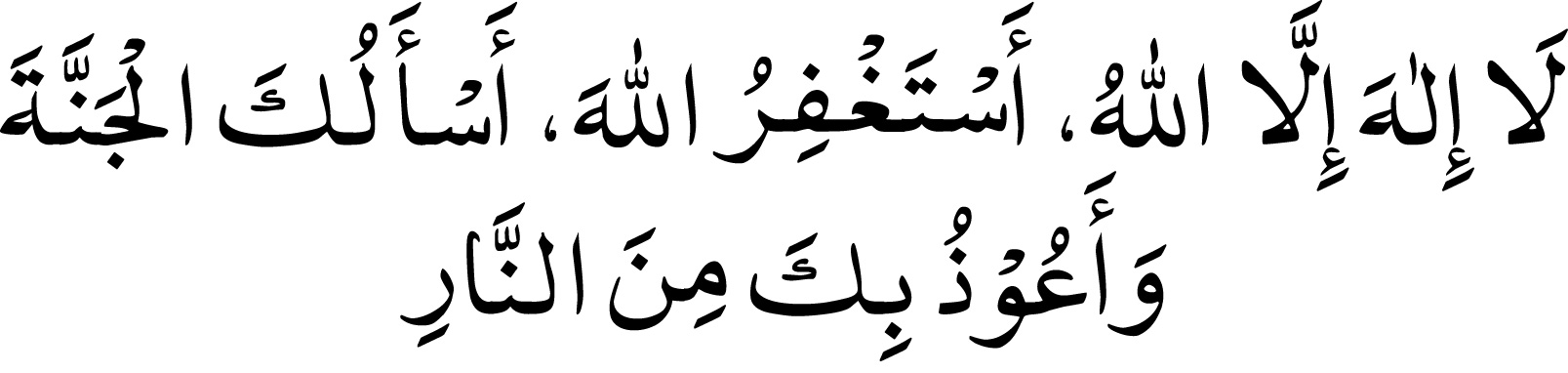
8. Read in abundance:


     Lā ilāha illallāh, astaghfirullāh, as’alukal jannah, wa a’ūdhubika minannār.

     There is no diety except Allāh, I seek forgiveness from Allāh, I ask from You (O Allāh) Jannah, and I seek Your refuge from the fire.  

9. Spend in the Path of Allāh ta‘ālā during the days and nights of Ramadān. Allocate a budget and spend accordingly.

10. Spend the last 10 days in i‘tikāf, for these 10 days are the very cream of Ramadān. Every year Laylat-ul-Qadr (The Night of Power) rotates in these 10 nights.

© Riyādul Jannah 


• Please forward this message on to all your contacts

Categories
Muslim women

Nursery or Adversary?

بسم الله الرحمن الرحيم

Assalamu Alaykum wR wB,

If we survey the Sunnah of the Prophet ﷺ, a similar understanding is found. The qualities of devotion to Allah and their families were at the centre of the praiseworthy qualities of women. For example, the Prophet clarifies the Islamic view regarding the best women and the central reason behind it saying, “The best women from the riders of the camels (the best Arab women) are the righteous among the women of Quraish. They are the kindest women to their children in childhood and the most careful of women in regards to the property of their husbands.” (Bukhari/Muslim) In this hadith the Prophet explains their goodness by being good wives and good mothers.

In another statement the Prophet ﷺ explains that one of the main aims of marriage is to produce and nurture children who follow the Sunnah of the Prophet (peace be upon him) in worshiping Allah and glorifying him. The companion Ma’qil ibn Yasaar narrated that a man came to the messenger of Allah (peace and blessings of Allah be upon him) and said: “O Messenger of Allah, I have found a woman who is from a good family and is pretty, but she does not bear children – should I marry her?” He told him not to. Then he came to him a second time and said something similar and he told him not to marry her. Then he came to him a third time and said something similar and he (peace and blessings of Allah be upon him) said: “Marry the one who is loving and fertile, for I will be proud of your great numbers before the nations on the Day of Resurrection.” (Abu Dawud/Nasa’i)

Shaykh ‘Abd al-‘Azeem Abaadi said in his commentary of this hadith, ‘Marry the one who is loving means the one who loves her husband; and the one who is fertile is the one who bears a lot of children.” {Awnul Mabud 6/33}

abcOh boy… I am going to do it again. I am opening the can of worms. Lighting a match in a dry forest. Shouting fire in a crowded theatre. Opening the floodgates. I am going to talk about something that will cause another round of Facebook unfriending, painful insults, and lots of people disagreeing with me. But as a man, a Muslim, and a chronically outspoken human being, I have to speak up. I have a platform – and I must use it. It is my moral responsibility to utilise my platform to speak up for those without such a public voice. I want to talk about… **takes deep breath**… ‘Working Mothers and their Responsibilities.’

“Most children are corrupted (and led to failure) because of their parents.” Ibn Qayyim RH, Tuhfatul Maudud bi-Ahkamil Maulud (p. 80)

By this point, some of you (especially those who know me “well”) will be thinking, “Oh God! What on earth is he going to say?” And others (who also know me, personally) will be thinking, “How can he talk about that issue? He doesn’t have kids!” Yes, what gives me the audacity to speak about such a topic, when I don’t have children? I actually thought about the same thing a few days ago, before writing this piece. I don’t know how long this article is going to be, simply because the whole thing has been going around my head for a long time. I wouldn’t be lying if I said a decade!

Just because I don’t have children, that doesn’t mean I don’t know anything ‘about’ children. I have taught children in a Primary School, and in a Madrasah setting for many years. And still offer tuition for teenagers in various subjects, as well as teaching Muslim youngsters Tafsir and Seerah. Which (hopefully) justifies my position, in writing this article. As I have understood and realised some of the causes and grounds why our youth are spiralling downwards.

You see I always wanted someone else to write it, I shall be totally honest. In particular – a female. And before writing it I scanned the web to see how much has already been written on the topic, especially by Muslims. I found a LOT of articles supporting the idea of working mothers, very few against it. I have a large extensive library (Alhumdu Lillah), I buy books on everything; things which are relevant and irrelevant, stuff that I need and don’t need (may need in future). So I searched how many books I had if any on ‘tarbiyyah/upbringing children, good mothers’ etc. I had a few on ‘tarbiyyah’, which contained sections on working mums, and others just generally in the early years with a child. But nothing extensive on working mothers, does it really work, the pros and cons.

This article below was written the day I started writing this blog believe it or not:

http://www.dailymail.co.uk/news/article-30342/Working-mothers-risk-damaging-childs-prospects.html

*A sign from Allah, perhaps?*

Silhouette of depressive man

Like I said, I wanted to write this piece many moons ago. But what recently triggered me to put pen to paper is the statistic below:

“25% of Women in the UK suffer from depression.” (NHS Stats)

Mental health problems affect both men and women, but not in equal measure.

“In England, women are more likely than men to have a common mental health problem.”

McManus, S., Meltzer, H., Brugha, T., Bebbington, P., & Jenkins, R. (eds) (2009). Adult Psychiatric Morbidity in England 2007: results of a household survey. NHS Information Centre for Health and Social Care. [online] Available at: http://www.hscic.gov.uk/catalogue/PUB02931/adul-psyc-morb-res-housur-eng-2007-rep.pdf [Accessed 25 August 2015].

“And are almost twice as likely to be diagnosed with anxiety disorders.”

Martin-Merino, E., Ruigomez, A., Wallander, M., Johansson, S. and GarciaRodriguez, L. (2009). Prevalence, incidence, morbidity and treatment patterns in a cohort of patients diagnosed with anxiety in UK primary care. Family Practice, 27(1), pp.9-16.

“10% of mothers and 6% of fathers in the UK have mental health problems at any given time.”

Parker, G., et al. (2008). Technical Report for SCIE Research Review on the Prevalence and Incidence of Parental Mental Health Problems and the Detection, Screening and Reporting of Parental Mental Health Problems. [online] York: Social Policy Research Unit, University of York. Available at: http://www.york.ac.uk/inst/spru/research/pdf/SCIEReview1.pdf [Accessed 14 Sep. 2015].

When I tried to read further, I also came across this:

http://www.theguardian.com/society/2013/jun/19/anxiety-depression-office-national-statistics

Nearly a fifth of adults in the UK experience anxiety or depression, according to the latest official figures.

The Office for National Statistics (ONS) said a higher proportion of women than men reported that they suffered from the conditions, with the highest indication of anxiety or depression occurring in the 50-54 age group.

There was evidence of anxiety or depression in 19% of people aged 16 or over, with 21% of women reporting the symptoms and 16% of men.

Also, see below: http://www.prisonreformtrust.org.uk/projectsresearch/mentalhealth

10% of men and 30% of women have had a previous psychiatric admission before they entered prison. A more recent study found that 25% of women and 15% of men in prison reported symptoms indicative of psychosis. The rate among the general public is about 4%.

26% of women and 16% of men said they had received treatment for a mental health problem in the year before custody.

And finally, more about depression: http://www.bbc.co.uk/news/uk-23553897

My point from all of the above is to give the readers the gist of what percentage of people in the UK suffer from anxiety, depression and stress. And more importantly what proportion are men and women.

So the million dollar question is “WHY?” In such a developed country, or in the West in general, why do we see more people suffering from depression in particularly women? Well, as this article is being written to ‘help’ women I will add the site below for reference:

http://www.nimh.nih.gov/health/publications/depression-in-women/index.shtml

Depression is not “one size fits all,” particularly when it comes to the genders. Not only are women more prone to depression than men, but the causes of female depression and even the pattern of symptoms are often different. Many factors contribute to the unique picture of depression in women—from reproductive hormones to social pressures to the female response to stress. Learning about these factors can help you minimize your risk of depression and treat it more effectively.

Figures for the lifetime prevalence of depression vary according to the criteria used to define depression. Using DSM-IV’s criteria for ‘major depressive disorder’ which are similar to the ICD-10 criteria for ‘moderate depression’, the lifetime prevalence of depression is about 15 percent and the point prevalence about 5 percent. This means that an average person has about a one in seven (15 percent) chance of developing depression in the course of his or her lifetime, and about a 1 in 20 (5 percent) chance of suffering from it at this very point in time.

However, these figures mask a very uneven gender distribution as depression is about twice as common in women than in men. The reasons for this uneven gender distribution are not entirely clear but are thought to be partly biological, partly psychological, and partly sociocultural.

Biological explanations Compared to men, women may have a stronger genetic predisposition to developing depression. Compared to men, women are much more subjected to fluctuating hormone levels. This is especially the case around the time of childbirth and at the menopause, both of which are associated with an increased risk of developing depression.

Psychological explanations Women are more ruminative than men, that is, they tend to think about things more—which, though a very good thing, may also predispose them to develop depression. In contrast, men are more likely to react to difficult times with stoicicism, anger, or substance misuse. Women are generally more invested in relationships than men. Relationship problems are likely to affect them more, and so they are more likely to develop depression.

Sociocultural explanations Women come under more stress than men. Not only do they have to go work just like men, but they may also be expected to bear the brunt of maintaining a home, bringing up children, caring for older relatives, and putting up with all the sexism!   Women live longer than men. Extreme old age is often associated with bereavement, loneliness, poor physical health, and precarity—and so with depression. Women are more likely to seek out a diagnosis of depression. They are more likely to consult a physician and more likely to discuss their feelings with the physician. Conversely, physicians (whether male or female) may be more likely to make a diagnosis of depression in a woman. Perhaps you can think of some other reasons why depression is twice as common in women than in men, in which case please do let me know!

https://www.psychologytoday.com/blog/hide-and-seek/201205/the-7-reasons-why-depression-is-more-common-in-women

1280x240-Homeworking-Hub-Image-1280x240Some of you at this point are thinking, what does all this has to do with the title and Mothers working. The aim of this article is to help women, not have a go at them, nor give them a blasting. It is to help them understand what they really need to do and what they should be doing. Where their priorities lie. I am not in a position to say this, but I don’t think most women understand. As humans, men and women, we are like sheep and just follow the trend. And women, in particular, are suffering from stress and depression because society demands too much from them I believe. Where they should have been placed and what their primary roles were, has been lost and disillusioned.

When you sit down to reflect on what your vision is for your life, how do you know that the vision you’ve chosen is, in fact, the right one? Is it by the level of happiness you are convinced that your vision is achieved, would give you? Or is it the fame and attention you know you’ll attain if you fulfilled it? It would be a shame if you spent years going up the ladder of life, only to find that the ladder was leaning against the wrong wall. Imagine if after all the effort you had exerted you found yourself on the Day of Judgment wishing you’d spent all that time and energy pursuing a different vision on Earth, one that would have given you a higher status in the hereafter which, after all, will last forever. On the Day of Judgment, things will become very clear to us in the starkest of ways. We will see reality as it truly is and realize how short was the opportunity that we had on Earth as the following hadith clearly illustrates:

Anas ibn Malik narrates that the messenger of Allah ﷺ  said, “The most affluent of the people in this world, of those who will go to Hell, will be brought on the Day of Resurrection and dipped once in the Fire. Then it will be said: O son of Adam, did you ever see anything good? Did you ever have any pleasure? He will say: No, by Allah, O Lord. Then the most destitute of the people in this world, of those who will enter Paradise, will be brought and dipped once in Paradise, and it will be said to him: O son of Adam, did you ever see anything bad? Did you ever experience any hardship? He will say: No, by Allah, O Lord. I never saw anything bad and I never experienced any hardship.” (Sahih Muslim)

Let us look at marriage…

In comparison to other countries, couples in the UK are rather old when they decide to get married. The average age that men in the UK get married is 30.8 and the average age to get married for women is 28.9 years.

Yes, besides the fact that a lot fewer people are getting married than for instance 30 years ago, the age at which people are marrying has increased quite a bit. The average age for getting married 30 years ago was about 24 years (about 23 years for women and about 25 years for men). That’s about 6 years earlier than the current average age.

The average age that people get married is dependent on a couple of factors, such as religion, culture and the level of development of the country where they live. In countries such as India and Pakistan, it is common that the parents of the bride and groom arrange the wedding. Therefore the average age of getting married in these countries is only 17 years old. In Scandinavian countries, it is more common to get married at a later age. In Denmark the average age people get married is almost 31 years old. Also in Sweden, Finland and Norway, the average age to get married is well above 30 years old.

So we can see that in Europe and the West, people tend to get married later. This again is due to the pressure from social norms and culture. E.g. getting a degree, building a career, having a job etc. All of which there is no harm in doing. But women need to understand, Islam does allow you to seek knowledge and education. Islam does allow you to work and earn for yourself. But the greatest virtue for a woman in Islam is being a good mother and a pious wife. Already, some of you will think I am backward or old-fashioned, not with the times and not up to date. False. There is no need for us to be sheep and follow society. If we really and truly follow Islam, then let us see what Allah says in the Qur’an and Hadith about women and their roles. Every woman praised in the Qur’an, namely Asiyah (Radhi Allahu Anha) – the wife of Pharoah and Maryam (Radhi Allahu Anha) the mother of Eesa (Alayhis Salam) were praised for being good wives and mothers.

“And Allah has set forth an example for those who believe, the wife of Pharaoh when she said: “My Lord! Build for me a home with You in Paradise, and save me from Pharaoh and his work, and save me from the people who are oppressors. And Maryam (Mary), the daughter of ‘Imran who guarded her chastity; and We breathed into her through Our spirit (Gabriel), and she testified to the truth of the words of her Lord and His Scriptures, and she was of the obedient.” [66:11-12]

The Prophet’s Companion Abu Musa Al-Ash’ari narrates that the Prophet (peace be upon him) described the status of these two women by saying, “Many amongst men attained perfection but amongst women, none attained perfection except Maryam (Mary), the daughter of ‘Imran, and Asiya, the wife of Pharaoh. And the superiority of Aishah to other women is like the superiority of tharid (a dish) to other meals.” (Bukhari)

People also talk a LOT about Khadijah (Radhi Allahu Anha), and how she was a businesswoman. No doubt about it! She was one of the richest women in Makkah. But, after marriage, she handed the business to the Prophet (Sallallahu Alayhi Wasallam). She (Radhi Allahu Anha) then had six children with the Prophet (Sallallahu Alayhi Wasallam). When the Prophet (Sallallahu Alayhi Wasallam) would meditate in the Cave of Hira, Khadijah (Radhi Allahu Anha) would walk from Makkah to Jabal Alnoor (Mount of Noor), then climb up to the Cave of Hira, twice a day to deliver the Prophet’s  (Sallallahu Alayhi Wasallam) food. Let us look at both sides of the coin, not just the fact she was a businesswoman. She was a mother to the children of the Prophet (Sallallahu Alayhi Wasallam), and what a great mother she was. Also, she was an amazing support to the Prophet  (Sallallahu Alayhi Wasallam).working-from-home-jobs

Being a mother is not an easy task, right from the moment of pregnancy, till labour, till breastfeeding, then the early years. I will try to outline some of the most important duties of mothers and how much neglect we see in the Ummah today. It is not as easy as sending our children to nurseries for someone else, strangers, to nurture our children. Babies need their mothers. There are many things women need to consider before they just dump, yes ‘dump’ children. It may not be neglect in the eyes of the law, but certainly is in my eyes and possibly in the eyes of Allah SWT.

Narrated ‘Abdullah bin ‘Umar: The Messenger of Allah (ﷺ) as saying: “Each of you is a shepherd and each of you is responsible for his flock. The amir (ruler) who is over the people is a shepherd and is responsible for his flock; a man is a shepherd in charge of the inhabitants of his household and he is responsible for his flock; a woman is a shepherdess in charge of her husband’s house and children and she is responsible for them; and a man’s slave is a shepherd in charge of his master’s property and he is responsible for it. So each of you is a shepherd and each of you is responsible for his flock.” (Abu Dawud)


A contented, confident and well-adjusted child does not come about by accident but is the result of hard work mainly on the part of the parents. It is not enough to send our children to nursery and expect teachers to do our job for us. Primary education comes from the home environment and the first best teachers, are parents themselves. As Muslim parents in a non-Muslim society, we have to work hard to ensure that Islam is the focus of our parenting efforts.

The pre-school years are the most important and rapid of development, so this is the golden opportunity for us to nurture our children and help them on the path to becoming good Muslims of the future. It is a grave mistake to think that children are too young to learn or understand their surroundings. In fact, the opposite is true; the younger the child, the faster they can absorb information. A lack of varied stimuli and unsettled emotional surroundings are major factors in disruptive behaviour. We all want the best for our children, but often either do not know where to start or cannot find the time to implement our intentions. Remember, as parents, you will play a central role throughout your child’s life, but more especially during the formative years when there are fewer external influences.

http://www.telegraph.co.uk/women/womens-business/10214544/The-five-pros-and-cons-of-being-a-working-mother.html

Cons of being a working mother:

  1. Tiredness. There are no words to describe what it is like doing a 10-hour working day with a long commute when you’ve been up half the night with a teething toddler or a hungry baby
  2. When you can hear your child still crying and shouting ‘mama’ as you’re halfway out of the driveway
  3. Missing out – first words, first steps, playdates and classes
  4. Rushing home from work ‘early’ to put toddler girl to bed only to find she fell asleep 10 minutes before you got home
  5. Managing the expectations of colleagues who just don’t get it

http://www.theguardian.com/lifeandstyle/2015/jan/01/mothers-work-children-school-survey

Siobhan Freegard, the co-founder of Netmums, said the needs of young teenagers often takes parents by surprise: “The truth is that the older your children get, the more they need you emotionally. Once they get to secondary school, they also need a great deal of help to organise all the homework and other academic demands they’re suddenly faced with.”

Those surveyed admitted feeling uncomfortable with their choice to give up work with 60% saying they feel embarrassed by the expectation that parents will work more, not less, when their child reaches school-age. Almost 40% said they are made to feel they are “setting a poor example to their child” by not working. Just 20% said they felt their choice meant they were seen as a better parent.

Freegard said: “Mothers – and it usually is mothers – have been trying and failing to talk about this issue for ages. It’s a hidden topic.”

MUST READ: https://www.tes.com/news/school-news/breaking-views/i-have-marked-my-daughter-crying-my-feet-because-there-are-deadlines 

In the United States today, more than half of mothers with young children work, compared to about one third in the 1970s. Working mothers are now the rule rather than the exception. Women have been moving into the workforce not only for career satisfaction but also because they and their families need the income.

Even when there are no problems, however, a two-career family has to deal with issues that do not come up in other families. Parents may feel so divided between family and career that they have little time for a social life or each other. Both parents need to share household and childcare responsibilities so that one will not end up doing most of the work and feeling resentful. Parents will lose an average of about ten work days per year due to the need to tend to a sick child, to care for their child when child care arrangements have broken down, or to take their child to necessary appointments.

So mothers really need to think twice before they resume work after having a child. We often hear the word “necessity” used. ‘I need to work’. Necessity is an abused term, we need to look carefully at what is a necessity. Wanting a luxurious lifestyle isn’t; fabulous car, large extended house, expensive getaways every year. If that is what you want, then sacrifice the welfare of your children for the above – harsh, but true. Your children don’t need holidays nor expensive presents. We look around today, parents have given their children every gadget, toy, doll, bike and game they can imagine having. But, have they given their children sufficient love and care and attention. Nobody said bringing up children was an easy task, nobody said women cannot work *full stop*. But it is different once you have children, you need to understand where your priorities lie, it is with your children. Don’t follow society, don’t follow the women in the magazine, because you deserve better and so do your children. This is a sincere plea from a brother of yours.

http://www.telegraph.co.uk/news/2016/07/07/the-chart-that-shows-how-feminism-is-ruining-womens-lives/

In conclusion, I say that the best role, the most honourable and worthy role for a woman is striving to be a fine wife, a good mother, or both. This role does not only secure the best for a woman in the hereafter but also fits perfectly with her natural disposition. In her study published by Centre for Policy Studies in 2009, Cristina Odone, former deputy editor of The New Statesman (1998-2004) concluded that “far from being committed to a career, the overwhelming majority of women would prefer to opt out of it. Instead of finding satisfaction in full-time work, most women realise themselves in their other roles as carers, partners, community members, and above all mothers”. Furthermore, McIntosh and Bauer concluded that working women are “often felt overwhelmed and unable to keep up with their job and family responsibilities”. They added that “the working mother felt she had two full-time jobs.”  {A thesis presented in partial fulfilment of the requirements for an MEd in the graduate school of Marietta College titled, “Working Mothers Vs Stay At Home Mothers: The Impact on Children.}

I ask our sisters in Islam to embrace their true role in society and reap the huge rewards that Allah has in store for them for fulfilling this role. I ask our brothers to support them in fulfilling this role. When we define a vision for our lives, we are seeking to make a contribution and leave a legacy. Your legacy, sisters is that if you take on the role that Allah has ordained for you, then you will positively affect the future of the Muslim ummah and ultimately the future of the world. That is a legacy beyond measure.

http://uswatulmuslimah.co.za/womens-issues/qaa/748-can-women-work.html

Please see Fatwa above

NB: I am not a sexist or a chauvinist. These are my sincere views for many sisters who seemed to have lost direction and guidance. If there is anything against Islam in this article which is explicit in Qur’an and Hadith, please state the evidence below. I shall happily retract my opinions. I understand many will disagree and disregard this article.

Allah knows best, to Him we turn and seek the truth.

Ismail Ibn Nazir Satia (One who is in dire need of Allah’s Forgiveness, Mercy and Pleasure)

16 Jamadul Akhar 1436

Categories
Shaykh Saleem Dhorat

What to do at the Time of Natural Catastrophes

by Shaykh Mawlānā Muhammad Saleem Dhorat hafizahullāh

Everyone is aware of the devastation that natural disasters bring with them. Many lose their lives, hundreds of thousands lose relatives, entire communities are wiped out and countless buildings and properties are destroyed. Thousands, even millions are left homeless, having lost everything they once owned, living under open skies with nothing to eat and cover themselves with. Even after the calamity has subsided, the death toll continues to increase with the spread of disease.

When calamities strike, we often think about our roles and responsibilities, as human beings and as Muslims. It is unfortunate that for most of us, it takes such calamities to make us reflect on the Power and lofty Attributes of Allāh ta‘ālā. Rather than expressing shallow sorrow and a momentary shock, there are a few points that we need to reflect and act upon, so that events like these can cause us to become better Muslims for the rest of our lives:


1. Allāh ta‘ālā is the Hākim (The Supreme Ruler) and the Hakīm (The Most Wise)

First of all, one has to reaffirm in one’s mind and heart that whatever happens, whether good or bad in appearance, is according to the Wish of Allāh ta‘ālā. Allāh ta‘ālā is Hākim i.e. He has Power over everything. Every single particle in the whole universe is under His Control. The turning of the leaf in the air while it is falling from the tree, to the up turning and shaking of the earth itself, as in the case of an earthquake, everything is in His Absolute Control. The commands, wishes and controls of everyone else are subjugated to His Command and Governance. The varied circumstances that one observes or experiences in one’s life are also in His total Control.

There are many incidents and events in a person’s life, during which one hopes for a positive outcome through worldly means e.g. when a relative is seriously ill we can hope for recovery by consulting a specialist, along with our belief that only that will happen which Allāh ta‘ālā has ordained. Nevertheless we take the help of worldly means to satisfy ourselves and try to rectify the situation to the best of our ability.

However, when faced with natural disasters like storms, earthquakes and floods, there is no hope of any worldly means which we can employ to circumvent, overcome or prevent re-occurrence of such situations. Such natural disasters are entirely in the Control of Almighty Allāh and we are forced to acknowledge that. Indeed as Muslims we should never have disregarded and ignored the Absolute Power of Allāh ta‘ālā and it should have been reflected upon in our day to day actions and deeds.

However, it is comforting to know that Allāh ta‘ālā is not only the Hākim (The Supreme Ruler) but He is also the Hakīm (The Most Wise). Allāh’s ta‘ālā Governance of the universe is unlike that of worldly rulers. His Control and Governance is full of Supreme Wisdom and Divine Justice. Hence even in natural disasters, there is the hidden Wisdom of the Almighty, which may not be apparent to our physical eyes.


2. Turn Towards Allāh ta‘ālā in Repentance

Every person, during such times should turn towards Allāh ta‘ālā with humbleness, faith and genuine repentance. According to the Sharī‘ah, common and open disobedience of Allāh ta‘ālā is one of the many reasons for the cause of calamities like earthquakes. When the land is overloaded with the disobedience of Allāh ta‘ālā, earthquakes from beneath and violent storms from above are commonplace. There are various scientific explanations as to why natural disasters occur, however the underlying facts point towards ‘how’ they happen and not ‘why’ they happen. The answer to ‘why’ and ‘when’ and even to ‘how’, in reality, remains with Allāh ta‘ālā. An answer to ‘why’ has been revealed in the Qur’ān:

(Corruption and) Mischief has appeared on land and sea because of what the hands of men have earned, that He (Allāh) may give them a taste of some of their deeds in order that they may turn back (from evil).  (30:41)

Incidents like these are, as it were, ‘wakeup’ alarm calls from Allāh ta‘ālā. Allāh ta‘ālā in His Infinite Mercy is jolting us through such incidents, so that we may mend our ways and reflect on our transgressions and as a result rectify ourselves before it is too late. Allāh ta‘ālā has revealed to his beloved Prophet sallallahu ‘alayhi wasallam, that as long as this Ummah continues to repent for their wrong-doings, He will not punish them through calamities. Incidents like these should not be viewed with some momentary sympathy or investigated out of curiosity, but treated strictly as a reminder to wake up and reflect on our lives of disobedience. The way Allāh has the Power to cause calamities in any part of the world, He also has the Power to cause a catastrophe here, in this very city, in the very vicinity of our homes.

Hence it is absolutely essential for Muslims, not just from the affected regions, but from all over the world, to turn towards Allāhta‘ālā. They must direct all their attention towards Him and reflect on their lives to find out where the Commands of Allāh ta‘ālā are being violated, then sincerely repent and resolve to adorn their future lives with taqwā, abstain from the disobedience of Allāhta‘ālā, and observe His Commands.


3. Pray for the Afflicted

Our beloved Prophet sallallahu ‘alayhi wasallam has commanded us to support and help the victims of calamities, whether they be Muslims or otherwise. The best and the most valuable support and help is to make du‘ā i.e. sincere prayers for the wellbeing of the victims. Du‘ā is a very powerful and potent means, which is available to each and every one of us, the one with worldly resources as well as the one without. Hence one should sincerely pray for the well being of the victims. One should pray that Allāh ta‘ālāgives them strength, patience and comfort and that He protects and guides them through these critical times and provides rapid recovery from their physical, mental and spiritual wounds. Only Allāh ta‘ālā has the ability to provide the things asked for in the above prayers. No amount of worldly means will provide for the loss that has been suffered by the victims.

It is difficult to comprehend or empathise with the situation of the victims. Scores of them have death hovering over their heads while their dead family members lie beside them. Thousands of dead bodies are piled up like logs unable to receive a proper burial. Thousands of people have lost their sons and daughters and thousands of young children have become orphans. Only prayers will help those people. So take out some time from listening to the news, reading newspaper reports and chatting about the events and bow down to Allāh ta‘ālā, and pray sincerely and earnestly (after making repentance) for the victims of the calamity. The victims certainly deserve our prayers, to say the least. It is their right over the entire Muslim community.

It is also worth mentioning that it will be a gross transgression for anyone to forget their own deeds and start judging the victims, claiming their misdeeds to be the reason for the calamity. We are in no position to do that. Besides, this will be tantamount to trying to guess the ‘Hikmah’ (Wisdom) of Allāh! Therefore we should refrain from uttering such words.


4. Donate Generously

For people far from the afflicted region, the next best thing that they can do to help and support is to provide financial and material help. The victims have lost everything, their homes and the shelter above their heads, their entire belongings and their livelihoods. There is an immediate need to provide shelter (as a protection from the cold nights), food and clothing. There is also a dire need to provide them with medication and other medical accessories and supply them with clean water and sanitation.

Alhamdulillāh, Allāh ta‘ālā has given us abundantly, more than we need. We do not have to sacrifice our daily food or clothing in order to donate towards the cause. I request all my brothers and sisters to reflect upon the material blessings that Allāh ta‘ālā has bestowed upon us, despite our not being deserving of them, and donate generously for the victims of this calamity. There are people out there, among the victims, who, until yesterday, were the patrons of or contributors towards charities themselves, and had donated profusely. Now, having lost everything, they are in need of charity themselves. Allāh ta‘ālā will inshā’allāh look favourably upon our generosity and remove future calamities awaiting to befall us. The Prophet sallallahu ‘alayhi wasallam has mentioned:

Truly sadaqah extinguishes the Wrath of Allāh and saves from an evil death. (Tirmidhī)

So, as human beings, and more so as Muslims, we should not let this suffering continue without providing help and support according to our individual capabilities. Do not wait for your zakāh to become due to make a donation. The need of the situation demands that we donate everything that is in our possession, even if that means undergoing hardships ourselves. However, since Allāh ta‘ālā has blessed us with adequate wealth we know that we can donate sufficiently without having to undergo such troubles. We should spend abundantly and generously, as generously as Allāh ta‘ālā has provided for us. Remember, whatever we will spend, we will do so from that which Allāh ta‘ālā has given us. It is His Money we will be spending to relieve His Creation. The Prophet s said:

All creatures are the dependants of Allāh. The most beloved to Allāh from all Creation is he who treats His dependants the best.  (Bayhaqī)

Therefore give as much as you can. This is not a time to wait for someone to come and knock at your door. Go out looking for reliable organizations and charities with correct channels, so that your money reaches the genuine victims and fulfills their needs.

May Allāh ta‘ālā give us the guidance to learn a lesson from such calamities and grant us the resolve to change our lives for the better. May Allāh ta‘ālā also give us the tawfīq to pray for the victims and to donate generously. Āmīn.

Categories
Marriage

Marriage Advice by Shaykh Abu Bakr alShatri (Hafidhahullah).

Makkah Rihaal

أمور ينصح بها لمن تعسر عليه الزواج :
أولاً :

قراءة سورة يس 4 مرات بنية الشفاء وتيسير الأمور وتحقيق المقصود ورفع البلاء في مكان نظيف خال لا يفرق بينهما بكلام ثم يدعو بهذا الدعاء 3 مرات :
( سبحان المنفس عن كل مديون ، سبحان المفرج عن كل محزون ، سبحان من أمره بعد الكاف والنون ، سبحان من إذا أراد شيئاً أن يقول له كن فيكون ، يا مفرج الهموم يا حي يا قيوم ، صل على سيدنا محمد وآله وافعل لي كذا وكذا ) ثم تذكر حاجتك بيقين وحسن ظن في الله فهو أكرم مسؤول وأعظم مأمول.

وهذه الوصفة تكرر يومياً أو أسبوعياً أو حسب استطاعة الإن


سان وفراغه وقراءة سورة يس يومياً بنية ما يريد القارئ أمر فيه خير كثير .
وممكن يقرأها الشخص مرة واحدة عند عدم القدرة على قراءتها 4 مرات مع الدعاء أعلاه.

ثانياً :

 الدعاء : يكرر الدعاء أكثر من أربعين وهذا من المجربات لا مما ورد
أمثلة على الأدعية :
رَبِّ هَبۡ لِى مِن لَّدُنكَ ذُرِّيَّةً۬ طَيِّبَةً‌ۖ إِنَّكَ سَمِيعُ ٱلدُّعَآءِ (٣٨) سورة آل عمران
رَبِّ لَا تَذَرۡنِى فَرۡدً۬ا وَأَنتَ خَيۡرُ ٱلۡوَٲرِثِينَ (٨٩) سورة الأنبياء
رَبِّ إِنِّى لِمَآ أَنزَلۡتَ إِلَىَّ مِنۡ خَيۡرٍ۬ فَقِيرٌ۬ (٢٤) سورة القصص ( 136 مرة يومياً )
ثالثاً :

قراءة الآية من سورة الحج أكثر من 51 مرة وهذا من باب التجربة ولكنه يرددها بيقين وحسن ظن في الله وفي كرمه سبحانه وتعالى بحصول الفرج وتحقيق المقصود والمأمول على أحسن حال :
وَأَذِّن فِى ٱلنَّاسِ بِٱلۡحَجِّ يَأۡتُوكَ رِجَالاً۬ وَعَلَىٰ ڪُلِّ ضَامِرٍ۬ يَأۡتِينَ مِن كُلِّ فَجٍّ عَمِيقٍ۬ (٢٧)
رابعاً :

ترديد هذا الجزء من سورة الحجر أكثر من 21 مرة :
وَزَيَّنَّـٰهَا لِلنَّـٰظِرِينَ (١٦) وَحَفِظۡنَـٰهَا مِن كُلِّ شَيۡطَـٰنٍ۬ رَّجِيمٍ (١٧)
خامساً :

عدم النوم بعد الفجر ولكن بعد طلوع الشمس بحوالي ربع ساعة .
سادساً :

صلاة الضحى 4 ركعات ( يصليها ركعتين ركعتين ) .
سابعاً :

كثرة الاستغفار .
ثامناً :

كثرة الصلاة على النبي صلى الله عليه وسلم

Advice for those who are experiaencing obstructions in their marriage:

Firstly:

Read Surah Al-Yasin, 4 times in a clean place without communicating during recitation, with the intention to cure and to facilitate things, to achieve and intend to remove distress from their marriage. After they must should read the dua, 3 times.

سبحان المنفس عن كل مديون ، سبحان المفرج عن كل محزون ، سبحان من أمره بعد الكاف والنون ، سبحان من إذا أراد شيئاً أن يقول له كن فيكون ، يا مفرج الهموم يا حي يا قيوم ، صل على سيدنا محمد وآله وافعل لي كذا وكذا

Subhanal munefis Aan kullilmadiyun, subhanal mufarij Aan kuli mahzoon, subhanna man amara bAadal kef wel noon, subhanaman itha arada shayan an yaqul lahu kun faya kun, yamufarij alhumoom ya hayu ya qayum sali Aala sayyidinah Muhammed wa alihi wafAal lee wa ketha wa ketha

After remember your needs with certainty and good thoughts in Allah as He is the Greatest. This is the treatment and you must repeat this daily or weekly or depending on the ability of the person, on your free time. You must read Surah Al-Yasin daily with the intention of good outcome. You can read this once when unable to read Surah Al-Yasin 4 times and dua.

Secondly:

Read the dua more than 40 times and this is from experience and not what is stated.

Examples:

رَبِّ هَبۡ لِى مِن لَّدُنكَ ذُرِّيَّةً۬ طَيِّبَةً‌ۖ إِنَّكَ سَمِيعُ ٱلدُّعَآءِ (٣٨) سورة آل عمران

Rabbi hab lee min ladunka thurriyyatan tayyibatan innaka sameeAau alddaAai

Oh my Lord! Grant me a righteous child as your special favour; surely you hear all prayers.

رَبِّ لَا تَذَرۡنِى فَرۡدً۬ا وَأَنتَ خَيۡرُ ٱلۡوَٲرِثِينَ (٨٩) سورة الأنبياء

Rabbi la tatharnee fardan waanta khayru alwaritheena

Oh my Lord! Leave me not without offspring though Thou art the best of inheritors.
رَبِّ إِنِّى لِمَآ أَنزَلۡتَ إِلَىَّ مِنۡ خَيۡرٍ۬ فَقِيرٌ۬ (٢٤) سورة القصص ( 136 مرة يومياً )

Rabbi innee lima anzalta ilayya min khayrin faqeerun

Oh Lord! Surely I am in desperate neeed of whatever good that You may send down to me. Read these Ayahs 136 times a day, every day.

Thirdly: Read the verse from Surah Al-Hajj more than 51 times, this is from experience but read the verse with certainty and good thought in Allah.

وَأَذِّن فِى ٱلنَّاسِ بِٱلۡحَجِّ يَأۡتُوكَ رِجَالاً۬ وَعَلَىٰ ڪُلِّ ضَامِرٍ۬ يَأۡتِينَ مِن كُلِّ فَجٍّ عَمِيقٍ۬ (٢٧)

Waaththin fee alnnasi bialhajji yatooka rijalan waAala kulli damirin yateena min kulli fajjin Aameeqin

And make a proclamation of Hajj (Pilgrimage) to mankind: they will come to you on foot and on lean camels from every distant quarter

Fourthly: Repeat this part from Surah Al-Hijr more than 21 times.

وَزَيَّنَّـٰهَا لِلنَّـٰظِرِينَ (١٦) وَحَفِظۡنَـٰهَا مِن كُلِّ شَيۡطَـٰنٍ۬ رَّجِيمٍ (١٧)

Wazayyannaha lilnna th ireena (16) Wahafi th naha min kulli shaytanin rajeemin (17)

And made them good looking for the beholders (16) And We have guarded them from every accursed shaitan (17)

Fifth: Do not sleep after Fajr but after sunrise (approximately 15 minutes)

Sixth: Salat Ad-Duha, 4 rakat (pray 2 rakats; 2 rakats)

Seventh:  Make a lot of Istighfar

“أَسْتَغْفِرُ اللهَ وَأَتُوبُ إِلَيْهِ”.

‘Astaghfirullaaha wa ‘atoobu ‘ilayhi.

I seek the forgiveness of Allah and repent to Him. 

Eighteth: Increase in the salutation of the Prophet Muhammed Salallahu Alayhi Wa Salim

“اللَّهُمَّ صَلِّ وَسَلَّمْ عَلَى نَبِيِّنَا مُحَمَّدٍ”.

Allahumma salli wa sallim ‘alaa nabiyyinaa Muhammadin

Oh Allah, we ask you for peace and blessings upon our prophet Muhammad

Categories
Ruqya

Black Magic and Satanic Possession

black-magic-moon

Praise be to Allah,

People who have had experience with such situations have related that the following are among the signs of a person who is possessed by jinn (or Satan):

Strong repulsion when hearing Qur’an or Adhan (call for prayers).

Episodes of losing consciousness and/or epileptic attacks, especially when Qur’an is recited for the possessed person.

Frequent nightmares during sleep.

Tendency to avoid people accompanied by out-of-the-norm behavior.

The jinn who possesses him might speak when Qur’an is recited for the possessed person.

Madness, as stated in the Qur’an (interpretation of the meaning): “Those who devour usury will not stand except as stands one whom Satan by his touch hath driven to [epileptic] madness…”2:275

Shaykh Muhammad Ibn Saleh al-‘Uthaymīn—رحمه الله—said:

“ينبغي على الإنسان أن يستعين بالله عز وجل في كل شيء حتى في الأمور الصغيرة : كالذهاب والمجيء والأكل والشرب واللباس. حتى يكون بذلك مدركاً لحاجته متعبدا لربه عز وجل لأن الاستعانة من العبادة وإذا استعان العبد بربه يسر له الأمر وسهله عليه.”

“It’s befitting for man to seek assistance with Allāh—عز وجل—in everything—even in the small matters like leaving to and from [somewhere], eating, drinking and dressing—so that with this, he can fulfill his need AND worship his lord—عز وحل. Because al-Isti’ānah (seeking assistance) is from the acts of worship and if the slave seeks assistance from his lord, He (Allāh) will facilitate the matter for him and make it easy.”

Ahkām Min al-Qur’ān al-Karīm, 1/3

As for a person struck by magic, he might experience the following:

Dislike of one’s spouse, as indicated in the Qur’an by the following verse (interpretation of the meaning): “And from these (angels) people learn that by which they cause separation between a man and his wife…” (Al-Baqarah, 2:102).

Different attitude in the house from that which is outside the house. For example, a person will feel that he is missing his family when is outside the house but when he goes home, love changes quickly to extreme hatred.

Inability to have sexual intercourse with one’s spouse.

Frequent miscarriage for pregnant women.

Sudden change in behavior without obvious reason.

Complete loss of appetite for food.

Thinking or imagining one has done something when in reality one has not.

Sudden obedience and/or love for a particular person.

It should be noted that if a person experiences some of the above symptoms this does not necessarily mean that he is either possessed by a jinn or struck by black magic. It might be due to physiological or psychological reasons.

As for curing this condition, the following steps are recommended:

Putting one’s trust in Allah with the sincere belief that He is the only cure for everything.

Reading Qur’an and known supplications expressing seeking refuge, the most important and effective of which is surah 113 and 114, Al-Falaq and Al-Naas, which were used to cure the Prophet himself. Surah 112, Al-Ikhlas, is recommended along with them, as well as the opening chapter of the Qur’an, Al-Fatihah. To cure black magic some have successfully used seven lotus-tree leaves. The leaves should be crushed, then mixed them with water enough for taking a bath. The following verses from the Qur’aan are then recited: verse Al-Kursi (2:255), surah Al-Kafiroon (109), surah 112, 113, 114; the verses which mention magic, which are: in surah Al-Baqarah (2:102), Al-A’raf (7:117-119), Yunus (10:79-82), and Taha (20:65-69). The possessed person drinks some of the water, and the rest is used to give him a bath.

Removing the elements of magic as was done by the Prophet SAW when he was struck by black magic by a Jewish man called Lubaid Bin Al-‘Aasim.

Eating seven Aa’liya Al-Barniy dates (among the dates of Al-Madinah) first thing in the morning; if not possible, any dates will suffice, by the will of Allah.

Cupping – removing excess blood.

Supplications/Duas.

And we ask Allah to cure you and ease your hardship, as He is the One who cures and there is no one else who can cure. Ameen

Categories
Muslim men Muslim women

“And the male is not like the female.” (Surah Imran)

IMG_20170704_002003.jpg

بسم الله الرحمن الرحيم

QUESTION: Is there a mention of the equality of women in the Qur’an?

ANSWER:

Praise be to Allah.

Firstly:

This word – equality – which many thinkers in both the east and the west advocate in various fields of life is a word which is based on deviation and a lack of understanding, especially when the speaker attributes this idea of equality to the Qur’an and to Islam.

One of the things that people misunderstand is when they say that “Islam is the religion of equality”. What they should say is that Islam is the religion of justice.

Shaykh Ibn ‘Uthaymeen (may Allah have mercy on him) said:

“Here we should note that there are some people who speak of equality instead of justice, and this is a mistake. We should not say equality, because equality implies no differentiation between the two. Because of this unjust call for equality, they started to ask, what is the difference between male and female?’ So they made males and females the same, and then the communists said, ‘What difference is there between ruler and subject? No one has any authority over anyone else, not even fathers and sons; the father has no authority over his son,’ and so on.

But if we say justice, which means giving each one that to which he or she is entitled, this misunderstanding no longer applies, and the word used is correct. Hence it does not say in the Qur’aan that Allaah enjoins equality, rather it says (interpretation of the meaning):

“Verily, Allah enjoins Al‑‘Adl (i.e. justice)”

[al-Nahl 16:90]

“and that when you judge between men, you judge with justice”

[al-Nisa’ 4:58]

Those who say that Islam is the religion of equality are lying against Islam. Rather Islam is the religion of justice which means treating equally those who are equal and differentiating between those who are different.

No one who knows the religion of Islam would say that it is the religion of equality.  Rather what shows you that this principle is false is the fact that most of what is mentioned in the Qur’aan denies equality, as in the following verses:

‘Say: Are those who know equal to those who know not?”

[al-Zumar 39:9]

‘Say: Is the blind equal to the one who sees? Or darkness equal to light?’

[al-Ra’d 13:16]

‘Not equal among you are those who spent and fought before the conquering (of Makkah, with those among you who did so later’

[al-Hadeed 57:10]

‘Not equal are those of the believers who sit (at home), except those who are disabled (by injury or are blind or lame), and those who strive hard and fight in the Cause of Allaah with their wealth and their live’

[al-Nisa’ 4:95]

Not one single letter in the Qur’an enjoins equality, rather it enjoins justice. You will also find that the word justice is acceptable to people, for I feel that if I am better than this man in terms of knowledge, or wealth, or piety, or in doing good, I would not like for him to be equal to me.

Every man knows that he find it unacceptable if we say that the male is equal to the female.”

Sharh al-‘Aqeedah al-Waasitah, 1/180-181

Based on this, Islam does not regard men and women as equal in matters where regarding them as equal would result in injustice to one of them, because equality that is inappropriate is a severe form of injustice.

The Qur’an commands women to wear clothes that are different from those worn by men, because of the differences in the ways each sex is tempted by the other. The temptation posed by men is less than the temptation posed by women, so the clothes that women should wear are different than the clothes that men wear. It makes no sense to tell women to expose the parts of the body that men are allowed to expose, because of the differences in the temptation posed by a woman’s body and a man’s body – as we shall explain.

Secondly:

There are matters in which men and women are treated differently in Islamic sharee’ah, such as:

1 – Qiwaamah (being in charge of the household)

Allah says (interpretation of the meaning):

“Men are the protectors and maintainers of women, because Allaah has made one of them to excel the other, and because they spend (to support them) from their means”

[al-Nisa’ 4:34]

Ibn Katheer (may Allaah have mercy on him) said:

“Allah says ‘Men are the protectors and maintainers of women’ meaning that the man is in charge of the woman, i.e., he is the leader and head of the household, the one who disciplines her if she goes astray.

‘because Allah has made one of them to excel the other’ i.e., because men are superior to women and are  better than women. Hence Prophethood was given only to men, as was the position of khaleefah, because the Prophet (peace and blessings of Allah be upon him) said, ‘No people shall ever prosper who appoint a woman as their ruler.’ This was narrated by al-Bukhaari from the hadeeth of ‘Abd al-Rahman ibn Abi Bakrah from his father. The same applies to the position of qadhi (judge), etc.

‘and because they spend (to support them) from their means’ refers to the mahr and the spending on women’s maintenance that Allah has enjoined upon men in His Book and in the Sunnah of His Prophet (peace and blessings of Allaah be upon him). So a man is inherently better than a woman, and he is superior to her because he spends on her. So it is appropriate that he should be in charge of her, as Allah says, ‘but men have a degree (of responsibility) over them’ [al-Baqarah 2:228].

‘Ali ibn Abi Talhah RA said, narrating from Ibn ‘Abbaas RA: ‘Men are the protectors and maintainers of women’ means that men are the leaders of women and they should obey them in areas where Allah has enjoined obedience. Obedience may mean treating his family kindly and protecting his wealth.”

(Tafseer Ibn Katheer, 1/490)

2 – Testimony or bearing witness. The Qur’an states that the testimony of one man is equivalent to the testimony of two women.

Allah says (interpretation of the meaning):

“And get two witnesses out of your own men. And if there are not two men (available), then a man and two women, such as you agree for witnesses, so that if one of them (two women) errs, the other can remind her”

[al-Baqarah 2:282]

Ibn Katheer RH said:

Two women are to take the place of one man because women are lacking in reason, as Muslim narrated in his Saheeh… from Abu Hurayrah that the Prophet (peace and blessings of Allaah be upon him) said: “O women, give in charity and seek forgiveness a great deal, for I have seen that you form the majority of the people of Hell.” A wise woman among them said, “Why is it, O Messenger of Allah, that we are the majority of the people of Hell?” He said, “Because you curse too much, and you are ungrateful to your spouses. I have seen none lacking in common sense and failing in religion but (at the same time) robbing the wisdom of the wise, besides you.” The woman asked: “O Messenger of Allah, what is wrong with our common sense and our religion?” He said: “Your lack of common sense (can be well judged from the fact) that the evidence of two women is equal to that of one man, that is a proof of the lack of common sense, and you spend some nights (and days) in which you do not offer prayer and in the month of Ramadhan (during the days) you do not observe fast, that is a failing in religion.”

(Tafseer Ibn Katheer, 1/336)

There may be some women who are wiser than some men, but this is not the usual rule and such women are not in the majority. Sharee’ah is based on what is general and most common.

The fact that women are lacking in reason does not mean that they are crazy, rather their reason is often overtaken by their emotions, and this happens to women more often than it happens to men. No one would deny this except one who is arrogant.

3 – A woman inherits half of what a man inherits.

Allaah says (interpretation of the meaning):

“Allaah commands you as regards your children’s (inheritance): to the male, a portion equal to that of two females”

[al-Nisa’ 4:11]

Al-Qurtubi RH said:

Because Allah knows better than they do what is in their best interests, He made the division of inheritance based on differentiation, because He knows what is in their best interests.

Tafseer al-Qurtubi, 5/164

For example, a man is obliged to spend more than a woman, so it is appropriate that he should have a larger share of inheritance than a woman.

4 – Clothing:

A woman’s ‘awrah includes her entire body. The least that can be said is that she should not uncover anything except her face and hands, and it was said that she should not even uncover that.

Allah says (interpretation of the meaning):

“O Prophet! Tell your wives and your daughters and the women of the believers to draw their cloaks (veils) all over their bodies (i.e. screen themselves completely except the eyes or one eye to see the way). That will be better, that they should be known (as free respectable women) so as not to be annoyed. And Allah is Ever Oft‑Forgiving, Most Merciful”

[al-Ahzaab 33:59]

The ‘awrah of a man is the area from the navel to the knees.

It was said to ‘Abdullah ibn Ja’far ibn Abi Talib, “Tell us what you heard from the Messenger of Allah (peace and blessings of Allaah be upon him) and what you saw of him, and do not tell us about anyone else, even if he was trustworthy.” He said, “I heard the Messenger of Allah (peace and blessings of Allah be upon him) say, ‘The area between the navel and the knee is ‘awrah.’”

Narrated by al-Hakim in al-Mustadrak (6418)

Other examples include the following, which is not a comprehensive list.

There are other differences between the sexes, including the following:

  • A man can marry four women, but a woman can only have one husband.
  • A man has the right to issue a divorce and it is valid if he does so, but a woman does not have the right to issue a divorce.
  • A man may marry a woman from among the People of the Book (Jews and Christians), but a Muslim woman may not marry anyone but a Muslim.
  • A man may travel without his wife or any of his mahrams, but a woman may not travel unless she is accompanied by a mahram.
  • Prayer in the mosque is obligatory for men, but not for women; a woman’s prayer in her house is more beloved to Allah.
  • A woman may wear silk and gold, but a man must not wear them.

Everything that we have mentioned is based on the difference between men and women, because the male is not like the female. Allah says (interpretation of the meaning):

“And the male is not like the female”

[Aal ‘Imran 3:36]

The male is different from the female in many ways, in his strength, in his body, in his toughness and roughness, whereas women are soft and gentle.

And men are different in intellectual terms, for men are known for their strength of understanding and their memory as compared to women. Women are weaker than men in memory and forget more than men do. This is well known, for most of the reputable scholars in the world are men. There are some women who are more intelligent and have better memories than some men, but this does not cancel out the general rule. Most cases are as we have described above.

With regard to emotions, men speak of them when they get angry or when they are happy, but women are affected by the slightest emotional effects, so their tears flow at the slightest emotional provocation.

Jihad is obligatory for men, but jihad in the sense of fighting is not obligatory for women. This is the mercy of Allah towards them, and consideration for their nature.

In conclusion we may say that the rulings for men are not like the rulings for women.

Thirdly:

Islam regards men and women as equally obliged with regard to many acts of worship and interactions with others. For example, women do wudoo’ just as men do, they do ghusl as men do, they pray as men do, and they fast as men do, except when they are menstruating or bleeding following childbirth. Women pay zakaah as men pay zakaah, and they do Hajj as men do, except for a few differences in the rulings. It is permissible and acceptable to buy from a woman, and if a woman gives charity, that is permissible. It is permissible for a woman to set free the slaves that she owns, and there are many other similar cases because women are the twin halves of men, as it says in the hadeeth:

It was narrated that ‘Aa’ishah said: The Messenger of Allah (peace and blessings of Allah be upon him) was asked about a man who finds some wetness (on his clothes) but did not have an erotic dream, and he said, “He should do ghusl.” He was asked about a man who had an erotic dream but did not find any wetness, and he said, “He does not have to do ghusl.” Umm Salamah said, “O Messenger of Allah, if a woman sees that, does she have to do ghusl?” He said, “Yes, for women are the twin halves of men.”

(Narrated by al-Tirmidhi, 113; Ahmad, 25663.

Conclusion:

Women are like men in some aspects and they differ from them in others. Most of the rulings of Islam apply to men and women equally. In cases where a distinction is made between the sexes, the Muslim regards that as a mercy from Allah and a sign of His knowledge of His creation, but the arrogant kaafir sees it as oppression and injustice, so he stubbornly insists on claiming that men and women are the same. So let him tell us how a man can carry a foetus and breastfeed it?  He stubbornly ignores the weakness of women and how they bleed during their monthly period, and he stubbornly beat his head against the rock of reality. But the Muslim is still at peace with his faith, surrendering to the command of Allaah.

“Should not He Who has created know? And He is the Most Kind and Courteous (to His slaves), All‑Aware (of everything)”

[al-Mulk 67:14 – interpretation of the meaning]

And Allah knows best.

Sheikh Muhammed Salih Al-Munajjid (Hafdhahullh).